

If you’ve ever climbed into your Kenworth on a 95-degree afternoon, you know how quickly the cab can heat up.
When the air conditioner suddenly starts blowing warm instead of cold, it’s more than just uncomfortable.
It can make an already long workday miserable.
The good news is that warm air doesn’t automatically mean you need an expensive repair.
Sometimes the problem is surprisingly simple.
Other times it points toward a component that needs professional attention.
The trick is knowing where to start before spending money replacing parts that aren’t actually broken.
First, Figure Out Which Problem You Actually Have
One mistake I see people make is mixing up two completely different A/C problems.
Problem #1
The air is cold…
…but barely any comes out of the vents.
That’s an airflow problem.

I covered that in Kenworth AC Blows Cold But Not Hard? Here’s How to Fix Weak Airflow because the refrigerant system may actually be working perfectly.
Problem #2
The airflow is strong…
…but the air isn’t cold.
That’s the problem we’re talking about here.
The fan is doing its job.
The cooling system isn’t.
Understanding which problem you have immediately eliminates a lot of unnecessary troubleshooting.



Low Refrigerant Is One of the Most Common Causes
Air conditioning systems slowly lose refrigerant over time if a leak develops.
As refrigerant levels drop, cooling performance usually drops with it.
Some common signs include:
- Air that’s cool but not cold.
- Cooling that gets worse on very hot days.
- The system cycling on and off more frequently.
- Air that becomes colder while driving than while sitting still.
Simply adding refrigerant isn’t always the answer, though.
If the refrigerant is low, there’s usually a leak somewhere that should be repaired rather than repeatedly recharging the system. Kenworth recommends checking hoses, fittings, and components for refrigerant leaks and having leaks repaired rather than simply tightening connections or repeatedly recharging the system.



Check the Condenser Before Assuming the Worst
The condenser sits at the front of the cooling package where outside air passes through it.
If it’s plugged with bugs, dirt, mud, or harvest debris, it can’t get rid of heat efficiently.
That means the A/C can’t cool the refrigerant properly.
Harvest season is especially hard on condensers because trucks spend so much time around dust, chaff, insects, and crop debris.
A dirty condenser is much cheaper to fix than replacing major A/C components.
A Bad Compressor Means the Refrigerant Can’t Do Its Job
The compressor is often called the heart of the air conditioning system.
Its job is to circulate refrigerant through the system under pressure.
If the compressor fails or the clutch stops engaging, the refrigerant can’t move the way it’s should.
Some warning signs include:
- Compressor clutch not engaging.
- Loud squealing or grinding noises.
- Intermittent cooling.
- No cooling at all.
Kenworth recommends checking the compressor, clutch, and drive belt whenever A/C performance drops or unusual noises develop.



A Blend Door Can Make the Air Feel Warmer
Inside your Kenworth’s HVAC box are several doors that control where the air goes and how much passes through the heater core or evaporator.
One of those is commonly called the blend door.
If the blend door sticks or the actuator fails, some heated air can mix with the cold air coming from the evaporator.
The result?
Instead of getting ice-cold air, you end up with air that’s only slightly cool or even lukewarm.
Some drivers also notice:
- The temperature changes by itself.
- One side of the cab feels warmer than the other.
- The air never gets as cold as it used to.
If your truck still has good airflow but the temperature never seems right, the blend door is definitely worth investigating.
Low Refrigerant Usually Means There’s a Leak
One of the biggest misconceptions about air conditioning systems is that refrigerant simply “gets used up.”
It doesn’t.
A properly sealed A/C system shouldn’t normally need refrigerant added year after year.
If the charge is low, refrigerant has escaped somewhere.
That means there’s usually a leak.
Common leak locations include:
- Hose connections.
- Compressor shaft seal.
- Condenser.
- Evaporator.
- Service ports.
- O-rings.
Simply adding another can of refrigerant without finding the leak often provides only temporary relief.
Sooner or later, the problem usually comes back.
Check the Compressor Clutch
With the engine running and the air conditioner turned on, the compressor clutch should engage.
If it never engages, the refrigerant can’t circulate through the system.
Sometimes the clutch cycles on and off normally.
Other times it may not engage at all.
Possible causes include:
- Low refrigerant pressure.
- Electrical problems.
- Pressure switch issues.
- Worn compressor clutch.
- Failed compressor.
If the clutch isn’t engaging, that’s an important clue when diagnosing the problem.
Electrical Problems Can Mimic A/C Problems
Modern HVAC systems depend on several electrical components.
A blown fuse.
A faulty relay.
A damaged wiring connector.
A failed pressure sensor.
Any of these can prevent the system from operating correctly.
That’s why I like starting with the simple checks before assuming major components have failed.
Sometimes the repair ends up being much easier than expected.



Harvest Conditions Are Hard on Air Conditioning Systems
Driving during harvest exposes a truck to conditions many highway trucks rarely experience.
Every day you’re around:
- Corn dust.
- Chaff.
- Dirt.
- Pollen.
- Insects.
- Gravel roads.
All of that eventually finds its way into the cooling package.
The condenser becomes dirty.
The radiator collects debris.
Airflow decreases.
Even if nothing is actually broken, reduced airflow across the condenser can noticeably reduce cooling performance.
That’s one reason I think harvest trucks deserve more frequent inspections than trucks that spend most of their time running interstate miles.
Don’t Forget the Cabin Air Filter
Although a dirty cabin air filter usually causes weak airflow instead of warm air, it’s still worth checking.
A plugged filter forces the blower motor to work harder while reducing the amount of cooled air reaching the cab.
If your truck has both weak airflow and poor cooling, inspect the filter before replacing expensive components.
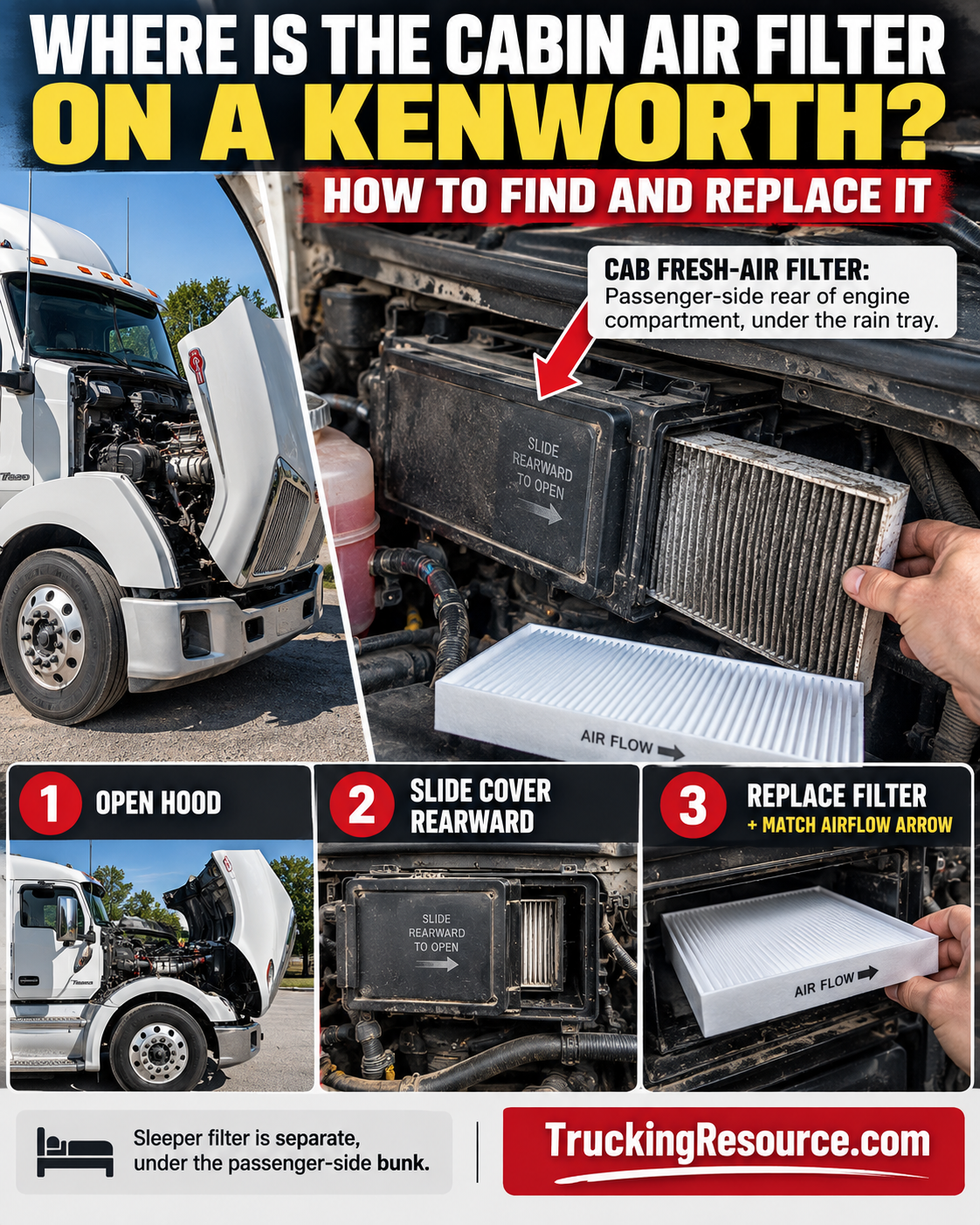
I cover that process step by step in Where Is the Cabin Air Filter on a Kenworth? How to Find and Replace Itbecause it’s one of the easiest maintenance items many drivers overlook.
My Troubleshooting Order
If my Kenworth suddenly started blowing warm tomorrow, this is exactly how I’d approach it.
- Verify whether the airflow is actually strong.
- Check the cabin air filter if airflow seems weak.
- Inspect the condenser for dirt, bugs, and harvest debris.
- Watch to see if the compressor clutch engages.
- Check whether the engine cooling fan is pulling enough air.
- Look for obvious refrigerant leaks around hoses and fittings.
- Verify the blend door is operating correctly.
- If everything looks normal, have the refrigerant pressures checked before replacing parts.
Working through the simple possibilities first can save a lot of unnecessary expense.
Frequently Asked Questions
Why is my Kenworth AC blowing warm but the fan works fine?
If airflow is strong but the air isn’t cold, common causes include low refrigerant, a dirty condenser, compressor problems, blend door issues, or poor condenser airflow while the truck is idling.
Can a dirty condenser really make that much difference?
Yes.
Especially on harvest trucks.
Corn dust, bugs, dirt, and chaff can restrict airflow through the condenser, making it much harder for the A/C system to reject heat.
Does low refrigerant always mean the compressor is bad?
No.
Low refrigerant usually points toward a leak somewhere in the system rather than a failed compressor.
Finding and repairing the leak is usually more important than simply adding more refrigerant.
Should I recharge the system myself?
If you know the refrigerant charge is low, it’s worth determining why before simply adding more. A leak that isn’t repaired will usually continue leaking, and repeated recharging doesn’t fix the underlying problem.
Don’t Assume the Worst Right Away
Warm air from the vents doesn’t automatically mean your Kenworth needs a new air conditioning system.
Many cooling problems start with something much simpler.
A dirty condenser.
A clogged cooling package.
Low refrigerant from a small leak.
A blend door issue.
By checking the simple things first and working through the system one step at a time, you’ll often have a much better chance of finding the real problem before replacing parts that weren’t actually broken.
Author: Jake Harrison
Jake Harrison is a commercial transportation writer for TruckingResource.com who specializes in CDL maintenance, truck systems, commercial vehicle equipment, and practical repair guides. He works with the TruckingResource.com editorial team to create detailed, beginner-friendly maintenance guides that help drivers diagnose common truck problems with confidence.