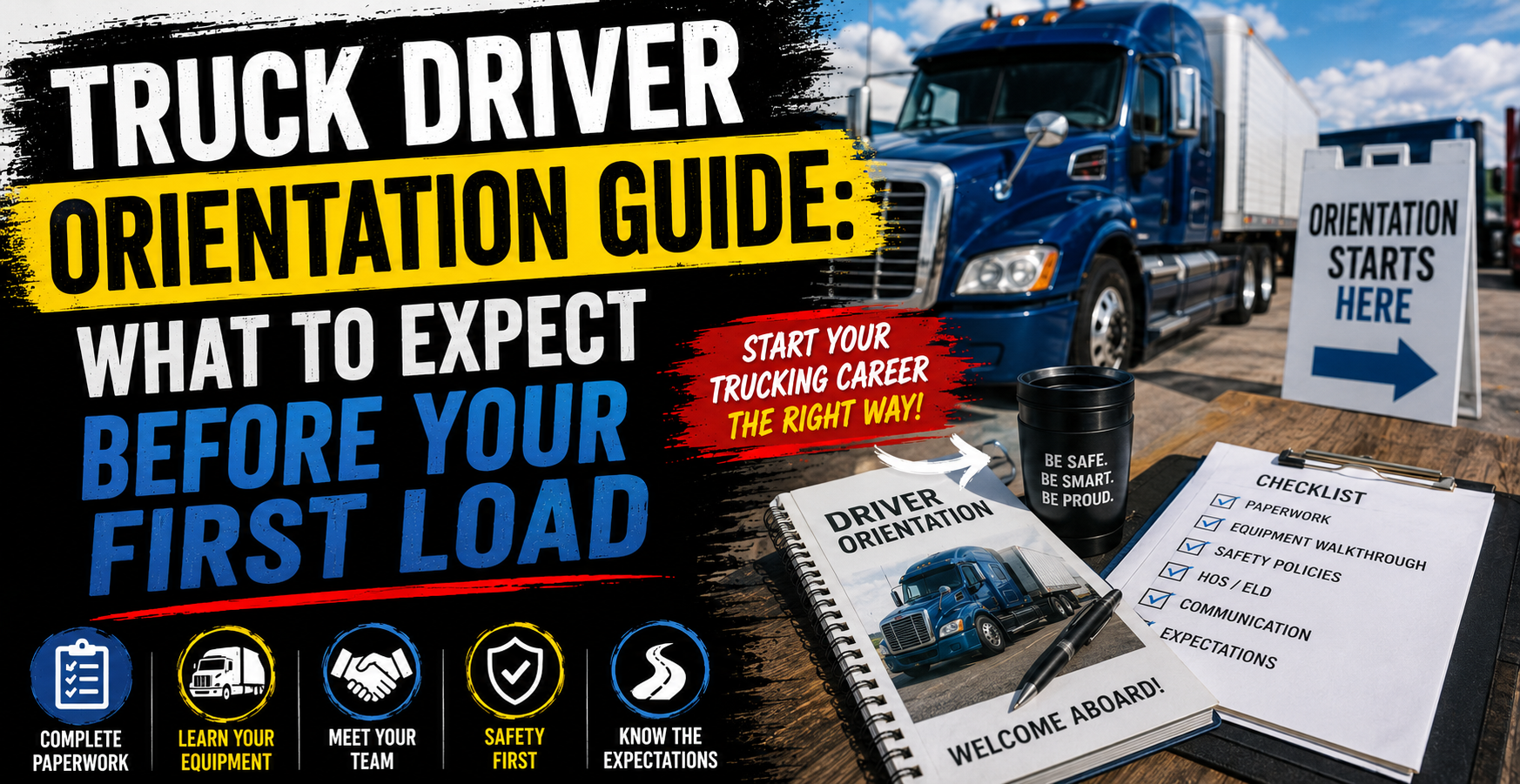
Getting hired by a trucking company is a huge milestone.
After weeks or months of studying, earning your CDL, and applying for jobs, you’ve finally received the phone call you’ve been waiting for.
Then your recruiter says something like:
“Your orientation starts next Monday.”
That’s usually when the excitement is replaced by questions.
What exactly happens during orientation?
How long will it last?
Will I have to take another driving test?
Do I get paid?
What should I pack?
What if I mess something up?
If you’re asking those questions, you’re in good company. Every new driver has them.
The good news is that truck driver orientation isn’t designed to intimidate you. It’s there to prepare you for success. Think of it as the bridge between CDL school and your first real trucking job.
Every company runs orientation a little differently, but the overall process is remarkably similar across the industry.
In this guide, I’ll walk you through what usually happens, how to prepare, common mistakes to avoid, and what comes next once orientation is over.
If you’ve recently earned your CDL, you may also want to read New Truck Driver Survival Guide Everything You Need to Know Your First Year. It explains how orientation fits into everything you’ll experience during your first year as a professional driver.
Why Do Trucking Companies Have Orientation?
Many new drivers assume that once they earn their CDL, they’re ready to hit the road immediately.
In reality, every trucking company has its own equipment, safety standards, technology, paperwork, and operating procedures.
Orientation helps make sure every driver starts with the same expectations.
Your CDL proves you can legally operate a commercial vehicle.
Orientation teaches you how to work for that specific company.
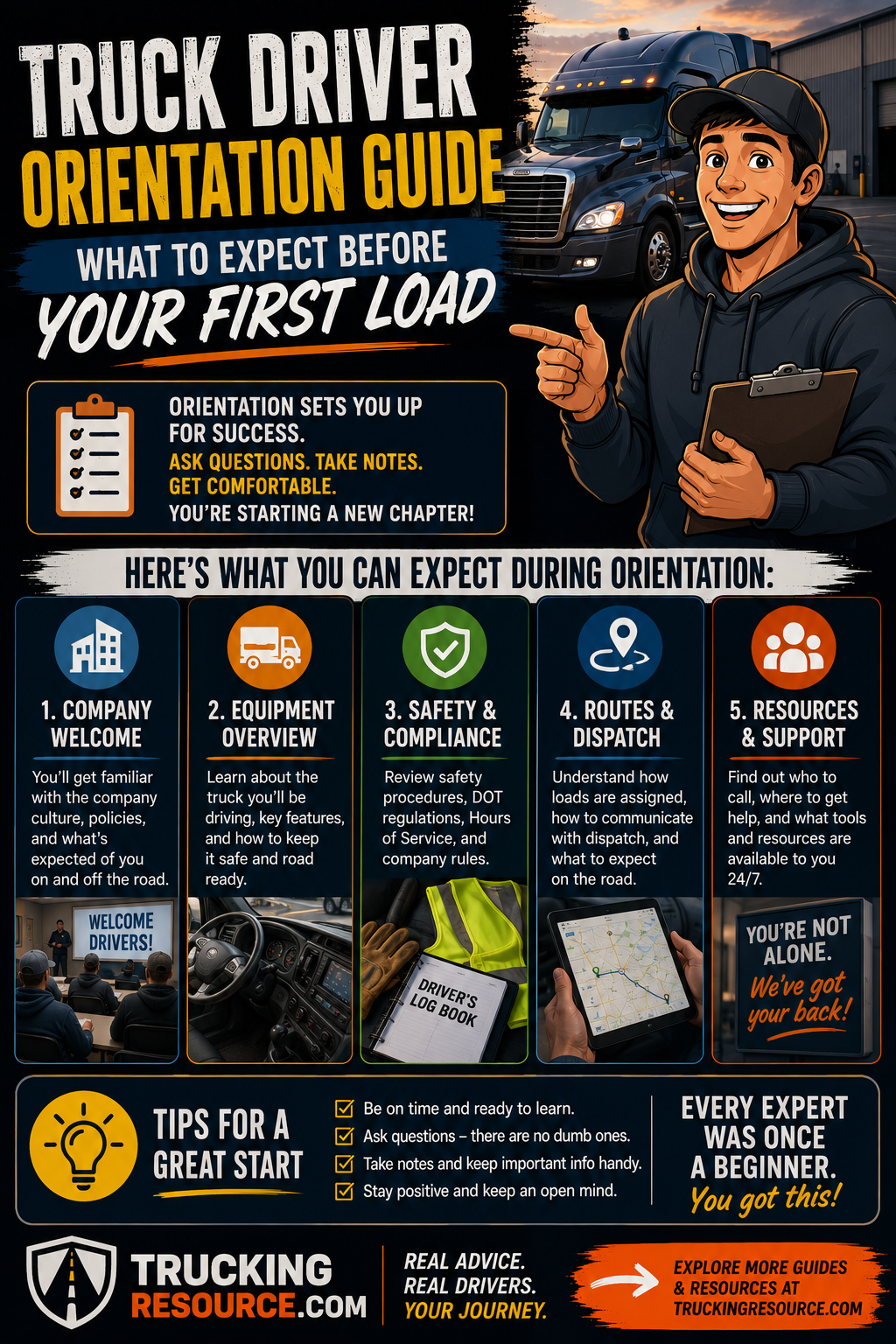
You’ll learn things like:
- Company safety policies
- Electronic logging device (ELD) procedures
- Hours of Service expectations
- Fueling procedures
- Accident reporting
- Communication with dispatch
- Customer service expectations
- Benefits and payroll
- Company equipment
Even experienced drivers attend orientation when they change employers because every carrier does things a little differently.
Who Attends Truck Driver Orientation?
One of the biggest misconceptions is that orientation is only for recent CDL graduates.
That’s not true.
Nearly everyone who joins a new trucking company attends some form of orientation.
The biggest difference is what happens afterward.
A driver with several years of safe experience may complete orientation and immediately receive a truck assignment.
A brand-new CDL graduate will usually move into additional training with a driver trainer before being dispatched on solo loads.
No matter how much experience you have, orientation is the company’s opportunity to make sure you’re ready to represent them safely and professionally.
Before You Ever Walk Through the Door
Orientation actually begins well before your first day.
After accepting a job offer, you’ll usually receive emails, phone calls, or text messages explaining what you’ll need before arriving.
That often includes:
- Employment verification
- Driving history
- Medical certificate
- Tax forms
- Direct deposit information
- Background check paperwork
- Drug testing instructions
- Travel arrangements
- Hotel information
Read every message from your recruiter carefully.
Showing up without required paperwork can delay your start date and create unnecessary stress before orientation even begins.
What Happens During Truck Driver Orientation?
Although every carrier has its own schedule, most orientations follow a similar format.
The first day is usually dedicated to introductions, paperwork, safety meetings, and company policies.
Over the next several days, you’ll typically receive training on company equipment, electronic logging devices, Hours of Service procedures, communication systems, and customer expectations.
Some companies also include:
- Road evaluations
- Backing assessments
- Pre-trip inspections
- Simulator training
- Defensive driving reviews
- Securement demonstrations
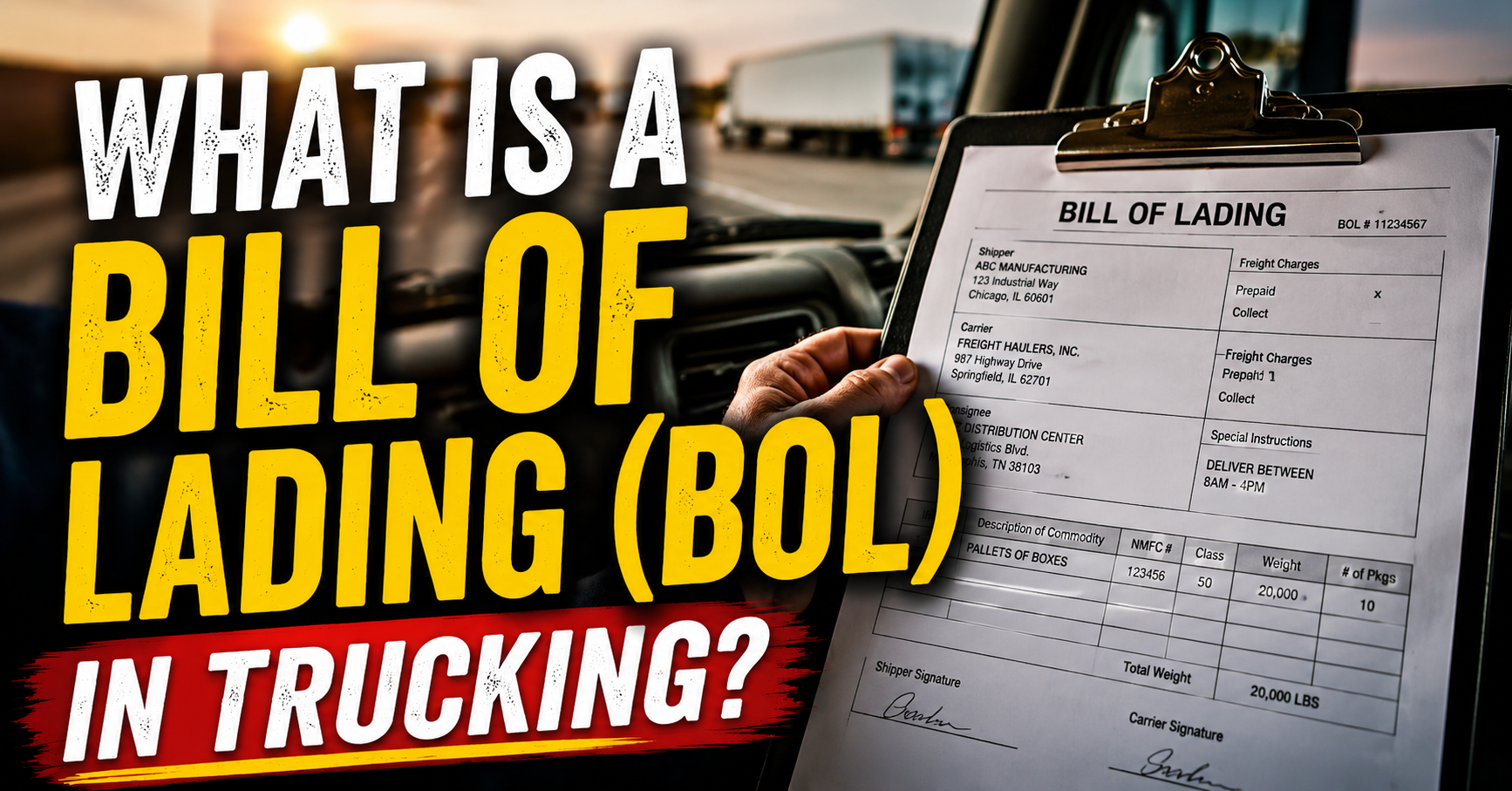
- Load paperwork training
The exact schedule depends on the company, your level of experience, and the type of freight you’ll be hauling.
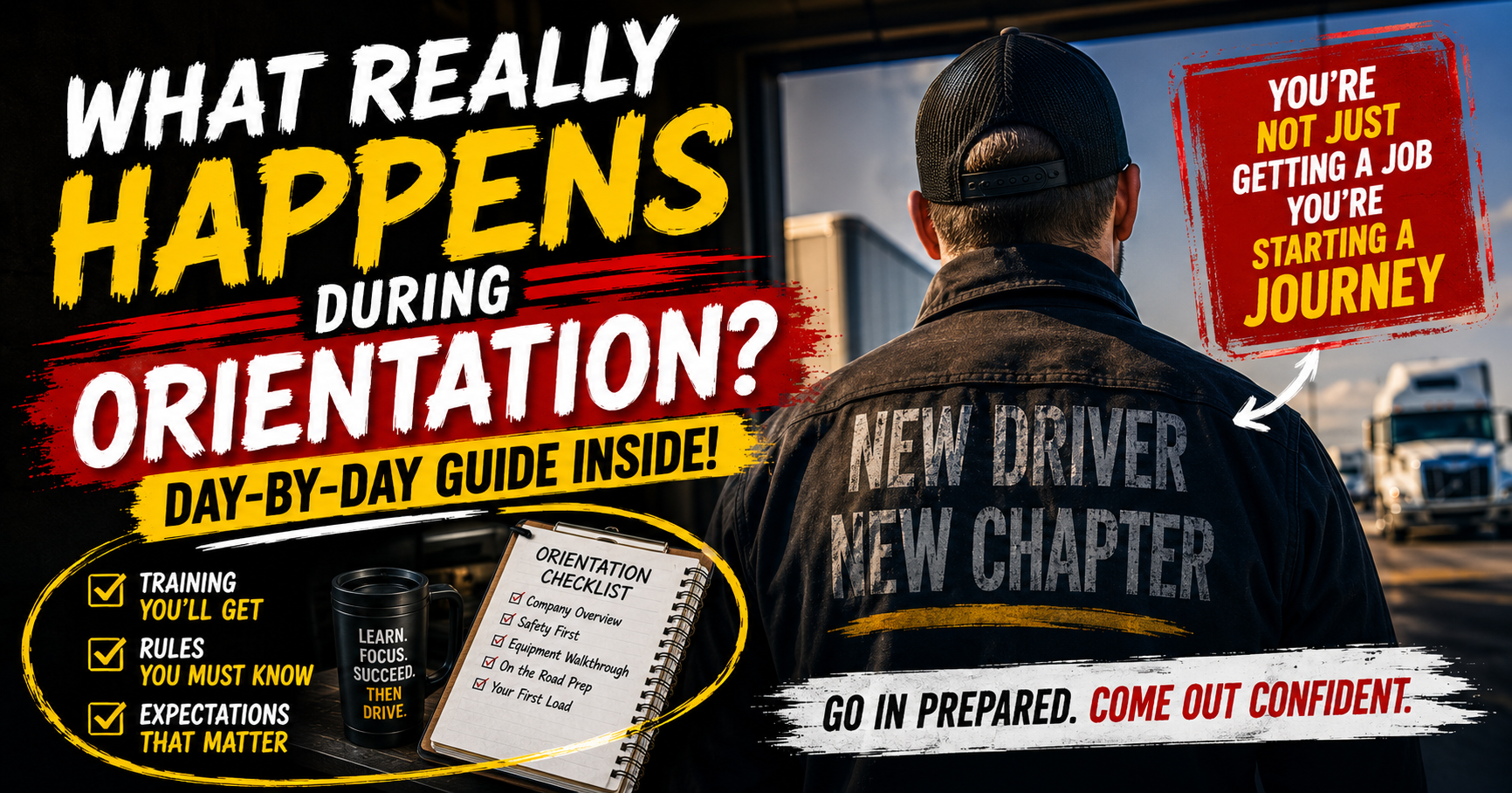
Later in this orientation series, I’ll cover What Happens During Truck Driver Orientation? in much more detail with a step-by-step walkthrough of a typical week.
Orientation Is More Than Watching Videos
If you’ve never been through trucking orientation before, you might imagine spending several days sitting in a classroom watching safety videos.
While there will probably be classroom instruction, that’s only one part of the process.
Orientation is also your opportunity to:
- Meet instructors
- Learn company expectations
- Ask questions
- Get comfortable with company equipment
- Understand dispatch procedures
- Meet other new drivers
- Build confidence before hauling freight
Many drivers form friendships during orientation that continue long after training ends.
It’s also one of the best times to ask questions because you’re surrounded by experienced instructors whose job is helping new drivers succeed.
Don’t Be Afraid to Ask Questions
Some new drivers spend the entire week trying to stay invisible because they don’t want anyone to think they’re inexperienced.
That’s the wrong approach.
Orientation exists because you’re still learning.
If something isn’t clear, ask.
If you don’t understand a company policy, ask.
If you’re unsure how a process works, ask.
The safest drivers aren’t the ones who pretend to know everything.
They’re the ones who ask questions before making mistakes.
A good instructor would much rather answer ten questions during orientation than deal with one preventable problem after you’re on the road.

What Happens Next?
Once orientation ends, your journey is just getting started.
For many new CDL graduates, the next step is spending time with a driver trainer to gain real-world experience before driving solo.
Other drivers may receive a truck assignment immediately, depending on their experience and the company’s hiring process.
Either way, orientation marks the transition from student to professional driver. Everything you’ve learned in CDL school begins coming together as you prepare for your first load.
In the next sections of this guide, we’ll cover how to prepare before you leave home, what to pack, whether orientation is paid, what can cause someone to fail orientation, what happens after orientation ends, and answer the most common questions new drivers have before their first day.
How Long Does Truck Driver Orientation Usually Last?
One of the first questions most new drivers ask after accepting a job offer is how long they’ll actually be at orientation.
The honest answer is that it depends on the company.
Some carriers can complete orientation in as little as two days, while others schedule a full week of classroom instruction, paperwork, equipment training, and driving evaluations.
A few companies may even keep drivers longer if additional training is needed or if they’re waiting for a trainer to become available.
Most new drivers can expect orientation to last somewhere between three and five days.
Don’t make travel plans assuming you’ll finish on a specific day unless your recruiter confirms the schedule.
Some companies move quickly, while others intentionally take extra time to make sure every new driver is fully prepared before heading out on the road.
If you’d like a more detailed breakdown of typical orientation schedules, be sure to read How Long Does Truck Driver Orientation Last? once it’s published.


What Should You Bring to Truck Driver Orientation?
Packing for orientation doesn’t have to be complicated, but showing up unprepared can make your first week much more stressful.
Most companies will provide a list of required documents before your arrival.
Always double-check that list with your recruiter since requirements can vary.
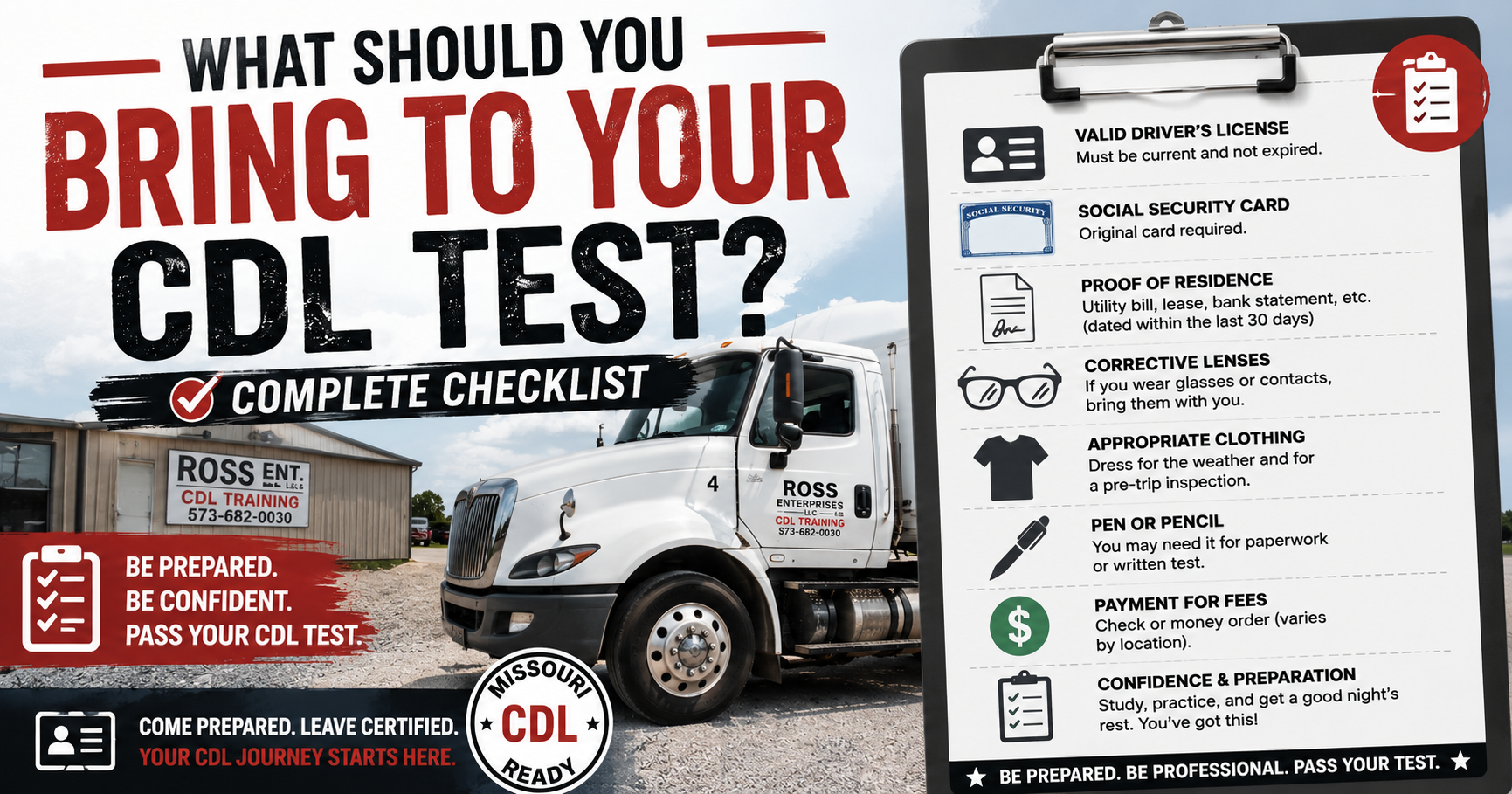
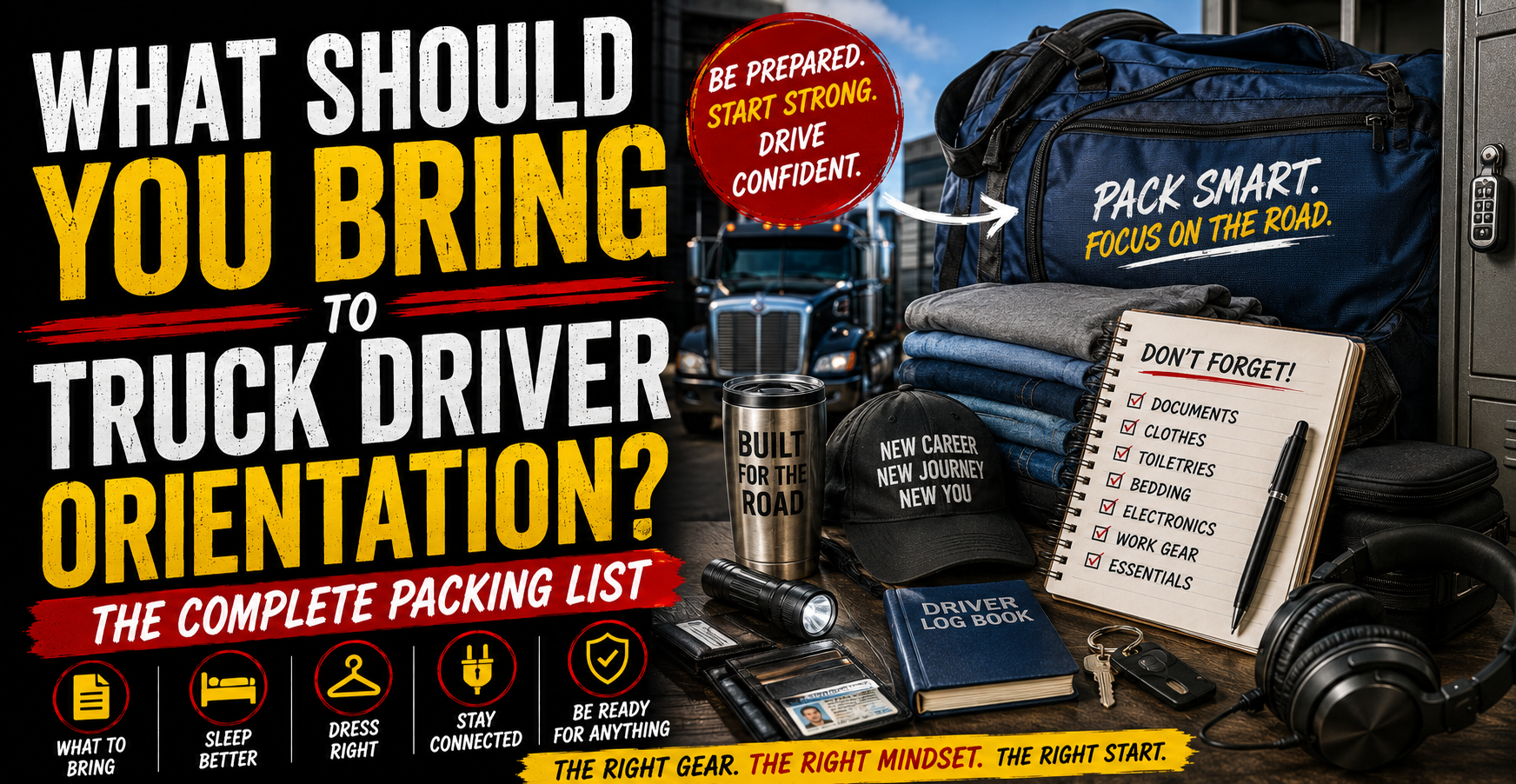
You’ll typically need items like:
- Your CDL
- Medical Examiner’s Certificate
- Social Security card or other required identification
- Banking information for direct deposit
- Any paperwork your recruiter requested
- Comfortable work clothes
- Closed-toe work boots
- Basic toiletries
- Prescription medications
- Phone charger
- Notebook and pen
If you’re traveling to another city for orientation, bring enough clothing for several days in case your schedule changes unexpectedly.
It’s also a good idea to pack a small amount of cash or a debit card for meals and personal expenses that may not be covered by the company.
I’ll cover packing in much greater detail in What Should You Bring to Truck Driver Orientation?, including items many experienced drivers wish they had brought their first week.
Do You Get Paid During Truck Driver Orientation?
The answer is often yes, but not always.
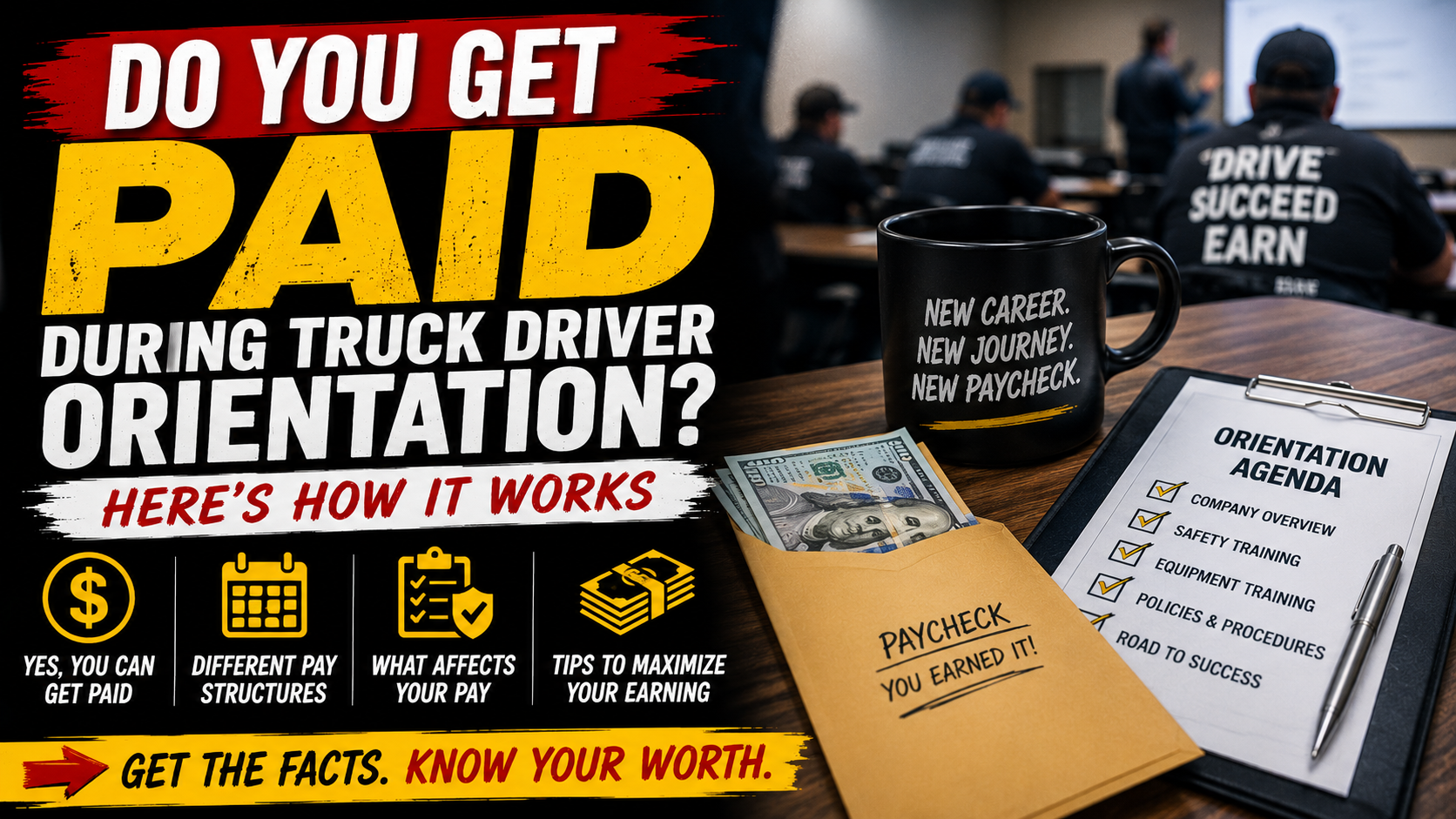
Many larger trucking companies pay drivers for attending orientation, although the amount varies considerably.
Some pay a flat amount for completing orientation.
Others pay by the day.
Some include hotel accommodations and meals, while others provide meal vouchers or reimburse certain expenses later.
Smaller carriers may have different policies.
Before traveling, ask your recruiter:
- Is orientation paid?
- When will I receive that pay?
- Is the hotel covered?
- Are meals included?
- Will travel expenses be reimbursed?
Understanding these details ahead of time helps you budget for your first week and avoids surprises when your first paycheck arrives.
I’ll break down the different pay structures companies use in Do You Get Paid During Truck Driver Orientation?
Can You Fail Truck Driver Orientation?
This is probably the question that makes new drivers the most nervous.
Technically, yes.
But it’s probably not for the reasons you’re imagining.
Companies aren’t looking for perfection.
They’re looking for honesty, professionalism, and safe decision-making.
Drivers may run into problems during orientation if they:
- Fail a required drug or alcohol test
- Misrepresent their employment or driving history
- Cannot legally operate the equipment they claimed experience with
- Display unsafe behavior
- Refuse to follow company policies
- Have paperwork issues that cannot be resolved
Making a small mistake during training usually isn’t what causes someone to fail orientation.
Instructors expect questions.
They expect nervousness.
They expect you to still be learning.
The drivers who succeed are the ones who show up prepared, listen carefully, maintain a positive attitude, and demonstrate a willingness to learn.
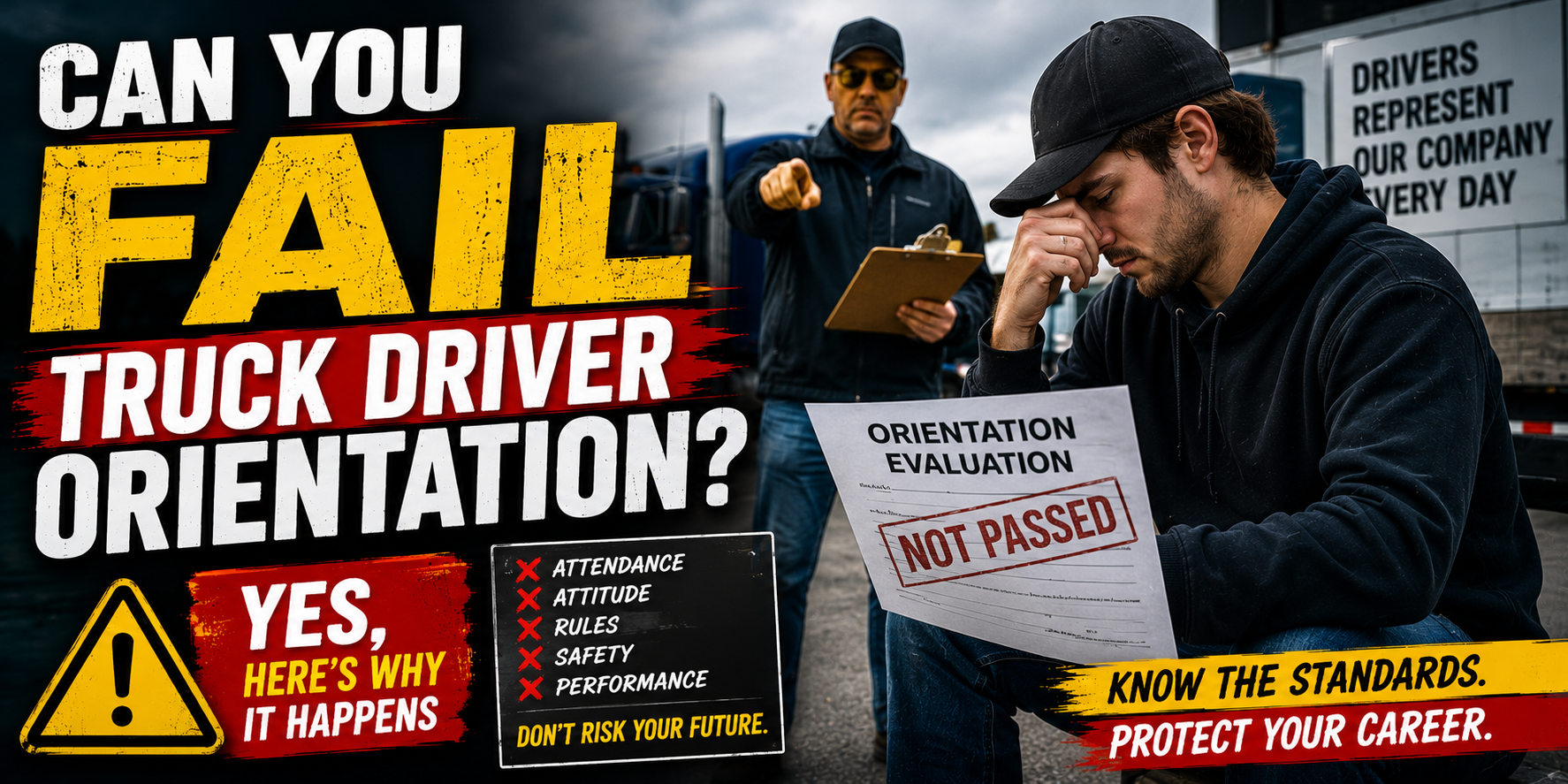
If you’re worried about orientation, don’t panic. I’ll explain the most common reasons drivers don’t complete orientation in Can You Fail Truck Driver Orientation?, along with practical tips to help you avoid those situations.
Common Mistakes New Drivers Make During Orientation
Most orientation mistakes happen before anyone ever gets behind the wheel.
Fortunately, they’re also some of the easiest mistakes to avoid.
Some of the biggest include:
- Arriving late
- Forgetting required paperwork
- Ignoring recruiter instructions
- Showing up with an unprofessional attitude
- Being afraid to ask questions
- Not taking notes
- Assuming every company does things the same way
Orientation isn’t a competition.
Nobody expects you to know everything.
Treat every instructor, safety manager, dispatcher, and fellow driver with respect, pay attention during training, and stay organized throughout the week.
Those simple habits make a much bigger impression than trying to act like you already know it all.
The drivers who get the most out of orientation are usually the ones who remain curious, listen closely, and take every opportunity to learn.
What Happens After Truck Driver Orientation?
For many new CDL graduates, orientation is immediately followed by time with a driver trainer.
During this phase, you’ll apply everything you learned in CDL school and orientation while hauling real freight under the supervision of an experienced driver.
Eventually, once you’ve successfully completed your company’s training requirements, you’ll receive your first solo truck assignment and begin running loads on your own.
Those first weeks are exciting, challenging, and sometimes overwhelming, but they’re also where your confidence really begins to grow.
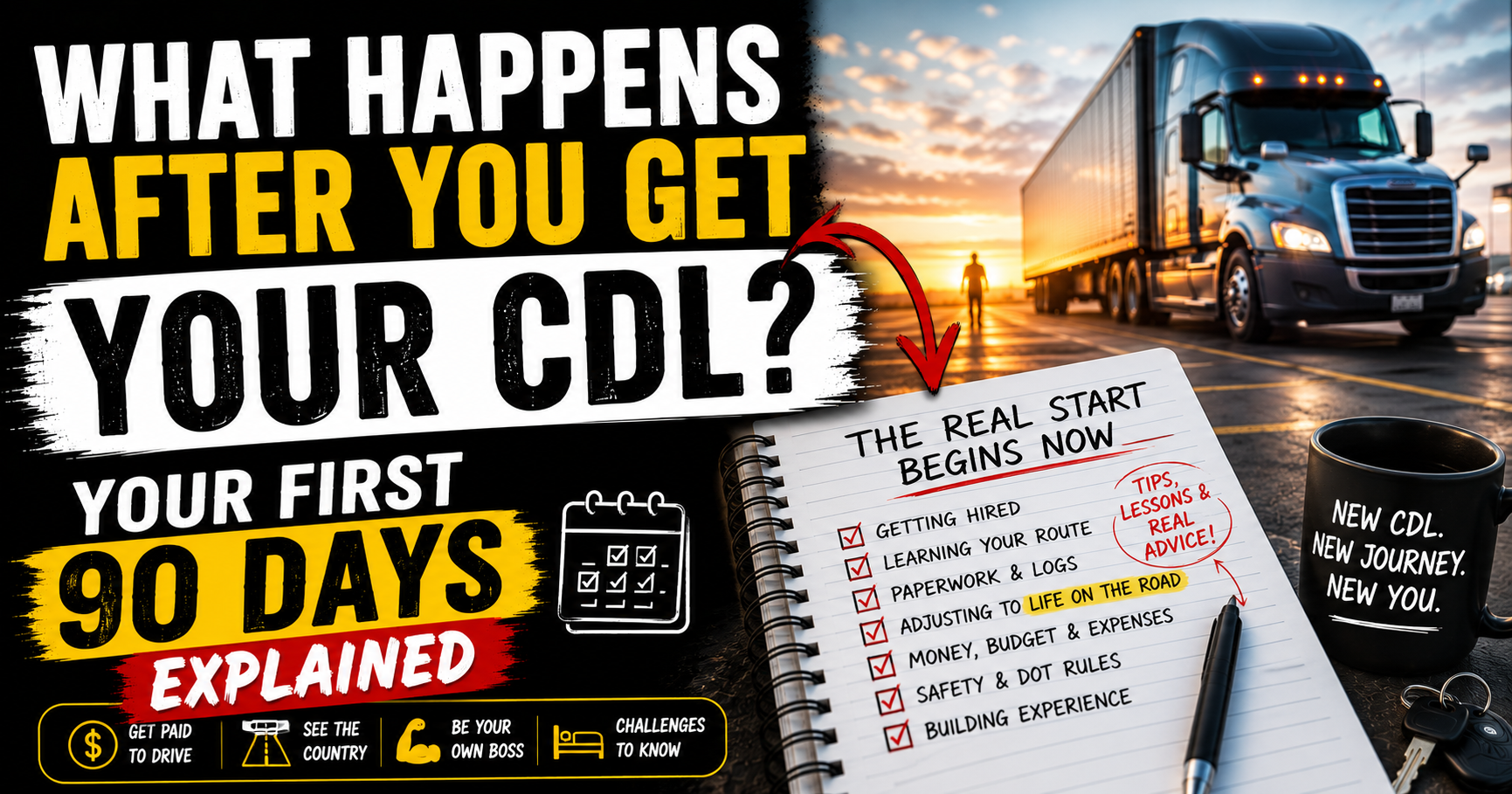
If you’re wondering what life looks like after orientation ends, What Happens After You Get Your CDL? Your First 90 Days Explained walks through the transition from orientation and training to becoming a solo driver.
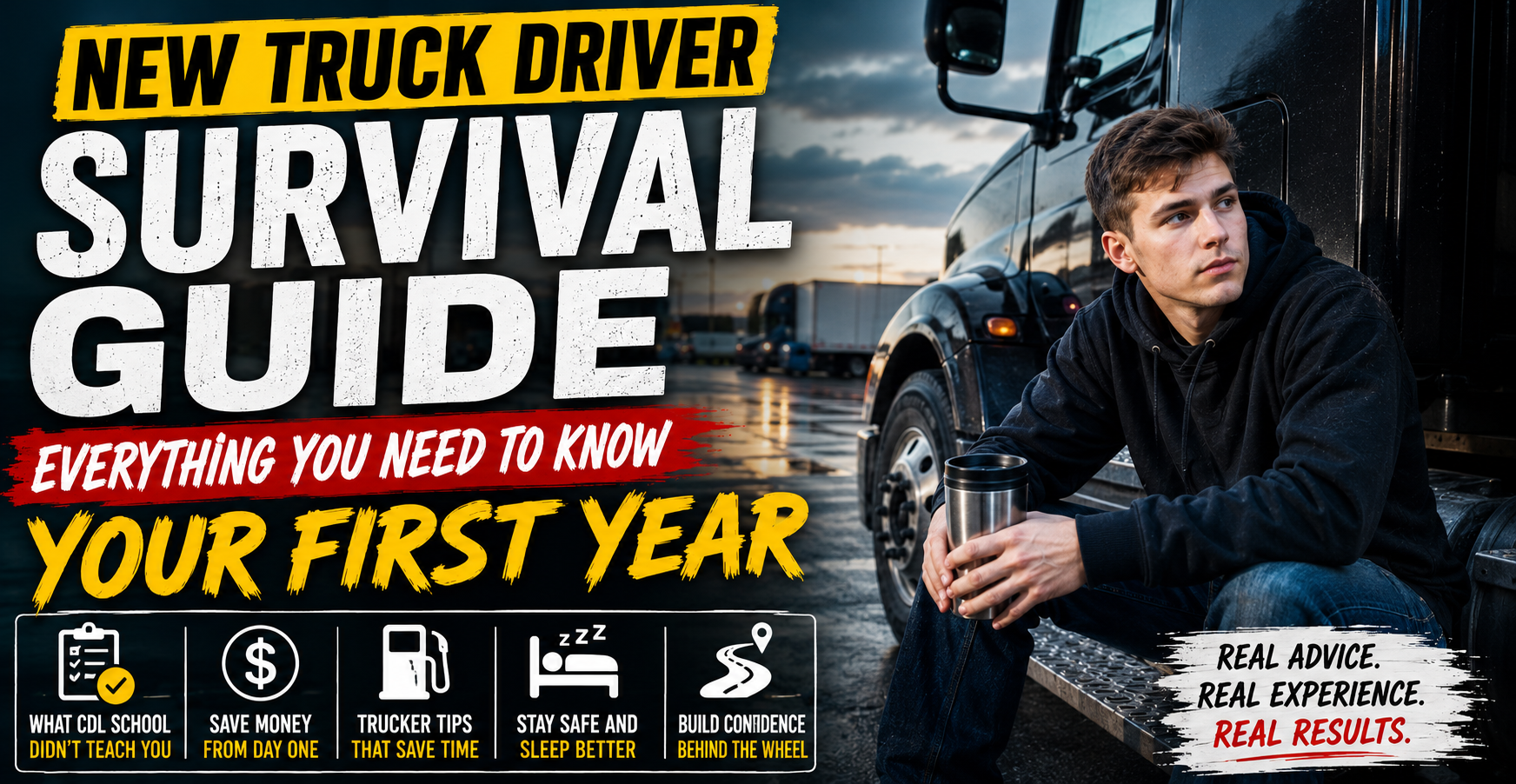
And if you want the complete roadmap for your first year in trucking, don’t miss the New Truck Driver Survival Guide Everything You Need to Know Your First Year. It ties together every stage of the journey, from earning your CDL to building confidence as a professional driver.
Use a Checklist Before You Travel
It’s surprisingly easy to forget something important when you’re focused on starting a new trucking job. Before leaving home, take a few minutes to confirm you have every required document, enough clothing for orientation and training, your travel details, medications, chargers, and anything else your recruiter requested.
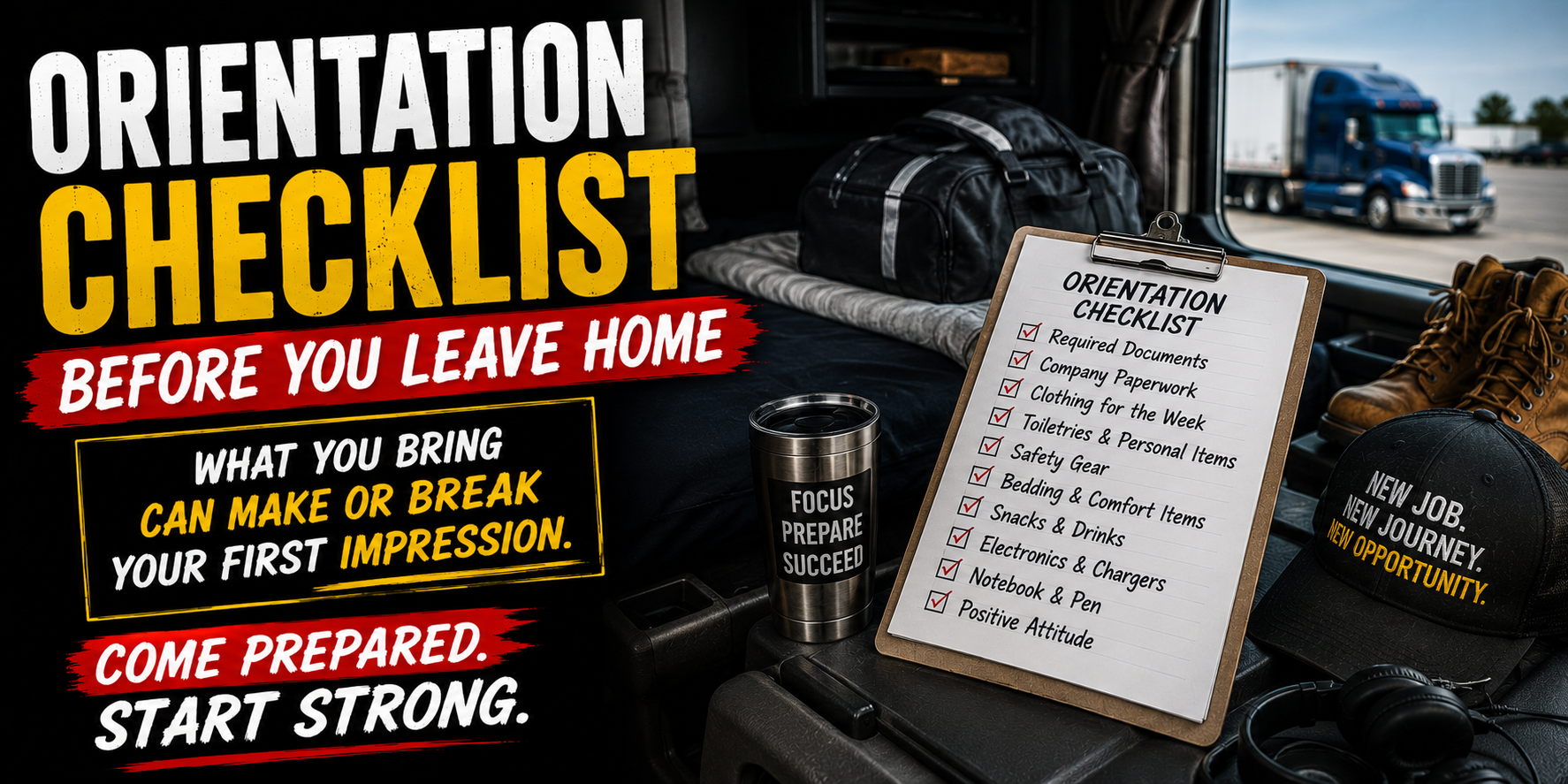
To make things easier, I put together a complete Truck Driver Orientation Checklist that you can work through before walking out the door. It only takes a few minutes and can save you a lot of stress once you arrive.
What Happens After Orientation Ends?
Many new drivers think orientation is the final step before they’re on their own, but that’s rarely the case. For most CDL graduates, orientation is simply the transition into company training. You’ll usually be paired with an experienced driver trainer, begin learning the company’s day-to-day procedures, and gradually take on more responsibility behind the wheel.
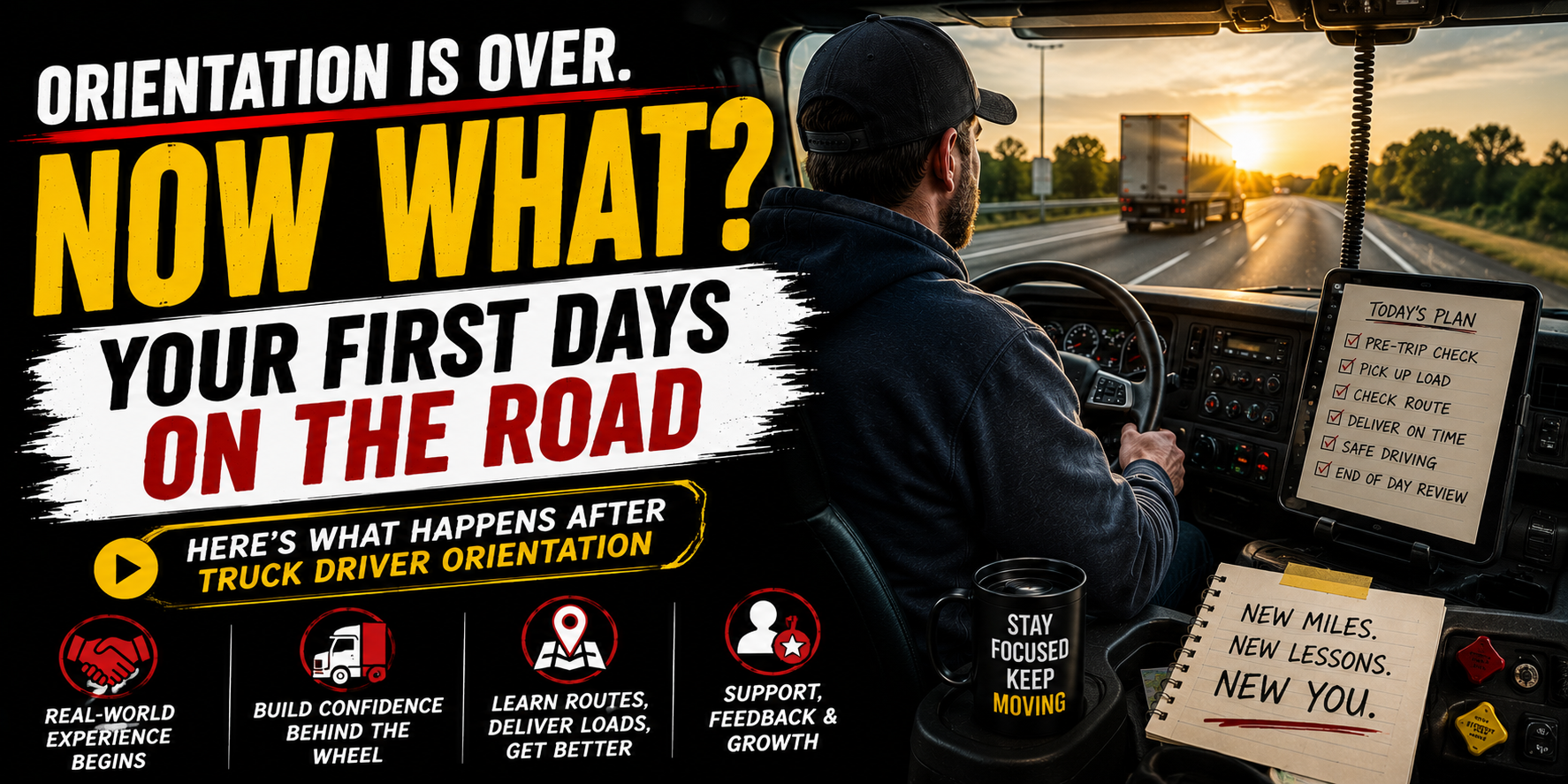
If you’re wondering exactly what those first days look like, my guide on What Happens After Truck Driver Orientation explains what to expect once the classroom portion is over, including meeting your trainer, completing your first trips, and preparing to drive solo.
Frequently Asked Questions About Truck Driver Orientation
Can I bring my spouse or family to orientation?
In most cases, no.
If the company provides a hotel room during orientation, it’s usually intended only for the driver attending training. Some companies may allow family members to stay with you if you arrange and pay for the room yourself, while others prohibit guests entirely.
If you’re planning to travel with family, ask your recruiter before making any reservations.
Will I have to take another driving test?
Maybe.
Many companies require a short road evaluation, even if you recently earned your CDL.
This usually isn’t as stressful as your state CDL road test. The company simply wants to verify that you can safely operate their equipment and follow basic driving procedures.
Some experienced drivers may also complete backing evaluations or pre-trip inspections during orientation.
Will I have to take another drug test?
Yes, in many cases.
Even if you recently completed a pre-employment drug test, it’s common for trucking companies to require another test as part of their hiring process.
This is completely normal and shouldn’t be a surprise.
The best approach is to assume you’ll be tested whenever you start with a new carrier.
Will I get my own truck during orientation?
Usually not.
Most new CDL graduates are paired with a driver trainer after orientation before receiving their own truck.
Experienced drivers may receive a truck assignment sooner, depending on the company’s hiring needs and available equipment.
Every carrier has its own process, so ask your recruiter what happens after orientation is complete.
Will I meet my driver trainer during orientation?
Sometimes.
Some companies introduce trainees to their trainers before orientation ends.
Others assign trainers after orientation or once you arrive at another terminal.
If you’re entering a training program, don’t worry if you don’t meet your trainer immediately. That’s common.
What should I wear to orientation?
Dress neatly and professionally.
You don’t need a suit, but this also isn’t the time for ripped jeans or clothing with offensive graphics.
Most drivers wear:
- Clean jeans or work pants
- Polo shirt or plain T-shirt
- Comfortable work boots
- Light jacket or hoodie
- Hat (if allowed)
Remember, you’re making a first impression on your future employer.
Should I take notes?
Absolutely.
Orientation covers a tremendous amount of information in a short period of time.
Even experienced drivers write things down.
Keeping a small notebook with company phone numbers, procedures, fuel policies, and important reminders can save you frustration later when you’re out on your own.
What if I don’t understand something?
Ask.
Seriously.
Orientation is the best time to get answers.
Whether it’s a question about electronic logging devices, payroll, breakdown procedures, fuel cards, or communication with dispatch, it’s far better to ask during orientation than guess later.
Good companies encourage questions because they want drivers to succeed.
What if I already have trucking experience?
Your orientation will probably move a little faster, but you’ll still learn company-specific policies and procedures.
Every carrier has different expectations.
Even drivers with decades of experience usually attend orientation when changing employers.
Don’t assume your previous company handled things the same way.
Is orientation stressful?
It can be.
There’s a lot of information packed into a few days, especially for brand-new CDL graduates.
The good news is that thousands of drivers successfully complete orientation every year.
Show up prepared.
Pay attention.
Stay organized.
Ask questions.
Those simple habits will put you ahead of many new drivers before you ever haul your first load.
Your First Week Sets the Tone for Your Career
Orientation isn’t about proving that you know everything.
It’s about showing that you’re ready to learn.
Every experienced truck driver has gone through this process at least once. They all remember wondering what the first day would be like, whether they’d fit in, and when they’d finally feel comfortable behind the wheel.
Before long, orientation will be behind you.
You’ll meet your trainer, start hauling freight, and begin building the experience that turns new drivers into confident professionals.
Take the week seriously, keep an open mind, and don’t be afraid to ask questions. The information you learn during orientation can make your first months on the road much smoother.
If your next step is training with a mentor, be sure to read What Happens After You Get Your CDL? Your First 90 Days Explained to see what comes next.
For the complete roadmap from earning your CDL through your entire rookie year, I also recommend the New Truck Driver Survival Guide Everything You Need to Know Your First Year. It connects everything we’ve covered here with the rest of the resources every new driver should have.
Author: Mason Carter
Mason Carter has spent more than 15 years in the trucking industry, driving regional and over-the-road routes while mentoring new CDL graduates. He enjoys helping new drivers understand the realities of trucking, build confidence behind the wheel, and start their careers with realistic expectations and practical advice.