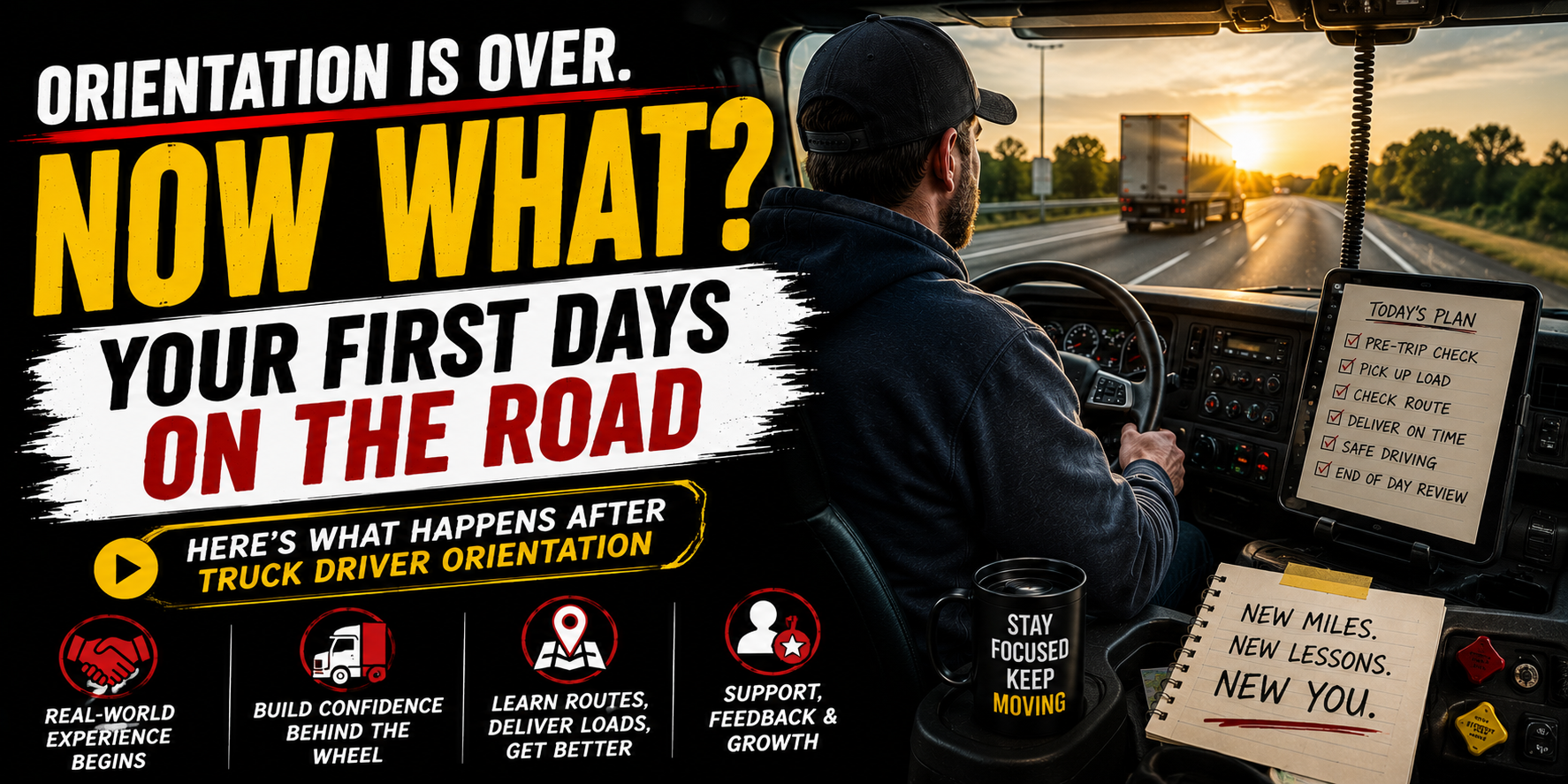
Finishing truck driver orientation feels like a huge accomplishment.
You’ve completed the paperwork.
You’ve sat through the classroom training.
You’ve learned the company’s policies and met people from safety, payroll, dispatch, and recruiting.
Now comes the question almost every new driver asks:
“What happens next?”
For most drivers, orientation isn’t the finish line.
It’s the bridge between earning your CDL and beginning your career.
The next few weeks are where you’ll start applying everything you’ve learned in the real world, usually alongside an experienced driver trainer before eventually earning your own truck. Many carriers transition new drivers directly from orientation into a period of mentored, on-the-job training before assigning them solo equipment.
If you haven’t completed orientation yet, I recommend reading our Truck Driver Orientation Guide: What to Expect Before Your First Load first. This article picks up where orientation ends.
You’ll Usually Meet Your Driver Trainer
For most new CDL graduates, the first stop after orientation is meeting the driver trainer you’ll spend the next several weeks with.
This trainer isn’t there to repeat CDL school.
Their job is to help you learn how to operate safely in the company’s day-to-day environment.
They’ll show you things like:
- Trip planning
- Fueling procedures
- Company paperwork
- Communication with dispatch
- Customer pickups and deliveries
- Time management
- Safe backing techniques
- Daily routines that experienced drivers use
This is where you’ll begin turning classroom knowledge into real experience.
Don’t Expect to Drive Every Mile Right Away
One surprise for many new drivers is that they don’t immediately take over the truck.
During the first few days, you’ll probably spend a lot of time watching your trainer.
That might feel frustrating at first.
In reality, it’s one of the fastest ways to learn.
Pay attention to how they:
- Plan fuel stops
- Set up for turns
- Communicate with customers
- Manage their logbook
- Back into tight spaces
- Solve unexpected problems
Every experienced driver has developed habits over thousands of miles.
Watching those habits is just as valuable as driving.

Your Confidence Will Grow One Load at a Time
No one expects you to become an expert during your first week.
Your trainer will usually let you take on more responsibility as your confidence improves.
At first, that may mean driving easier highway miles.
Later, you’ll begin handling more of the job yourself.
You might start:
- Backing into truck stop parking spaces.
- Performing pre-trip inspections on your own.
- Planning routes.
- Talking with customers.
- Managing your electronic logs.
- Navigating unfamiliar cities.
Every day builds on the one before it.
Expect Information Overload
Even though orientation is over, you’ll continue learning almost every day.
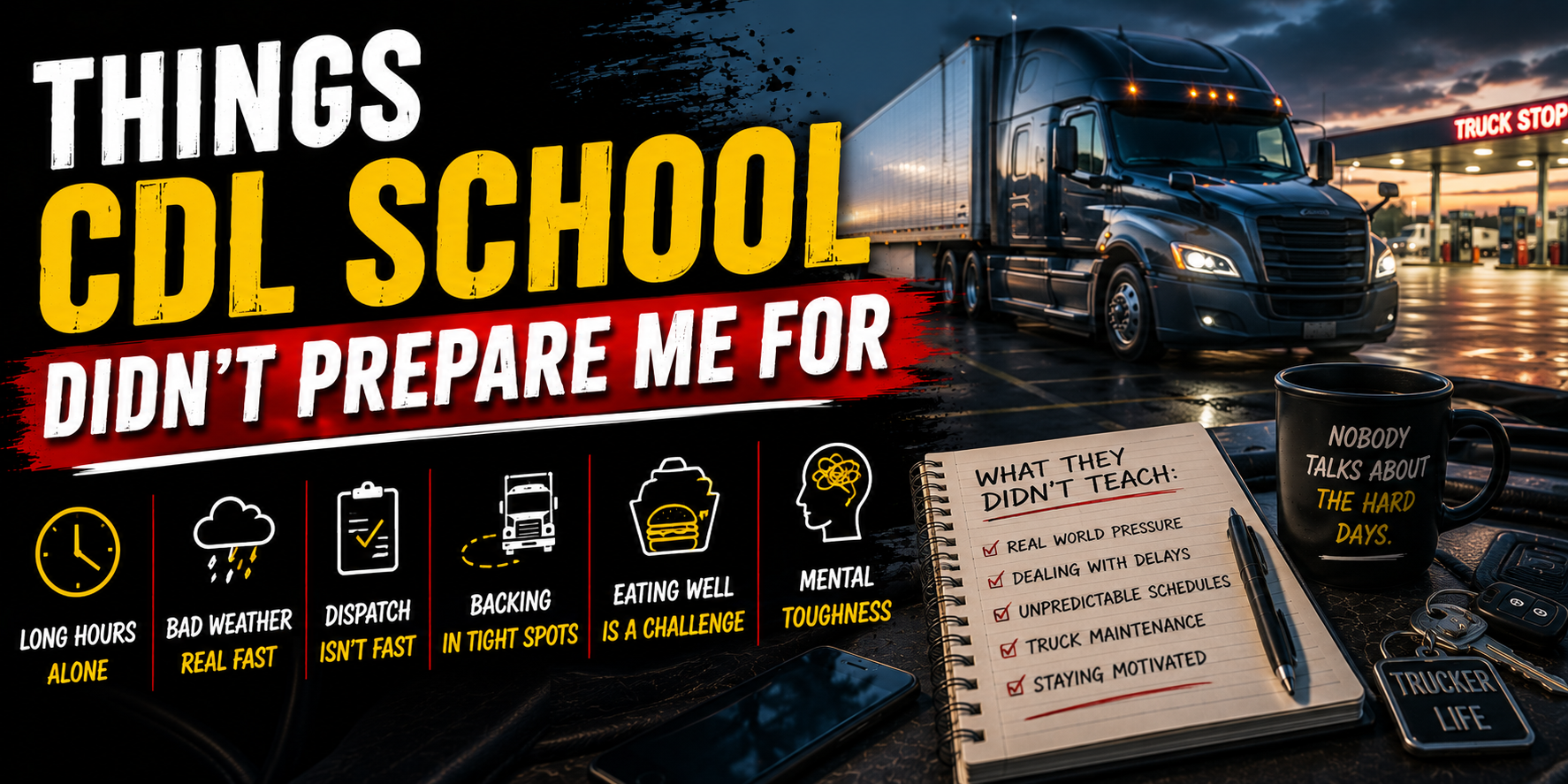
In fact, many drivers say they learned more during their first month on the road than they did during CDL school. The lessons beyond CDL school often involve routines and challenges that only become clear once you're working, which lessons beyond CDL school explores.
You’ll quickly become familiar with things like:
- Truck stop layouts
- Fuel islands
- Scale houses
- Shipping offices
- Receiving procedures
- Parking strategies
- Weather planning
- Traffic patterns
Don’t feel discouraged if everything seems overwhelming at first.
That’s completely normal.
Life With a Driver Trainer
Living and working with a driver trainer is probably the biggest adjustment you’ll make after orientation.
For the first time, you’re not just driving a truck. You’re sharing a very small living space with another person for days or even weeks at a time.
Every trainer has a different routine.
Some like to start driving before sunrise.
Others prefer to run later into the evening.
Some enjoy talking throughout the day, while others prefer a quieter cab.
The key is to communicate, stay respectful, and be willing to adapt.
Remember, your trainer has one goal: helping you become a safe, successful solo driver.
The better you work together, the more you’ll learn.
When Will You Get Your Own Truck?
This is usually the question every new driver asks.
The answer depends on several factors, including:
- The company’s training program
- Your progress during training
- Your driving performance
- Your trainer’s evaluation
- Freight demand
Some drivers complete training in just a few weeks.
Others need additional time before both they and the company feel comfortable with them driving alone.
Don’t compare your timeline to someone else’s.
Taking an extra week to become a safer driver is far better than rushing into solo driving before you’re ready.
The First Few Loads Can Feel Overwhelming
Even after orientation and training, your first solo loads will probably feel intimidating.
Suddenly, you’re making every decision yourself.
You’ll be responsible for:
- Planning your route
- Managing your available driving hours
- Finding fuel stops
- Locating safe parking
- Communicating with dispatch
- Handling delays
- Completing deliveries on time
That’s a lot to think about.
The good news is that every load gets a little easier.
Before long, many of these tasks become second nature.
Mistakes Will Happen and That’s Okay
Every experienced truck driver has stories about small mistakes they made early in their career.
Maybe they missed a turn.
Maybe they had to circle a truck stop twice before parking.
Maybe they backed into a space five different times before getting straight.
Those experiences don’t mean you’re a bad driver.
They mean you’re learning.
The important thing is making safe decisions, asking for help when needed, and learning from every mistake instead of repeating it. More practical guidance on entering the profession appears in practical advice for new drivers.
Keep Learning Every Day
Graduating from orientation doesn’t mean your education is finished.
In many ways, it’s just beginning.
The best drivers continue learning throughout their careers.
They:
- Ask experienced drivers for advice.
- Watch how others solve problems.
- Stay current on DOT regulations.
- Learn better trip-planning strategies.
- Find ways to improve fuel efficiency.
- Practice backing whenever possible.
The trucking industry is always changing, and drivers who keep learning tend to become more confident and successful over time.
Frequently Asked Questions
Will I drive alone immediately after orientation?
Usually not.
Most new CDL graduates spend time with a company trainer before being assigned their own truck.
The length of training depends on the carrier and your progress.
What if I don’t get along with my trainer?
It happens occasionally.
If you’ve made a genuine effort to communicate and the situation still isn’t working, speak professionally with your driver manager or training department.
Most companies want both you and your trainer to have a productive experience.
How long does training usually last?
It varies.
Some programs last only a few weeks, while others continue until you’ve demonstrated that you can safely operate independently.
What happens after I finish training?
Once you’ve successfully completed your trainer’s program, you’ll usually be assigned your own truck or begin driving solo in company equipment.
From there, you’ll start hauling loads on your own while continuing to gain experience.
Will my first loads be difficult?
Most companies try to ease new drivers into solo driving with manageable freight and routes.
Even so, your first few weeks can feel challenging simply because everything is still new.
That’s completely normal.
Orientation Was Only the Beginning
Completing truck driver orientation is a major milestone, but it’s only the first step in becoming a professional driver.
The weeks that follow are where you’ll develop the habits, confidence, and experience that can’t be taught in a classroom.
Be patient with yourself.
Ask questions.
Listen to your trainer.
Learn from every mile you drive.
Before long, the things that seem intimidating today will become part of your everyday routine.
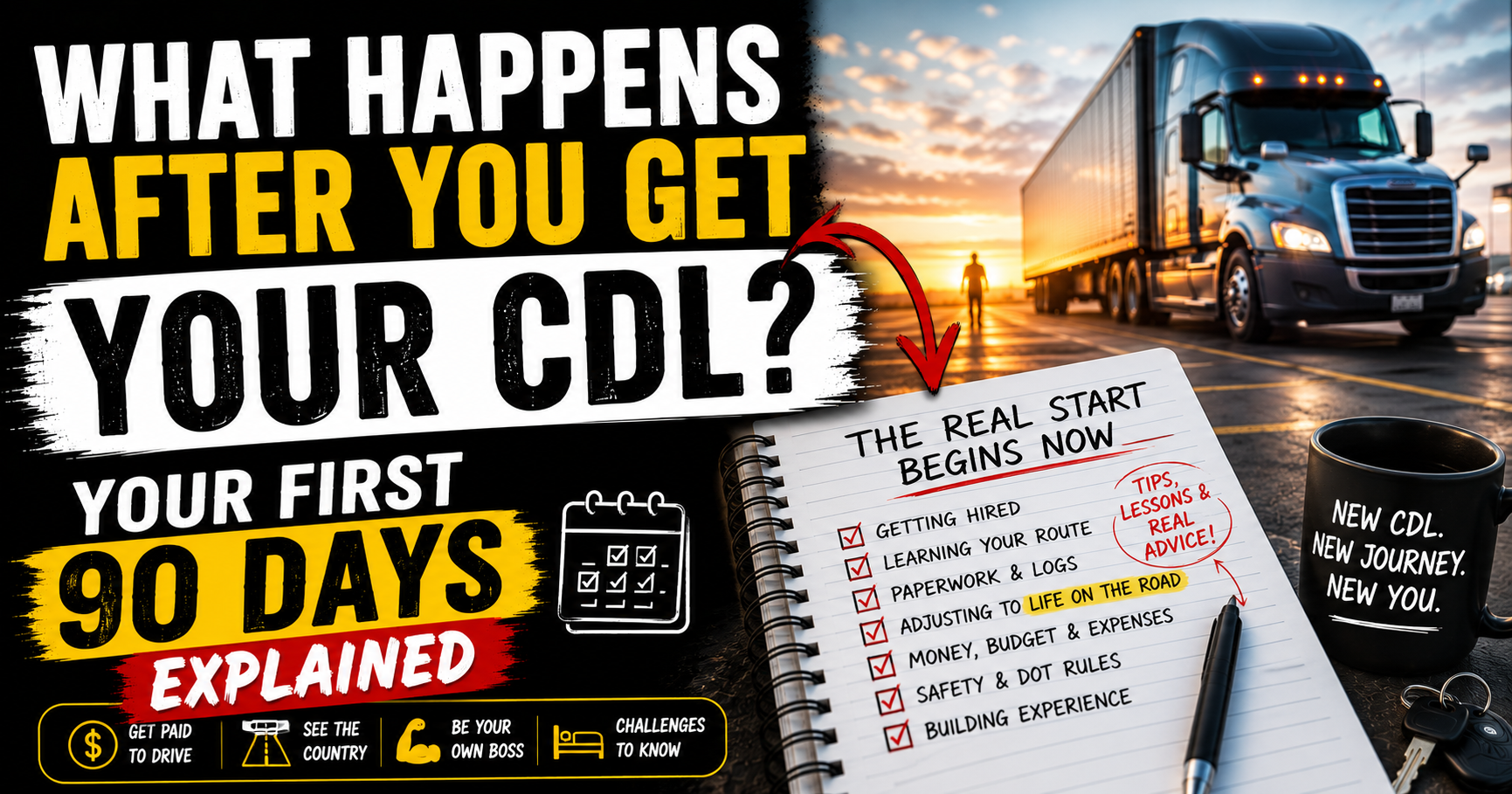
If you want a better idea of what your first few months will really be like, read What Happens After You Get Your CDL? Your First 90 Days Explained. It picks up where this article leaves off and walks through the challenges, milestones, and lessons most new drivers experience during their first three months.
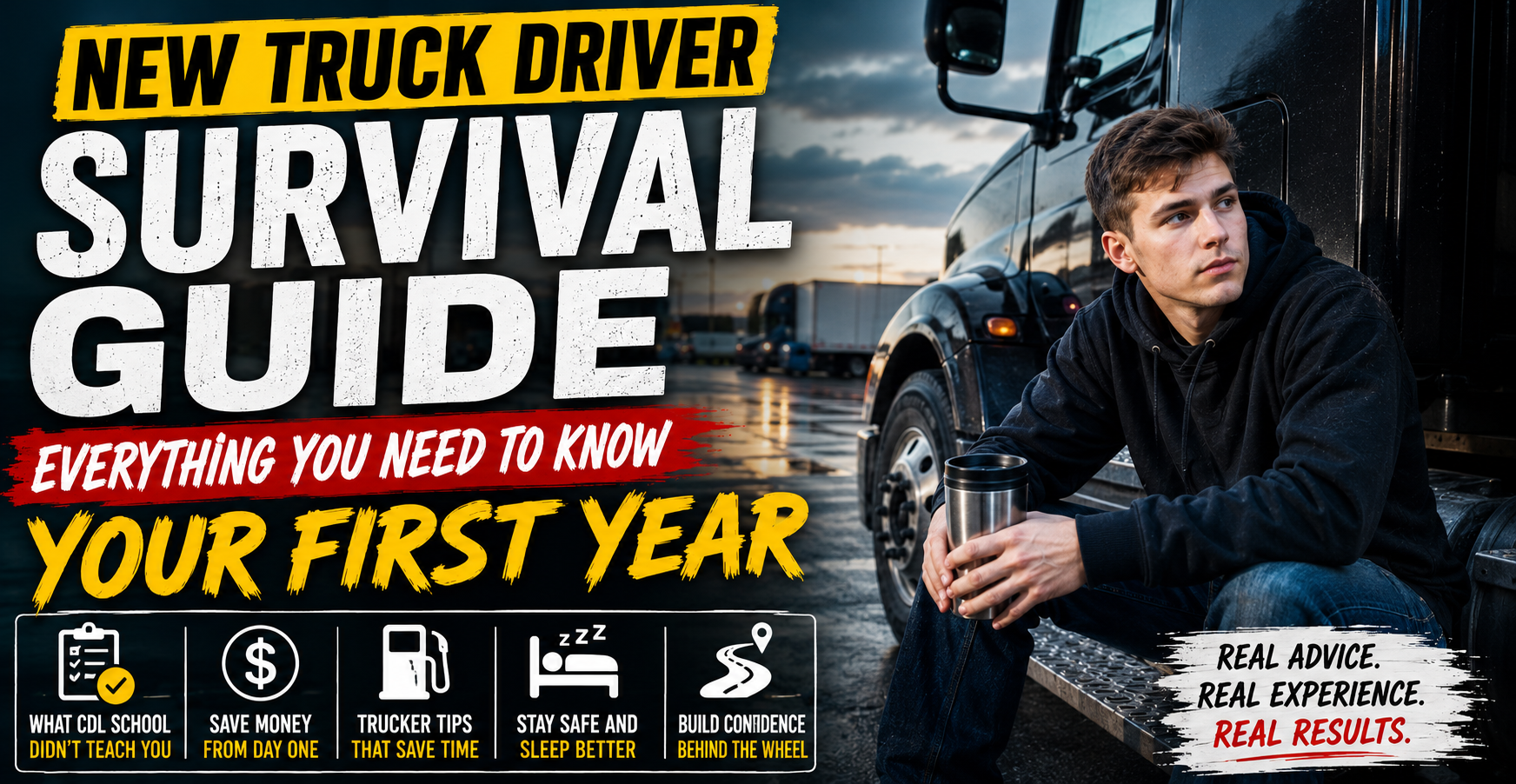
You should also check out our New Truck Driver Survival Guide: Everything You Need to Know Your First Year for practical tips that will continue helping you long after orientation is over.
Author: Mason Carter
Mason Carter has spent more than 15 years driving regional and over-the-road freight while mentoring new CDL graduates. He enjoys helping new drivers build confidence by sharing practical advice that prepares them for a safe and successful trucking career.