
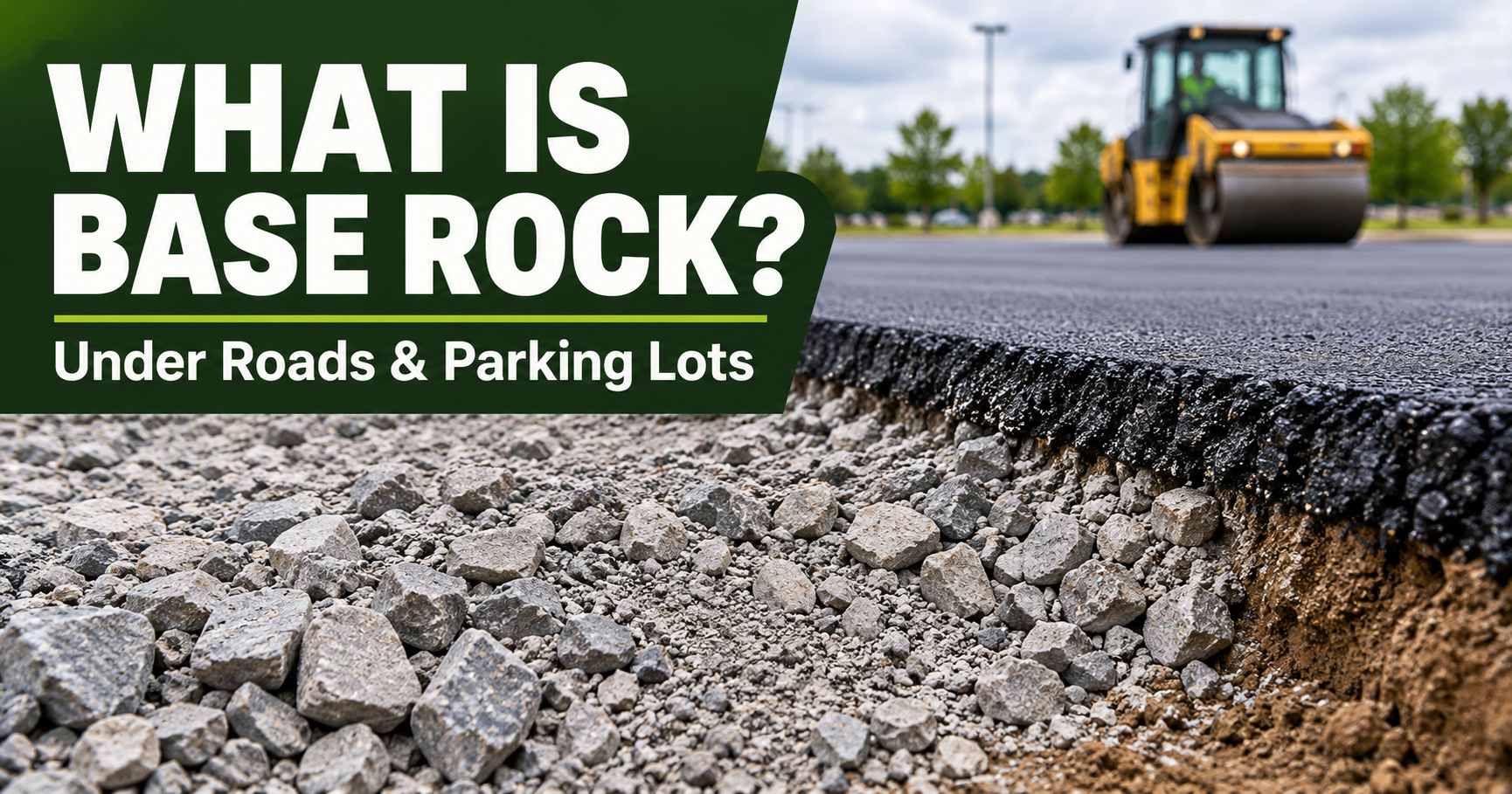
Until I started hauling rock from a quarry in a dump truck, “base rock” was basically just another name for a pile of crushed stone to me.
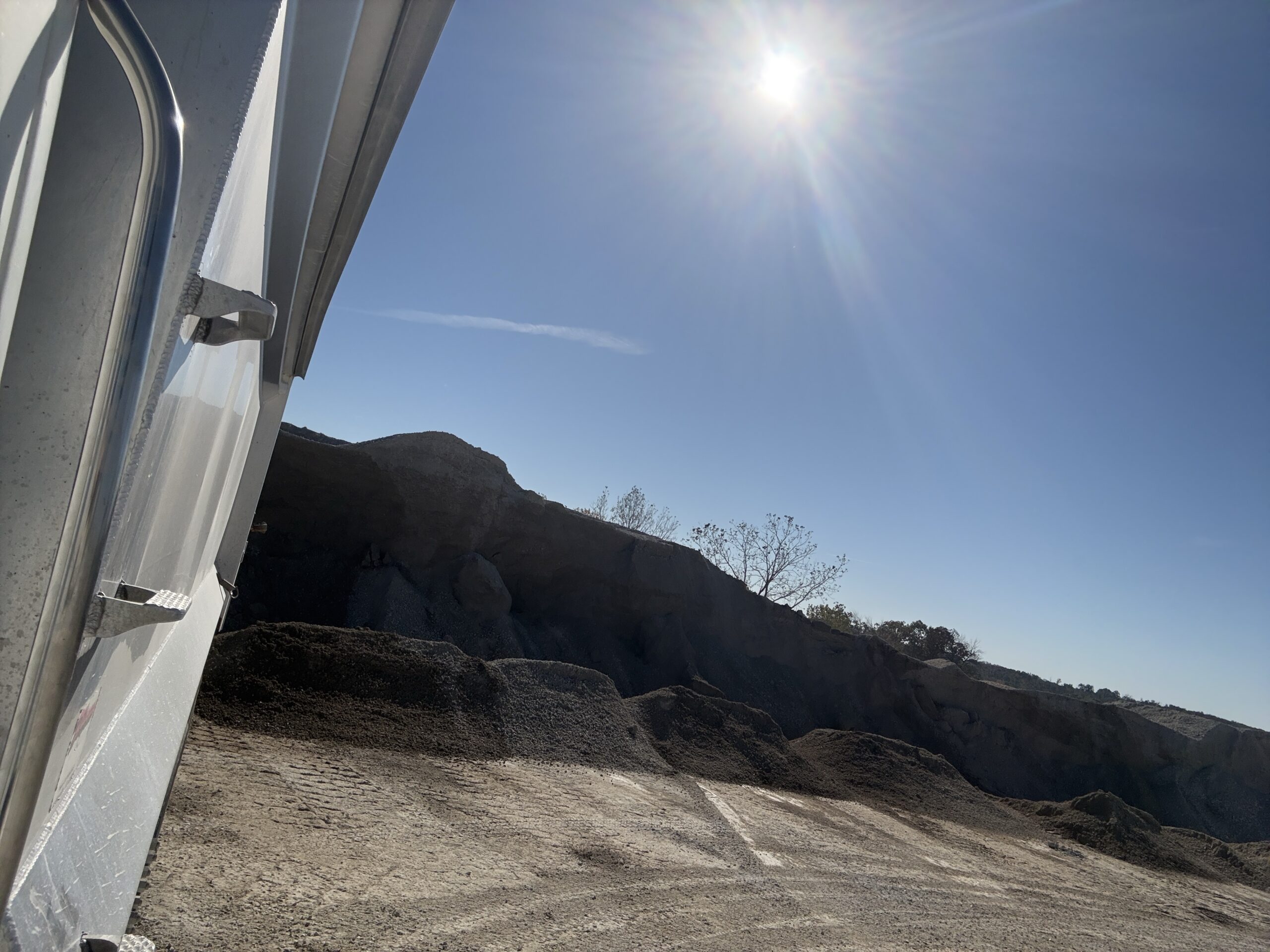
Then I spent an 11-hour day hauling roughly 125 tons of 1-inch base from a quarry to a parking lot that was being prepared for asphalt.
That gave me a much better reason to understand what I was actually hauling.
Base rock, also called road base, aggregate base or base gravel depending on where you live and who you’re talking to, is a mixture of aggregate used to create a strong, compacted foundation underneath pavement and other surfaces. Instead of consisting only of clean, same-size stones, base material is generally graded with different particle sizes that help it form a dense, stable layer when properly placed and compacted.
That’s why the material I was hauling wasn’t the finished parking lot.
It was going under the finished parking lot.
And after watching load after load disappear into that project, I started understanding just how much material can be hiding underneath a paved surface we normally don’t think twice about.
What Is Base Rock?
Base rock is aggregate material used to create a structural foundation beneath surfaces such as asphalt and concrete.
It can be made from crushed stone, quarry rock, gravel and other approved aggregate materials depending on the specifications for the project.
The Federal Highway Administration describes aggregate base as a compacted mineral aggregate layer placed beneath the pavement surface. One of its main jobs is carrying and distributing loads so the weaker material underneath isn’t taking all that stress directly.
The base can also contribute to drainage and overall pavement strength.
That’s what makes it different from simply dumping decorative gravel onto the ground.
Base rock is there to do a job.


What Was the 1-Inch Base I Hauled?
The material I was hauling from the quarry was referred to as 1-inch base.
One thing worth clearing up is that this doesn’t mean every rock in the dump bed was exactly one inch across.
Base aggregate is graded material.
In Missouri’s aggregate-base specifications, for example, certain Type 1 and Type 5 base materials are required to have 100% of the aggregate pass a 1-inch sieve, with progressively smaller percentages passing 1/2-inch and smaller sieves.
So when you’re looking at base material, you’re not necessarily looking at a bed full of identical 1-inch rocks.
You’re looking at a mixture of particle sizes built around a particular gradation.
That’s important because those different sizes help the material form a dense base when it’s placed and compacted.

Why Does Base Rock Have Small Pieces and Fines in It?
This is one of the biggest differences between base material and the clean rock people may picture when they hear “gravel.”
A good aggregate base needs stability.
Different particle sizes can fit together much more tightly than a pile consisting entirely of identical larger stones.
The smaller material fills spaces between larger aggregate.
The angular crushed particles can interlock.
Then compaction pushes the material together into a much denser layer.
There is still a balance, though.
More fines aren’t automatically better. Aggregate specifications control gradation because the amount and type of fine material can affect strength, drainage, frost susceptibility and other properties.
That’s why road base isn’t simply whatever leftover rock happens to be lying around the quarry.
Why Is Base Rock Used Under Asphalt?
This finally made the parking-lot job I was hauling to make more sense.
Asphalt isn’t necessarily placed directly onto ordinary soil and expected to handle years of vehicles driving over it.
A pavement system is made of layers.
The prepared soil underneath is generally called the subgrade.
Depending on the design, there may also be a subbase.
Then you have the base.
The pavement surface goes above that.
The Federal Highway Administration describes the granular base directly beneath pavement as a load-bearing and strengthening component of the pavement structure.
In flexible pavement, which includes asphalt pavement, the base helps improve load support and distribute loads through the pavement structure.
So the 1-inch base I was delivering wasn’t just filling space.
It was becoming part of the parking lot’s foundation.

Why Parking Lots Need a Good Base
Think about what happens after a parking lot opens.
Cars repeatedly drive over the same entrances.
Vehicles turn while barely moving.
Delivery trucks may cross it.
People park in the same areas every day.
Water gets onto and underneath the pavement.
The ground experiences freezing and thawing in colder climates.
All of that has to be supported somehow.
A properly designed and constructed aggregate base helps create a stronger and more uniform foundation for the pavement above it.
If the underlying material moves, settles or fails, eventually you’re likely to see the consequences at the surface.
That’s why so much work can happen on a parking lot before anybody ever sees an asphalt paver.
I Hauled About 125 Tons and They Still Needed Load After Load
This was the part that put the amount of material into perspective for me.
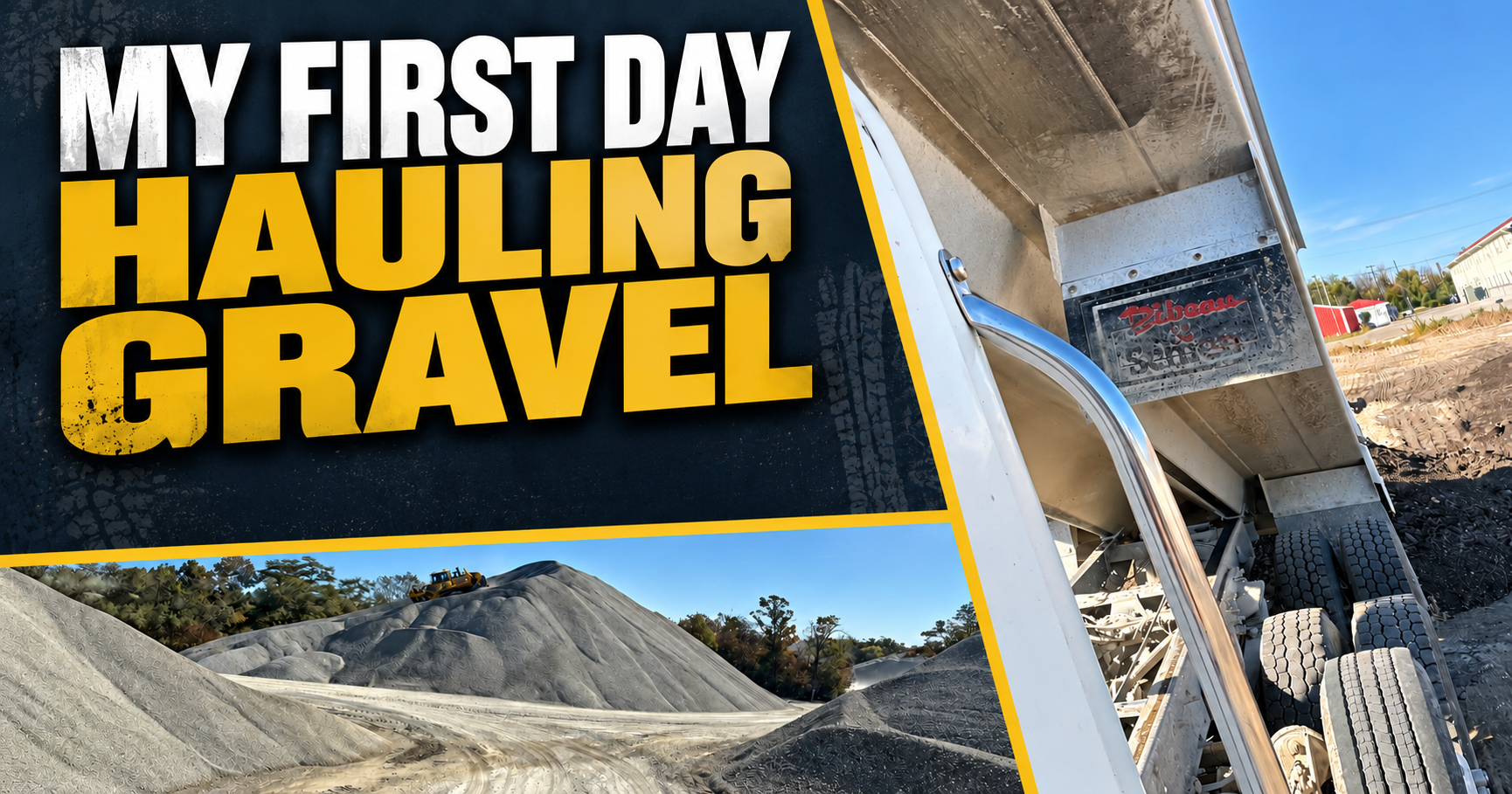
During my first day hauling gravel in a dump truck, I was making roughly 12-mile runs between the quarry and this parking-lot project.
I was driving an older early-2000s Freightliner dump truck.
I’d go to the quarry.
Get loaded with 1-inch base.
Cross the scale.
Sign for the load.
Take my ticket.
Drive to the parking lot.
Dump.
Then go back for more.
By the end of the day, I had moved approximately 250,000 pounds of material.
That’s about 125 tons.
And seeing that amount of material disappear into a parking-lot project gives you a very different appreciation for what’s underneath pavement.
Is Base Rock the Same as Gravel?
Not exactly.
“Gravel” is a broad term, and people use it loosely in everyday conversation.
Technically, gravel refers to a particular range of coarse aggregate particles. Road and construction materials can contain gravel, crushed stone, sand-sized particles and fines in specific combinations.
Base rock is better thought of by what the material is designed to do.
It’s an aggregate mixture intended to form a base layer.
A pile of clean decorative gravel and a pile of dense-graded aggregate base may both look like “rock” to someone driving past the quarry, but they can behave very differently after they’re placed.
Base Rock vs Clean Gravel
This distinction becomes easier when you look at the spaces between the rocks.
Clean gravel generally contains much less fine material.
That leaves open spaces between larger particles, which can be desirable when drainage is the goal.
Dense-graded base is different.
It contains a range of particle sizes that can pack together more tightly.
For pavement base, the goal can include stability and load distribution rather than simply letting as much water as possible flow through open voids.
That doesn’t mean drainage isn’t important.
It means the material has to be selected for the job it’s supposed to perform.


Why Crushed Rock Works Well for Base
Particle shape matters too.
Crushed rock tends to have angular surfaces and edges rather than being completely smooth and rounded.
Those angular particles can interlock when the material is compacted.
Federal Highway Administration guidance notes that angular aggregate with rough surface texture is preferred for granular base stability, while particle size distribution also plays a major role in stability and performance.
That makes intuitive sense once you picture it.
Dump a bunch of smooth balls together and they can move around each other.
Dump irregular angular pieces of rock together with smaller particles filling the spaces, then compact everything, and you’ve created something much more resistant to movement.
Why Does Road Base Need to Be Compacted?
Simply dumping base rock onto the ground doesn’t finish the job.
It has to be spread and compacted correctly.
Compaction increases density by reducing void space and helping the particles settle into a stable arrangement.
Federal Highway Administration guidance describes granular base being spread in layers and compacted with heavy equipment rather than placing one enormous loose layer and calling it finished.
The exact thickness, moisture requirements, compaction target and equipment depend on the project specifications.
That’s important because there isn’t one universal recipe for every driveway, road and parking lot.
The engineering requirements determine how the base needs to be built.
Is Road Base the Same as Base Rock?
In everyday construction conversation, you’ll often hear terms such as road base, base rock, aggregate base and base gravel used for closely related materials.
The exact terminology and specification can vary by location, quarry and project.
That’s why I’d pay more attention to the actual material specification than the nickname somebody uses for it.
If a contractor orders a particular aggregate base, the quarry needs to supply material meeting the required gradation and other specifications.
Calling two products “road base” doesn’t automatically mean they’re identical.
What Does “Road Base Gravel” Mean?
Road base gravel generally refers to aggregate used as a compacted foundation in a road or similar pavement structure.
It isn’t necessarily the surface you ultimately drive on.
On a paved project, the base is generally underneath the asphalt or concrete.
That’s the same basic role the material I hauled was serving in the parking lot.
We were bringing in the foundation material before the asphalt.
Once the job is finished, most people using that parking lot will never see those loads of rock again.
But they’ll still be driving over them.
Base Is Different From Subbase
These two terms are easy to mix up.
The base is the layer supporting the surface course.
A subbase, when used, sits below the base and above the subgrade.
Federal Highway Administration terminology describes the subgrade as the prepared roadbed, the subbase as material placed on that subgrade to support the base, and the base as the layer supporting the surface course.
Not every project has exactly the same layer arrangement.
But understanding those three words makes pavement construction much easier to picture:
Surface
Base
Subbase, if used
Subgrade
So when somebody says they’re bringing in base before paving, they’re talking about one of the structural layers underneath the finished surface.
How Does Base Rock Get From the Quarry to the Jobsite?
This is the part I can now answer from the driver’s seat.
At the quarry I was hauling from, I would pull the Freightliner into the appropriate area for the material I needed.
Then I’d position the truck near the 1-inch base.
A massive quarry loader would load the dump body.
Once the loader operator had finished, he’d honk his horn to let me know I was ready.
Then I’d pull around and get onto the quarry scale.
After the truck was weighed, I’d pull forward, sign the ticket and get my ticket receipt.
Then it was approximately 12 miles back to the parking-lot project.
Dump the base.
Lower the bed.
Head back to the quarry.
Repeat.
It was a pretty simple cycle after I learned it, but it was completely new to me that morning.
Base Rock Is Heavy
This is also why dump-truck capacity matters so much when hauling aggregate.
Rock is heavy enough that the truck’s allowable weight can become the limiting factor before somebody simply fills the dump body to the top.
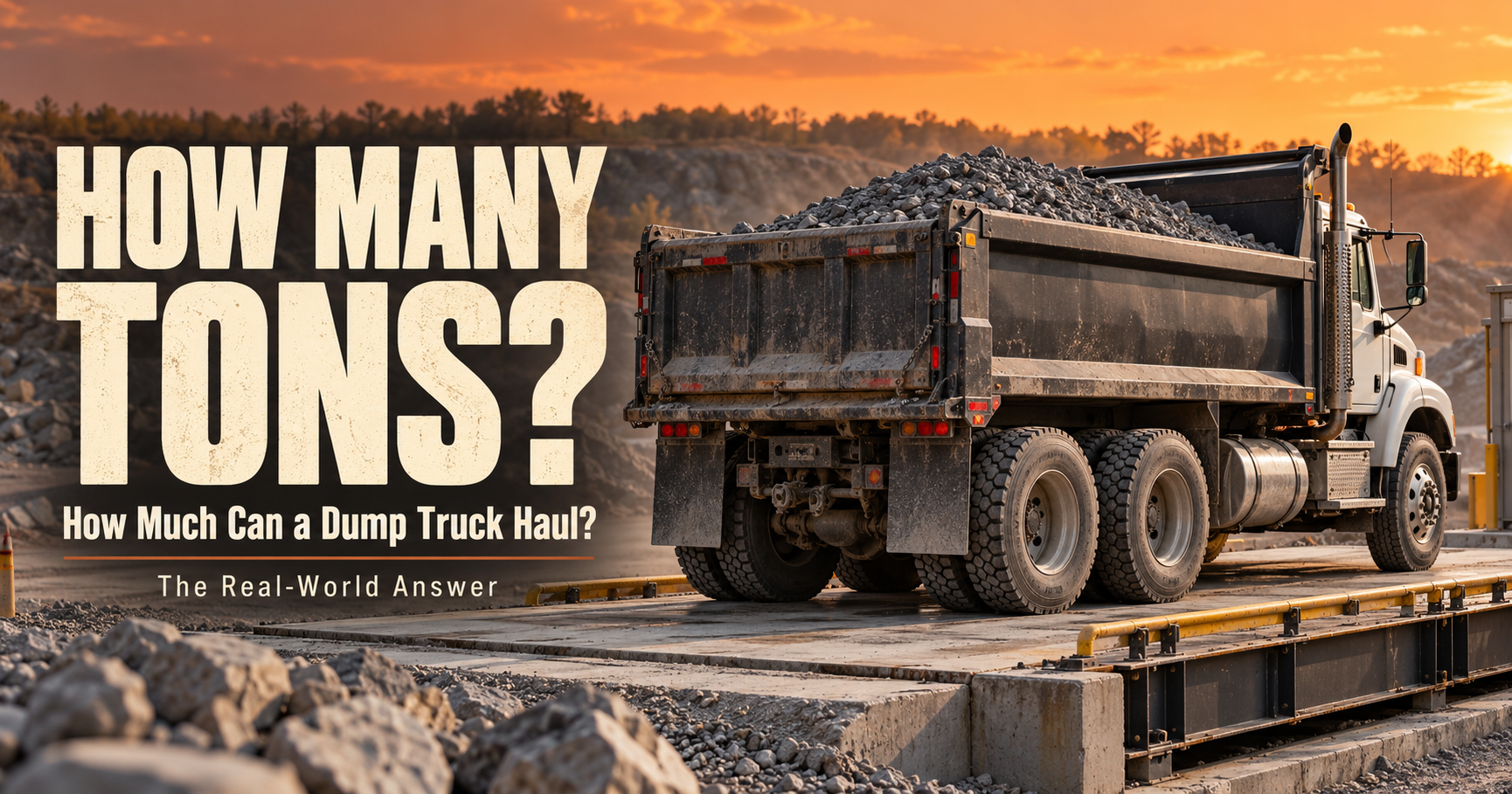
I went deeper into this in how many tons a dump truck can haul, because dump-body volume and legal payload aren’t the same thing.
You have to account for the truck itself.
An older Freightliner dump truck already weighs a lot before the first bucket of base ever hits the bed.
That’s why our loaded trucks went across the quarry scale.
The Quarry Scale Became Part of My Routine
After a few trips, the process started feeling automatic.
Get loaded.
Wait for the horn.
Drive onto the scale.
Pull forward.
Sign.
Take the ticket.
Leave.
It reminded me of hauling grain because commercial trucking often comes back to weight.
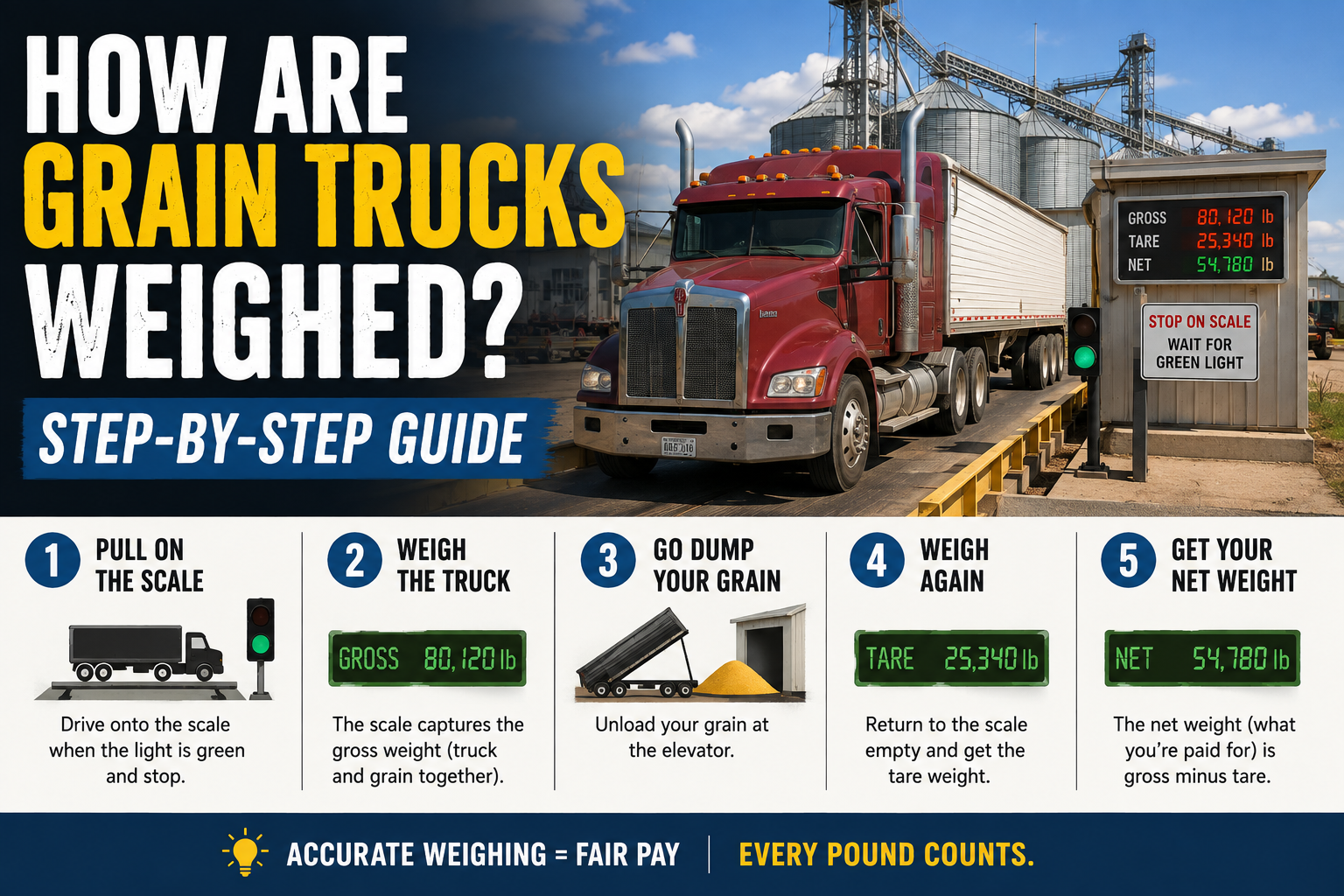
I’ve explained how grain trucks are weighed before, and while a grain operation and rock quarry are very different places, both made me appreciate how important scales are when you’re hauling bulk material.
Looking at the load isn’t enough.
The scale tells you what you’ve actually got.
Why Isn’t Base Rock Just One Size?
Before learning more about this material, I could see someone assuming that “1-inch base” should mean a pile of 1-inch rocks.
That’s not really how graded aggregate works.
The gradation is intentional.
Larger aggregate provides structure.
Smaller particles help fill voids.
The mixture can be compacted into a dense layer.
Specifications use different sieve sizes to control how much material falls into different size ranges.
That’s why the Missouri base specification I looked at doesn’t simply say “make every rock one inch.”
For some types of base, it specifies that all material passes the 1-inch sieve and then sets percentage ranges for material passing progressively smaller sieves.
That’s a much more precise way of controlling what ends up in the finished base.
Can You Use Base Rock for a Driveway?
Base aggregate can absolutely be part of driveway construction, but the right material and construction method depend on the site and what you’re trying to build.
A base layer can provide a strong foundation beneath another surface.
But I wouldn’t assume the exact 1-inch base I hauled to a commercial parking lot is automatically the perfect material, depth and specification for every residential driveway.
Soil conditions matter.
Drainage matters.
Expected vehicle loads matter.
Local aggregate products differ.
The finished surface you want matters.
If you’re ordering material for your own project, asking the quarry or contractor what base specification is appropriate makes more sense than simply ordering something because the words “base rock” are in the name.
What I Think About When I See a Paved Parking Lot Now
This job changed something small for me.
Before hauling aggregate, I’d look at a paved parking lot and basically see asphalt.
Now I know how much can be underneath it.
I spent almost an entire workday moving 1-inch base from one quarry to one parking-lot project.
Approximately 125 tons went through my truck over multiple loads that day.
And I was only one part of the project.
There’s the quarry producing the material.
The loader operator loading it.
The truck hauling it.
The crew placing it.
Equipment spreading it.
Compaction.
Grade preparation.
And eventually the paving operation that covers all that base up.
Once the asphalt goes down, most of that work disappears from sight.
But the rock underneath is still doing its job every time another vehicle drives across the parking lot.
About the Author: Dax. I’m a Class A CDL driver sharing what I’m learning from real-world trucking, including hauling grain, driving dump trucks, working around farms and quarries, and handling the situations CDL school can’t completely prepare you for. I created Trucking Resource to give new and working drivers straightforward answers based on actual experience behind the wheel.