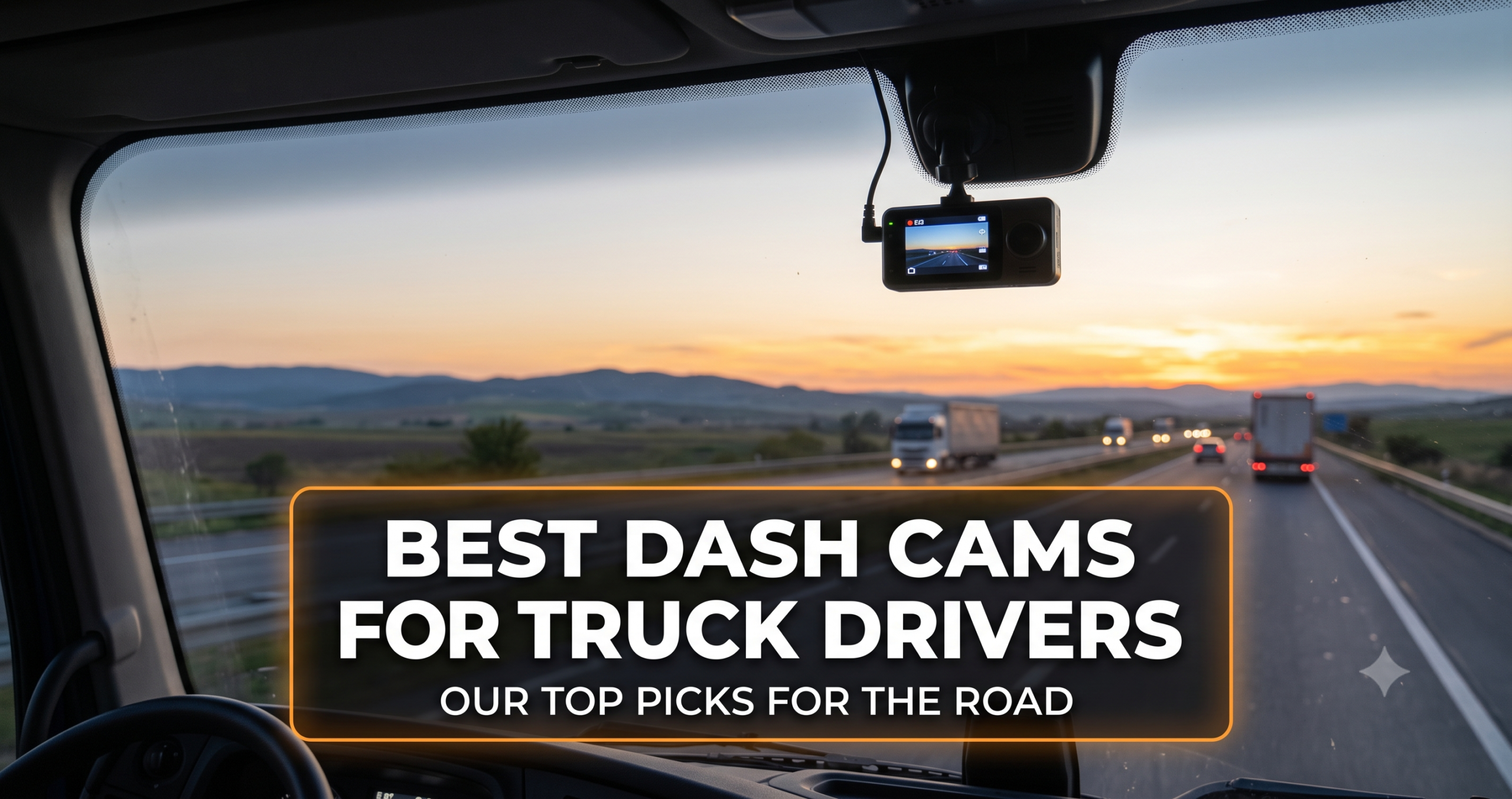
If there’s one piece of technology I wish every truck driver would install before heading out on the road, it’s a quality dash cam.
After years of driving dump trucks and commercial vehicles, I’ve seen enough close calls to know that not every accident is your fault. Unfortunately, proving that after the fact isn’t always easy.
People cut off trucks, slam on their brakes, drift into your lane while looking at their phones, or claim you caused an accident that happened completely differently than they describe.
A dash cam won’t stop those situations from happening, but it can provide something incredibly valuable when they do.
Evidence.
For many drivers, that single video file can make the difference between a quick insurance claim and months of arguing over who was responsible.
Why Every Truck Driver Should Consider a Dash Cam
Commercial trucks spend thousands of miles on the road every month. The more miles you drive, the greater the chance you’ll eventually witness or be involved in an accident.
I’ve talked with plenty of drivers who didn’t think they needed a dash cam until after something happened.
Once you’ve dealt with a false accusation or watched another driver completely change their story, you quickly realize how valuable recorded video can be.
Whether you’re a company driver or an owner operator, having video footage can help document:
- Traffic accidents
- Unsafe drivers
- Hit-and-run incidents
- Backing accidents
- Road rage
- Weather conditions
- Deer and wildlife collisions
- Damage that occurred while parked
I’ve even seen dash cam footage help prove a driver did everything possible to avoid a crash.
The Features I Look For
Not every dash cam is built the same.
Some record grainy video that becomes useless once the sun goes down. Others have trouble reading license plates or don’t capture enough detail when vehicles are moving quickly.
When choosing one for a commercial truck, I look for a few important features.
Sharp Video Quality
If you ever need to show footage to an insurance company or law enforcement, blurry video doesn’t help much.
Higher resolution makes it easier to identify vehicles, license plates, road signs, and what actually happened.
Front and Rear Cameras
Many incidents don’t happen directly in front of your truck.
Backing into loading docks, someone hitting your trailer, or another vehicle following too closely are all situations where rear camera footage becomes valuable.
That’s one reason I like systems that record both directions instead of only the windshield view.
Night Vision
A large percentage of commercial driving happens before sunrise or after dark.
A quality sensor can make a tremendous difference when recording in rain, fog, or poorly lit truck stops.
Loop Recording
Nobody wants to constantly delete old videos.
Loop recording automatically replaces the oldest files while protecting important footage when an impact occurs.
That means your dash cam keeps working without any extra effort from you.
GPS Logging
Some models record your location and speed along with the video.
That additional information can sometimes become useful when reviewing an accident or explaining what happened.
The Dash Cam I’d Recommend
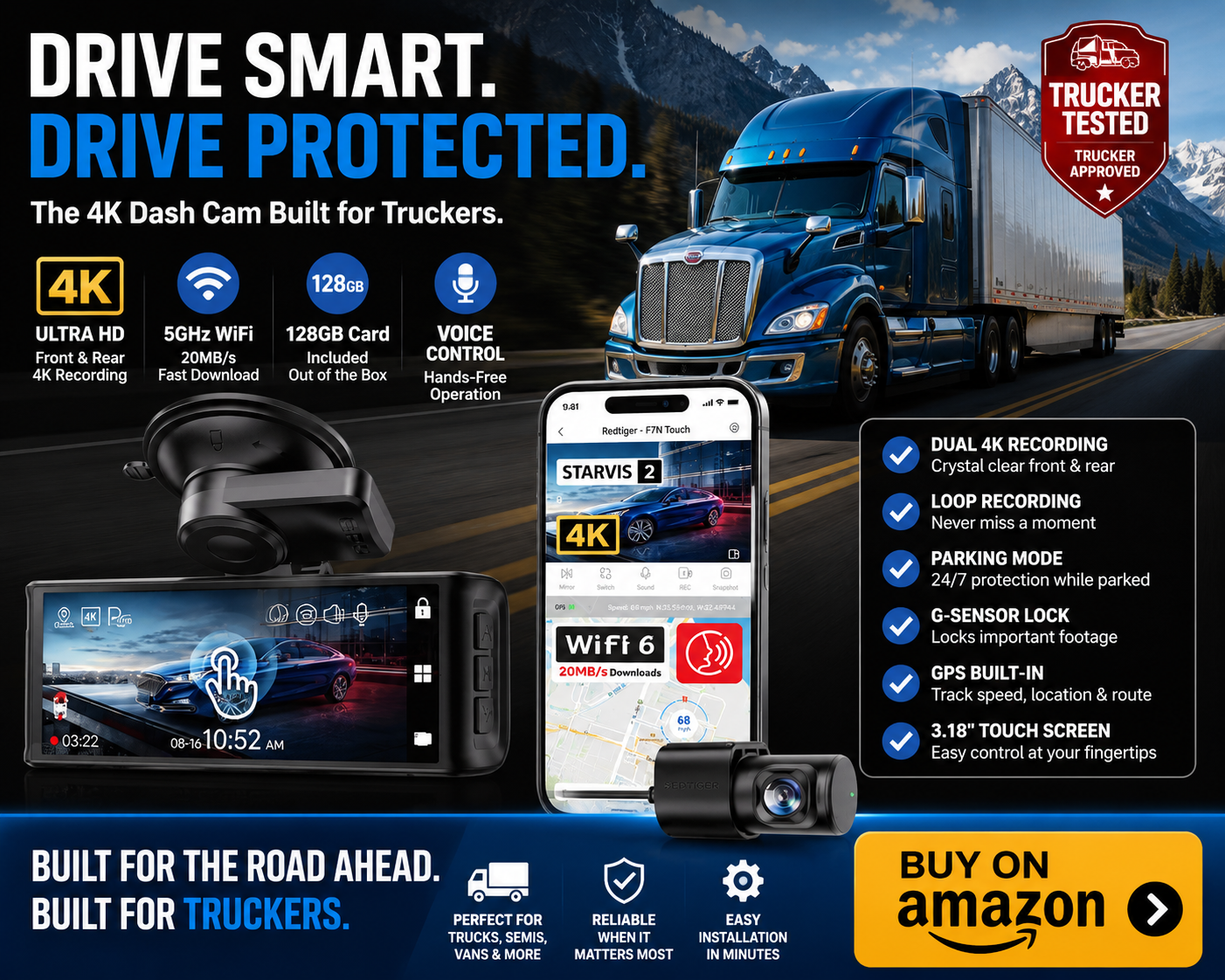
If someone asked me today what I’d buy for my own truck without spending a fortune, I’d point them toward the REDTIGER 4K Front and Rear Dash Cam.
It checks nearly every box I look for.
The 4K front camera produces sharp video during the day, while the rear camera provides another angle that many cheaper systems simply don’t offer.
I also like that it includes built-in GPS, voice controls, Wi-Fi connectivity for downloading footage, and a 128 GB memory card right out of the box. That means you’re not immediately shopping for extra accessories before you can even use it.
For most truck drivers, it offers an excellent balance between image quality, reliability, and price without getting into some of the expensive fleet camera systems.
Why Owner Operators Benefit Even More
If you own your truck, every accident has the potential to cost you money beyond the repair bill.
Downtime.
Insurance deductibles.
Lost loads.
Higher premiums.
Possible legal disputes.
That’s a lot riding on somebody else’s word.
A dash cam gives you an unbiased witness that never forgets what happened.
Even if the footage never gets used, simply knowing it’s there provides peace of mind every time you pull onto the highway.
A Dash Cam Doesn’t Replace Safe Driving
One mistake I see online is people treating dash cams like they’re some kind of magic shield.
They’re not.
The best protection is still driving defensively, maintaining plenty of following distance, and staying alert.
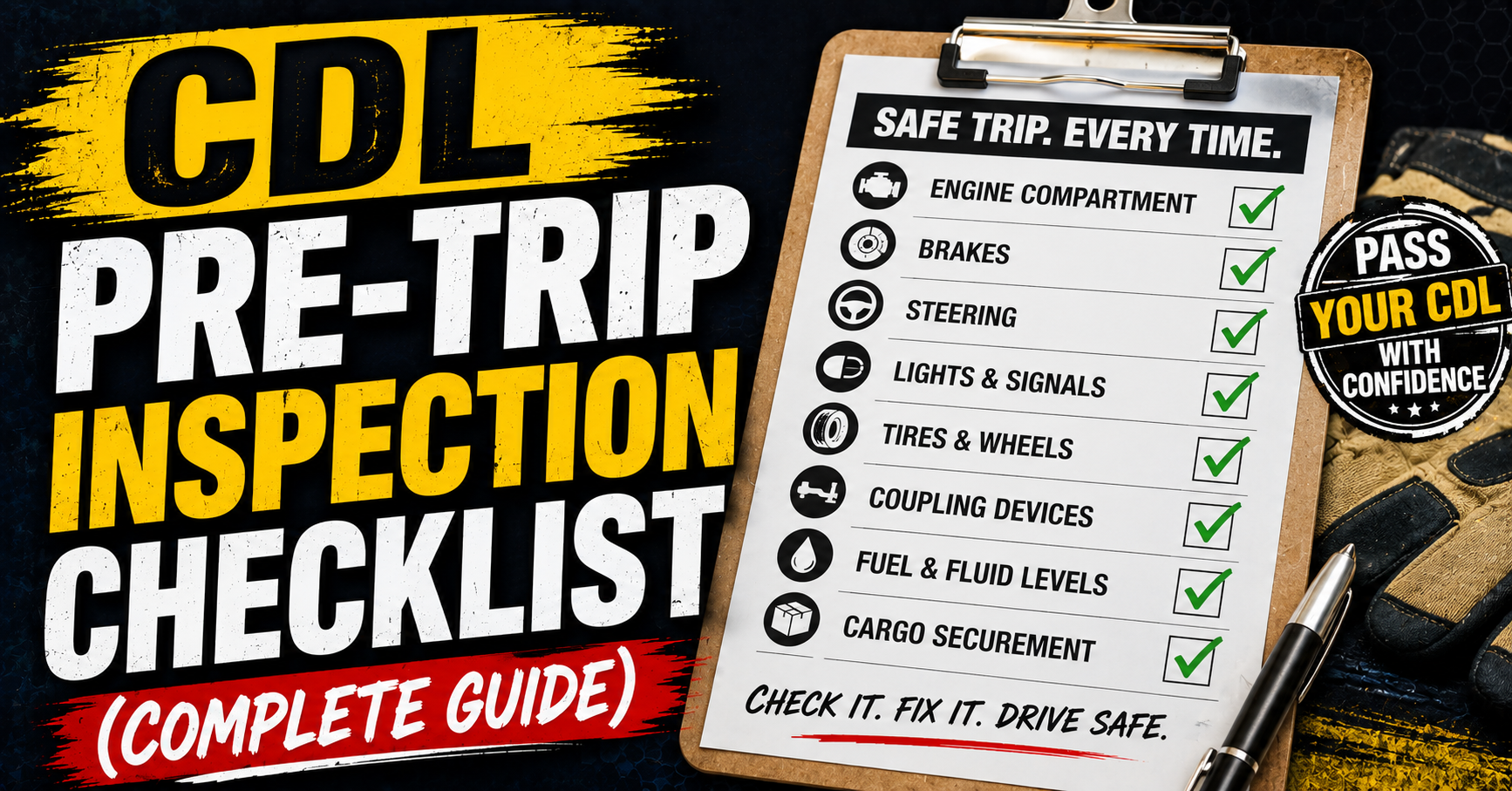
If you’re new to commercial driving, I’d also recommend reading our guide on how to perform a CDL pre-trip inspection. Catching small problems before you leave can prevent bigger ones later.
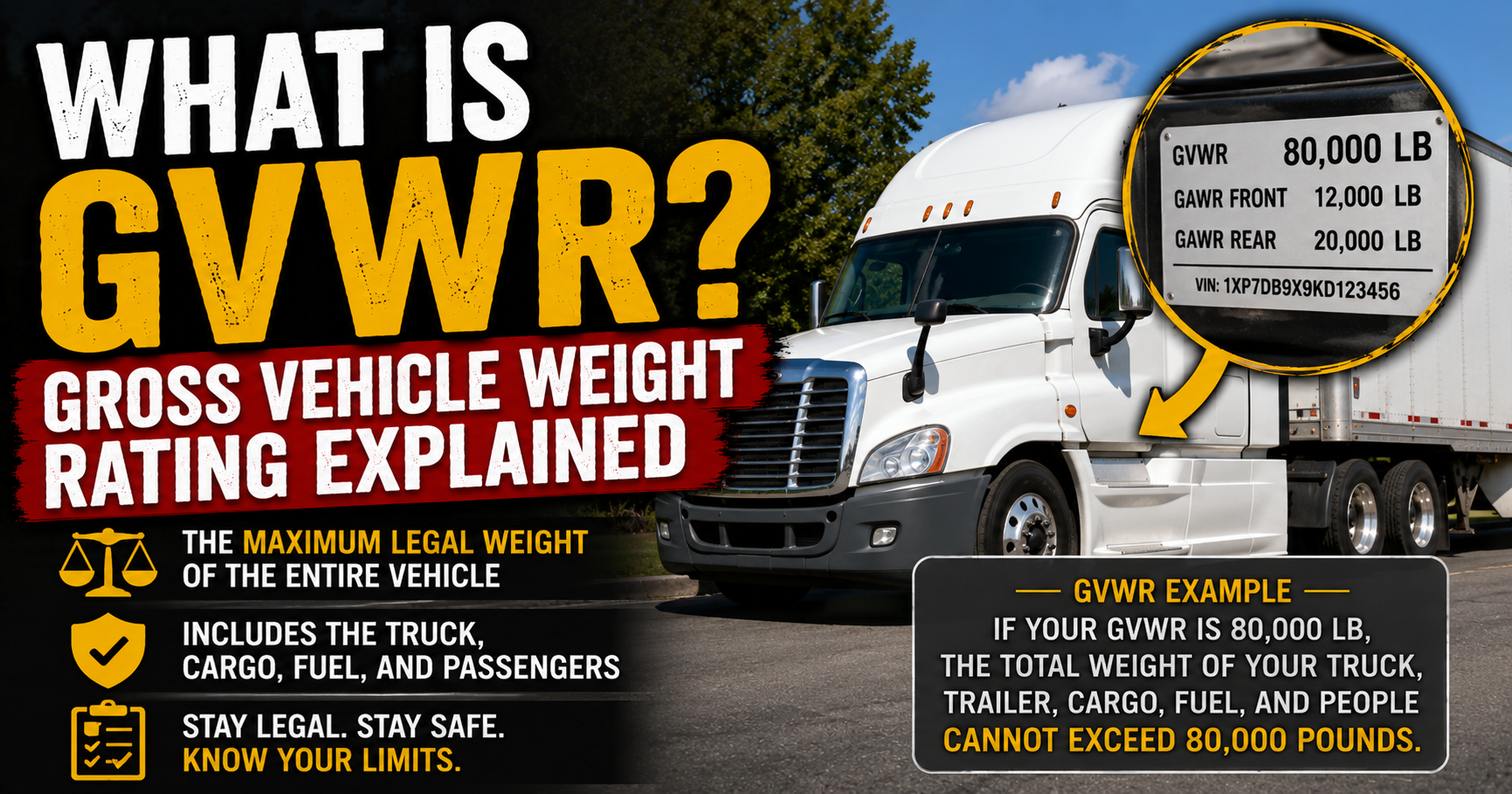
Understanding concepts like GVWR (Gross Vehicle Weight Rating) and GCWR is another important part of operating safely and protecting yourself on the road.
Other Gear I’d Keep Alongside a Dash Cam
A dash cam is just one part of being prepared.
I also keep a few other items in my truck that have earned their place over the years.
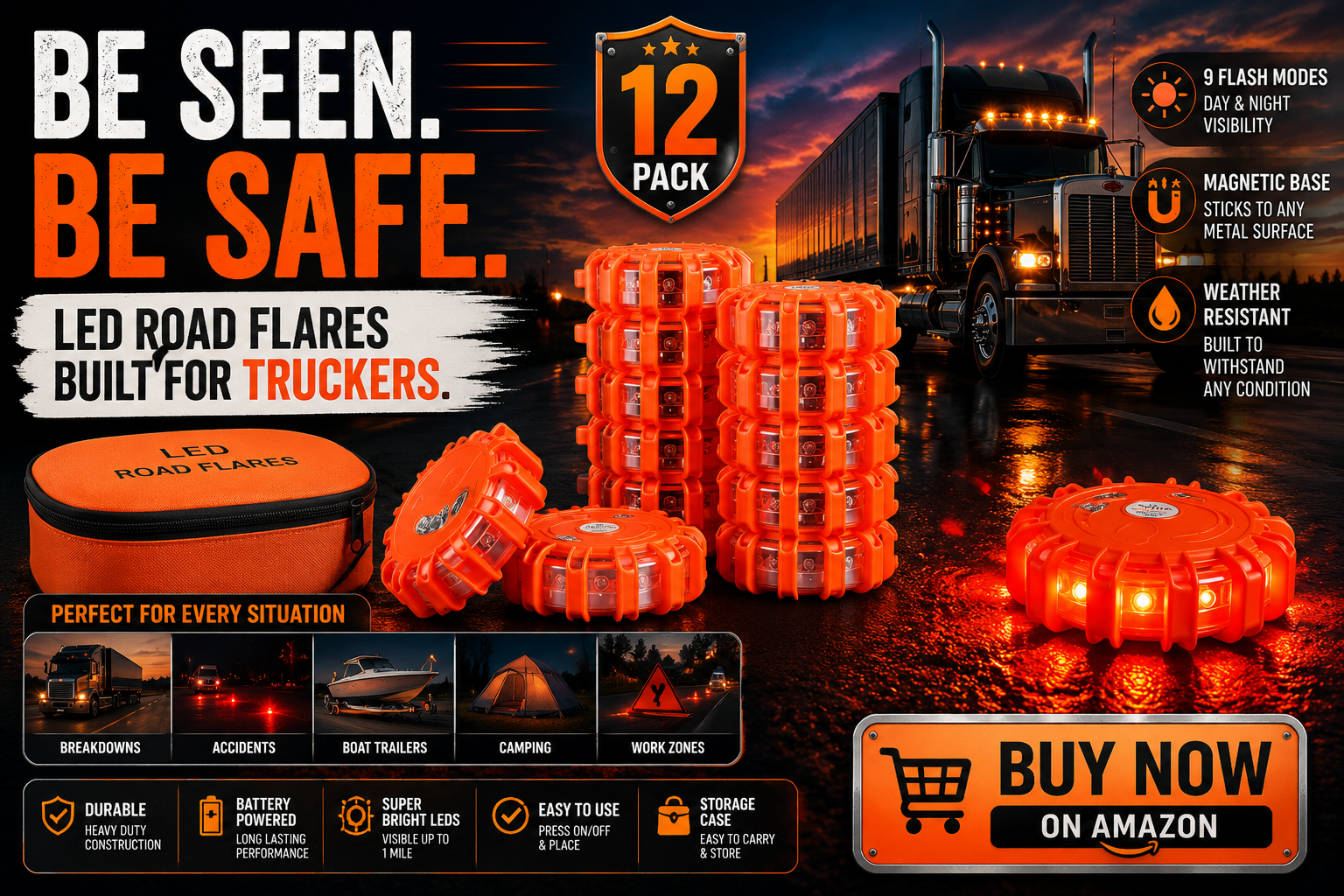
If I ever end up stopped on the shoulder, I want other drivers to see me as early as possible. That’s why I always carry LED roadside safety flares along with DOT-approved warning triangles.
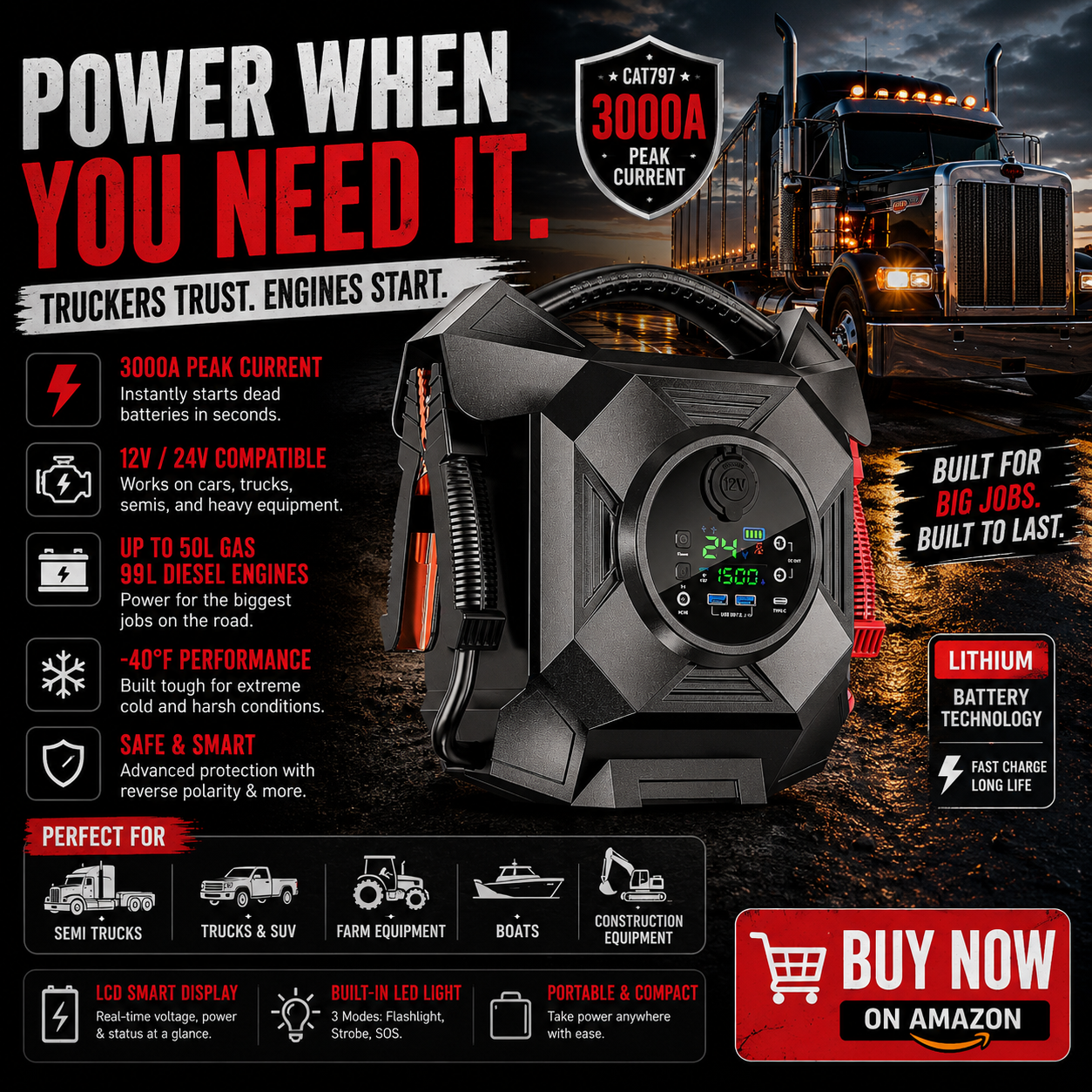
For dead batteries, a heavy-duty CAT truck jump starter has the power to get larger diesel engines going again without waiting for another truck to arrive.
I also wouldn’t leave home without a dependable Streamlight rechargeable flashlight because inspections and breakdowns never seem to happen in perfect daylight.
Frequently Asked Questions
Is a dash cam legal in commercial trucks?
In most areas, yes. However, windshield mounting laws can vary by state, so it’s worth checking local regulations and mounting the camera where it doesn’t interfere with your view.
Can a dash cam lower insurance costs?
Some insurance companies offer discounts or other incentives for using dash cams, especially for commercial vehicles. Even when they don’t, having clear video evidence may help speed up claims and resolve disputes.
Should company drivers buy their own dash cam?
If your employer doesn’t already provide one, I think it’s money well spent. Having your own footage can help protect you if questions come up after an accident.
Is 4K worth it?
For commercial drivers, I believe it is. The added detail can make it much easier to read license plates, recognize road signs, and capture important evidence that lower-resolution cameras might miss.
How to Get the Most from Your Dash Cam
Buying a dash cam is only half the battle. Installing it correctly and making sure it’s recording when you need it is just as important.
I’ve seen drivers spend a couple hundred dollars on a nice camera only to discover after an accident that the memory card was full, the camera wasn’t plugged in, or it had been bumped and was recording nothing but the truck’s visor.
A few minutes spent setting everything up properly can save you a major headache later.
Mount It Where It Doesn’t Block Your View
Your camera should have a clear view of the road without becoming a distraction.
Most drivers mount it high on the windshield behind or near the rearview mirror so it’s mostly out of sight while still capturing everything ahead.
Take a minute to sit in the driver’s seat and make sure the camera isn’t blocking traffic lights, signs, or pedestrians.
Check the Camera During Your Pre-Trip Inspection
I always recommend making your dash cam part of your routine before pulling out.
Just like checking your lights, tires, and air system, glance at the screen to make sure it’s powered on and recording.
If you’re still learning what should be included before every trip, take a few minutes to read our CDL pre-trip inspection checklist. Building good habits early makes life a lot easier down the road.
Format the Memory Card Occasionally
Most dash cams use loop recording, but memory cards can still develop errors over time.
Formatting the card every month or two helps keep recordings reliable. It only takes a minute and can prevent corrupted files when you need them most.
Save Important Footage Right Away
If you’re ever involved in an accident or witness something important, don’t wait until the end of the week to save the video.
Download it to your phone or another device as soon as it’s safe to do so.
Many newer cameras, including the REDTIGER 4K Front and Rear Dash Cam, make this easy with built-in Wi-Fi so you don’t have to remove the memory card every time.
Common Dash Cam Mistakes Truck Drivers Make
Over the years, I’ve noticed a few mistakes that come up again and again.
Buying the Cheapest Camera Available
A $30 dash cam might seem like a bargain until you try reading a license plate in the rain at night.
Picture quality is one area where spending a little more usually pays off.
When your goal is protecting yourself after an accident, you want footage that’s actually usable.
Ignoring the Rear Camera
A surprising number of incidents happen behind the truck.
Someone backs into your trailer.
Another driver rear-ends you in traffic.
A vehicle follows too closely before making contact.
That’s why I prefer systems with both front and rear cameras instead of only recording what’s ahead.
Never Reviewing the Footage
Every once in a while, watch a few minutes of your recordings.
Make sure the camera angle hasn’t shifted.
Check that the image is clear.
Confirm the microphone and GPS are working if you use those features.
It’s much better to discover a problem in your driveway than after an accident.
Other Safety Gear That Works Well with a Dash Cam
A dash cam records what happened, but it doesn’t make you safer during a breakdown.
That’s why I like having a few other items ready to go.
A dependable set of LED roadside flares helps alert approaching traffic long before they reach your truck, especially during rain, fog, or nighttime breakdowns.
I also keep DOT-approved warning triangles in the cab because they’re required in many situations and remain one of the most effective ways to warn other drivers.
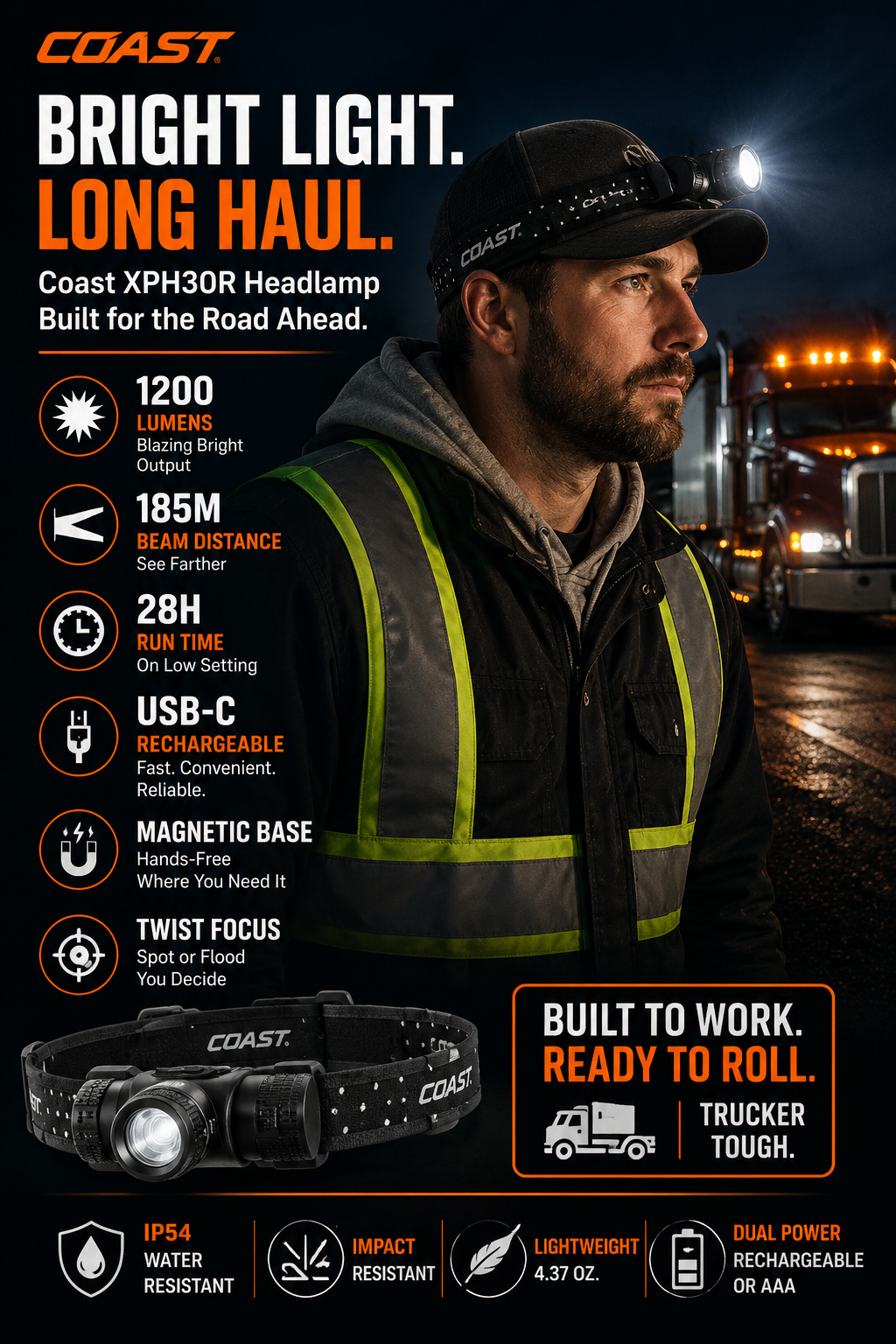
If I’m forced to inspect or repair something after dark, having a Coast rechargeable headlamp keeps both hands free while I work, and a high-visibility reflective safety vest makes me much easier for passing traffic to see.
Those four items work together with a dash cam to help protect both you and your truck when things don’t go according to plan.
Is a Dash Cam Worth It?
If you only drive your pickup around town once or twice a week, maybe it’s something you can put off.
Commercial trucking is different.
Most CDL drivers cover tens of thousands of miles every year. The more time you spend on the road, the greater your chances of encountering distracted drivers, unexpected lane changes, weather-related crashes, or someone who simply makes a bad decision.
I’ve reached the point where I wouldn’t want to drive without a dash cam.
Hopefully, you’ll never need the footage.
But if the day comes when someone claims you caused an accident you didn’t, having clear video evidence can be one of the smartest investments you’ve ever made.
For most truck drivers, the REDTIGER 4K Front and Rear Dash Cam strikes an excellent balance between video quality, useful features, and price. It’s the one I’d recommend to friends and family because it delivers the features that matter without venturing into the cost of commercial fleet camera systems.
If you’re putting together your truck for the first time or upgrading your gear, you may also find these guides helpful:
- How to Get a CDL: Step-by-Step Guide for New Drivers
- What Is GVWR? Gross Vehicle Weight Rating Explained
- What Are Air Brakes? How They Work on Commercial Trucks
Those articles pair well with this one and can help you become a safer, more knowledgeable driver while getting the most out of your equipment.