When I first started driving commercial trucks, I thought all axles basically did the same thing.
They held the wheels.
They carried weight.
They rolled down the road.
It didn’t take long before I realized every axle has a different job.
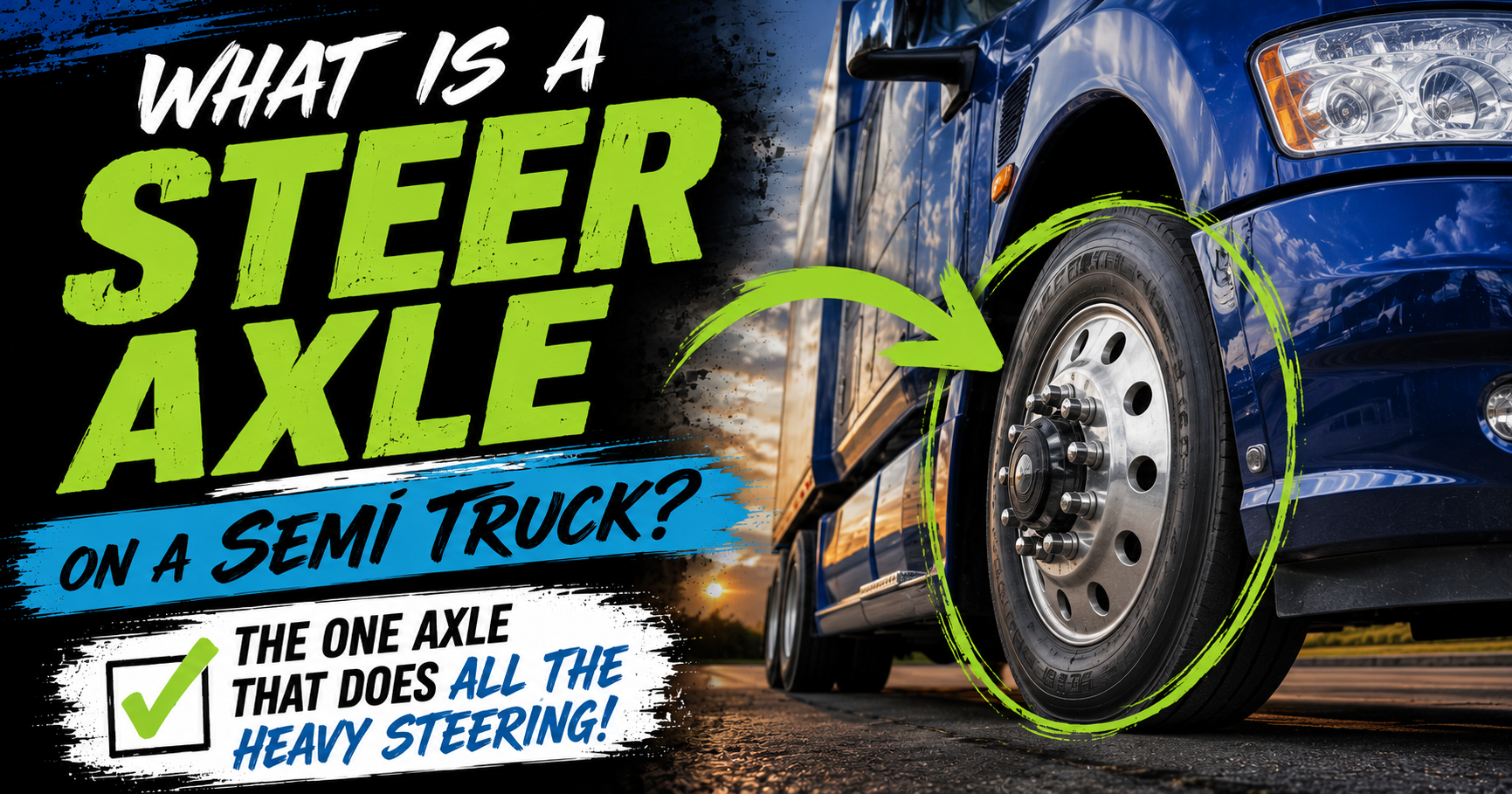
The steer axle might actually be the most important one on the truck because it’s responsible for directing an 80,000-pound vehicle exactly where you want it to go.
If something goes wrong with your steer axle or steer tires, you’re going to notice it immediately.
After more than 25 years behind the wheel, I’ve learned to pay extra attention to the steer axle during every pre-trip inspection. It’s one area where I never cut corners. The CDL Pre-Trip Inspection Checklist (Complete Guide) expands on how to examine major commercial vehicle components before leaving the yard.
What Is a Steer Axle?
A steer axle is the front axle on a commercial truck that allows the front wheels to turn left and right, giving the driver control over the direction of the vehicle. Unlike the drive axles, the steer axle does not normally receive engine power. Its primary job is steering and supporting part of the truck’s weight.
Every highway tractor has one steer axle, although some heavy-duty specialty trucks may have additional steering axles depending on their design.

Where Is the Steer Axle Located?
The steer axle sits directly beneath the front of the truck.
It supports:
- The engine.
- The front suspension.
- The steering components.
- The front wheels and tires.
Because it’s located under the heaviest part of the tractor, it carries a significant amount of weight even before a trailer is attached.

What Does the Steer Axle Do?
Its biggest job is right there in the name.
It steers the truck.
When you turn the steering wheel, a series of steering components moves the front wheels on the steer axle. Understanding common steering wheel shaking causes can help connect unusual vibration with potential tire, wheel, brake, or suspension problems: steering wheel shaking causes
Those tires determine where the entire tractor and trailer will travel.
Without a properly functioning steer axle, safely controlling a commercial truck would be impossible.
Steer Axle vs. Drive Axle
New CDL students often confuse these two terms.
The difference is actually pretty simple.
The steer axle controls the direction of the truck.
The drive axle provides the power that moves the truck forward.
Both are critical, but they perform completely different jobs.
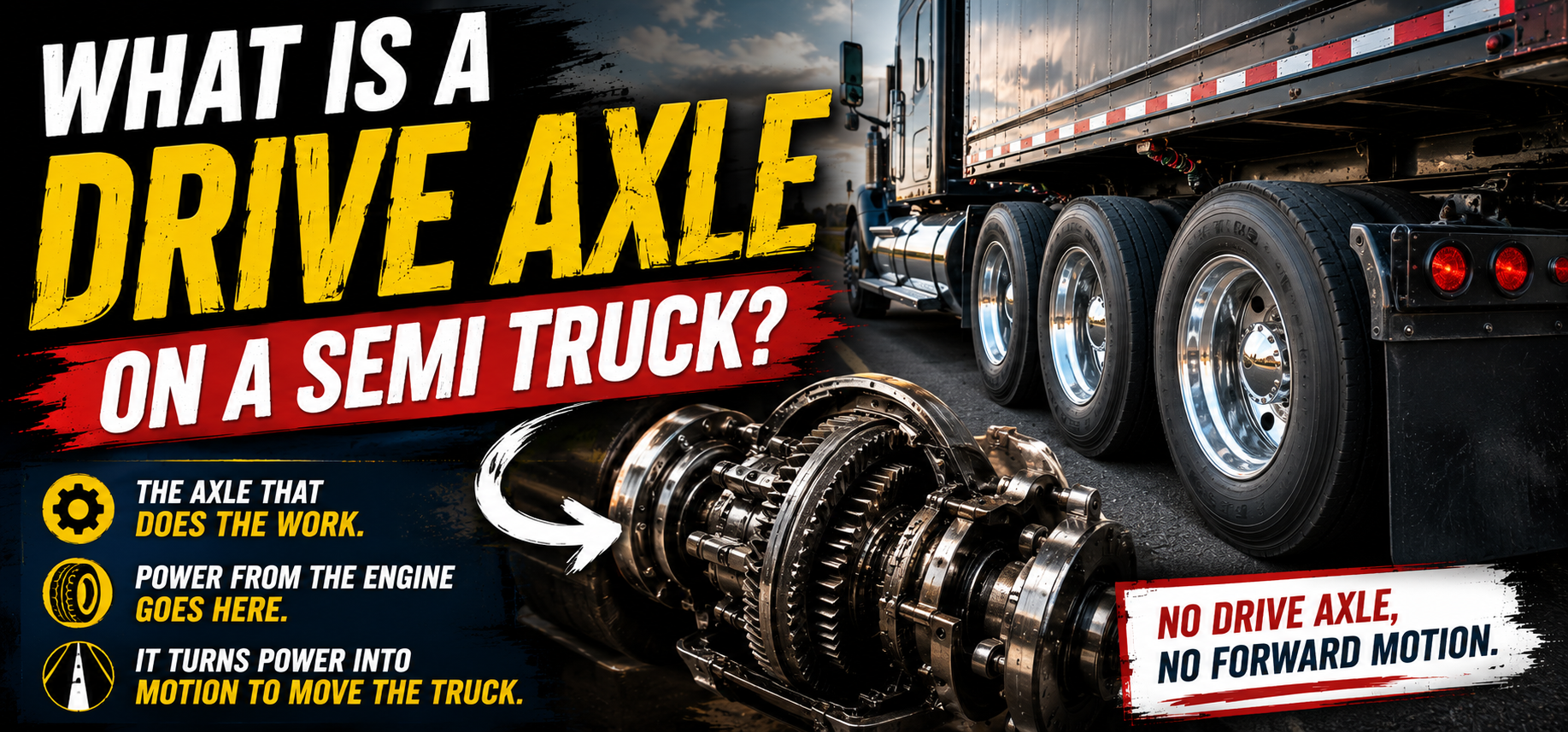
If you haven’t already, our guide explaining What Is a Drive Axle on a Semi Truck? covers how the powered rear axles move the truck down the road.
Why the Steer Axle Is So Important
Every truck component matters.
But if I had to choose one axle that deserves the most attention during inspections, it’s the steer axle.
Think about everything riding on it:
- Steering control.
- Front suspension.
- Front brakes.
- Steer tires.
- Wheel bearings.
- Kingpins.
- Tie rods.
If any of those components develop a serious problem, your ability to control the truck can be affected.
That’s why experienced drivers spend a little extra time inspecting the front end.
Understanding Steer Tires
The steer axle uses a pair of tires commonly called steer tires. Some drivers also include a commercial tire inspection thumper among the tools used during a tire inspection.
Unlike drive tires, steer tires aren’t responsible for putting engine power on the road.
Instead, they provide:
- Steering response.
- Directional stability.
- Smooth handling.
- Predictable braking.
- Better control during emergency maneuvers.
I’ve always believed your steer tires deserve some of the closest attention during every inspection because they’re doing one of the most important jobs on the truck.
What Should You Inspect on the Steer Axle?
My routine has stayed pretty much the same for years.
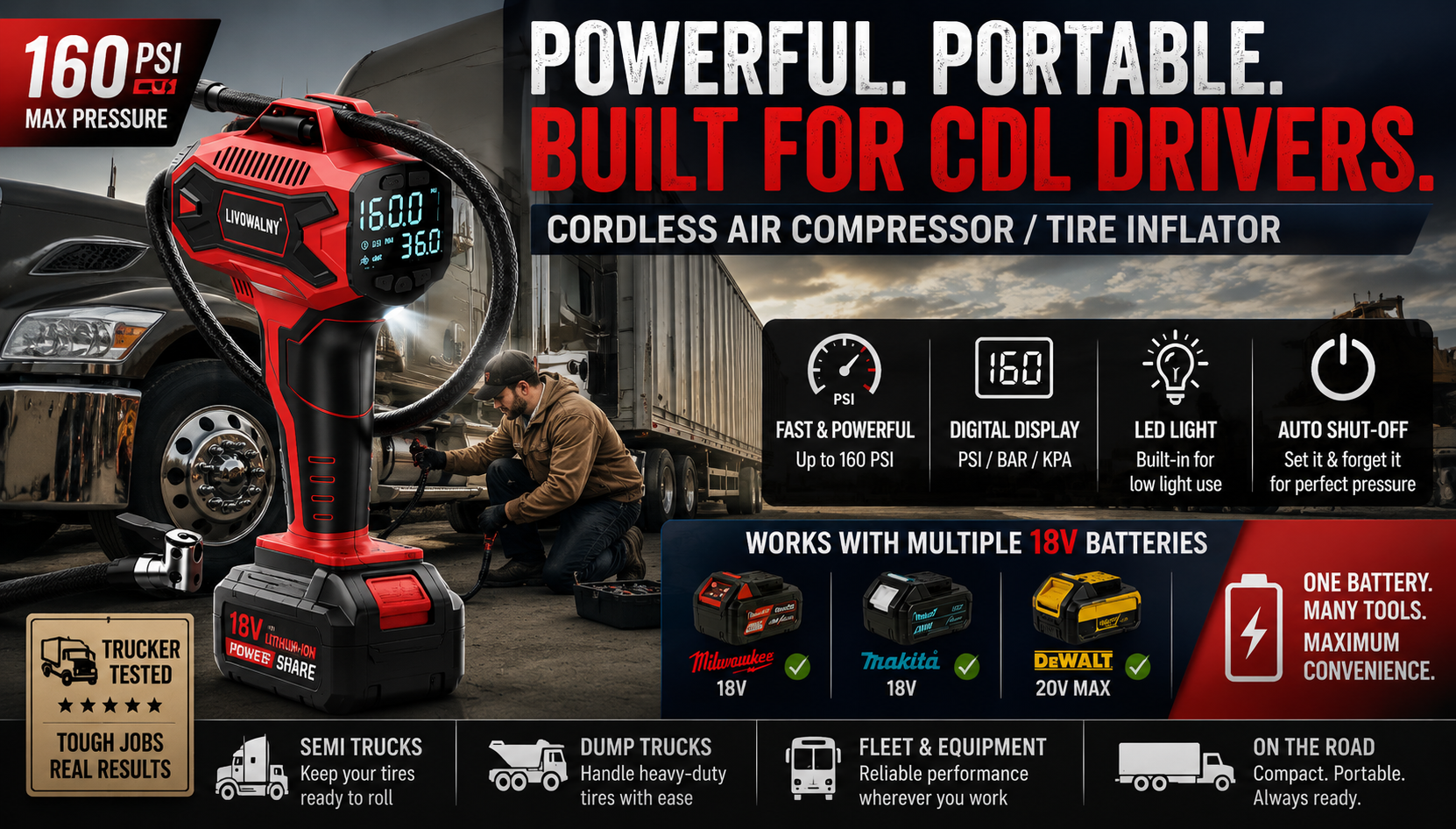
Before leaving, I always check: For tire checks that require adding air, a digital pressure-gauge pump can be kept with the inspection equipment.
- Tire condition.
- Tire pressure.
- Wheel condition.
- Lug nuts.
- Hub oil seal.
- Leaf springs or air suspension.
- Shock absorbers.
- Tie rods.
- Drag link.
- Steering gearbox.
- Brake components.
- Air lines if equipped.
It sounds like a long list, but once you’ve done enough inspections it becomes second nature.
Why Steer Axle Weight Matters
Most new drivers focus on total truck weight.
Experienced drivers know axle weights matter just as much.
The steer axle has its own legal weight limits.
If too much cargo weight shifts forward, the steer axle can become overloaded even if the truck’s total weight is still legal.
Understanding weight distribution is a huge part of becoming a professional driver.
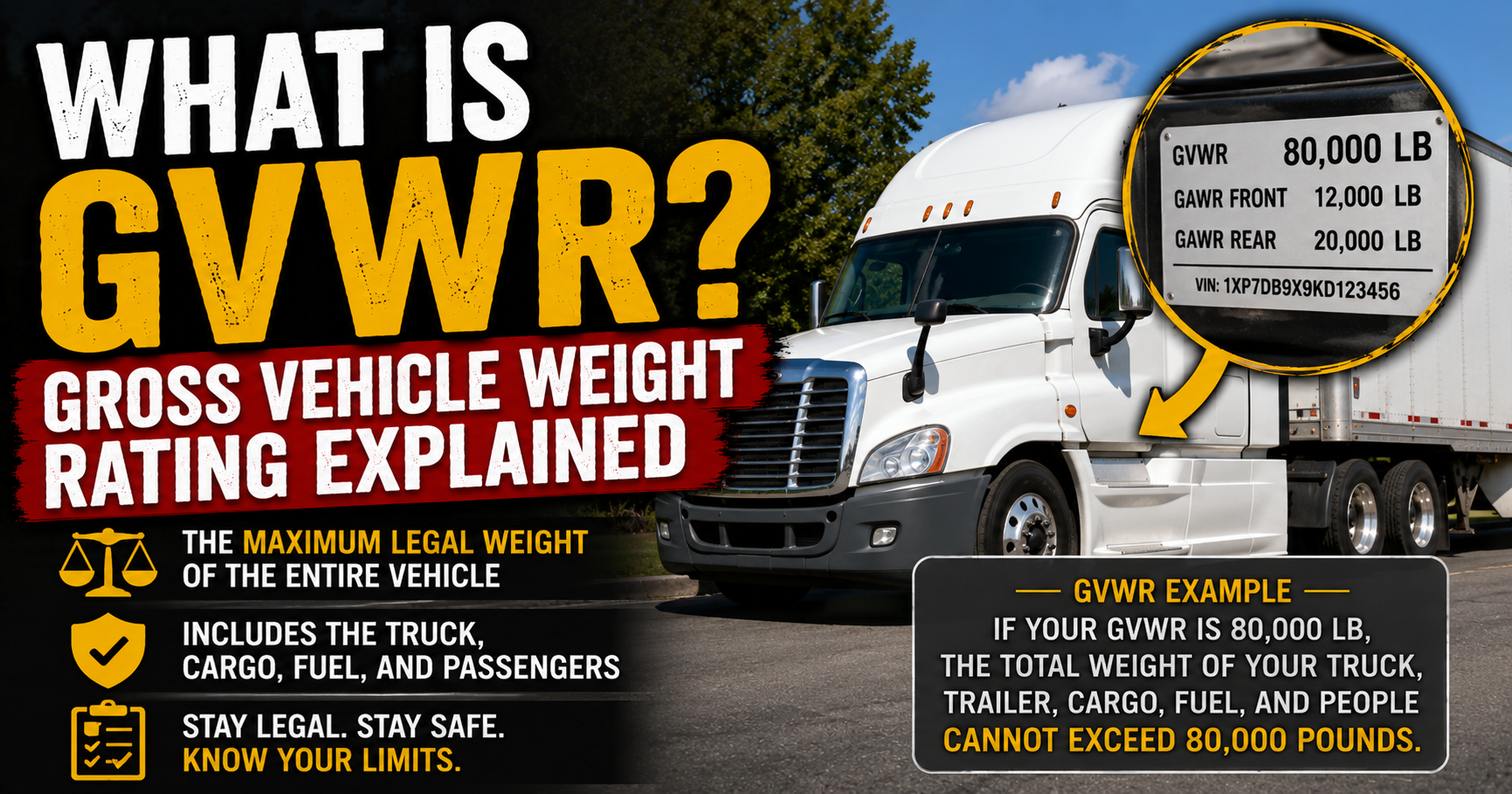
Our guide explaining What Is GVWR? Gross Vehicle Weight Rating Explained does a good job explaining why axle weights are just as important as total vehicle weight.
Common Steer Axle Problems
Fortunately, serious failures are uncommon when trucks are maintained properly.
Still, there are a few things I’ve learned to watch for.
These include:
- Uneven tire wear.
- Low tire pressure.
- Loose steering components.
- Leaking hub seals.
- Suspension wear.
- Damaged shocks.
- Alignment issues.
Catching these problems early usually prevents much larger repair bills later.
Common Mistakes New Drivers Make
I’ve watched plenty of new drivers focus almost entirely on the drive tires while barely looking at the front of the truck.
That’s backwards.
The steer tires are among the most critical tires on the entire vehicle.
Another mistake is ignoring small steering changes.
If the truck suddenly begins pulling to one side or the steering feels different than normal, there’s usually a reason.
I’ve learned it’s always better to investigate early than hope the problem fixes itself.
Will the Steer Axle Be on the CDL Exam?
Absolutely.
The steer axle is part of nearly every CDL pre-trip inspection.
You’ll likely be expected to identify:
- Steering linkage.
- Steering gearbox.
- Leaf springs or air suspension.
- Shock absorbers.
- Tires.
- Wheels.
- Brakes.
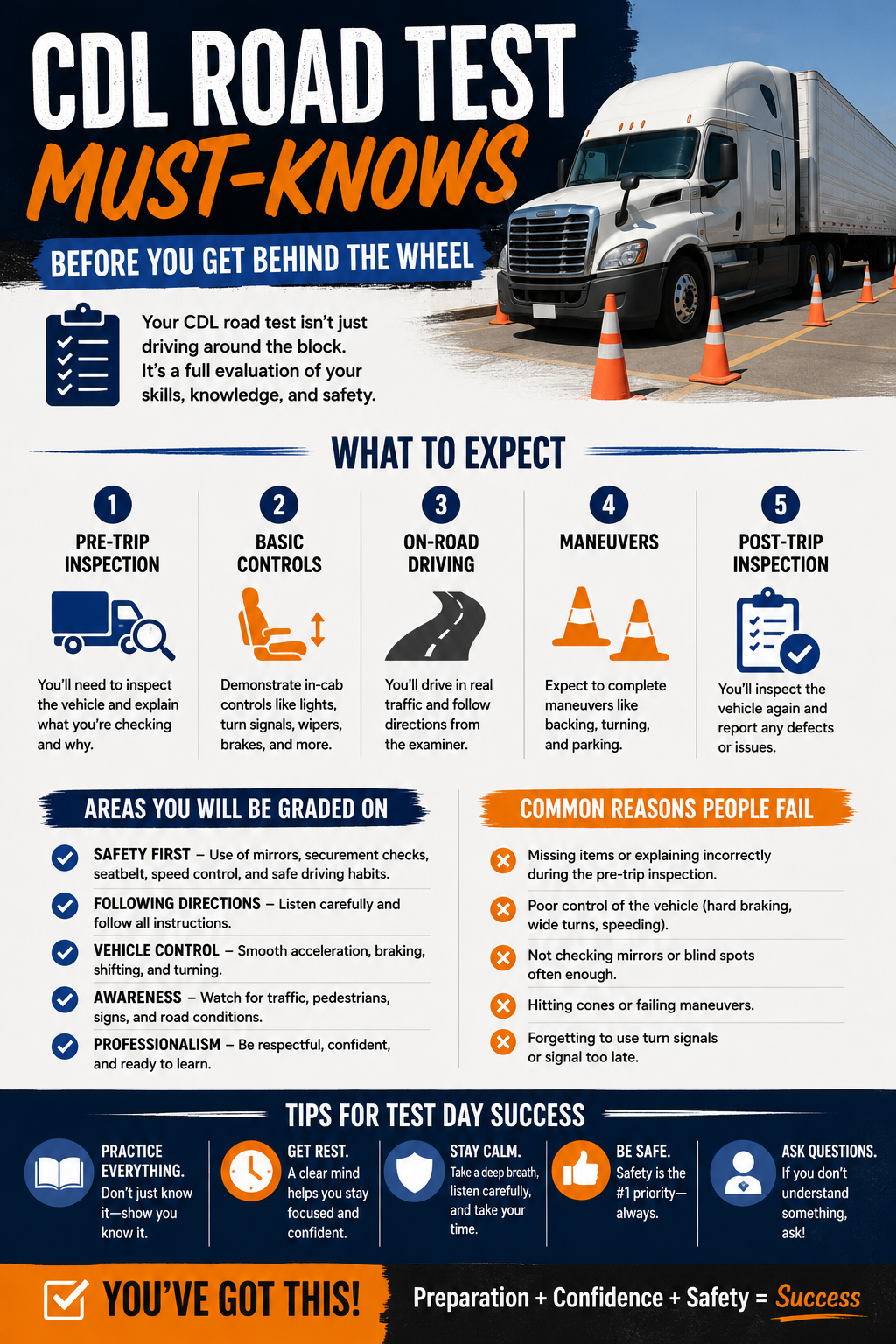
That’s one reason I always encourage new drivers to spend extra time practicing their inspection routine.
Our CDL Vehicle Inspection Practice Test is an excellent way to become more comfortable with the inspection points you’ll need to know before taking your CDL skills exam.
One Tool That Helps During Every Pre-Trip
Early mornings, rainy weather, and nighttime inspections are all part of trucking.
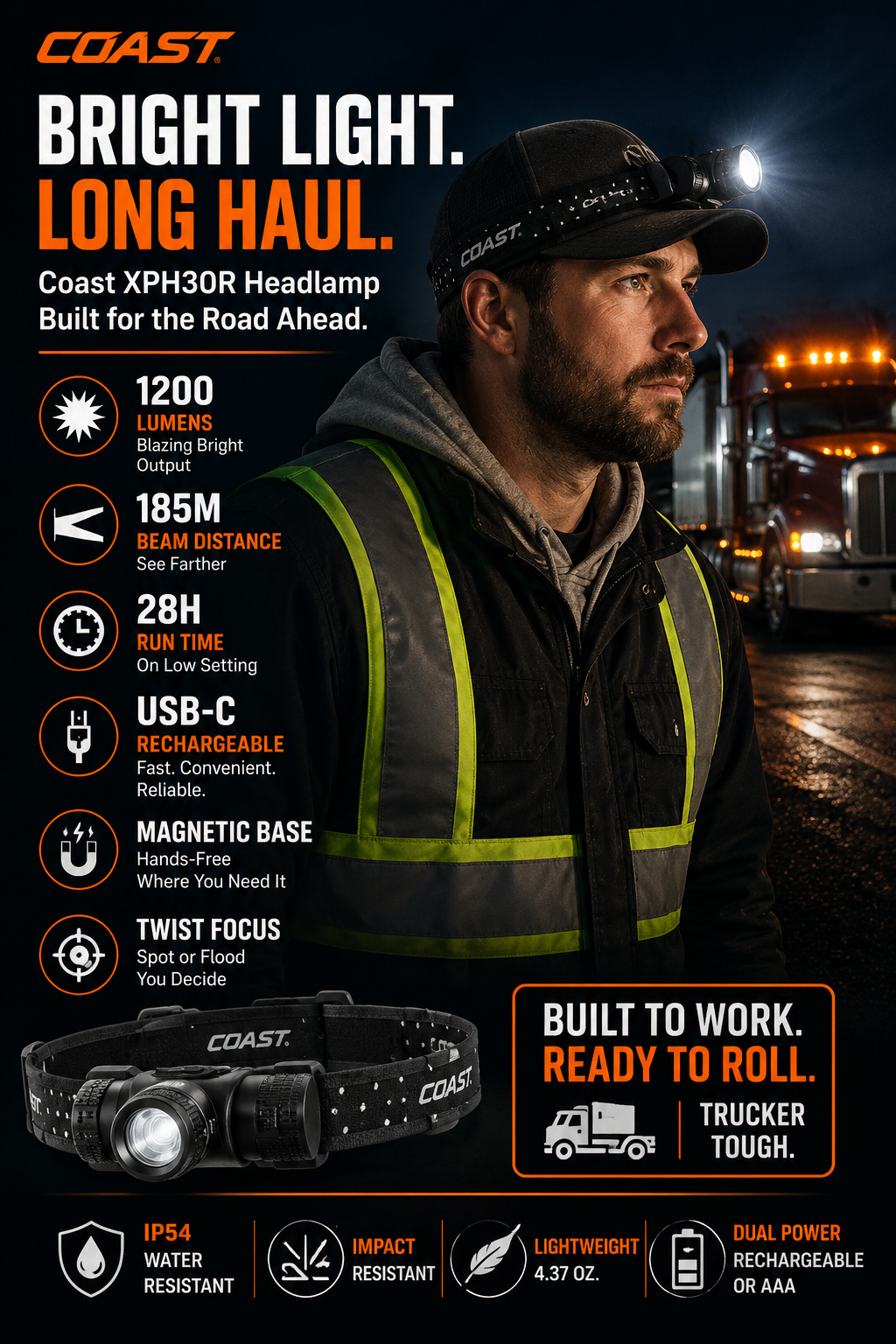
That’s why I never leave home without my Coast XPH30R USB-C Rechargeable Dual Power Headlamp.
Having both hands free while checking steering components, tires, suspension parts, and brake hardware makes inspections faster, easier, and much safer.
My Advice After Millions of Miles
If there’s one area of the truck I never rush through, it’s the front end.
Your steer axle controls where the truck goes.
It carries tremendous responsibility every mile you drive.
Taking an extra few minutes to inspect your steer tires, steering components, suspension, and brakes is one of the smartest habits you can develop as a professional driver.
I’ve always believed that safe trucking starts long before you put the truck in gear.
It starts with a careful inspection.
The steer axle may only be one part of the truck, but it’s one of the biggest reasons you arrive safely at the end of the day.
Author: Mike Reynolds
Mike Reynolds has spent more than 25 years hauling freight throughout the United States in dry vans, refrigerated trailers, flatbeds, and heavy-haul equipment. Throughout millions of accident-free miles, he’s learned that thorough pre-trip inspections, especially around the steer axle and steering system, are some of the best investments a driver can make before every trip.