
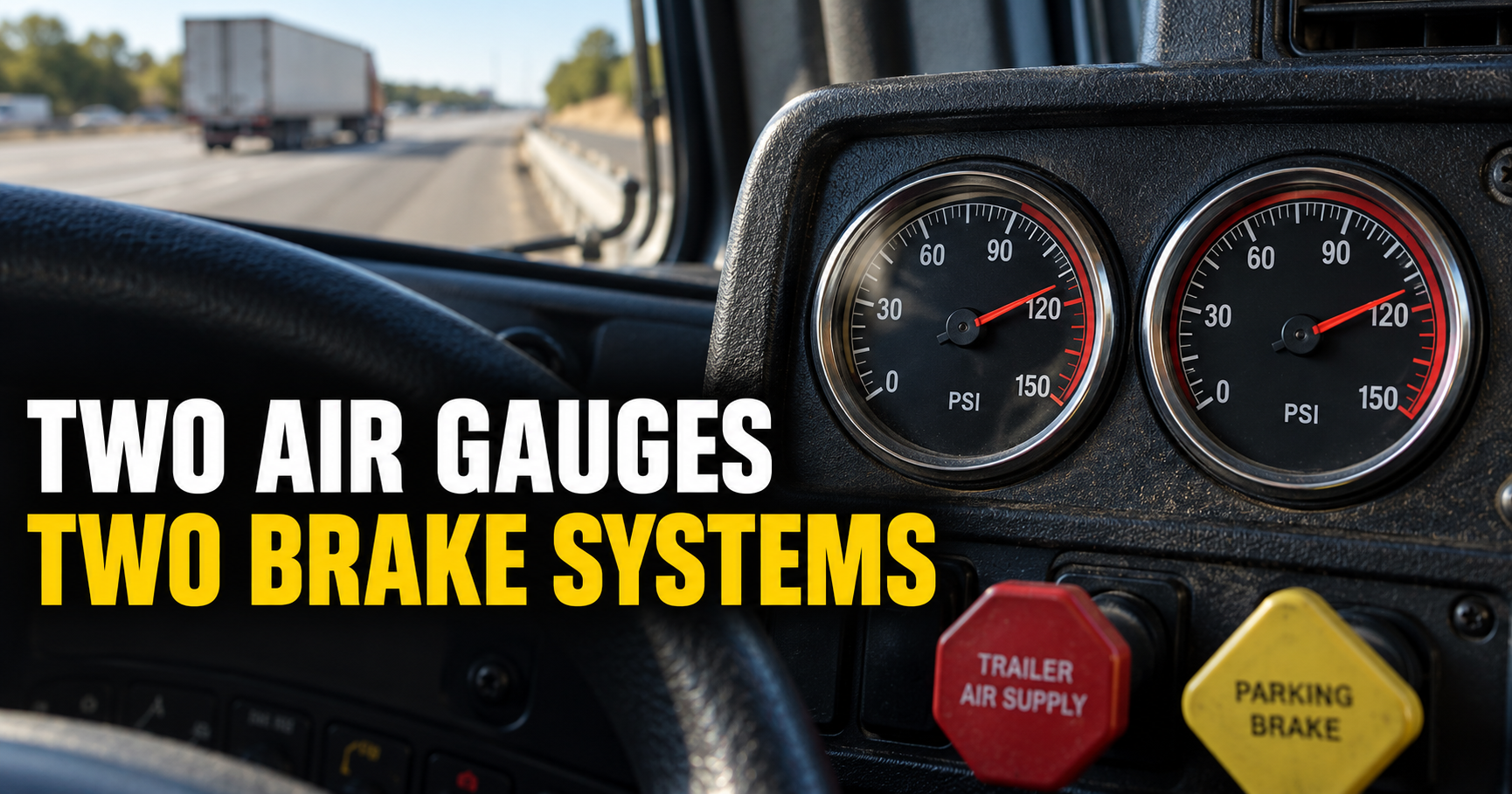
When I first climbed into a semi truck, one of the first things I noticed was how many gauges were on the dashboard.
Some were obvious.
Fuel.
Speedometer.
Coolant temperature.
Then there were two air pressure gauges sitting side by side.
My first thought was pretty simple.
“Why are there two of them?”
Wouldn’t one gauge tell me everything I needed to know?
After getting my CDL and spending time driving every day, I realized those two gauges are actually some of the most important instruments in the entire truck.
They’re constantly telling you whether your air brake system is healthy enough to keep driving safely.
Once you understand what they’re showing, you’ll probably find yourself glancing at them every few minutes without even thinking about it.
Why Semi Trucks Have Two Air Pressure Gauges
Unlike a passenger car, most heavy-duty trucks don’t rely on hydraulic brakes.
They use compressed air.
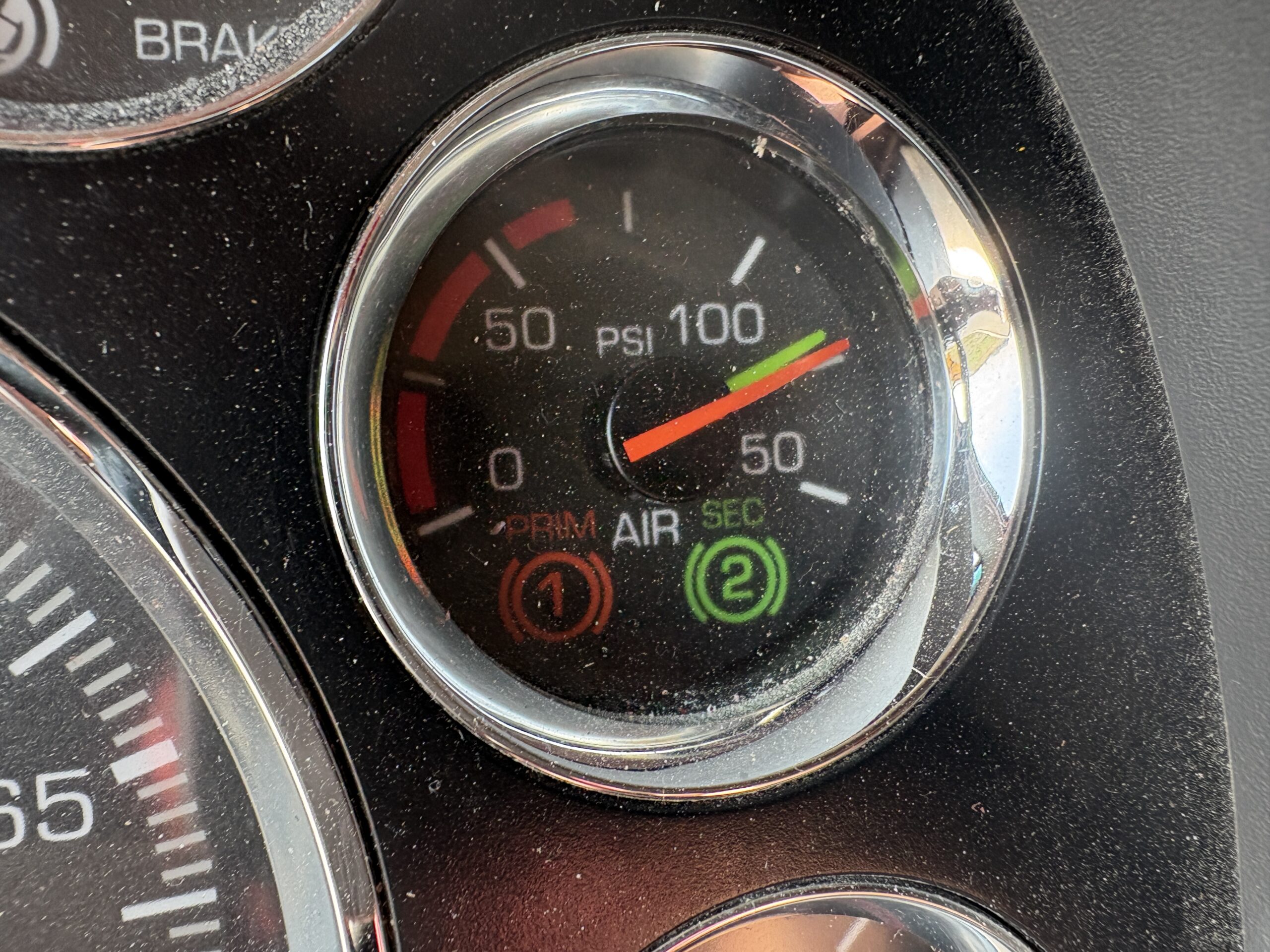
Instead of having one air reservoir, modern semi trucks use two separate air systems.
That’s why you see two gauges.
They’re commonly labeled:
- Primary Air
- Secondary Air
Each gauge monitors the pressure inside a different air reservoir.
The systems work together, but they’re separate enough that if one develops a problem, the other can often continue providing braking capability long enough for the driver to stop safely.
That’s one of the reasons commercial trucks are designed this way.
Federal Motor Carrier Safety Regulations require dual-service brake systems on most heavy commercial vehicles equipped with air brakes because they provide an important layer of redundancy if one circuit fails.



What Is Normal Air Pressure?
One of the most common questions new drivers ask is:
“Where should these gauges normally be?”
Most heavy-duty trucks spend the majority of their time operating between 100 and 125 PSI.
As the compressor builds pressure, both gauges climb together.
Eventually the air governor reaches its cut-out pressure and tells the compressor to stop pumping.
As you continue driving and use the brakes, air pressure slowly drops.
When pressure falls to the governor’s cut-in setting, the compressor begins building pressure again.
That cycle repeats all day long.
Seeing the needles slowly rise and fall within that normal operating range is exactly what you want.


Is It Normal If the Two Gauges Don’t Match Exactly?
Yes.
This surprises a lot of new CDL drivers.
The primary and secondary systems don’t always use exactly the same amount of air.
One system may briefly show a few pounds more or less than the other.
A small difference is perfectly normal.
What would concern me is seeing one gauge suddenly drop much lower while the other stays near normal.
That usually points toward a problem affecting only one side of the air system.
If you notice that happening, don’t ignore it.
It’s a sign that something deserves a closer look before it becomes a much bigger problem.
What Happens When You Press the Brake Pedal?
Another thing I didn’t fully understand when I was learning to drive was why the gauges moved every time I applied the brakes.
The answer is simple.
Every brake application uses a small amount of compressed air.
Normally, you won’t see a huge drop.
Maybe just a few pounds.
As the compressor continues running, that air is quickly replaced.
If you’re sitting still repeatedly pumping the brake pedal without letting the compressor catch up, you’ll see the pressure continue falling.
That’s completely different than normal driving.
On the road, the compressor is constantly working to keep both air systems within their normal operating range.
What Happens if Air Pressure Gets Too Low?
This is where those gauges become more than just numbers on the dashboard.
They’re warning you about the condition of one of the truck’s most important safety systems.
As long as both gauges stay in their normal operating range, everything is working the way it should.
If pressure keeps dropping, however, the truck is designed to warn you before it becomes dangerous.
Most trucks have both a warning light and an audible low-air alarm that activates when system pressure drops to around 60 PSI.
That warning is telling you something important.
The truck is running out of usable air.
You should never ignore it.
Federal regulations require a low-air warning device because drivers need time to safely stop before air pressure becomes critically low.
Why the Parking Brakes Can Apply Automatically
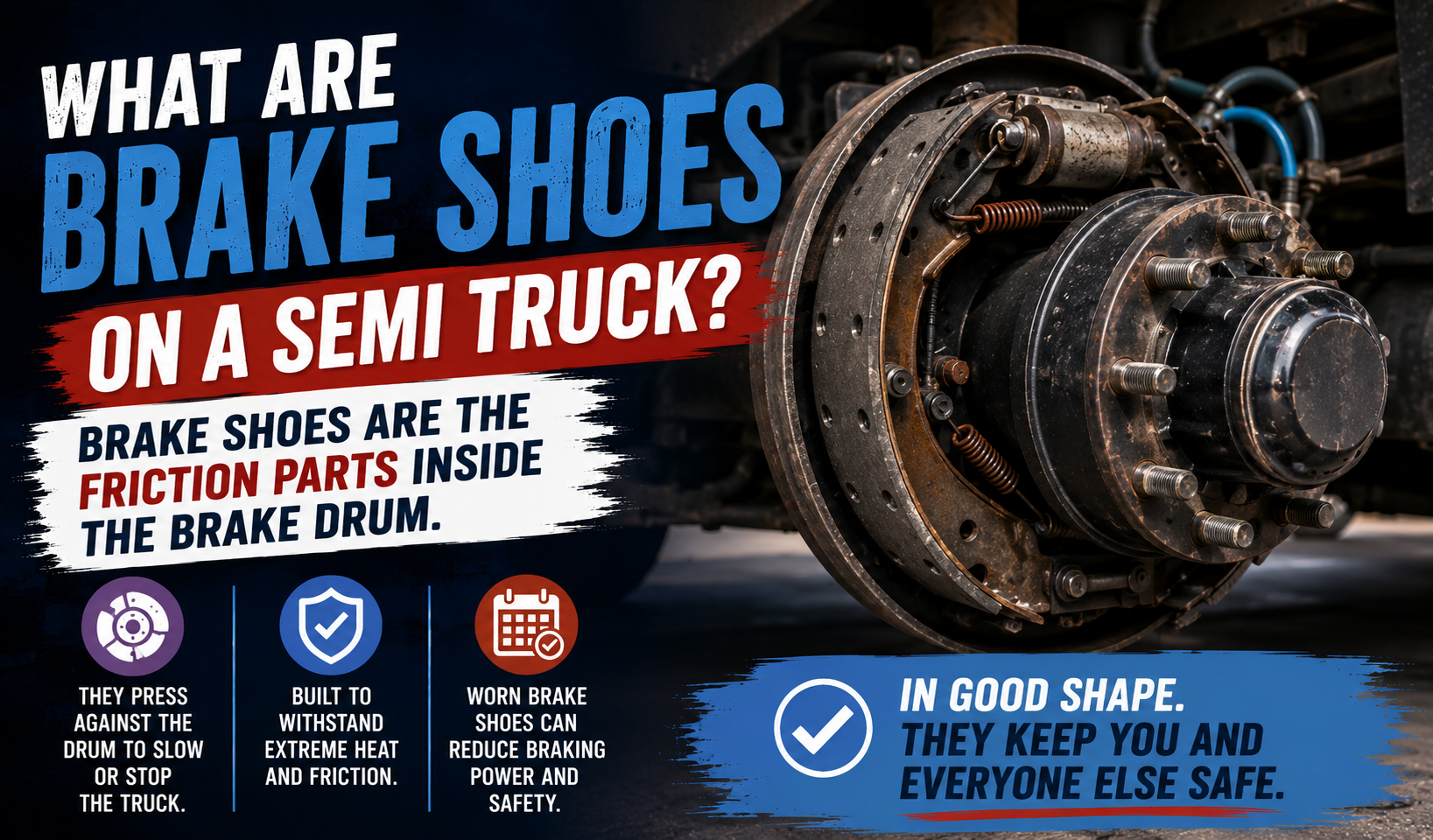
One thing that surprises many new drivers is learning that the parking brakes are actually held released by air pressure.
When enough air pressure is available, powerful springs inside the brake chambers remain compressed.
If air pressure falls too far, those springs begin applying the brakes automatically.
That’s why they’re called spring brakes.
On most trucks, this happens somewhere around 20 to 40 PSI, depending on the system.
By that point, you’ve already ignored the low-air warning.
The truck is now protecting itself because there isn’t enough air pressure left for safe operation.
That’s also why you should never continue driving after a low-air warning hoping the pressure will magically come back on its own.
Why Do the Gauges Drop When I’m Sitting Still?
Another question I had while learning was why the needles sometimes moved even when the truck wasn’t driving.
That’s perfectly normal.
Air brakes use compressed air.
Every time you press the brake pedal, you’re using a small amount of that stored air.
If you’re sitting in one place repeatedly pressing the brakes, the pressure will gradually decrease until the compressor catches back up.
That’s exactly why the air brake portion of the CDL skills test has you demonstrate air pressure loss and recovery.
You’re proving the compressor, governor, warning devices, and spring brakes all operate correctly.
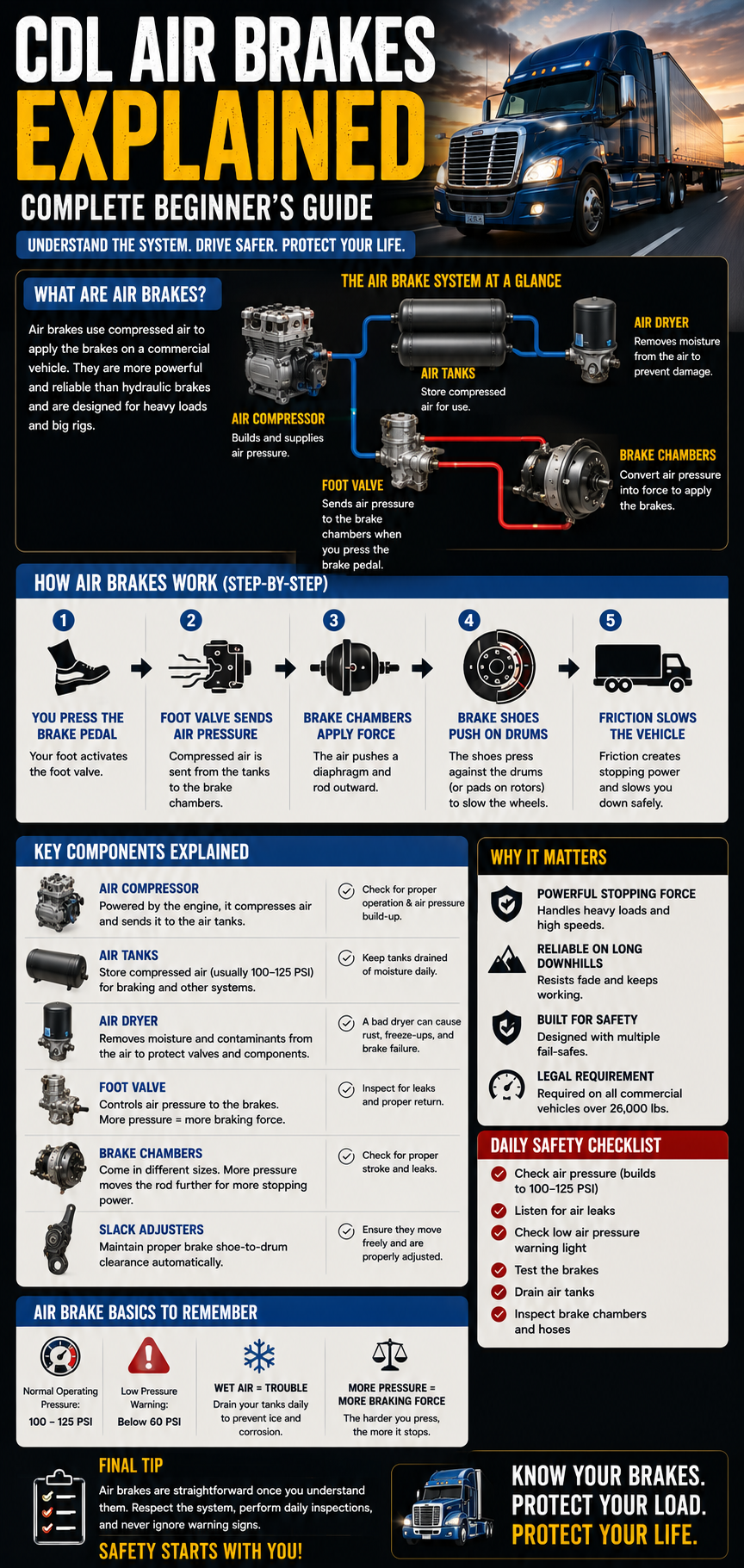
If you’re preparing for your CDL, my CDL Air Brakes Explained Complete Beginner’s Guide walks through that entire system in much greater detail.
What If One Gauge Starts Falling But the Other Doesn’t?
This is one of the biggest advantages of having two separate air systems.
If one gauge suddenly starts dropping much faster than the other, it usually means there’s a problem affecting only one circuit.
Some possible causes include:
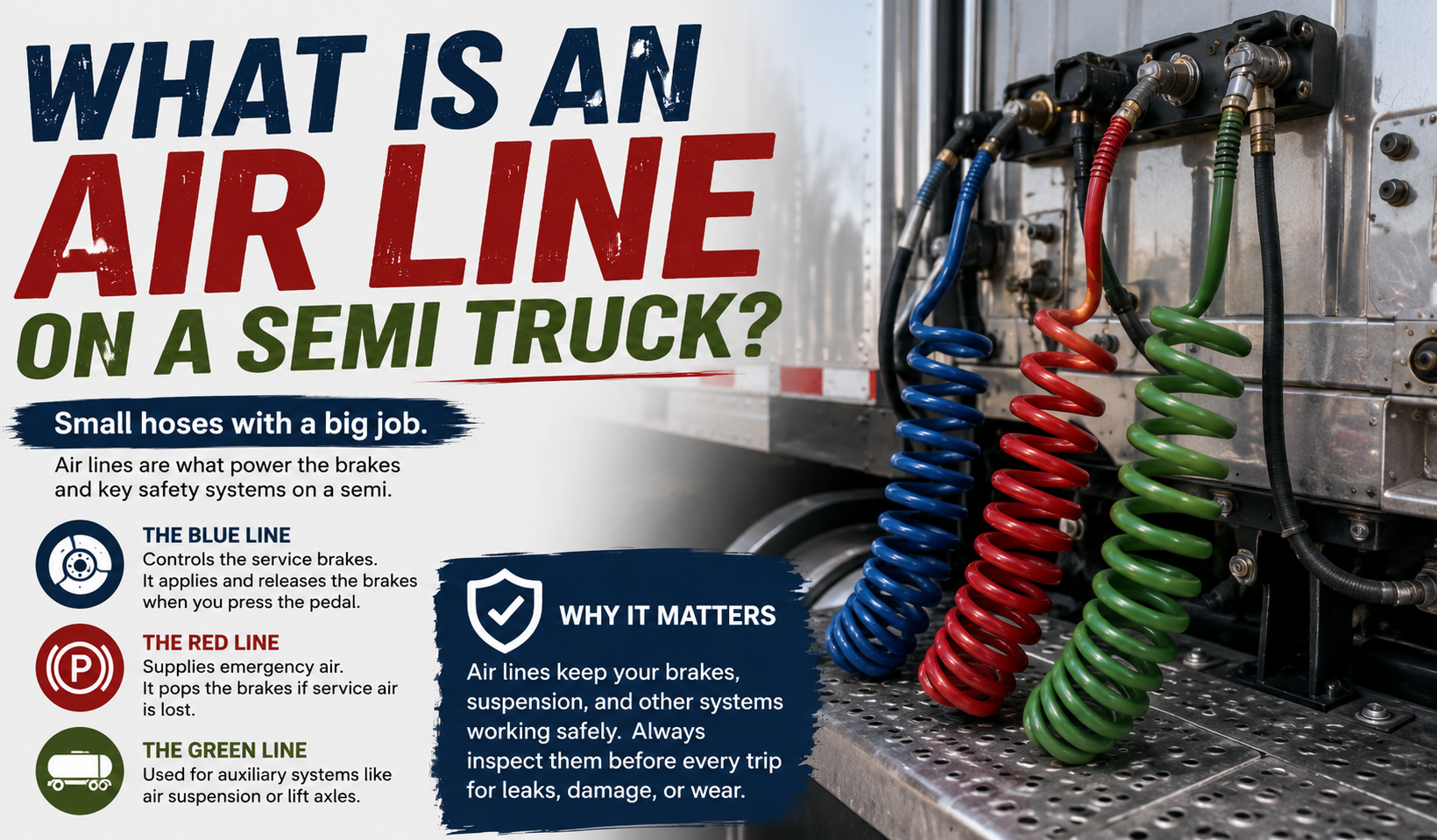
- An air leak.
- A damaged air line.
- A faulty valve.
- A leaking brake chamber.
- Another component connected to that air circuit.
The important thing isn’t diagnosing the exact failure while you’re driving.
The important thing is recognizing that something isn’t normal.
If one gauge continues falling while the other remains steady, it’s time to safely get off the road and investigate the problem.

Don’t Obsess Over Every Small Needle Movement
One mistake I think many new drivers make is watching the air gauges too closely.
The needles move.
That’s their job.
Air pressure naturally rises and falls as the compressor cycles and the brakes are used.
Small changes are completely normal.
What you’re really watching for is anything unusual.
A gauge that won’t build pressure.
Pressure that drops rapidly.
A low-air warning.
One gauge behaving completely differently than the other.
Those are the situations that deserve your attention.
Frequently Asked Questions
Why does my semi truck have two air pressure gauges?
Most heavy-duty trucks use two separate air brake circuits for safety. Each gauge monitors a different air reservoir so the driver can see the condition of both systems.
Is it normal for one air gauge to read slightly higher?
Yes.
A small difference between the two gauges is common because each air system may be using air at a slightly different rate.
What PSI should my air pressure normally be?
Most trucks normally operate somewhere around 100 to 125 PSI, although the exact operating range varies slightly depending on the truck and governor settings.
What should I do if the low-air warning comes on?
Treat it seriously.
Safely pull off the road as soon as practical and determine why the system isn’t maintaining normal air pressure.
Driving with low air pressure can eventually lead to automatic spring brake application and loss of normal braking performance.
These Are Gauges Every Driver Learns to Trust
When I first looked at the dashboard, those two air pressure gauges just looked like two more needles among a dozen others.
Now they’re some of the first gauges I glance at after starting the truck.
Not because I expect something to be wrong.
Because they tell me one of the truck’s most important safety systems is working the way it should.
Once you understand what they’re showing, you stop looking at them as two mysterious gauges and start seeing them for what they really are.
A quick snapshot of the health of your entire air brake system.
Author: Jake Harrison
Jake Harrison is a commercial transportation writer for TruckingResource.com who specializes in commercial truck maintenance, CDL training, air brake systems, and heavy-duty equipment. He works with the TruckingResource.com editorial team to create practical, easy-to-understand guides that help drivers better understand the trucks they operate every day.