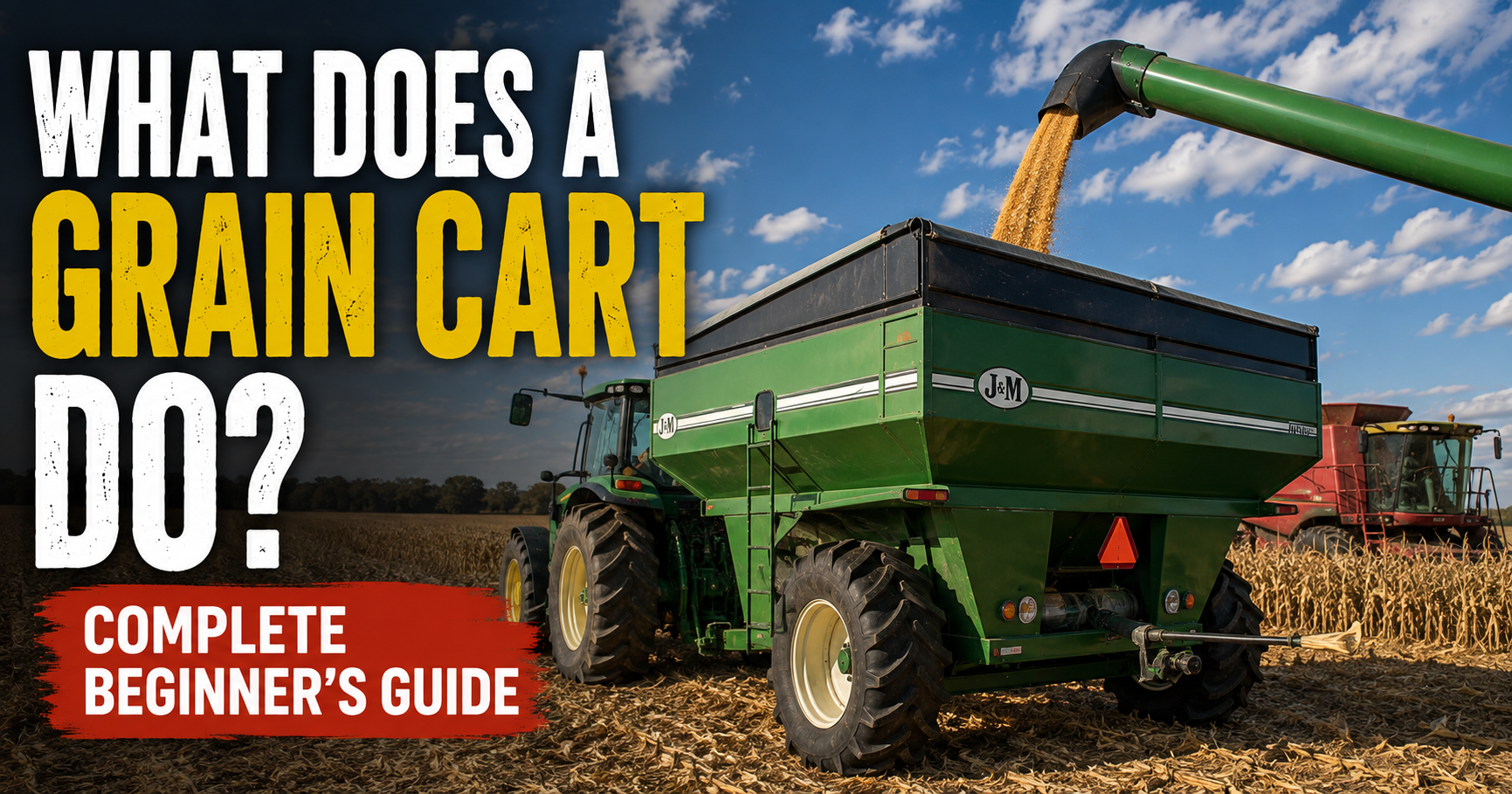
Growing up around farming, I’d seen grain carts plenty of times.
I knew they were pulled by tractors.
I knew they carried grain.
But if someone had asked me exactly what their job was, I honestly couldn’t have explained it very well.
Now that I’ve started hauling corn during harvest, I see firsthand why a grain cart is one of the most important pieces of equipment in the entire operation.
Without it, harvest would slow down dramatically.
The grain cart isn’t there just to move grain.
Its real job is to keep the combine harvesting as continuously as possible.
Once you understand that, the entire harvest process makes much more sense.
If you’re new to harvest trucking, I’d recommend reading How Harvest Trucking Works From Field to Grain Bin first because it shows how the combine, grain cart, truck, and grain bins all work together.
What Is a Grain Cart?
A grain cart is a large wagon pulled by a tractor that’s designed to temporarily hold harvested grain.
You’ll also hear people call them:
- Auger carts
- Grain buggies
- Chaser bins (in some areas)
Regardless of the name, the job is the same.
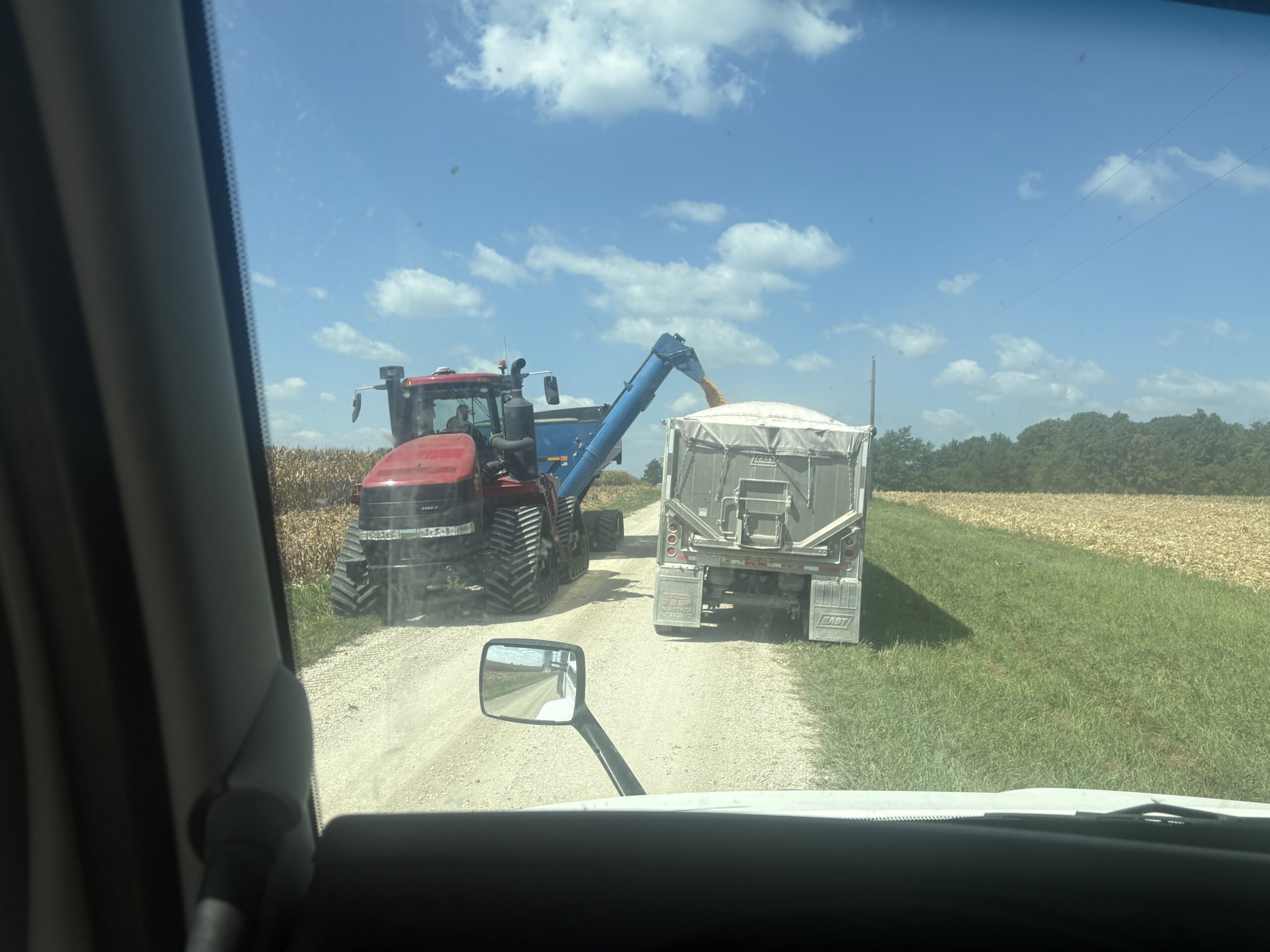
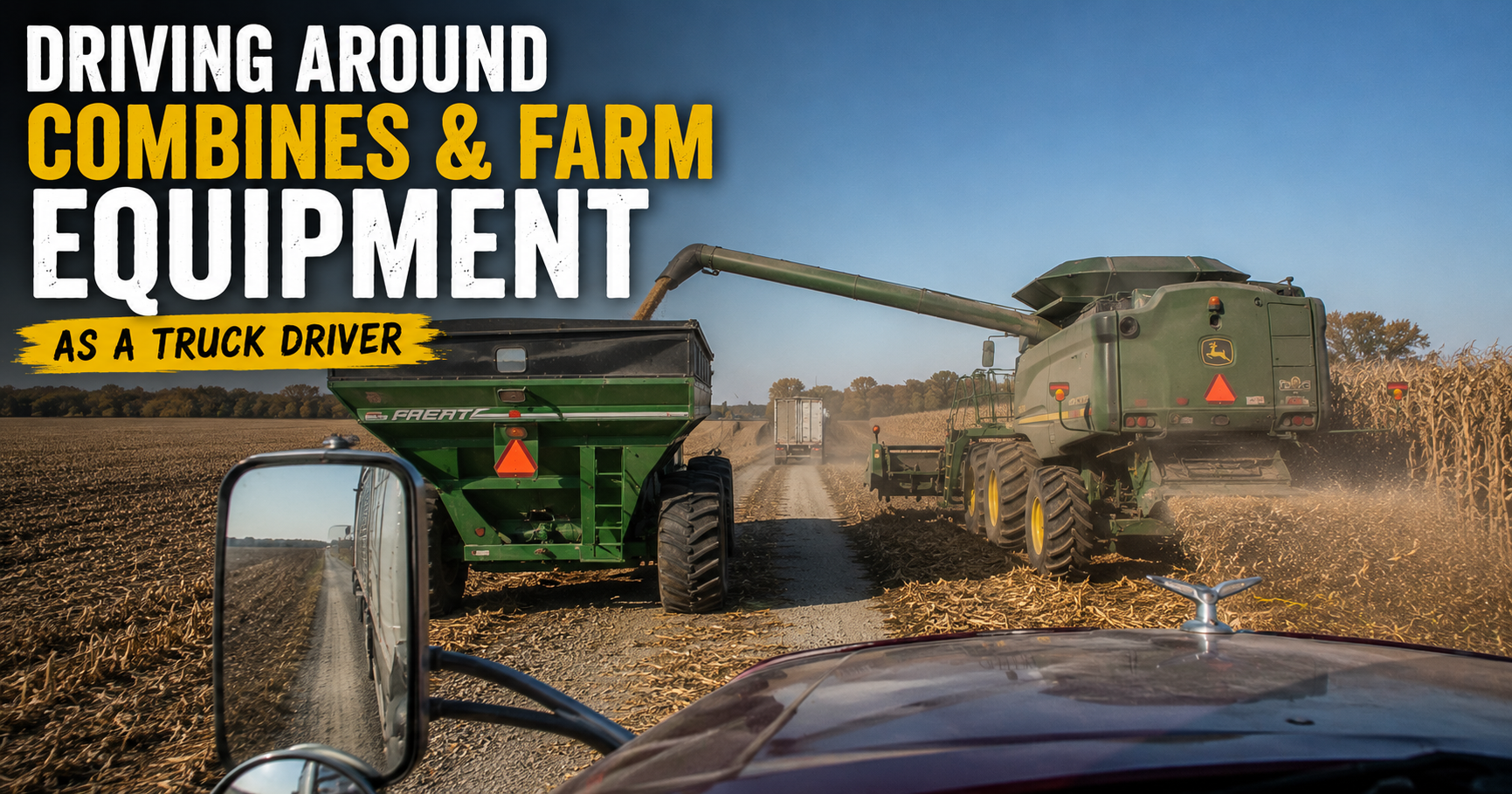
The grain cart receives grain from the combine and then transfers it into a waiting grain truck.
Instead of the combine driving to the truck every time its grain tank fills up, the grain cart comes to the combine.
That simple idea saves an incredible amount of time during harvest. Grain carts allow combines to unload on the move and then quickly transfer grain to trucks waiting at the field edge. That time savings can influence grain truck trips per day across the harvest operation.
Why Don’t Trucks Just Drive Beside the Combine?
That’s a question I wondered myself.
The answer becomes pretty obvious once you watch harvest for a while.
Semi trucks are heavy.
Fields aren’t always dry.
Driving loaded trucks throughout a field increases soil compaction and can easily create problems in soft conditions.
Grain carts are built specifically for field work.
Their large flotation tires or tracks spread out the weight much better than a loaded semi, allowing them to travel where trucks often shouldn’t.
Instead of bringing the truck to the combine…
The grain cart brings the grain to the truck.
The Combine Doesn’t Have to Stop Harvesting
This is probably the biggest advantage.
A combine’s grain tank fills surprisingly quickly.
Without a grain cart, the combine would have to stop harvesting, drive over to the truck, unload, and then drive back to where it left off.
That might not sound like much.
But if you repeat that dozens of times every day, you lose a tremendous amount of harvesting time.
Instead, the grain cart pulls alongside while the combine continues harvesting.
The combine unloads directly into the cart while both machines keep moving.
Once the cart is full enough, it heads to the waiting truck.
Meanwhile…
The combine never stopped harvesting.
That’s exactly what the grain cart was designed to accomplish. Keeping the combine harvesting almost continuously is considered the primary benefit of using a grain cart.
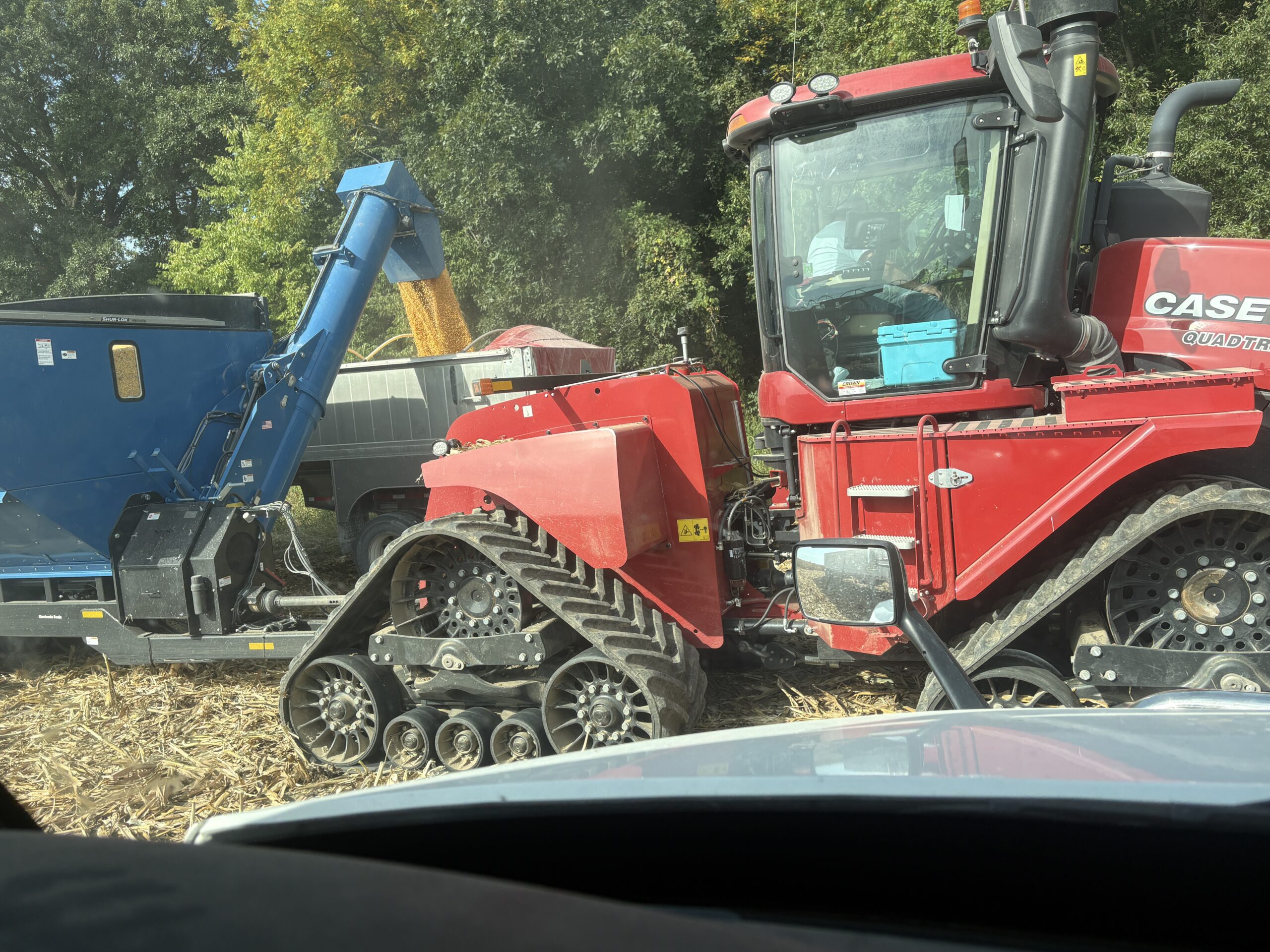
How the Grain Cart Loads the Truck
Once the grain cart has collected enough corn from the combine, the operator heads toward the waiting truck.
This is where everything starts coming together.
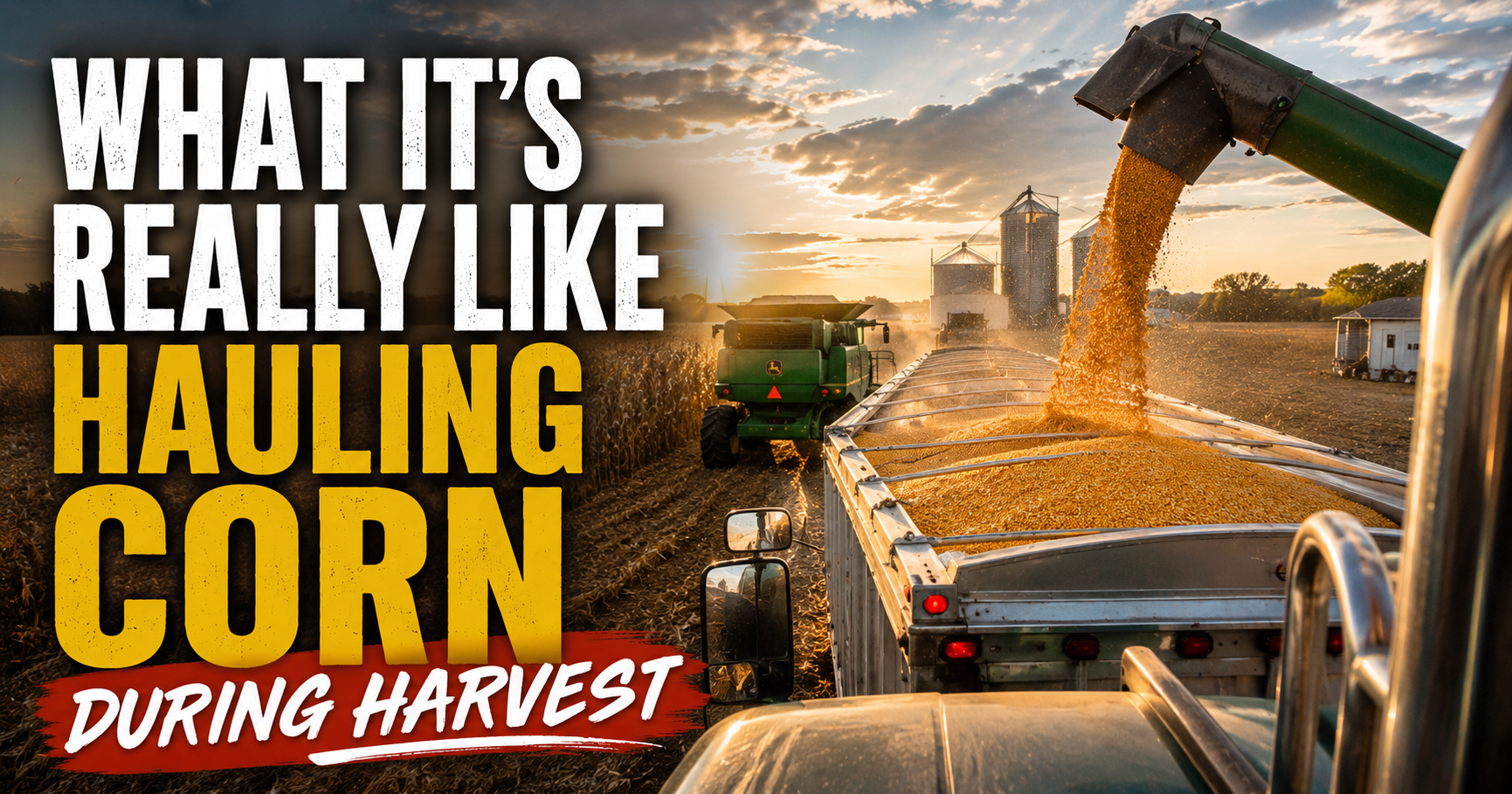
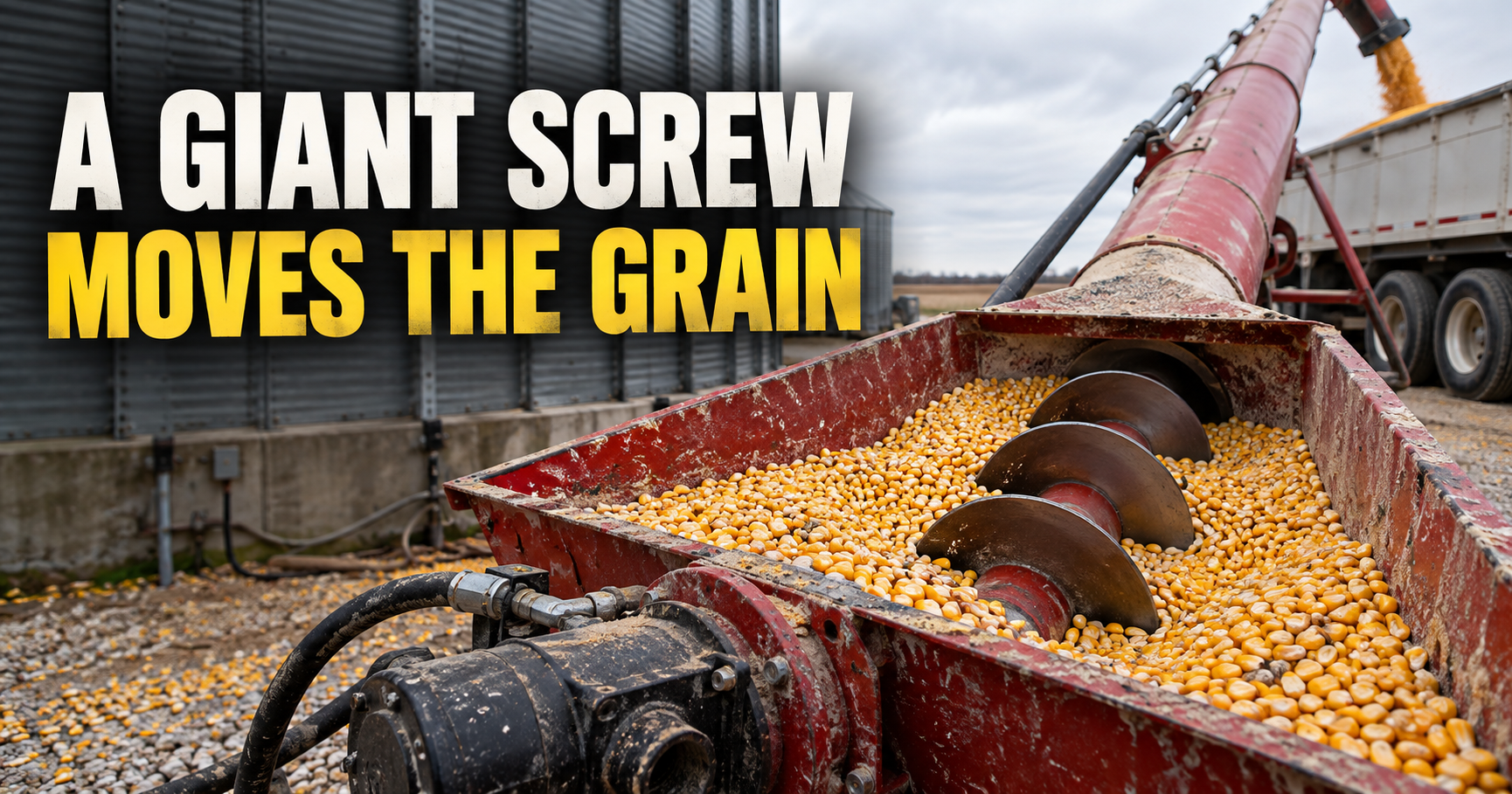
The truck is normally parked in a location that’s easy to reach without driving all over the field. The grain cart pulls alongside the trailer, swings the unloading auger into position, and begins transferring grain into the hopper trailer. High-capacity unloading augers can move hundreds of bushels per minute, so a truck can often be loaded in just a few minutes. The broader harvest trucking experience perspective shows how this loading process fits into a driver’s daily routine.
Watching it happen is impressive.
What looks like a simple process actually requires a lot of skill from the grain cart operator.
They have to position the auger correctly over the trailer while continuing to move alongside the truck. They also need to distribute the grain throughout the trailer instead of piling it all into one spot. That helps keep the load balanced and makes better use of the trailer’s capacity.
Grain Cart Operators Have a Tough Job
Before I started hauling grain, I honestly thought the truck driver had the hardest job during harvest.
Now I’d say every person has their own challenges.
The grain cart operator is constantly thinking ahead.
They’re watching the combine.
Watching how full the cart is becoming.
Watching where the truck is.
Planning the quickest route across the field.
Trying to be waiting for the combine before it actually needs to unload.
That’s a lot to manage.
If the grain cart falls behind, eventually the combine has nowhere to unload.
If the truck isn’t ready, the grain cart eventually fills up.
Everything has to stay moving together.
Grain Carts Come in Many Different Sizes
Not every farm uses the same size grain cart.
Smaller operations may use carts that hold only a few hundred bushels.
Larger farms often use carts capable of holding well over 1,000 bushels before unloading into a truck. Capacities commonly range from around 750 to 1,500 bushels depending on the model and operation.
The right size depends on things like:
- How many combines are harvesting.
- How large the fields are.
- How many trucks are hauling grain.
- How quickly trucks can get back from unloading.
There isn’t one perfect size for every farm.
The equipment has to match the operation.


It’s Really About Keeping Everyone Working
After watching harvest for a while, I’ve realized the grain cart isn’t just another wagon.
It’s really the traffic controller for the entire harvest.
It keeps the combine harvesting.
It keeps the trucks loading.
It keeps grain flowing.
Without it, everybody spends more time waiting.
With it, everyone spends more time working.
That’s why grain carts have become such an important part of modern harvesting operations.
I Understand Their Importance Much More Now
Before starting my first trucking job, I probably wouldn’t have paid much attention to a grain cart sitting in a field.
Now I look at one completely differently.
I know the combine depends on it.
I know the truck depends on it.
I know harvest moves more efficiently because it’s there.
It’s one of those machines that doesn’t always get much attention, but after seeing harvest from the driver’s seat, I’ve realized just how important it really is.
The next time you see a tractor pulling a grain cart across a field, you’ll know it’s doing much more than simply hauling corn. If that equipment is moving along a public road, encountering tractors and grain carts provides context on how truck drivers should respond.
It’s helping keep one of the busiest times of the farming year moving from sunrise until the last load of the day.


Frequently Asked Questions
Can a combine unload directly into a grain truck?
Yes, in some situations it can. However, many farms prefer using a grain cart because it allows the combine to continue harvesting while the cart transports grain to a waiting truck near the edge of the field. That keeps the combine operating more continuously and reduces unnecessary truck traffic through the field.
Why is it called a grain cart?
The name comes from its job. It “carts” grain from the combine to the truck. Depending on where you live, you may also hear people call it an auger cart, grain buggy, or chaser bin.
Does every farm use a grain cart?
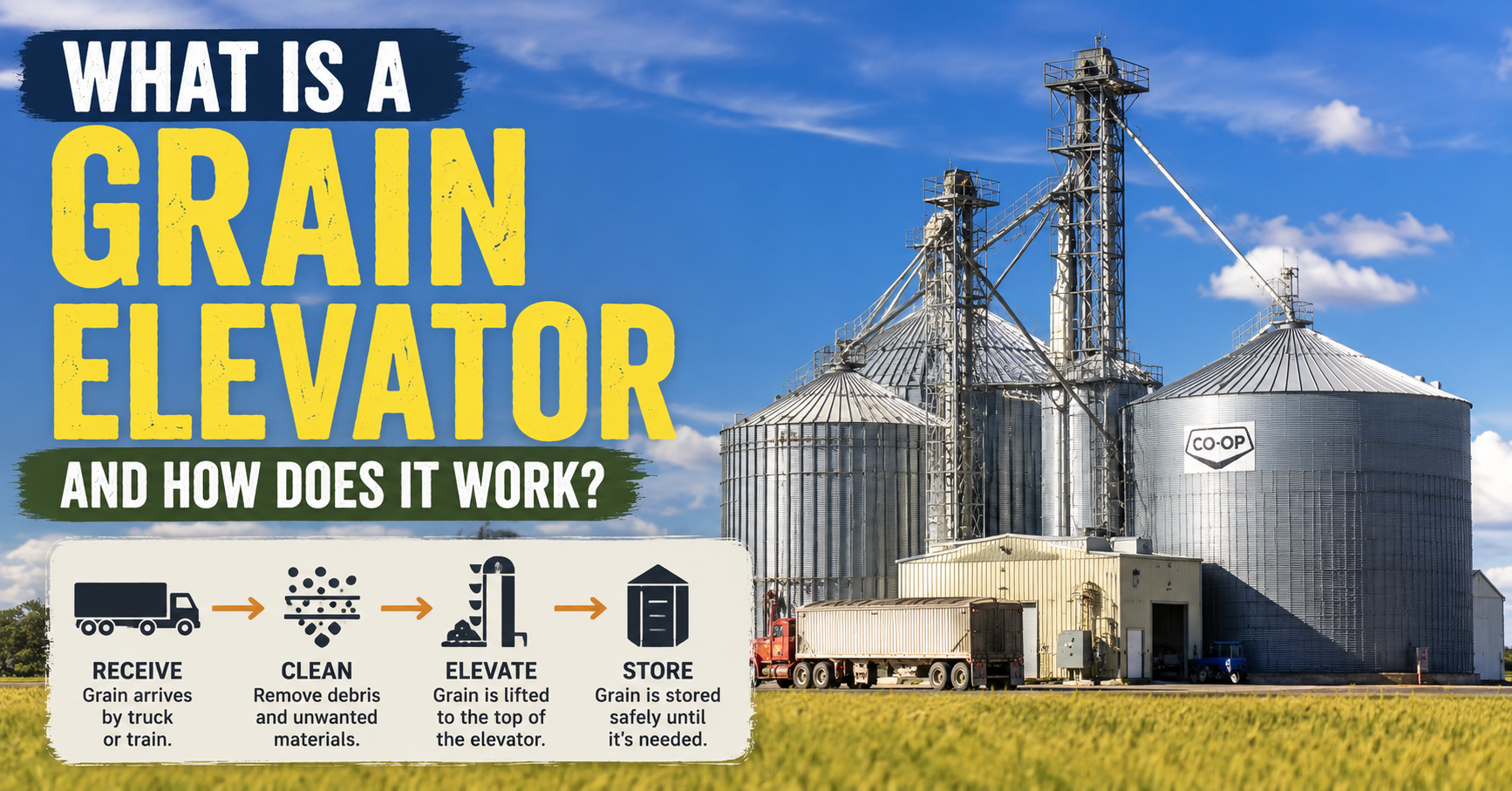
No. Smaller farms may unload combines directly into trucks or wagons. Grain carts become more common as farms grow larger because they help improve harvest efficiency and reduce combine downtime. For the next stages after grain reaches a receiving point, see how grain is handled after unloading.
Can one grain cart serve multiple combines?
Yes, depending on the size of the operation, field layout, and harvesting speed. Larger farms may use multiple grain carts so combines can continue harvesting with minimal interruption.
Author: Dax Weaver
Dax Weaver is the founder of TruckingResource.com and a first-year Class A CDL driver from Cairo, Missouri. After earning his CDL on his first attempt, he began hauling corn during harvest for a local farming operation. Through TruckingResource.com, Dax shares honest first-hand experiences, practical trucking advice, and real-world insights from learning the industry one load at a time.