When I first started learning about grain hauling, I kept hearing people talk about test weight.
At first, I assumed it simply meant how much a truckload weighed.
It doesn’t.
Test weight measures something completely different.
It’s one of the quality measurements taken from a grain sample before a load is accepted at many commercial grain elevators. Readers can see how this inspection step fits into the facility's larger workflow in commercial grain elevators.
Understanding what test weight means helped me better understand why every truckload is sampled before it’s unloaded.
What Is Grain Test Weight?
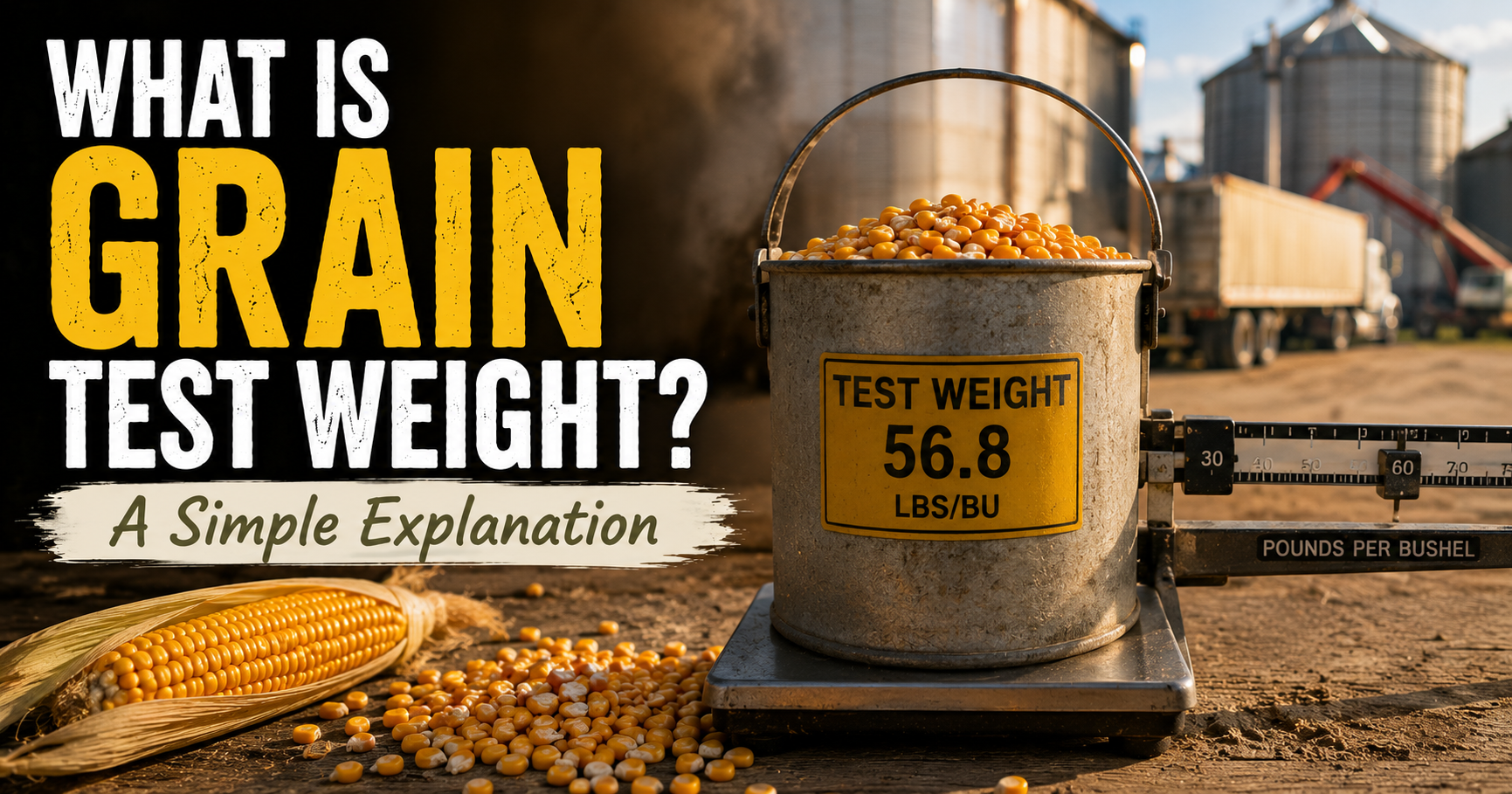
Test weight is the weight of a specific volume of grain.
Instead of weighing an entire truckload, inspectors weigh a standardized volume of grain and report the result as pounds per bushel.
For corn, the USDA standard bushel is based on 56 pounds, while other grains use different standards. Test weight is an official grain quality measurement and is determined by weighing a standardized volume of grain.
The important thing to remember is that test weight is not the same thing as the total weight of the truck. Understanding the difference also provides useful context for total weight of the truck.


Why Does Test Weight Matter?
Test weight helps buyers evaluate grain quality.
Generally speaking, grain with a higher test weight has fuller, better-developed kernels than grain with a lower test weight.
Lower test weight can result from several factors, including:
- Poor growing conditions.
- Drought.
- Disease.
- Early frost.
- Weather stress during grain fill.
- Harvest conditions.
Lower test weight may lead to price discounts depending on the grain and buyer because it’s one of the quality factors used during grain grading.



Test Weight Is Different Than Moisture
One thing that confused me at first was the difference between moisture and test weight.
They’re related, but they’re not the same measurement.
Moisture tells you how much water is inside the grain.
Test weight tells you how much a standard volume of grain weighs.
Because moisture can influence how kernels pack together, it can also affect test weight, which is why elevators determine both values during inspection.
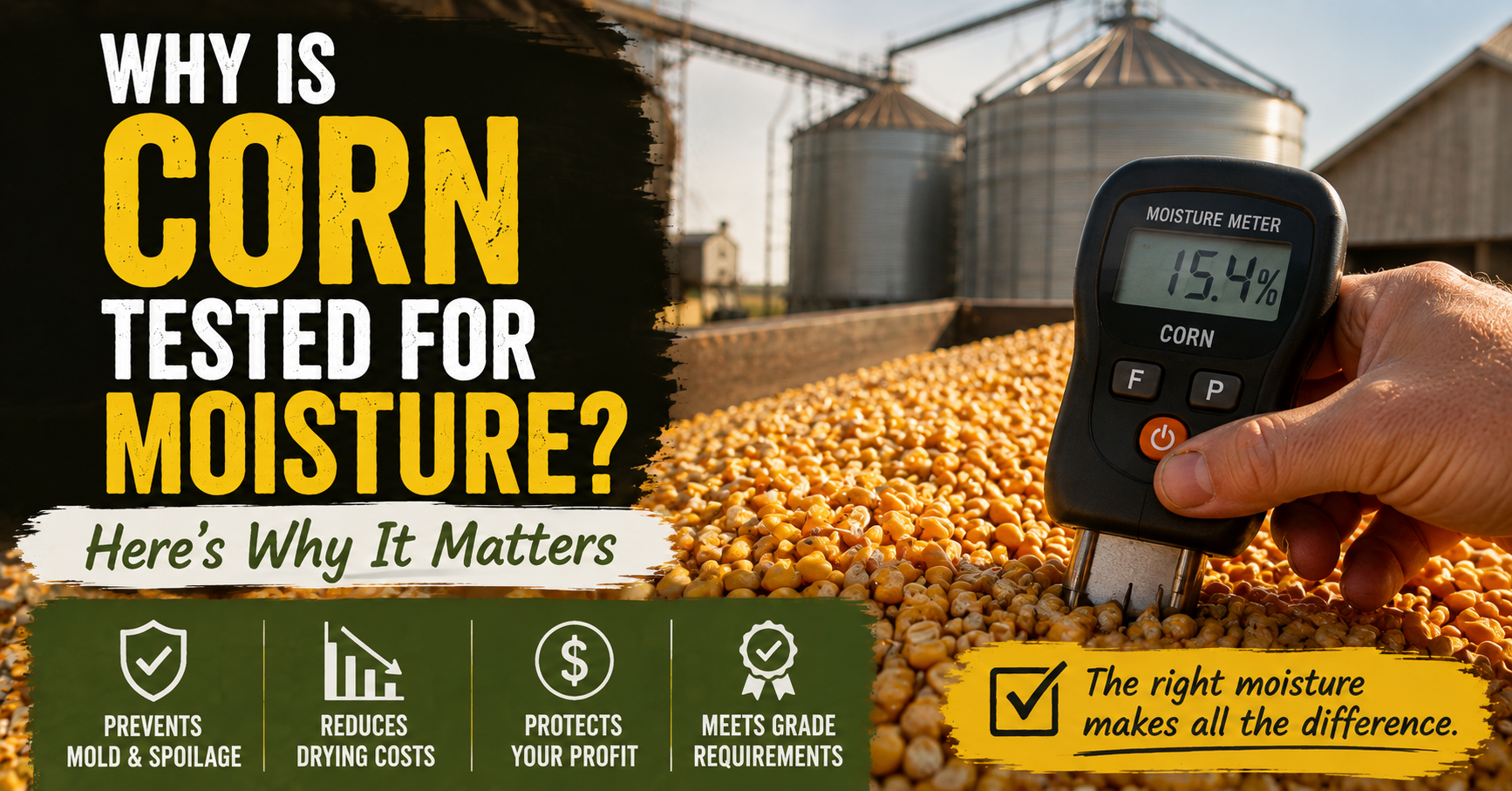
If you’d like to understand moisture first, read Why Is Corn Tested for Moisture? Here’s Why It Matters because that measurement is usually discussed alongside test weight.
Test Weight Doesn’t Tell You Yield
This surprised me.
Many people assume higher test weight automatically means higher yields.
That’s not necessarily true.
A field can produce an excellent yield while having average test weight.
Likewise, grain with a very good test weight doesn’t automatically mean the field produced more bushels per acre.
Yield measures how much grain was produced.
Test weight measures one aspect of the grain’s quality.
The two are related but they’re not interchangeable. University extension specialists note that high test weight does not automatically mean high yield, and low test weight does not necessarily mean poor yields.


Test Weight Can Affect the Price Farmers Receive
Test weight isn’t just recorded for curiosity.
It’s one of the quality factors grain buyers use when evaluating a load.
Grain with a lower test weight may receive discounts depending on the crop, the buyer, and the marketing standards being used.
That’s because test weight helps indicate how well the grain developed and is one of the official grading factors used under USDA grain standards.
It isn’t the only quality measurement, but it’s certainly an important one.
How Is Test Weight Measured?
The process is much simpler than I expected.
A representative sample of grain is collected from the load.
That grain is placed into specialized equipment that measures the weight of a standardized volume.
The result is reported as pounds per bushel.
Because the procedure is standardized, buyers and sellers can compare grain quality consistently no matter where the grain is delivered. USDA has established standardized procedures for measuring test weight so results are consistent across inspection locations. You can also review how we verify information to see how Trucking Resource handles authoritative sources and accuracy.
Test Weight Is Only One Part of Grain Quality
One thing I’ve learned is that no single number tells the entire story.
When grain arrives at a commercial elevator, inspectors may also evaluate:
- Moisture content.
- Foreign material.
- Damaged kernels.
- Broken kernels.
- Heat damage.
- Other grading factors.
Together, those measurements help determine the grain’s overall grade and market quality.
Truck Drivers Usually Don’t Need to Calculate Test Weight
As a truck driver, my responsibility is getting the load to its destination safely.
The grain elevator handles the sampling and testing.
Still, I think it’s helpful to understand what the numbers on a scale ticket actually mean.
The more I’ve learned about moisture, test weight, and grain grading, the more I’ve appreciated how much happens after the truck arrives at the elevator.

Frequently Asked Questions
Is test weight the same as the truck’s weight?
No. Test weight measures the weight of a standardized volume of grain, usually reported in pounds per bushel. It has nothing to do with how much the entire truck weighs.
Does higher test weight always mean better grain?
Generally, a higher test weight is associated with better grain quality, but it isn’t the only grading factor. Moisture, damaged kernels, foreign material, and other measurements are also considered during grain inspection.
Is test weight measured on every load?
Many commercial grain elevators measure test weight as part of the grading process before accepting grain, although the exact procedures can vary by facility and commodity.
Why should truck drivers understand test weight?
Even though drivers don’t perform the testing themselves, understanding test weight helps explain the information shown on grain scale tickets and why every load is sampled before it’s unloaded.
Another Small Number That Matters
When I first started learning about grain hauling, I assumed the only weight that mattered was how much grain the truck was carrying.
Now I know there are several different measurements, and each serves a different purpose.
Truck weight tells the elevator how much grain was delivered.
Moisture helps determine how safely the grain can be stored.
Test weight helps evaluate the grain’s quality.
Together, those numbers help keep the grain marketing system fair, consistent, and accurate from the moment a truck arrives until that grain reaches its final destination.
Author: Jake Harrison
Jake Harrison is a commercial transportation writer for TruckingResource.com who specializes in CDL training, trucking safety, commercial vehicles, freight operations, and agricultural transportation. He works with the TruckingResource.com editorial team to create practical, beginner-friendly guides that explain how trucking and the agricultural supply chain work together.