Most people understand that combines harvest corn and trucks haul it away.
What many people don’t think about is what happens after the truck reaches the farm.
Before starting my first trucking job, I honestly never gave it much thought either.
Now it’s something I see every day.
Once the truck leaves the field, the job isn’t finished.
In many ways, it’s only halfway done.
The grain still has to make it from the trailer into storage quickly, safely, and efficiently so the truck can get back to the field for another load.
If you’re new to harvest trucking, I’d recommend reading How Harvest Trucking Works From Field to Grain Bin first because it explains how the combine, grain cart, truck, and grain bins all work together throughout harvest.
The Goal Is to Get the Truck Turned Around Quickly
During harvest, time matters.
The truck sitting at the grain bins isn’t hauling another load.
Meanwhile, combines are still harvesting.
Grain carts are still filling.
Everyone is waiting on the truck to get back.
That’s why many farms build their grain handling systems around moving trucks through as efficiently as possible. Features like drive-over pits, grain legs, and larger unload areas are designed to reduce bottlenecks during harvest.
The faster a truck can unload safely, the faster it can return to the field.
Pulling Into Position
Every farm has a different layout.
Some have a large concrete unloading area.
Others have a more compact setup.
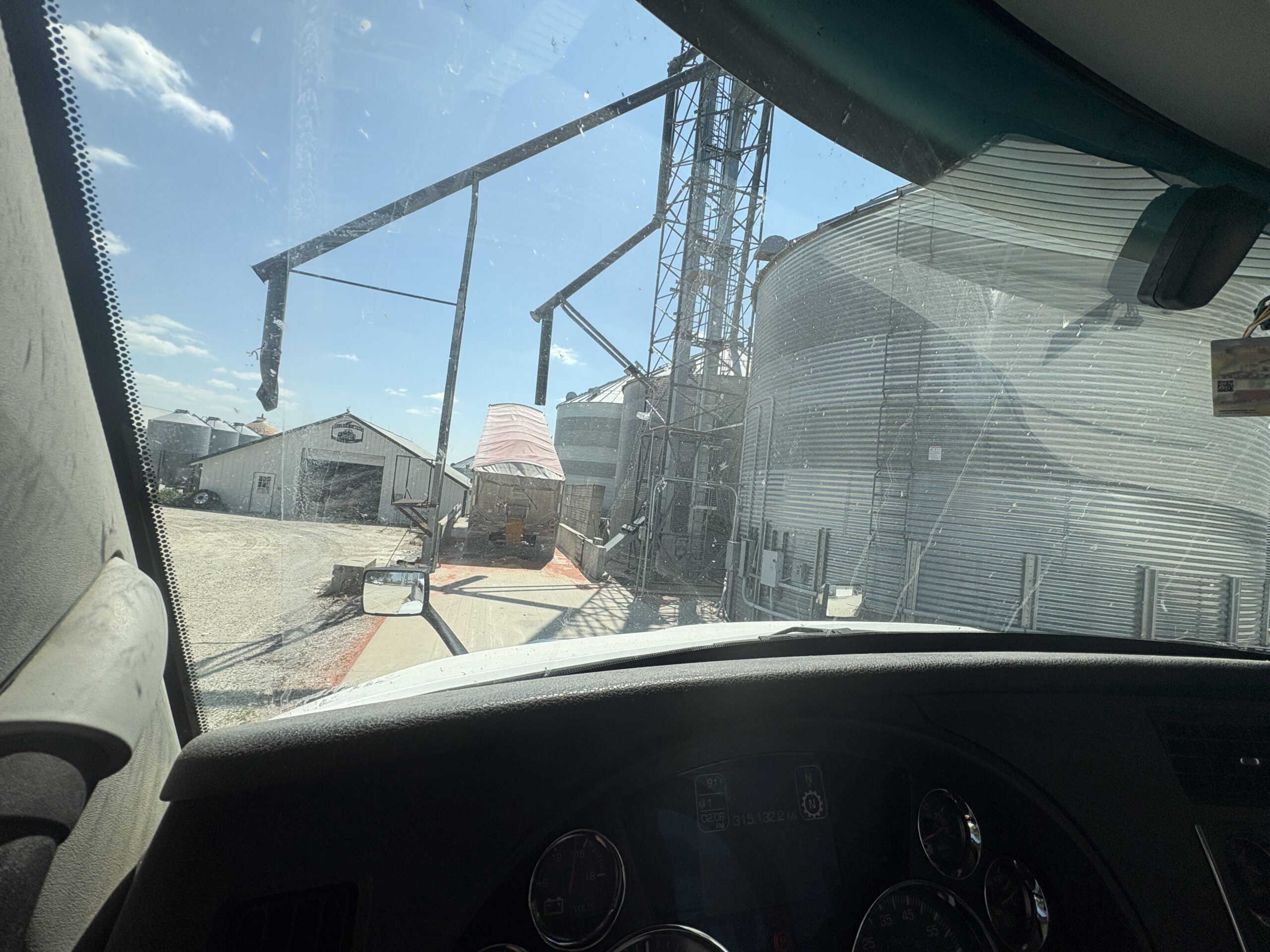
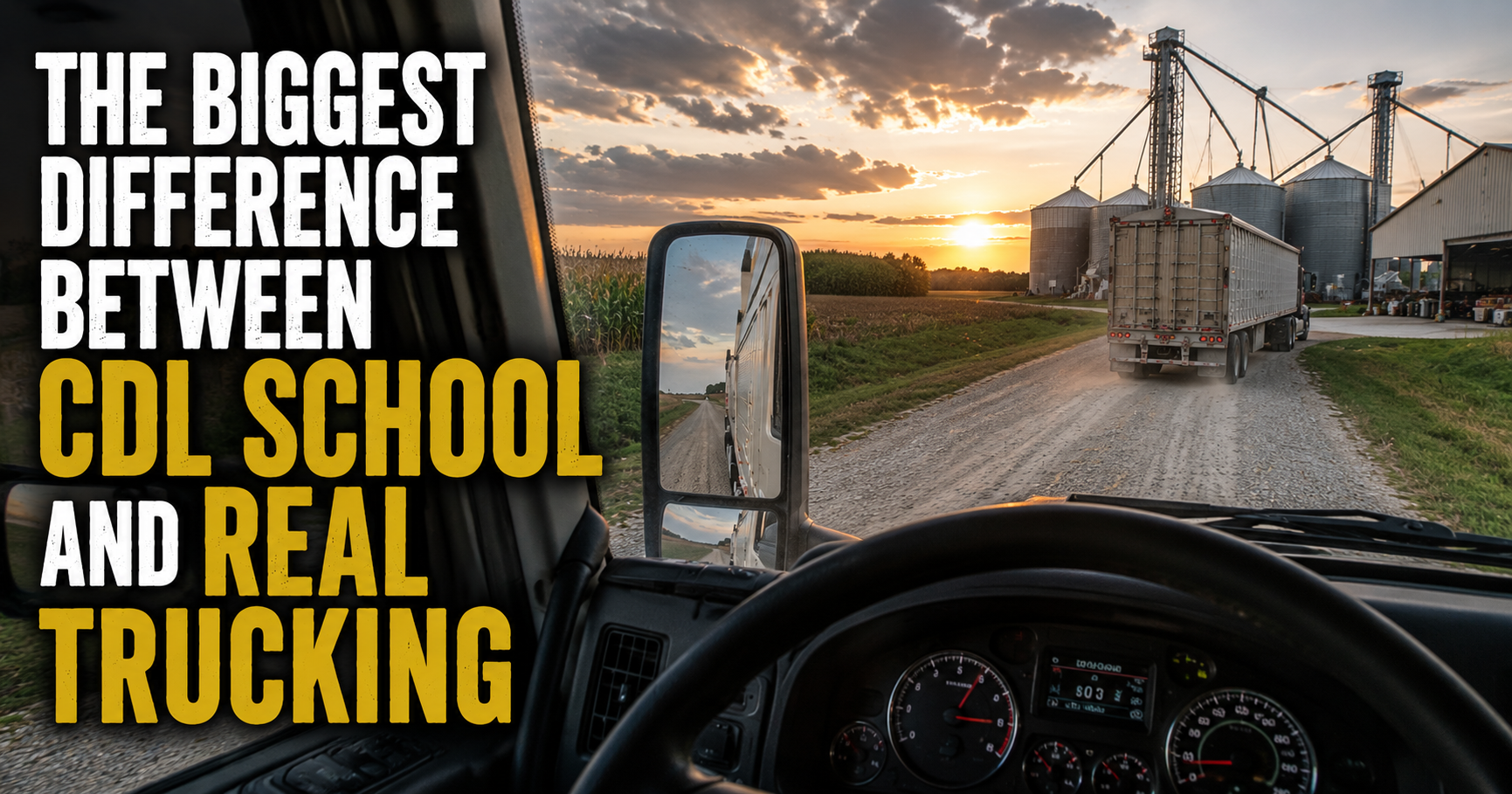
Regardless of the layout, the driver needs to line the trailer up correctly over the receiving pit or unloading hopper.
Getting lined up matters.
If you’re off by very much, grain can miss the pit, creating extra cleanup and slowing everything down.
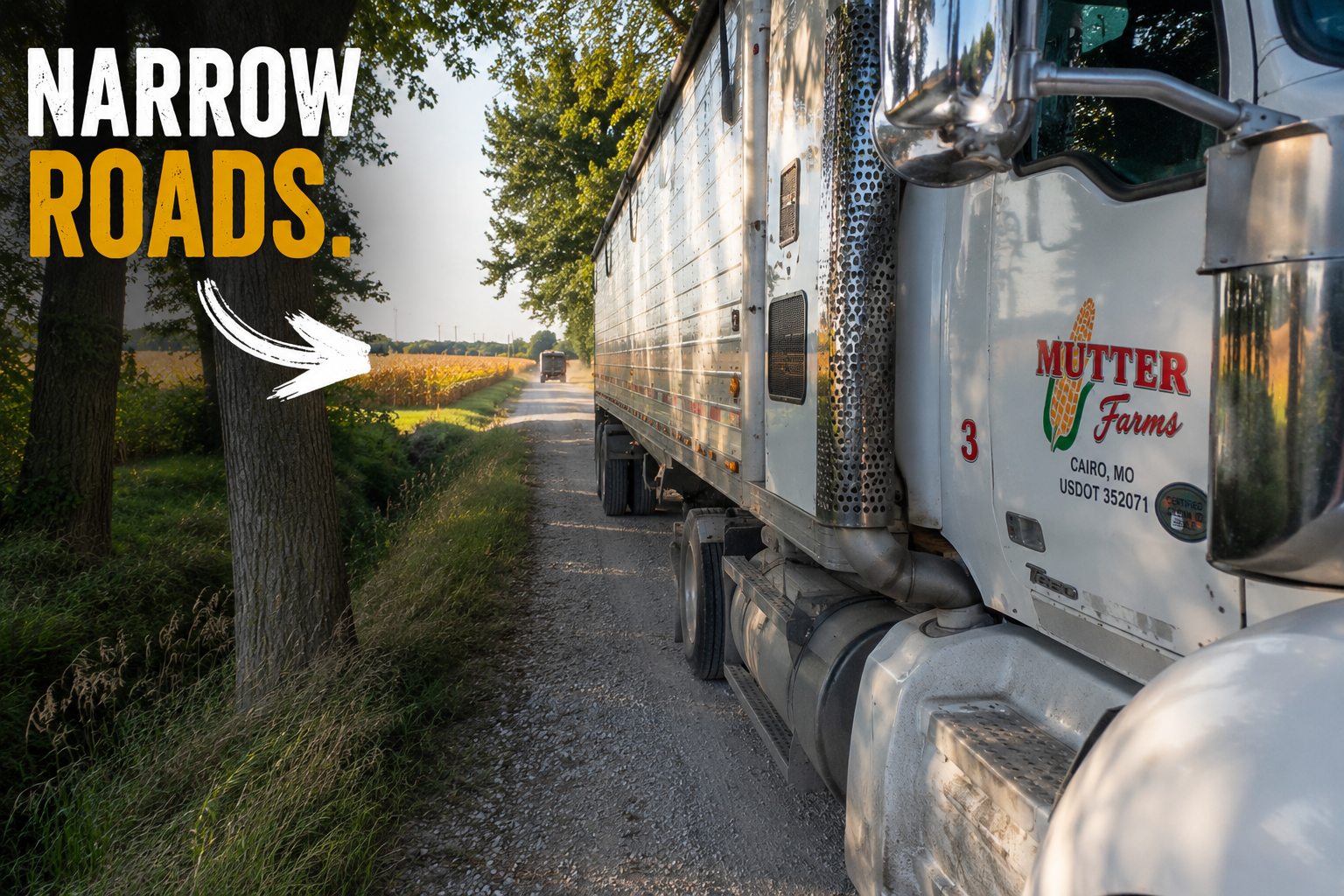
Like most things in trucking, taking an extra few seconds to get positioned correctly is much better than rushing. That same patience matters when get positioned correctly on narrow gravel roads and setting up a turn.
Opening the Hopper Doors
Once the truck is in position, it’s time to unload.
Most hopper-bottom grain trailers use doors underneath the trailer that allow the grain to flow downward by gravity.
As the doors are opened, the corn begins flowing into the receiving pit below.
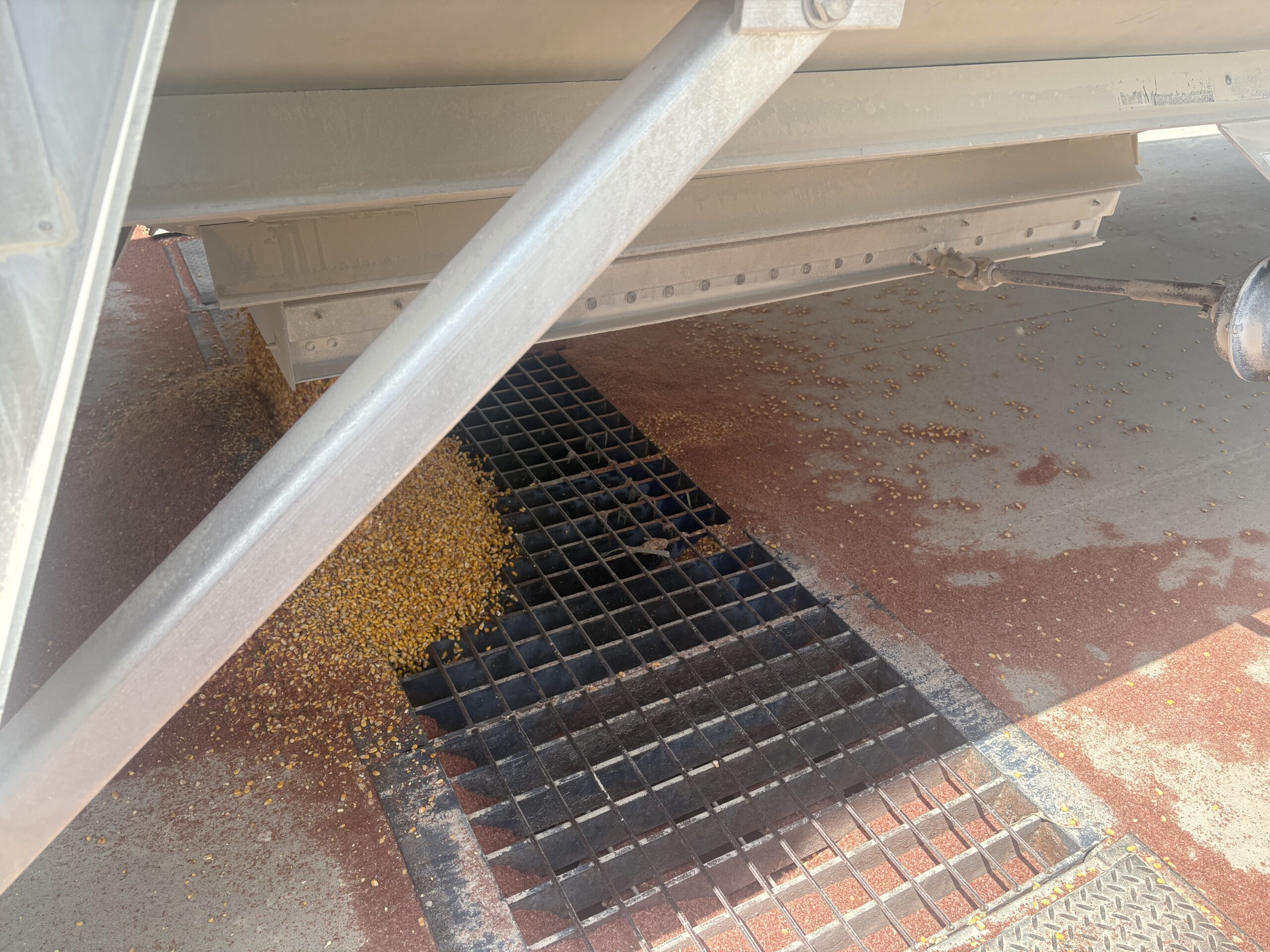
From there, the farm’s grain handling equipment takes over.
One thing I found interesting is how simple the unloading process actually is.
The trailer doesn’t dump like a dump truck.
Instead, gravity does almost all of the work.
Where Does the Grain Go?
After falling into the receiving pit, the corn doesn’t stay there very long.
The pit simply serves as the collection point.
From there, augers or a grain leg move the corn through the grain handling system and into the storage bins. Modern farm systems are designed to move grain continuously from the pit into storage while minimizing delays for waiting trucks.
Watching this happen for the first time helped me understand how much equipment is involved beyond just the truck itself.
The truck is only one piece of a much larger system.
Why You Sometimes Have to Wait to Unload
People often picture harvest as a nonstop race from the field to the grain bins.
Sometimes it is.
Other times, you might arrive and have to wait your turn.
That doesn’t necessarily mean something is wrong.
There may already be another truck unloading.
The augers may still be moving grain into a storage bin.
Someone may be changing which bin is being filled.
Or the farm may simply be working through several trucks that arrived close together.
When I first started, I thought waiting meant we were falling behind.
Now I understand it’s just part of keeping everything organized.
It’s much better to wait a couple of minutes than to rush around heavy equipment or create confusion in the unloading area.
Safety Around Grain Bins Is Extremely Important
One thing I realized very quickly is that grain handling equipment deserves respect.
Augers, PTO shafts, receiving pits, and grain bins can all be dangerous if they’re not treated properly.
As a truck driver, my job is to unload the grain safely and stay aware of what’s happening around me.
I don’t rush.
I pay attention to where people are working.
I stay clear of moving equipment unless I need to be there.
Grain bins themselves have serious hazards that many people don’t realize exist. Flowing grain can trap and engulf a person in seconds, and no one should ever enter a grain bin while grain is being loaded or unloaded.
Even though my job is hauling grain, it’s important to understand that safety doesn’t stop once the truck reaches the farm.

Every Farm Has Its Own Routine
One thing I’ve already noticed is that no two farms handle grain exactly the same way.
Some have newer grain handling systems.
Some have older equipment that’s still doing an excellent job.
Some have larger unloading areas.
Others are more compact.
The basic process stays similar, but every operation develops a routine that works best for its equipment, layout, and storage capacity.
As a new driver, I’ve found it helps to pay attention, ask questions when needed, and learn how each place prefers trucks to move through the unloading area.
Good Communication Keeps Everything Moving
Harvest is a team effort.
The combine operator, grain cart operator, truck drivers, and the people managing the grain handling system all depend on one another.
Sometimes that means waiting for instructions.
Sometimes it means letting another truck unload first.
Sometimes it means adjusting your plans because something changed in the field.
I’ve learned that good communication usually makes the entire process smoother.
Everyone has the same goal.
Keep harvest moving safely and efficiently.
What Surprised Me the Most
Before I started hauling grain, I thought unloading would be the easiest part of the job.
In many ways it is.
But I didn’t realize how much planning and equipment were involved after the truck reached the farm.
The truck may only spend a short time unloading, but there are augers, grain legs, receiving pits, storage bins, and people all working together behind the scenes.
Watching the entire process gave me a much better appreciation for everything that happens after the grain leaves the field.
It also helped me understand why harvest depends on every piece of equipment doing its job.
Frequently Asked Questions
How long does it take to unload a grain truck?
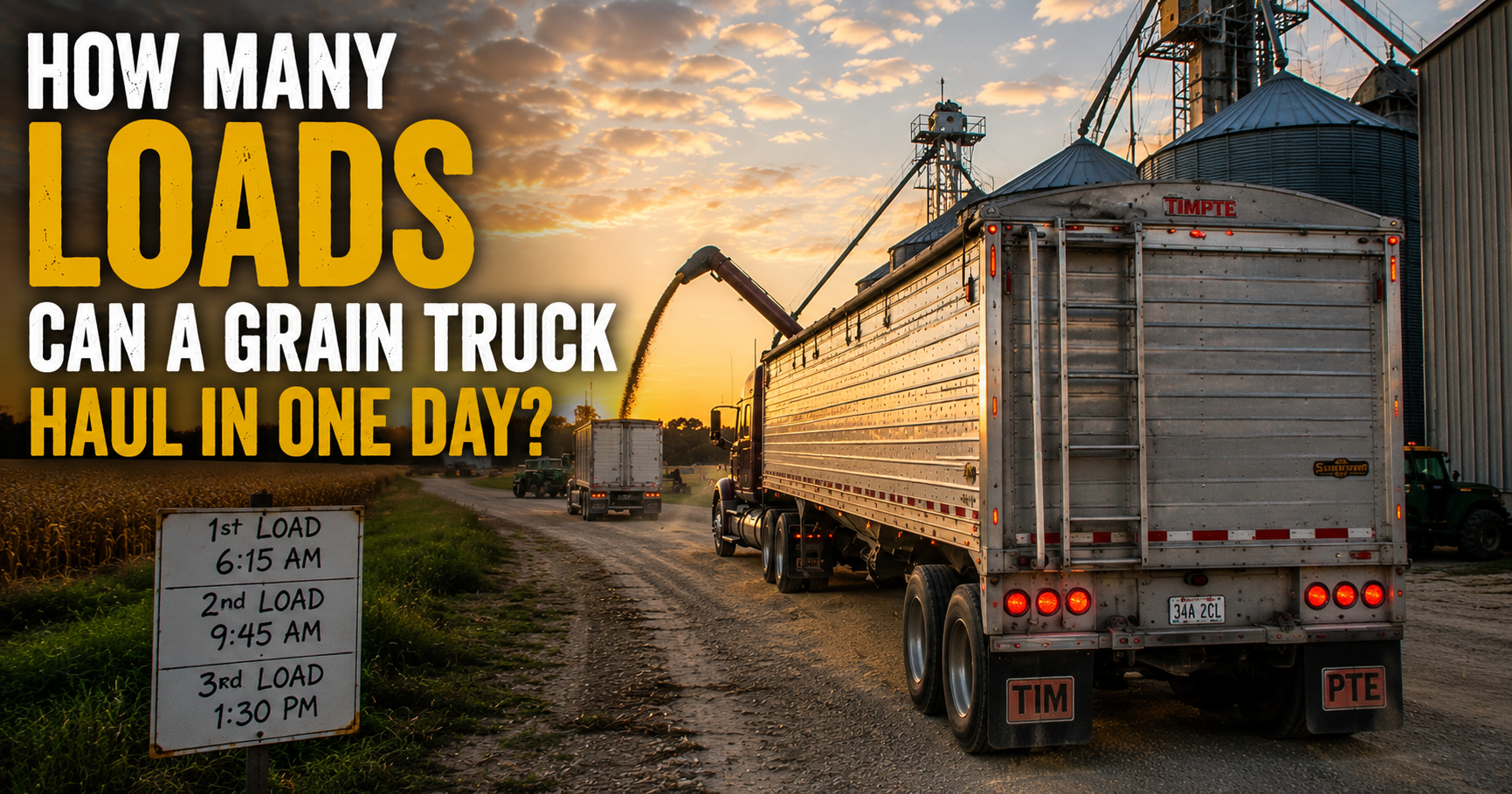
It depends on the farm’s unloading system, the amount of grain in the trailer, and whether other trucks are already waiting. Some unloads are finished in just a few minutes, while others take longer if several trucks arrive close together. Unload times also help explain how many loads trucks complete during a harvest shift.
Why don’t grain trucks dump like a dump truck?
Most grain trailers used during harvest are hopper-bottom trailers. Instead of raising the trailer, the grain flows out through hopper doors underneath using gravity. That makes unloading efficient while keeping the trailer level.
What happens if the grain bins become full?
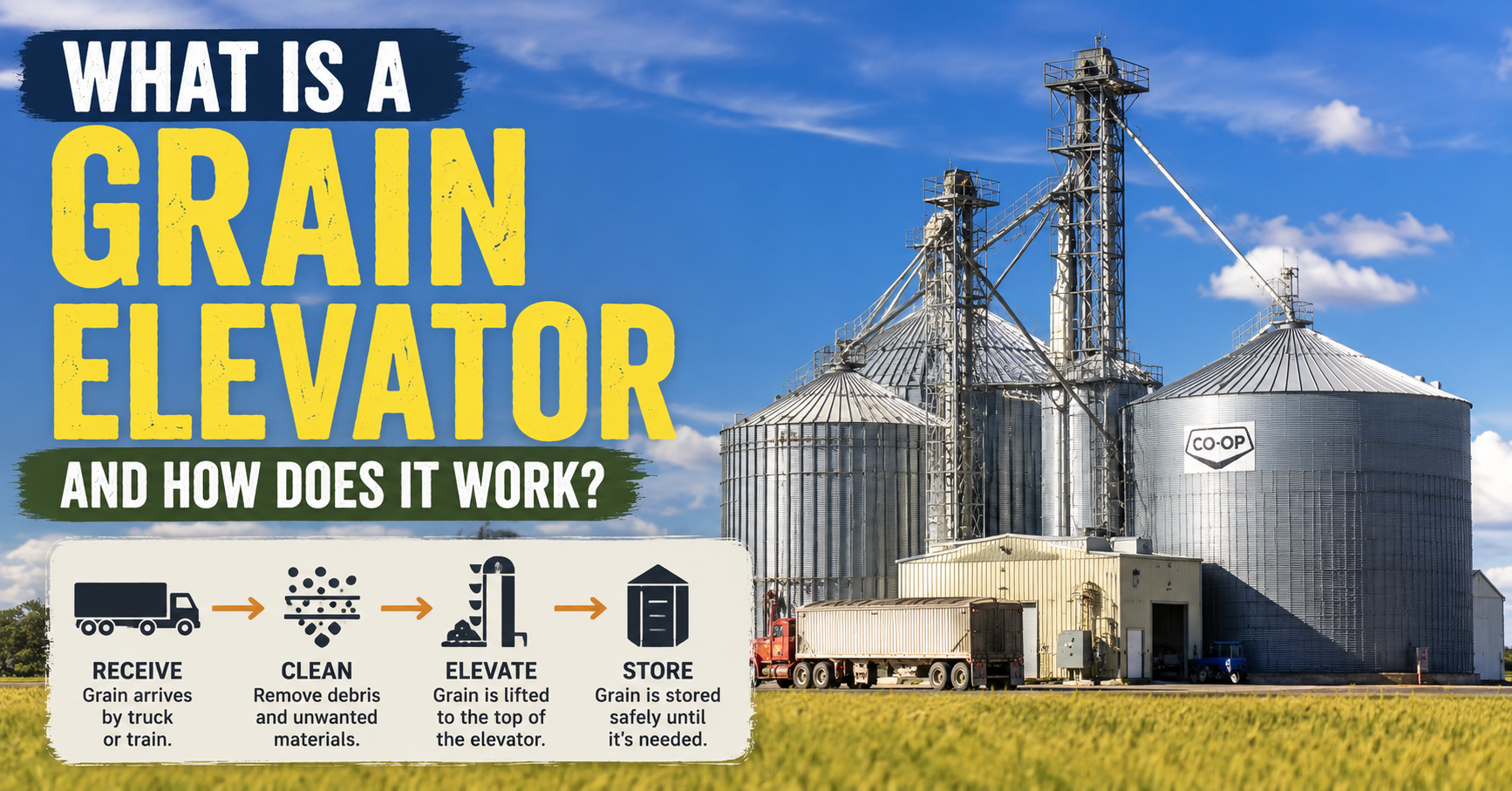
If a storage bin reaches capacity, the farm may begin filling another bin or haul grain to a commercial elevator, depending on the operation and available storage.
Is unloading grain dangerous?
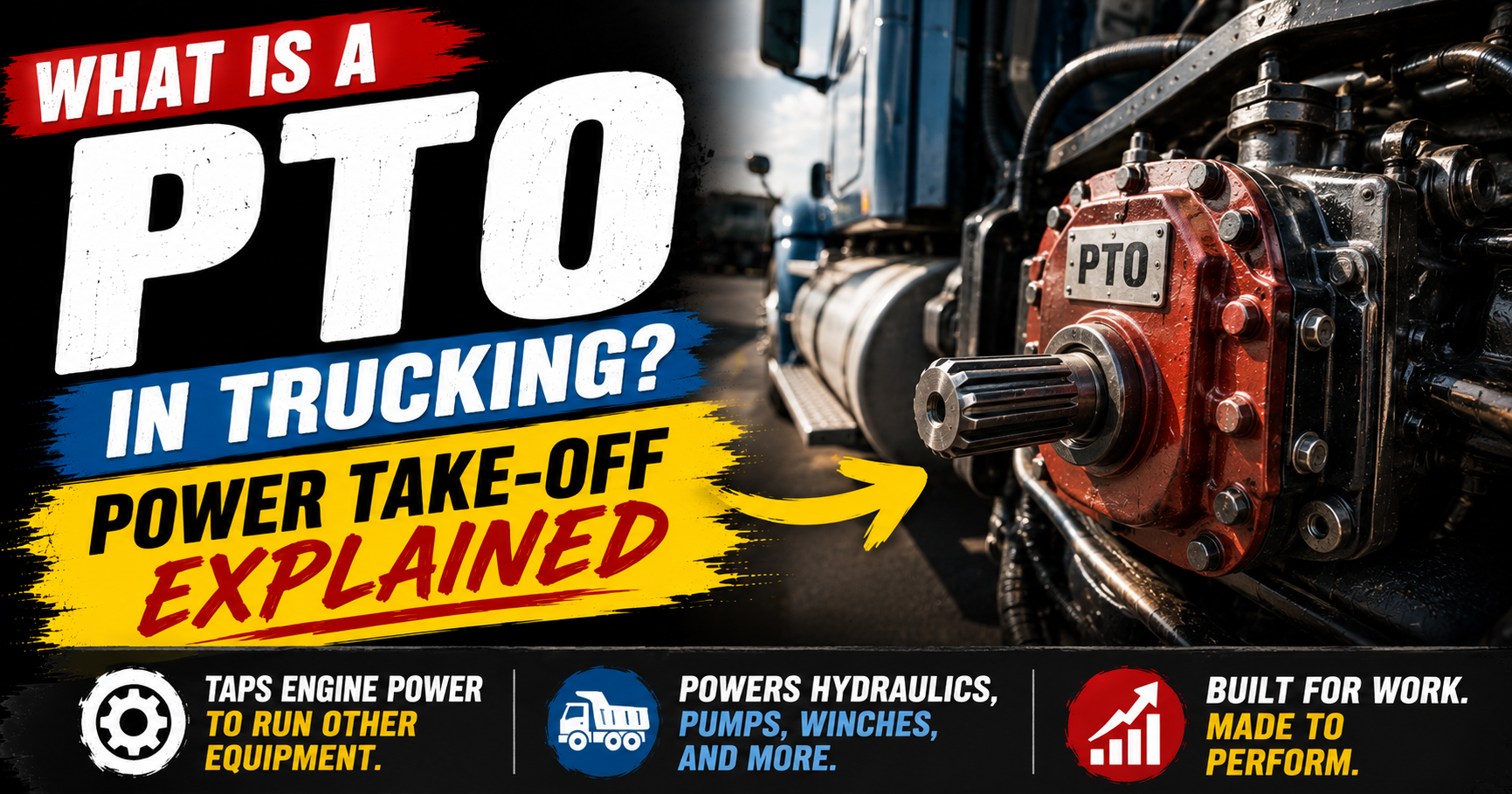
It can be if proper safety procedures aren’t followed. Drivers and farm workers should stay aware of moving augers, PTO shafts, and other equipment. Grain bins also present serious engulfment hazards, and no one should enter a bin while grain is flowing. A basic explanation of what PTO shafts do can help newer drivers recognize another piece of equipment that requires careful attention.
Seeing the Entire Process Changed My Perspective
Only a few weeks ago, I thought the truck driver’s job ended once the trailer reached the farm.
Now I know that’s only one step in a much larger process.
The grain still has to move from the trailer into storage.
The unloading equipment has to keep working.
The truck has to get turned around and head back to the field.
Meanwhile, the combines are still harvesting, and the grain carts are still moving.
It’s one continuous cycle.
Seeing that process firsthand has given me a whole new appreciation for everyone involved in bringing in a harvest.
If you’ve never watched grain move from the field all the way into storage, I hope this article helped you understand what happens after the truck leaves the field and why every part of the process matters.
Author: Dax Weaver
Dax Weaver is the founder of TruckingResource.com and a first-year Class A CDL driver from Cairo, Missouri. After earning his CDL on his first attempt, he began hauling corn during harvest for a local farming operation. Through TruckingResource.com, Dax shares honest first-hand experiences, practical trucking advice, and real-world insights from learning the industry one load at a time.