One of the first dispatchers I ever worked with called me and said, “You’re going to have to deadhead about 90 miles to your next pickup.”
I understood the mileage part.
I had no idea what “deadhead” meant.
Like most new drivers, I assumed it had something to do with driving an empty truck. I wasn’t completely wrong, but I wasn’t exactly right either.
Deadheading is one of those trucking terms you’ll hear almost every day once you begin driving professionally. It’s also something that affects fuel costs, profits, scheduling, and even how much money owner-operators make.
Let’s break it down in plain English.
What Does Deadhead Mean?
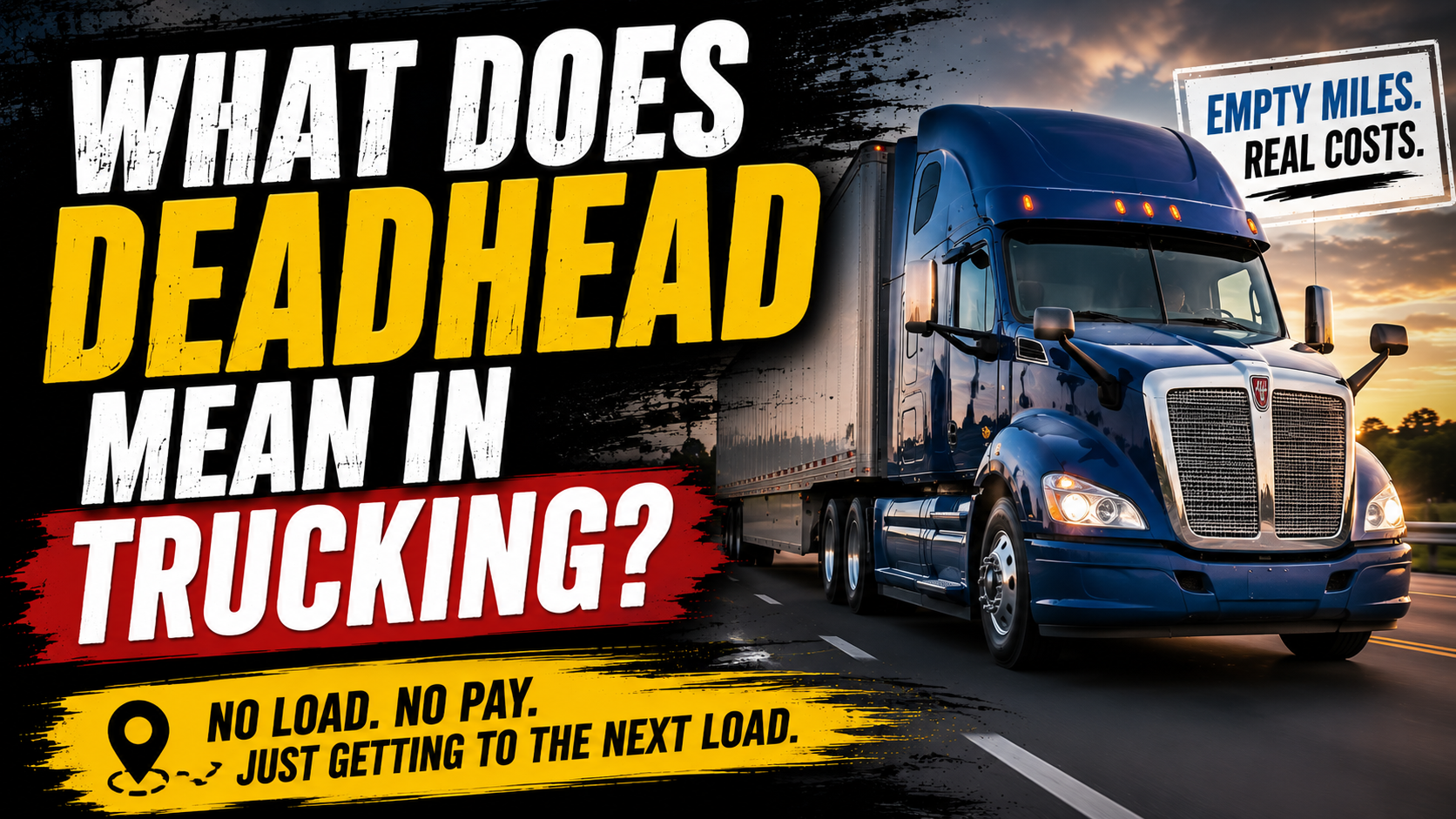
In trucking, deadheading means driving a truck with an empty trailer attached because there isn’t a paying load inside.
The truck is still pulling a trailer.
The driver is still working.
The equipment is still using fuel.
The difference is that no freight is being transported.
Most deadhead miles happen when a driver is traveling to pick up the next load after making a delivery.

Why Is It Called Deadheading?
The word “deadhead” has been around for well over a century.
In transportation, it has long been used to describe vehicles moving without paying passengers or revenue-generating cargo.
In trucking, the meaning is simple.
The truck is moving, but the trailer isn’t earning money because it’s empty.
Every mile still costs money.
It just isn’t bringing any income back.

Why Do Truck Drivers Deadhead?
No driver wants unnecessary deadhead miles, but sometimes they’re unavoidable.
Some common situations include:
- Driving to pick up the next load.
- Returning an empty trailer.
- Traveling to a different customer.
- Repositioning equipment.
- Moving into a stronger freight market.
- Heading to a repair facility.
Sometimes dispatch can line up another load immediately.
Other times, an empty trip is simply part of doing business.
Deadhead vs. Bobtail
These two trucking terms get confused all the time.
Here’s the easiest way to remember them.
Deadhead means you’re pulling an empty trailer.
Bobtail means you’re driving without any trailer at all.
That’s an important distinction because the truck handles very differently in each situation.
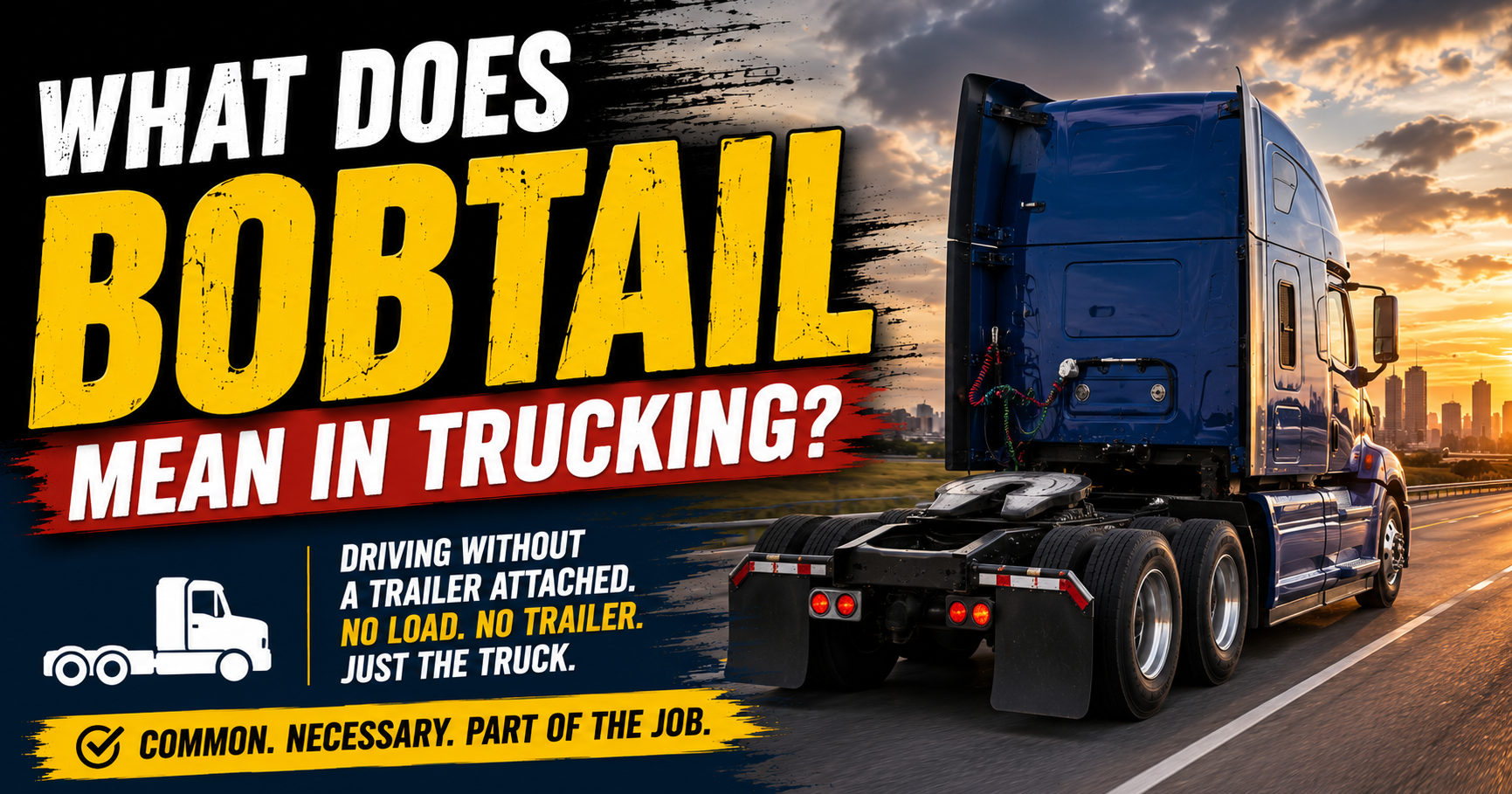
If you haven’t already, take a few minutes to read our guide explaining what bobtail means in trucking. It’s one of the most commonly misunderstood trucking terms.
Why Deadhead Miles Matter
For company drivers, deadhead miles may simply be part of the day’s work.
For owner-operators, they can have a much bigger impact.
Every mile driven costs money.
Even with an empty trailer, you’re still paying for:
- Fuel.
- Tires.
- Maintenance.
- Oil changes.
- Insurance.
- Depreciation.
- Driver time.
The truck doesn’t stop costing money just because the trailer is empty.
That’s why experienced owner-operators pay close attention to deadhead miles when choosing loads.
Can Deadhead Miles Be Reduced?
Sometimes.
Not always.
Good dispatchers and freight brokers work hard to minimize empty miles whenever possible.
Drivers can also help by planning ahead and accepting loads that position them closer to future freight opportunities.
No trucking operation eliminates deadhead completely.
The goal is simply to keep it as low as possible.
Does an Empty Trailer Handle Differently?
Absolutely.
An empty trailer behaves differently than a loaded one.
Without thousands of pounds of cargo pressing down on the suspension, the trailer tends to bounce more over rough pavement and can be more affected by strong crosswinds.
Braking characteristics also change compared to hauling a full load.
That’s one reason I never let my guard down just because the trailer is empty.
Empty doesn’t mean harmless.
If you’re studying for your CDL permit, our Free CDL Weather, Winter & Mountain Driving Practice Test includes situations where understanding vehicle handling becomes especially important.
Deadhead Miles and Fuel Costs
Fuel is one of the biggest expenses in trucking.
Every unnecessary mile driven without freight cuts into profits.
I’ve talked with plenty of owner-operators over the years who don’t judge a load simply by its pay rate.
Instead, they calculate:
- Loaded miles.
- Deadhead miles.
- Fuel costs.
- Tolls.
- Time required.
Sometimes a lower-paying load actually earns more money because it requires very little deadheading.
That’s one reason successful trucking businesses focus on total profitability instead of just the rate per mile.

Can You Get Paid for Deadhead Miles?
Sometimes.
Some trucking companies pay drivers for certain deadhead miles.
Others only pay loaded miles.
Every company has its own policies.
If you’re considering a driving job, ask how deadhead pay works before accepting the position.
Understanding the pay structure ahead of time can prevent surprises later.
Will Deadheading Be on the CDL Test?
You probably won’t see a question asking you to calculate deadhead miles.
However, you should absolutely understand what the term means.
It’s one of the most common pieces of trucking terminology you’ll hear throughout your career.
If you’re reviewing trucking vocabulary while preparing for your permit test, our CDL General Knowledge Study Guide PDF is a helpful resource that explains many of the concepts you’ll encounter on the written exam.
My Advice After Years on the Road
Every truck driver accumulates deadhead miles.
It’s simply part of the business.
The important thing is understanding what they cost and learning how to minimize them whenever possible.
Over the years, I’ve learned that successful drivers don’t just think about the next load.
They think about the next several loads.
Planning ahead, reducing empty miles, and understanding how freight moves can make a big difference over the course of a year.

Deadheading may never be anyone’s favorite part of trucking, but understanding it is one more step toward becoming a smarter, safer, and more profitable professional driver. For a balanced look at what the profession offers beyond individual challenges, see the broader truck driving career.
If you’re new to trucking and want to learn more industry terms, visit our growing Trucking Glossary where we explain the words, equipment, and phrases every CDL driver should know.
Author: David Walker
David Walker is a former CDL instructor with more than 22 years of experience teaching new commercial drivers and mentoring owner-operators. Throughout his career, he’s helped hundreds of drivers understand the business side of trucking, including routing, fuel costs, equipment operation, and the industry terminology they’ll use every day.