(function(){“use strict”;/* QUESTION BANK — replace only this array for future tests. */var Q=[[“What is the most reliable cure for driver fatigue?”,”Stopping safely and getting adequate sleep”,[“Opening a window”,”Turning up music”,”Drinking coffee continuously”],”Fresh air, music, and caffeine may create brief alertness but do not restore the judgment and reaction time that sleep provides.”],[“What is a microsleep?”,”A brief, uncontrolled period of sleep that may last only seconds”,[“A scheduled ten-minute rest break”,”A technique for improving night vision”,”A normal blink with full awareness”],”At highway speed, a few seconds of sleep can carry a truck hundreds of feet without control. Warning signs require an immediate safe stop.”],[“Which is a common warning sign of dangerous fatigue?”,”Repeated yawning, drifting lanes, or forgetting recent miles”,[“Improved concentration”,”Sharper night vision”,”Faster reaction time”],”Heavy eyelids, missed signs, wandering thoughts, and lane drift show that alertness is failing. Do not wait for a microsleep.”],[“Why should medication labels be checked before driving?”,”Prescription and nonprescription drugs can cause drowsiness or impaired coordination”,[“Medicine changes the vehicle’s weight”,”Labels determine tire pressure”,”All approved medicine is safe for driving”],”Cold, allergy, pain, and sleep medicines may impair a driver. Ask a qualified medical professional when driving effects are uncertain.”],[“Why is alcohol dangerous even before a person appears drunk?”,”It can reduce judgment, vision, coordination, and reaction time”,[“It improves confidence and control”,”It affects only hearing”,”Commercial drivers process it instantly”],”Driving skills begin declining at low alcohol levels. Commercial drivers also face strict limits and serious legal and career consequences.”],[“What is the safest response to a phone notification while driving?”,”Ignore it until parked in a safe, legal place”,[“Read it below the window line”,”Reply quickly at a red light”,”Hold the phone near the steering wheel”],”Handling or reading a phone takes attention, eyes, and often hands away from driving. No routine message is worth that risk.”],[“Why is eating a complicated meal while driving unsafe?”,”It occupies hands and attention needed for vehicle control”,[“Food makes brake fluid warm”,”Eating changes legal weight limits”,”It improves reaction time”],”Any task that competes for vision, thought, or physical control is a distraction. Prepare before moving or stop safely.”],[“At night, why must speed be limited by headlight range?”,”The vehicle must be able to stop within the illuminated distance”,[“Headlights shorten braking distance”,”Night roads have no traffic”,”High beams guarantee unlimited sight”],”Overdriving headlights means the truck reaches a hidden hazard before it can stop. Low beams provide an even shorter useful view.”],[“What should a driver do when oncoming high beams cause glare?”,”Look toward the right edge of the lane and slow if needed”,[“Stare directly at the lights”,”Close both eyes briefly”,”Turn on interior lights”],”Avoid direct glare while using the right road edge as a guide. Keep scanning and reduce speed so the limited view remains adequate.”],[“Why should the windshield and mirrors be especially clean at night?”,”Dirt and streaks scatter light and increase glare”,[“Clean glass creates more road friction”,”Dirty mirrors improve depth perception”,”Cleaning replaces proper headlights”],”Film, bugs, and moisture can turn ordinary lights into blinding glare. Clean both inside and outside surfaces.”],[“When should high beams be dimmed?”,”Whenever they could interfere with another road user’s vision”,[“Only when the fuel tank is low”,”Never on rural roads”,”Only for other commercial vehicles”],”Dim for oncoming traffic and when following another vehicle closely enough that mirror glare becomes a problem. Use low beams in fog.”],[“Why should interior cab lighting be kept low at night?”,”Bright interior light reduces the driver’s ability to see outside”,[“It increases tire heat”,”It makes the vehicle wider”,”It disables clearance lights”],”The eyes adapt to darkness better when the cab is dim. Use enough instrument lighting to read controls without creating reflections.”],[“What is the purpose of a turn signal?”,”To give others advance notice of an intended movement”,[“To claim immediate right of way”,”To force traffic to stop”,”To replace mirror checks”],”Signal early, then verify the path remains clear. A signal communicates intention but does not create a safe opening.”],[“When is a brief horn tap appropriate?”,”When it may help another road user notice the truck before a conflict”,[“Whenever another driver is slow”,”To demand right of way”,”Continuously in residential areas”],”The horn is a warning device, not an expression of anger. Use it when useful while still slowing or stopping to avoid danger.”],[“Why should brake lights be used to communicate an upcoming slowdown?”,”Early gentle brake application can warn following traffic”,[“Brake lights reserve the lane”,”They replace warning flashers after stopping”,”They make the truck stop faster”],”A few early light applications, without confusing other drivers, can make a planned slowdown visible before firm braking begins.”],[“What should a driver do before backing near pedestrians?”,”Get out and look, use a spotter if available, and back slowly”,[“Rely only on the horn”,”Back quickly before anyone approaches”,”Watch one mirror only”],”People can enter blind areas without realizing the driver cannot see them. Avoid backing when possible and stop if the spotter disappears.”],[“Why are bicyclists especially vulnerable beside a turning truck?”,”They may be hidden in blind spots and caught by trailer off-tracking”,[“Bicycles always stop at green lights”,”They are wider than trucks”,”Truck mirrors make bicycles look larger”],”Check repeatedly before and during a turn. Never squeeze past a cyclist or assume the cyclist understands the truck’s turning path.”],[“How should a truck pass a bicyclist?”,”Allow generous legal clearance and pass only when the entire maneuver is safe”,[“Sound the horn continuously and pass closely”,”Force the bicycle onto the shoulder”,”Move back immediately after the cab passes”],”The trailer and air movement can affect a cyclist. Wait for clear sight distance and do not return until the whole vehicle is safely past.”],[“Why should extra following distance be allowed behind a motorcycle?”,”Its small size and quick stopping can make changes harder to judge”,[“Motorcycles have no brake lights”,”They cannot use traffic lanes”,”They always travel slowly”],”Motorcycles are vulnerable and may change position for road hazards. More space improves visibility and reaction time.”],[“What is a truck’s no-zone?”,”A large area around the truck where other road users may be difficult or impossible to see”,[“A lane where trucks cannot travel”,”The space directly under the cargo”,”A legally reserved parking area”],”Blind areas extend in front, behind, and along both sides. Frequent mirror checks reduce risk but do not eliminate every no-zone.”],[“What should a driver do when a car remains in a blind spot?”,”Adjust speed safely to create separation and keep tracking it in mirrors”,[“Move toward the car to force it away”,”Assume it has exited the road”,”Change lanes without signaling”],”Avoid prolonged side-by-side travel. Create space without aggressive action and verify the lane repeatedly before any maneuver.”],[“How should a driver respond to an aggressive motorist?”,”Avoid engagement, create distance, and let the motorist go”,[“Return gestures”,”Block passing attempts”,”Follow the motorist to argue”],”Retaliation escalates risk. Stay calm, avoid eye contact, and seek a safe public location or police help if a serious threat continues.”],[“Why is professional courtesy important around merging traffic?”,”Predictable speed and reasonable space reduce conflict”,[“Courtesy requires surrendering right of way in every case”,”It allows speeding”,”It removes the need for signals”],”The driver must still follow right-of-way rules, but small safe adjustments can prevent forced merges and sudden braking.”],[“What should a driver do if emotional stress is disrupting concentration?”,”Recognize the impairment and stop safely until able to focus”,[“Drive faster to finish sooner”,”Use the phone for distraction”,”Ignore the problem”],”Anger, grief, and anxiety can narrow attention and impair decisions. Fitness to drive includes mental as well as physical readiness.”],[“What is the best habit for maintaining awareness on a long trip?”,”Use an active scan, take proper breaks, and monitor personal alertness”,[“Stare at the centerline”,”Depend on cruise control for attention”,”Skip breaks to arrive early”],”Move the eyes among the road ahead, mirrors, instruments, and nearby hazards. Regular rest and honest self-checks prevent tunnel vision and fatigue.”]],S={q:[],i:0,s:0},$=function(x){return document.getElementById(x)},E={quiz:$(‘quiz’),results:$(‘results’),reviewScreen:$(‘reviewScreen’),qcount:$(‘qcount’),score:$(‘score’),progress:$(‘progress’),bar:$(‘bar’),question:$(‘question’),answers:$(‘answers’),feedback:$(‘feedback’),prev:$(‘prev’),next:$(‘next’),review:$(‘review’),reviewList:$(‘reviewList’)};function sh(a){a=a.slice();for(var i=a.length-1;i;i–){var j=Math.floor(Math.random()*(i+1)),t=a[i];a[i]=a[j];a[j]=t}return a}function esc(s){var d=document.createElement(‘div’);d.textContent=s;return d.innerHTML}function top(){$(‘tr-cdl-app’).scrollIntoView({behavior:’smooth’,block:’start’})}function start(){S.q=sh(Q).map(function(x){return{t:x[0],a:sh([{t:x[1],ok:true}].concat(x[2].map(function(w){return{t:w,ok:false}}))),e:x[3],p:null}});S.i=0;S.s=0;E.quiz.hidden=false;E.results.hidden=true;E.reviewScreen.hidden=true;render();top()}function render(){var q=S.q[S.i],done=q.p!==null,n=S.q.filter(function(x){return x.p!==null}).length;E.qcount.textContent=’Question ‘+(S.i+1)+’ of ‘+S.q.length;E.score.textContent=S.s;E.bar.style.width=n/S.q.length*100+’%’;E.progress.setAttribute(‘aria-valuenow’,n);E.question.textContent=q.t;E.answers.innerHTML=”;q.a.forEach(function(a,i){var b=document.createElement(‘button’);b.type=’button’;b.className=’answer’+(done&&a.ok?’ good’:”)+(done&&i===q.p&&!a.ok?’ bad’:”);b.textContent=a.t;b.disabled=done;b.onclick=function(){pick(i)};E.answers.appendChild(b)});E.prev.disabled=S.i===0;E.next.disabled=!done;E.next.textContent=S.i===S.q.length-1?’View Results’:’Next Question’;if(done)feed(q);else E.feedback.hidden=true}function pick(i){var q=S.q[S.i];if(q.p!==null)return;q.p=i;if(q.a[i].ok)S.s++;render()}function feed(q){var a=q.a[q.p],c=q.a.filter(function(x){return x.ok})[0];E.feedback.className=’feedback ‘+(a.ok?’good’:’bad’);E.feedback.innerHTML=’‘+(a.ok?’ Correct!’:’ Incorrect’)+’‘+(!a.ok?’
Correct answer: ‘+esc(c.t)+’
Why yours is incorrect: It does not follow the visibility, fitness, communication, or road-sharing principle being tested.
‘:”)+’
Explanation: ‘+esc(q.e)+’
‘;E.feedback.hidden=false}function finish(){var n=S.q.length,b=n-S.s,p=Math.round(S.s/n*100);E.quiz.hidden=true;E.reviewScreen.hidden=true;E.results.hidden=false;$(‘percent’).textContent=p+’%’;$(‘final’).textContent=S.s+’/’+n;$(‘correct’).textContent=S.s;$(‘incorrect’).textContent=b;$(‘message’).textContent=p>=90?’Outstanding! You are well prepared on night driving and driver fitness.’:p>=80?’Great job! Review the missed visibility and fitness questions.’:p>=70?’Good progress. Keep practicing this section.’:’More night-driving and driver-fitness study is recommended.’;E.review.disabled=!b;top()}function review(){E.reviewList.innerHTML=”;S.q.filter(function(q){return!q.a[q.p].ok}).forEach(function(q,i){var c=q.a.filter(function(a){return a.ok})[0],d=document.createElement(‘article’);d.className=’review-item’;d.innerHTML=’
Driving a commercial vehicle safely doesn’t just depend on your ability to control the truck. It also depends on your physical condition, mental alertness, and ability to recognize hazards that become much more difficult to see after dark. Fatigue, distractions, poor visibility, and impaired judgment contribute to thousands of crashes every year, making driver fitness one of the most important subjects covered during CDL training.
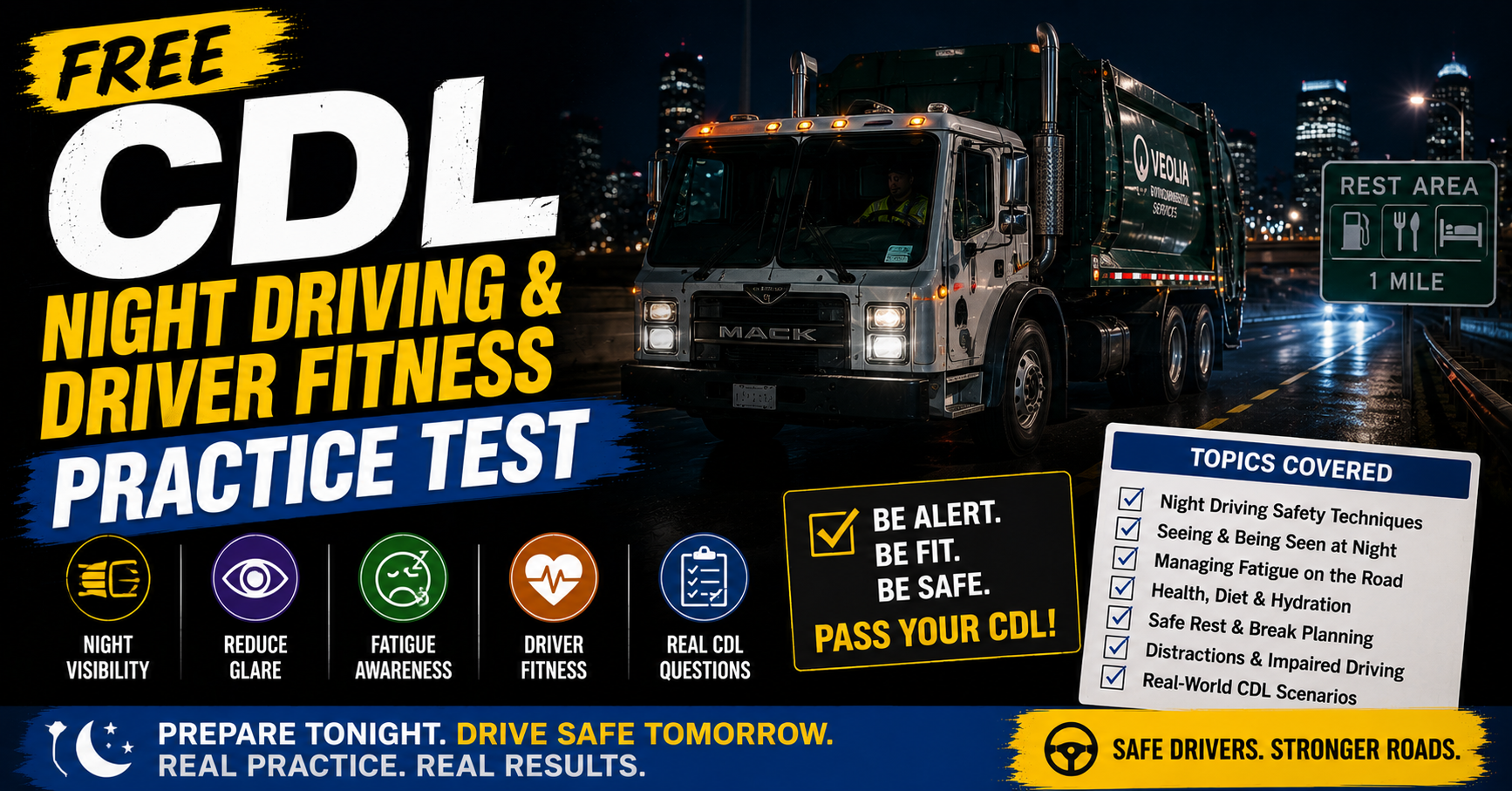
Our Free CDL Night Driving & Driver Fitness Practice Test includes 25 realistic multiple-choice questions covering night driving, fatigue, distractions, communication, blind spots, sharing the road, and safe driving habits. Every question includes a detailed explanation to help you understand why the correct answer is the safest choice instead of simply memorizing information.
If you’re just beginning your CDL studies, you’ll build a stronger foundation by completing our Free CDL General Knowledge Practice Test #1 before moving into advanced driving topics like night driving and driver fitness.
Driving after dark changes nearly every aspect of commercial vehicle operation.
Reduced visibility makes it harder to recognize:
Animals.
Pedestrians.
Disabled vehicles.
Road debris.
Curves.
Construction zones.
Weather hazards.
Because you can’t see as far ahead at night, professional drivers reduce their speed whenever necessary to ensure they can safely stop within the distance illuminated by their headlights.
Slowing down often provides the extra time needed to recognize hazards before they become emergencies.
Fatigue Can Be Just as Dangerous as Alcohol
Many people underestimate the effects of fatigue.
Lack of sleep slows reaction time, reduces concentration, affects judgment, and increases the likelihood of making poor driving decisions.
One of the most dangerous effects of fatigue is microsleep.
A microsleep lasts only a few seconds, but at highway speeds, a commercial truck can travel hundreds of feet with virtually no driver control.
The only reliable cure for fatigue is getting enough quality sleep.
Coffee, energy drinks, loud music, or open windows may provide temporary alertness, but they cannot replace proper rest.
Your headlights are one of the most important safety tools you have after dark.
However, they can only illuminate a limited distance ahead.
Professional drivers should also:
Keep headlights clean.
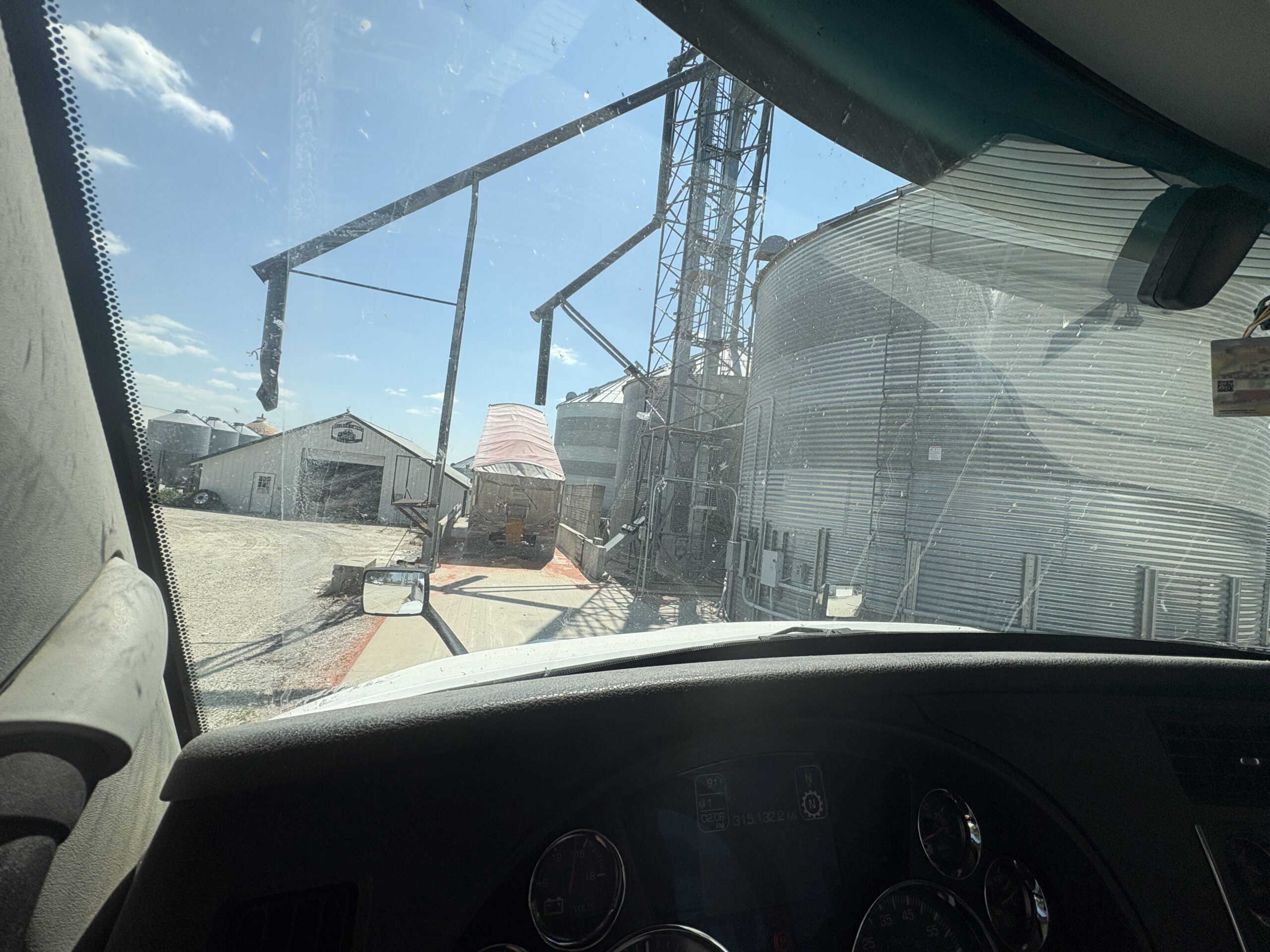
Clean windshields and mirrors regularly.
Reduce interior cab lighting.
Dim high beams for other traffic.
Watch for glare from oncoming vehicles.
Good visibility allows you to recognize hazards earlier and make smoother driving decisions.
Blind Spots Never Disappear
Every commercial vehicle has areas where other motorists temporarily disappear from view.
These blind spots become even more difficult to monitor at night.
Drivers should:
Check mirrors frequently.
Signal early.
Recheck mirrors before changing lanes.
Avoid sudden lane changes.
Never assume another vehicle has moved away.
Understanding where your blind spots are helps reduce the risk of collisions with vehicles traveling beside or behind your truck.
Sharing the Road With Smaller Vehicles
Commercial trucks share the road with passenger cars, motorcycles, bicycles, buses, emergency vehicles, and pedestrians every day.
Because trucks require more room to stop and turn, professional drivers must anticipate the actions of smaller vehicles.
Many passenger vehicle drivers don’t understand:
Truck blind spots.
Wide turns.
Longer stopping distances.
Trailer off-tracking.
Air turbulence.
Patience and defensive driving help prevent misunderstandings that could otherwise lead to accidents.
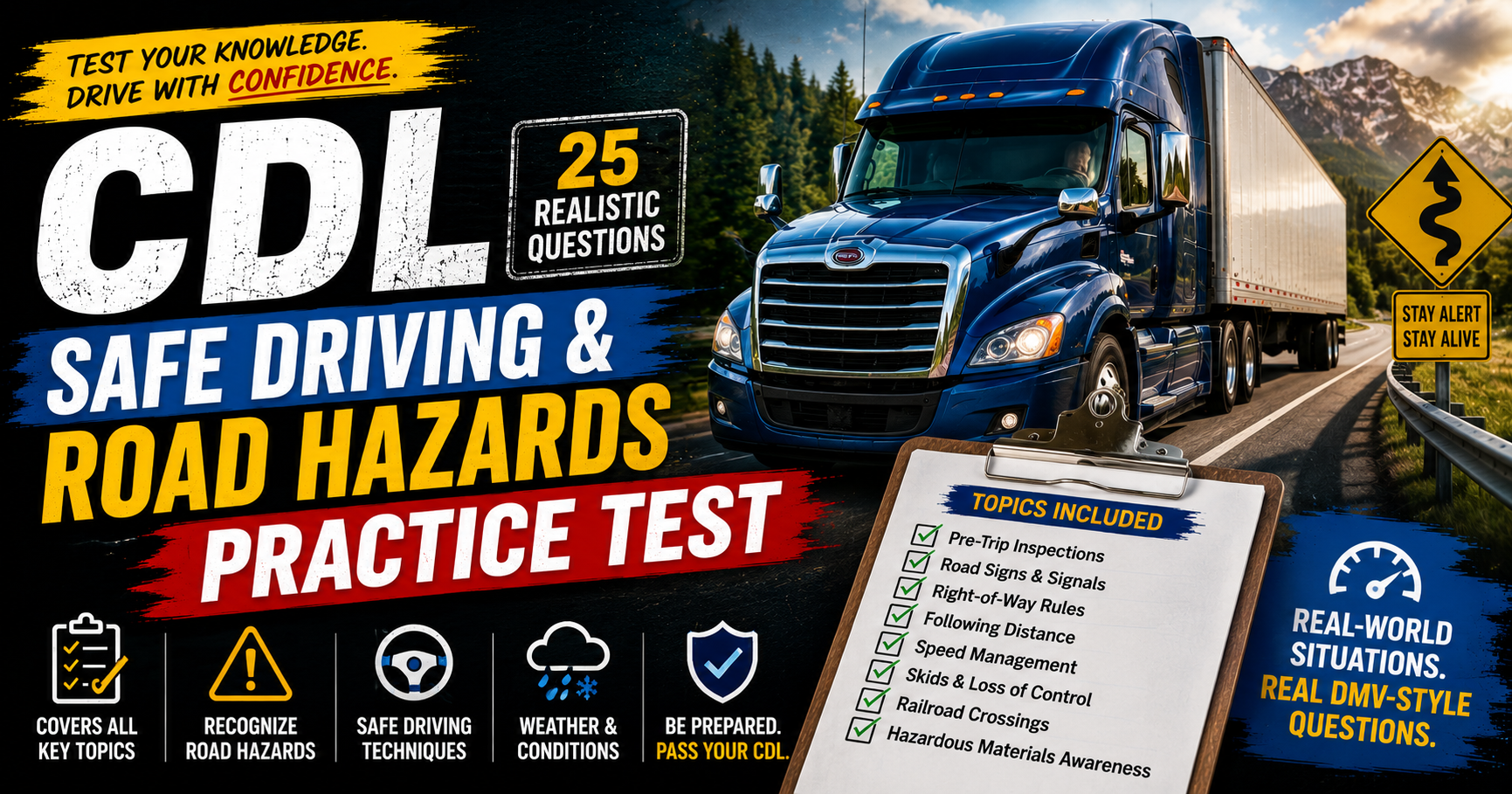
Continue strengthening your defensive driving skills by taking our CDL Safe Driving & Road Hazards Practice Test. Many of the same defensive driving principles become even more important after dark and during periods of driver fatigue.
Communicating With Other Drivers
Professional truck drivers communicate constantly, even without speaking.
Every time you use your turn signals, brake lights, headlights, or horn appropriately, you’re helping other motorists understand what you intend to do.
Good communication helps reduce confusion and prevents many unnecessary crashes.
Drivers should:
Signal lane changes early.
Brake smoothly whenever possible.
Use headlights whenever visibility decreases.
Use the horn only when necessary to warn others of danger.
Avoid sudden, unpredictable movements.
The more predictable you are, the easier it is for everyone around you to drive safely.
Watch Carefully for Motorcycles and Bicycles
Motorcycles and bicycles are much smaller than commercial vehicles and can disappear into blind spots quickly.
They also react differently to road conditions than large trucks.
Potholes, gravel, railroad tracks, and uneven pavement that may have little effect on your truck can cause a motorcycle or bicycle to lose control.
Always allow extra space when passing.
Before making a right turn, carefully check mirrors several times to ensure a cyclist isn’t traveling beside your trailer.
Giving vulnerable road users additional room helps protect everyone on the road.
Managing Stress Behind the Wheel
Driving a commercial vehicle requires constant concentration.
Personal problems, traffic congestion, delays, and demanding schedules can all increase stress.
Professional drivers recognize when stress begins affecting their judgment.
Healthy ways to manage stress include:
Taking scheduled breaks.
Getting enough sleep.
Eating balanced meals.
Staying hydrated.
Planning trips ahead of time.
Remaining patient during traffic delays.
Allowing anger or frustration to control your decisions often creates unnecessary risks.
The Importance of an Active Visual Scan
Safe drivers never stare at one location for long.
Instead, they constantly move their eyes between:
The road ahead.
Side mirrors.
Rearview mirrors.
Gauges.
Traffic beside the truck.
Road signs.
Potential hazards.
This continuous scanning habit helps identify developing problems before they become emergencies.
The farther ahead you look, the more time you’ll have to react safely.
Driving Professionally Every Mile
One of the biggest differences between experienced truck drivers and new drivers is consistency.
Professional drivers don’t wait until conditions become dangerous before paying attention.
Instead, they develop safe habits that become automatic every time they drive.
These habits include:
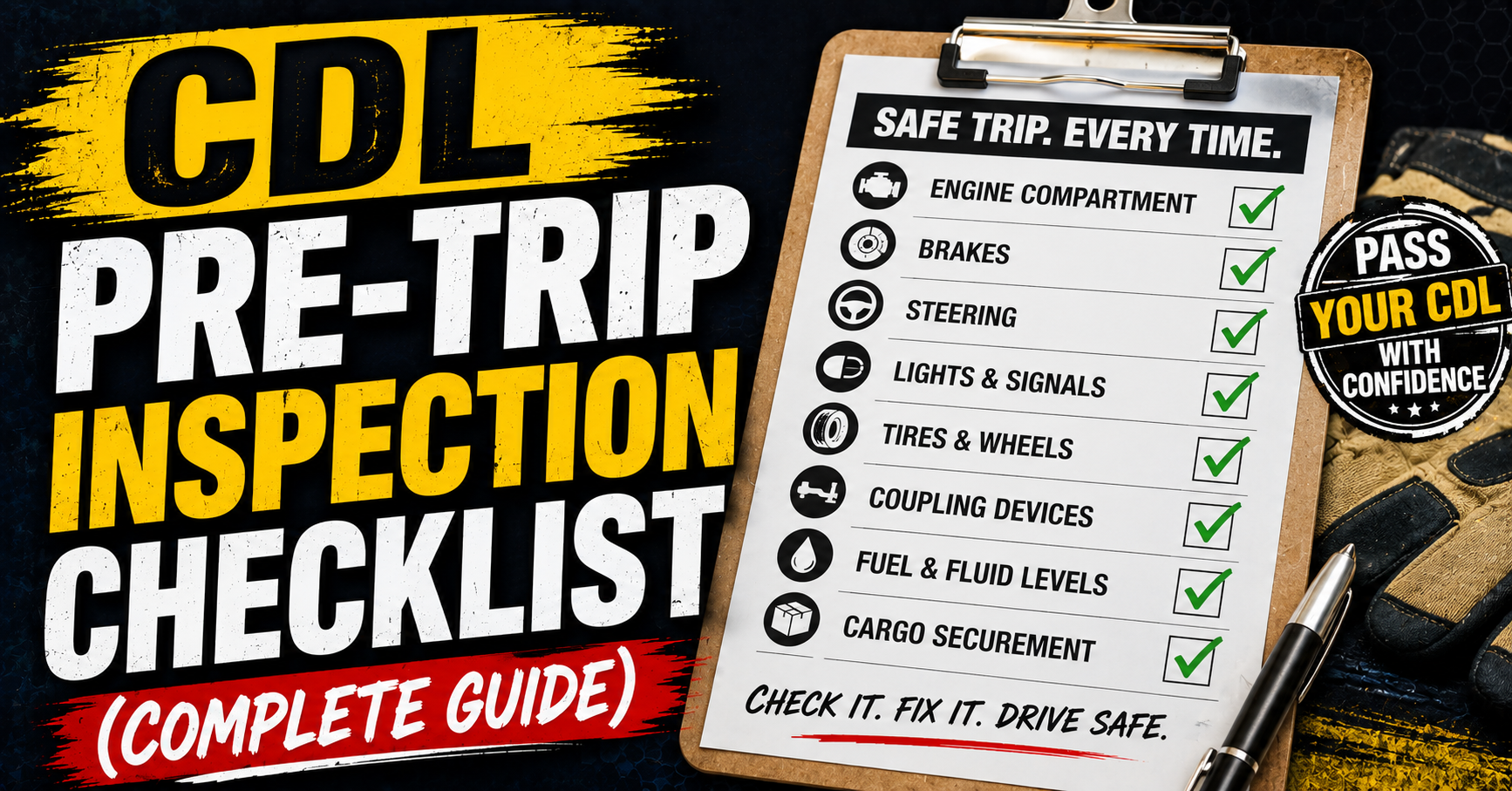
Performing complete pre-trip inspections.
Wearing a seat belt.
Eliminating distractions.
Checking mirrors frequently.
Maintaining safe following distances.
Monitoring personal alertness.
Staying patient around other drivers.
Good habits built early in your career can stay with you for decades.
Common Night Driving Mistakes
Many crashes that occur after dark are preventable.
Some of the most common mistakes include:
Driving faster than headlight range allows.
Ignoring signs of fatigue.
Following traffic too closely.
Failing to dim high beams.
Driving with dirty headlights or windshield.
Using a phone while driving.
Ignoring blind spots before changing lanes.
Driving while emotionally distracted.
Recognizing these mistakes helps you avoid them before they become dangerous.
Frequently Asked Questions
How many questions are on this CDL Night Driving & Driver Fitness Practice Test?
This practice test includes 25 multiple-choice questions covering fatigue, night driving, distractions, communication, blind spots, visibility, and sharing the road.
What is microsleep?
Microsleep is a brief period of unintended sleep that may last only a few seconds. At highway speeds, a commercial truck can travel hundreds of feet without the driver being fully aware or in control.
What is the best way to prevent driver fatigue?
The only reliable solution is getting enough quality sleep. Coffee, energy drinks, fresh air, or loud music may provide temporary alertness but cannot replace proper rest.
Why is night driving more dangerous?
Reduced visibility makes it harder to recognize hazards, judge distances, and react to changing traffic conditions. Commercial drivers should adjust their speed so they can safely stop within the distance illuminated by their headlights.
Why are blind spots important for truck drivers?
Commercial vehicles have much larger blind spots than passenger cars. Drivers should check mirrors frequently, signal early, and verify that surrounding traffic is clear before changing lanes or turning.
Why is driver fitness included on the CDL exam?
Safe commercial driving depends not only on vehicle control but also on the driver’s physical health, mental alertness, judgment, and ability to make safe decisions under changing road conditions.
Continue Building Your CDL Knowledge
Becoming a safe commercial driver involves much more than learning how to operate a truck. It requires staying alert, managing fatigue, communicating with other road users, and making smart decisions every mile you drive.
Continue working through our growing collection of free CDL practice tests to strengthen your understanding of General Knowledge, vehicle inspections, weather, braking, emergency procedures, cargo securement, railroad crossings, and other important CDL topics. Every practice test brings you one step closer to passing your CDL permit exam while building the knowledge and confidence needed for a successful trucking career.