
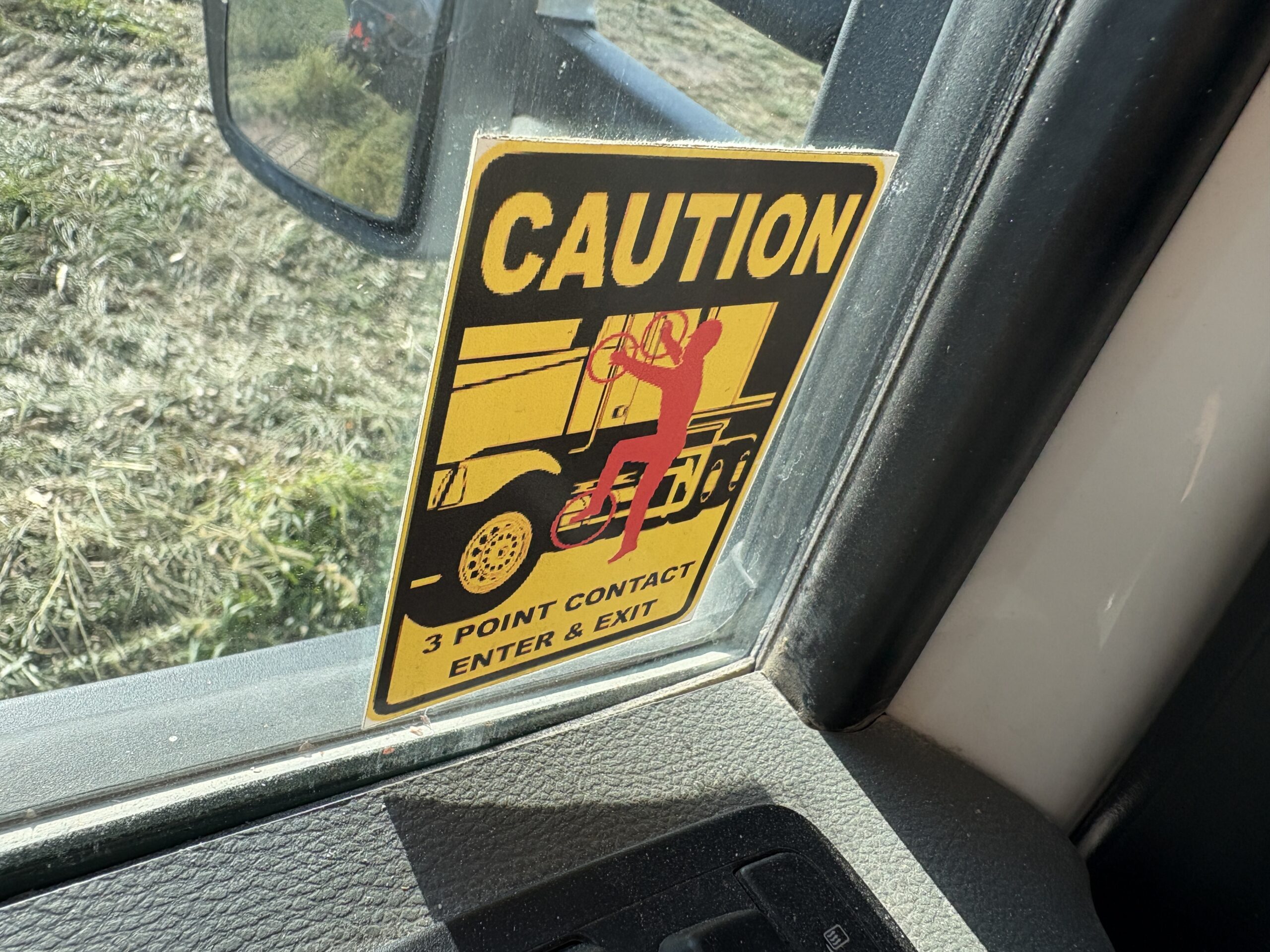
The warning sticker on the Kenworth door in my photo is hard to miss: “3 POINT CONTACT ENTER & EXIT.” I noticed it because it calls out something I had to think about deliberately when I was getting my CDL. Climbing into a truck looks easy until you realize the examiner may be watching you before you even start driving.
I was taught to take three points of contact seriously every single time. The warning I heard during training was that one careless entry or exit could cost me the test. I am not going to claim that every state automatically fails every applicant for one slip, because testing and scoring procedures can differ. I would still treat it like a test-ending mistake. More than that, I would treat it like a habit worth keeping after the examiner is gone.
What Does Three Points of Contact Mean?
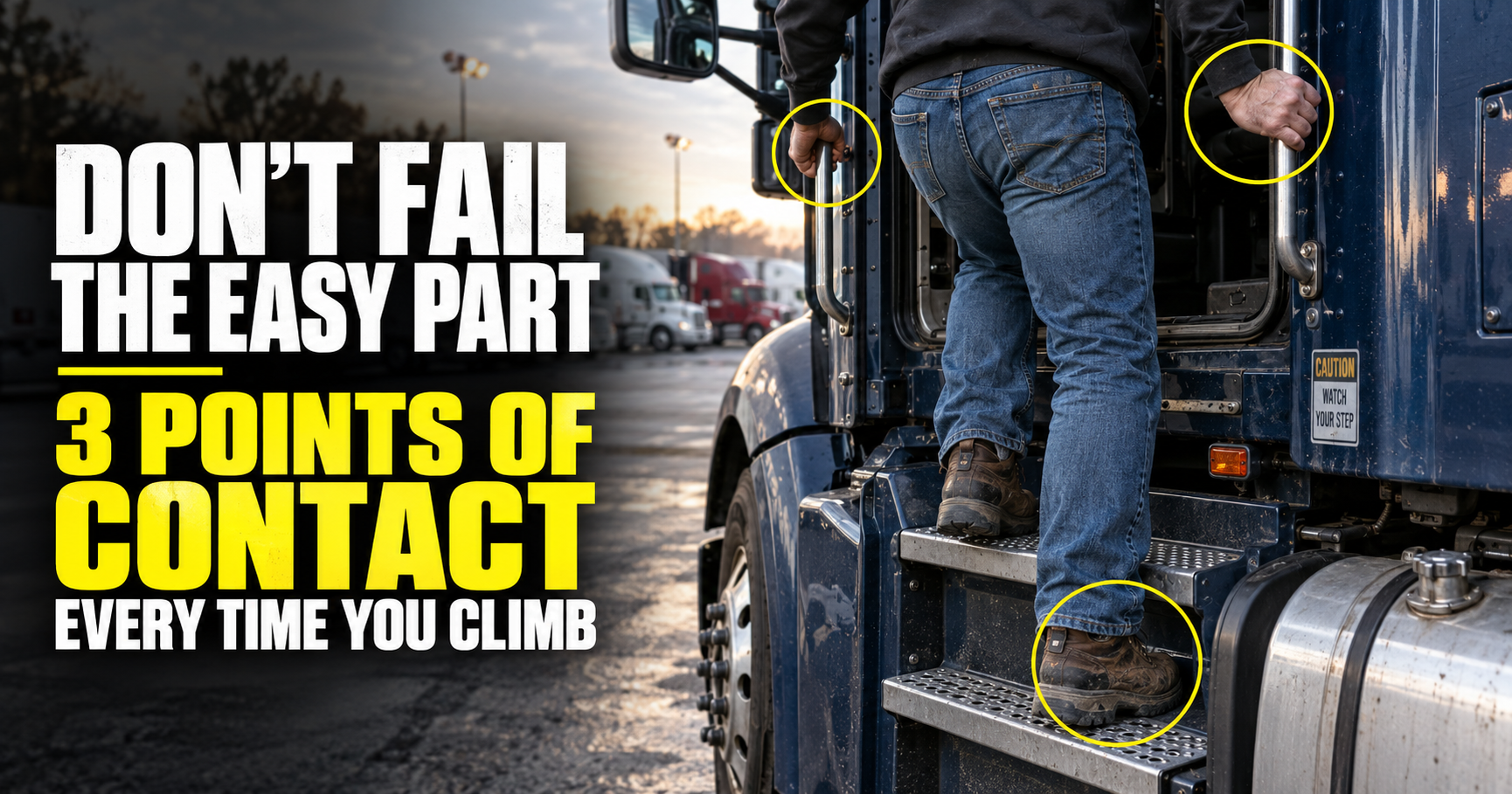
It means keeping two hands and one foot, or two feet and one hand, in contact with the truck while climbing. When you move one hand or foot to the next step, the other three points help support and steady you.
You do not have to freeze in place with the same three points touching the truck the entire time. You move one point at a time. Put a foot securely on the step, hold the grab handles, then move your next hand or foot.
That simple pattern is why the rule works. It keeps you from reaching, twisting, and trusting one shoe on a wet step to hold your whole weight. Penske’s truck-entry safety guidance describes the same two-hands-and-one-foot or two-feet-and-one-hand method.



How I Get Into the Truck
I start by looking at the ground and the steps. Mud, gravel, ice, spilled material, and worn step surfaces can change the climb before I even touch the door. If my boots are muddy, I knock off what I can rather than carry it onto the steps.
Then I face the truck. I use the grab handles designed for climbing and put my first foot firmly on the lower step. I move up one hand or foot at a time, keeping the other three points secure. Once I am high enough, I step into the cab rather than trying to pull myself in with one arm.
I do not use the door as my main handhold. An open door can move, and it is not the same as a fixed grab handle. I also keep my phone, drink, paperwork, and anything else I’m carrying out of my hands until I am safely in the cab.
That last part takes planning. If I need something in the truck, I would rather set it down, climb in correctly, and pick it up afterward than try to climb while protecting a cup of coffee.
How I Get Out Without Jumping
Getting down is where I think it is easiest to get careless. You have been sitting for a while, you want to check something quickly, and the ground looks close enough to hop onto.
I turn and face the truck before descending. I find the grab handles, place a foot on the step, and come down one point at a time. I keep looking where my foot is going instead of assuming the last step is clear.
I do not jump from the cab or skip the last step. On a clean, level parking lot, that shortcut may seem harmless. At a job site, the landing could be loose gravel, a rut, slick mud, or an object you could not see from the seat. The few seconds saved are not worth finding out the hard way.
Where Do Drivers Usually Lose the Third Point?
The mistake I watch for is letting go with one hand while moving a foot. At that moment, you may have just one hand and one foot supporting you. It happens easily if you turn to talk to someone, reach back for an item, or try to close the door while still on the steps.
Another common temptation is using a hand to hold something. A phone, lunch bag, clipboard, or set of keys can leave you trying to climb with one usable hand. Put the item away, use a safe way to carry it that leaves your hands free, or retrieve it after you have finished climbing.
I also would not count a hand resting on a moving door as though it were a secure grab handle. Before I move a foot, I want my hand on something fixed that I can actually grip.

Does It Matter During the CDL Road Test?
Yes. The examiner sees how you handle the vehicle, and entering and exiting safely are part of showing that you can work around a commercial truck.
When I prepared for my CDL, I treated every climb as though it counted. I did not want to perform every driving maneuver correctly and then give the examiner a reason to question my safety habits while I stepped out of the cab. The exact consequence of one mistake depends on the test rules where you take it, so I would not promise a universal automatic failure. The useful advice is the same: practice it until you do it without thinking.
The road test has enough to remember already. Our CDL road test walkthrough covers what happens during the test, so you can work safe cab entry and exit into the same practice routine as your inspections and driving.
When Will You Climb In and Out During a Test?
More often than you might expect. You may get in to move the vehicle, get out for an inspection or instruction, and get back in again. Depending on the test and equipment, you could have several chances to show the examiner how you use the steps and grab handles.
That is why I would not save this for one special moment at the start. I would practice three points of contact whenever I entered or left the truck during training. If it is a habit, you are much less likely to forget when you are nervous.
I passed my Class A test on my first attempt after an accelerated course at Ross Trucking School. With a short course, I found it especially helpful to make the small repeatable actions automatic. Facing the truck and keeping three points of contact belonged in that group.
What If the Truck Has Only One Grab Handle?
Cab layouts vary. Look at the handles and steps on the truck you are using, then plan a stable path before climbing. At some moments you will have two feet and one hand in contact; at others, two hands and one foot.
The goal is to use secure parts intended to support you and move one hand or foot at a time. If a grab handle is loose, a step is damaged, or you cannot find a stable way in, do not pretend the problem will disappear once you start climbing. Report it.
I would pay attention to those parts during a pre-trip inspection as well. Our pre-trip inspection mistakes guide covers other details that can get overlooked when a new driver is focused on memorizing the larger components.
Do You Have to Face the Truck?
That is how I would do it going up and down. Facing the truck puts the grab handles in front of you and makes it easier to keep your weight close to the steps.
Stepping down while facing outward feels quicker because you can see the ground. The trouble is that it encourages you to reach behind yourself for a handle or step off before you have a secure footing. I turn around while I am still safely inside the cab, take hold of the handles, and climb down facing the truck.
Once both feet are on the ground, I can turn toward wherever I need to go.

What Changes in Rain, Snow, or Mud?
The method stays the same, but I slow down. I check the step surface and my boot soles. A step packed with mud or coated in ice is a different surface from the one I climbed in on that morning.
I also check the ground before descending. A truck parked on uneven gravel may leave the lowest step farther from the ground than I expect on one side. Snow can hide a rut. Mud can move under a boot.
Three points of contact give me a better chance to steady myself if a foot slips. They do not make a damaged step or unsafe footing acceptable. If something looks wrong, I deal with it before climbing.
What I Took From That Sticker on the Kenworth Door
It was a good reminder precisely because the instruction was short. “3 POINT CONTACT ENTER & EXIT” applies when I am climbing in for the first time, stepping out to inspect something, and getting back in when I am tired at the end of the day.
On a CDL test, I would treat every entry and exit as part of the test. On the job, I would use the same routine even if nobody were watching: face the truck, use the fixed handles and steps, keep a hand free, and move one point at a time.
About the author: Dax earned his Class A CDL on his first attempt after an accelerated course at Ross Trucking School. He writes for TruckingResource.com about the practical details new drivers need to notice around commercial trucks.