
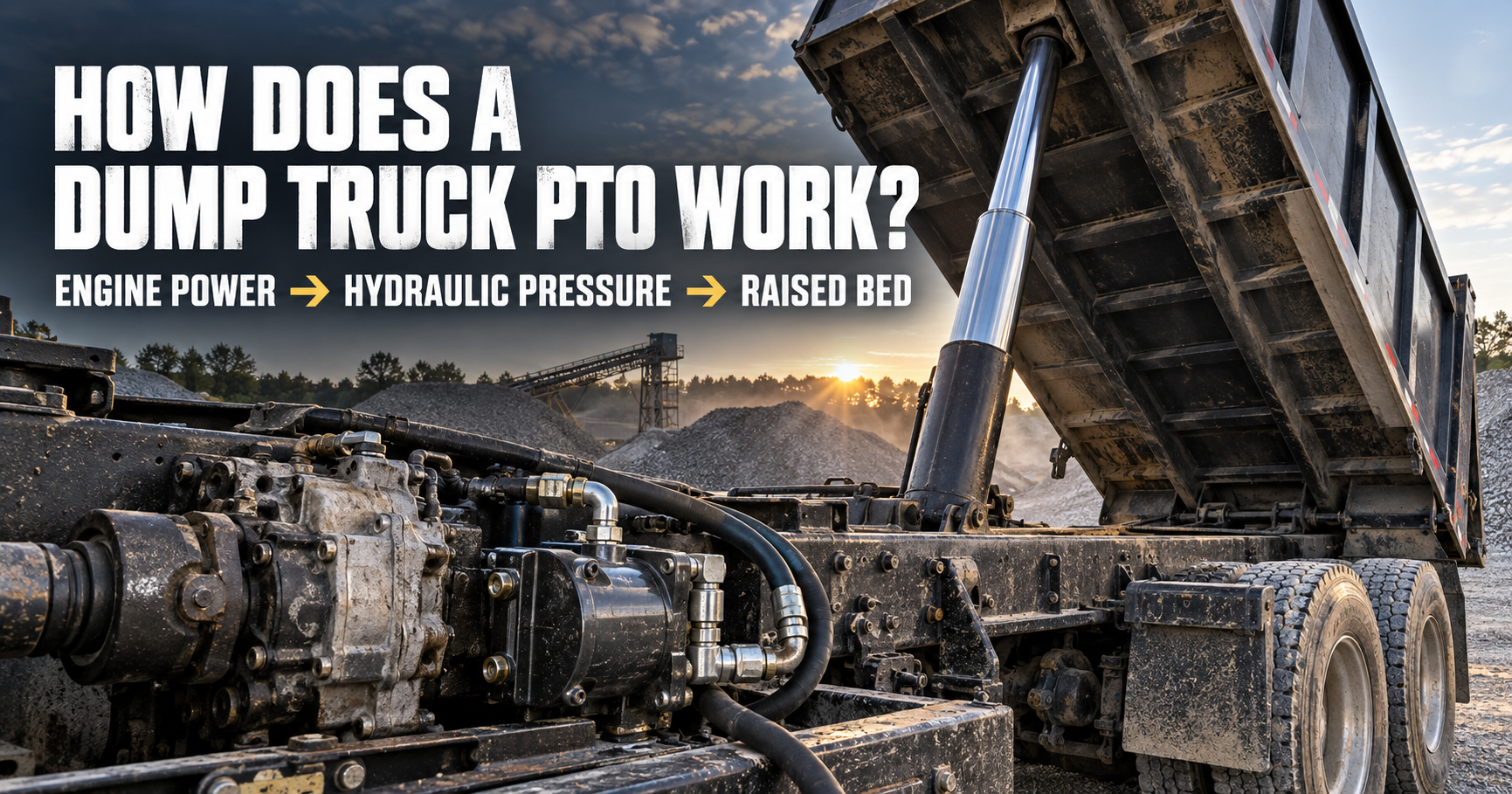
A new driver can climb into a dump truck, see a PTO switch and a bed control, and reasonably wonder why the truck needs both. If the engine is already running, why doesn’t the bed just go up?
The short answer is that the PTO makes engine power available to the hydraulic system. The bed control then tells that system what you want the bed to do. Once you separate those two jobs, the controls make a lot more sense.
I would want to understand that difference before my first load. I would also want someone familiar with that specific truck to show me its controls, because a dash switch, air-operated control, and automatic PTO setup may not work the same way.
What Does PTO Mean on a Dump Truck?
PTO means power take-off. It is equipment that uses power from the truck’s drivetrain to operate something besides the wheels. On a typical dump truck, that something is a hydraulic pump.
The pump moves hydraulic fluid to operate the cylinder that lifts the dump bed. The PTO itself does not physically push the bed up. It supplies the power that lets the hydraulic system do the lifting.
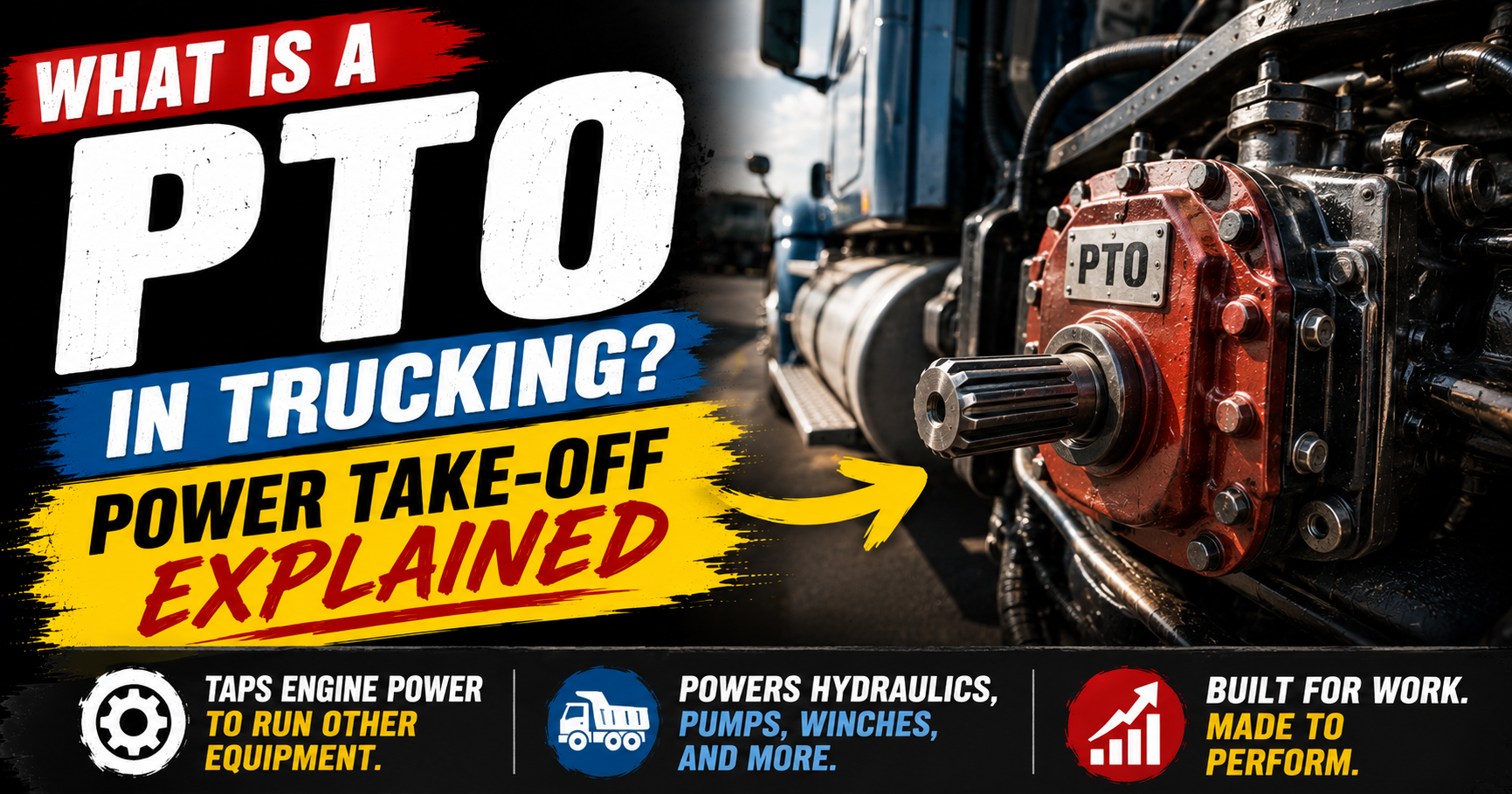
That is the basic idea behind many work trucks, not just dump trucks. Our broader guide to what a PTO does in truckingcovers some of the other equipment it can run. Here, I’m staying focused on the dump bed so a new driver can picture what happens after touching that switch.



Why Are There Separate PTO and Bed Controls?
I think of them as two separate decisions.
The PTO control engages the equipment that provides power to the hydraulic pump. The bed control directs the hydraulic system to raise, lower, or hold the bed, depending on how that truck is built.
Engaging the PTO does not necessarily mean the bed should start rising. Likewise, moving a bed control will not give you the expected result if the pump is not being driven or another required condition has not been met.
That distinction helps when something seems wrong. If the PTO indicator comes on but the bed does not move, I would not assume the PTO is the only possible cause. The hydraulic controls, fluid, pump, hoses, and truck-specific interlocks all deserve attention.


What Happens When the Bed Goes Up?
At a basic level, the engine supplies power through the PTO to the hydraulic pump. The pump moves fluid under pressure. When the driver uses the appropriate bed control, that pressure extends a hydraulic cylinder and raises the bed.
As the bed tilts, the load moves toward the rear and out through the tailgate or opening designed for that body. How it empties depends on the material and the body. Damp material may stick; dry material may flow quickly. A load that does not move as expected is a reason to stop and assess what is happening, not a reason to keep raising the bed without looking.
Lowering the bed uses the truck’s hydraulic controls as designed. The exact sequence and control positions depend on the equipment. I would follow the instructions for that truck and body instead of treating a general article as an operating manual.

If you are comparing body styles, our dump trailer guide explains how a trailer differs from a dump body mounted on the truck.
Where Is the PTO Switch in a Dump Truck?
There is no single dashboard layout I can promise you. A truck may have a switch, lever, or another type of control, and it may have an indicator showing when the PTO is engaged. Other controls govern the bed itself.
Before I drove an unfamiliar dump truck, I would have someone point out the PTO control, bed control, indicator lights, and any warnings posted in the cab. Then I would ask them to demonstrate the truck’s normal operating sequence in a suitable location.
I would also ask one practical question: How do I confirm the PTO is disengaged before driving away? Knowing how to turn it on is only half the lesson.


Should You Drive With the PTO Engaged?
That depends on the truck, PTO, and equipment it powers. Some commercial vehicles are designed to use a PTO while moving. A dump truck’s bed-hoist procedure may call for a different sequence.
For a driver learning a particular dump truck, I would follow its operating instructions and the company’s training rather than assume every PTO follows one rule. What I would always confirm before leaving a dump site is that the bed is fully lowered and the controls are in their required travel positions.
That may sound obvious while you are reading it at home. At a busy site, with someone waiting behind you and material still falling out, it is exactly the kind of step I would want to make deliberate.
What Would I Check Before Raising a Dump Bed?
The ground and the space above the truck would be my first concerns. A dump bed changes the truck’s height and center of gravity as it rises. Soft ground, a slope, or a load that shifts to one side can turn an ordinary unload into a serious problem.
I would look up for power lines, roofs, branches, and other overhead obstacles. Then I would look around the truck for people, equipment, and enough room for the tailgate and material to move safely. The unloading spot needs to suit both the truck and the load.
I would also check that I understand the tailgate arrangement on that body. A tailgate that is set incorrectly can keep material from leaving as expected or create another hazard. Before operating a truck I have not used, I would want its normal unloading process demonstrated with that exact body and load type.
These checks belong before reaching for the PTO control. Once the bed is rising, you have less room to correct a poor choice of dumping location.
What If the PTO Engages but the Bed Will Not Raise?
I would stop working the controls and start with the simple observations. Is the engine running as required? Does the truck indicate that the PTO actually engaged? Are the bed controls in the correct position for that truck? Is there an obvious leak or unusual noise?
The problem may be in the PTO engagement system, hydraulic pump, fluid supply, controls, or hoist. A driver can report what happened and check the items they are trained to check. Diagnosing or repairing hydraulic equipment is a separate job.
I would never put myself under a raised bed to investigate unless the equipment has been properly secured using the manufacturer’s approved body support procedure. A bed can come down unexpectedly, and the hydraulic system should not be treated as the support holding it safely over someone.
What If the Bed Raises Slowly?
Slow lifting does not point to just one cause. The load, engine speed specified for the system, hydraulic fluid condition, pump, controls, and mechanical condition may all affect operation.
I would compare the behavior with what is normal for that particular truck, rather than guess from another vehicle. If it suddenly works differently, makes a new noise, or shows a leak, I would stop and report it. Repeatedly operating a system that is struggling can turn a smaller problem into a bigger one.
This is where a quick pre-use look helps. Hoses, fittings, the pump area, and the hoist may give you a visible clue before you are standing at a dump site with a load that will not come out.



Does Every Dump Truck Use the Same PTO Setup?
No. Even trucks doing similar work can have different transmissions, PTO equipment, hydraulic controls, and dump bodies. That is why I would not tell a new driver to flip one named switch, put the transmission in one specific position, and follow a universal set of steps.
Understand the job each component performs, then learn the correct sequence for the truck in front of you. If the controls are unfamiliar, get a demonstration before carrying a load. That is a reasonable thing to ask, whether you are new to dump trucks or simply new to that particular truck.
Does a Dump Truck PTO Need Maintenance?
Yes. The PTO and hydraulic system have components that need inspection and service according to the equipment instructions. From the driver’s side, I would pay attention to leaks, damaged hoses, loose or damaged visible components, unusual sounds, and changes in how the bed operates.
I would also keep clear of moving or pressurized components. A hydraulic leak is not something to search for with your hand. If I saw fluid escaping or found a problem I was not trained to handle, I would report it and have the system checked.
Good lighting helps when you are looking over equipment early in the morning. The Coast XPH30R rechargeable headlamp is one option we’ve linked for hands-free visibility during truck inspections. A light can help you see a problem; it does not make it safe to get beneath an unsupported bed.
Is the PTO the Same Thing as the Hydraulic Pump?
No. They work together, but they have different jobs. The PTO transfers mechanical power from the truck’s drivetrain. The hydraulic pump uses that power to move fluid through the hoist system.
I find that distinction useful because drivers often call the whole setup “the PTO.” In conversation, people may know what they mean. When something stops working, though, knowing the separate parts helps you describe the problem accurately: the PTO will not engage, the pump makes an unusual noise, or the bed does not respond to its control.
A clear description gives the person inspecting the truck a better starting point than “the dump part is broken.”
About the author: Dax earned his Class A CDL on his first attempt after an accelerated course at Ross Trucking School. He writes for TruckingResource.com to explain commercial truck equipment in plain language for newer drivers.