
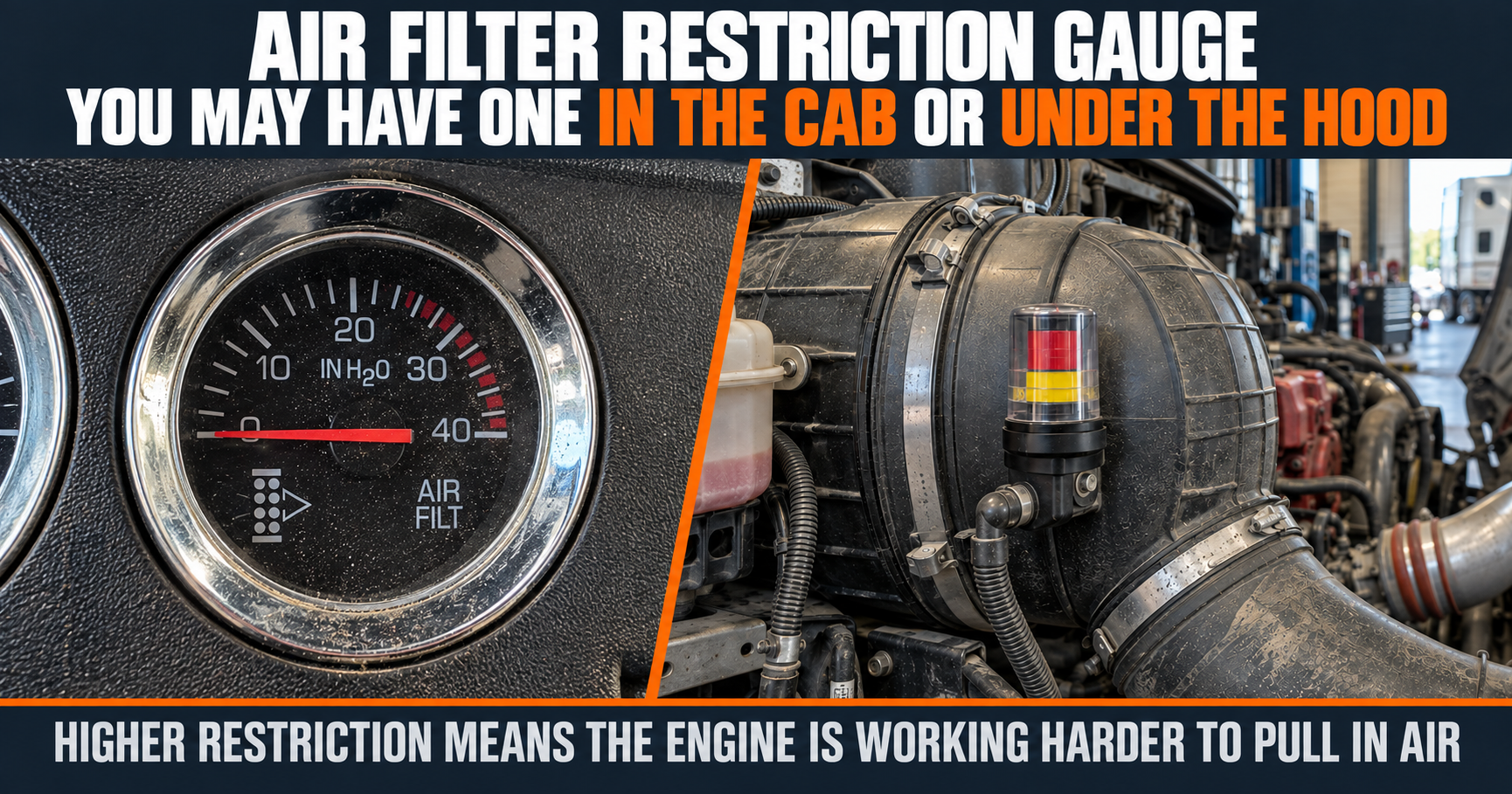
There’s a small gauge on some heavy trucks that’s easy to overlook until you actually stop and read what’s printed on it.
AIR FILTER RESTRICTION.
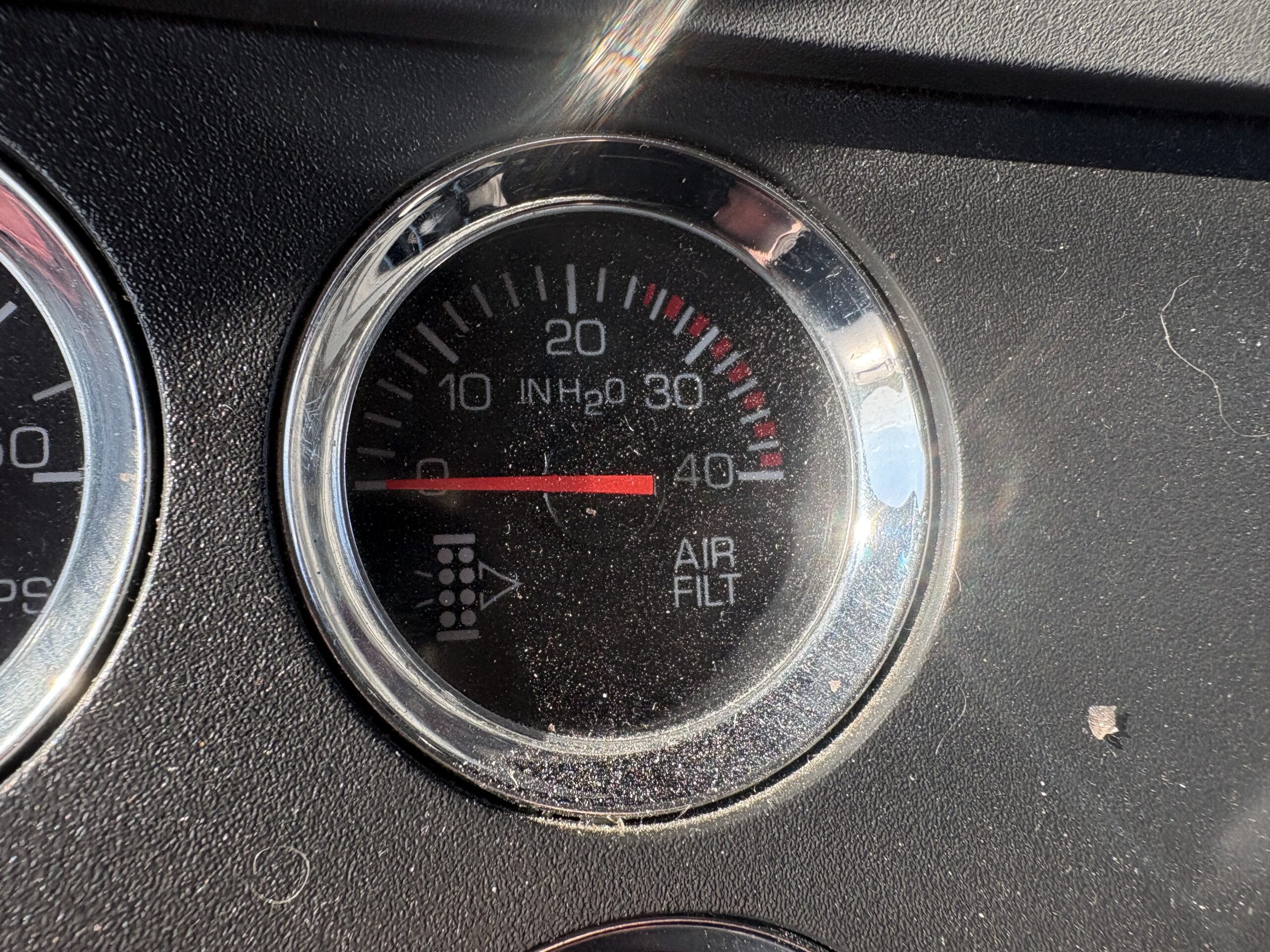
Depending on the truck, the scale may be marked in inches of water, often written as in. H₂O.
That doesn’t look anything like oil pressure, boost, voltage, or the other gauges most drivers recognize immediately.
The basic idea is actually pretty simple.
This gauge is telling you how difficult it is for the engine to pull air through its intake system.
A clean air filter lets air pass through relatively easily. As the filter collects dust and dirt, resistance increases. The restriction gauge gives you a way to see that happening instead of replacing an air filter based only on mileage or guessing whether it’s dirty.
For trucks that spend their days on gravel roads, around grain dust, in fields, on construction sites, or anywhere else with a lot of airborne dirt, that’s a pretty useful gauge to understand.
What Does Air Filter Restriction Actually Mean?
A diesel engine needs an enormous amount of air.
Air enters through the intake, passes through the engine air filter, travels through the intake plumbing and turbocharger system, and eventually reaches the cylinders.
The air filter’s job is to catch dirt before it reaches expensive engine components.
There’s a tradeoff, though.
As dirt accumulates in the filter, it becomes harder for the engine to pull air through it.
That resistance is what the restriction gauge measures.
Instead of measuring pressure in PSI like your air brake gauges, air filter restriction is commonly measured in inches of water, usually abbreviated in. H₂O.



What Does “Inches of Water” Mean?
This throws people off because we’re used to seeing PSI on truck gauges.
An inch of water is simply another unit for measuring relatively small pressure differences.
You don’t need to perform any conversions while driving.
The important thing is understanding the direction of the gauge.
Lower restriction generally means air is passing through the intake more easily.
Higher restriction means the engine has to work against more resistance to pull air through the intake system.
The higher that restriction gets, the closer you’re getting to the point where the air filter or intake system needs attention.



What Is a Normal Air Filter Restriction Reading?
This is where I don’t like giving drivers one magic number.
The acceptable maximum depends on the engine, air cleaner, intake system, and manufacturer’s specifications.
Donaldson, one of the major manufacturers of heavy-duty air filtration systems, notes that recommended service points vary by engine and application, with many heavy-duty diesel systems using restriction limits somewhere around the 20 to 30 inches H₂O range.
That does not mean every semi truck should have its filter changed at the same number.
The correct service point for your engine and truck is the one specified by the manufacturer.
What the gauge gives you is something even more useful for everyday driving.
It lets you see whether restriction is increasing.
Why Does the Reading Increase?
Usually because something is making it harder for the engine to get air.
A dirty engine air filter is the obvious reason.
But it’s not the only possibility.
Restriction can also increase because of:
- Debris blocking the outside air intake.
- A damaged or collapsed intake hose.
- Snow or ice blocking the intake.
- Heavy dust buildup.
- Foreign material inside the intake system.
That’s why a high restriction reading shouldn’t automatically mean, “Throw an air filter in it.”
It means the intake system needs to be inspected.

Dusty Work Can Plug an Air Filter Much Faster
This matters a lot for trucks that don’t spend their entire lives on pavement.
A highway tractor pulling a dry van across interstate highways isn’t exposed to the same environment as a dump truck running gravel roads all day.
Grain hauling can be even worse.
Corn dust.
Field dust.
Chaff.
Gravel road dust.
Dust around grain bins.
You can see it hanging in the air.
The engine is breathing from that same environment.
That’s one reason an hour meter or mileage interval doesn’t always tell the whole story when deciding when an air filter needs attention.
The restriction gauge is showing you what’s actually happening inside the intake.
A Dirty Air Filter Can Affect Engine Performance
A diesel engine can only make power properly when it gets enough air.
If intake restriction becomes excessive, you may begin noticing changes in performance.
The truck may feel sluggish.
Throttle response may not feel the same.
Fuel economy can suffer.
Under heavy load, you may notice the engine doesn’t pull like it normally does.
And because the turbocharger is part of that airflow system, an intake restriction can also affect what you’re seeing elsewhere on the dashboard.
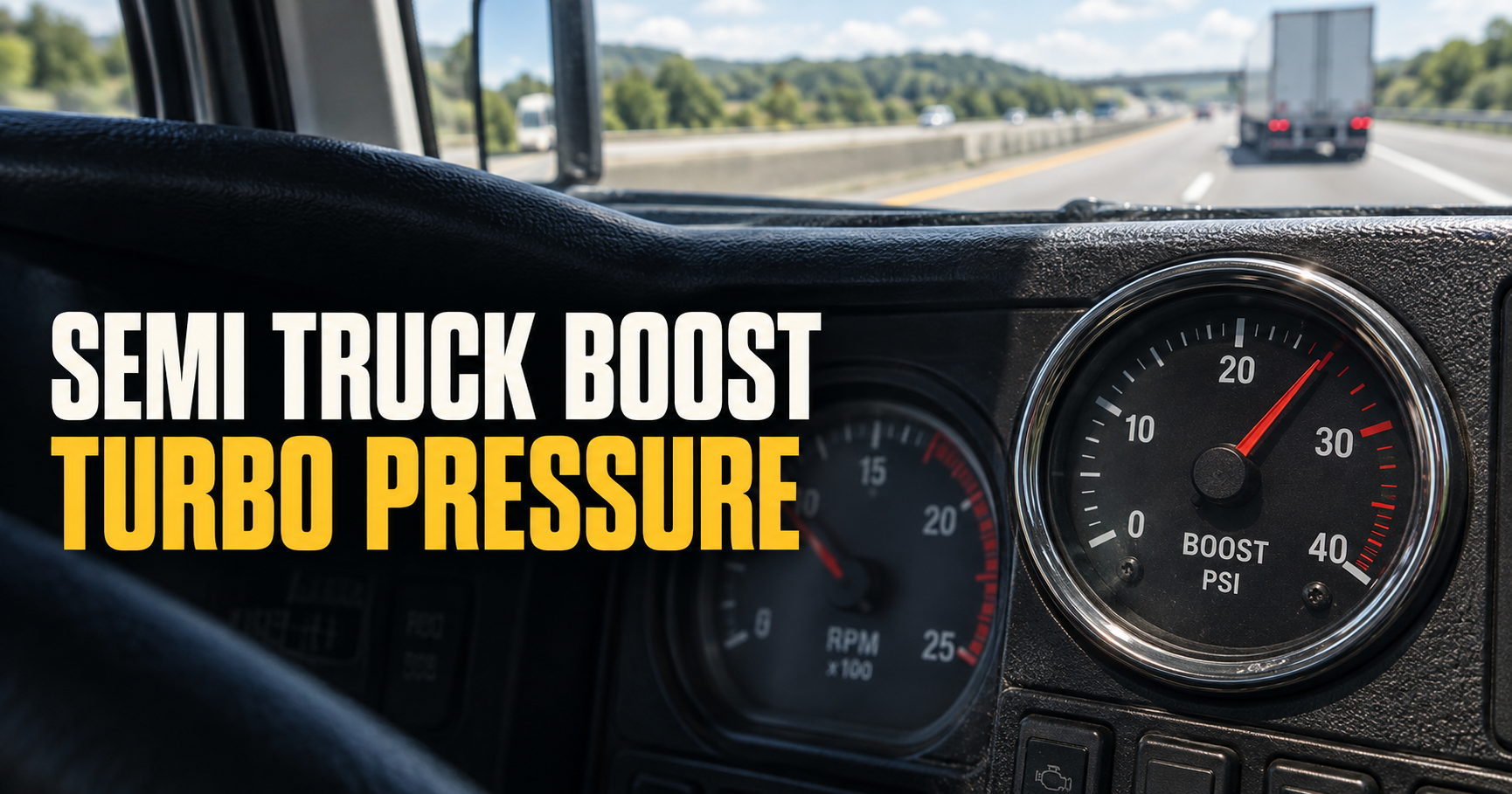
That’s where your semi truck boost gauge becomes useful.
If the truck suddenly feels weak, boost isn’t behaving normally, and the air filter restriction reading is unusually high, those clues together give you a much better starting point than simply guessing that the turbocharger is bad.
Don’t Replace a Turbo Before Checking the Simple Stuff
This is exactly why dashboard gauges are worth understanding.
A truck feels weak under load.
Someone notices lower boost.
Immediately the conversation becomes:
“Turbo’s going bad.”
Maybe.
But a diesel engine is a system.
If the engine can’t get enough clean air into the intake, turbo performance and engine power can both be affected.
Checking the air intake and restriction gauge is much easier and cheaper than starting with major engine components.
Can You Tell if an Air Filter Is Bad Just by Looking at It?
Not reliably.
An air filter can look dirty and still have usable capacity remaining.
On the other hand, restriction can become excessive even when the filter doesn’t look as terrible as you expected.
That’s one reason restriction-based servicing is useful.
You’re measuring how the filter is actually affecting airflow instead of judging it only by appearance.
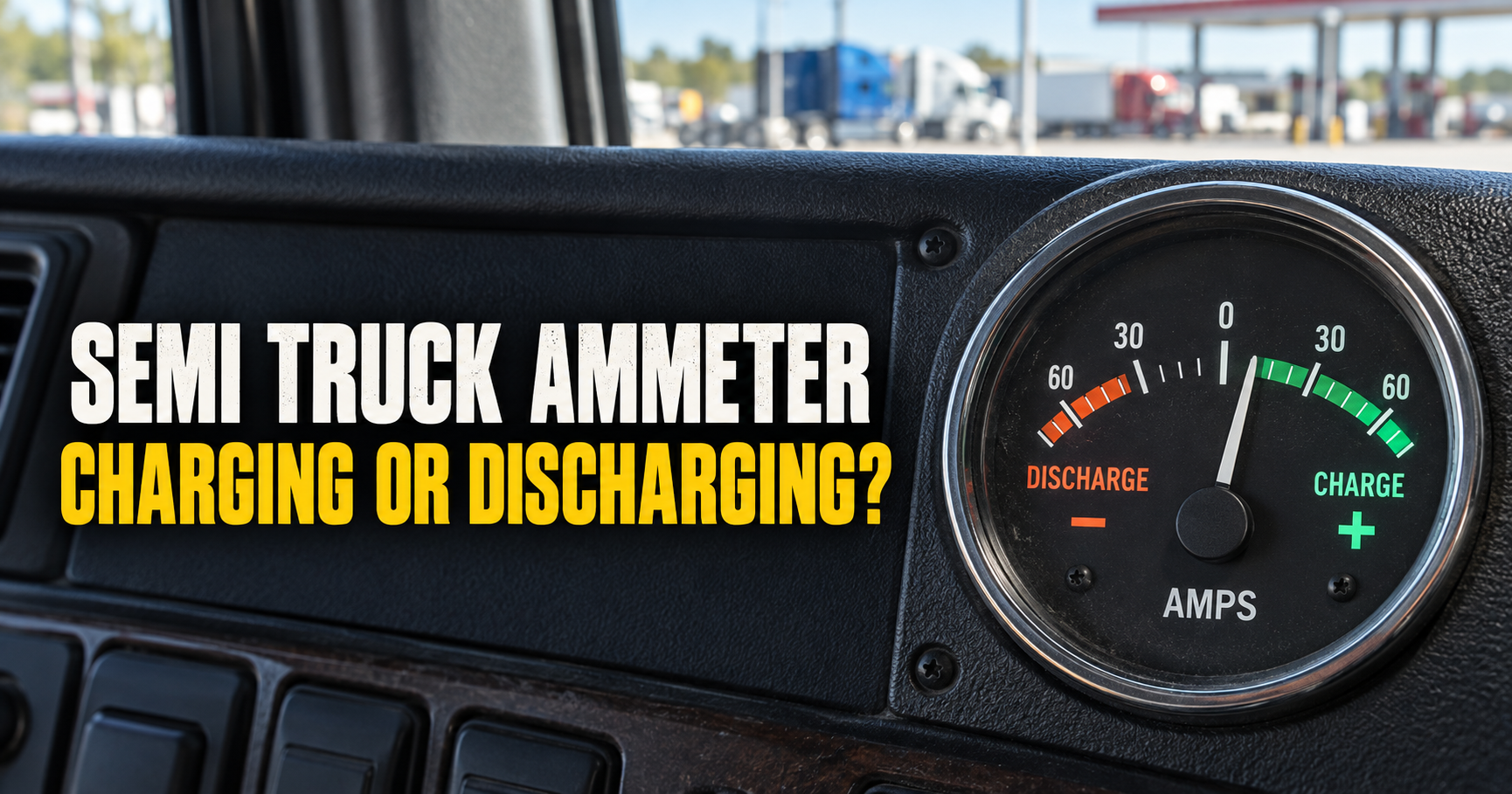


Don’t Keep Pulling the Filter Out Just to Look at It
There’s another reason I like using the restriction gauge.
Every time the air cleaner housing is opened, there’s an opportunity for dirt to get where it shouldn’t.
The entire purpose of the air filter is keeping abrasive material out of the engine.
Repeatedly opening the housing just to inspect a filter that doesn’t need service can create unnecessary opportunities for contamination or damage to seals.
If the restriction gauge says the system is still comfortably within specification, there may be no reason to constantly disturb it.
What Happens After You Replace the Air Filter?
On systems with a restriction indicator or gauge that records the highest restriction reached, the indicator may need to be reset after the filter is replaced.
Exactly how that’s done depends on the truck and the type of indicator being used.
After servicing the filter and resetting the indicator where required, you should see the restriction return to a much lower reading if the filter was the cause.
If restriction remains unusually high with a new filter installed, it’s time to inspect the rest of the intake system.
What if the Gauge Suddenly Reads Much Higher Than Normal?
A gradual increase over thousands of miles or many dusty workdays makes sense.
A sudden jump deserves more attention.
Something may have changed.
The outside intake could be partially blocked.
Debris may have entered the intake.
A hose could have collapsed.
The filter may have become contaminated unusually quickly.
Rather than assuming the gauge is wrong, I’d inspect the intake system and figure out why the restriction changed.
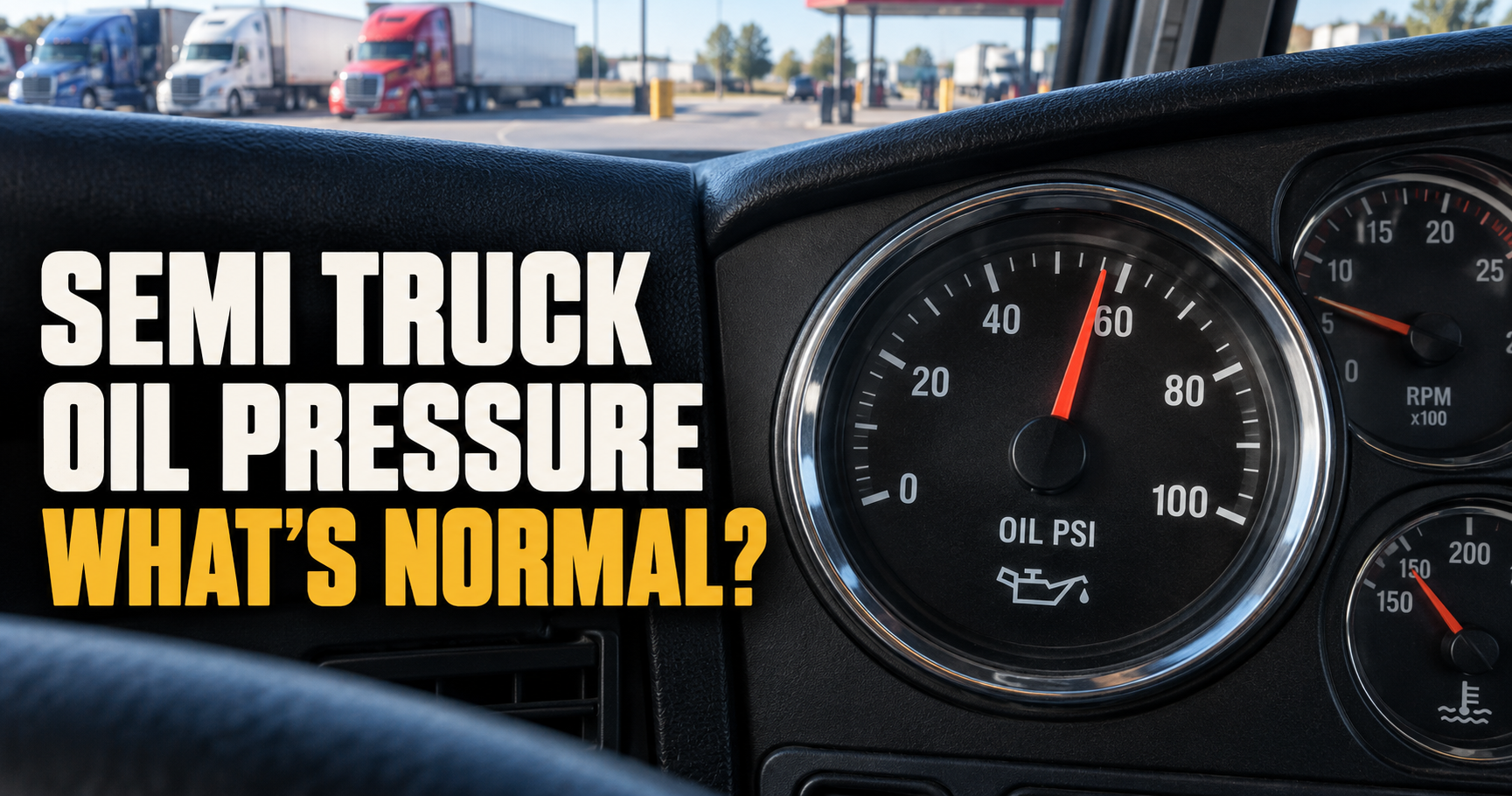
The same basic principle applies to several of the gauges we’ve already covered. Knowing the truck’s normal behavior makes an unusual reading much easier to spot. Our normal oil pressure guide for semi trucks uses the same approach because a sudden change from your truck’s normal pattern often matters more than obsessing over one universal number.
What if the Gauge Always Reads Zero?
A low reading can be perfectly normal when the engine isn’t pulling much air.
But if the gauge never responds under conditions where you’d expect some restriction, especially if you know the filter is heavily loaded, the gauge or restriction indicator itself may deserve inspection.
Remember that airflow changes dramatically with engine demand.
You can’t always judge intake restriction accurately while the engine is simply sitting at idle.
Should You Clean or Replace a Dirty Air Filter?
That depends on the filter and manufacturer’s service instructions.
Many modern heavy-duty engine air filters are designed to be replaced rather than casually blown clean with compressed air.
Using high-pressure compressed air incorrectly can damage filter media, creating tiny openings that allow dirt to reach the engine.
Follow the filter and truck manufacturer’s servicing instructions rather than automatically grabbing an air hose.
Saving a few dollars on an air filter isn’t worth feeding abrasive dirt into an expensive diesel engine.
Can a Plugged Air Filter Hurt the Turbo?
Severe intake restriction can certainly make the turbocharger and engine work under conditions they weren’t intended to operate in.
The turbo relies on a healthy supply of incoming air.
That’s another reason ignoring an excessive restriction reading isn’t a great idea.
The gauge exists so you can service the intake before restriction becomes a bigger performance problem.
How Often Should a Semi Truck Air Filter Be Changed?
There’s no honest universal mileage answer.
A truck running clean interstate miles may go much longer than a dump truck working gravel roads.
A grain truck operating through dusty harvest conditions can see another completely different environment.
That’s exactly why restriction monitoring makes sense.
Rather than changing a perfectly usable filter simply because a calendar says so, you can combine the manufacturer’s maintenance schedule with the actual restriction reading and operating conditions.
The Engine Air Filter Is Different From the Cabin Air Filter
This distinction matters because both are called “air filters.”
The engine air filter cleans the air entering the engine.
The cabin air filter cleans air entering the HVAC system for the driver.
A clogged engine air filter can affect engine breathing and performance.
A clogged cabin filter can make your heater or air conditioner barely blow through the vents.
They’re completely different systems.
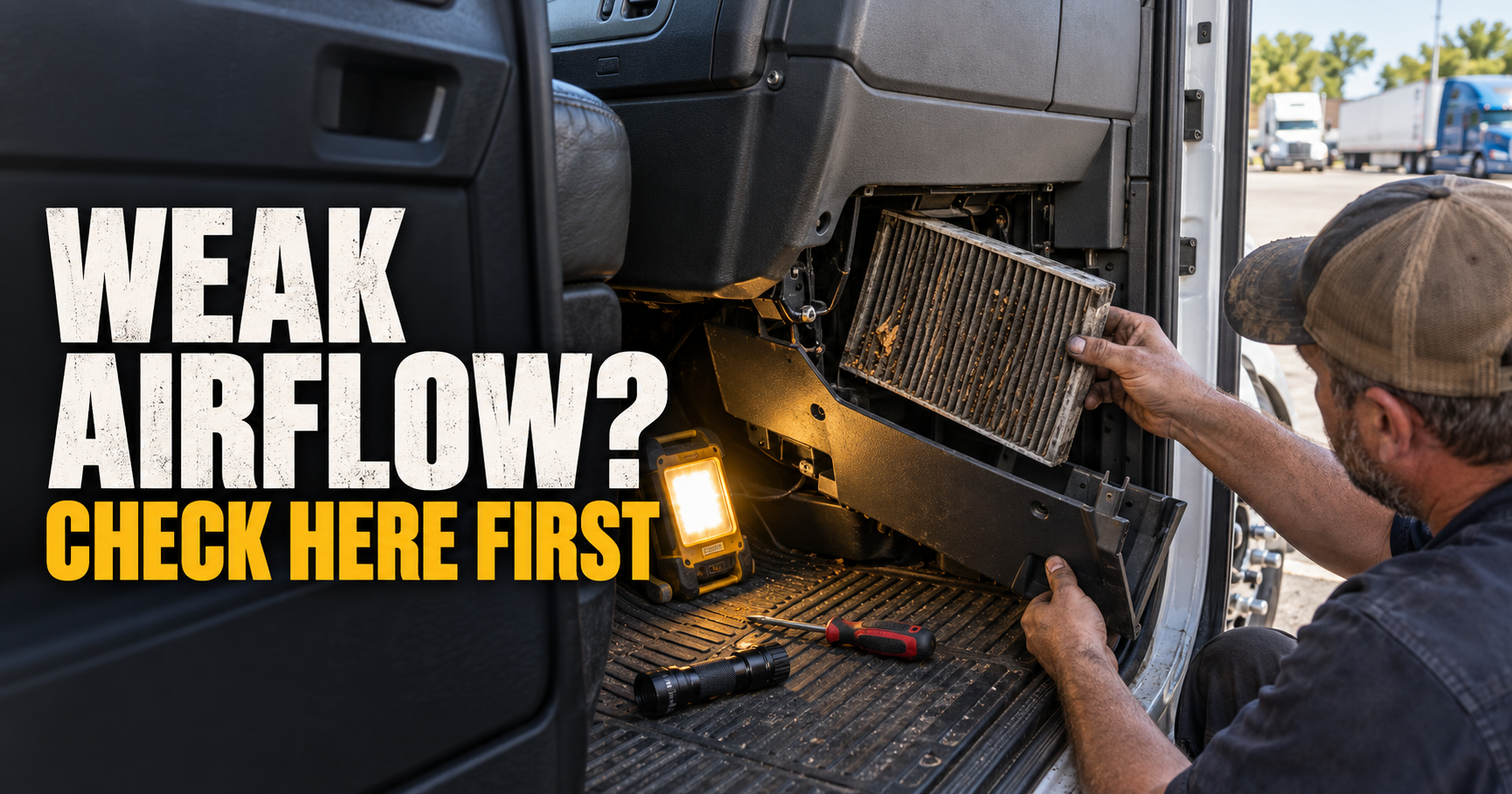
If your problem is weak airflow inside the cab rather than engine performance, our Kenworth cabin air filter guideexplains that side of the truck.
Frequently Asked Questions
What does an air filter restriction gauge measure on a semi truck?
It measures how much resistance the engine encounters while pulling air through the intake and air filter. Higher restriction generally means airflow is becoming more restricted.
What does in. H₂O mean?
It means inches of water column, a unit used to measure relatively small pressure differences. Heavy-duty air filter restriction gauges commonly use it instead of PSI.
What should my air filter restriction gauge read?
The correct service limit depends on the engine and intake system. Many heavy-duty diesel applications use service points somewhere around 20 to 30 inches H₂O, but you should use the specification for your particular truck and engine.
Does a high reading automatically mean the air filter is bad?
No. The filter is a common cause, but blocked intake openings, damaged hoses, snow, ice, or other intake restrictions can also produce an elevated reading.
Can a dirty air filter reduce turbo boost?
Excessive intake restriction can limit the air available to the engine and turbocharger and may contribute to reduced performance. Low boost can have many other causes, though, so don’t diagnose the turbo from one gauge alone.
Should I change my air filter if it looks dirty?
Appearance alone isn’t always a reliable measure of remaining filter life. Follow the manufacturer’s service recommendations and restriction limits.
Why is the reading low at idle?
The engine isn’t demanding nearly as much air at idle as it does under heavy load. Restriction becomes more apparent when airflow demand increases.
That Little Gauge Can Save You From Guessing
The air filter restriction gauge isn’t nearly as dramatic as an oil pressure or coolant temperature gauge.
You’re probably never going to stare at it every few minutes while driving.
But that’s not its job.
It’s there to answer one useful question:
How hard is the engine having to work to pull air through the intake?
If the reading stays comfortably within the truck’s normal range, great.
If it gradually climbs toward the manufacturer’s service limit, the filter is telling you it’s getting loaded.
And if the reading suddenly changes while the truck also starts losing power, you’ve got another valuable clue about where to start looking.
For a tiny gauge most drivers barely notice, that’s actually quite a bit of useful information.
Author: Ryan Cole
Ryan Cole writes about diesel trucks, electrical systems, engine performance, and everyday commercial vehicle maintenance for TruckingResource.com. His work focuses on turning confusing dashboard readings and truck problems into straightforward information drivers can actually use.