
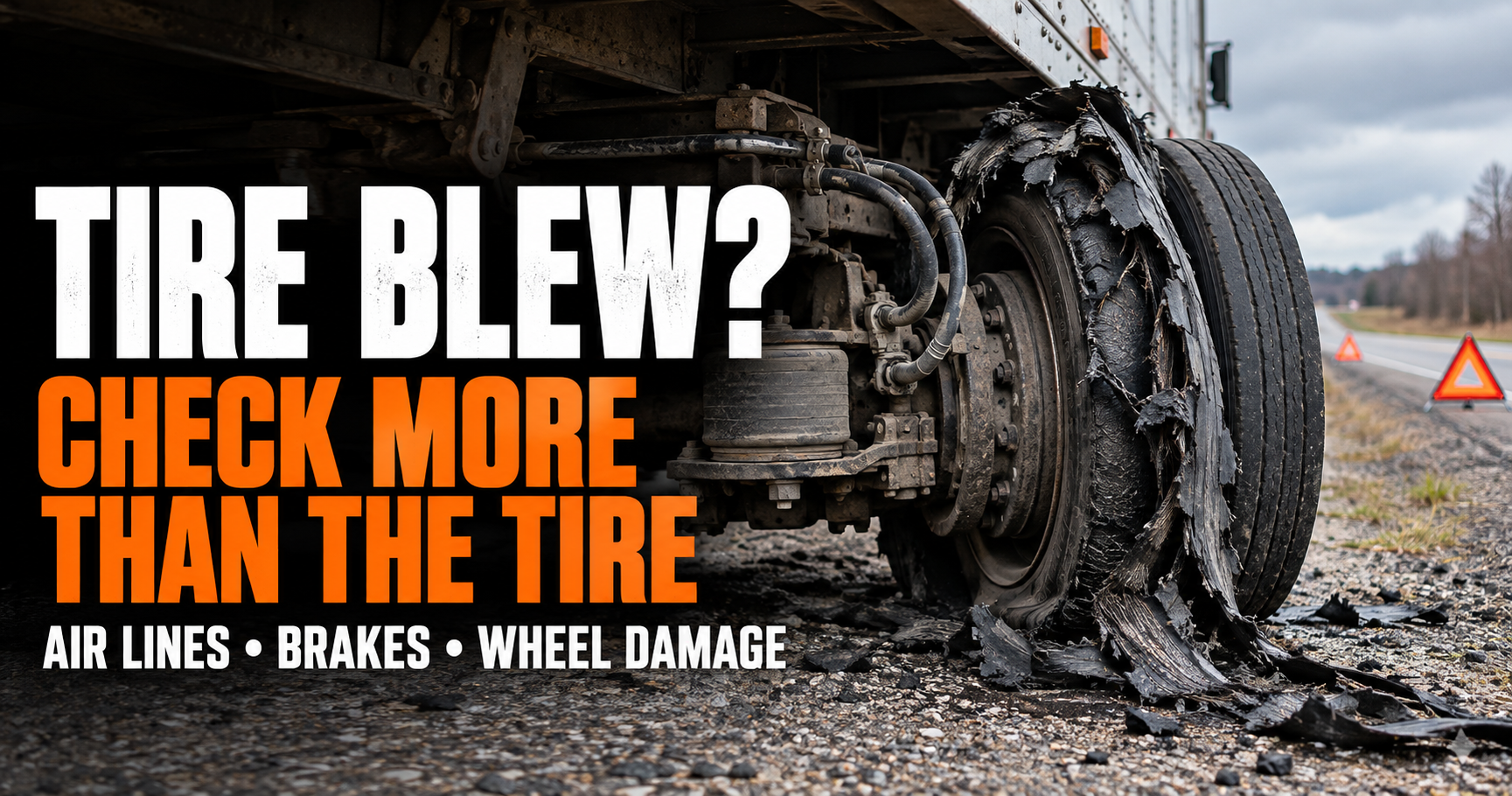
When a tire blew on my semi while I was hauling corn, the sound was so loud it reminded me of a cannon. The truck shook, and I saw smoke and smelled rubber. I was doing about 60 mph on a rural highway, so my first job was getting the loaded truck onto the shoulder safely.
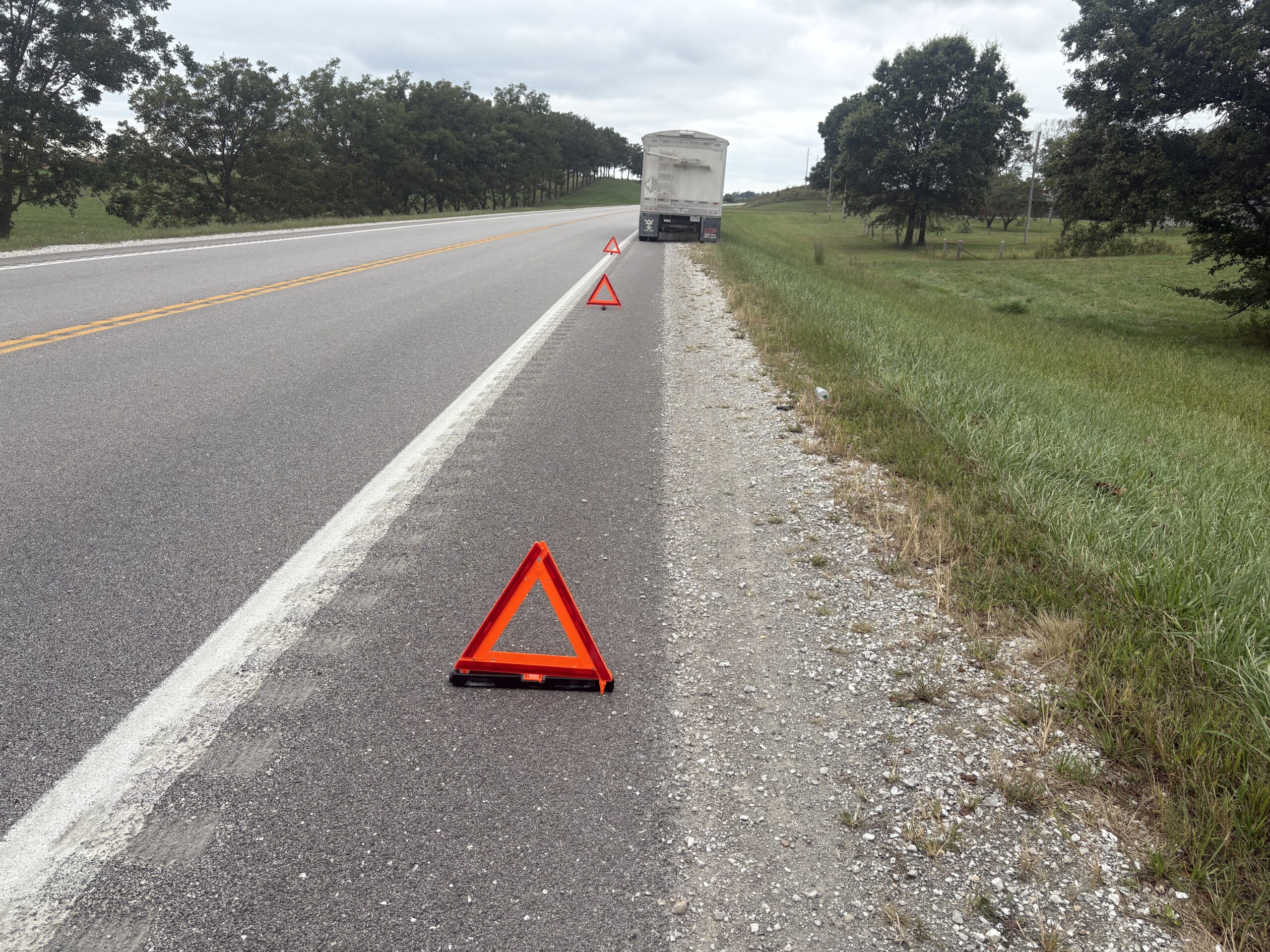
Once I stopped, I turned on my flashers and put out my warning triangles. Then I got a close look at the tire. A large section had come apart. It was the kind of damage that makes you wonder what else the rubber might have hit on its way off.
That question is the reason for this article. Replacing the failed tire is obvious. Checking the wheel, the other tire beside it, and the equipment around them is easier to overlook.
I’m not claiming the blowout damaged all of those parts on my truck. I don’t have a shop report saying it did. The photos show a badly damaged tire, and they gave me good reason to ask what needed to be inspected before the truck went back to work.
Start With the Tire That Failed, but Don’t Stop There
The failed tire needs a proper inspection, even if the damage seems obvious. A tire technician may be able to tell whether there are signs of impact, separation, heat, or another problem. Sometimes the remaining pieces won’t support a definite answer.
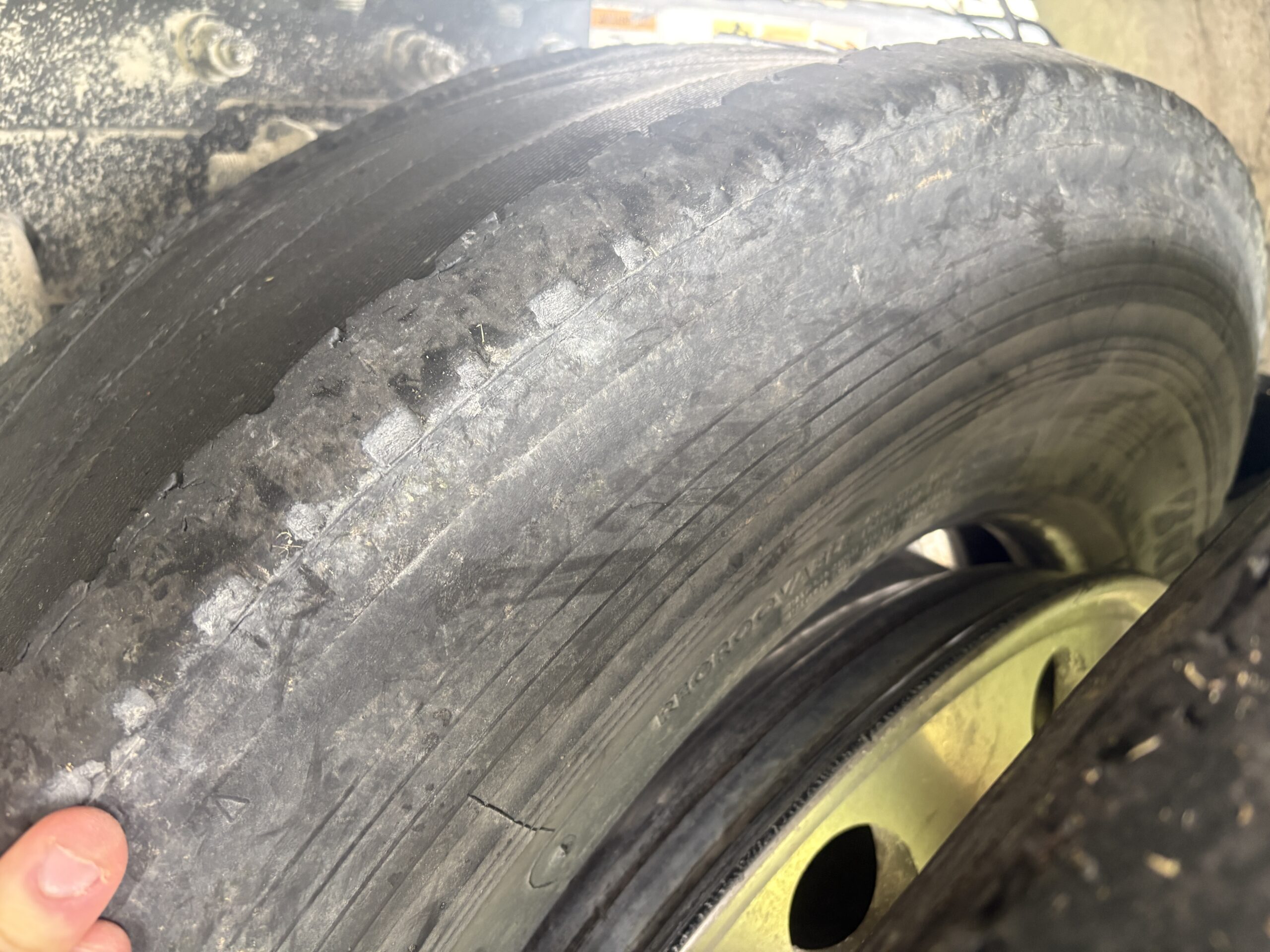
I haven’t identified the cause of mine. A close-up photo taken after a tire has torn apart can show the result without proving what started the failure. I would be wary of anyone who looks at one picture and confidently says I must have missed a particular defect during my pre-trip.
The practical question at the shop is what the technician can establish from the tire and wheel in front of them. If there’s a clear cause, I’d want to know. If there isn’t, I’d want them to say that too. Guessing doesn’t help prevent the next breakdown.
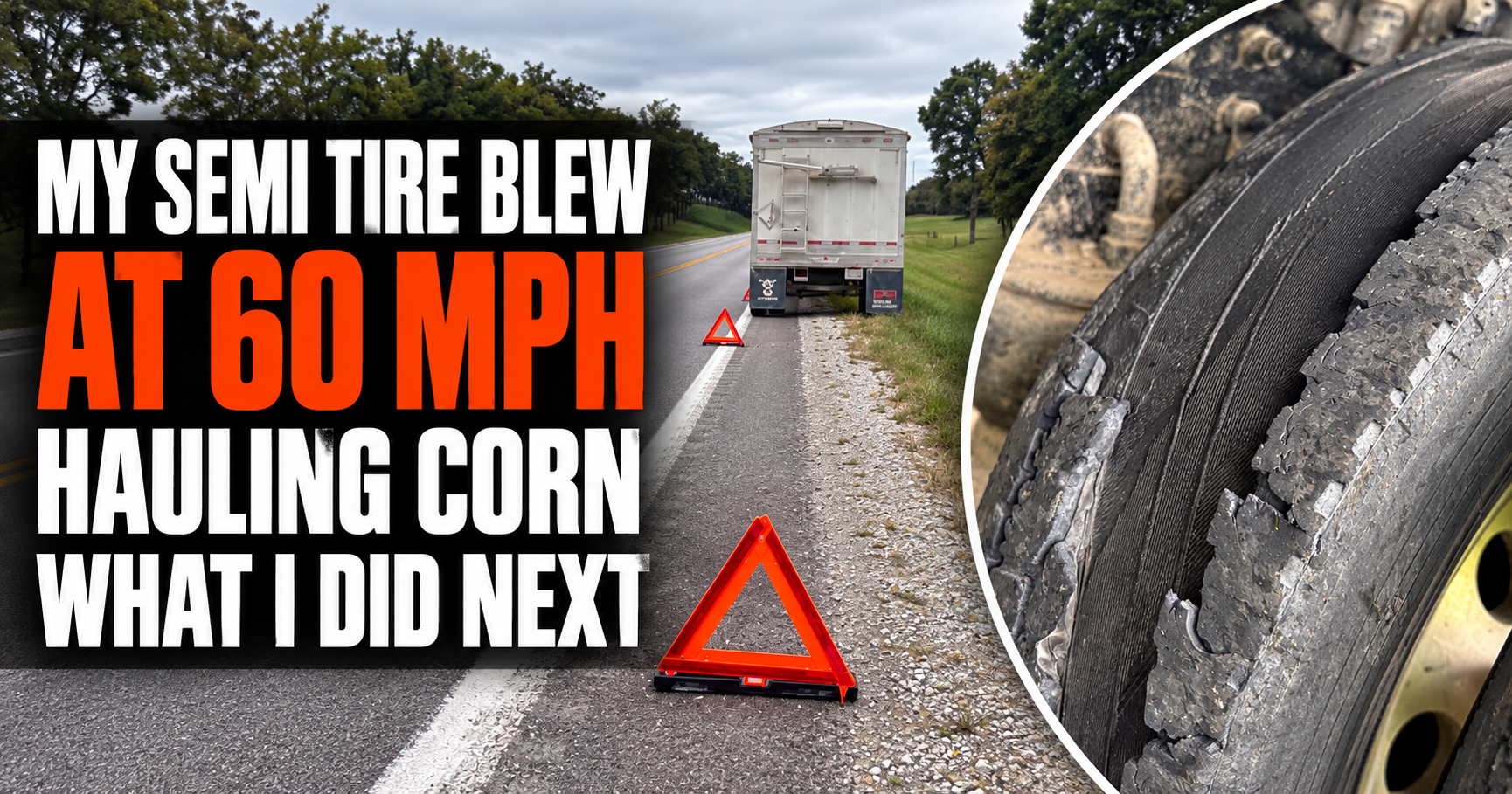
For the full account of what happened on the highway, including the original tire photos, I shared my semi tire blowout while hauling corn at 60 mph.
Check the Other Tire if the Failed One Was in a Dual Pair
If a tire fails in a dual wheel position, the tire beside it deserves attention. The remaining tire may have carried more load after its partner failed. It could also have been struck or rubbed by loose pieces from the failed tire.
That does not automatically mean both tires must be replaced. It means the surviving tire needs to be assessed on its own condition, inflation, load capacity, and any damage a quick glance might miss. A technician can also check that the replacement and remaining tire are suitable to run together.
The load question matters especially on a working truck. I was hauling corn, and I wouldn’t want someone to assume the remaining tire was fine simply because it still held air. Federal tire rules include restrictions on the weight carried by a tire. FMCSA also has guidance addressing operation after a defective tire has been removed from a dual set, provided the remaining tires are not overloaded. That is a different situation from continuing to operate with the failed tire still mounted.
If I had another failure in a dual position, I’d ask the shop directly: “What did you find on the tire beside it, and is that tire fit to stay in service?” That is more useful than asking only whether they replaced the visibly shredded one.
Look at the Wheel, Rim, and Valve Area
The wheel assembly needs a look before a new tire goes on and the truck leaves. I’d want the technician to check the wheel and rim for visible damage and examine the valve and surrounding hardware.
A tire coming apart can make a lot of noise and movement. That doesn’t prove my wheel was damaged. It does mean I wouldn’t want the inspection to end the moment the old tire came off.
This is also a good time to pay attention to anything unusual that happened after the failure. If the truck still shook, pulled, or made a new noise after the repair, I’d report that before heading back onto the highway. A new tire fixes the tire problem; it doesn’t automatically explain every symptom the truck might have.
Check What the Loose Rubber Could Have Hit
The tire in my photos did not fail neatly. Large damaged sections were visible after I stopped. When rubber comes apart at road speed, nearby equipment can be in its path.
What is nearby depends on the wheel position and the truck or trailer. A qualified mechanic should look around the failed tire for damaged mud flaps, wiring, lights, air lines, brake components, fenders, and other parts in that area. I’m naming possible inspection points, not saying each one was damaged on my truck.
This is where the difference between a tire replacement and a complete repair becomes important. A tire shop might put new rubber on the wheel, but if something nearby was torn loose, that problem still needs attention before the vehicle returns to service.
I’d ask one plain question before leaving: “Did you check for anything the tire hit when it came apart?” It gives the technician a chance to tell me what was inspected and what, if anything, still needs repair.

Don’t Assume the Tire Was the Only Source of Smoke or Smell
Right after the bang, I saw smoke and smelled rubber. The destroyed tire is the obvious place to start when explaining that, but I can’t prove from the cab exactly what produced every bit of smoke.
If there was continued smoke, unusual heat, or a lingering burning smell after stopping, I’d want the shop to look closely for rubbing or another mechanical problem. Heat and smell can point to a tire dragging against something, but they can also call for a wider inspection. I wouldn’t dismiss either sign just because a replacement tire is ready.
What I can say firsthand is that the smell was part of how I knew something serious had happened. It came with the cannon-like bang and the shaking. If a driver reports those symptoms to a shop, they should be included in the description of the failure rather than reduced to “needs one tire.”
What About the Pre-Trip Inspection?
A blowout makes it tempting to look backward and ask whether you should have seen it coming. That’s a reasonable question, but the tire’s condition after it explodes does not show exactly what it looked like before the trip.
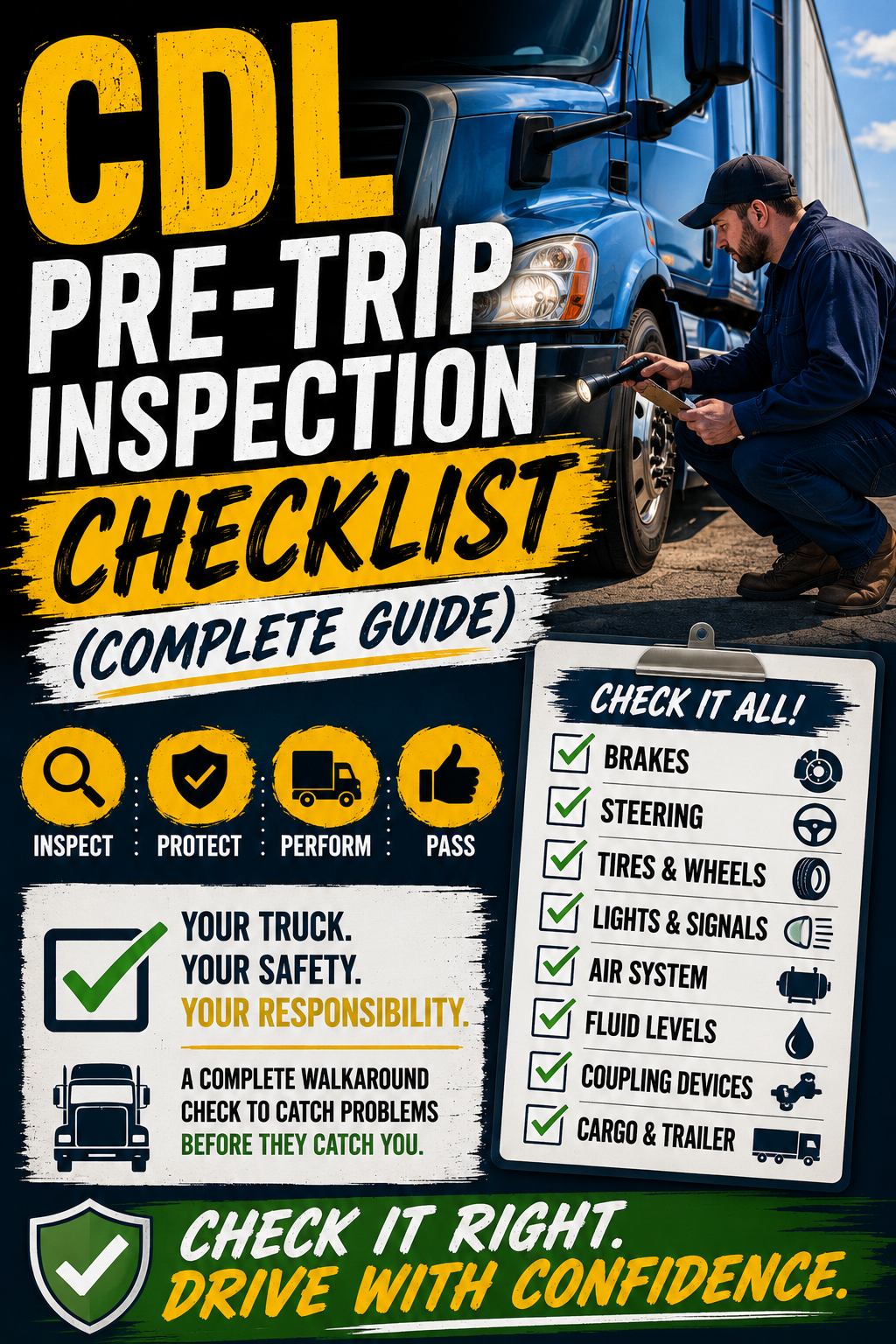
A pre-trip inspection is still important. Tires should be checked for visible cuts, bulges, cracking, irregular wear, foreign objects, and other damage. FMCSA’s commercial tire safety guidance also calls attention to inflation and proper loading. Our CDL pre-trip inspection checklist covers the tire checks alongside the rest of the vehicle.
I don’t have evidence that an obvious defect was present before my blowout. I also won’t tell readers a pre-trip can guarantee a tire won’t fail. The useful takeaway for me is to take visible tire problems seriously and have them evaluated while the truck is parked.
After a tire failure, I’d want the repair shop’s findings recorded as clearly as possible. Knowing what they actually found is more helpful than building a story around what might have happened.



Questions I’d Ask Before Taking the Truck Back Out
I wouldn’t need a long technical speech from the shop. I would want clear answers to a few things: What failed? Was the other tire in that wheel position checked? Was the wheel inspected? Did loose rubber hit anything nearby? Is there any remaining issue that keeps the truck from going back to work?
If the cause cannot be determined, that should be clear too. “We replaced the tire, but we can’t establish why it failed” is an answer I can work with. It tells me not to present a guess as a fact later.
I’d also want to know whether there’s anything I should watch for on the first drive after the repair. A vibration, pull, noise, or smell that continues after the tire is replaced deserves another look. Those symptoms shouldn’t become something a driver just gets used to.
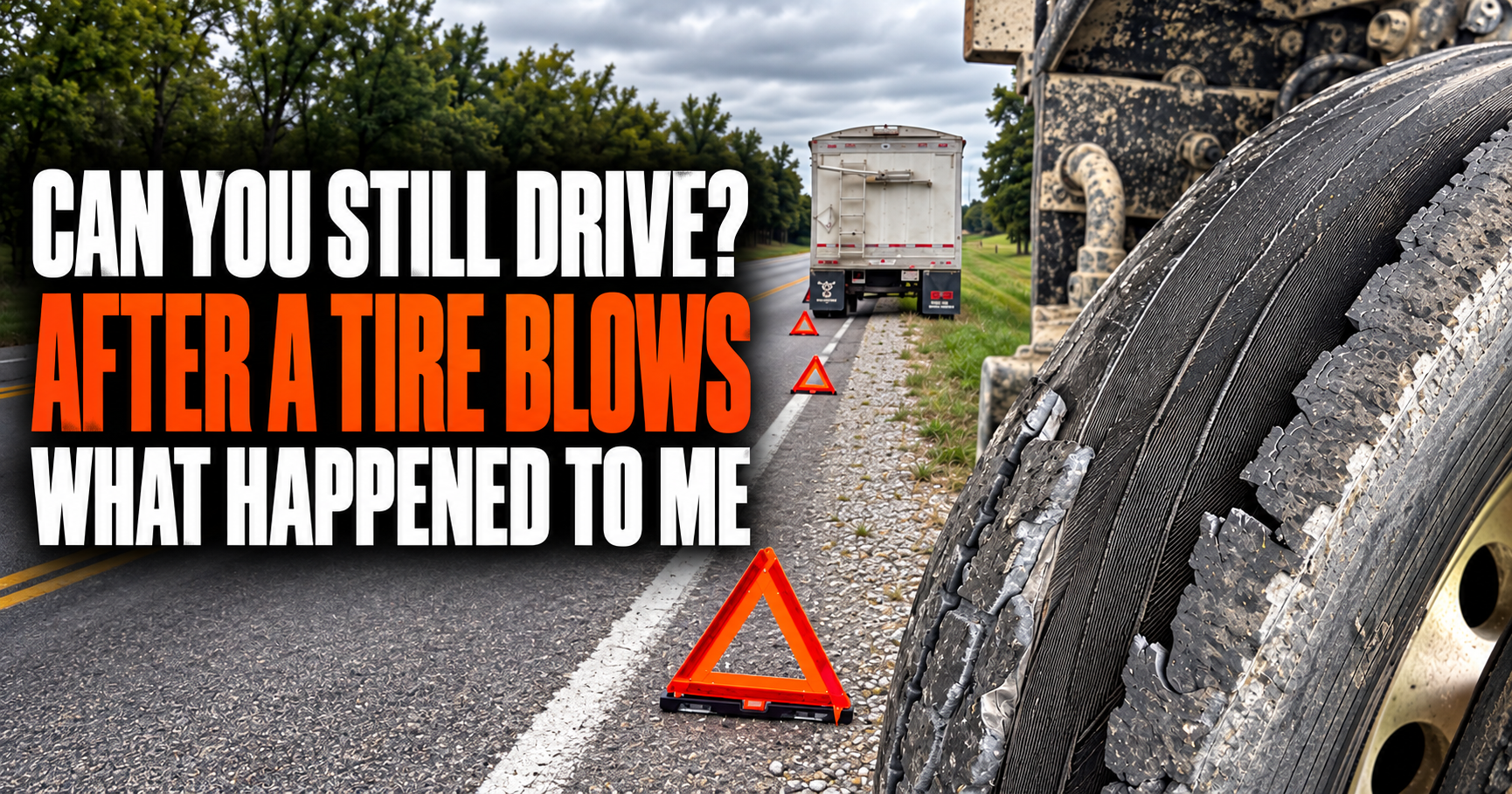
My truck made it to a tire shop about eight miles from where I stopped, after I was told no service truck was available. I wrote separately about being told to drive after the blowout. Making it to a shop does not answer whether every part near that wheel was okay. That takes an inspection.
What the Photos Can Tell Me
My photos prove how badly the tire was damaged when I saw it on the shoulder. They help show why the bang, shaking, smoke, and rubber smell got my attention so fast.
They do not prove the cause. They do not tell me whether a line, wheel, or brake component was damaged out of view. And they do not tell another driver whether their truck can be driven after a similar failure.
That’s the distinction I’d keep in mind if this happens again. I can describe what I heard, felt, smelled, and photographed. Then I need a qualified inspection to answer what the truck needs before it goes back on the road.
About the author: This article is based on a firsthand tire blowout while hauling corn, documented with original roadside photos for TruckingResource.com.