
When I was learning air brakes in CDL school, every instructor seemed to repeat the same phrase:
“Watch the pushrod.”
At first, I wasn’t exactly sure why everyone cared so much about one steel rod sticking out of the brake chamber.
Then I learned something that has stayed with me throughout my trucking career.
Every time you press the brake pedal, the pushrod is one of the first components that begins turning air pressure into stopping power.
Without it, your brake chamber couldn’t move the slack adjuster, the S-cam wouldn’t rotate, and your truck wouldn’t slow down.
It’s a simple part, but it’s one of the most important links in the entire air brake system.
What Is a Pushrod?
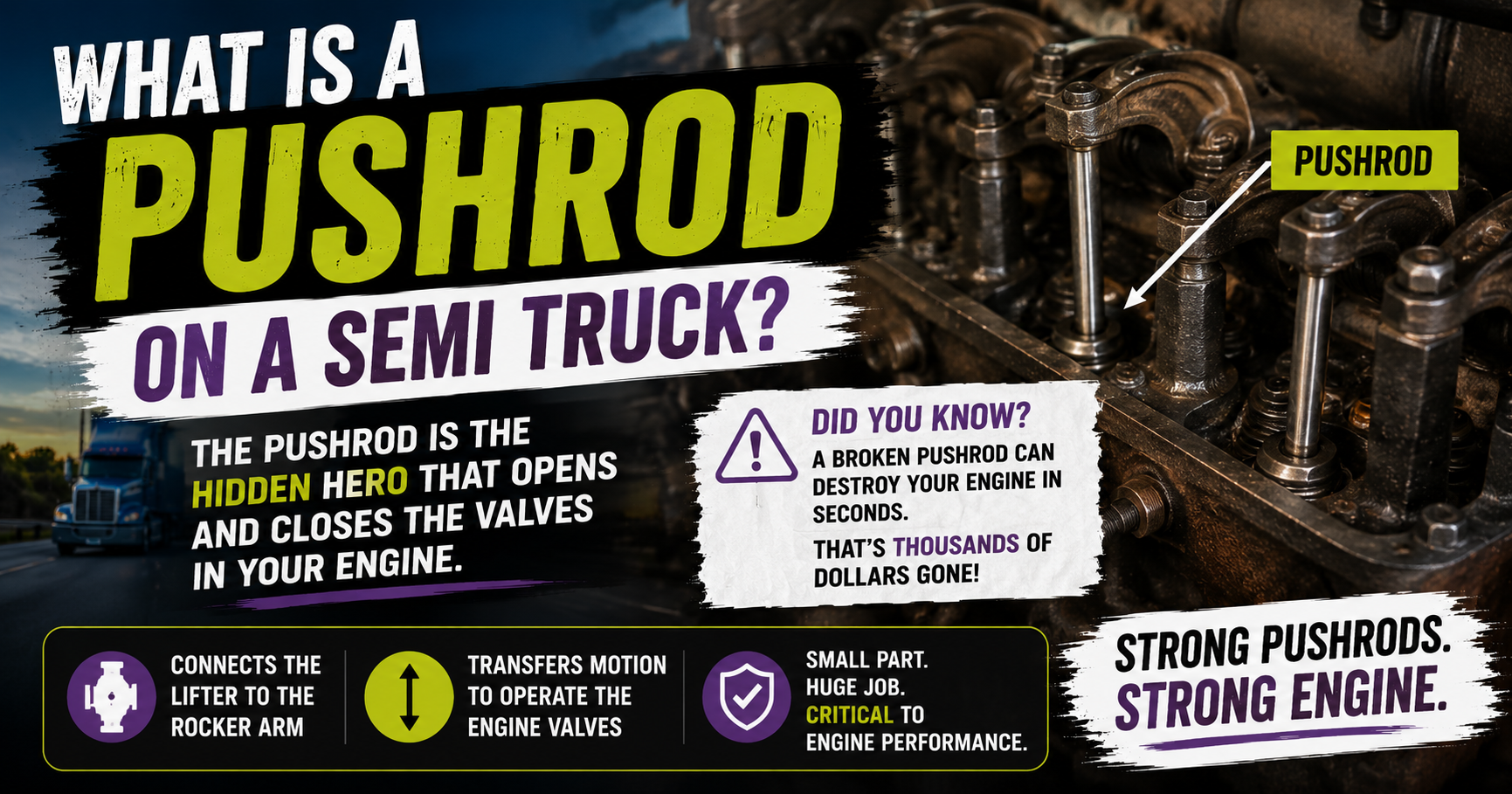
A pushrod is a steel rod that extends from the brake chamber and transfers force from the brake chamber to the slack adjuster whenever the driver applies the brakes. The pushrod is one of the key mechanical links in a commercial truck’s air brake system.
Although it doesn’t look complicated, the pushrod performs an essential job every single time you slow your truck.

Where Is the Pushrod Located?
The pushrod is attached directly to the brake chamber.
From there, it extends outward and connects to the slack adjuster.
You’ll typically find it mounted near each wheel equipped with air brakes.
During your CDL pre-trip inspection, it’s one of the components you’ll be expected to identify and inspect.

How Does a Pushrod Work?
The pushrod only moves when the brakes are applied.
Here’s what happens.
- You press the brake pedal.
- Compressed air enters the brake chamber.
- The diaphragm inside the brake chamber moves.
- The pushrod extends outward.
- The pushrod rotates the slack adjuster.
- The slack adjuster turns the S-cam.
- The S-cam forces the brake shoes against the brake drum.
- Friction slows the truck.
Every component depends on the one before it.
If the pushrod can’t move properly, the rest of the braking system can’t do its job correctly.
Why Is the Pushrod So Important?
I’ve always looked at the pushrod as the messenger.
The brake chamber creates the force.
The pushrod delivers it.
Without that connection, the truck would have plenty of air pressure but no effective way to transfer it into actual braking force.
That’s why it’s such an important inspection item during every pre-trip.

How the Pushrod Works With Other Brake Components
The pushrod isn’t designed to work alone.
It works together with several other parts you’ve probably already heard about.
The brake chamber creates the air-powered movement.
The pushrod transfers that movement.
The slack adjuster converts the straight-line movement into rotational force.
The S-cam spreads the brake shoes.
Finally, the brake shoes press against the drum to slow the truck.
If you’re still learning how those parts fit together, these guides explain each component in greater detail:
- What Is a Brake Chamber on a Semi Truck?
- What Is a Slack Adjuster on a Semi Truck?
- What Is an S-Cam Brake? How Semi Truck Drum Brakes Work
Together, these parts make up the heart of a traditional commercial truck air brake system.
What Is Pushrod Stroke?
One phrase you’ll hear constantly during CDL training is pushrod stroke.
That simply refers to how far the pushrod moves when the brakes are fully applied.
Manufacturers specify the maximum allowable stroke for each brake chamber.
If the pushrod travels too far, it usually indicates worn brake components or another issue that needs to be corrected before the truck is driven safely.
That’s one reason measuring pushrod travel is an important part of many brake inspections.
What Causes Excessive Pushrod Travel?
Several issues can cause the pushrod to move farther than it should.
Some of the more common causes include:
- Worn brake shoes.
- Worn brake drums.
- Improperly functioning automatic slack adjusters.
- Worn S-cam bushings.
- Brake system damage.
- Poor maintenance.
None of these problems should be ignored.
Brake issues almost always become more expensive if they’re allowed to continue.
Inspecting the Pushrod During a Pre-Trip
Whenever I inspect my truck, I always take a close look at the pushrods.
I’m checking for:
- Bent pushrods.
- Rust or corrosion.
- Damage.
- Proper alignment.
- Secure connections.
- Excessive stroke.
- Air leaks around the brake chamber.
These inspections only take a few minutes but can prevent major safety problems later.
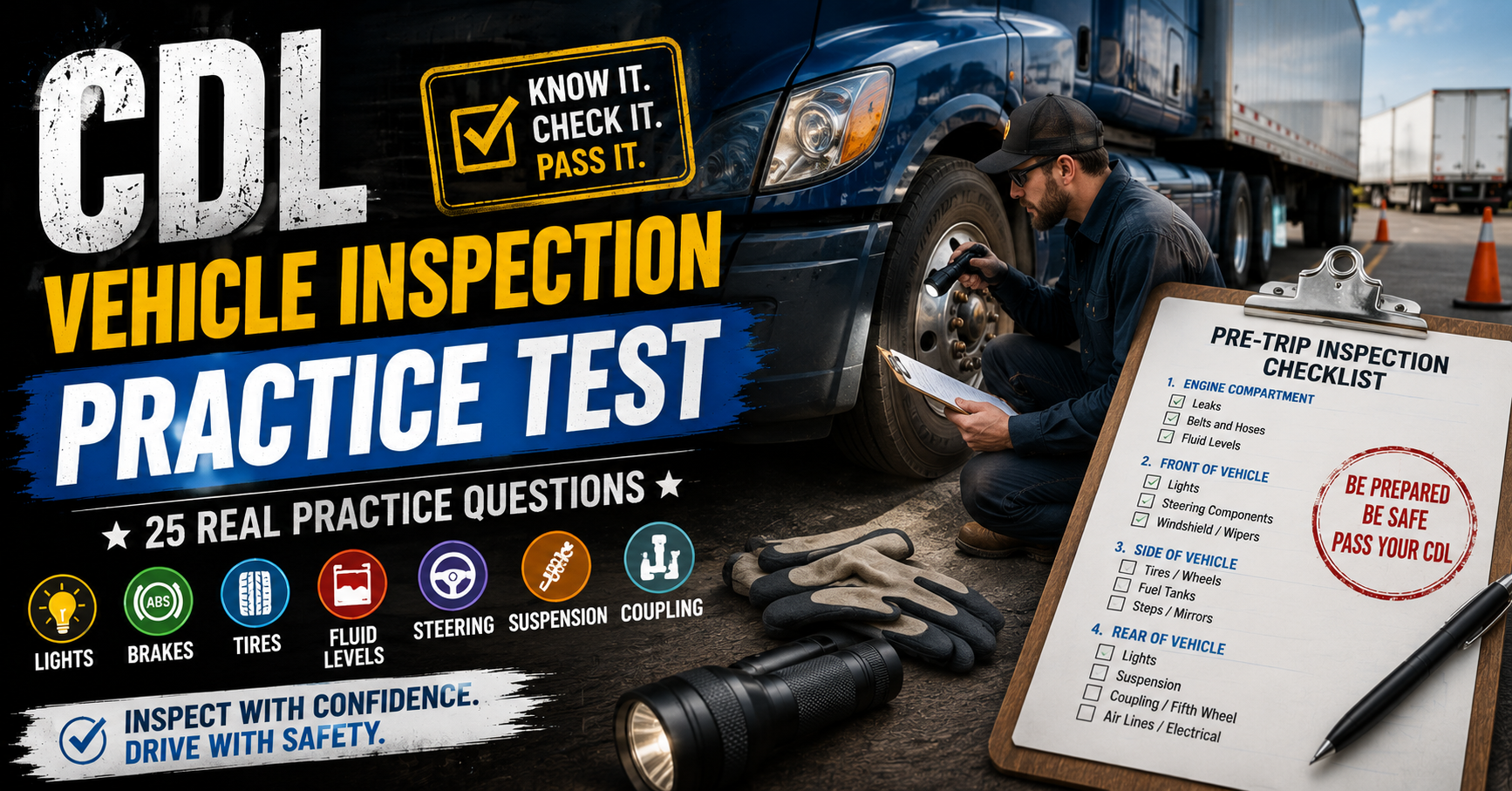
If you’re preparing for your skills test, our CDL Vehicle Inspection Practice Test is one of the best ways to become comfortable identifying these brake components before exam day.
Common Mistakes New CDL Drivers Make
One mistake I see often is confusing the pushrod with the slack adjuster.
The pushrod doesn’t rotate.
It moves in and out.
The slack adjuster is the part that rotates.
Another mistake is assuming every pushrod should move the same distance.
Brake chambers come in different sizes, and manufacturers publish different maximum stroke specifications.
Understanding that difference becomes important as you gain experience.
Where You’ll Hear This Term
Even after you earn your CDL, you’ll hear mechanics and inspectors mention pushrods regularly.
You’ll hear the term during:
- DOT inspections.
- Annual inspections.
- Brake adjustments.
- Preventive maintenance.
- CDL training.
- Fleet maintenance meetings.
It’s one of those terms that quickly becomes part of your everyday trucking vocabulary.
Frequently Asked Questions
Is the pushrod part of the brake chamber?
It’s attached to the brake chamber, but it’s a separate component that transfers force from the chamber to the slack adjuster.
Can a bent pushrod cause brake problems?
Yes.
A damaged or bent pushrod can affect brake operation and should be repaired before the truck is placed back into service.
Will I need to know about pushrods for my CDL?
Absolutely.
You’ll likely identify the pushrod during your pre-trip inspection and should understand its role in the air brake system.
Our Free CDL Air Brakes Practice Test 1 and Free CDL Air Brakes Practice Test 2 are excellent study resources that reinforce many of these brake system concepts.
One Tool That Makes Brake Inspections Easier
Pushrods sit underneath the truck, and that’s not always the easiest place to see, especially before sunrise or after dark.
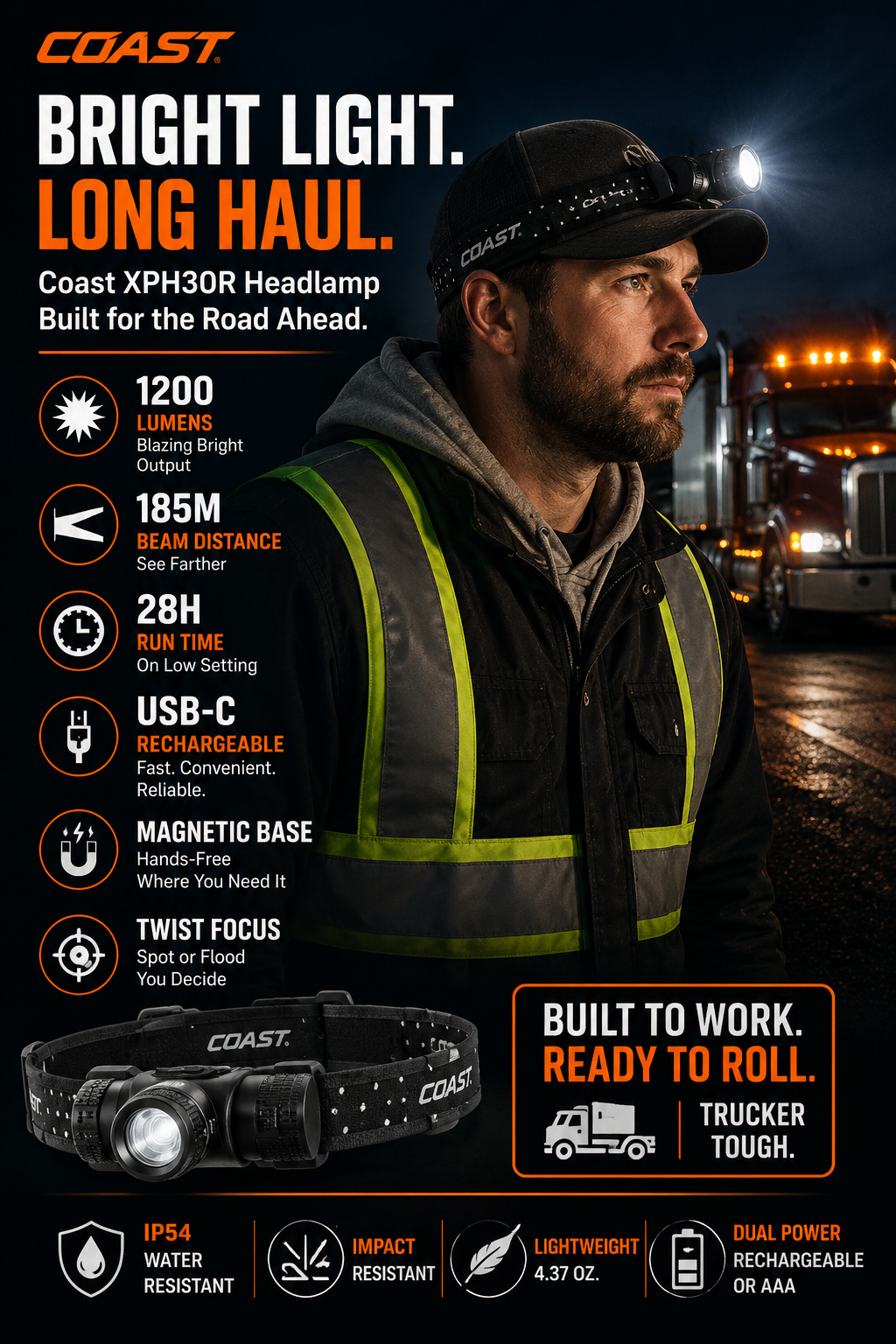
That’s why I always keep the Coast XPH30R USB-C Rechargeable Dual Power Headlamp in my truck.
Having both hands free while checking pushrods, brake chambers, slack adjusters, and S-cams makes inspections faster, safer, and a whole lot less frustrating.
My Advice After Years of Inspecting Air Brakes
One thing I’ve learned over the years is that air brakes are only as dependable as the attention you give them.
The pushrod might not be the biggest part underneath your truck.
It probably won’t be the most expensive either.
But every time you step on the brake pedal, it’s doing an incredibly important job.
Learn how it works.
Know what normal looks like.
Inspect it carefully every day.
Those habits won’t just help you pass your CDL exam.
They’ll help make you the kind of professional driver other people trust to share the road with.
Author: Brian Cooper
Brian Cooper spent more than 24 years driving tractor-trailers, dump trucks, and vocational equipment while training new CDL drivers on air brake systems and pre-trip inspections. His hands-on experience has taught hundreds of drivers that understanding each brake component is one of the best ways to stay safe and avoid costly breakdowns.