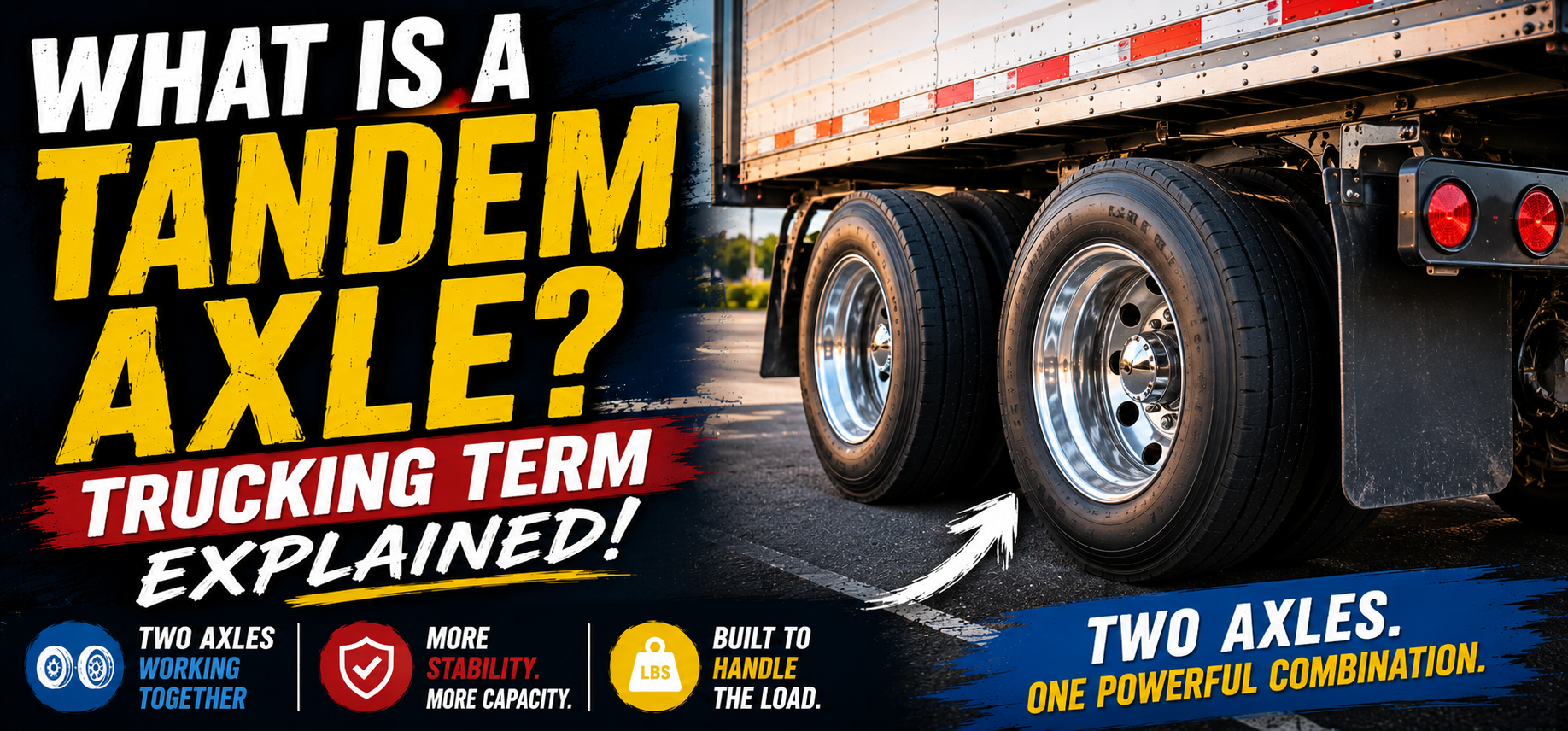
One of the first trucking terms that confused me when I was earning my CDL was tandem axle.
My instructor kept saying things like, “Slide your tandems,” or “Watch your tandem weight.”
I knew he wasn’t talking about tires, but I wasn’t exactly sure what he meant either.
After years of hauling everything from dry vans and refrigerated trailers to flatbeds and dump trailers, I can tell you that understanding tandem axles is something every commercial driver needs to know.
They’re important for handling, braking, weight distribution, DOT compliance, and even whether your load is legal.
What Is a Tandem Axle?
A tandem axle is a pair of axles mounted close together that work as a single unit to support and distribute weight. On commercial trucks, you’ll commonly find tandem axles on both the tractor and the trailer. Seeing how tandem axles support both tractors and trailers is a useful foundation for understanding CDL Combination Vehicles Explained: Complete Beginner’s Guide.
Instead of relying on one axle to carry a heavy load, two axles share the work.
That spreads the weight across four tires instead of two, giving the truck greater stability and load-carrying capacity.
Where Are Tandem Axles Located?
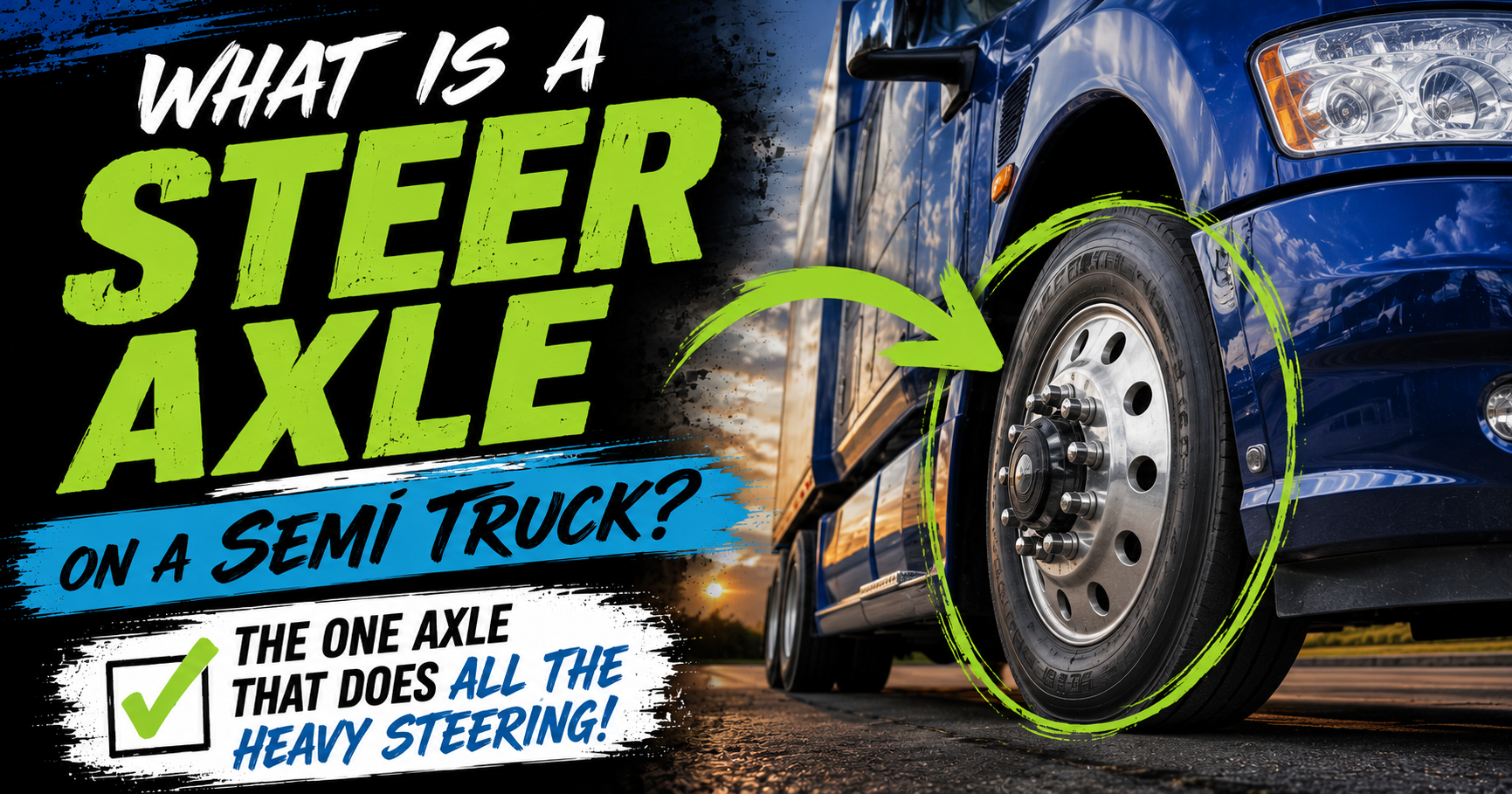
Most Class A tractor-trailers have two different sets of tandems. The tractor also has a separate front steering component, covered in What Is a Steer Axle on a Semi Truck?.
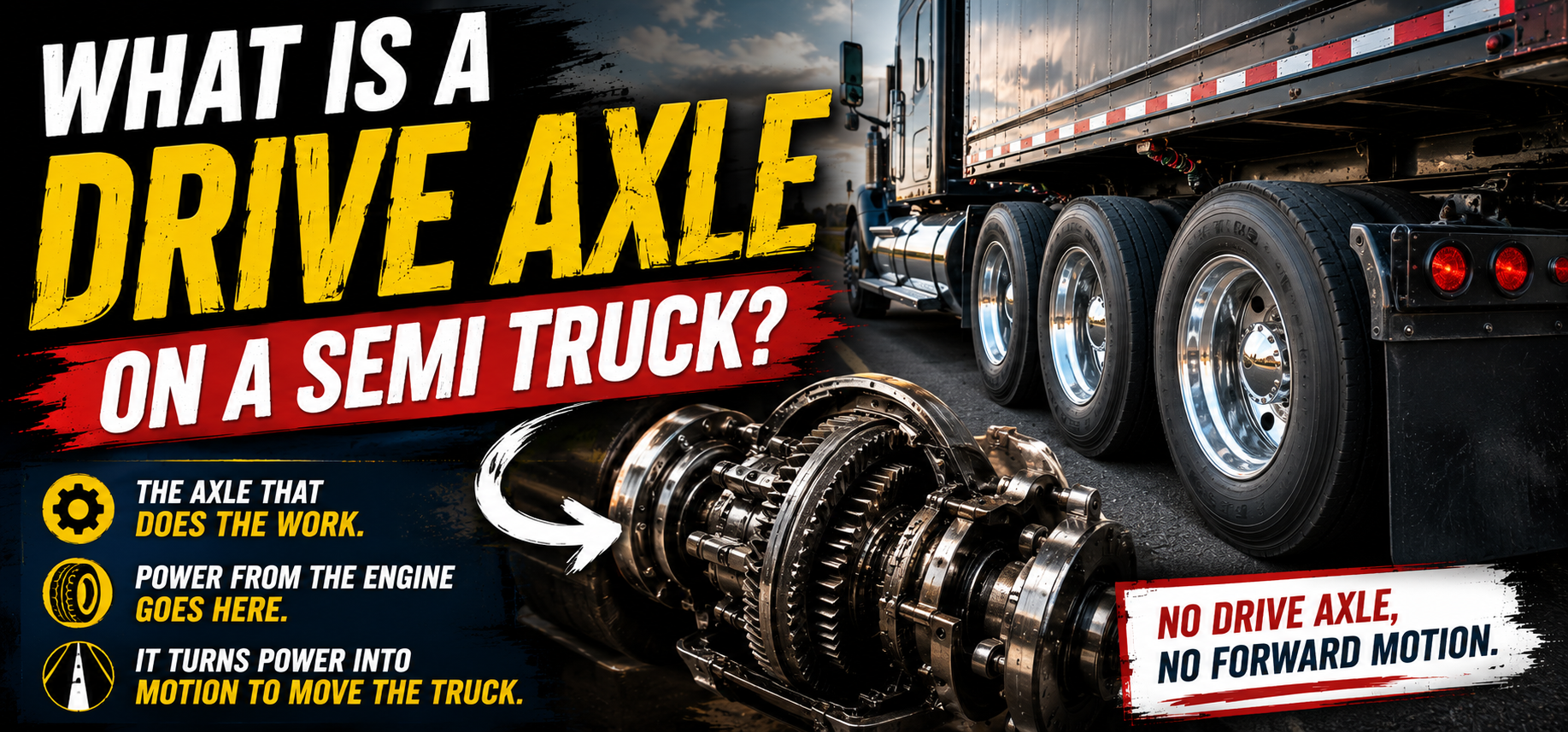
The first set is on the tractor. On a tractor, these are the drive axles, which are explained in What Is a Drive Axle on a Semi Truck?.
These are commonly called the drive tandems because the engine delivers power to them.
The second set is usually near the rear of the trailer.
These support much of the trailer’s cargo weight and can often be moved forward or backward depending on the trailer design.
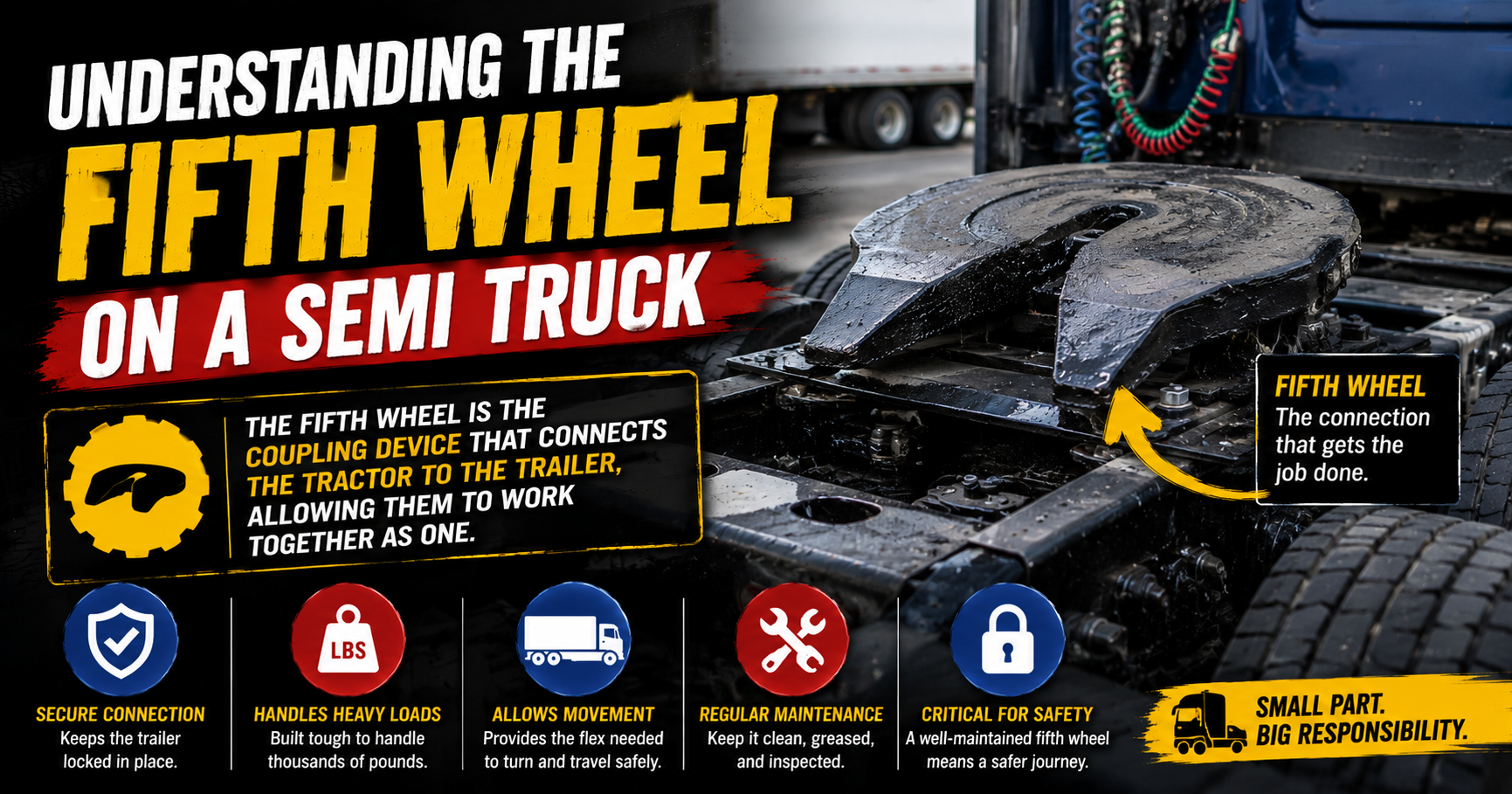
If you’re just learning how tractor-trailers are put together, our guide on Understanding the Fifth Wheel on a Semi Truck explains how the tractor and trailer work together as one unit.
Why Do Semi Trucks Use Tandem Axles?
The answer is simple.
Commercial trucks haul a tremendous amount of weight.
Using two axles instead of one provides several advantages.
It helps:
- Carry heavier loads safely.
- Improve braking performance.
- Distribute weight more evenly.
- Increase stability.
- Reduce stress on individual tires.
- Improve traction in many driving conditions.
Without tandem axles, many commercial trucks couldn’t legally or safely haul the loads they transport every day.
What Does “Sliding the Tandems” Mean?
One phrase you’ll hear often is “slide the tandems.”
Some trailers allow the tandem axle assembly to move forward or backward underneath the trailer.
Drivers slide the tandems to help distribute weight correctly between the tractor and trailer axles.
This is especially important after loading.
If too much weight is concentrated on one axle group, the truck may not be legal even if the total weight is within limits.
Learning how weight is distributed is one of the most important skills for new CDL drivers.
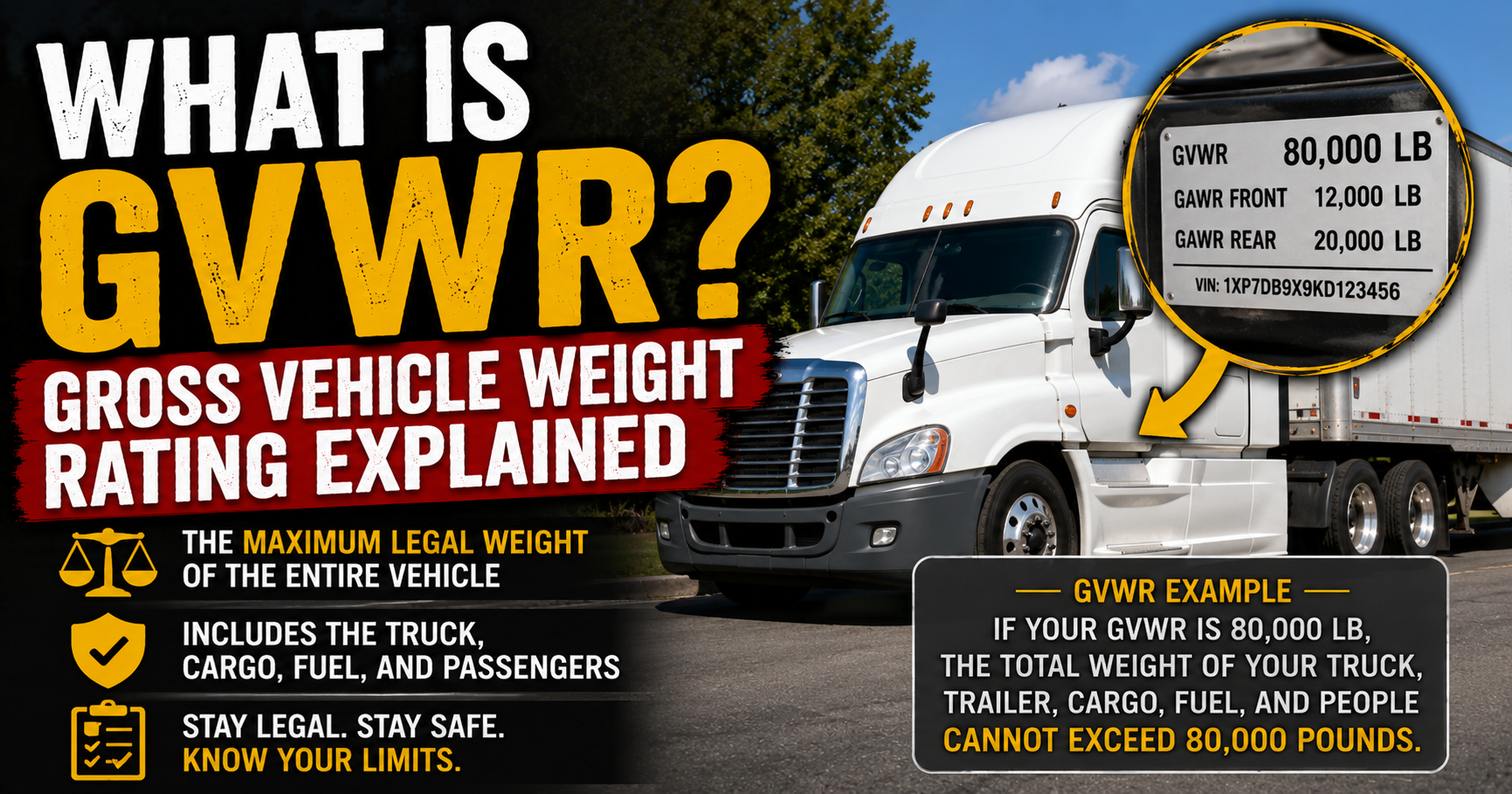
Our guide explaining what GVWR means is a great place to start if you’re still learning about commercial vehicle weight ratings.
Why Tandem Axles Matter at Weigh Stations
Every time you pull onto a scale, officers aren’t just looking at your total weight.
They’re also checking how that weight is distributed.
Even if your truck weighs less than the legal maximum overall, too much weight on one tandem axle group can still result in violations.
That’s why experienced drivers pay close attention to axle weights before leaving the shipper.
Good load distribution saves time, money, and unnecessary headaches.
How Tandem Axles Affect Handling
One thing I noticed early in my driving career was how much truck handling changes depending on weight distribution.
A properly balanced truck feels much smoother.
Steering is more predictable.
Braking feels more controlled.
An improperly balanced truck, on the other hand, can feel awkward and less stable.
While tandem axles don’t solve every handling issue, they play a huge role in keeping commercial vehicles balanced on the road.

Inspecting Tandem Axles During Your Pre-Trip
Your tandem axles should be part of every pre-trip inspection.
When I inspect mine, I check:
- Tires.
- Wheels.
- Lug nuts.
- Brake components.
- Suspension.
- Air lines.
- Axle seals.
- Mud flaps.
I also look for anything unusual, including fluid leaks or damaged components.
Finding a problem before leaving the yard is always better than discovering it hundreds of miles later.
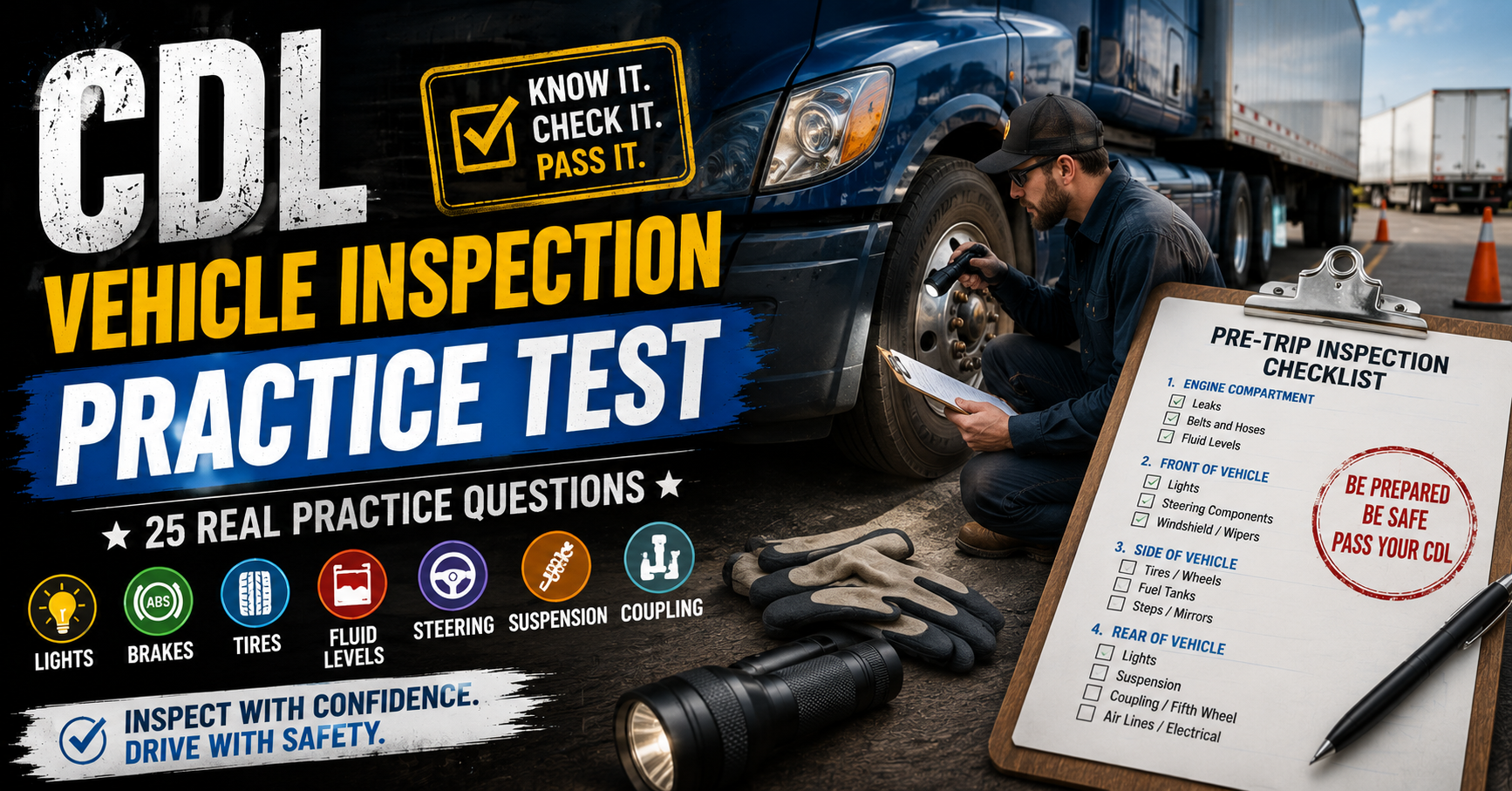
If you’re preparing for your CDL skills test, spend some time with our CDL Vehicle Inspection Practice Test. It covers many of the inspection items you’ll be expected to identify during your exam.
Common Mistakes New Drivers Make
I’ve watched plenty of new drivers make the same mistakes.
Some assume the truck’s total weight is the only number that matters.
Others never think about individual axle weights until they receive an overweight ticket.
I’ve also seen drivers forget to recheck axle weights after shifting cargo or sliding their tandems.
Those small adjustments can make a big difference.
The more experience you gain, the more naturally you’ll begin thinking about weight distribution every time a trailer is loaded.

Will Tandem Axles Be on the CDL Exam?
Yes.
Questions about tandem axles commonly appear on CDL General Knowledge and Combination Vehicle exams.
You should understand:
- What tandem axles are.
- Why trucks use them.
- How they affect weight distribution.
- Why sliding trailer tandems is important.
- How tandem axles improve stability and braking.
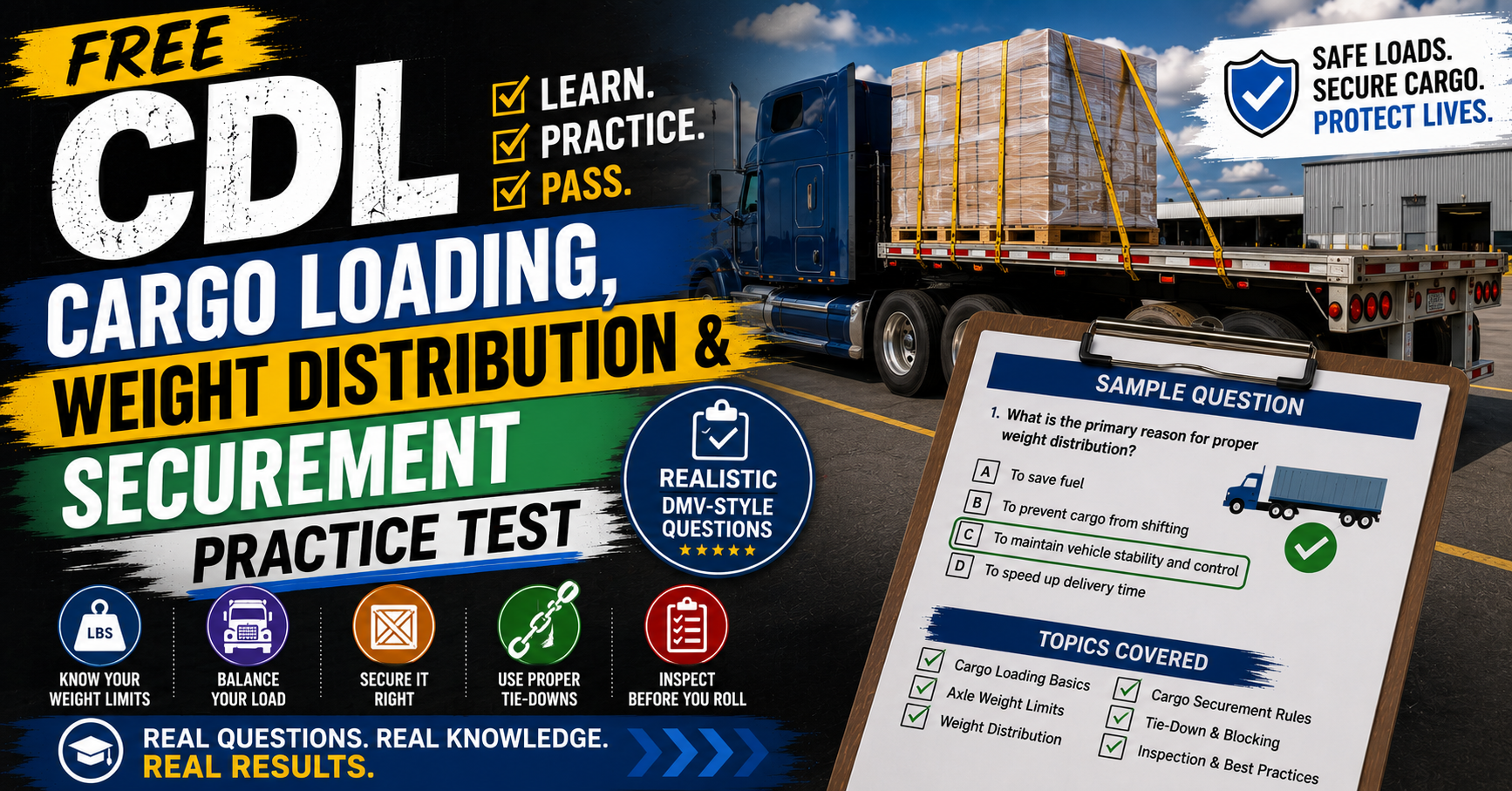
If you’re studying for your permit, our Free CDL Cargo Loading, Weight Distribution & Securement Practice Test is an excellent way to reinforce many of these concepts before test day.
One Tool Every Driver Should Carry
One item I always recommend keeping in the truck is a dependable tire inflator.
A slow leak on one tire in a tandem axle can quickly become a much bigger problem if it isn’t caught early.
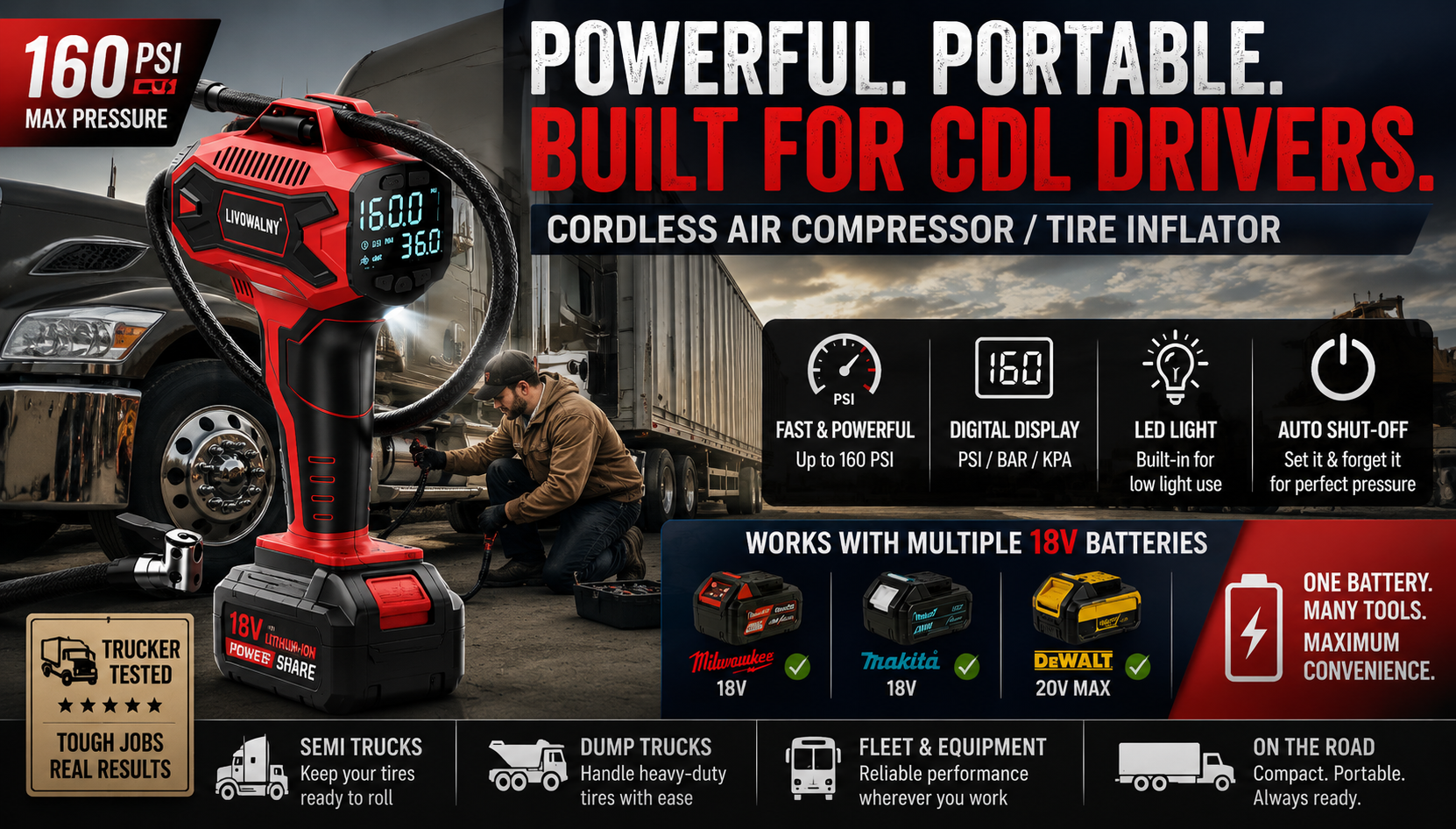
I’ve had good luck carrying the Tire Inflator Air Compressor compatible with Milwaukee, DeWalt, and other major battery platforms because it’s compact, portable, and easy to keep in the truck for quick pressure checks.
My Advice After Years Behind the Wheel
Tandem axles may seem like just another piece of trucking terminology when you’re first studying for your CDL.
Before long, they’ll become something you think about every single day.
Every load you haul…
Every scale you cross…
Every pre-trip inspection you perform…
Your tandem axles are helping carry the weight safely down the road.
The better you understand how they work, the easier it becomes to haul legal loads, protect your equipment, and become a safer professional driver.
Author: Brian Cooper
Brian Cooper spent more than 24 years training commercial drivers and helping new CDL students master vehicle inspections, weight distribution, and combination vehicle operation. His practical approach to teaching has helped hundreds of drivers build safe habits that last throughout their careers.