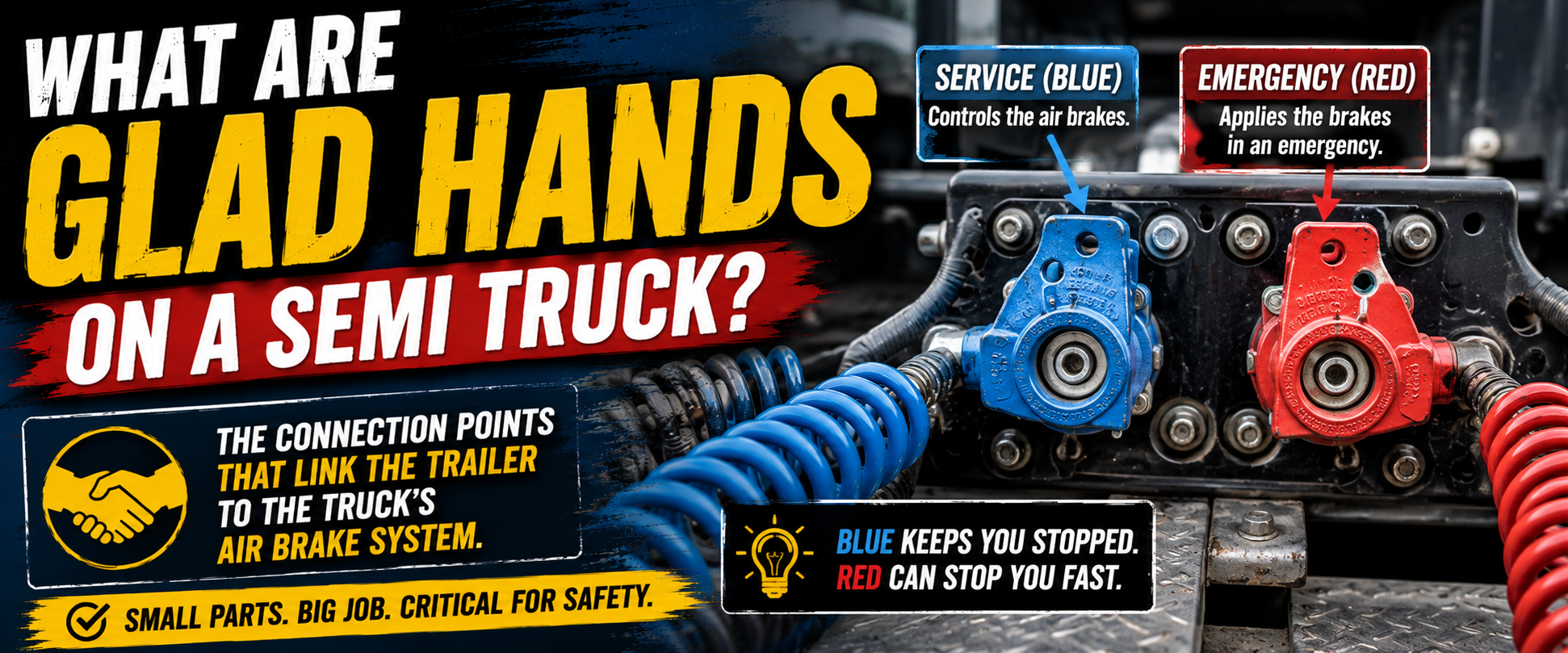
The first time someone told me to “hook up the glad hands,” I had absolutely no idea what they were talking about.
I looked around the back of the tractor wondering if I was missing some special tool.
It turns out, every truck driver has that moment at some point.
Glad hands are one of those trucking terms that sounds strange until someone explains it. After that, it becomes second nature because you’ll connect and disconnect them almost every time you hook up to a trailer.
After more than two decades behind the wheel, I can tell you they’re one of the most important parts of every tractor-trailer. Without them, your trailer’s air brakes simply won’t work.
What Are Glad Hands?
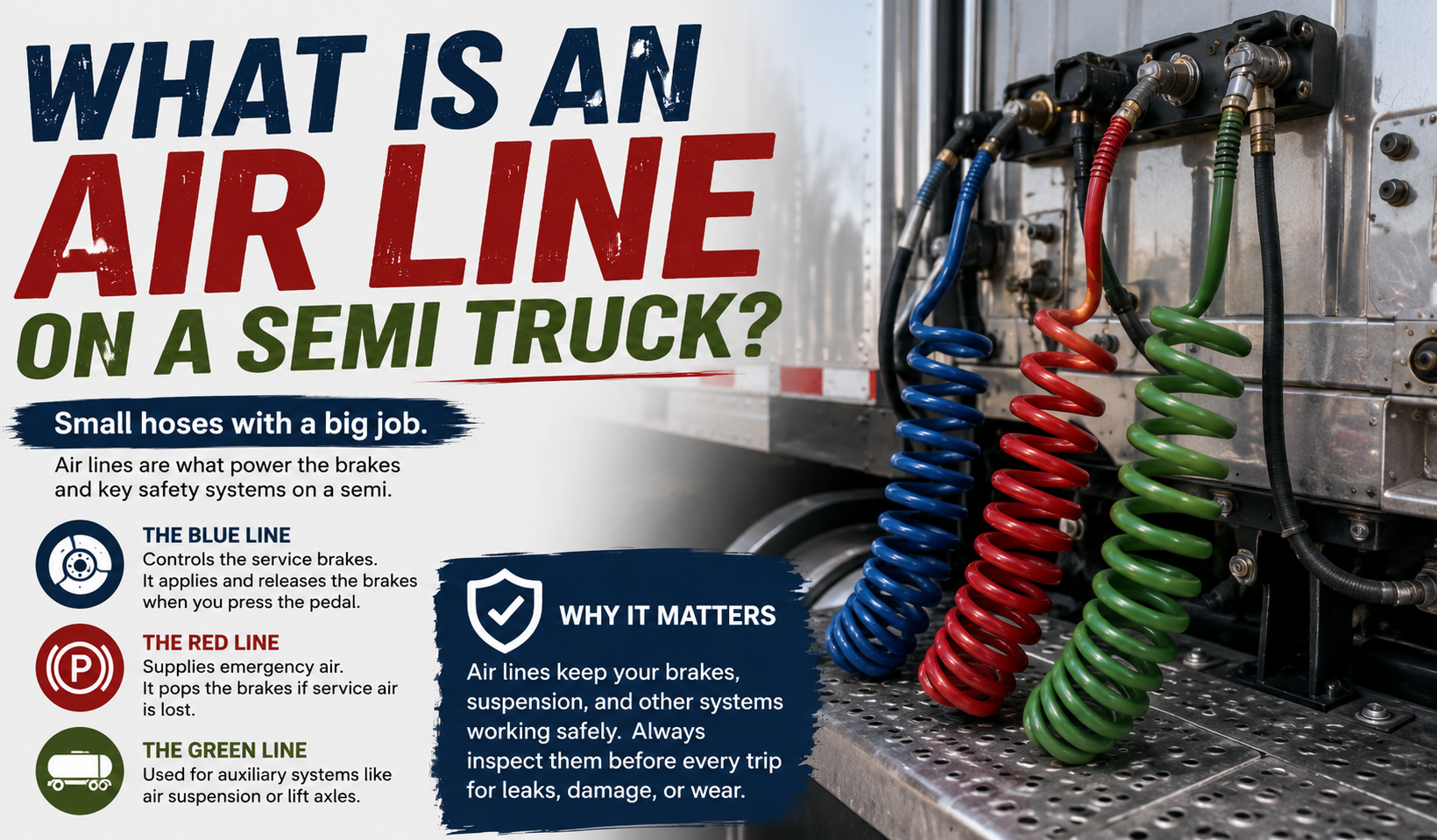
Glad hands are the quick-connect couplers that join the tractor’s air lines to the trailer’s air lines. These couplers connect the specific What Is an Air Line on a Semi Truck? that carry air between both units.
Their job is to transfer compressed air from the tractor to the trailer so the trailer’s air brake system can function properly. Once you understand that connection, air brake system questions can help you check your knowledge of the larger braking system.
You’ll normally find two glad hands hanging behind the tractor.
One connects the emergency (supply) air line.
The other connects the service air line.
When connected correctly, they allow air to flow between the tractor and trailer while maintaining an airtight seal.
Without that connection, the trailer brakes cannot operate as designed.

Why Are They Called Glad Hands?
Believe it or not, nobody knows exactly who first gave them that name.
The most common explanation is that when the two couplers are connected, they resemble two hands shaking each other.
Once you’ve hooked them together a few times, you’ll understand exactly why people started calling them “glad hands.”
It’s one of those trucking terms that’s been around for decades and has never changed.

Where Are the Glad Hands Located?
You’ll find the tractor’s glad hands mounted behind the cab, usually near the catwalk.
Matching couplers are mounted on the front of every trailer equipped with air brakes.
During every trailer hookup, you’ll connect:
- Emergency air line
- Service air line
Along with the electrical cable, these are the final connections made before performing your tug test and pre-trip inspection.
What Do Glad Hands Actually Do?
Their purpose is simple.
They carry compressed air between the tractor and trailer.
That air is what allows the trailer’s braking system to work correctly.
The emergency line supplies air to the trailer’s air tanks.
The service line delivers air when you press the brake pedal, causing the trailer brakes to apply.
Without both systems working together, the trailer cannot brake safely.
Why the Colors Matter
Most tractors use color-coded airlines to help prevent mistakes.
Typically you’ll see:
- Red for the emergency line.
- Blue for the service line.
The colors aren’t there to make the truck look nice.
They’re there to help drivers quickly identify the correct connections.
Crossing the airlines can prevent the trailer brakes from working correctly and create a dangerous situation.
Even after years of driving, I still take a second to confirm I’m connecting red to red and blue to blue.
Connecting Glad Hands Correctly
Hooking them up is straightforward once you’ve done it a few times.
First, inspect both couplers.
I always make sure the rubber seals are clean and free from dirt, sand, or debris.
Then I line up the two couplers at roughly a right angle.
A quick twist and downward motion locks them together.
Once both airlines are connected, I gently tug on each one to make sure they’re secure.
It becomes second nature after a while, but it’s never something I rush through.
Inspecting Glad Hands During a Pre-Trip Inspection
Every pre-trip inspection should include checking your glad hands.
I always look for:
- Cracked rubber seals.
- Bent connectors.
- Air leaks.
- Excessive corrosion.
- Damaged hoses.
- Loose fittings.
Even a small air leak can cause problems later.
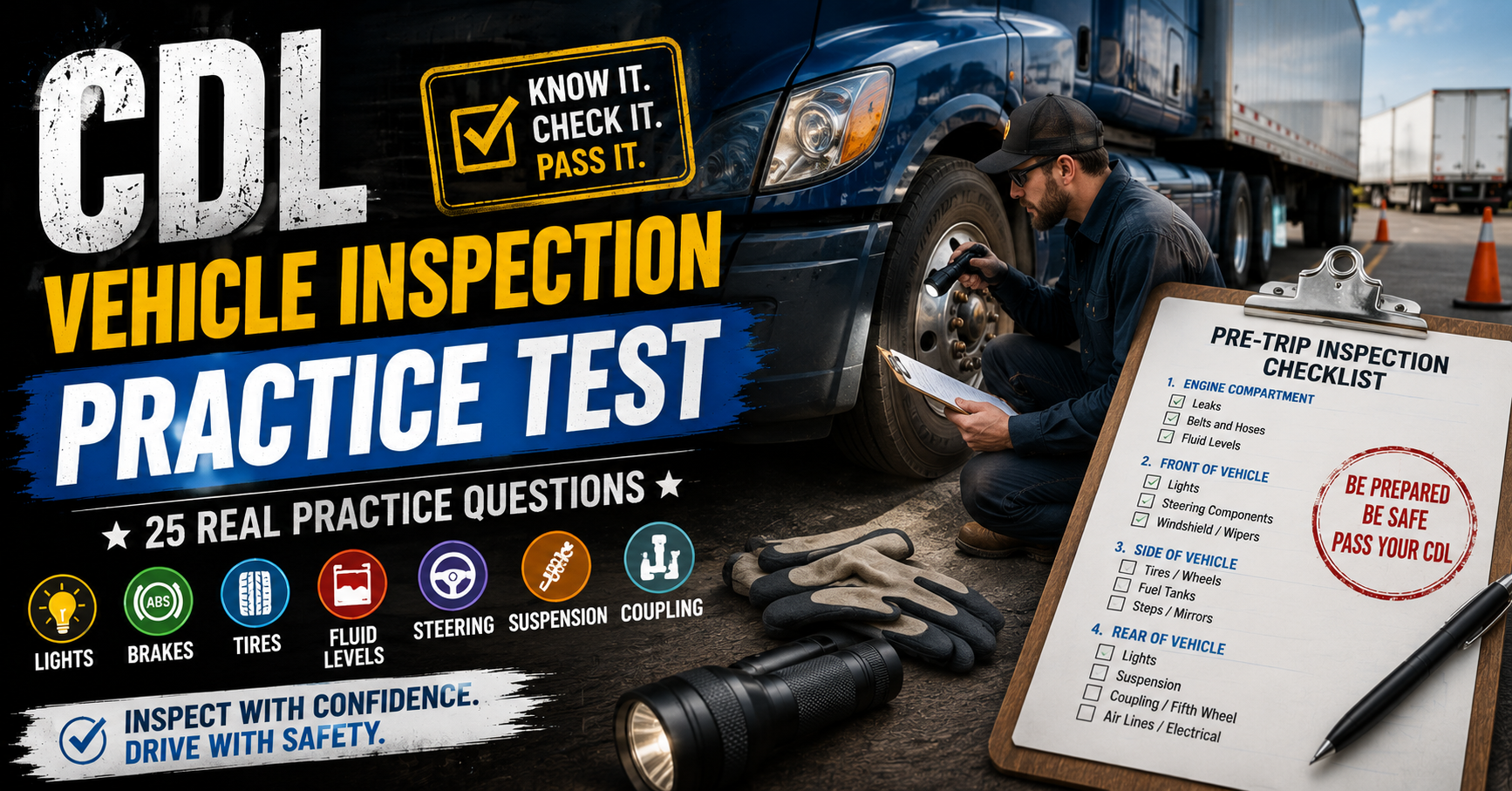
If you’re preparing for your CDL skills test, our CDL Vehicle Inspection Practice Test is an excellent way to practice the inspection points you’ll be expected to identify.
Common Glad Hand Problems
Like any truck component, glad hands eventually wear out.
The most common problems I’ve seen include worn rubber seals, damaged aluminum couplers, corrosion, and dirt trapped between the seals.
Sometimes drivers struggle to connect them simply because debris has built up around the sealing surfaces.
Fortunately, these issues are usually easy to spot during a proper inspection.
Replacing a worn seal is far less expensive than dealing with an air leak on the road.

Common Mistakes New Drivers Make
Almost every experienced driver has watched someone make these mistakes.
One is connecting dirty glad hands without wiping them clean first.
Another is forgetting to support the airlines properly after they’re connected.
If the hoses are allowed to drag or become pinched during turns, they can become damaged surprisingly quickly. Using heavy-duty bungee cords to help support the airlines can reduce unnecessary dragging and movement.
I’ve also seen drivers skip checking for audible air leaks after hooking up.
That’s something I always listen for before pulling away.
Will Glad Hands Be on the CDL Exam?
Yes.
If you’re studying for a Class A CDL, you’ll almost certainly see questions involving glad hands, trailer hookups, and air brake systems.
You’ll also be expected to identify them during your pre-trip inspection.
Once you’ve reviewed this topic, I recommend taking our Free CDL Air Brakes Practice Test 1 to reinforce what you’ve learned before taking your written exam.
Why Every Truck Driver Should Understand Glad Hands
Glad hands may not be the biggest parts on a truck, but they’re among the most important.
Every time you connect a trailer, you’re relying on those couplers to deliver the air needed for safe braking.
That’s why I never rush through the hookup process.
I inspect the seals.
I verify the colors.
I make sure the connections are secure.
I listen for leaks.
Those simple habits have become automatic over the years, and they’ve helped me avoid problems more than once.
Like many things in trucking, paying attention to the small details often prevents the biggest headaches later.
Author: Mike Reynolds
Mike Reynolds has spent more than 25 years operating tractor-trailers throughout the United States, hauling everything from refrigerated freight to heavy construction equipment. After thousands of trailer hookups, he believes careful inspections and proper coupling procedures are some of the most important habits every professional truck driver can develop.