(function(){“use strict”;/* QUESTION BANK — replace only this array for future tests. */var Q=[[“Why are roads often most slippery when rain first begins?”,”Water mixes with accumulated oil, rubber, and dirt on the surface”,[“Rain immediately freezes every road”,”Fresh water increases tire pressure”,”Pavement becomes smoother only after hours of rain”],”The first rain can lift residue into a slick film before heavier water washes some of it away. Reduce speed and increase following distance early.”],[“What should a driver do when the vehicle begins hydroplaning?”,”Ease off the accelerator and avoid sudden braking or steering”,[“Brake as hard as possible”,”Accelerate to push through the water”,”Turn sharply toward the shoulder”],”Hydroplaning means the tires have lost firm road contact. Smoothly reducing power helps them regain traction without upsetting the vehicle.”],[“Why should low-beam headlights be used in fog?”,”High beams reflect from fog droplets and can worsen glare”,[“Low beams melt fog near the road”,”High beams are illegal in all weather”,”Low beams increase tire traction”],”Fog scatters bright light back toward the driver. Low beams, slower speed, and greater following distance improve the limited view.”],[“When should a driver leave the roadway because of fog?”,”When visibility becomes too poor to drive safely, using a suitable safe location”,[“Only after following another vehicle closely”,”In the travel lane as soon as fog appears”,”Never, because commercial vehicles must continue”],”If you cannot see far enough to stop safely, continuing is not responsible. Exit or pull completely away from traffic where the vehicle can be properly secured and marked.”],[“What is black ice?”,”A thin, hard-to-see layer of ice that may look like wet pavement”,[“Dark asphalt that is always warm”,”Snow mixed with engine oil”,”Ice found only inside tunnels”],”Black ice is especially dangerous because it blends with the road. Temperatures near freezing, ice on mirrors, and disappearing tire spray are warning clues.”],[“Why are bridges likely to freeze before nearby roads?”,”Cold air circulates above and below the bridge deck”,[“Bridges contain refrigerated steel”,”Traffic never drives on bridges”,”Bridge paint attracts snow”],”A bridge loses heat from both surfaces, while ordinary pavement retains ground warmth. Approach bridges cautiously whenever temperatures are near freezing.”],[“What control movements are safest on snow or ice?”,”Slow, smooth steering, braking, and acceleration”,[“Sharp steering and late hard braking”,”Fast acceleration to warm tires”,”Continuous cruise control use”],”Limited traction is easily exceeded. Gentle inputs and greatly reduced speed help keep the tires rolling and the vehicle balanced.”],[“Why should cruise control be avoided on slippery roads?”,”It may apply power automatically when the tires need less force”,[“It disconnects the steering wheel”,”It turns off all lights”,”It makes the vehicle wider”],”The driver should feel and manage changing traction directly. Automatic throttle changes can trigger wheel spin or a skid.”],[“What should be checked before a trip into snow or freezing rain?”,”Weather, route conditions, required chains, equipment, and alternate plans”,[“Only the radio volume”,”The paint color of snowplows”,”Whether the cargo invoice is waterproof”],”Planning helps prevent becoming trapped on an unsafe route. Carry required equipment and know where conditions, closures, or chain restrictions may change.”],[“When tire chains are required, what is essential?”,”Install the correct chains securely and recheck them after a short distance”,[“Place one chain loosely over the cargo”,”Use chains only on steering mirrors”,”Drive at normal dry-road speed”],”Loose or incorrectly fitted chains can damage the vehicle or fail. Follow the chain and vehicle instructions, obey speed limits, and inspect them after they settle.”],[“Why can packed snow be more dangerous near intersections?”,”Repeated braking and acceleration may polish it into slick ice”,[“Traffic lights heat the snow”,”Snow becomes deeper only under trucks”,”Intersections eliminate tire traction laws”],”Vehicle movement can compact and polish snow. Begin slowing much earlier and avoid sudden changes near stops, curves, ramps, and shaded areas.”],[“How should a driver react to a strong crosswind?”,”Reduce speed, maintain a firm grip, and use smooth steering corrections”,[“Steer sharply with every gust”,”Drive close beside another vehicle”,”Accelerate beyond the limit”],”Tall, light, or empty vehicles can be pushed sideways. Lower speed gives more time and control, especially on bridges and when leaving sheltered areas.”],[“What should a driver expect when passing from behind a windbreak into an open area?”,”A sudden side force may move the vehicle”,[“The wind will always stop”,”The brakes will apply automatically”,”The vehicle will become heavier”],”Trees, buildings, and hills can temporarily block wind. Be ready for a gust when the shelter ends, but avoid overcorrecting.”],[“Why is extreme heat hard on tires?”,”Road heat and tire flexing can increase internal temperature and pressure”,[“Heat adds tread depth”,”Hot tires cannot lose air”,”Pavement cools tires at highway speed”],”Underinflation, overload, and damage generate even more heat. Inspect tires frequently and never release air solely because a warm tire reads higher.”],[“During hot weather, why should engine temperature be watched closely?”,”Heavy loads, grades, and heat can overwhelm the cooling system”,[“The gauge measures outside humidity”,”A hot engine improves every fluid”,”Temperature cannot change while moving”],”Check coolant, belts, hoses, and airflow before travel. If temperature rises abnormally, stop safely before serious engine damage or fire occurs.”],[“What is the main danger of driving into deep moving water?”,”The vehicle may stall, lose traction, float, or be swept away”,[“Water always improves braking”,”A heavy truck cannot be moved by water”,”The road surface becomes easier to see”],”Water depth, current, and hidden road damage are difficult to judge. Never enter floodwater when safe passage is uncertain.”],[“After safely crossing shallow standing water, what should be tested?”,”Brake operation at a slow speed”,[“The horn at highway speed”,”Cargo weight by swerving”,”The parking brake while moving fast”],”Water can make brakes weak or uneven. Light application at a safe low speed tests response and helps dry the friction surfaces.”],[“Why does glare from snow create a driving hazard?”,”It can cause eye strain and hide roadway contrast or obstacles”,[“It increases tire pressure”,”It makes the engine overheat”,”It improves night vision”],”Bright reflected light can reduce detail and fatigue the eyes. Clean glass, appropriate eye protection, proper visor use, and reduced speed help.”],[“What should a driver do when sun glare blocks the view ahead?”,”Slow down, use the visor, keep glass clean, and be ready to stop”,[“Continue at full speed from memory”,”Follow taillights closely”,”Close both eyes briefly”],”Low sun can hide signals, pedestrians, and stopped traffic. Never drive faster than the distance you can clearly see.”],[“Before descending a mountain grade, what should be done?”,”Select a safe speed and low gear before the descent begins”,[“Shift to neutral to save fuel”,”Wait for speed to build before choosing a gear”,”Hold the clutch down”],”Gravity can rapidly increase momentum. Engine braking and correct gear selection reduce service-brake heat and help maintain a stable speed.”],[“What is the purpose of a runaway-truck ramp?”,”To stop a vehicle that has lost normal speed control on a downgrade”,[“To provide routine parking”,”To let trucks pass uphill traffic”,”To test cargo securement”],”Escape ramps use an uphill grade, deep material, or other resistance to stop a runaway vehicle. Use one early if brake control is failing.”],[“Why should mountain weather forecasts be checked even when the valley is clear?”,”Conditions at higher elevations can be colder and change quickly”,[“Weather never reaches mountain roads”,”Elevation warms pavement in winter”,”Forecasts apply only to passenger cars”],”Mountain routes may have snow, ice, fog, or wind while lower areas remain mild. Plan equipment, timing, and alternate routes before climbing.”],[“What should a driver do if freezing rain begins coating the mirrors?”,”Treat it as an urgent traction warning and slow or stop safely”,[“Increase speed before the road freezes”,”Use cruise control”,”Ignore it until tires begin sliding”],”Ice forming on mirrors, antennas, or wipers often means the roadway is also freezing. Conditions can deteriorate before the pavement looks icy.”],[“Why is extra following distance important in blowing snow?”,”Visibility and traction can both change suddenly”,[“Snow shortens every vehicle”,”Following closely blocks the wind”,”Brake lights become brighter in snow”],”Blowing snow can hide lane markings, stopped vehicles, and icy patches. More space allows time for gentle braking and unexpected visibility loss.”],[“What is the safest response when weather exceeds the driver’s or vehicle’s safe capability?”,”Stop at a safe location and wait for conditions to improve”,[“Continue because schedules override weather”,”Follow another truck as closely as possible”,”Drive on the shoulder around closures”],”A professional driver knows when conditions are no longer manageable. Delaying is safer than risking a crash, becoming stranded, or ignoring a closure.”]],S={q:[],i:0,s:0},$=function(x){return document.getElementById(x)},E={quiz:$(‘quiz’),results:$(‘results’),reviewScreen:$(‘reviewScreen’),qcount:$(‘qcount’),score:$(‘score’),progress:$(‘progress’),bar:$(‘bar’),question:$(‘question’),answers:$(‘answers’),feedback:$(‘feedback’),prev:$(‘prev’),next:$(‘next’),review:$(‘review’),reviewList:$(‘reviewList’)};function sh(a){a=a.slice();for(var i=a.length-1;i;i–){var j=Math.floor(Math.random()*(i+1)),t=a[i];a[i]=a[j];a[j]=t}return a}function esc(s){var d=document.createElement(‘div’);d.textContent=s;return d.innerHTML}function top(){$(‘tr-cdl-app’).scrollIntoView({behavior:’smooth’,block:’start’})}function start(){S.q=sh(Q).map(function(x){return{t:x[0],a:sh([{t:x[1],ok:true}].concat(x[2].map(function(w){return{t:w,ok:false}}))),e:x[3],p:null}});S.i=0;S.s=0;E.quiz.hidden=false;E.results.hidden=true;E.reviewScreen.hidden=true;render();top()}function render(){var q=S.q[S.i],done=q.p!==null,n=S.q.filter(function(x){return x.p!==null}).length;E.qcount.textContent=’Question ‘+(S.i+1)+’ of ‘+S.q.length;E.score.textContent=S.s;E.bar.style.width=n/S.q.length*100+’%’;E.progress.setAttribute(‘aria-valuenow’,n);E.question.textContent=q.t;E.answers.innerHTML=”;q.a.forEach(function(a,i){var b=document.createElement(‘button’);b.type=’button’;b.className=’answer’+(done&&a.ok?’ good’:”)+(done&&i===q.p&&!a.ok?’ bad’:”);b.textContent=a.t;b.disabled=done;b.onclick=function(){pick(i)};E.answers.appendChild(b)});E.prev.disabled=S.i===0;E.next.disabled=!done;E.next.textContent=S.i===S.q.length-1?’View Results’:’Next Question’;if(done)feed(q);else E.feedback.hidden=true}function pick(i){var q=S.q[S.i];if(q.p!==null)return;q.p=i;if(q.a[i].ok)S.s++;render()}function feed(q){var a=q.a[q.p],c=q.a.filter(function(x){return x.ok})[0];E.feedback.className=’feedback ‘+(a.ok?’good’:’bad’);E.feedback.innerHTML=’‘+(a.ok?’ Correct!’:’ Incorrect’)+’‘+(!a.ok?’
Correct answer: ‘+esc(c.t)+’
Why yours is incorrect: It does not follow the weather or mountain-driving safety principle being tested.
‘:”)+’
Explanation: ‘+esc(q.e)+’
‘;E.feedback.hidden=false}function finish(){var n=S.q.length,b=n-S.s,p=Math.round(S.s/n*100);E.quiz.hidden=true;E.reviewScreen.hidden=true;E.results.hidden=false;$(‘percent’).textContent=p+’%’;$(‘final’).textContent=S.s+’/’+n;$(‘correct’).textContent=S.s;$(‘incorrect’).textContent=b;$(‘message’).textContent=p>=90?’Outstanding! You are well prepared for challenging weather and mountain driving.’:p>=80?’Great job! Review the missed weather questions.’:p>=70?’Good progress. Keep practicing this section.’:’More weather and mountain-driving study is recommended.’;E.review.disabled=!b;top()}function review(){E.reviewList.innerHTML=”;S.q.filter(function(q){return!q.a[q.p].ok}).forEach(function(q,i){var c=q.a.filter(function(a){return a.ok})[0],d=document.createElement(‘article’);d.className=’review-item’;d.innerHTML=’
Driving a commercial vehicle safely means being prepared for much more than clear skies and dry pavement. Professional truck drivers encounter heavy rain, dense fog, snowstorms, icy roads, strong crosswinds, extreme heat, and steep mountain grades throughout the year. Each of these conditions requires different driving techniques, careful planning, and good judgment.
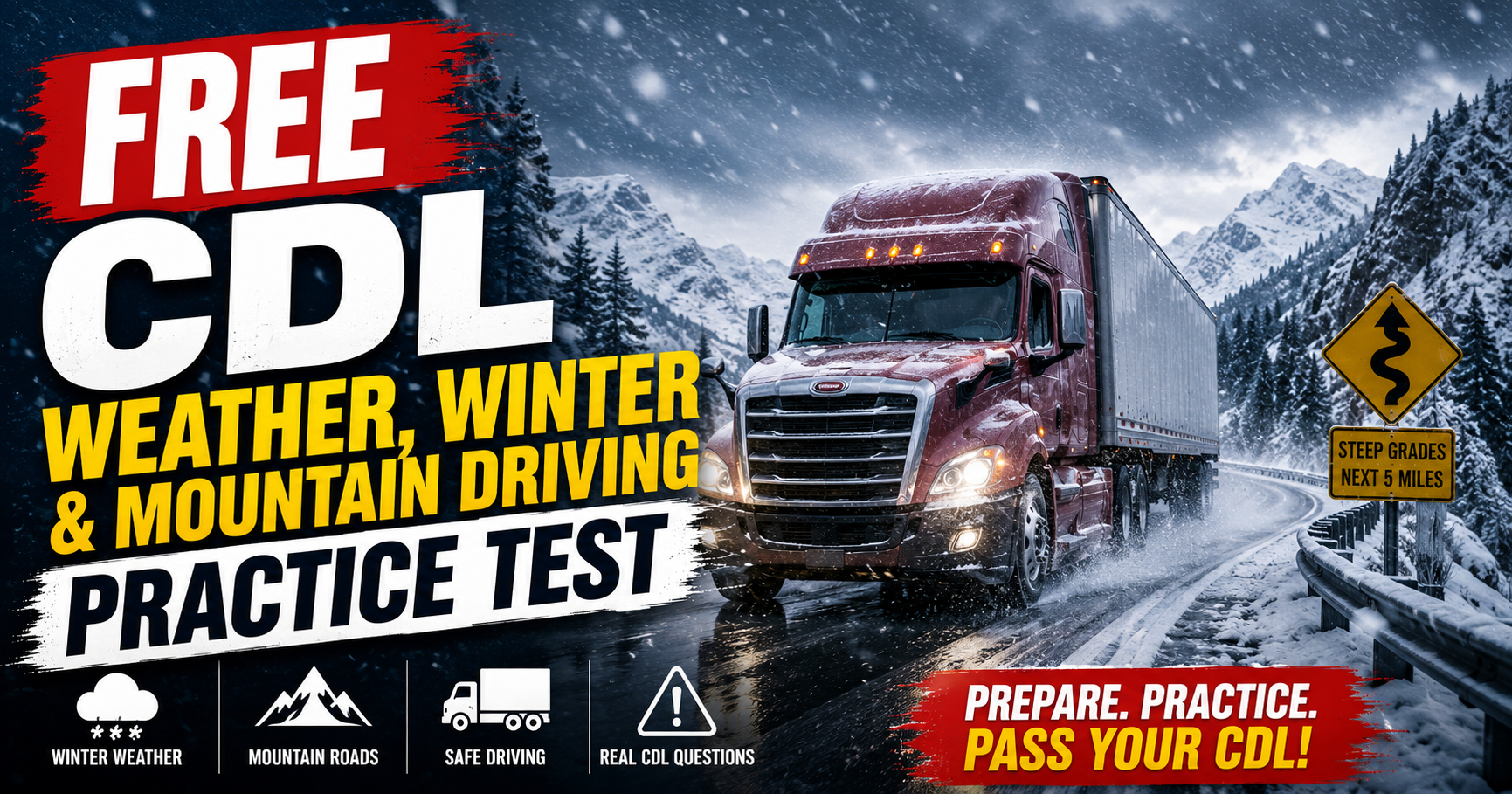
Our Free CDL Weather, Winter & Mountain Driving Practice Test helps prepare you for these challenging situations with 25 realistic multiple-choice questions covering many of the weather and mountain driving topics found on CDL permit exams. Every question includes a detailed explanation to help you understand why the correct answer is the safest choice instead of simply memorizing facts.
If you’re just beginning your CDL studies, you’ll build a stronger foundation by completing our Free CDL General Knowledge Practice Test #1 before moving into advanced driving situations like severe weather and mountain grades.
Weather is one factor that no commercial driver can control.
Road conditions can change within minutes, turning an ordinary trip into one that requires extra caution and careful decision-making.
Professional drivers constantly monitor changing conditions because rain, snow, fog, wind, and extreme temperatures all affect how a commercial vehicle handles.
Poor weather can increase:
Stopping distance
Skid risk
Tire wear
Driver fatigue
Visibility problems
Brake temperatures
Vehicle instability
Understanding how different weather conditions affect your truck is one of the most valuable skills you’ll develop during CDL training. These concepts fit into the wider study strategy outlined in this How to Pass Your CDL General Knowledge Test the First Time.
What You’ll Learn on This Practice Test
This practice test focuses on weather-related driving situations commonly covered in CDL manuals throughout the United States.
Topics include:
Rain and hydroplaning
Snow and ice
Black ice
Fog
High winds
Mountain driving
Long downgrades
Extreme heat
Flooded roads
Brake performance
Visibility
Emergency decision making
Each question is designed to reinforce safe commercial driving habits that you’ll use long after earning your CDL.
Many drivers assume heavy rain is the most dangerous time to drive.
In reality, the first few minutes of rainfall can be especially hazardous.
Oil, dirt, rubber residue, and other contaminants build up on the pavement during dry weather. When rain first begins, those materials mix with water and create a slippery surface before heavier rainfall eventually washes some of it away.
Professional truck drivers respond by:
Reducing speed.
Increasing following distance.
Avoiding sudden steering.
Braking gradually.
Watching for standing water.
Taking these simple precautions greatly reduces the risk of losing control.
Understanding Hydroplaning
Hydroplaning occurs when tires lose contact with the road because water builds beneath them.
Instead of gripping the pavement, the tires begin riding on top of the water.
When this happens, steering and braking become much less effective.
If your truck begins hydroplaning:
Stay calm.
Ease off the accelerator.
Avoid sudden braking.
Keep steering movements smooth.
Allow the tires to regain traction naturally.
Sudden corrections often make the situation worse.
Fog is one of the most challenging weather conditions commercial drivers face.
Heavy fog doesn’t simply reduce how far you can see.
It also makes it more difficult for other drivers to see your vehicle.
When driving in fog:
Use low beam headlights.
Reduce speed.
Increase following distance.
Avoid passing unless absolutely necessary.
Watch carefully for stopped traffic ahead.
If visibility becomes too poor to drive safely, the best decision may be finding a safe location completely off the roadway until conditions improve.
Winter Driving Requires Extra Patience
Snow and ice dramatically reduce available traction.
Even experienced commercial drivers approach winter weather with caution because stopping distances become much longer while steering response becomes less predictable.
Successful winter driving depends on smooth vehicle control.
Avoid:
Hard braking.
Sudden steering.
Rapid acceleration.
Following too closely.
Abrupt lane changes.
Gentle inputs help keep the tires gripping the road instead of sliding across it.
One of the most dangerous winter hazards is black ice.
Unlike snow-covered roads, black ice often looks like ordinary wet pavement.
Drivers may not realize traction has disappeared until the vehicle begins sliding.
Black ice commonly forms:
On bridges.
On overpasses.
In shaded areas.
During early morning hours.
When temperatures hover near freezing.
Whenever conditions suggest black ice may be present, slow down well before curves, bridges, and intersections.
High Winds Can Affect Large Commercial Vehicles
Commercial trucks present a much larger surface area to the wind than passenger vehicles.
This makes them especially vulnerable to strong crosswinds.
Empty trailers, box trucks, and other tall vehicles are often affected the most.
When high winds develop:
Reduce your speed.
Keep both hands on the steering wheel.
Expect stronger gusts near bridges and open fields.
Leave extra room between vehicles.
Avoid sudden steering corrections.
Maintaining a steady, controlled response helps prevent overcorrection when wind conditions change suddenly.
Mountain Driving Requires Planning
Mountain driving should never begin without preparation.
Long uphill climbs place additional strain on engines and cooling systems.
Long downhill grades create continuous braking demands that can quickly overheat service brakes if they’re used incorrectly.
Before beginning any major downgrade:
Reduce speed.
Select the proper gear.
Use engine braking whenever possible.
Monitor your speed frequently.
Avoid riding the brakes continuously.
Planning ahead is always safer than trying to correct excessive speed halfway down a mountain.
Extreme Heat Creates Problems Too
Winter weather isn’t the only environmental challenge commercial drivers face.
Extreme summer heat can be just as dangerous for both drivers and equipment.
High temperatures place additional stress on:
Tires
Cooling systems
Brakes
Engines
Drivers
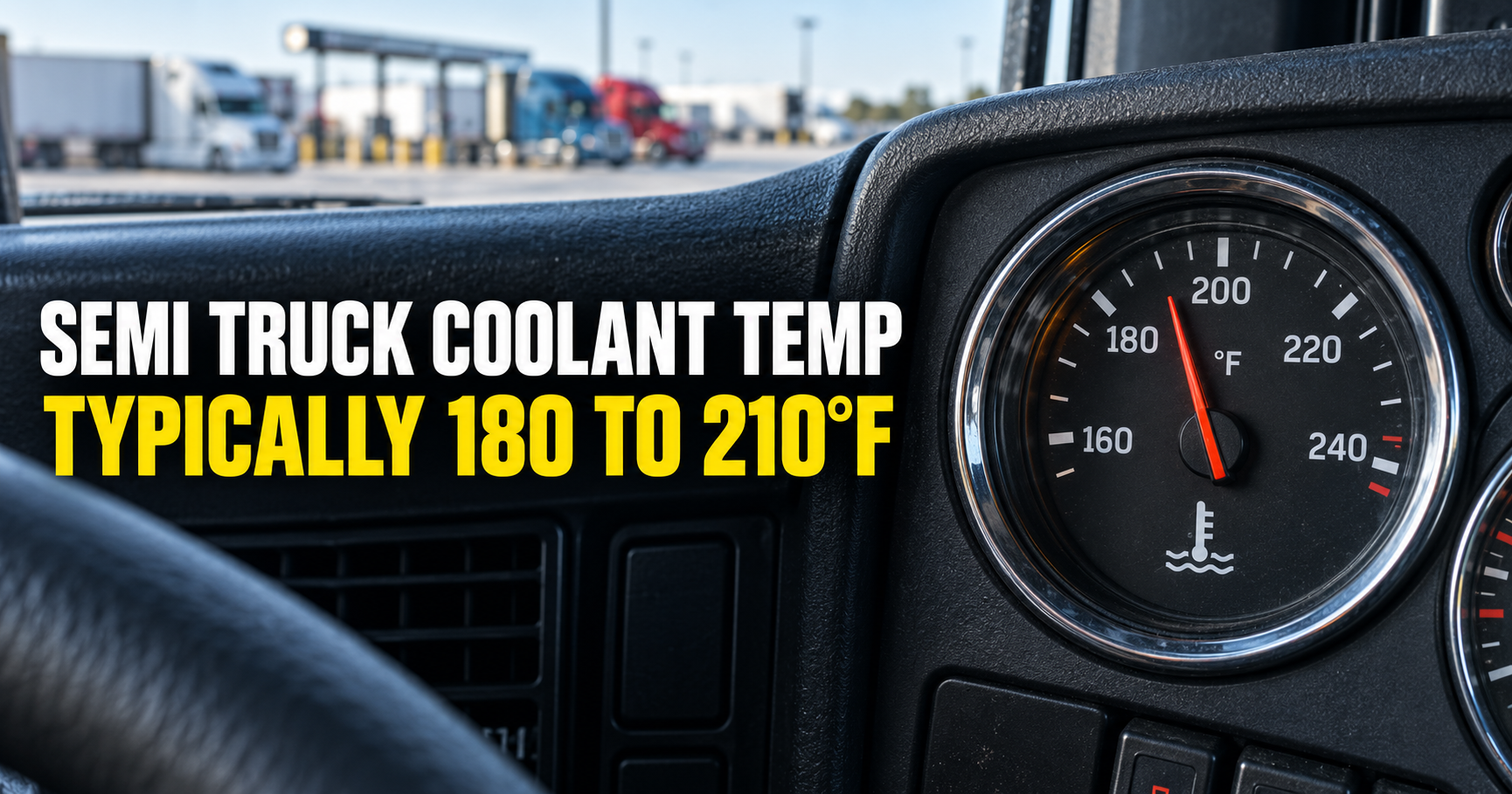
Long climbs, heavy loads, and stop-and-go traffic can quickly increase engine temperatures during hot weather.
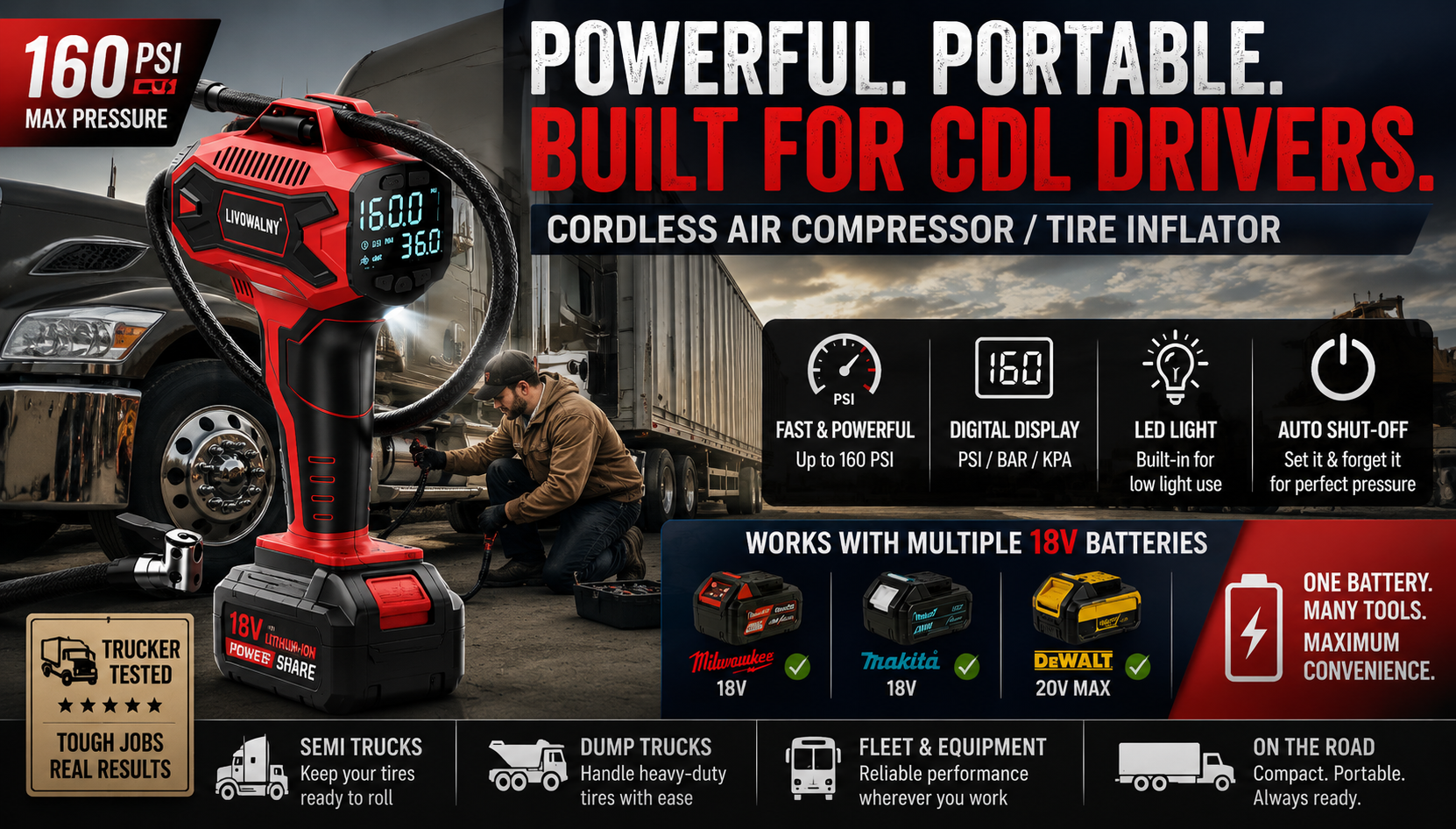
Drivers should regularly inspect coolant levels, belts, hoses, and tires before beginning long trips during the summer months. A portable tire inflator can be one practical item to consider when preparing for a long trip and checking inspect … tires.
Never ignore a rising temperature gauge.
Stopping early to investigate a potential problem is almost always better than dealing with an overheated engine on the side of the highway.
Flooded Roads Are Never Worth the Risk
Water covering a roadway is often much deeper than it appears.
Fast-moving water can wash away pavement beneath the surface while hiding potholes, debris, or damaged bridges.
Even large commercial vehicles can lose traction or become unstable when traveling through deep water.
If you’re unsure about water depth or road conditions:
Slow down.
Look for warning signs.
Never drive around barricades.
Choose another route whenever possible.
Professional drivers understand that arriving safely is always more important than staying on schedule.
Driving Safely Through Changing Mountain Weather
Mountain weather can change much faster than conditions at lower elevations.
A sunny morning at the bottom of a mountain pass can quickly turn into heavy snow, freezing rain, dense fog, or strong winds near the summit.
Before entering mountainous areas, check the latest forecasts and road conditions.
Carry any equipment that may be required, including tire chains where applicable.
Planning ahead helps prevent unexpected delays while reducing the chance of becoming stranded during severe weather.
Continue improving your defensive driving skills by taking our CDL Safe Driving & Road Hazards Practice Test. Many of the same hazard recognition techniques apply during difficult weather conditions.
Visibility Is Just as Important as Traction
Many drivers think only about slippery roads during bad weather.
Visibility is equally important.
Heavy rain, blowing snow, fog, smoke, dust, and sun glare can all reduce how far ahead you can see.
Professional drivers adjust their speed so they can stop within the distance they can clearly see.
Whenever visibility decreases:
Slow down.
Increase following distance.
Use appropriate headlights.
Keep your windshield clean.
Stay alert for vehicles without lights.
Driving too fast for limited visibility greatly increases the chance of a collision.
Know When It’s Time to Stop
One of the best decisions a professional driver can make is recognizing when conditions are no longer safe.
There is no load, appointment, or delivery schedule worth risking your life.
If weather conditions become too dangerous because of:
Heavy snow
Ice storms
Flooding
Extremely high winds
Whiteout conditions
Wildfire smoke
Dense fog
Find a safe location completely off the roadway and wait until conditions improve.
Professional judgment is one of the qualities that separates experienced truck drivers from inexperienced ones.
Common Weather Driving Mistakes
Many crashes during severe weather happen because drivers fail to adjust to changing conditions.
Some of the most common mistakes include:
Driving too fast for conditions.
Following traffic too closely.
Using cruise control on icy roads.
Braking aggressively on slippery pavement.
Ignoring changing forecasts.
Entering flooded roadways.
Descending mountain grades too quickly.
Waiting too long to reduce speed.
Learning to recognize these mistakes before they happen can help you become a much safer commercial driver.
Frequently Asked Questions
How many questions are on this CDL Weather Practice Test?
This practice test contains 25 multiple-choice questions covering winter driving, mountain grades, rain, fog, wind, flooding, extreme heat, and other weather-related CDL topics.
Is weather covered on the CDL General Knowledge exam?
Yes. Safe driving during changing weather conditions is an important part of the CDL General Knowledge exam because professional drivers encounter challenging weather throughout the year.
What is black ice?
Black ice is a thin layer of transparent ice that often looks like wet pavement. Because it’s difficult to see, drivers should slow down whenever temperatures approach freezing, especially on bridges and overpasses.
Why should I avoid cruise control on icy roads?
Cruise control can automatically apply engine power when traction is limited. On slippery roads, it’s much safer for the driver to control acceleration manually.
Why are mountain grades dangerous?
Long downgrades can cause vehicles to gain speed quickly while generating excessive brake heat. Proper gear selection, engine braking, and safe speeds help drivers maintain control throughout the descent.
What should I do if severe weather becomes too dangerous?
If conditions exceed your ability to drive safely, find a secure location away from traffic and wait until weather conditions improve. Making the decision to stop is often the safest choice a professional driver can make.
Continue Building Your CDL Knowledge
Every commercial driver will eventually encounter rain, snow, ice, high winds, steep mountain grades, or extreme temperatures. Understanding how these conditions affect your vehicle is essential for both passing your CDL permit exam and staying safe throughout your trucking career.
Keep working through our growing collection of free CDL practice tests to strengthen your knowledge one topic at a time. The more you practice, the more confident you’ll become when facing both the written exam and the real-world situations that professional truck drivers experience every day.