
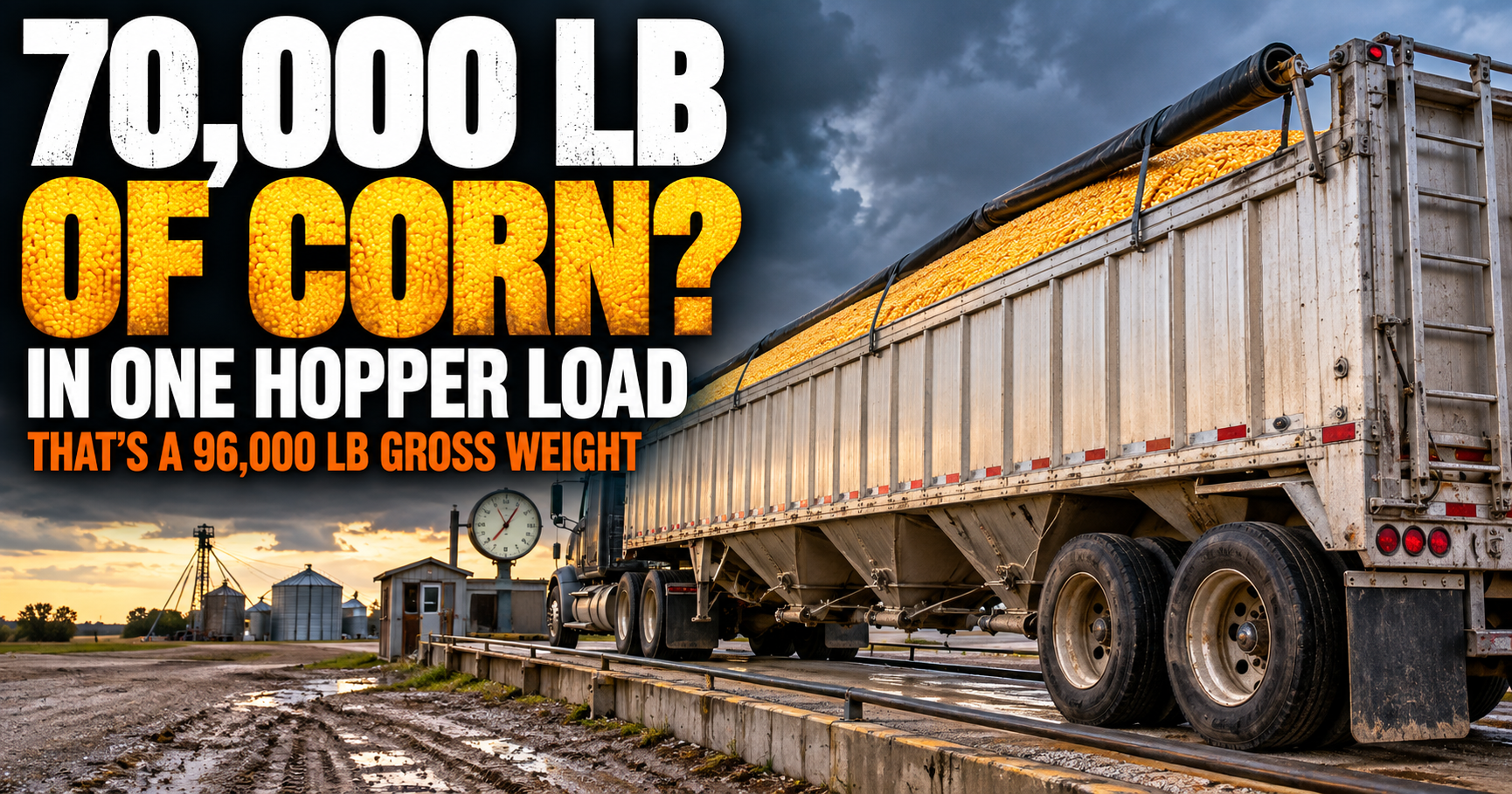
I have seen the grain truck weigh around 96,000 pounds loaded at the elevator. After the corn was unloaded, it weighed closer to 26,000 pounds. That puts the corn in the trailer at roughly 70,000 pounds.
Those numbers answer what was on that truck. They do not tell every driver how much corn a hopper bottom trailer can legally haul. Sometimes corn is loaded from a field where I cannot weigh the whole truck before leaving. I have to judge the load as carefully as I can, then see the actual weight when I reach the elevator.
And once I pull out with that much corn behind me, the weight is more than a number on a ticket. I feel it getting up to speed and account for it every time I need to slow down.
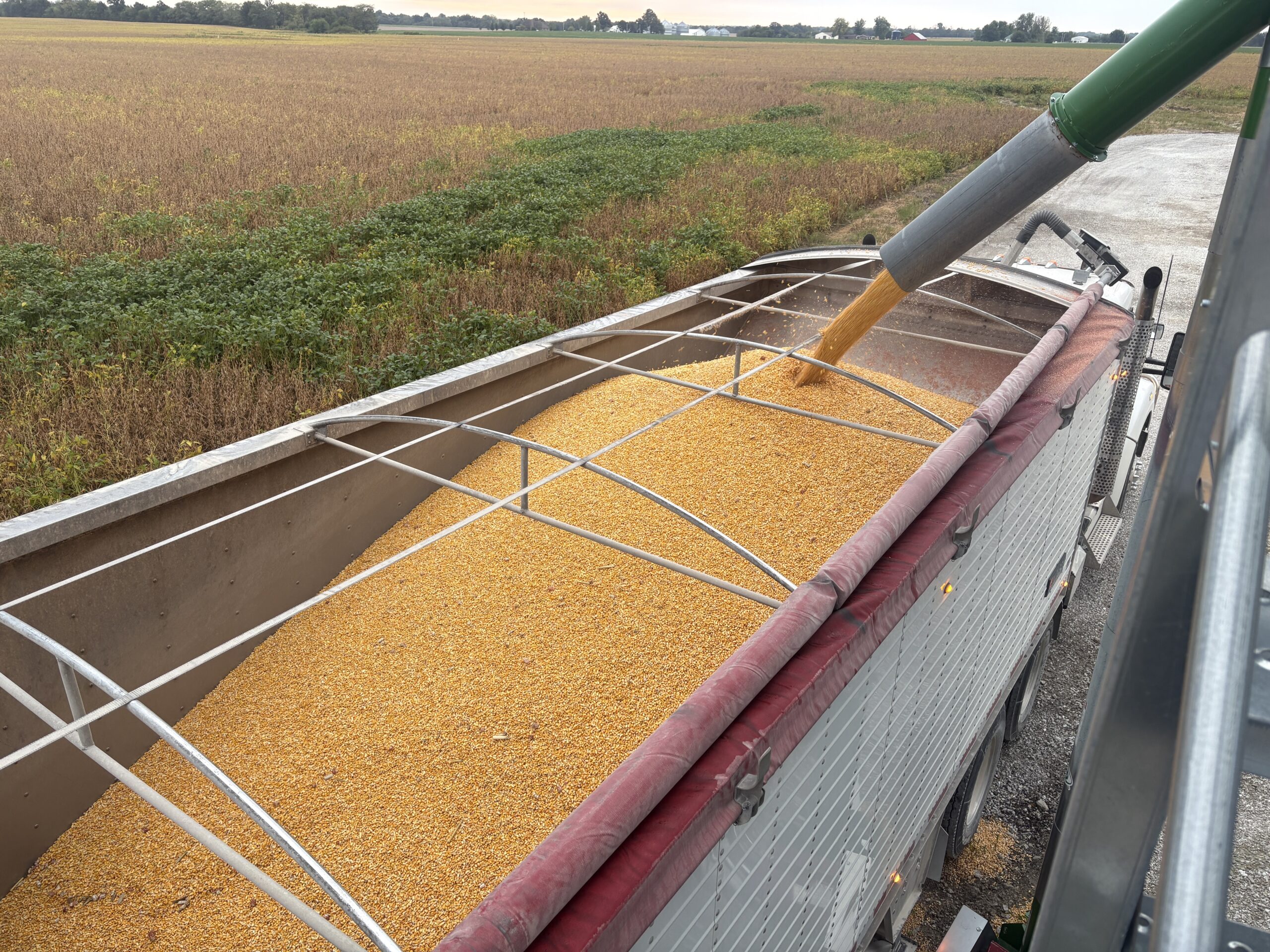
How I figure the weight of the corn
The loaded scale weight includes the truck, trailer, and corn. The empty weight includes the truck and trailer after unloading. Subtracting the two gives the net weight of the grain:
96,000 pounds loaded − 26,000 pounds empty = about 70,000 pounds of corn
I am rounding the weights I have seen. For any individual delivery, the actual loaded, empty, and net figures on its scale ticket are the numbers to use.
Corn is commonly figured at 56 pounds per bushel, so 70,000 pounds is approximately 1,250 bushels. That calculation helps put the load in perspective. It is not a claim that every trailer can haul 1,250 bushels or that every load with that many bushels will be allowed on the road. USDA uses 56 pounds per bushel as the standard conversion for corn.



A trailer can have room left and still be too heavy
When I look into a hopper trailer, I can see whether corn is getting near the top. I can see where it is piling up and how much space appears to be left. What I cannot see is the exact weight on the truck’s axles.
That is why “How much will the trailer hold?” and “How much can I haul?” are different questions. The corn may physically fit. The weight still has to work for the truck and trailer, the axles, and the roads I am taking.
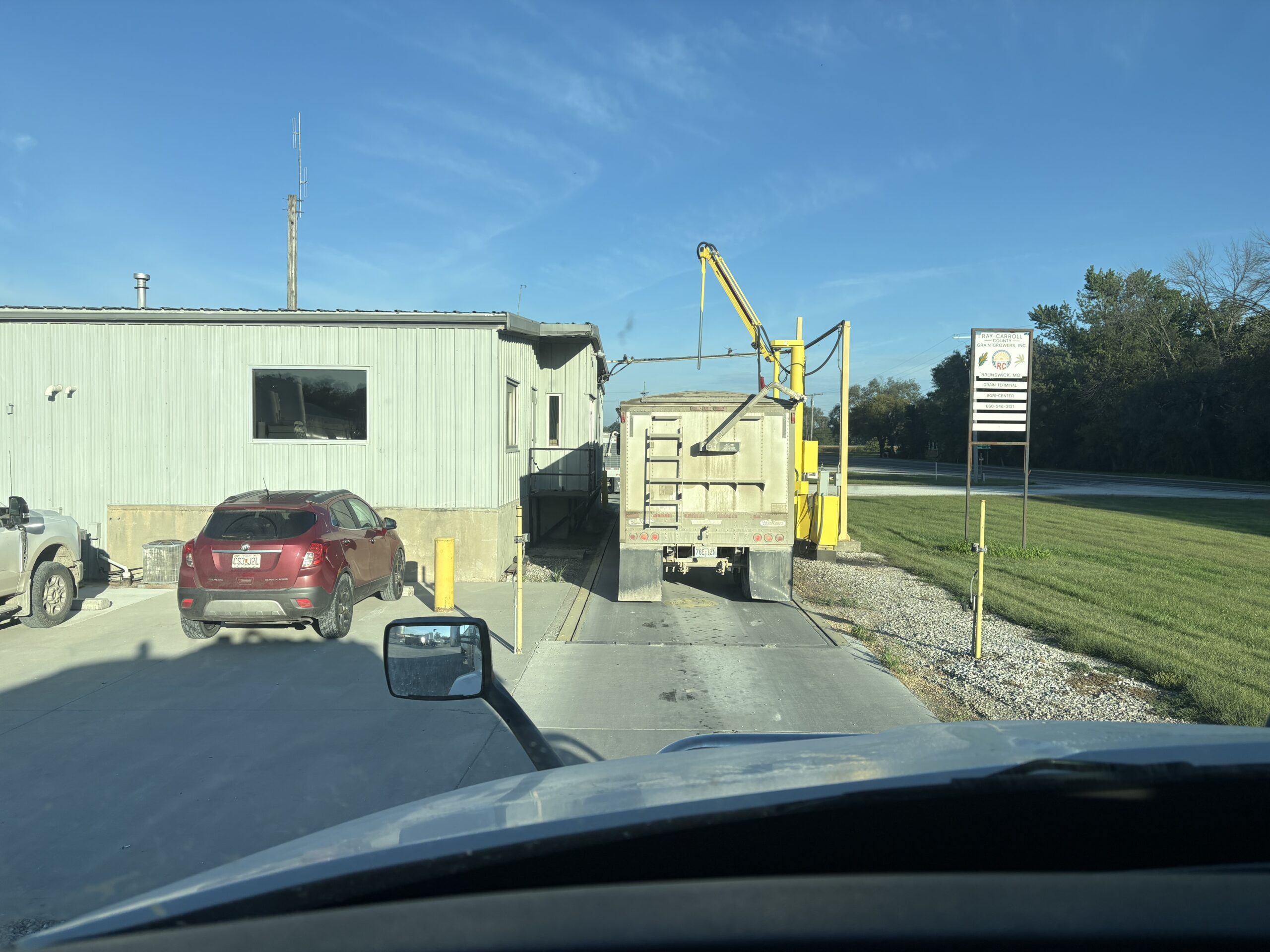
I load the front part a little heavier than the back with the combination I drive. That comes from working with this particular truck and trailer. It is not a pile height another driver can copy and expect to get the same weights. The truck’s setup and where the axles sit affect the result.
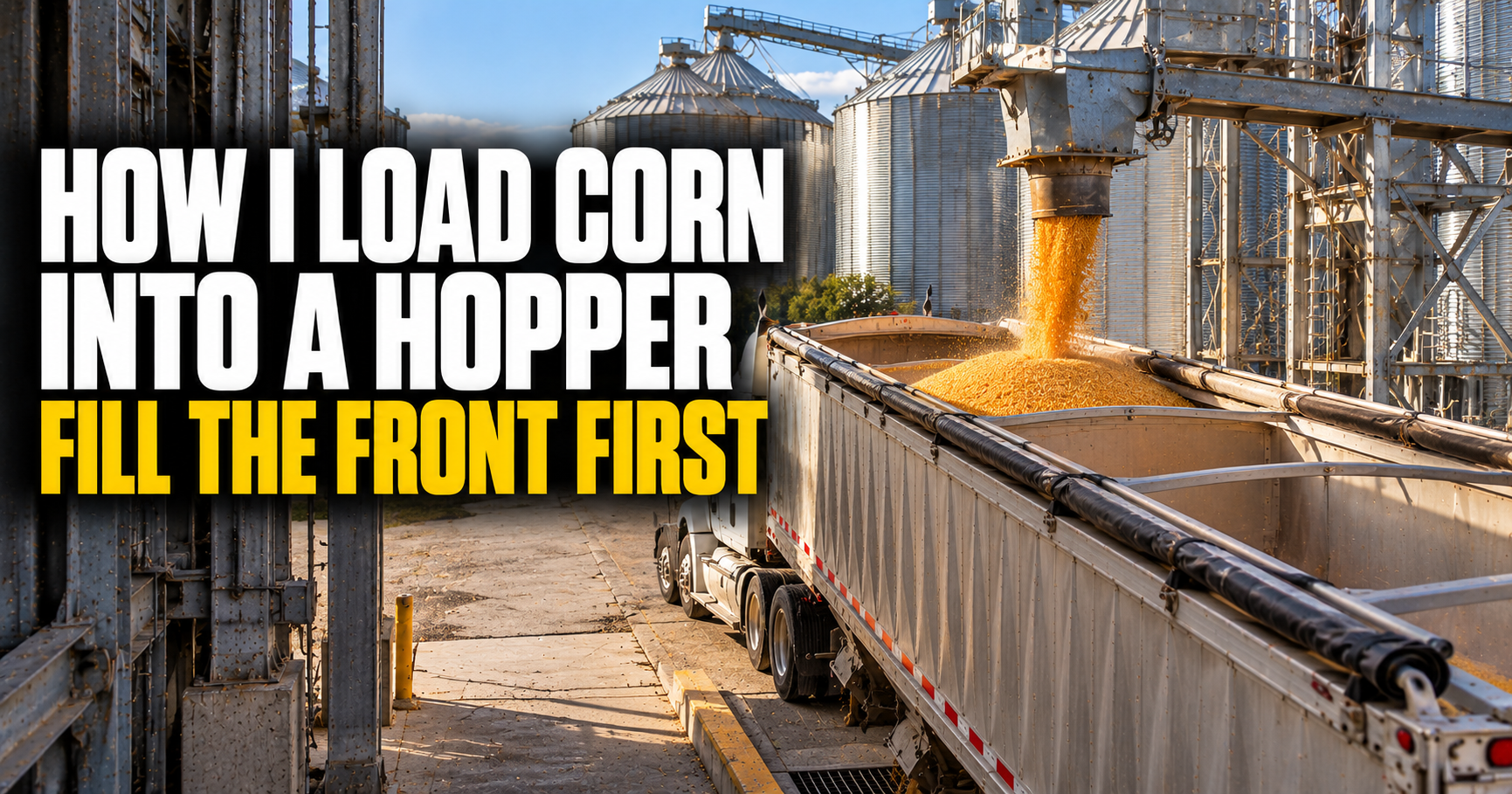
At the farm bin, I can watch the front fill, move the truck, and watch the rear fill. I describe that process in how I load corn from a grain bin into a hopper trailer. Seeing both sections helps me place the corn, but looking into the trailer still cannot give me a scale weight.
Loading from the field involves some guesswork
Loading corn out in a field can be especially hard because there may be no scale for the entire truck. Corn comes from the grain cart into the trailer, and I have to decide when there is enough before I get an actual gross weight.
I watch where the corn is landing. I pay attention to the front and rear sections. I use whatever weight information is available to me. Still, until the truck reaches a scale, I am working with an estimate.
A pile of corn can look high directly under where the grain cart is dumping while there is more room elsewhere. Two loads that appear similar can weigh differently when they reach the elevator. I cannot rely on a glance across the trailer to know exactly how many pounds I have.
My truck has a gauge that helps me judge weight during loading. With this truck, I often work toward a reading around 80%. That is a reference I have learned from this setup. It does not mean the trailer is 80% full by volume, and it is not an 80% rule for other grain trucks. The elevator scale tells me what the complete truck actually weighed.
What 70,000 pounds of corn feels like when I pull onto the highway
There is a noticeable difference between driving back from the elevator empty and pulling out from the farm with a heavy load of corn. The truck takes its time building speed.
On the two-lane highways I drive, it can take around two minutes for my loaded truck to go from a stop to roughly 65 or 70 mph, when the road, speed limit, and conditions allow it. That is my experience with this truck, not a performance figure for every semi. An uphill grade or a different load can change how it accelerates.
I think about that before turning onto the highway. A car approaching from behind can close the distance while I am still working through the lower gears. I wait for enough room to enter safely. Once I turn, I use my four-way flashers while I am moving much slower than traffic so drivers behind me can see that I am still getting up to speed.
I usually turn the flashers off once I reach about 55 mph. That is how I handle the slow acceleration on my route, not a universal speed at which every truck must switch them off. I still watch the traffic around me, use my normal signals when needed, and drive for the actual road and conditions.
Someone following a loaded grain truck may wonder why it takes so long to reach highway speed. From my seat, I am bringing a truck and trailer carrying tens of thousands of pounds of corn up to speed without rushing the equipment or pretending it can accelerate like a pickup.

I leave far more room to slow down
The other big change with a heavy load is how early I need to think about stopping. I leave a lot of space between my truck and the vehicle ahead. I look well down the road for brake lights, turns, intersections, and anything that might make traffic slow suddenly.
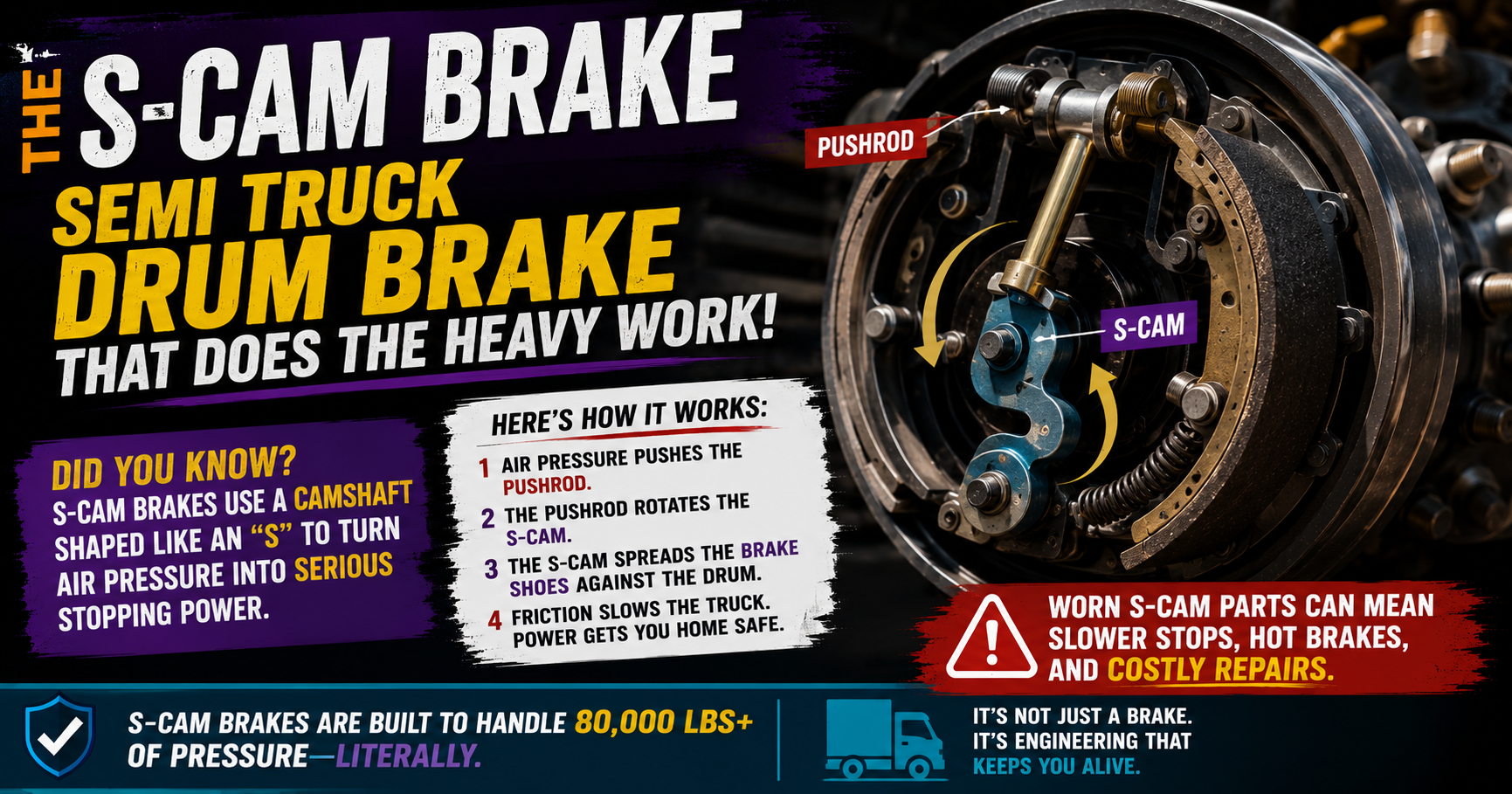
I use the engine brake to help control speed and use the service air brakes when I need to slow or stop. The engine brake helps manage the truck’s momentum, but it does not replace the service brakes. I would rather start slowing early and smoothly than get close to traffic and have to make a hard stop.
The Federal Motor Carrier Safety Administration gives 196 feet as the average stopping distance for a loaded tractor-trailer traveling 55 mph in ideal conditions, compared with 133 feet for a passenger vehicle. Conditions and speed can make the distance longer. That is why following distance matters so much when I am hauling corn. FMCSA
On a two-lane road, that space can disappear fast if a vehicle turns onto the highway ahead of me or slows for a driveway. I cannot count on the truck reacting like it did after I emptied the trailer. I drive the loaded trip as a loaded trip, leaving myself time and room to respond.
Is 96,000 pounds a legal harvest weight in Missouri?
Do not assume it is. I have seen the scale show about 96,000 pounds loaded. I am sharing what I saw, not presenting 96,000 pounds as a legal target.
Missouri’s grain harvest weight provision allows vehicles hauling grain or grain coproducts during harvest to exceed the otherwise applicable maximum weight limitation by up to 10% on highways other than interstates. For an applicable 80,000-pound limit, that works out to 88,000 pounds, not 96,000. The truck’s axle weights and configuration, the route, and any posted road or bridge limits also matter.
I have heard people talk about “farm weights” as though there is one number every grain truck can use during harvest. That is too simple. A loaded weight on an elevator ticket does not tell me which roads a truck could lawfully travel at that weight.
The same goes for the elevator accepting a load. The elevator weighs and receives the corn. Its scale ticket records what arrived; it does not make the drive there legal after the fact.
The ticket gives me the answer I could not get in the field
At the elevator, I drive onto the scale loaded. After I unload, I go back across for the empty weight and get the ticket. That is where I can compare what I thought I had with what the truck actually weighed.
When I see around 96,000 pounds loaded and around 26,000 pounds empty, I know the load was roughly 70,000 pounds of corn. I can also think back to how full the trailer looked and what the truck’s gauge showed. That experience helps me judge another load, though I still cannot assume the next one will weigh exactly the same.
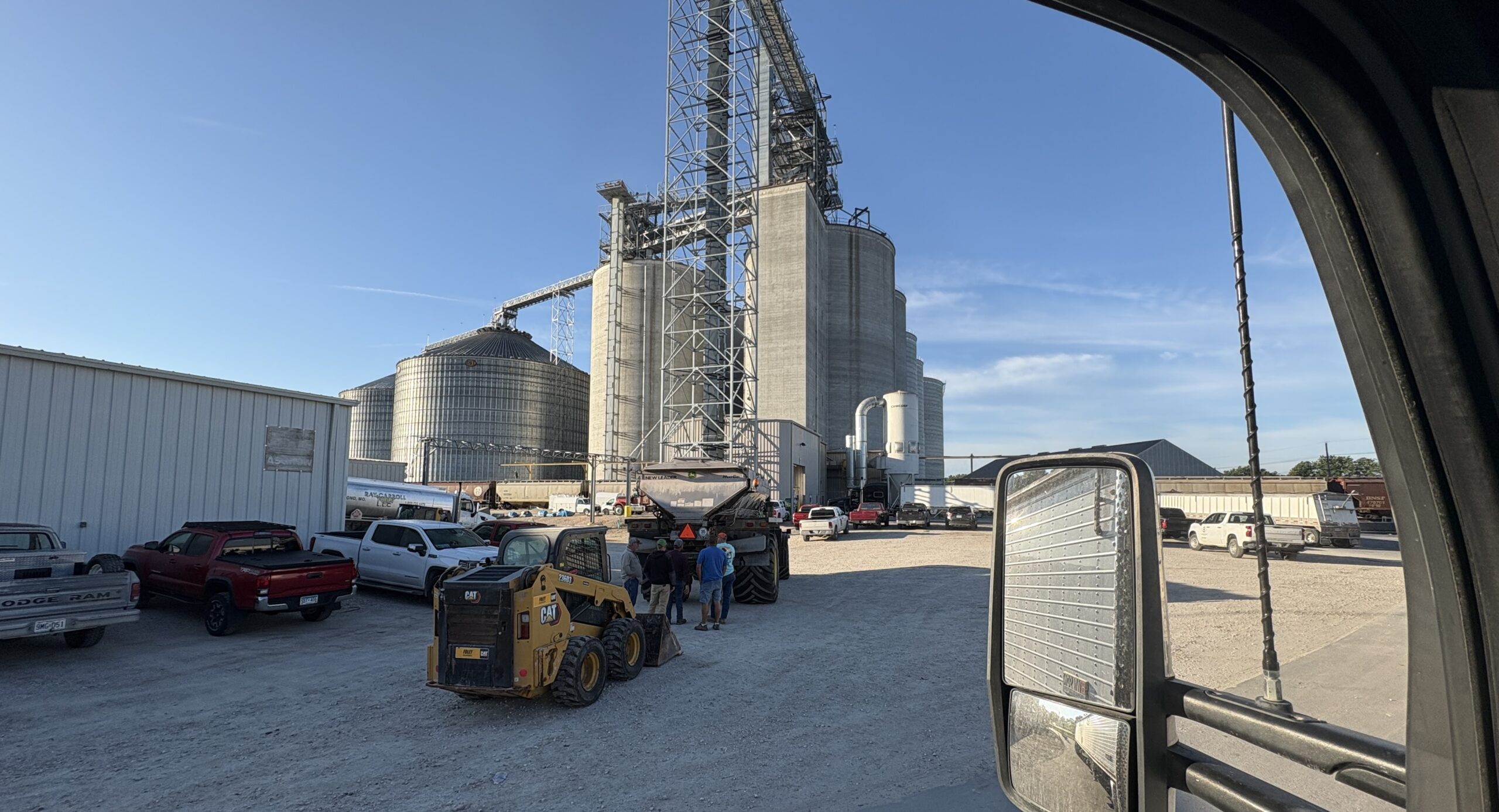
I take the receipt back to farm management for their records. The loaded weight, empty weight, and net grain weight are more useful than me saying, “It looked about full.” I explain the rest of the elevator trip, including both trips across the scale, in what happened when I hauled corn to a grain elevator.
The number on the scale is only part of the load
About 70,000 pounds of corn is a substantial load behind my truck. The scale ticket tells me how much was there. The drive tells me what it means to carry it: waiting for a safe opening onto the highway, taking time to accelerate, warning drivers behind me while I am moving slowly, and leaving plenty of room to brake.
I keep three numbers separate when I talk about these trips. Corn weight is what the load itself weighed. Gross weight is the entire loaded truck and trailer. Allowed weight depends on the truck and the roads it travels. Confusing those numbers makes “How much can a hopper trailer haul?” sound like it has one easy answer when it does not.
About the author: I share firsthand truck driving and grain-hauling experience at Trucking Resource.