
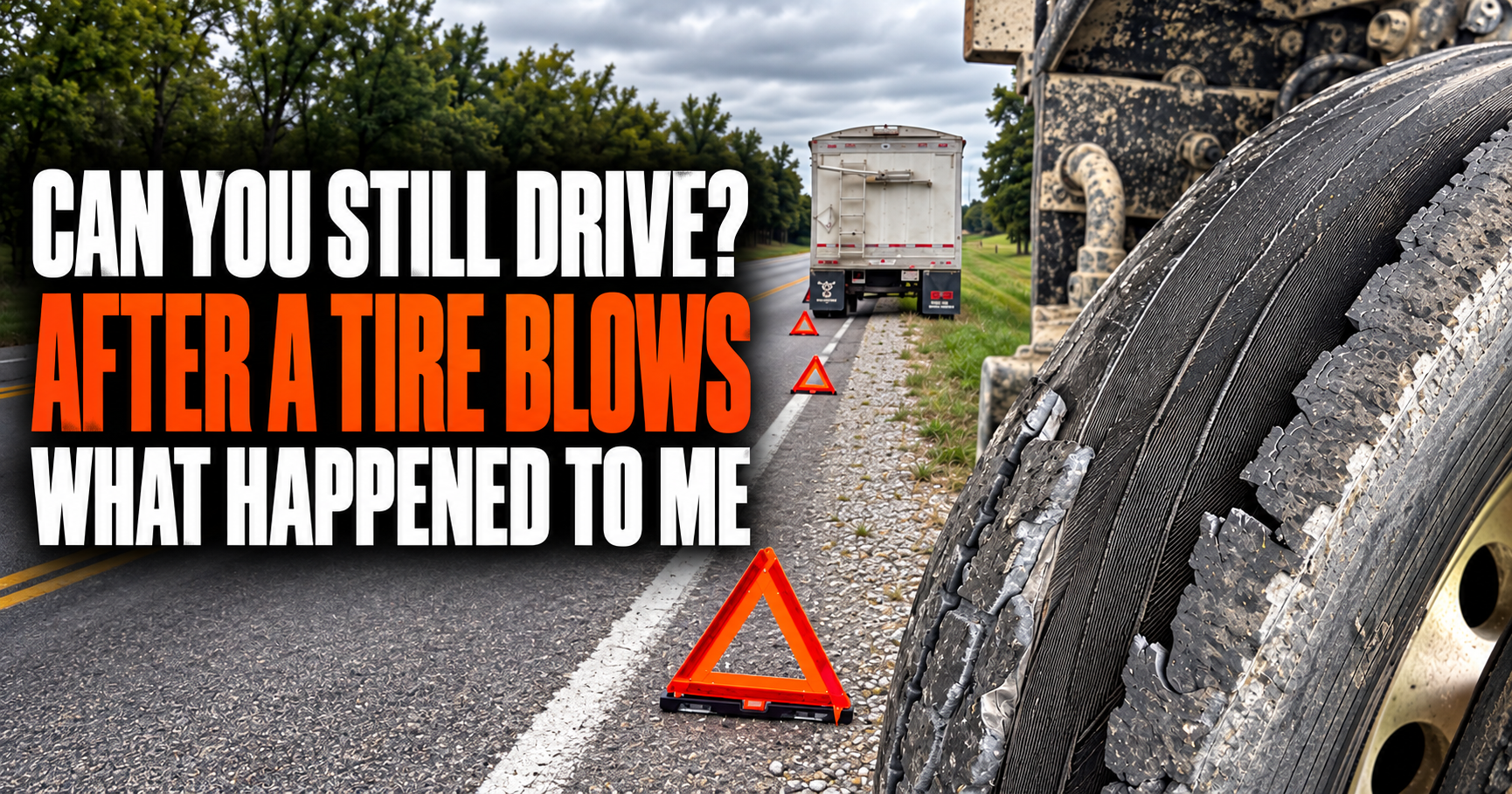
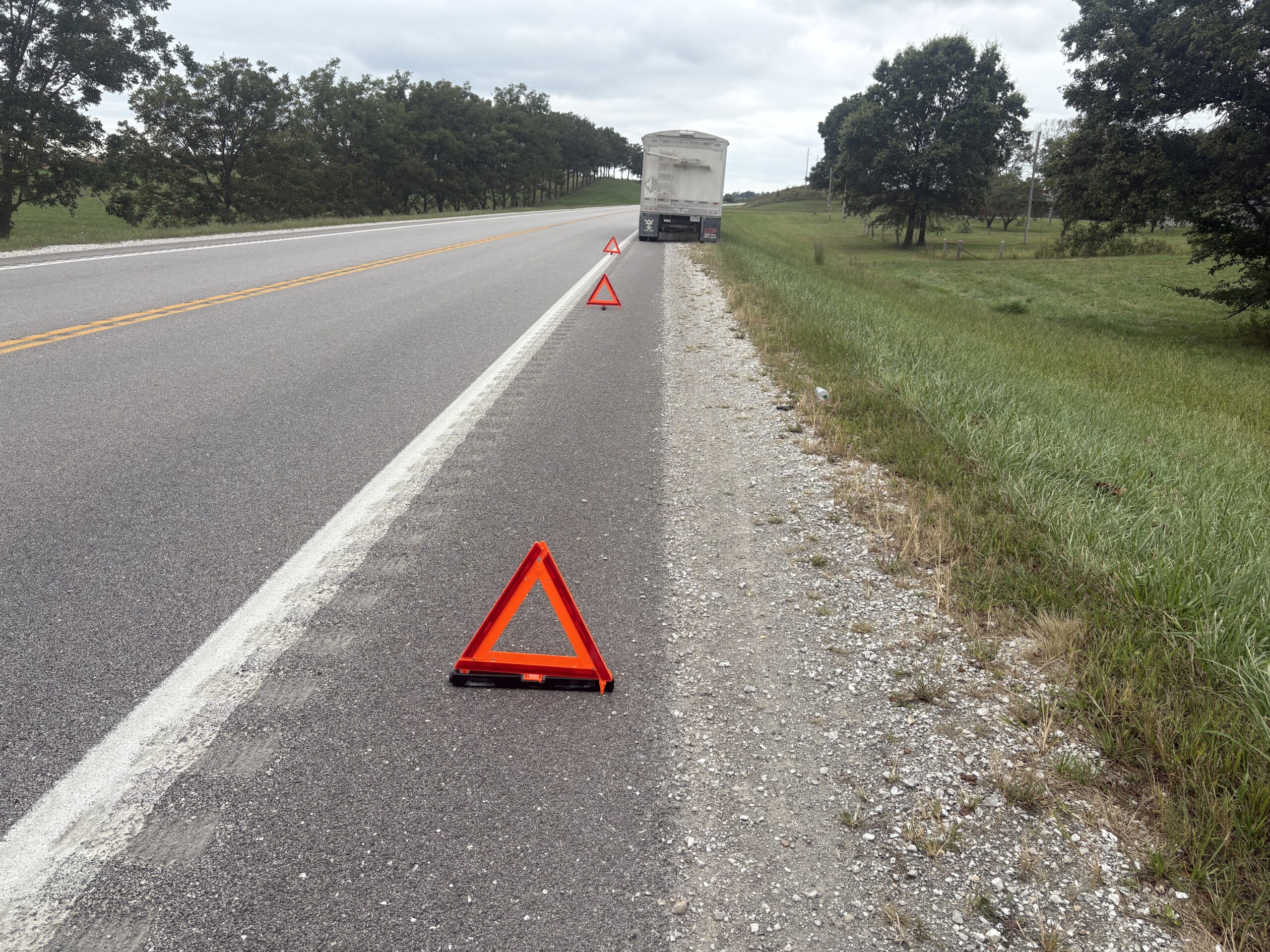
After a tire blew on my semi while I was hauling corn, I pulled onto the wide shoulder of a rural highway. I turned on my flashers, put out my three warning triangles, and called about getting help.
The tire was badly torn apart. I had been doing about 60 mph when it failed, and I’d heard a bang like a cannon, felt the truck shake, and noticed smoke and a strong rubber smell. At that point, I expected someone would come deal with the tire where I was stopped.
Instead, I got a call back saying no service truck was available. I was told to drive slowly to a tire shop in the next town, about eight miles away.
I did what I was told and made it to the shop with my flashers on. But if you’ve found this article because someone told you to drive a semi after a blowout, please don’t treat my eight-mile trip as proof that yours is okay. What happened to me and what a truck is safe and legal to do are two different questions.
Can You Drive a Semi With a Blown Tire?
If the tire is flat, has separated, or has exposed belt or body ply, federal tire rules prohibit operating the vehicle on it. Driving slowly does not, by itself, make a prohibited tire acceptable to use.
That is the direct answer I wish had been part of the conversation when I was sitting on the shoulder. A driver can be told there’s a shop nearby or that roadside service isn’t available, but the distance to the shop doesn’t determine whether the truck can be driven there.
The federal tire rule in 49 CFR § 393.75 lists conditions that prohibit operating on a tire, including a flat tire, tread or sidewall separation, and exposed belt or body ply material. A damaged tire also raises questions about the rest of that wheel position and anything the failed tire may have struck.
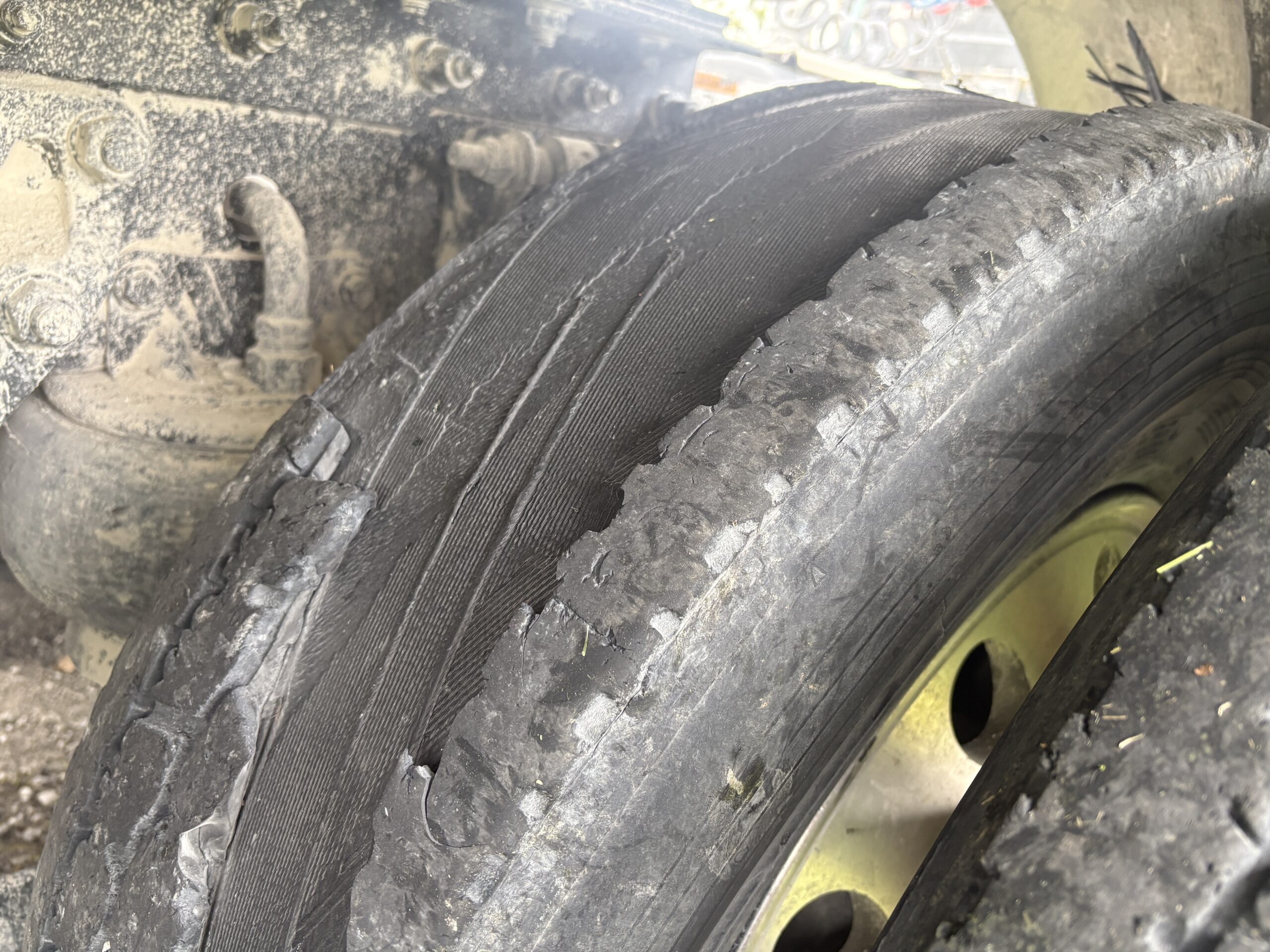
I can describe the damage in my photos and the instructions I received. I can’t inspect another driver’s truck from here or tell them that driving to a shop is acceptable. If you’re stopped with a blown tire, that decision needs to be made from the actual condition of the equipment, not from someone else’s successful trip.



Why I Pulled Over Before Calling Anyone
My tire failure wasn’t subtle. It sounded like a cannon went off while I was hauling corn at highway speed. The truck shook, and I saw smoke and smelled rubber.
I got the truck onto a wide shoulder and stopped. My priority at that moment was getting out of the travel lane and making the stopped truck visible to other drivers. I turned on the flashers and placed my warning triangles.
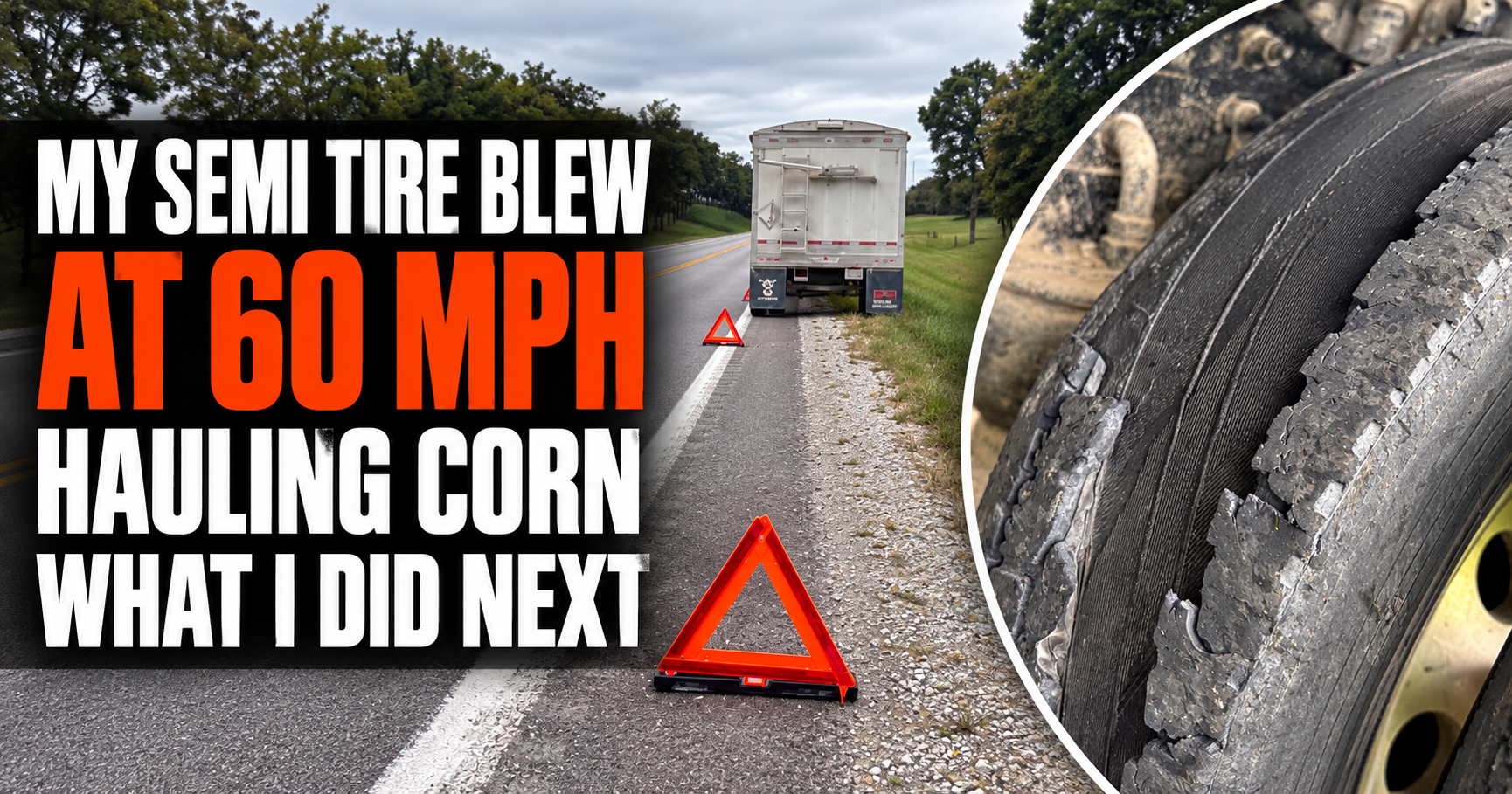
If you want the whole account, including the tire and roadside photos, I wrote about the blowout while hauling corn at 60 mph. This article is about the question that came afterward: what happens when the available plan is to move a truck with a damaged tire?
It matters that I stopped first. I wasn’t eight miles from the shop wondering whether that loud bang was worth checking. I had already seen the damaged tire and set out the triangles when I got the call.
“No Service Truck Available” Didn’t Settle the Tire Question
I understand why getting to a tire shop sounded practical. There wasn’t a service truck available, and the shop was in the next town. I also understand why a truck sitting on a highway shoulder needs a plan.
But those facts don’t tell you whether the truck is fit to drive.
A blown tire can leave rubber hanging loose. Pieces can come off, and nearby equipment may need to be checked. If the failed tire is one of a pair, the condition and load on the other tire also matter. I’m describing things a qualified person would need to evaluate, not claiming each of them happened to my truck.
That’s where a phone conversation can get frustrating. The person looking for a service option may be thinking about where the nearest shop is. The driver is beside the truck, looking at what actually failed. Before the truck moves, those two parts of the situation need to come together.
In my case, I was told to go slowly. I drove the roughly eight miles with my flashers on and got there safely. I’m relieved I did. I still wouldn’t want a reader to come away thinking that “eight miles is close enough” is a rule for a failed semi tire.
Does It Matter Which Tire Blew?
Yes, but the answer is more complicated than identifying whether the tire was on the tractor or trailer.
A tire failure can affect how the truck handles, how weight is carried, and what else might be damaged. On a dual wheel position, for example, it’s reasonable to ask about the condition of the remaining tire. A driver also needs to know whether loose rubber can strike nearby parts as the wheel turns.
Those are inspection questions. They aren’t things to assume away because the truck still moves under its own power.
I haven’t identified the exact cause of my tire failure, and I’m not going to use the photos to make claims about damage a mechanic hasn’t confirmed. The pictures do show a tire that came apart badly. That was enough to make the instruction to drive to the next town feel like a serious decision rather than a routine trip to a shop.
What I Would Want Clarified Before Moving a Truck Again
If I were dealing with another blowout, I’d want a clear assessment of the damaged tire and the surrounding equipment before the truck went back onto the road. I’d also want to know what the plan is if moving it isn’t safe or allowed.
That means more than asking, “Can it make it eight miles?” A truck might be physically capable of moving while still having a tire condition that rules out operating it. It might also have damage that gets worse as the wheel turns. The fact that a driver can creep along doesn’t answer either question.
I’d be specific when reporting the problem: where I’m stopped, which tire appears damaged, whether the tire is flat or coming apart, and whether I can see loose material or other damage. I’d send the photos if the person arranging help can receive them. That gives the people making the repair plan more than “I had a blowout.”
I’d also want the plan confirmed by someone qualified to assess that equipment. If the truck cannot be operated in its present condition, the answer has to address repair or recovery where it sits. A lack of available mobile service is a problem to solve, but it doesn’t repair the tire.
The Shoulder Is Its Own Safety Problem
While all of that is being worked out, the truck is still beside a live road. I was grateful for the wide shoulder where I stopped, but I still turned on my flashers and put out my triangles.
The FMCSA guidance on emergency warning devices explains the warning-device requirements for a commercial vehicle stopped on a highway or shoulder. Drivers should know those rules before they need them. This wasn’t a practice exercise for me. It was a loaded truck that had unexpectedly stopped along a rural highway.
I also wouldn’t spend time beside a damaged tire trying to diagnose it while ignoring traffic. Getting the truck stopped and making the scene visible came before figuring out how the tire would be replaced.
What Those Eight Miles Taught Me
I made it to the tire shop. That’s the outcome of my trip, but it isn’t the answer to whether every semi can be driven after a blowout.
The answer depends on the tire’s condition and whether the truck meets the rules for operating on the road. A flat or separated tire is not made okay by going slowly. If someone tells you to drive to a shop, the question to ask is whether the truck can legally and safely make that trip in its actual condition.
What I remember most clearly is the order of events: the cannon-like bang at 60 mph, the shaking and rubber smell, getting the corn truck onto a wide shoulder, putting out my triangles, and then hearing that no service truck was available. I was glad to reach the shop. I’d want a much clearer answer about the tire before making that decision again.
About the author: This article draws on a firsthand tire blowout while hauling corn, documented with original photos for TruckingResource.com.