
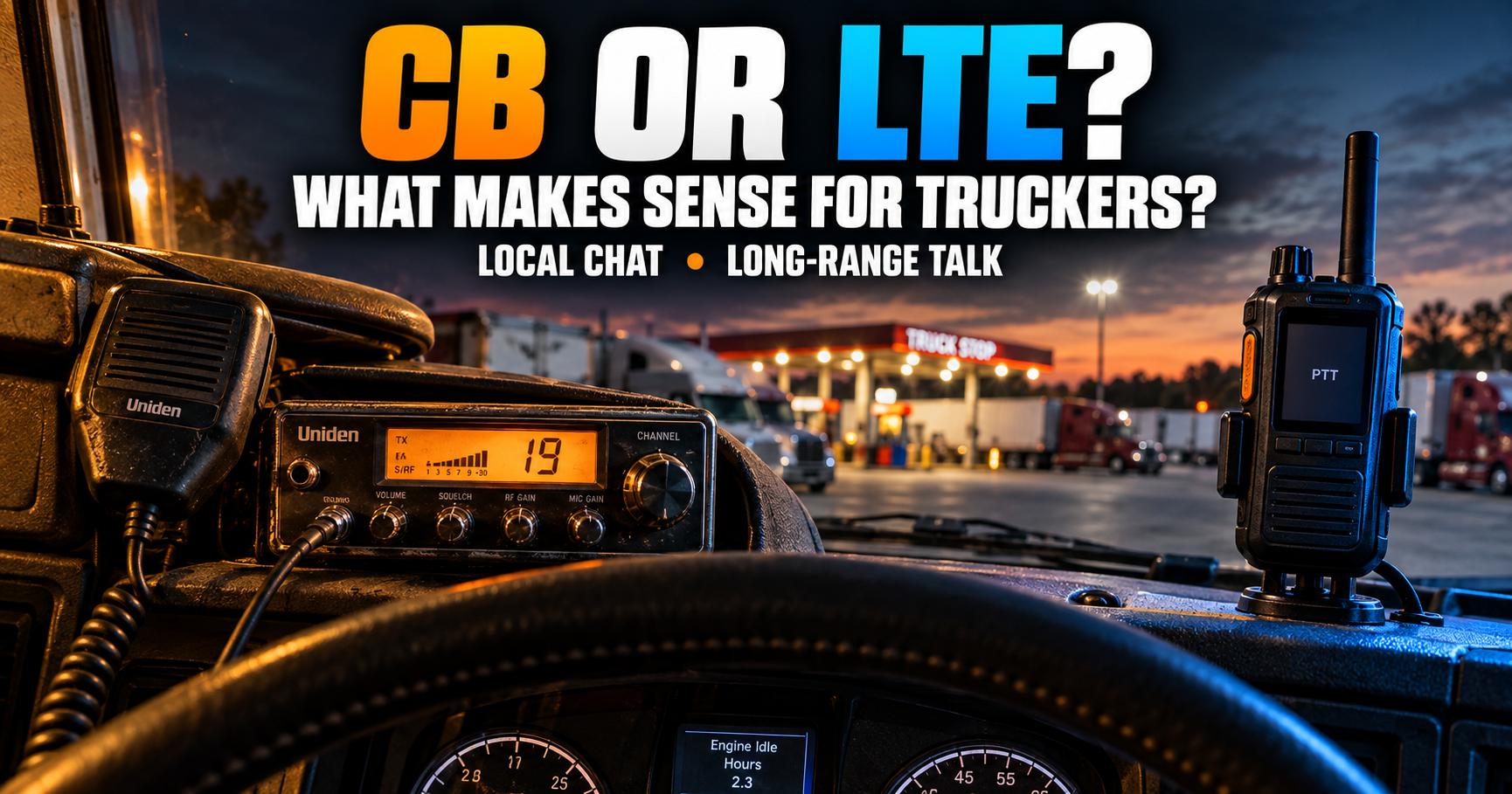
A CB radio and an LTE walkie-talkie both let you press a button and talk. From the driver’s seat, that makes them seem like two ways to do the same job. They aren’t.
A CB is useful when you need to reach other drivers nearby, including people you have never met. An LTE radio is useful when you need to reach specific people in your group, even when their trucks are far away. That difference matters more than the advertised range on either box.
If I were choosing equipment for a truck, I would start with one question: Who am I trying to talk to? The answer usually makes the choice much easier.
The Difference in Plain English
A CB sends its signal directly over radio waves. Other people within range can hear you when they are on the same channel. You do not need to add them to a group or know who they are ahead of time.
An LTE walkie-talkie uses cellular service to carry the conversation. You talk to people whose radios are set up to communicate with yours. They might be in another truck across the state, but a nearby driver with an ordinary CB will not hear the call.
That is why I would never buy an LTE radio expecting it to replace every reason truckers use a CB. I also would not expect a CB to do the job of a private, long-distance crew radio. Each solves a different communication problem.



When I Would Want a CB in the Truck
Picture traffic stopped ahead and a driver coming the other direction who knows what happened. A CB gives nearby drivers a shared place to talk. You can ask about the backup, hear a warning about a blocked lane, or communicate with another driver while maneuvering around a tight area.
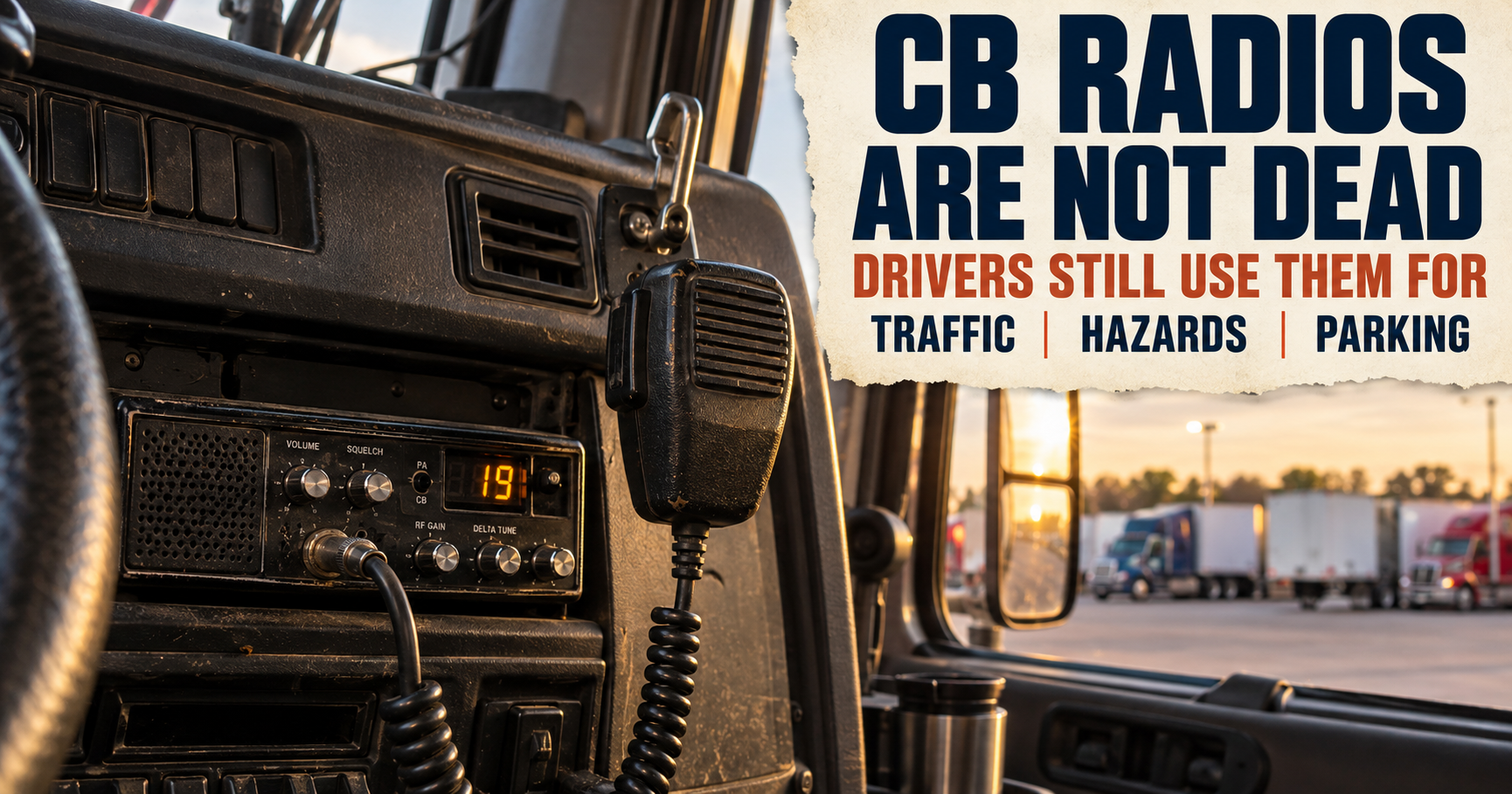
The useful part is that you do not have to know anyone’s name. If they have a CB, are close enough, and are listening to the same channel, you may be able to reach them. For a closer look at who still uses one and why, read what truck drivers use CB radios for today.
That open conversation is also a CB’s weakness. A channel can be noisy. Nobody nearby may be listening. You may hear people you have no reason to talk to. And if the other driver is too far away, the conversation simply will not happen.
For me, a CB makes the most sense as a way to communicate with the drivers around the truck right now.



When an LTE Walkie-Talkie Makes More Sense
Now picture two drivers working for the same operation. One has reached the delivery point, while the other is still an hour away. They want to coordinate without depending on both trucks being within CB range.
That is where an LTE push-to-talk radio is appealing. It is designed for conversations between the people you set up to communicate with. You press the button, speak, and your crew hears you through the cellular-based service.
I can see the value for a small fleet, drivers moving between farms and grain facilities, or a family trying to keep in touch while traveling in separate vehicles. The important condition is cellular coverage. “Nationwide” describes how far apart connected radios can be when service is available. It does not mean the radio creates a signal in a dead zone.
If your main goal is talking to one known person, I would also compare the LTE radio with the phone you already carry. The dedicated radio earns its place when the simple push-to-talk operation and group communication are useful enough to justify another device.
Can an LTE Radio Talk to Truckers on Channel 19?
No. An LTE walkie-talkie does not join an ordinary CB channel. A CB driver on Channel 19 will not hear your LTE group, and your LTE radio will not pick up that driver’s warning.
This is the question I would settle before buying anything. If you want to hear what nearby truckers are saying, get a CB. If you want to talk with your own group over a much greater distance where cellular service is available, consider an LTE radio.
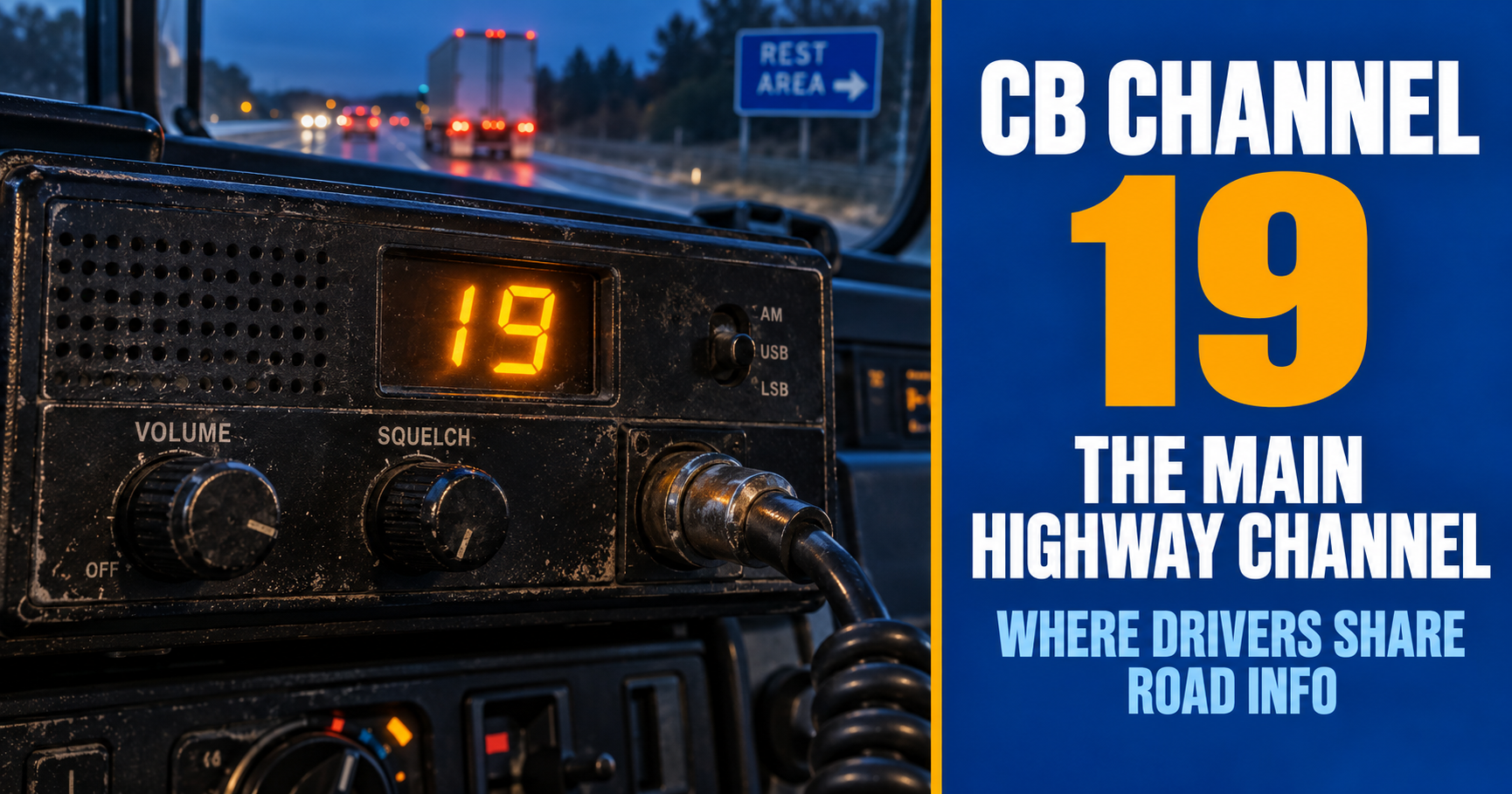
If you are new to CB and wondering where drivers usually listen, our CB channel guide for truck drivers explains Channel 19 and the other channels you may encounter.
What Happens When Cell Service Drops?
A regular CB does not need a cellular connection. If your truck has power and the CB and antenna are working, you can try to reach someone within radio range even where your phone has no signal.
An LTE radio depends on its network connection. If it cannot connect, its long-distance push-to-talk feature cannot work as intended. Having access to more than one cellular network may improve the odds of a connection, but it cannot guarantee service everywhere.
I would keep that in mind on rural routes. A coverage claim on a product page tells you less about your route than using the equipment where you actually drive. I would not make either device my only plan for getting help in an emergency.
How Far Will Each One Reach?
CB range changes with the antenna installation, terrain, nearby obstacles, interference, and the other driver’s setup. It is usually a tool for local communication. If you have seen an impressive mileage claim for a CB, do not treat that number as what you will get every day from a semi.
An LTE radio does not have the same local radio-range limit between the two drivers. Its conversation travels through the service network, so users can be much farther apart when both have a working connection and are set up to talk to each other.
That is a useful distinction, but I would still ask whether distance is what I need. Hearing a truck a mile ahead may be more valuable in traffic than reaching a coworker 500 miles away. On a different job, talking with that coworker may be exactly the point.
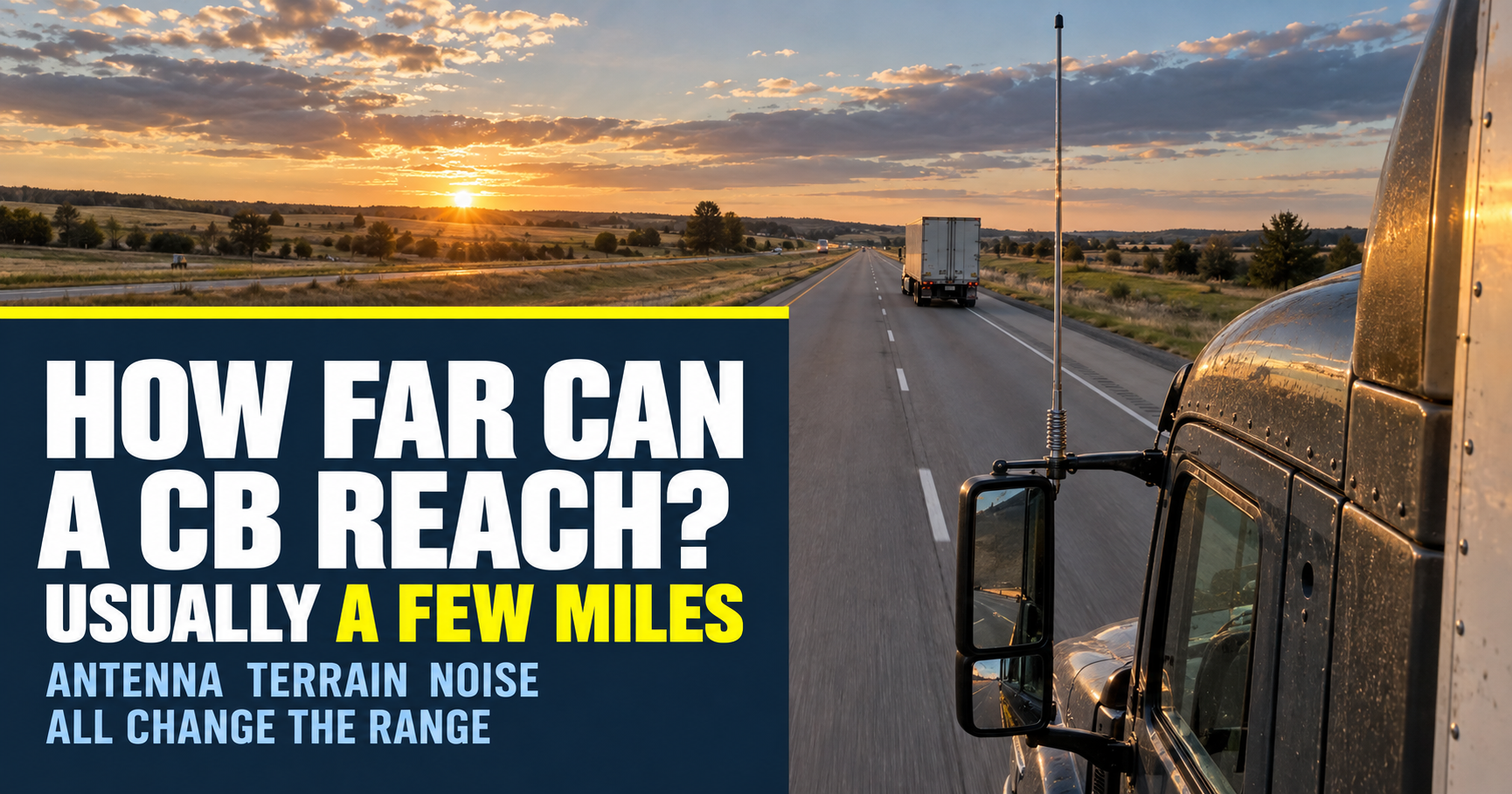
I go further into the variables behind local radio range in how far a CB can reach in a semi truck.
What Does Each Setup Involve?
A traditional CB installation can involve mounting the radio, finding a suitable power connection, routing coax, mounting an antenna, and checking SWR. The antenna deserves attention. A radio that turns on and receives chatter has not necessarily been set up well for transmitting.
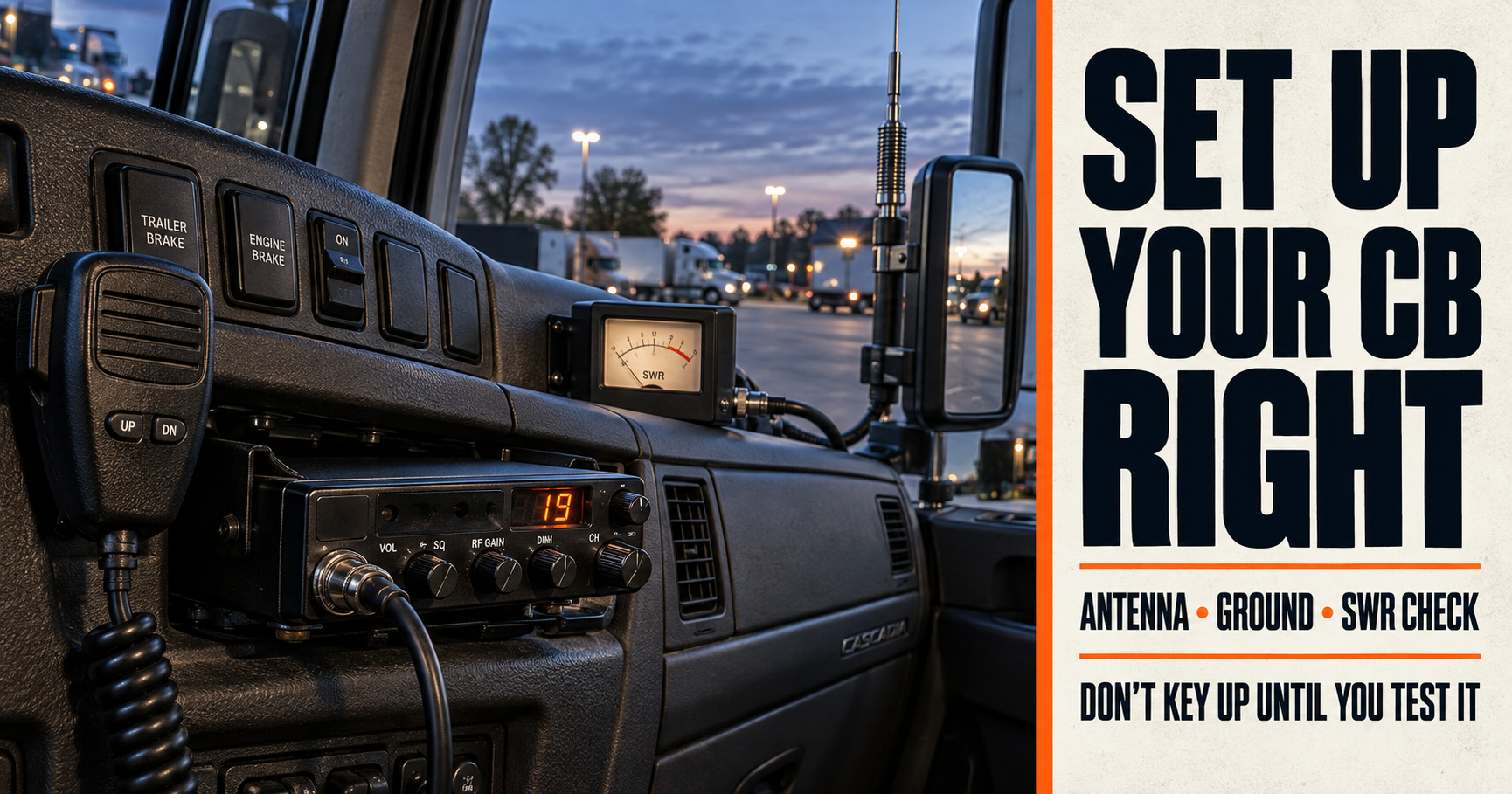
If you are starting from an empty cab, use our semi truck CB setup guide to see the whole job before buying parts.
A handheld LTE radio avoids that CB antenna installation, but it brings its own routine. You need to charge it, keep track of it, and make sure the people you want to reach have compatible, connected devices. A vehicle-style LTE unit may also need mounting and power, depending on the model.
I would choose based on what I want the device to do, then decide which setup I am willing to live with. I would not choose an LTE radio solely to avoid installing a CB if my real goal is hearing nearby drivers.
Is There an Ongoing Cost?
With a CB, you buy the radio and installation parts, and there generally is not a cellular service renewal to keep using it. You may spend more later if you replace a damaged antenna, mount, or cable.
With an LTE radio, check the service terms for the exact model before buying. For example, Rapid Radios says its G1 includes the first 12 months of cellular service and requires an annual renewal to maintain service after that. Terms can change, so I would check the manufacturer’s current G1 service details when comparing the long-term cost.
That is the question I would ask about any “no monthly fee” claim: What happens after the included service period? A product can have no monthly bill and still have a yearly renewal.

The Two Products I Would Compare
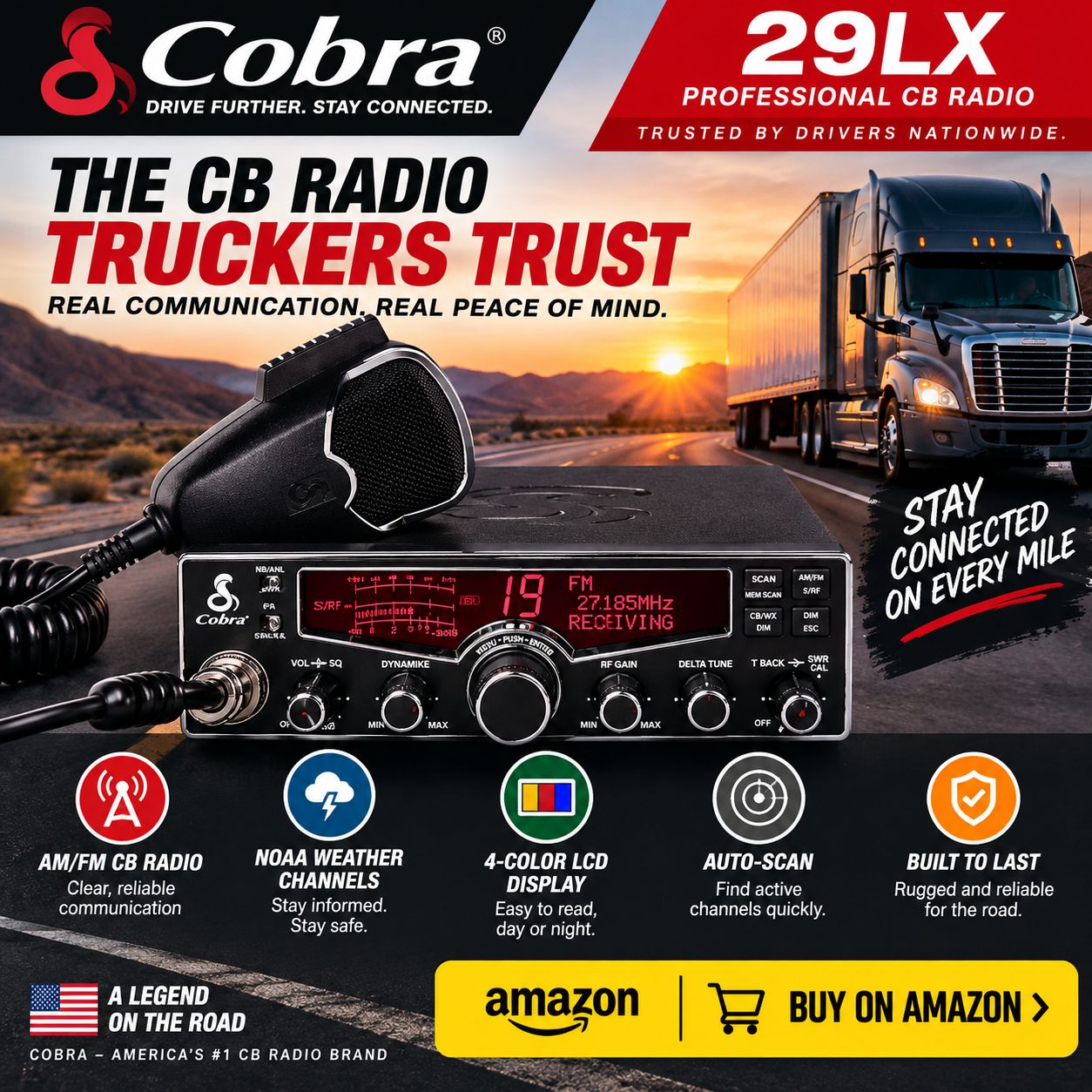
For a truck driver who wants a traditional CB, the Cobra 29LX AM/FM CB radio is one option to consider. It belongs in the CB side of this comparison because it lets you communicate on CB channels with other nearby users. Budget for a suitable antenna and installation parts as well, then check SWR once everything is mounted.
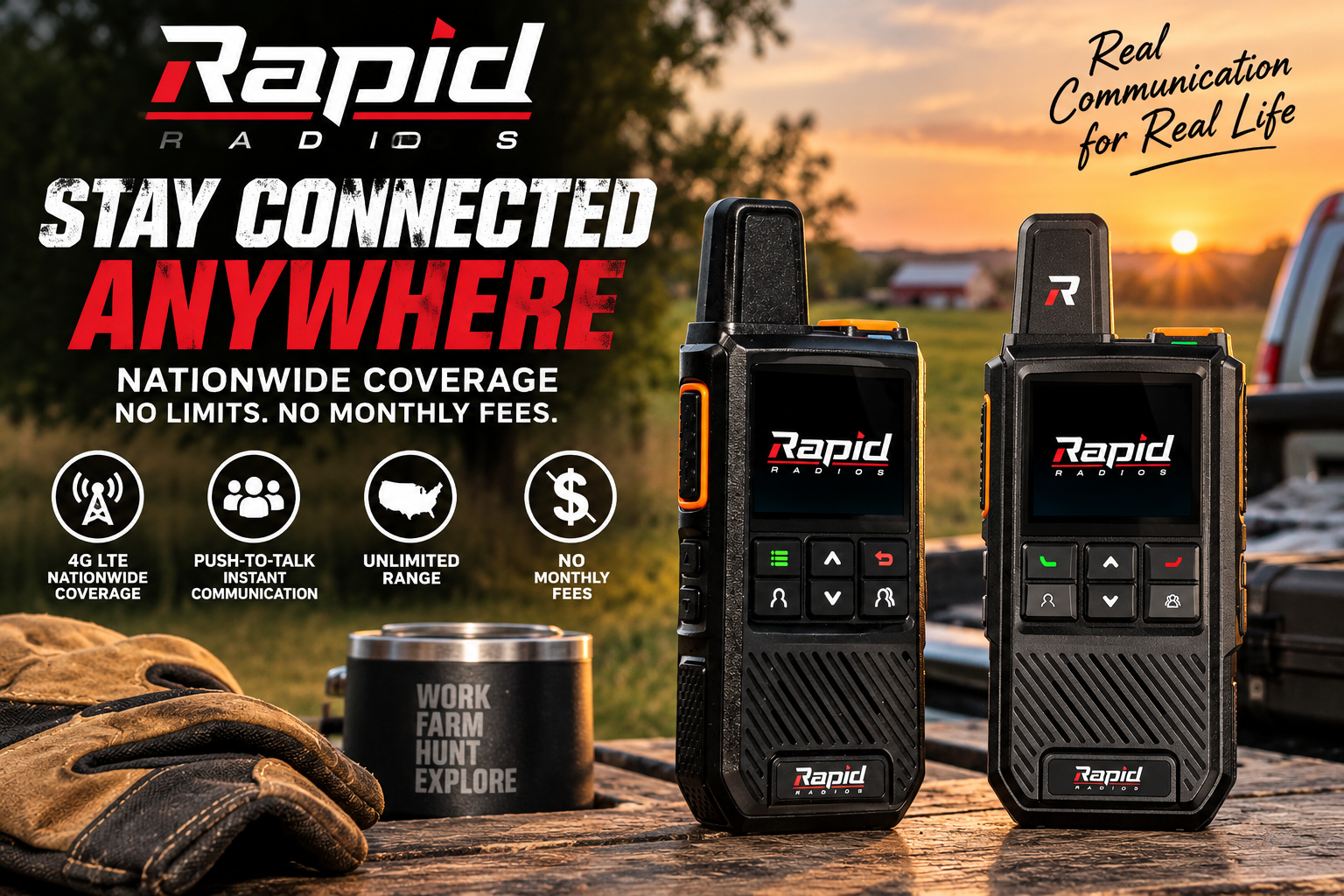
For drivers who need to talk with their own group over longer distances, the Rapid Radios G1 LTE walkie-talkie is the different kind of option. It uses push-to-talk over cellular service. I would check coverage along the routes that matter to me and confirm the current renewal terms before ordering.
I have not run a side-by-side range test of these two products in the same trucks. I would not pretend one has clearer audio or a longer practical reach based on a test we have not done. The reason to choose between them is the communication job each is built to handle.
Would I Carry Both?
Yes, if I regularly needed both kinds of conversation. A CB could keep me connected to nearby drivers, while an LTE radio could keep me in touch with my own crew farther away. They would each have a reason to be in the cab.
If I could buy only one, I would make the decision this way. For roadside information from nearby drivers I do not know, I would pick the CB. For regular communication with specific people who may be far away, I would look at LTE, provided cellular coverage works on our routes.
That is a more useful question than asking which radio is newer. When I’m coming up on stopped traffic, I want to know what drivers around me are saying. When I need to reach a coworker at another stop, I want a reliable way to reach that person. Those are different conversations, and it makes sense to use equipment suited to each one.
About the author: Dax earned his Class A CDL on his first attempt after an accelerated course at Ross Trucking School. He writes for TruckingResource.com to make trucking equipment and new-driver questions easier to understand.