
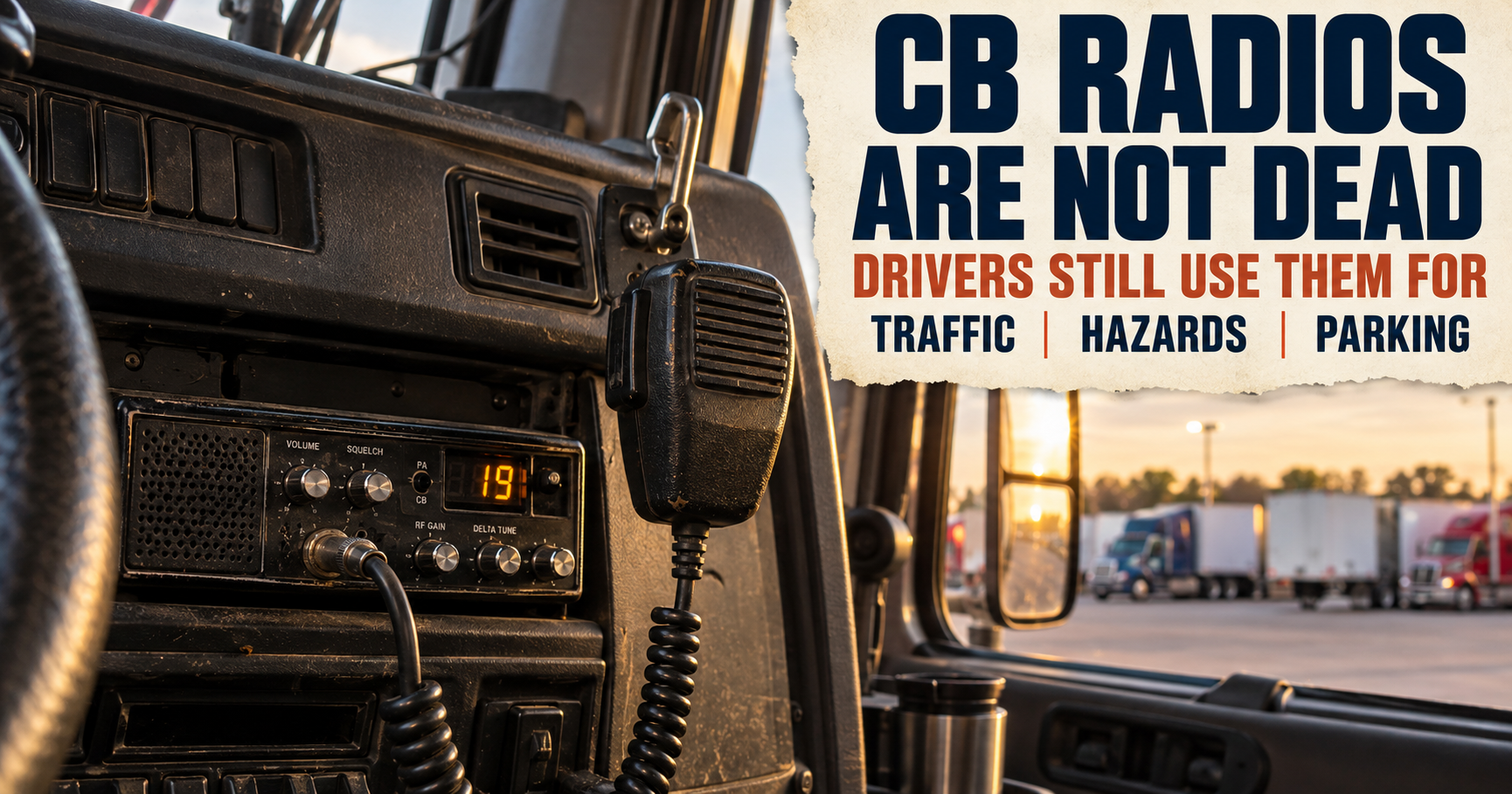
With smartphones, live traffic apps, GPS navigation, Bluetooth headsets, and company messaging systems everywhere, it would be easy to assume the CB radio disappeared from trucking years ago.
Yet climb into plenty of semis, dump trucks, grain trucks, or heavy-haul rigs and you’ll still find one mounted somewhere in the cab.
So are truck drivers actually using them?
Yes, some definitely are.
CB isn’t nearly as universal as it once was. Some drivers hardly ever turn one on, and others don’t have one at all. But it still does something a cell phone can’t do very well.
A CB lets you immediately talk to other people around you without knowing who they are, having their phone number, or joining the same app.
For the right kind of trucking, that can still be extremely useful.
Truck Drivers Haven’t Completely Abandoned CB
CB radio isn’t dead.
Even the Federal Communications Commission has described CB as remaining popular among groups such as long-haul truck drivers, particularly for highway and rural communication.
How useful one is depends a lot on where you drive and what kind of work you’re doing.
An OTR driver may use one differently from somebody running a dump truck locally. Grain hauling, construction work, heavy haul, rural trucking, and industrial jobs can create completely different reasons for wanting to communicate with nearby vehicles.
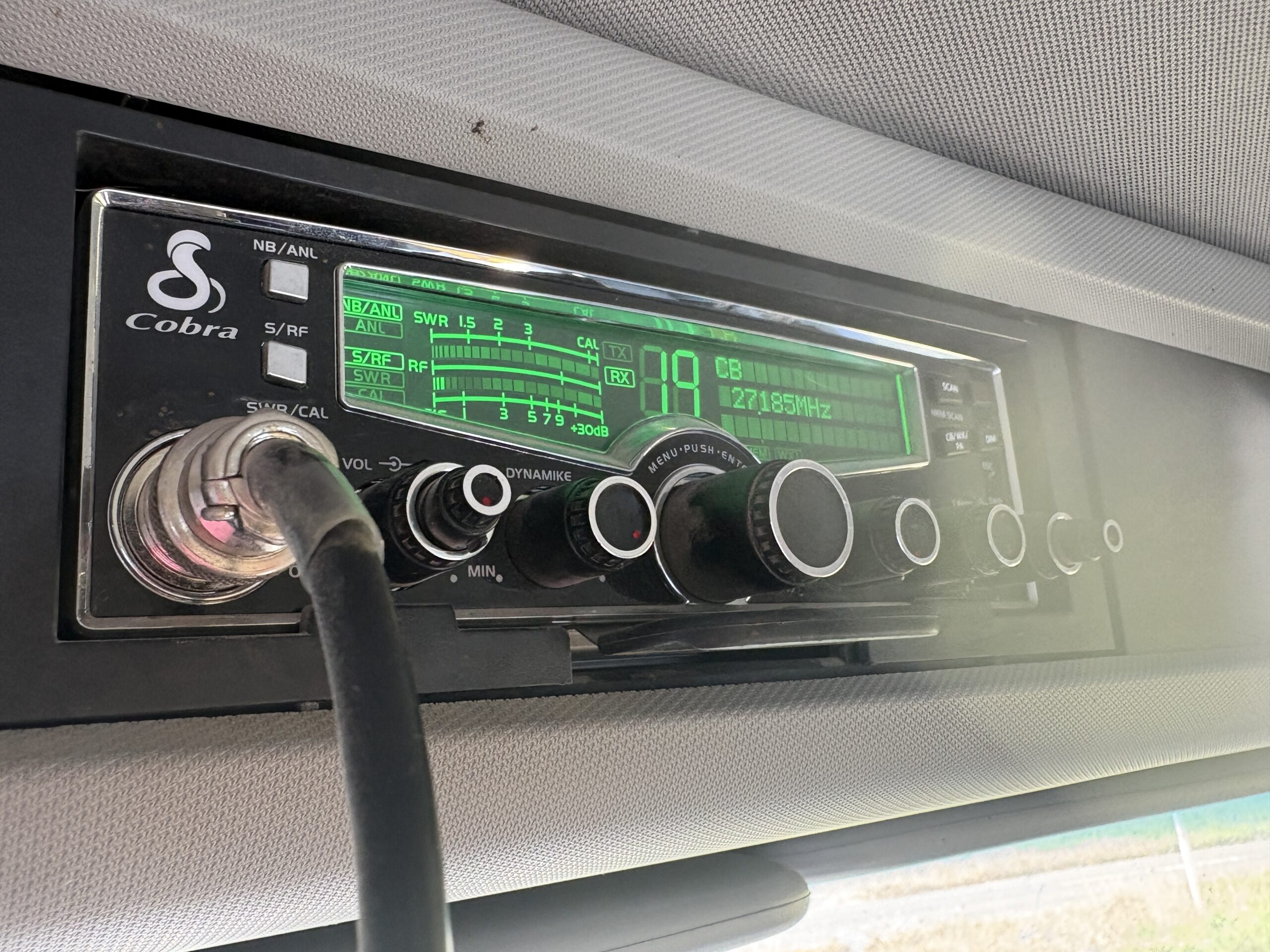
And that’s really where CB still makes sense.
It gives you local communication without needing to know who you’re trying to reach.
What Are Truckers Actually Using CB For?
A CB can become useful anytime drivers around each other need information quickly.
Traffic can suddenly stop over a hill.
Something can fall into the roadway.
A lane may be unexpectedly blocked.
A truck might be trying to maneuver into a difficult entrance.
Drivers working around the same jobsite may need to coordinate movement.
Weather or road conditions can change quickly.
Instead of trying to figure out who to call, a driver can pick up the microphone and speak to whoever nearby happens to be listening.
Typical direct CB communication can reach roughly five to fifteen miles under suitable conditions, according to the FCC, although real-world range varies tremendously with the antenna, terrain, installation, interference, equipment, and surroundings.

Why Everybody Talks About Channel 19
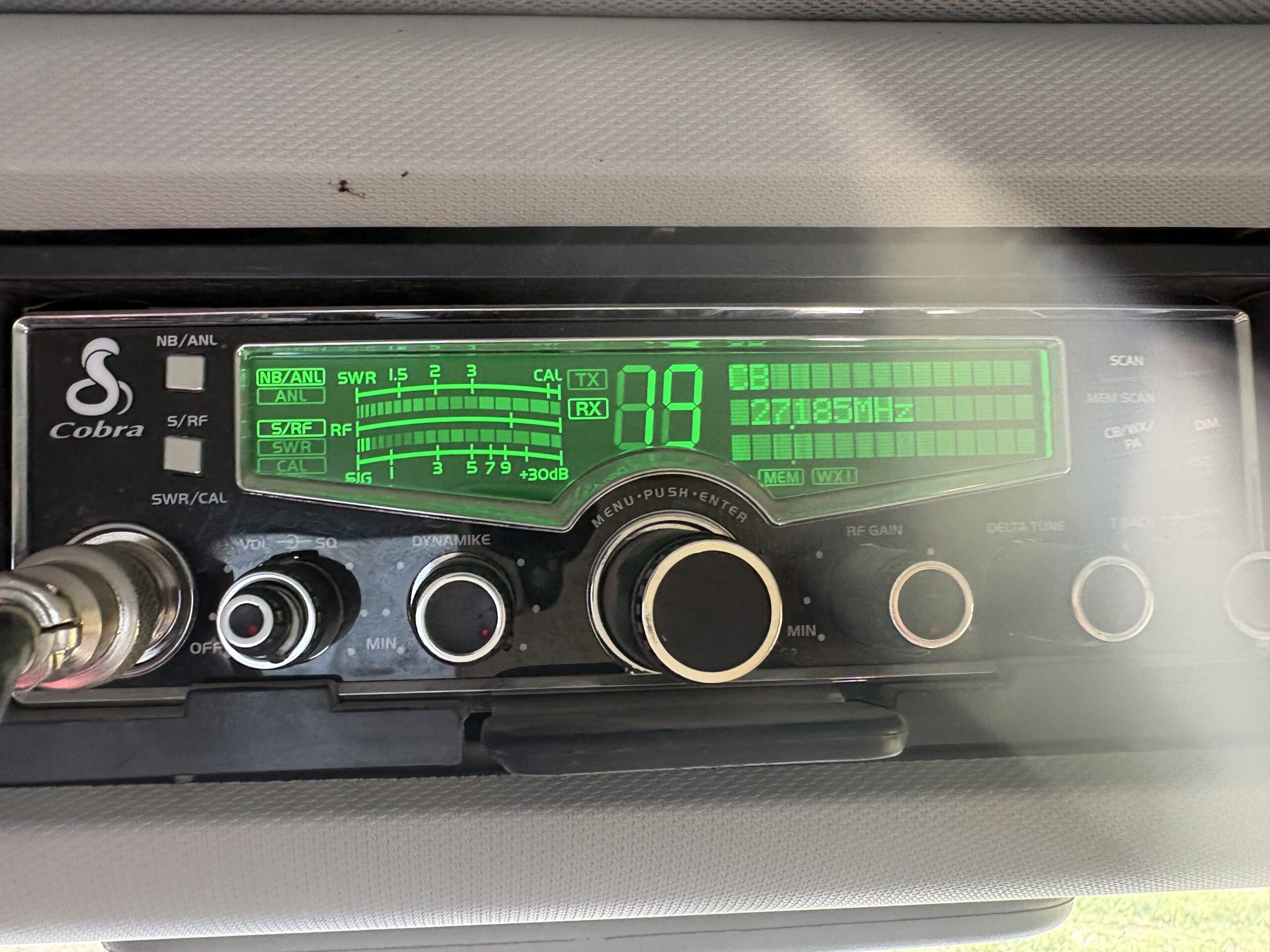
If you’ve heard a truck driver mention “19,” they’re usually talking about CB Channel 19.
Channel 19 operates at 27.185 MHz and has been associated with highway trucking communication for decades.
It became particularly useful because drivers traveling in different directions could exchange information about what was happening farther down the road.
That same basic idea still works today.
Someone ahead may warn other drivers about stopped traffic, an accident, debris, construction, or another hazard before navigation software has caught up.
Channel 19 deserves its own article because there’s enough to cover about its use, etiquette, history, and terminology without trying to squeeze everything into this one.
Sometimes the Driver Ahead Knows Before Your Phone Does
Modern navigation is incredible.
I wouldn’t trade it for the old days of navigating entirely with paper maps and radio conversations.
But apps still rely on information reaching them.
A truck driver two miles ahead may already be looking directly at whatever stopped traffic.
That’s one of the situations where CB has an advantage.
The information doesn’t need to travel through an app first. One driver sees something, presses the microphone button, and other drivers nearby can hear about it immediately.
That doesn’t make CB better than modern navigation.
It makes it useful for a different reason.
Rural Trucking Is Where CB Can Still Make Plenty of Sense
Not every commercial truck spends its entire life running interstate highways with excellent cellular coverage.
Trucks work on rural highways, gravel roads, farms, grain facilities, construction sites, quarries, logging roads, and remote industrial locations.
Cell service isn’t equally reliable everywhere.
Traditional CB communication doesn’t require a cellular tower or data connection to reach another nearby CB station.
That gives it a practical advantage in certain rural situations.
Local Drivers Can Find Uses for CB Too
CB isn’t exclusively an OTR tool.
Picture several dump trucks moving through the same construction site.
Or grain trucks working the same route between fields and storage.
Or commercial trucks maneuvering around heavy equipment.
Sometimes being able to say something to everybody listening nearby is simply easier than individually calling people.
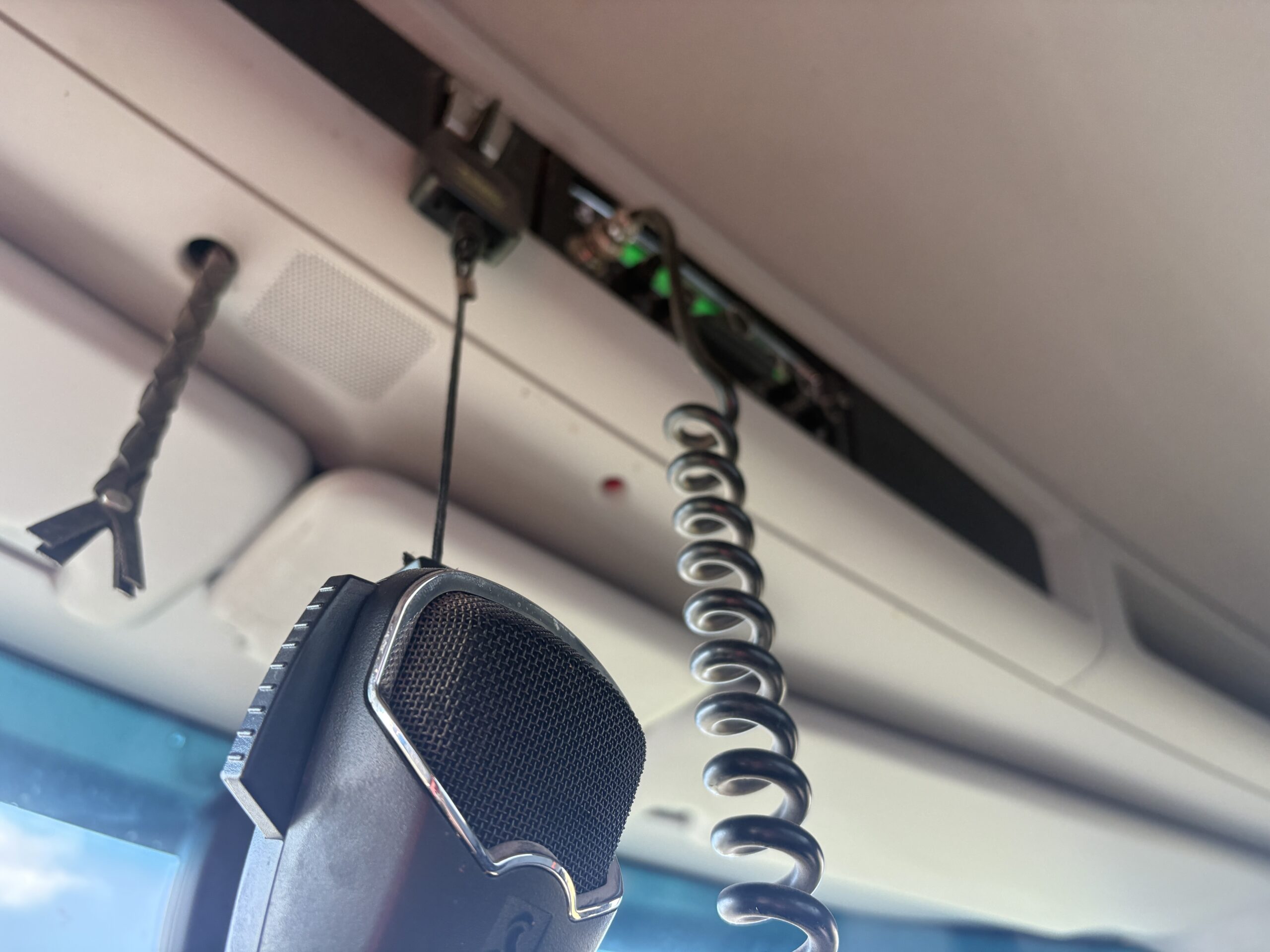
That doesn’t mean every operation uses CB. Businesses may rely on phones, dedicated business radios, cellular push-to-talk systems, or something else entirely.
But short-range radio communication still solves a problem that hasn’t disappeared.



How CB Became Such a Big Part of Trucking
Long before smartphones, modern GPS units, and real-time traffic apps, drivers had far fewer ways to know what was happening beyond what they could physically see.
CB changed that.
Drivers could exchange information about traffic, road conditions, weather, fuel stops, and problems farther down the highway while they were still moving.
An entire trucking vocabulary developed around CB use.
“Breaker.”
“What’s your 20?”
“Bear.”
“Four-wheeler.”
“Back it down.”
Some of that language became so closely tied to American trucking culture that people who had never driven a truck recognized it.
So Why Did CB Use Decline?
Technology took over many of its old jobs.
A driver today can pull up live traffic, weather radar, turn-by-turn navigation, truck routing, and road information from inside the cab.
Smartphones made private conversations effortless.
Companies have their own messaging and dispatch systems.
Those tools eliminated a lot of the reasons drivers once depended heavily on CB.
There’s another reason too.
Not everybody wants to listen to interference, arguments, random conversations, or noise all day.
So CB became less essential.
That doesn’t make it useless.

A CB and a Cell Phone Solve Different Problems
It doesn’t really make sense to ask whether a phone is better than a CB.
They’re built for different kinds of communication.
If you want to talk privately with your dispatcher, spouse, customer, or another specific person, a phone is obviously much better.
If you need to communicate with a truck directly ahead of you and have absolutely no idea who the driver is, your phone doesn’t help much.
That’s where CB makes sense.
A Traditional CB I’d Actually Consider for a Truck
If you’re going to put a CB in your truck, I’d rather buy one with features that are actually useful on the road instead of simply grabbing the cheapest radio available.
One option I really like is the Cobra 29LX AM/FM Professional CB Radio.
This is a real traditional CB, so you can use Channel 19 and communicate directly with other CB-equipped drivers around you without relying on cellular service. It supports both AM and FM CB operation, which gives you the newer FM option while still letting you communicate with drivers using traditional AM CB equipment.
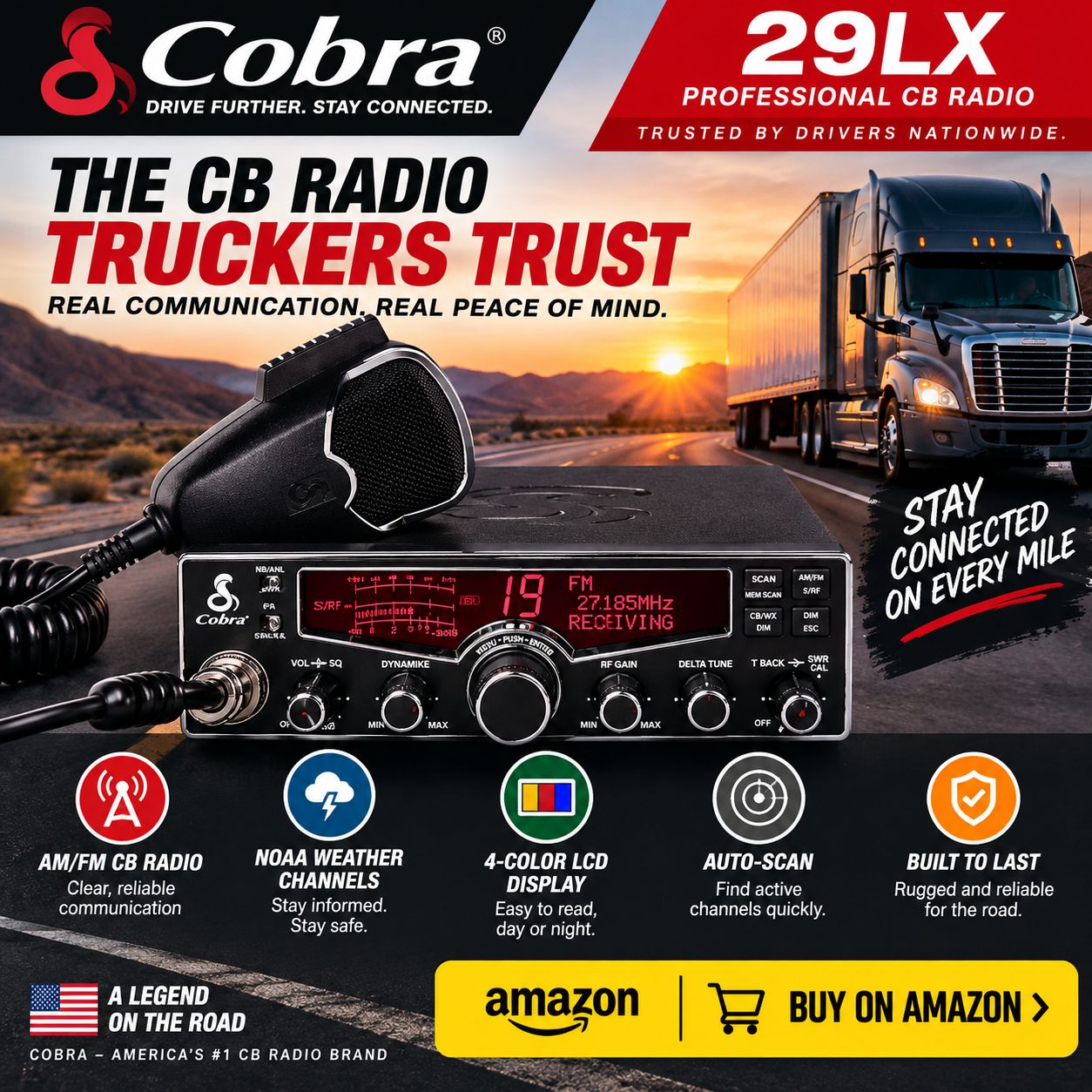
But the feature that really catches my attention for someone spending long days in a commercial truck is the built-in NOAA weather capability.
The radio can receive NOAA weather channels and monitor for emergency weather alerts. If you’re hauling grain, running rural roads, working construction, or simply spending all day on the highway, being able to get weather information without reaching for your phone is a genuinely useful feature.
It also has a selectable four-color LCD display, automatic channel scanning, and Cobra’s Radio Check diagnostic system. That system can provide information about things such as antenna SWR, RF output, and vehicle voltage.
SWR is particularly important with CB because even a great radio can perform poorly if the antenna isn’t installed and tuned correctly.
That’s why I like the Cobra 29LX as a serious truck CB setup rather than treating CB as nothing more than an old piece of trucking nostalgia.
If you’re actually going to keep a CB mounted in the truck and use it regularly, having weather alerts, antenna diagnostics, AM/FM operation, and a good display makes a lot more sense to me than saving a few dollars on a bare-bones radio.
What About Nationwide LTE Walkie-Talkies?
There’s another option now that looks a little like traditional two-way radio but works very differently.
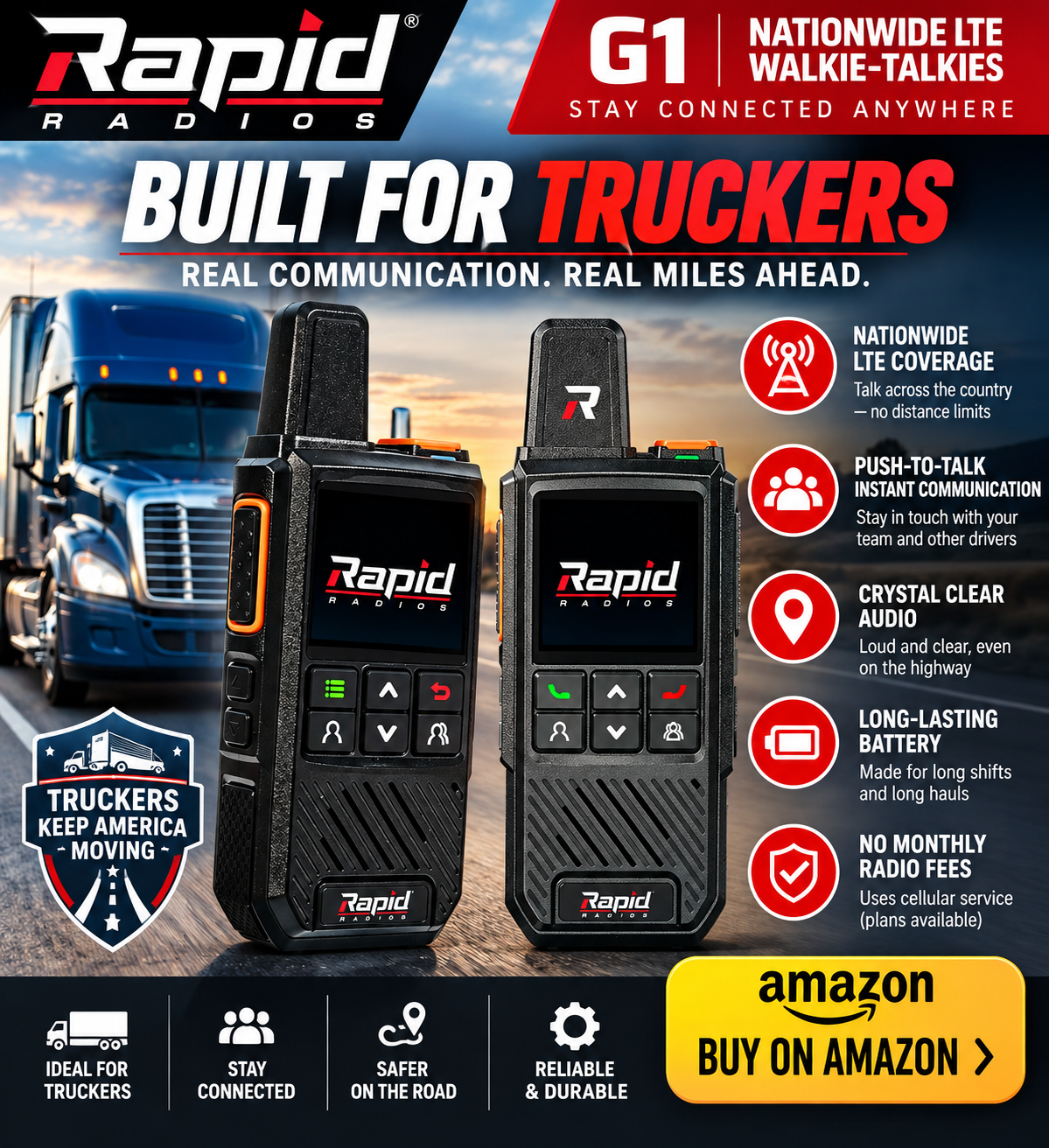
Cellular push-to-talk radios communicate over LTE networks rather than directly over CB frequencies.
That can give them a huge range advantage.
A traditional CB is mainly useful for local communication. Cellular push-to-talk radios can communicate across much greater distances wherever the required network service is available.
For a farm, business, trucking operation, or crew that needs communication far beyond ordinary CB range, something like the Rapid Radios G1 Nationwide LTE Push-to-Talk Radios may make more sense than trying to stretch a CB signal beyond what it was designed to do.
But I wouldn’t call these a replacement for CB in every situation.
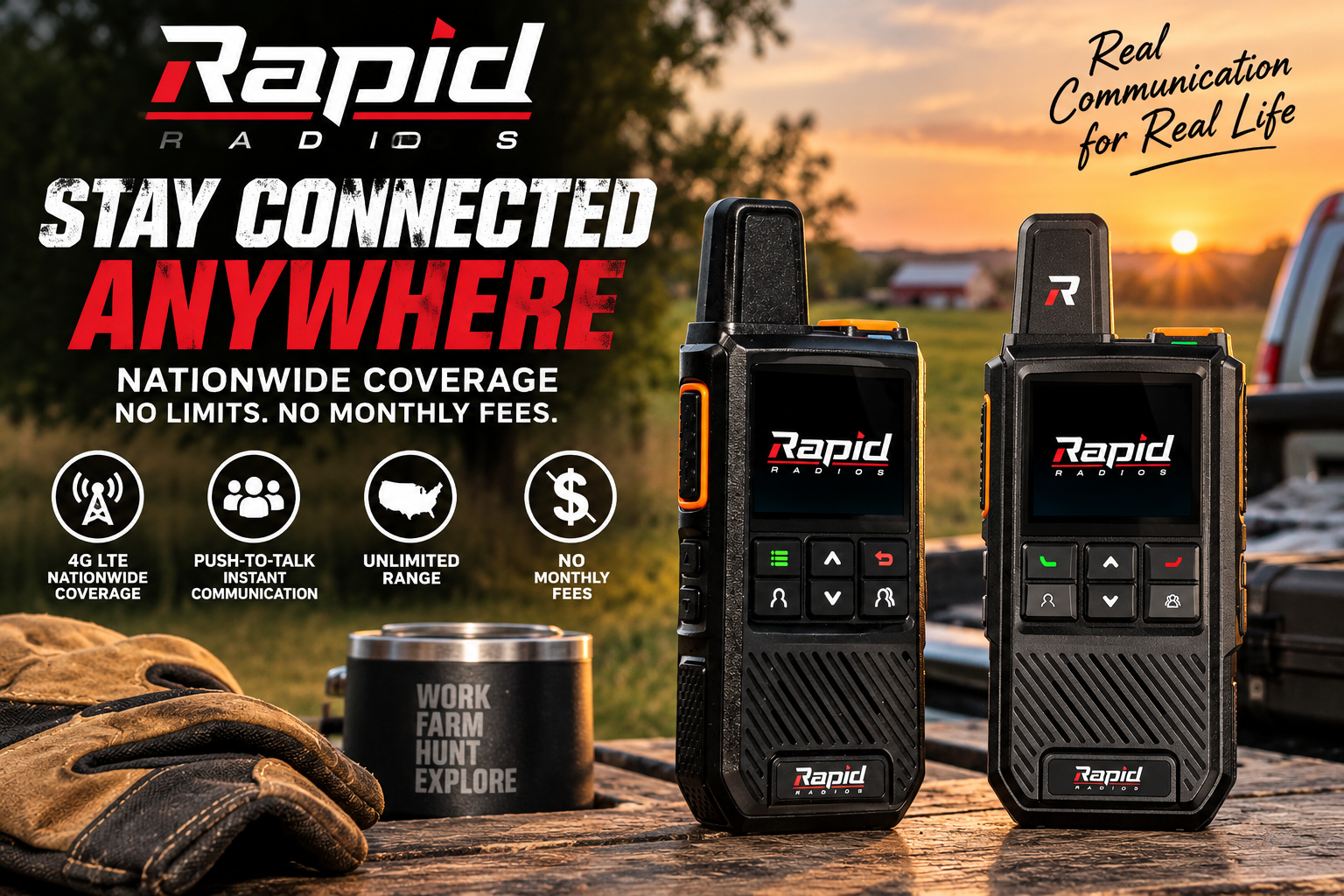
A traditional CB lets you communicate with other CB users nearby, including drivers you’ve never met.
An LTE push-to-talk radio generally communicates with compatible users within its supported system.
They’re useful for different reasons.
Don’t Forget About a Bluetooth Headset for Actual Phone Calls
There’s one more piece of communication equipment that serves a completely different purpose in a truck.
A Bluetooth headset.
I wouldn’t compare one directly with a CB because they’re solving completely different problems.
A CB is useful when you need to communicate with other drivers nearby and you don’t know who they are.
A Bluetooth headset is for those times when you actually need to talk with someone specific on your phone, whether that’s dispatch, another employee, a customer, or somebody at home.
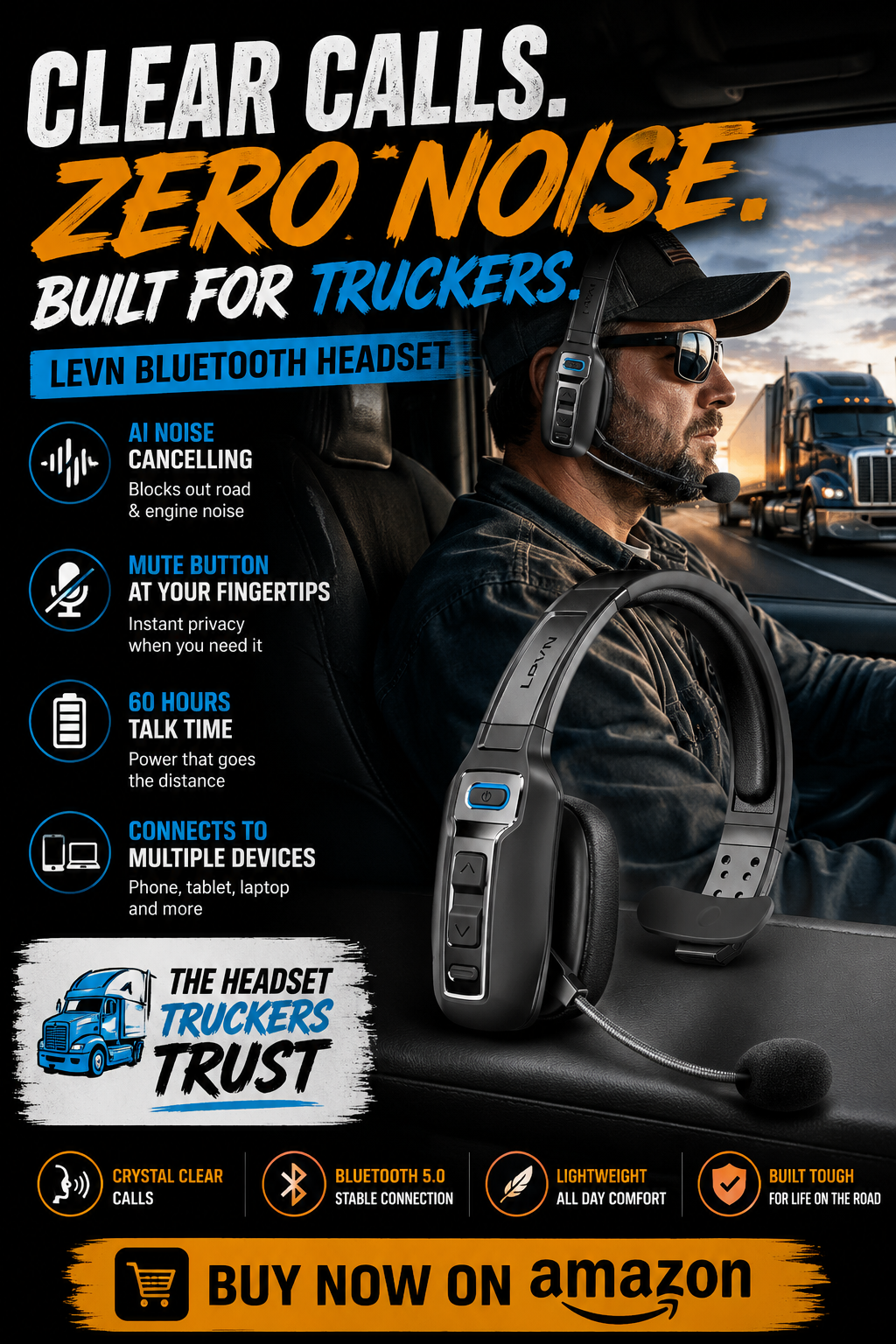
For that job, the LEVN Bluetooth Trucker Headset is the kind of headset I’d want in a noisy commercial truck.
One of the biggest reasons is noise.
A semi or dump truck cab isn’t exactly a quiet office. You’ve got the diesel engine, road noise, HVAC blower, wind, equipment outside the truck, and plenty of other background noise competing with your conversation.
This LEVN headset is designed with noise cancellation specifically for environments like that. It also has a boom microphone, mute control, dual-device Bluetooth connectivity, and up to 60 hours of advertised working time.
That long battery life matters more than it sounds like it would. If you’re working long days, the last thing you want is another device that constantly needs to be charged.
So if I were setting up communication equipment in a working truck, I wouldn’t necessarily choose between CB and Bluetooth.
I’d use them for different things.
The LEVN trucker Bluetooth headset handles phone conversations.
The CB handles nearby drivers.
And something like the LTE push-to-talk radios we discussed earlier can handle communication between your own people across much greater distances.
Three different technologies, three different jobs.
That’s a much better way to think about truck communication than trying to find one device that somehow does everything.
Does a Traditional CB Need a Monthly Plan?
No cellular service plan is required for ordinary traditional CB communication.
Once you’ve bought the radio, installed an appropriate antenna, and set the system up correctly, it communicates directly with other CB stations that are within range.
That’s one of the things people still like about it.
LTE push-to-talk equipment works differently because it relies on cellular infrastructure and whatever service arrangement applies to that particular system.
The LTE system may provide vastly greater geographic reach, while CB gives you direct local radio communication without depending on cellular coverage.
Do Truckers Need a License to Use CB?
Ordinary eligible CB operation in the United States generally doesn’t require you to apply for an individual FCC station license.
CB is authorized by rule as long as you’re eligible and follow the FCC’s operating requirements.
That doesn’t mean CB is completely unregulated.
Rules still govern equipment and operation.
But the average truck driver using legal CB equipment normally doesn’t have to take a licensing exam like an amateur radio operator would.
How Far Will a CB Reach From a Semi?
This is where you’ll hear wildly different answers.
The FCC has described typical direct CB communication as roughly five to fifteen miles, but that isn’t a promise that every installation will do it.
The antenna can make an enormous difference.
So can antenna placement, terrain, buildings, coax cable, interference, grounding, installation quality, and the setup on the other end of the conversation.
You could buy an excellent CB and still end up disappointed if the antenna installation is poor.
CB range deserves its own article because there are enough variables involved that giving everybody one mileage number would be misleading.
Don’t Spend Everything on the Radio and Ignore the Antenna
This catches a lot of beginners.
The radio gets all the attention because that’s the piece sitting inside the cab.
But the antenna system plays a huge role in how well the radio actually performs.
Mounting location matters.
Coax matters.
Grounding matters.
Antenna selection matters.
SWR matters.
A reasonably priced radio connected to a properly set up antenna can perform much better than an expensive radio attached to a terrible antenna installation.
What Does SWR Mean?
SWR stands for Standing Wave Ratio.
Without getting buried in radio theory, it gives you an indication of how well the antenna system is matched to the radio.
Poor SWR can hurt performance, and a severely mismatched antenna system can potentially damage the transmitter.
You don’t need to become a radio technician to own a CB.
But if you’re installing your own setup, understanding how to check and adjust SWR is worth learning.
We’ll cover that separately because antenna tuning can easily become an entire article by itself.
Is a CB Radio Still Worth Putting in a Semi Truck?
It depends on your job.
A driver surrounded by other trucks every day, working rural routes, running construction, hauling grain, doing heavy haul, or spending a lot of time on the highway may find one genuinely useful.
Another driver could install one and barely touch it.
That’s the reality of CB in modern trucking.
It isn’t something every professional driver absolutely needs anymore.
But it still offers one capability that’s difficult to replace.
You can press a button and immediately talk to other CB-equipped drivers around you.
When you actually need that, the radio suddenly feels a lot less outdated.
Frequently Asked Questions
Do truck drivers still talk on CB radios?
Yes. Usage isn’t as universal as it once was, but CB remains in use among truck drivers, particularly for highway, rural, and short-range communication.
What CB channel do truck drivers normally use?
Channel 19 is the channel most closely associated with truckers and highway communication in the United States.
What frequency is CB Channel 19?
CB Channel 19 operates at 27.185 MHz.
How far can a truck CB communicate?
The FCC has described typical direct communication as roughly five to fifteen miles, but actual range depends heavily on the antennas, installation, terrain, interference, and equipment at both ends.
Is a CB required in a semi truck?
No. Plenty of professional drivers operate without one. Whether it’s useful depends largely on the type of trucking and where you operate.
Will a CB work if there’s no cell service?
Yes. Traditional CB stations communicate directly by radio and don’t depend on cellular service for local communication.
Are LTE walkie-talkies basically CB radios?
No. Cellular push-to-talk radios use cellular networks. CB radios communicate directly on CB frequencies. LTE systems can provide far greater geographic reach, but the two technologies aren’t doing exactly the same job.
Is Channel 19 legally reserved for truck drivers?
No. Truckers don’t own Channel 19. It simply became the channel commonly associated with highway and trucking communication.
The Technology Changed, But One Useful Idea Never Did
Phones replaced a lot of what truckers once needed CB for.
GPS replaced radio directions.
Traffic apps replaced some road reports.
Modern dispatch systems handle communication that once would’ve been much harder.
What those technologies didn’t completely replace is the ability to communicate instantly with an unknown driver nearby.
That’s why CB radios are still hanging from truck dashboards all these years later.
You may listen for hours without hearing anything you care about.
Then someone warns you about stopped traffic, debris in the road, equipment around a blind curve, or another immediate problem ahead.
At that moment, the reason truck drivers never completely gave up on CB becomes pretty easy to understand.
Author: Tyler Grant
Tyler Grant writes about commercial truck equipment, driver communication, and everyday life behind the wheel for TruckingResource.com. His guides focus on the equipment drivers actually use and the practical reasons some older trucking technology remains useful alongside newer alternatives.