
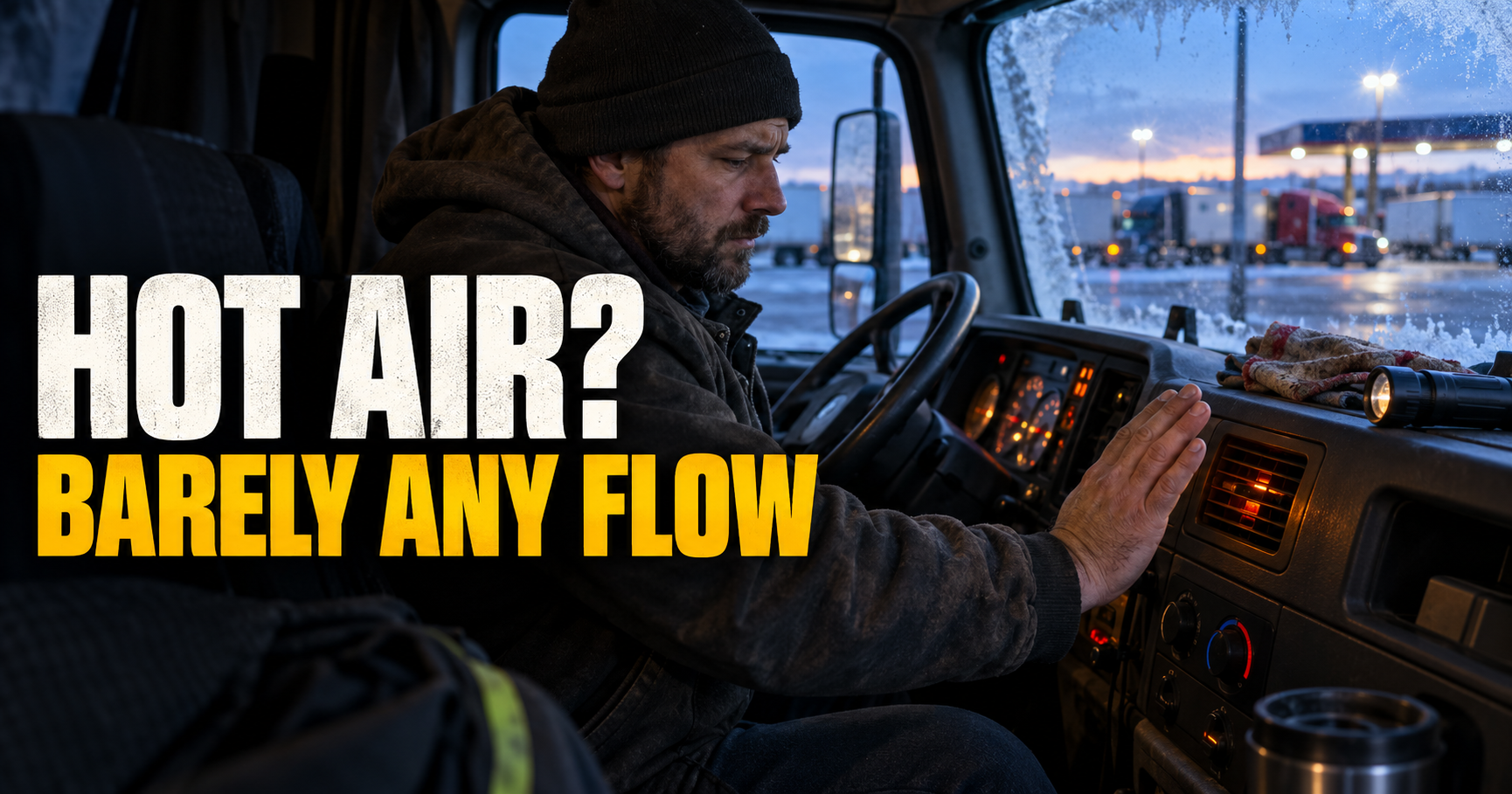
When cold weather arrives, there’s nothing worse than climbing into your Kenworth expecting a warm cab only to discover the heater is barely pushing any air through the vents.
The air itself feels hot.
The problem is that hardly any of it is reaching you.
If that sounds familiar, you’re dealing with an airflow problem rather than a heating problem.
That’s actually good news because many weak-airflow issues are much easier and less expensive to fix than problems with the engine’s cooling system or heater core.
One thing that’s worth remembering is that the heater and air conditioner share much of the same HVAC system. If you’ve already experienced weak A/C airflow, you’ll notice many of the same components can also reduce heater performance. I covered those shared airflow issues in Kenworth AC Blows Cold But Not Hard? Here’s How to Fix Weak Airflow.
First, Make Sure You’re Solving the Right Problem
There are two very different heater complaints.
The first is:
The air is hot, but there’s very little airflow.
That’s what this article covers.
The second is:
The blower moves plenty of air, but the air never gets warm.
Those two symptoms point to completely different problems.
If your heater is producing plenty of heat but barely moving any air, there’s a good chance the restriction is somewhere in the HVAC airflow system instead of the engine cooling system.



Start With the Cabin Air Filter
If I had to pick one place to begin, this would be it.
A clogged cabin air filter is one of the most common reasons both the heater and air conditioner lose airflow.
The blower motor may still be spinning at full speed.
The heater core may be producing plenty of heat.
The problem is that very little air can actually get through the dirty filter.
Kenworth recommends inspecting the cab air filter every three to six months and replacing it sooner if heater or A/C airflow becomes less efficient or the windshield fogs more easily.
If you haven’t checked yours recently, I’d start there.
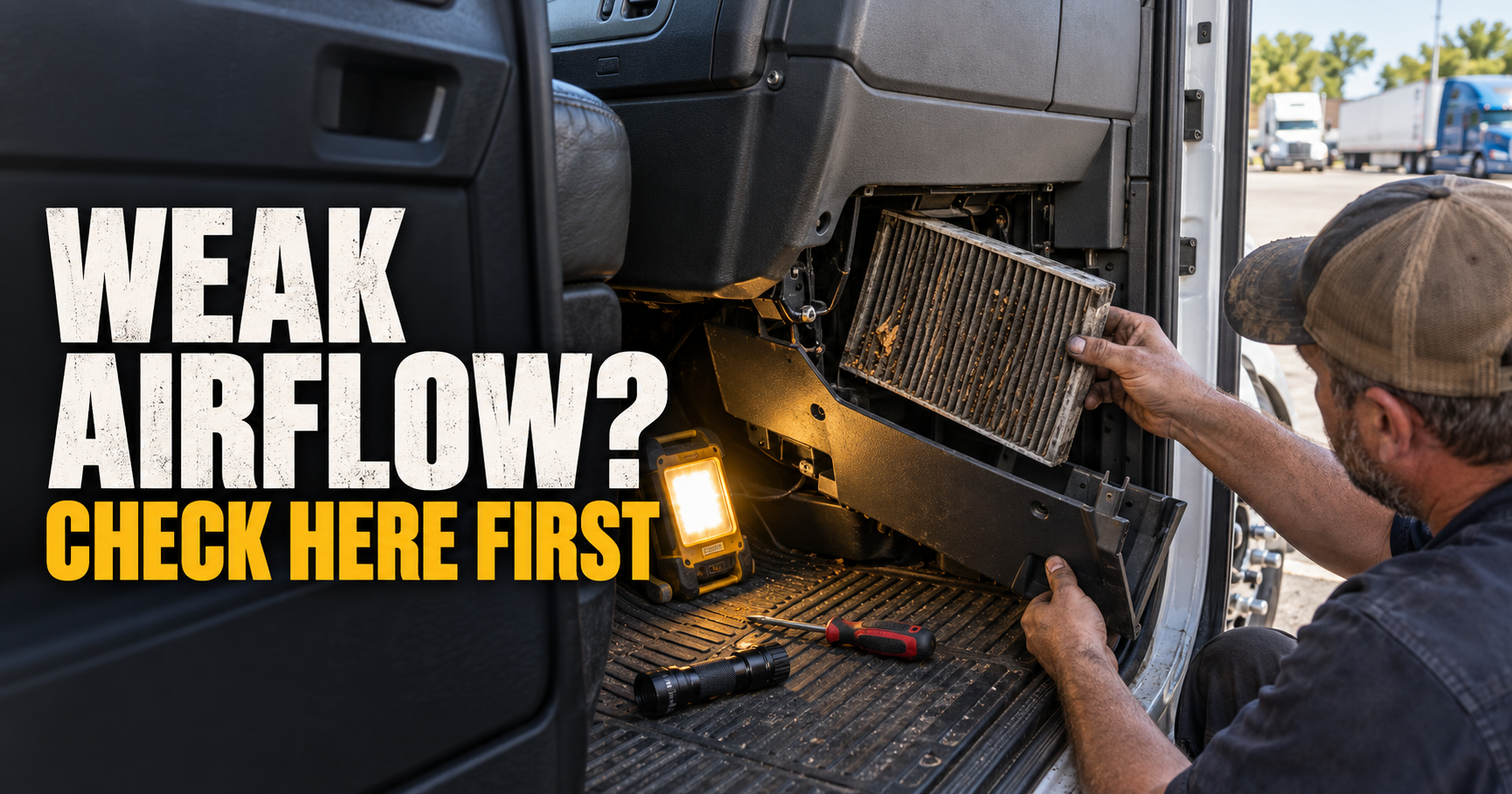
I put together a complete guide showing where the cabin air filter is located on many Kenworth models because it’s one of the easiest maintenance items to overlook.
Harvest Dust Doesn’t Only Affect the Air Conditioner
One thing I’ve noticed driving during harvest is that dust gets into everything.
Corn dust.
Chaff.
Gravel road dust.
Pollen.
Even after harvest ends, that debris doesn’t magically disappear from the HVAC system.
A filter that became partially plugged during September can still restrict heater airflow in December.
That’s one reason I think trucks that spend time around grain deserve more frequent HVAC inspections than trucks that spend all year pulling highway freight.
A Weak Blower Motor Can Reduce Airflow
Blower motors don’t always quit without warning.
Sometimes they slowly lose performance over time.
The fan still works.
You still hear it running.
It simply doesn’t move nearly as much air as it once did.
Other signs may include:
- Squealing noises.
- Grinding sounds.
- Airflow that’s weak on every fan speed.
- An electrical or burning smell.
If the cabin air filter is clean and airflow is weak regardless of which speed you choose, the blower motor deserves a closer look.



Don’t Forget About the Blower Motor Resistor
The blower motor resistor is another part that can affect how your heater performs.
However, it’s important to understand what it usually does.
A bad resistor normally causes certain fan speeds to stop working completely.
For example:
- Low doesn’t work.
- Medium doesn’t work.
- Only high works.
If every fan speed still works but the airflow is weak across all of them, I’d spend my time checking the cabin air filter, blower motor, and HVAC box before replacing the resistor.
Knowing that difference can save a lot of unnecessary parts swapping.
Debris Around the Blower Wheel Can Reduce Airflow
Harvest creates a tremendous amount of debris.
Corn leaves.
Dust.
Chaff.
Small sticks.
Seeds.
Over time, some of that material can find its way into the blower housing.
If debris builds up around the blower wheel, it can reduce the amount of air the fan is capable of moving.
The motor may sound completely normal.
The heater may produce plenty of heat.
But airflow through the vents will still feel disappointing.
Cleaning the blower housing isn’t always the first thing people think about, but it can make a noticeable difference on trucks that spend their lives around grain dust.
A Blend Door Can Also Restrict Heat
Inside the HVAC box are several doors that control where the air goes.
If one of those doors sticks or its actuator fails, heated air may not be directed where it’s supposed to go.
Some common symptoms include:
- Heat coming from the defroster instead of the dash vents.
- Air changing outlets by itself.
- Different temperatures from different vents.
- Inconsistent airflow.
If the air isn’t coming from the vents you’ve selected, I’d definitely inspect the blend and mode doors before assuming something is wrong with the heater core.
Don’t Automatically Blame the Heater Core
A lot of people hear “poor heat” and immediately think the heater core is plugged.
Sometimes that’s true.
But if your heater is producing hot air, even though the airflow is weak, the heater core is usually doing its job.
A restricted heater core more often causes:
- Lukewarm heat.
- Heat that changes while driving.
- One heater hose much hotter than the other.
- Poor heating even with strong airflow.
If your truck has plenty of heat but very little airflow, I’d focus on the HVAC air delivery system first.



My Troubleshooting Order
If my Kenworth heater suddenly started blowing hot air with weak airflow tomorrow morning, here’s exactly how I’d approach it.
- Inspect the cabin air filter.
- Check the fresh-air intake for leaves and debris.
- Inspect the blower wheel for harvest dust and chaff.
- Listen to the blower motor on every speed.
- Verify all fan speeds operate correctly.
- Check that the blend and mode doors move properly.
- Only then would I start investigating the heater core or deeper HVAC issues.
Starting with the simplest checks often saves both time and money.
Weak Heat in Winter May Actually Begin During Harvest
One thing I’ve started thinking about after driving through harvest is how many HVAC problems actually begin months before winter arrives.
Dust doesn’t disappear after harvest.
If the cabin air filter becomes packed with corn dust in September and never gets replaced, you’ll probably notice it much more once cold weather arrives and you’re relying on the heater every morning.
That’s one reason I think fall is one of the best times to inspect the HVAC system instead of waiting until the first freezing morning.
Frequently Asked Questions
Why is my Kenworth heater hot but barely blowing?
The most common causes are a clogged cabin air filter, debris around the blower wheel, a weak blower motor, or an HVAC airflow door problem.
Can a dirty cabin air filter affect the heater?
Absolutely.
The same cabin air filter affects airflow for both the heater and the air conditioner.
If it becomes plugged, both systems can feel weak even though they’re producing the correct temperature.
Why does my heater work on high but not on lower fan speeds?
That’s often a sign of a failing blower motor resistor. The resistor controls the lower fan speeds, while high speed usually bypasses it.
Should I replace the blower motor before checking the filter?
No.
The cabin air filter is much easier and less expensive to inspect first.
I’d always eliminate the simple possibilities before replacing major components.
Sometimes the Cheapest Repair Is the Right One
Weak heater airflow doesn’t always mean you’re facing an expensive repair.
Many times the problem comes down to restricted airflow rather than a lack of heat.
A dirty cabin air filter.
Harvest debris around the blower.
A worn blower motor.
A blend door that’s not moving correctly.
Working through those possibilities one step at a time gives you the best chance of fixing the problem without replacing parts that weren’t actually bad.
If your heater is hot but the airflow just isn’t there, start with the simple things.
You might be surprised how often the fix is easier than you expected.
Author: Jake Harrison
Jake Harrison is a commercial transportation writer for TruckingResource.com who specializes in CDL maintenance, truck systems, commercial vehicle equipment, and practical repair guides. He works with the TruckingResource.com editorial team to create detailed, beginner-friendly maintenance guides that help drivers diagnose common truck problems with confidence.