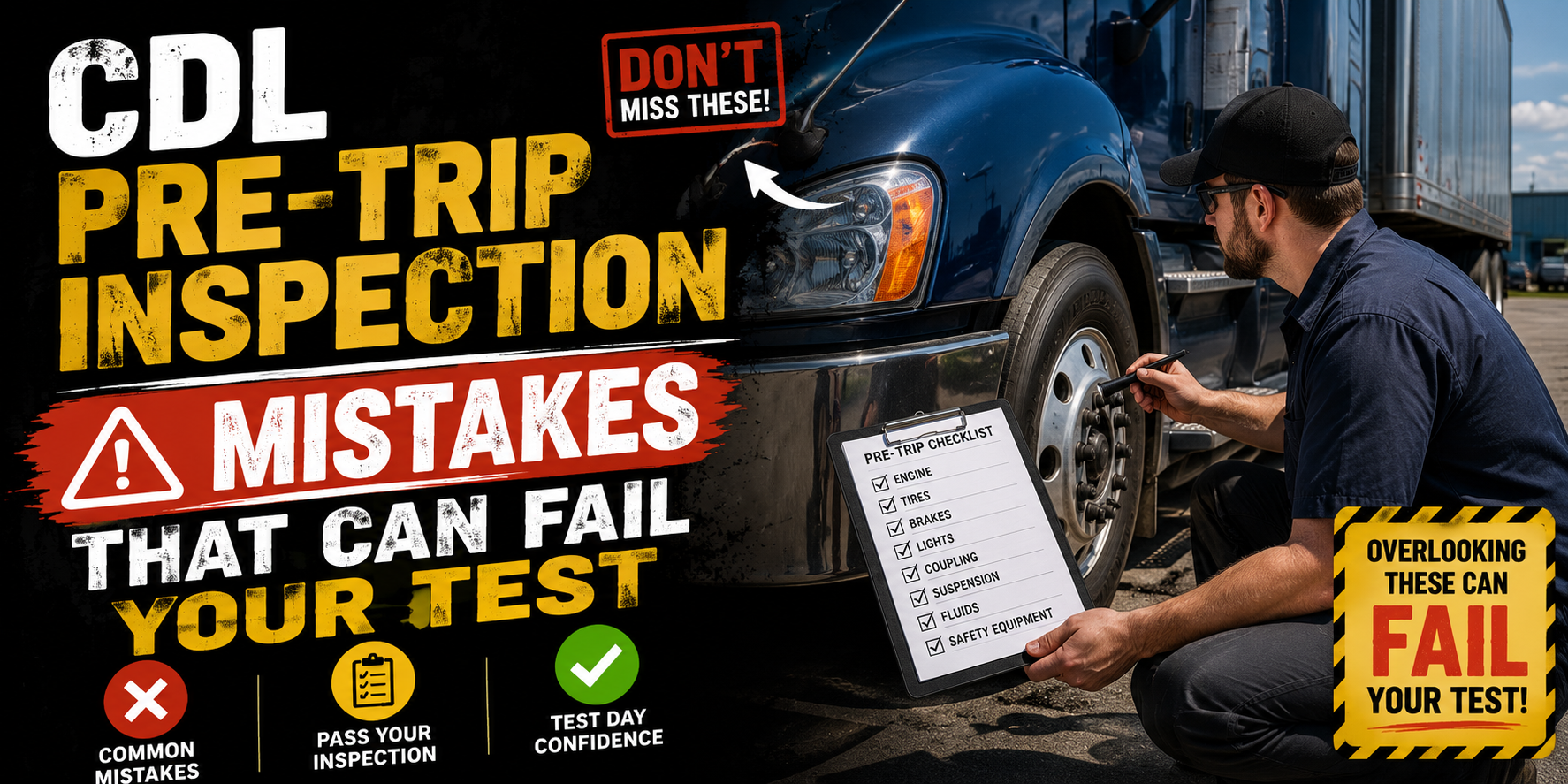
If you’re halfway through your CDL pre-trip inspection and suddenly realize you forgot to mention something, it’s easy to panic.
Did I just fail?
Maybe not.
One of the biggest misconceptions about the CDL skills test is that you have to stand beside the truck and deliver one absolutely perfect memorized speech from beginning to end.
That’s not really the best way to think about what you’re being tested on.
The examiner needs to determine whether you understand how to inspect a commercial vehicle and recognize conditions that could make that vehicle unsafe to operate. A complete What Happens During a CDL Pre-Trip Inspection? can help you understand what the examiner is evaluating from start to finish.
Some mistakes may count against your score.
Other mistakes can be much more serious.
And depending on your state’s testing procedures, certain safety-critical errors can potentially prevent you from successfully completing that portion of the test.
The exact procedures, scoring, and required inspection items can vary by state, vehicle type, testing location, and which CDL skills testing system is being used. Always use your state’s current CDL manual and official testing requirementsas your final authority. Because testing requirements can change, review our testing information disclaimer before relying on any CDL guidance published here.
But regardless of where you’re testing, there are several mistakes you absolutely want to avoid.
If you’re still learning the inspection from beginning to end, start with our CDL pre-trip inspection resources first. This guide is different. We’re focusing specifically on the mistakes that can hurt you when test day arrives. A complete CDL Pre-Trip Inspection Checklist (Complete Guide) provides the broader inspection foundation before you focus on test-day mistakes.
Mistake #1: Memorizing a Speech Without Understanding the Truck
This may be the biggest mistake of all.
CDL students hear certain phrases repeatedly during training:
“Properly mounted and secured.”
“Not cracked, bent, or broken.”
“No abrasions, bulges, or cuts.”
Those phrases aren’t inherently bad.
In fact, some are useful ways to describe the conditions you’re checking.
The problem starts when you memorize them so mechanically that you stop understanding what you’re actually inspecting.
Know Why Each Component Matters
Imagine pointing toward a component and confidently saying:
“It’s not cracked, bent, or broken.”
But that’s not even the primary condition you’re supposed to be checking on that particular component.
You’ve memorized words, but you haven’t demonstrated understanding.
A better way to study is to ask yourself three questions whenever you learn an inspection item:
- What does this component do?
- What could be wrong with it?
- Why would that problem make the vehicle unsafe?
Once you understand those three things, the inspection becomes much easier to remember.
You’re no longer memorizing hundreds of disconnected words.
You’re inspecting a truck.

Mistake #2: Rushing Because the Examiner Is Watching You
Nerves make people do strange things.
You’ve practiced your pre-trip dozens of times.
Then the examiner stands beside you with a clipboard and suddenly you start talking twice as fast as normal.
That’s when things get skipped.
Your CDL pre-trip inspection isn’t a race.
There generally isn’t some prize for finishing faster than everyone else.
Follow the Same Routine You Practiced
If you normally begin at one location and systematically work your way around the vehicle, keep doing that.
Don’t invent a completely different inspection routine on test day.
A consistent pattern helps your brain recognize when something is missing.
For example, you might mentally organize the vehicle into areas such as:
- Engine compartment
- Front suspension and steering
- Brakes
- Tires and wheels
- Side of vehicle
- Coupling system
- Trailer
- Lights and reflectors
- In-cab inspection
The exact sequence you use should match the training and testing requirements you’re following.
The important thing is consistency.
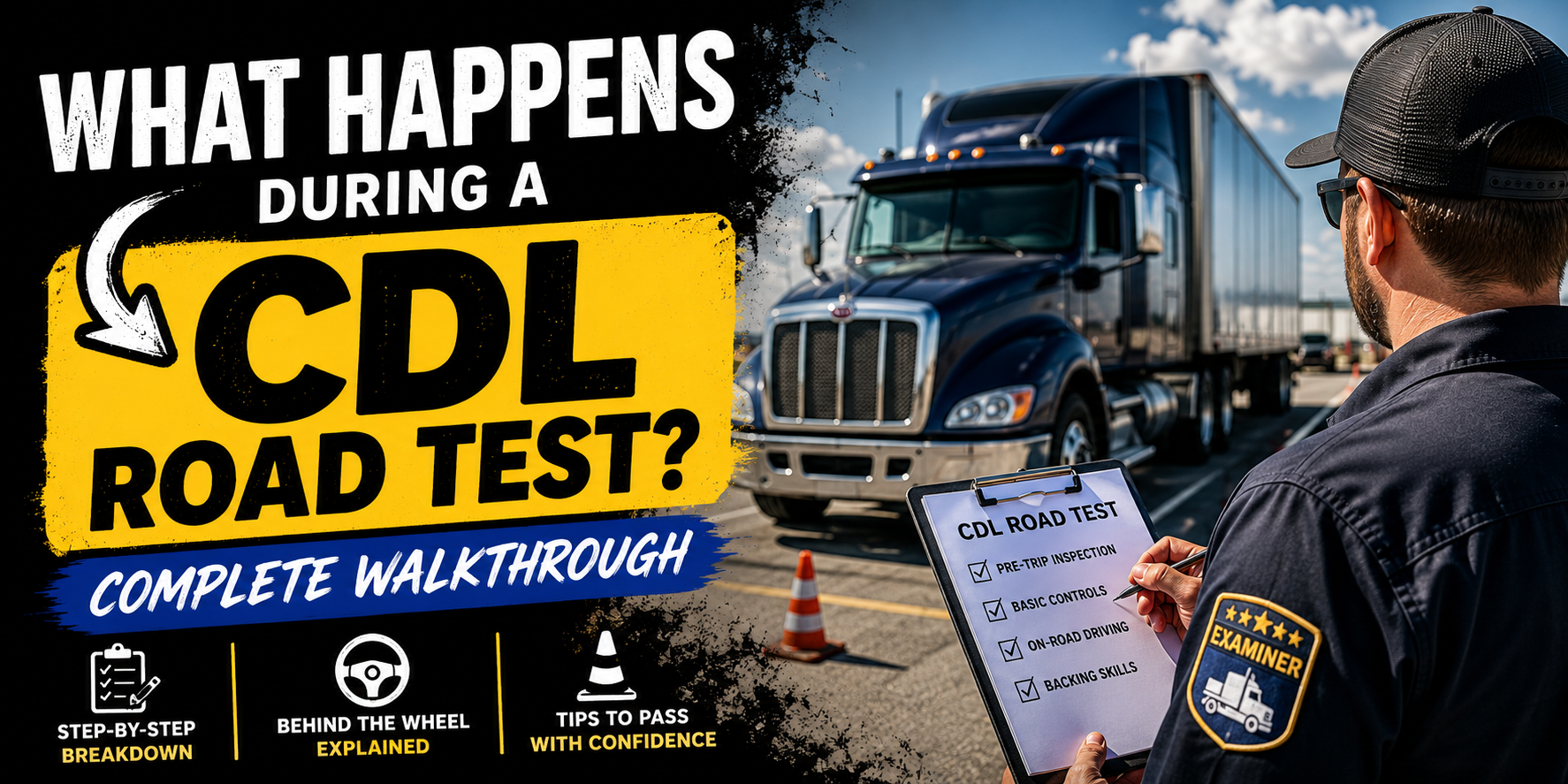
If you want to see how the inspection fits into the entire hands-on CDL testing process, our complete CDL road test walkthrough explains what generally happens as you move from inspection-related testing into basic vehicle control and actual on-road driving.

Mistake #3: Not Knowing Your Brake Checks
If there’s one area where you don’t want to guess, it’s the braking system.
Brakes are among the most safety-critical systems on any commercial motor vehicle.
If you’re testing in an air-brake-equipped vehicle, you need to know the procedures required for the test you’re taking.
Understand What Each Air Brake Check Is Proving
Depending on your vehicle and testing procedure, you may need to demonstrate or explain checks involving areas such as:
- Air-pressure buildup
- Low-air warning devices
- Emergency or spring-brake operation
- Air leakage
- Service-brake operation
Don’t memorize the sequence without understanding what it means.
Take the low-air warning, for example.
The warning system exists because a driver needs to know before air pressure falls to a dangerously low level.
Once you understand why each check exists, remembering the procedure becomes much easier.
Our Air Brakes study resources are worth reviewing if this is one of your weaker areas. The written Air Brakes test and the physical inspection aren’t identical, but understanding how the system actually works makes the inspection procedures far less confusing.
Mistake #4: Giving Tires and Wheels a Quick Glance
Pointing toward a tire and saying “looks good” isn’t demonstrating much.
Tire and wheel problems can cause serious crashes, breakdowns, and out-of-service conditions.
You need to understand what you’re looking for.
Know the Tire Conditions That Matter
Depending on the inspection requirements you’re following, you’ll generally be concerned with things such as tire condition, inflation, tread, and serious visible damage.
For CDL study purposes, one important federal minimum to remember is 4/32 inch tread depth on front steering axle tires and 2/32 inch on other tires, measured in the applicable major tread grooves.
You should also understand why conditions such as exposed cords, significant cuts, or bulges are concerning.
Don’t Forget the Wheel
The tire isn’t the entire inspection.
You may also need to evaluate areas such as:
- Rims
- Lug nuts
- Hub seals
- Oil or grease leakage where applicable
- Other required wheel components
Don’t simply memorize a list.
Think about what would happen if a wheel component were loose, damaged, leaking, or improperly secured while traveling at highway speed.
That makes the importance much easier to remember.
Mistake #5: Treating Steering and Suspension Like Random Vocabulary
Steering and suspension components can become a blur when you’re first learning a pre-trip.
Pitman arm.
Drag link.
Tie rods.
Leaf springs.
Spring hangers.
Shock absorbers.
Air bags.
Instead of memorizing names without context, think about what these systems actually do.
Steering Components Help You Control the Vehicle
Depending on the component, you may be looking for conditions such as damage, looseness, missing hardware, leaks where applicable, or anything else required by your inspection procedure that could affect safe steering.
If you can’t reliably control where a commercial vehicle is going, you have a major safety problem.
Suspension Supports and Stabilizes the Vehicle
Suspension components help support the vehicle and its load while maintaining stability and proper vehicle control.
Problems such as broken or shifted springs, damaged mounts, missing hardware, or damaged air-suspension components can be serious.
Understanding the system makes remembering the individual components much easier.
Mistake #6: Rushing Through the Fifth Wheel and Coupling System
If you’re testing with a tractor-trailer combination, don’t treat the coupling inspection as something to rush through.
An improperly coupled trailer can separate from the tractor.
That’s not merely a testing technicality.
That’s a potentially catastrophic real-world failure.
Understand What Proper Coupling Looks Like
Depending on your test and vehicle, your inspection may involve areas such as:
- Fifth-wheel mounting
- Locking mechanism
- Kingpin
- Trailer apron
- Air connections
- Electrical connection
- Landing gear
You need to understand how these components work together.
For example, you should understand why the locking mechanism must properly secure the kingpin and why an improper gap between the trailer apron and fifth wheel could indicate a coupling problem.
If combination vehicles are still confusing, go back through your Combination Vehicles study material rather than trying to memorize coupling terminology without understanding how the tractor and trailer connect.
Mistake #7: Forgetting Lights, Reflectors, and Emergency Equipment
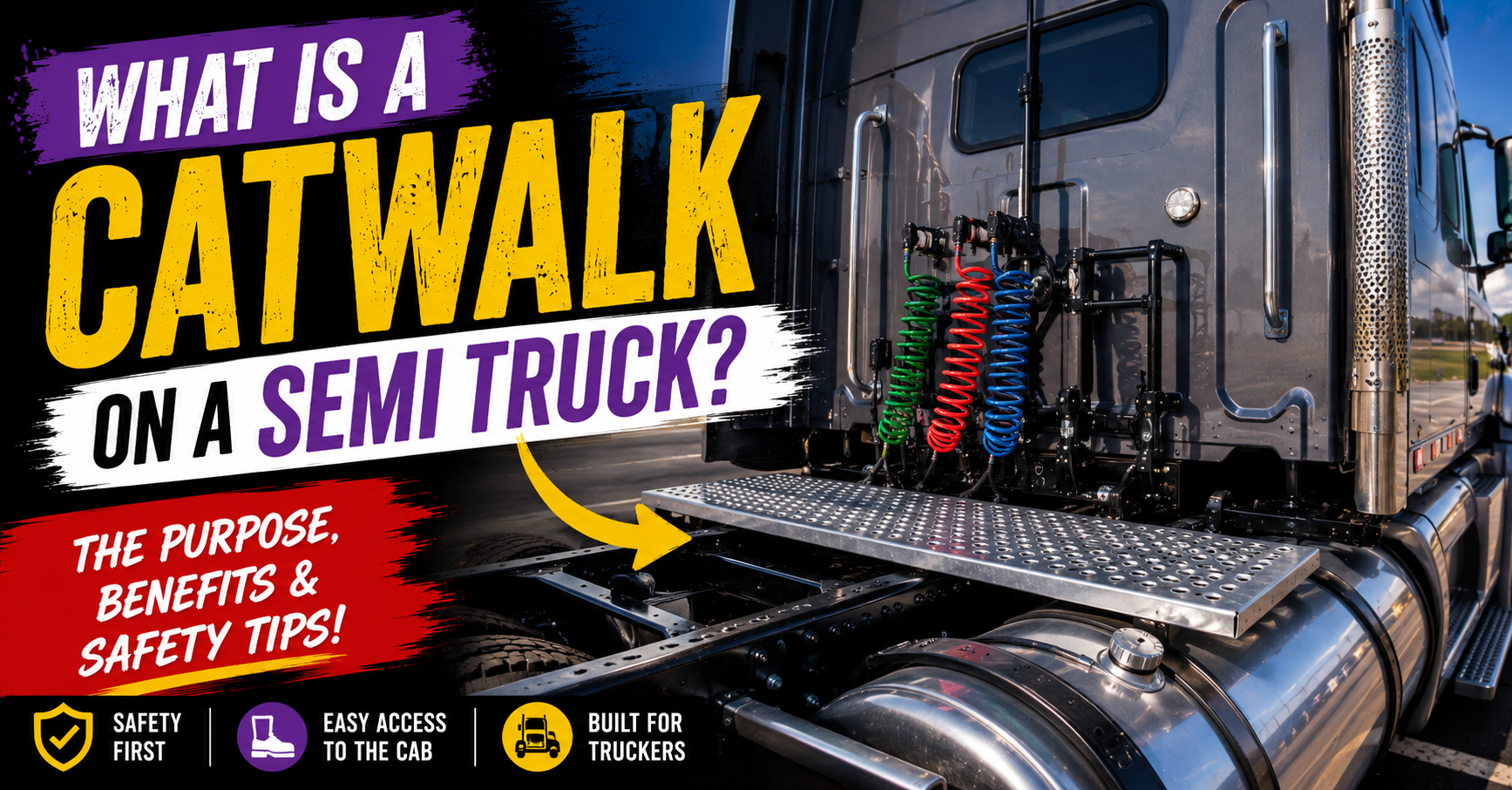
Students often spend so much time studying the engine compartment, brakes, and coupling system that they rush through everything else. Understanding the platform behind the cab can also make coupling-system inspections easier to visualize: the platform behind the cab.
Don’t.
Lights, reflectors, and emergency equipment exist for real safety reasons.
Think About the Real-World Purpose
If your truck is disabled at night, other motorists need to see you.
If there’s an emergency, you need the required equipment to respond appropriately and warn approaching traffic.
Depending on the vehicle and testing requirements, you may need to identify or inspect required lighting, reflectors, warning devices, and appropriate emergency equipment such as a fire extinguisher.
When you understand why the equipment is required, remembering it becomes easier than memorizing another disconnected list.
Mistake #8: Panicking When You Realize You Forgot Something
This is a big one.
You’re halfway through your inspection.
Suddenly your brain says:
“Wait. I forgot something back there.”
Now you’re barely paying attention to what you’re currently inspecting because you’re mentally replaying the mistake.
Don’t let that happen.
One Mistake Shouldn’t Create Five More
Whether you’re permitted to return to something you omitted, how that omission is scored, and whether a specific mistake ends that portion of testing depends on the procedures being used where you’re testing.
Follow the examiner’s instructions.
Continue performing the inspection as accurately as possible.
Don’t decide for yourself that you’ve failed.
The examiner determines your score.
Your job is to stay focused.
This same mindset becomes important later during the driving portion. As we explain in our CDL road test walkthrough for beginners, one of the worst things you can do after a small mistake is mentally give up and allow it to cause several additional errors.

Mistake #9: Studying an Outdated CDL Pre-Trip Checklist
This problem has become increasingly important because CDL testing procedures have changed over time.
You can find countless pre-trip videos, cheat sheets, scripts, and forum posts online.
Some are excellent.
Some were created years ago.
Don’t automatically assume the exact procedure shown in an old video is identical to the test you’ll take today.
Your Current State CDL Manual Comes First
Use your state’s current official CDL manual and testing information as your primary reference.
Then use training materials, videos, practice resources, and study guides to help you understand and remember that information.
This is especially important for exact testing procedures.
A helpful YouTube instructor might live 1,500 miles away and be explaining the process used in a different state or under an older testing procedure.
Learn from multiple resources, but know which source has the final say for your test.
Mistake #10: Studying the Pre-Trip Only From a Piece of Paper
You can read “slack adjuster” 100 times.
That’s different from standing beside an actual commercial vehicle, finding it, pointing to it, and understanding how it relates to the braking system.
Whenever your training situation allows it, practice around a real vehicle.
Physically Identify the Components
Point to them.
Say their names.
Explain what you’re checking.
Look at how the systems connect.
Find the brake chamber.
Follow the air lines.
Look at the steering linkage.
Inspect the suspension.
Look at the fifth wheel.
Examine an actual tire and wheel.
Once you’ve physically seen these components repeatedly, they stop feeling like random vocabulary from a CDL manual.
You start seeing the truck as a collection of connected systems.
That’s when the pre-trip begins making much more sense.
The Biggest Pre-Trip Mistakes Usually Come Back to Understanding
When you look at these mistakes together, there’s a pattern.
Students get into trouble when they:
- Rush.
- Memorize without understanding.
- Skip safety-critical systems.
- Change their routine under pressure.
- Study outdated information.
- Panic after a mistake.
The solution isn’t simply memorizing an even longer script.
It’s understanding the vehicle well enough that your inspection has a logical purpose.
You’re asking:
Is this truck safe to drive?
That’s what a real pre-trip inspection is supposed to determine.
What Should You Focus on Most Before Test Day?
Start with your state’s current requirements.
Know exactly what testing procedure you’re preparing for.
Then build a consistent routine.
Understand Before You Memorize
Know what each major component does and what unsafe conditions you’re trying to identify.
Spend Extra Time on Safety-Critical Systems
Pay particular attention to areas such as brakes, steering, tires and wheels, suspension, and coupling equipment where applicable.
Practice Around a Real Vehicle
Don’t rely entirely on reading or watching videos.
Physical repetition helps connect names to actual components.
Slow Down
You don’t need to impress the examiner with how quickly you can talk.
You need to demonstrate that you know how to inspect a commercial vehicle.
What Happens After You Complete the Pre-Trip Portion?
The pre-trip isn’t the end of CDL skills testing.
Depending on where you are in the process, you’ll also need to demonstrate basic vehicle control and eventually operate the commercial vehicle on public roads.
That’s where the skills you’ve been learning begin working together.
You’ll need to control the vehicle, use your mirrors, manage turns, maintain safe speed and following distance, recognize traffic hazards, and make safe decisions while the examiner evaluates your driving.
Before test day, read our complete walkthrough of what happens during a CDL road test so you understand what generally comes after inspection-related testing and what the examiner will be looking for once you’re actually behind the wheel.
Knowing the entire process can make test day feel much less intimidating.
Frequently Asked Questions About CDL Pre-Trip Mistakes
Will forgetting one item automatically fail my CDL pre-trip test?
Not necessarily. How omissions are scored depends on your state’s current testing procedure and the specific item involved. Don’t assume one forgotten phrase means you’ve automatically failed. Continue following the examiner’s instructions and complete the test as accurately as possible.
Do I have to say everything exactly like the CDL manual?
You need to demonstrate the knowledge required by your testing procedure, but focusing entirely on memorizing exact wording can make the inspection harder. Understanding what you’re inspecting, what defects you’re looking for, and why those defects matter is much more useful than repeating words you don’t understand.
What are the most important parts of a CDL pre-trip inspection?
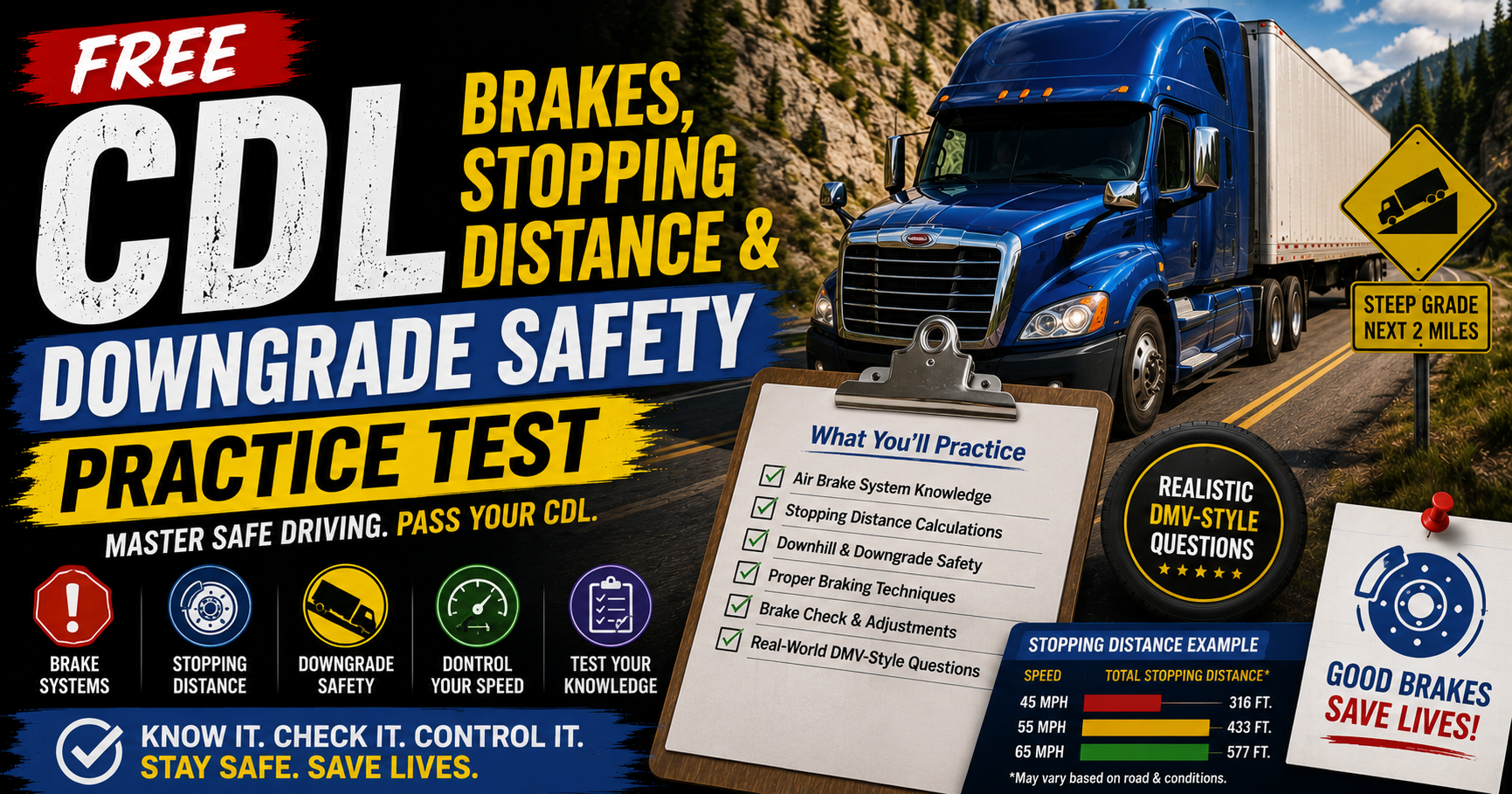
Every required portion matters, but safety-critical systems deserve particular attention. Brakes, steering, tires and wheels, suspension, and coupling equipment on combination vehicles can all have serious safety consequences if something is wrong. Test your understanding of one of those critical systems with this brakes and stopping-distance quiz.
Can I go back if I forgot to inspect something?
That depends on the testing procedure and examiner instructions where you’re taking the test. Don’t assume you’re allowed to jump backward whenever you want. Follow the examiner’s directions and know your state’s current testing rules beforehand.
Can I fail because I used the wrong terminology?
Testing isn’t simply a vocabulary contest, but you do need to correctly identify and explain required components and conditions. Using memorized phrases incorrectly can demonstrate that you don’t understand what you’re inspecting, which is why learning the actual systems matters.
Should I memorize a CDL pre-trip script?
A structured script can help you maintain a consistent inspection order, but don’t make it your entire study strategy. Use repetition to organize the inspection while also learning what each component does and what unsafe conditions you’re checking for. Pairing that hands-on preparation with broader CDL study practice can help reinforce the wider knowledge tested on the permit exam.
Don’t Let One Small Mistake Throw Off Your Entire Test
The CDL pre-trip inspection can feel overwhelming because there’s so much information packed into one part of the testing process.
But underneath all the terminology, the purpose is straightforward.
You need to demonstrate that you can recognize whether a commercial vehicle is safe to operate.
Take your time.
Use a consistent routine.
Understand what you’re inspecting.
Know your state’s current requirements.
Pay close attention to safety-critical systems.
And if you realize you made a small mistake, don’t mentally quit.
Stay focused on the next component and continue doing the best inspection you can.
Once you’re comfortable with the inspection itself, make sure you’re also preparing for what comes next. Our What Happens During a CDL Road Test Complete Walkthrough takes you through the rest of the process so you can walk into test day understanding the bigger picture.
Author: Tyler Brooks
Tyler Brooks has worked around commercial trucks and CDL training for more than a decade, helping new drivers better understand vehicle inspections, CDL testing, and the safety habits they’ll need once they begin driving professionally. His focus is making complicated CDL material easier to understand without reducing it to meaningless memorization.