If you’ve ever watched a tractor back under a trailer, you’ve witnessed one of the most important connections in the trucking industry.
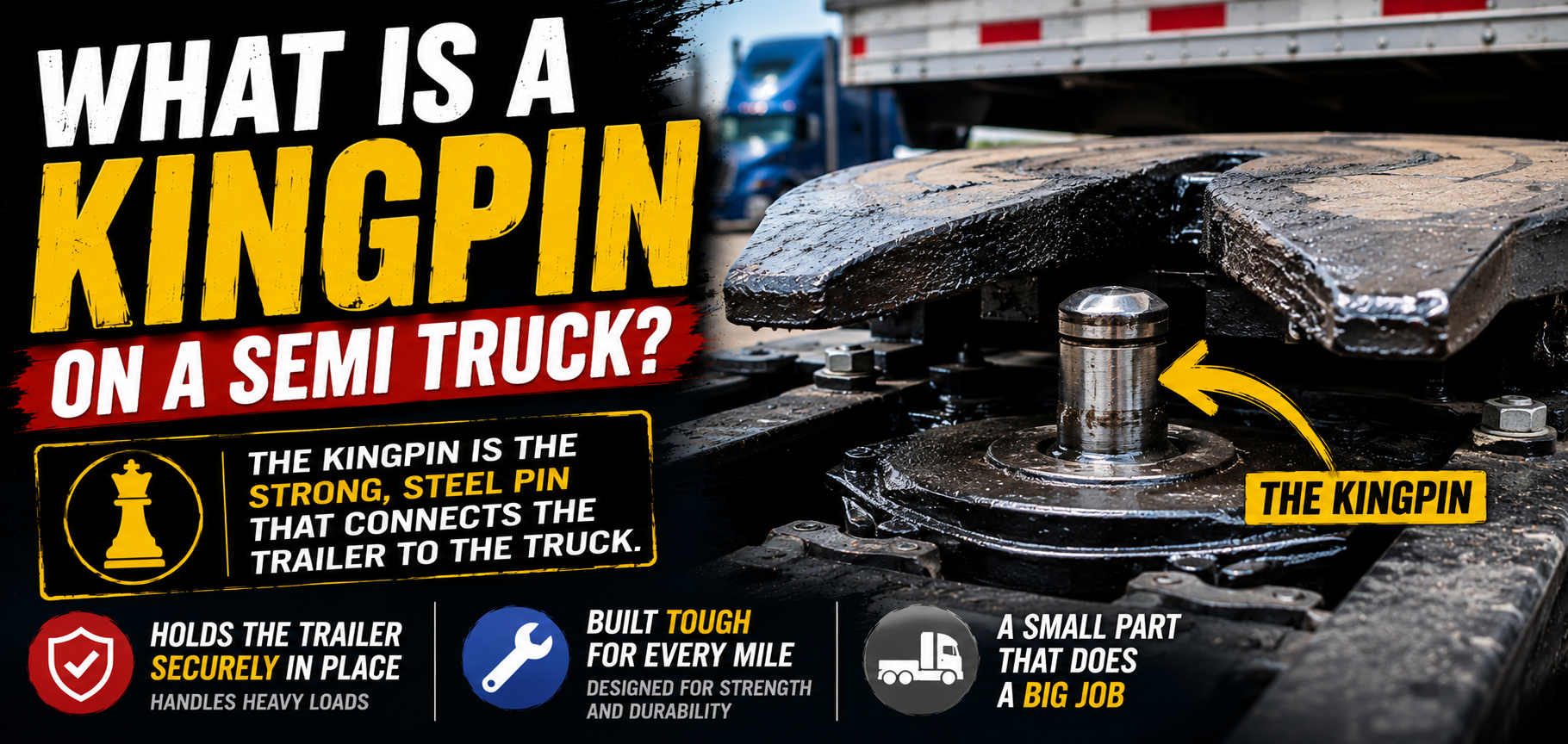
That connection is made by the kingpin.
It isn’t a flashy piece of equipment, and most people driving down the highway never notice it. But without a kingpin, every semi truck hauling a trailer would be sitting still.
After more than 25 years behind the wheel, I can tell you this little piece of hardened steel deserves a lot more respect than it gets. Every load I’ve hauled has depended on the kingpin doing its job correctly.
If you’re studying for your CDL or you’re simply trying to understand how tractor-trailers work, this is one trucking term you’ll definitely want to know.
What Is a Kingpin?
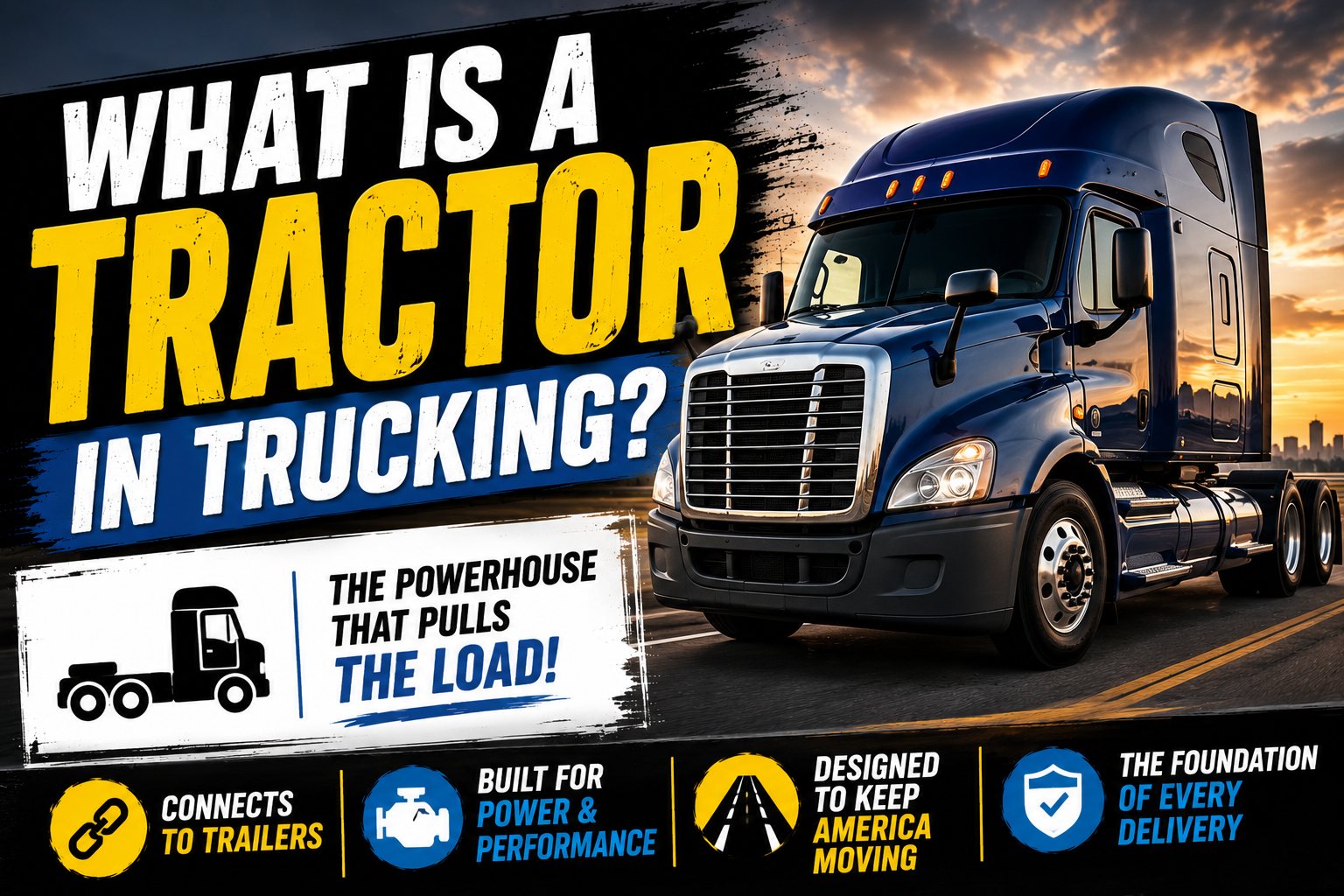
A kingpin is a heavy-duty steel pin permanently attached to the underside of the front of a semi-trailer. Its counterpart is the powered What Is a Tractor in Trucking?, whose fifth wheel locks around the kingpin.
Its job is simple but incredibly important.
The kingpin slides into the tractor’s fifth wheel, where locking jaws grab it securely and connect the trailer to the truck. Once locked in place, it becomes the pivot point that allows the trailer to follow the tractor through turns while keeping the two connected.
Without a properly connected kingpin, the trailer cannot be safely hauled.
Where Is the Kingpin Located?
Unlike the fifth wheel, which is mounted on the tractor, the kingpin is part of the trailer.
You’ll find it underneath the trailer’s upper coupler plate near the very front.
When you’re backing under a trailer, you’re actually lining up your fifth wheel so its opening captures the kingpin.
Once everything is aligned correctly, the fifth wheel’s locking mechanism automatically secures it around the kingpin.

How the Kingpin Works
Every time you hook to a trailer, the same basic process happens.
The tractor backs under the trailer.
The kingpin enters the throat of the fifth wheel.
The locking jaws close around the narrow section of the kingpin.
Once everything is locked, the trailer becomes securely attached to the tractor while still being able to pivot during turns.
It’s an incredibly simple design, but it’s one that’s proven itself for decades.
The Kingpin and the Fifth Wheel Work Together
One thing I always explain to new drivers is that the kingpin and fifth wheel aren’t separate systems.
They’re partners.
The fifth wheel is mounted on the tractor.
The kingpin is mounted on the trailer.
Without one, the other can’t do its job.
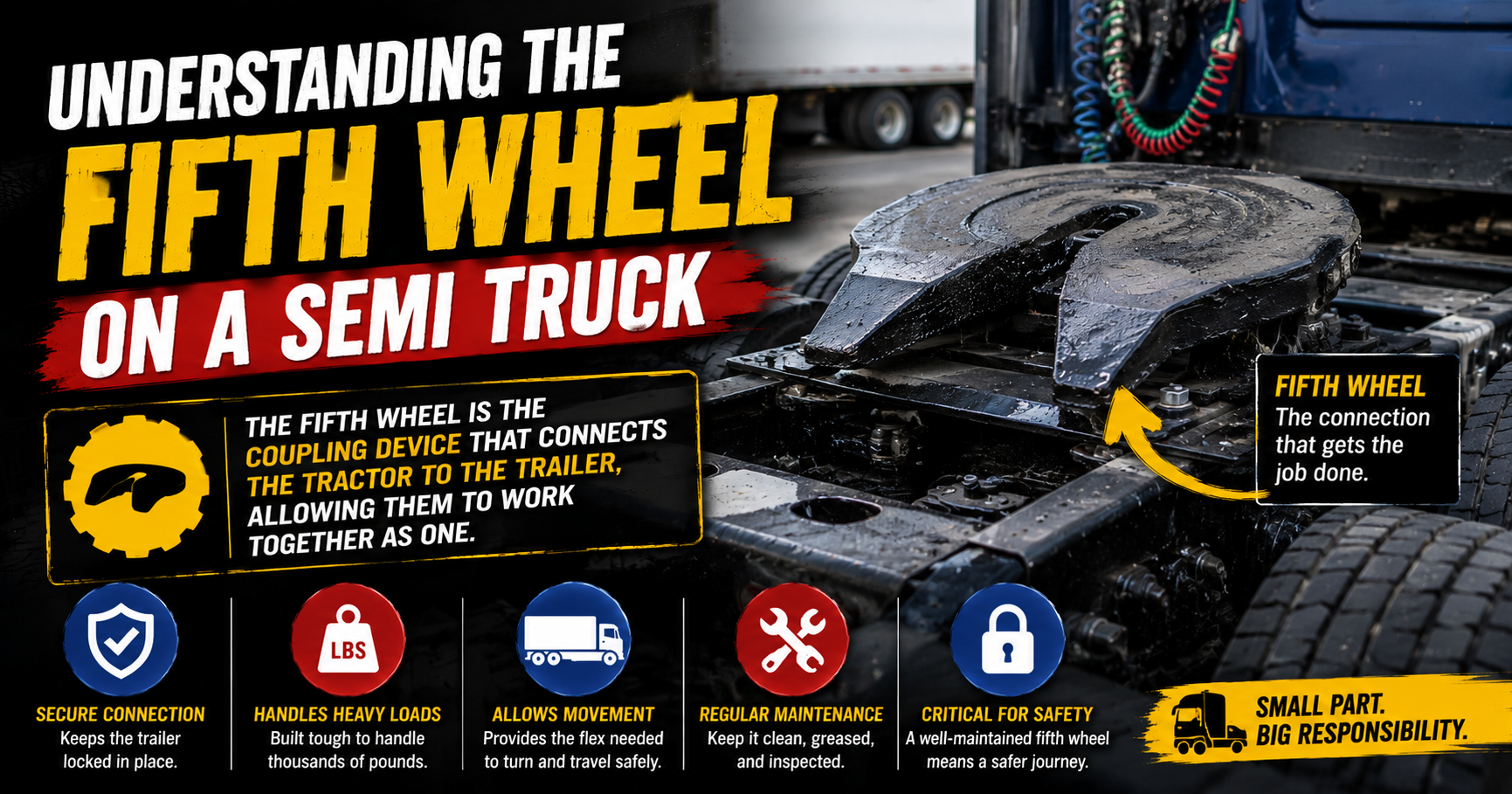
If you haven’t already, I recommend reading our guide on Understanding the Fifth Wheel on a Semi Truck because the two components are designed to work together every mile you drive.
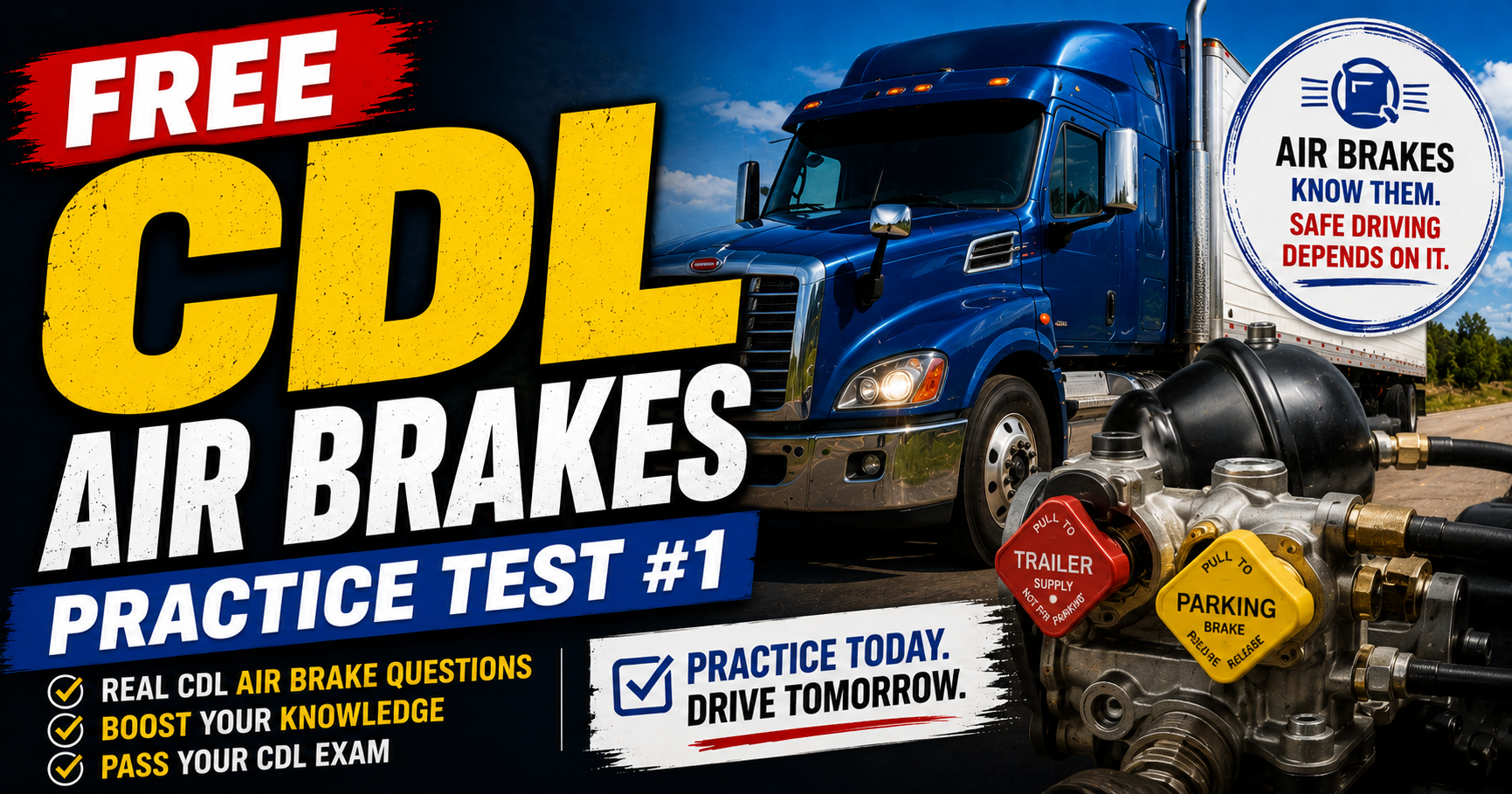
Why the Kingpin Is So Important
Every pound of cargo you’re hauling depends on that connection remaining secure.
The kingpin helps:
- Keep the trailer attached to the tractor.
- Allow smooth turning.
- Transfer weight to the tractor.
- Maintain stability during braking.
- Keep the combination vehicle tracking properly.
If the coupling isn’t correct, the consequences can be extremely serious.
That’s why professional drivers inspect the connection every single day.
What Is a Tug Test?
One habit I’ve never skipped is performing a tug test.
After coupling the trailer and connecting the airlines, I’ll gently pull forward with the trailer brakes still applied.
If everything is locked correctly, the trailer stays connected.
If something isn’t right, I’d much rather discover it sitting in the yard than halfway down the highway.
It’s a simple step that takes only a few seconds.
Inspecting the Kingpin During a Pre-Trip Inspection
A proper pre-trip inspection should always include checking the trailer connection.
When inspecting the kingpin area, I look for:
- Excessive wear.
- Visible damage.
- Cracks.
- Bent components.
- Proper trailer seating on the fifth wheel.
- Locking jaws fully engaged.
I also make sure there isn’t excessive space between the trailer apron and the fifth wheel.
If something doesn’t look right, I stop and investigate before moving the truck.
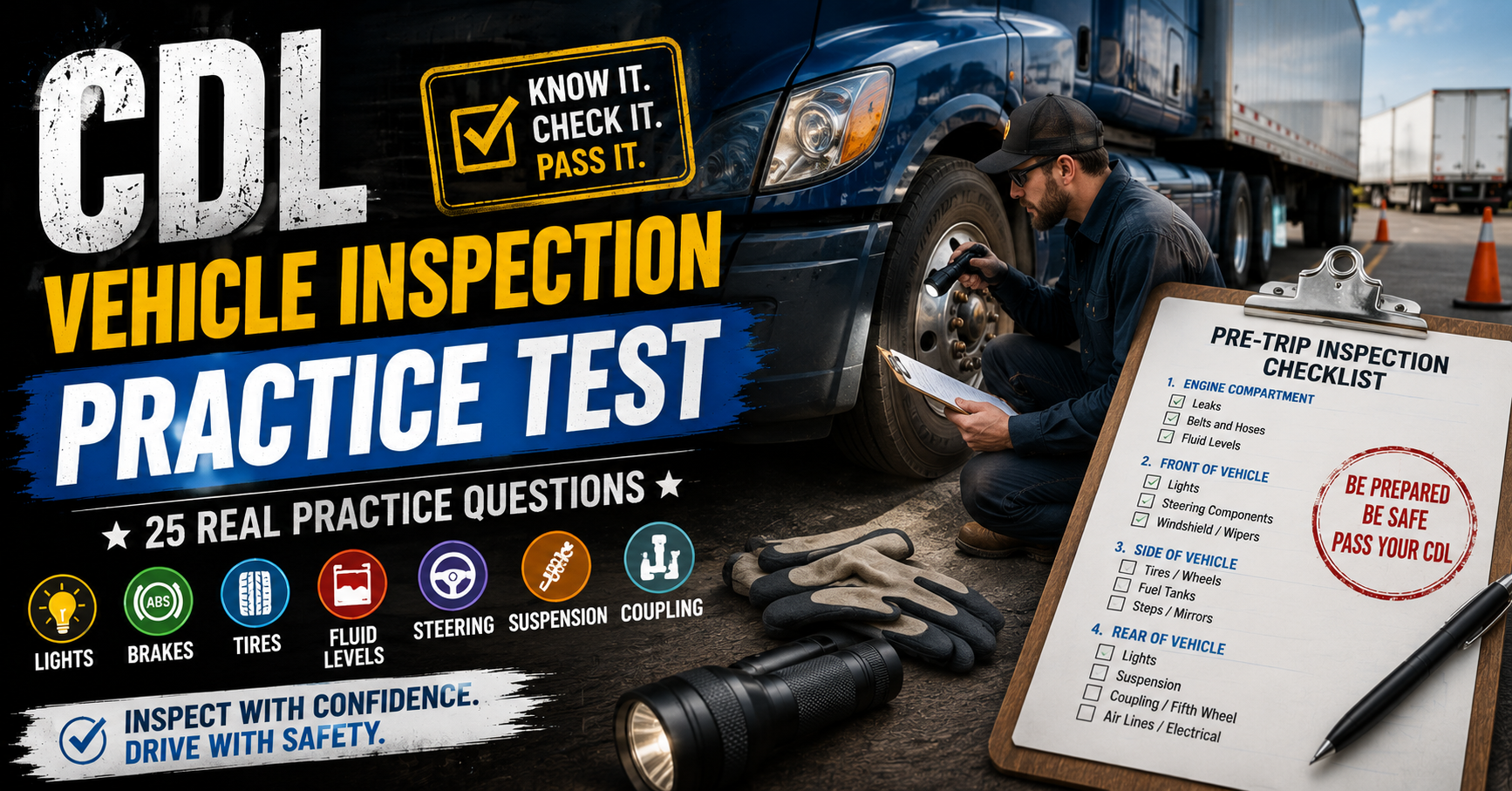
If you’re preparing for your CDL skills exam, our CDL Vehicle Inspection Practice Test is a great way to review many of the inspection points you’ll be expected to know.
Common Mistakes New Drivers Make
I’ve seen a few mistakes repeated over the years.
One of the biggest is assuming the trailer is connected simply because it “felt right.”
Never assume.
Always verify.
Another mistake is backing under a trailer that’s sitting too high.
Instead of entering the fifth wheel correctly, the trailer can ride over the top of the fifth wheel, creating what’s known as a high hook.
It may appear connected at first glance, but the locking jaws never fully capture the kingpin.
That’s one of the reasons visual inspections are so important.
Can a Kingpin Wear Out?
Yes.
Although kingpins are extremely strong, they’re not indestructible.
Over time they can develop wear from thousands of hookups, heavy loads, and years of use.
Regular inspections help identify excessive wear before it becomes a safety issue.
Trailer manufacturers and maintenance shops also inspect kingpins during routine service to ensure they remain within acceptable specifications.
Will You See Questions About Kingpins on the CDL Exam?
Absolutely.
If you’re pursuing a Class A CDL, you’ll likely encounter questions involving kingpins, fifth wheels, and combination vehicles.
Understanding how these components work together isn’t just important for passing the written exam.
You’ll also use this knowledge during your pre-trip inspection and throughout your trucking career.
Once you’ve reviewed this topic, try our Free CDL Combination Vehicles Practice Test to reinforce what you’ve learned before taking your CDL exam.
My Advice After Years of Hauling Trailers
The kingpin is one of those parts most people never think about until something goes wrong.
Professional drivers think about it every day.
Every time I hook to a trailer, I slow down, line everything up carefully, perform a tug test, and visually confirm the connection.
I’ve never regretted spending those extra few minutes.
Taking shortcuts during coupling simply isn’t worth the risk.
The kingpin may be one of the smallest major components on a tractor-trailer, but it’s responsible for one of the biggest jobs on the truck: keeping your trailer connected safely for every mile of the trip.
Author: Mike Reynolds
Mike Reynolds has spent more than 25 years operating combination vehicles throughout the United States, hauling everything from refrigerated freight to heavy construction materials. Over thousands of trailer hookups, he’s learned that careful coupling procedures and thorough inspections are some of the most important habits a professional truck driver can develop.