If you’ve spent any time studying for your CDL or looking at the specifications for a commercial truck, you’ve probably come across the term GVWR.
When I first heard it years ago, I honestly thought it was just another one of those trucking acronyms I’d memorize long enough to pass the test and then forget.
I couldn’t have been more wrong.
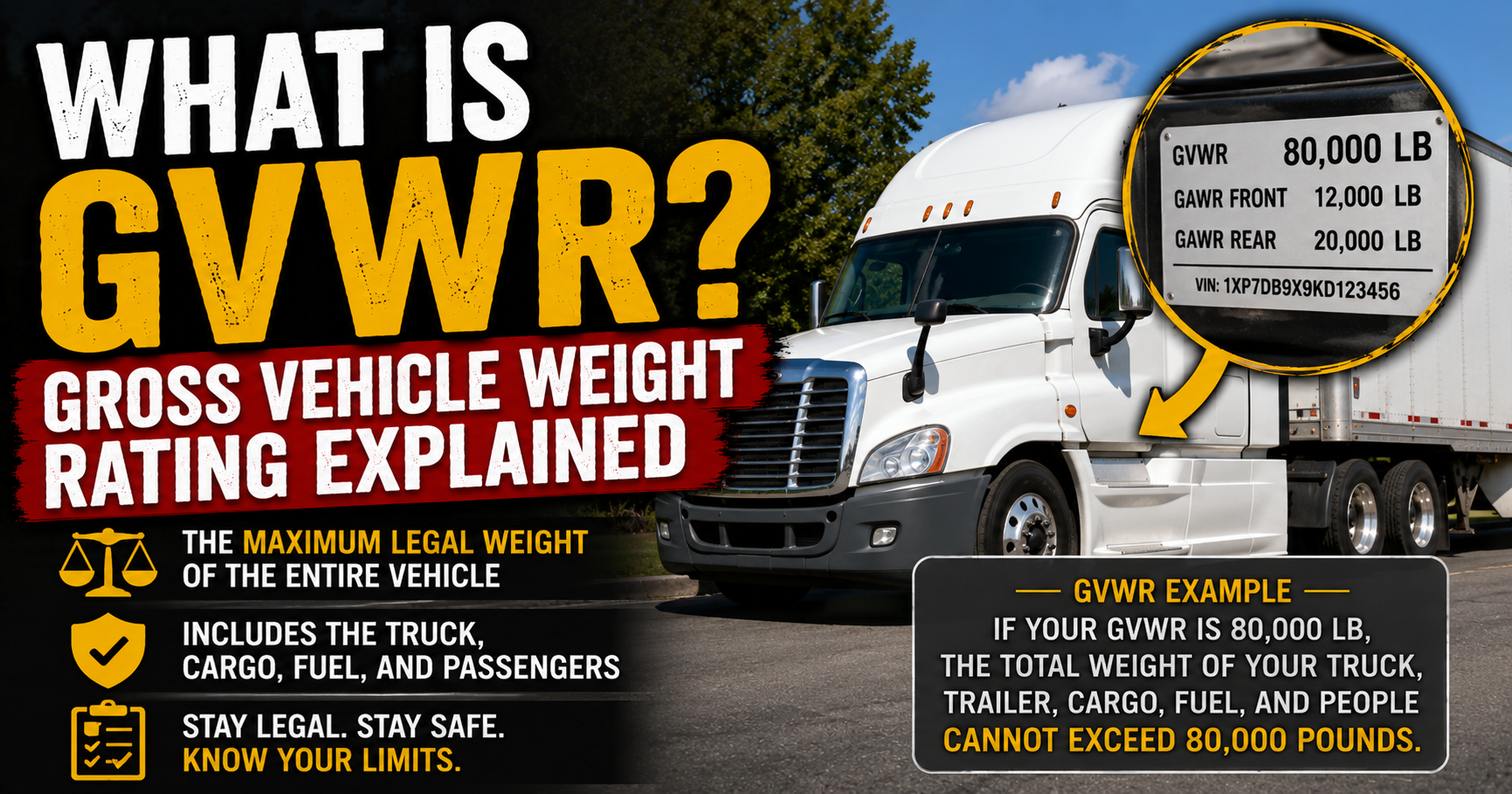
Understanding your truck’s Gross Vehicle Weight Rating (GVWR) is something you’ll use throughout your entire driving career. It affects what you can legally haul, whether you need a CDL, how safely your truck handles, and whether you’re operating within DOT regulations.
I’ve seen new drivers confuse GVWR with the truck’s actual weight, and I’ve even heard experienced drivers mix it up with GCWR. They’re related, but they’re definitely not the same thing. The related distinction becomes clearer in GCWR Explained: What Every CDL Driver Should Know, which focuses on the weight rating for the entire vehicle combination.
Let’s break it down in plain English.
What Does GVWR Mean?
GVWR stands for Gross Vehicle Weight Rating.
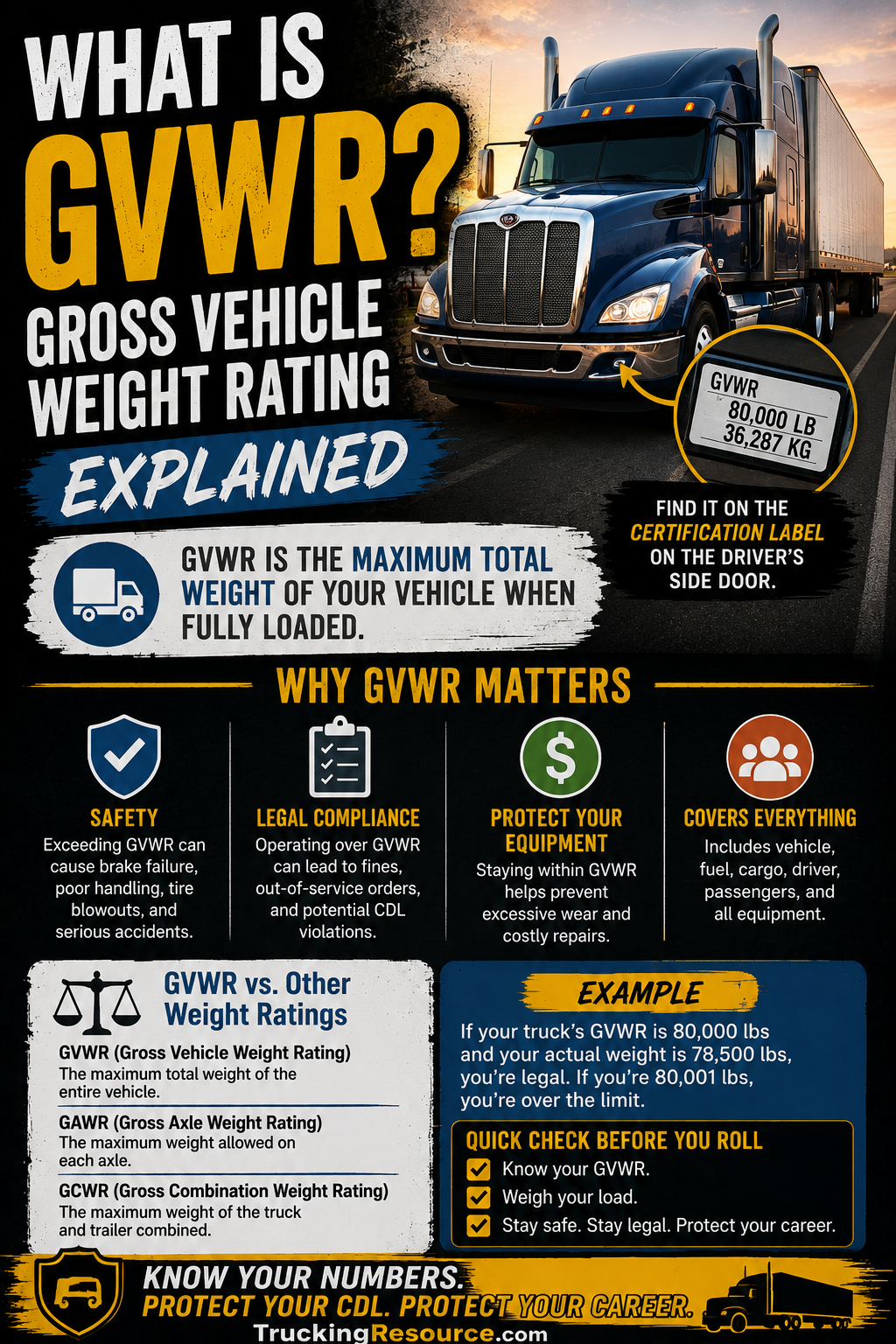
It’s the maximum amount your truck is designed to weigh when it’s fully loaded.
That number includes:
- The truck itself
- Fuel
- Engine fluids
- The driver
- Passengers
- Cargo
- Tools
- Equipment
- Anything else being carried on the truck
Think of it as the truck manufacturer’s safety limit.
It’s not a suggestion, and it isn’t based on what the truck weighs sitting empty in a parking lot.
Instead, it’s the highest safe operating weight determined by the manufacturer based on the truck’s frame, suspension, axles, brakes, wheels, and tires.
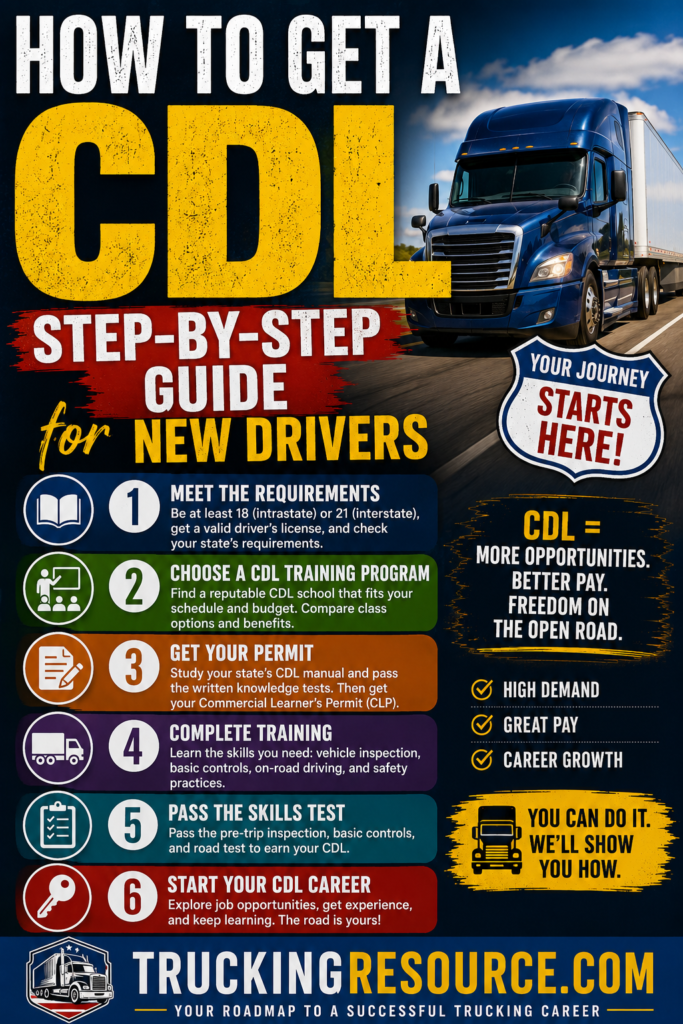
If you’re just beginning your CDL journey, our How to Get a CDL: Step-by-Step Guide for New Drivers explains why understanding weight ratings is an important part of becoming a safe commercial driver.

Where Can You Find Your Truck’s GVWR?
Fortunately, you don’t have to guess.
Every commercial vehicle has a certification label placed by the manufacturer.
You’ll usually find it:
- Inside the driver’s door
- On the driver’s side door jamb
- Near the door latch
- On the manufacturer’s information plate
The label lists several important specifications, including the GVWR.
Whenever I climb into a truck I’m not familiar with, one of the first things I like to know is its weight ratings. It only takes a few seconds, and it’s information you’ll use regularly.
Why GVWR Matters
Knowing your GVWR isn’t just about passing your CDL exam.
It affects your daily operation as a commercial driver.
If you exceed the manufacturer’s weight rating, several problems can happen.
Your truck may take longer to stop.
Steering can become less responsive.
Tires may overheat.
Suspension components experience additional stress.
Brakes have to work harder.
In an emergency situation, all of those factors can make the truck much more difficult to control.
That’s why manufacturers establish these ratings in the first place.
They’re designed to keep both the driver and everyone else on the road safer.
Is GVWR the Same as the Truck’s Actual Weight?
No.
This is probably the biggest misunderstanding I see.
Your truck’s actual weight changes all the time.
Imagine you’re driving a dump truck.
When you leave the yard in the morning with an empty bed, the truck weighs much less than it does after loading several tons of gravel.
The GVWR doesn’t change.
It’s simply the maximum weight the truck is designed to safely handle.
Your actual operating weight moves up and down throughout the day depending on what you’re carrying.
How GVWR Affects Your CDL
GVWR plays a major role in determining whether a Commercial Driver’s License is required.
Federal CDL regulations use vehicle weight ratings when deciding what class of license is needed. Since licensing rules may change, check our regulatory information disclaimer before treating this general explanation as a current compliance determination.
That’s one reason understanding GVWR is so important for new drivers.
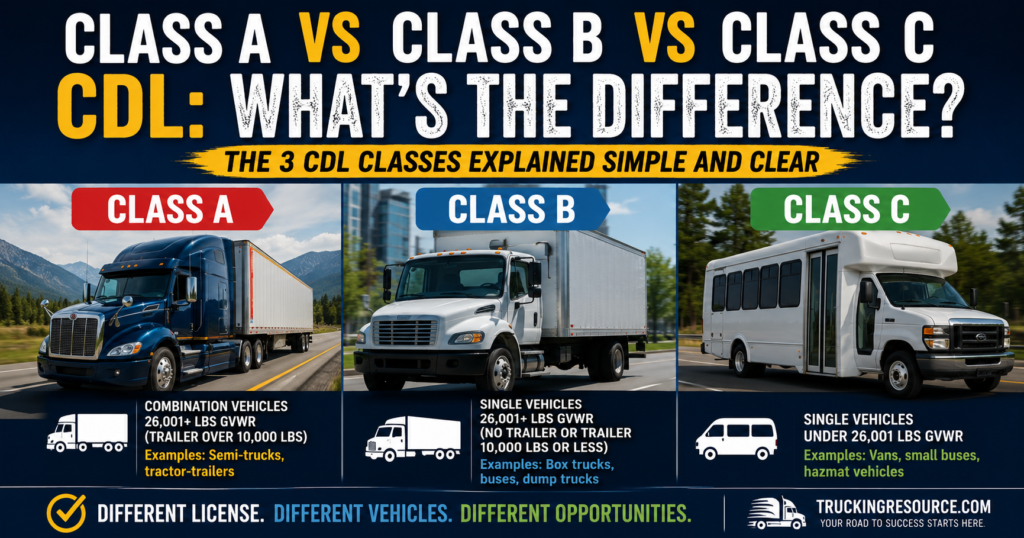
If you’re still unsure about the different license classes, our guide comparing Class A vs. Class B vs. Class C CDL licenses explains how weight ratings help determine which CDL you need.
GVWR vs. GCWR
People often confuse these two terms.
Although they’re related, they describe different things.
GVWR is the maximum safe weight of one vehicle.
GCWR, which stands for Gross Combination Weight Rating, refers to the maximum combined weight of the truck and any trailer it’s towing.
For example, a tractor pulling a loaded trailer has both a GVWR and a GCWR.
Understanding the difference becomes especially important if you’re planning to earn a Class A CDL and operate combination vehicles.
Can You Exceed Your GVWR?
The simple answer is no.
Even if the truck seems capable of carrying more weight, exceeding the manufacturer’s rating can create serious safety issues.
An overloaded truck may:
- Increase stopping distance.
- Reduce steering control.
- Wear out tires more quickly.
- Put excessive stress on the suspension.
- Increase the risk of mechanical failures.
- Lead to DOT violations during inspections.
Overloading isn’t worth the risk.
I’ve always believed it’s better to make another trip than to overload a truck and hope nothing goes wrong.
How DOT Officers Check Weight
Commercial vehicles can be inspected at weigh stations or during roadside inspections.
If your truck appears overloaded, officers may compare your actual weight with the applicable ratings and legal weight limits.
Being overweight can result in citations, fines, or being required to correct the issue before continuing your trip.
Understanding your truck’s weight ratings before loading helps prevent those situations.
Common GVWR Mistakes New Drivers Make
Over the years, I’ve noticed several mistakes that come up again and again.
One is assuming GVWR means the truck’s empty weight.
It doesn’t.
Another is thinking that if the suspension isn’t sagging, the truck must be within its limits.
That’s not a reliable way to judge weight.
I’ve also met drivers who focus only on how much cargo they’re hauling without considering fuel, passengers, tools, or additional equipment already on the truck.
Every pound counts.
The more familiar you become with your truck and its ratings, the easier it is to avoid these mistakes.
Will GVWR Be on the CDL Exam?
Yes, you should expect questions related to GVWR and other vehicle weight ratings on the CDL General Knowledge exam.
You don’t necessarily need to memorize every federal regulation, but you should understand what GVWR means, why it matters, and how it affects commercial driving.
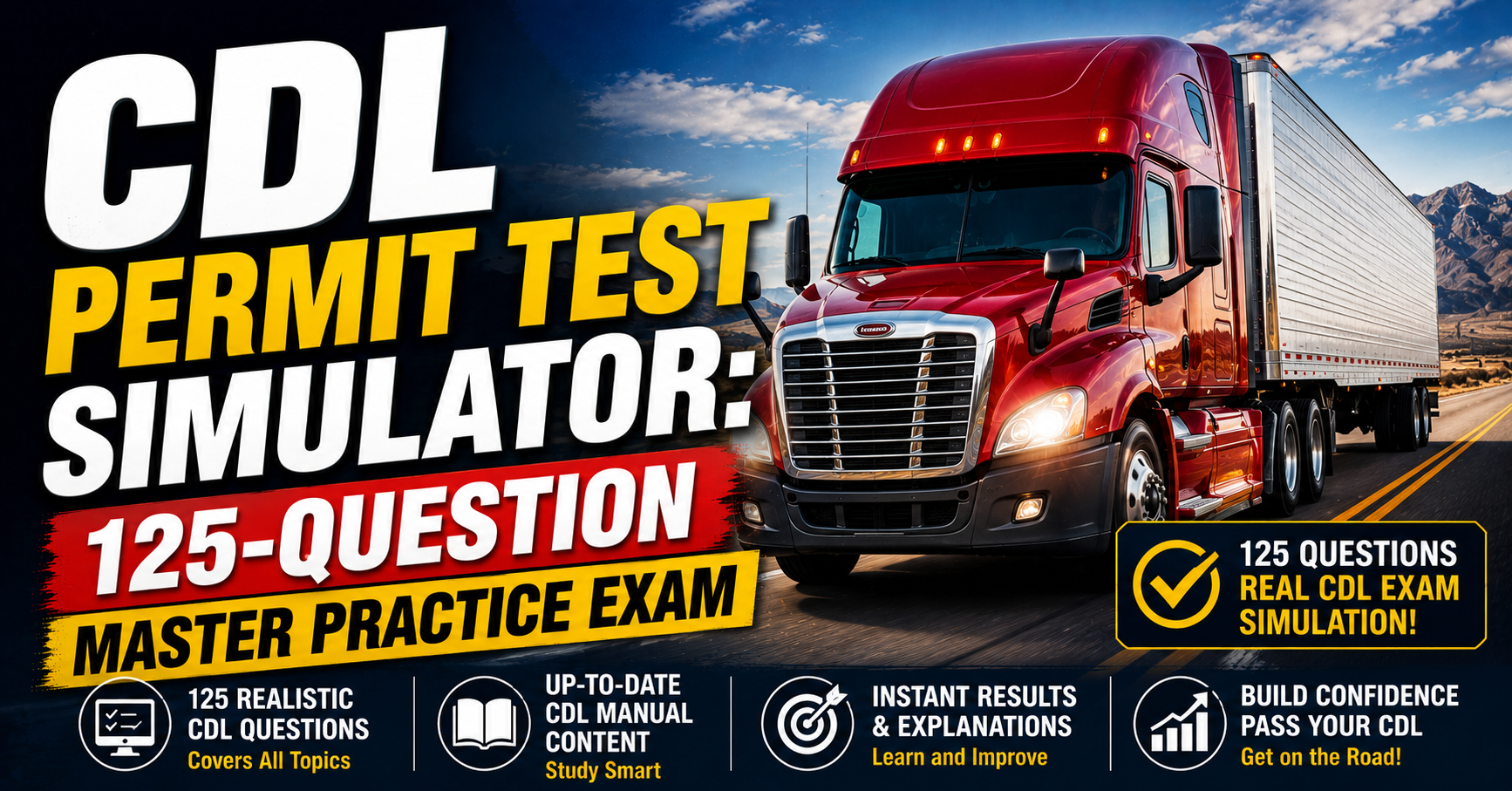
One of the best ways to reinforce these concepts is by taking practice exams after you’ve finished studying. Our CDL Permit Test Simulator: 125-Question Master Practice Exam is a great way to test your knowledge before scheduling the real exam.
If you prefer studying from a structured resource before testing yourself, our CDL General Knowledge Study Guide PDF is another excellent option for reviewing the material in a format that’s easy to work through at your own pace.
Why Every Commercial Driver Should Understand GVWR
I’ve always believed that good truck drivers aren’t just people who know how to shift gears or back into a loading dock.
They’re drivers who understand their equipment.
Knowing your truck’s GVWR helps you load safely, stay within legal limits, protect your equipment, and make smarter decisions every day you’re behind the wheel.
It’s one of those terms you’ll hear repeatedly throughout your trucking career, and once you understand it, dozens of other weight-related concepts become much easier to learn.
If you’re serious about becoming a knowledgeable commercial driver, spend the time to understand not just what GVWR stands for, but why it matters every time your truck leaves the yard.
Author: Mike Reynolds
Mike Reynolds has spent more than 25 years driving commercial trucks throughout the United States, hauling everything from dry van freight to heavy construction materials. Over the years, he’s learned that understanding vehicle weight ratings is just as important as knowing how to drive, and he enjoys helping new drivers build a strong foundation for a safe and successful trucking career.