The first time someone explained air brakes to me, I walked away more confused than when the conversation started.
People kept talking about air compressors, reservoirs, brake chambers, slack adjusters, spring brakes, and governors like I was supposed to already know what all those parts did. The role of one of those key components is explained in What Is a Slack Adjuster on a Semi Truck?.
The truth is, air brakes aren’t nearly as complicated as they sound.
Once you understand the basic idea, everything else starts falling into place.
If you’re studying for your CDL permit, learning how air brakes work isn’t just important because it’ll help you pass the written exam. It’ll also help you understand what you’re inspecting during your pre-trip inspection and why those inspections matter every time you get behind the wheel. The complete beginner’s guide to CDL air brakes expands on these components and inspection principles in plain English through CDL Air Brakes Explained: Complete Beginner’s Guide.
After more than 20 years around commercial trucks, I’ve learned that the drivers who understand their equipment usually become safer drivers.
Let’s break it down in plain English.
Why Do Commercial Trucks Use Air Brakes Instead of Hydraulic Brakes?
Most passenger vehicles use hydraulic brakes.
When you press the brake pedal, brake fluid transfers pressure through the brake lines and applies the brakes.
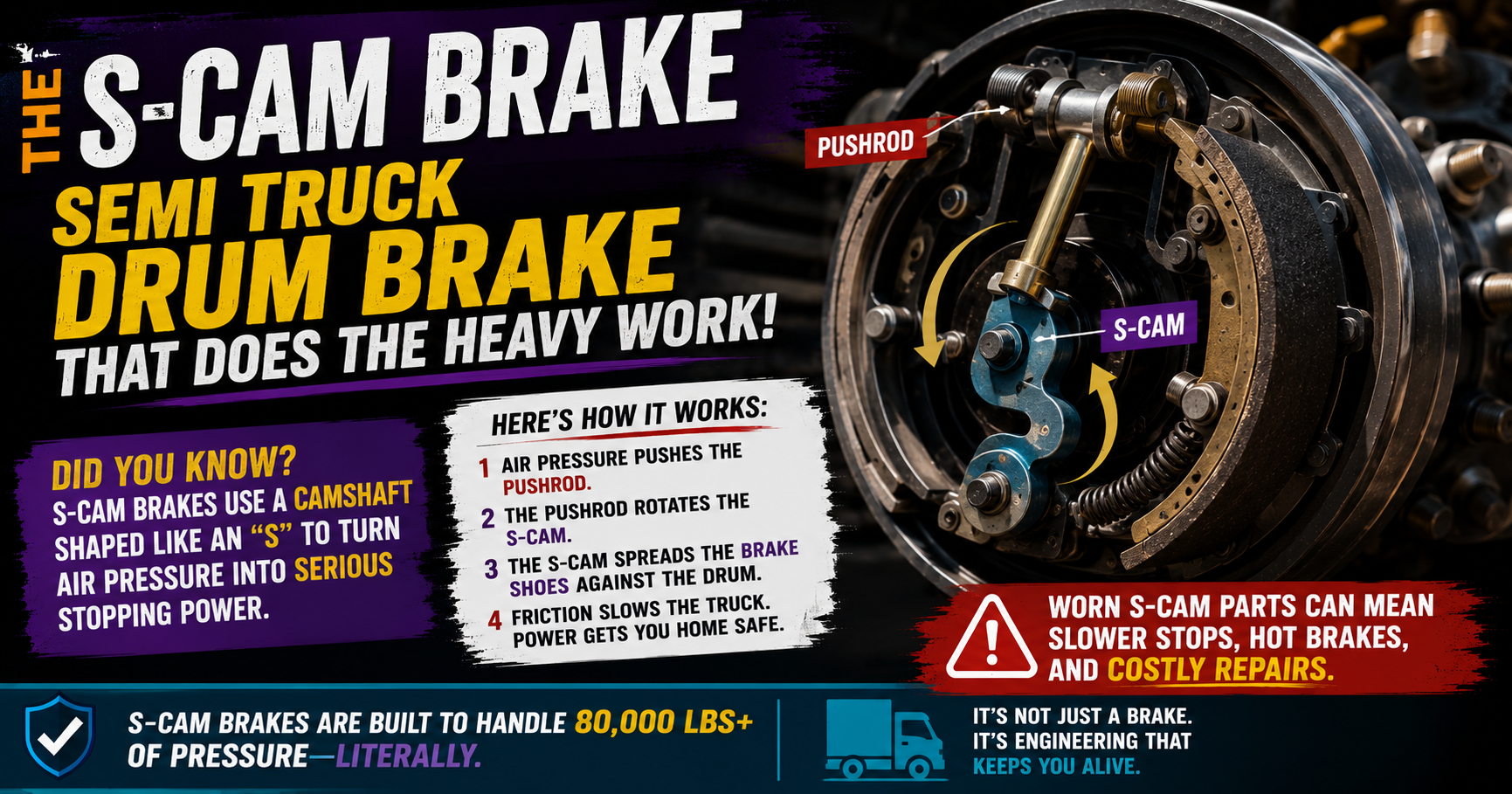
Commercial trucks are different. Understanding the air system is the first step toward seeing What Is an S-Cam Brake? How Semi Truck Drum Brakes Work in action at the wheels.
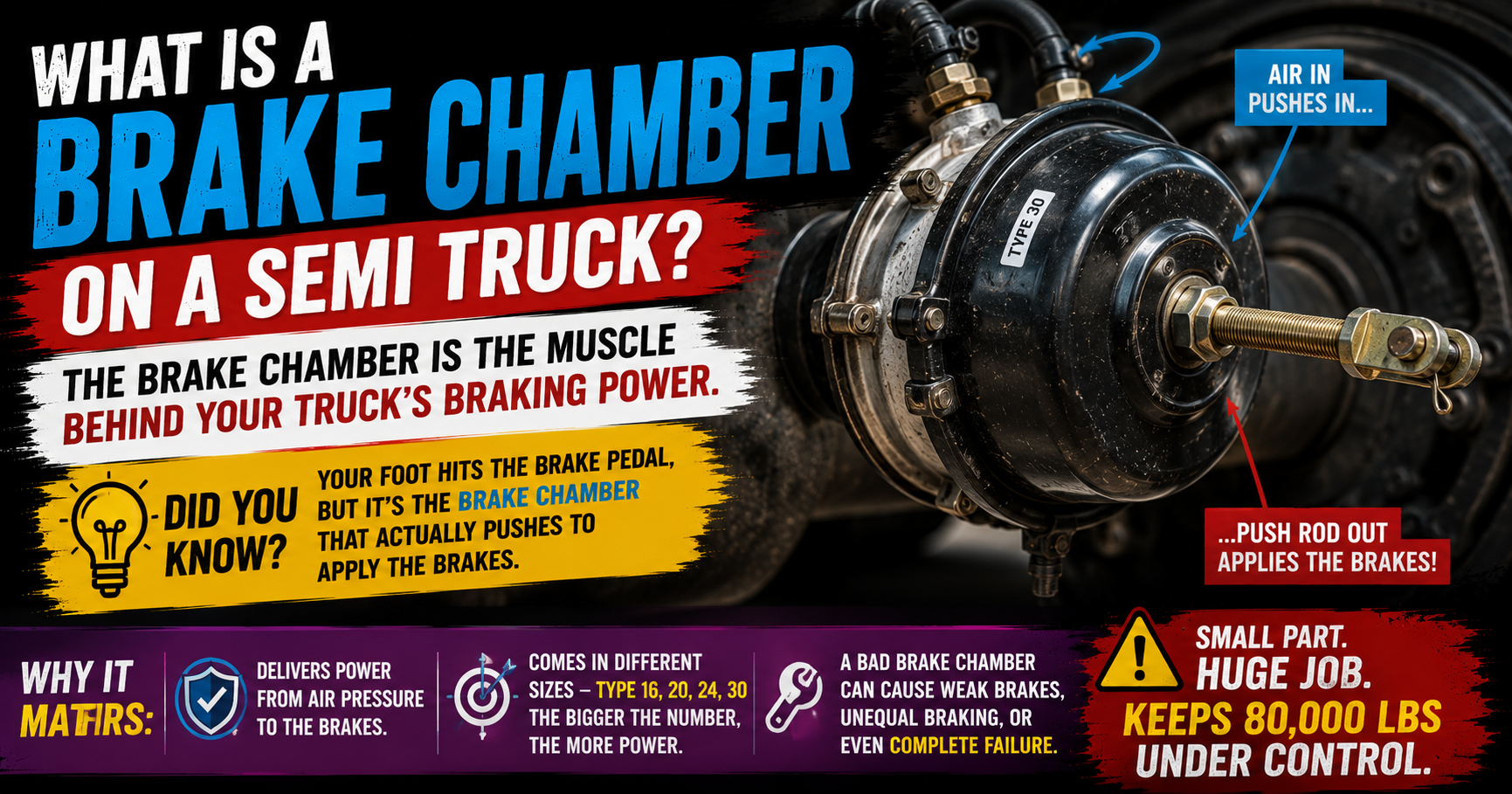
Instead of brake fluid, they use compressed air. That compressed air ultimately reaches components such as brake chambers, which turn pressure into braking force: What Is a Brake Chamber on a Semi Truck?.
Why?
Because air brake systems are much better suited for heavy commercial vehicles.
A fully loaded tractor trailer can legally weigh up to 80,000 pounds in many situations.
Stopping that much weight safely requires a braking system that’s powerful, dependable, and designed with multiple safety features.
One of the biggest advantages of air brakes is that even if the engine quits running, there’s still compressed air stored in the system for braking.
That’s a huge safety advantage when compared to relying entirely on hydraulic pressure.
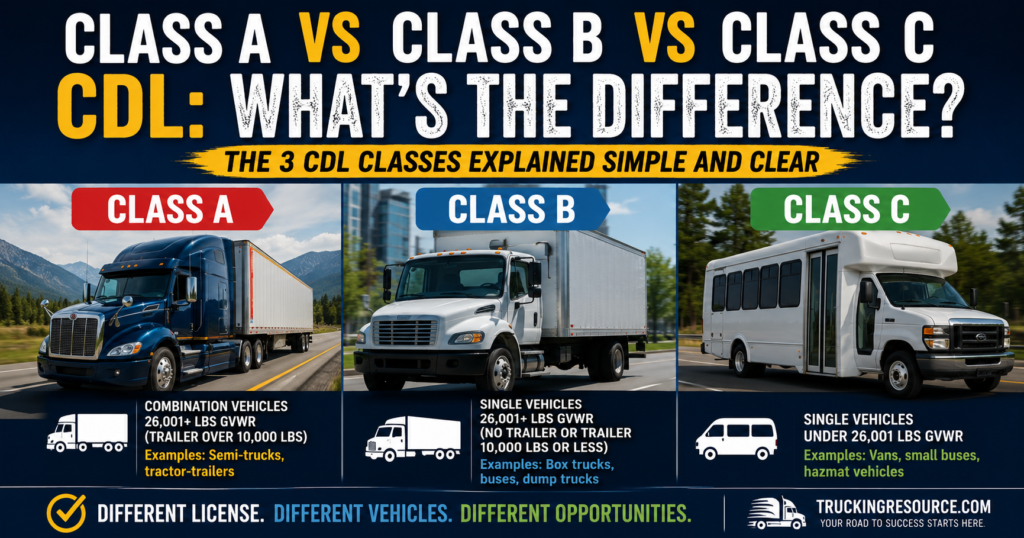
If you’re still deciding whether you’ll need to learn air brakes, our guide explaining Class A vs. Class B vs. Class C CDL: What’s the Difference? explains which commercial vehicles commonly use air brake systems.

How Do Air Brakes Work?
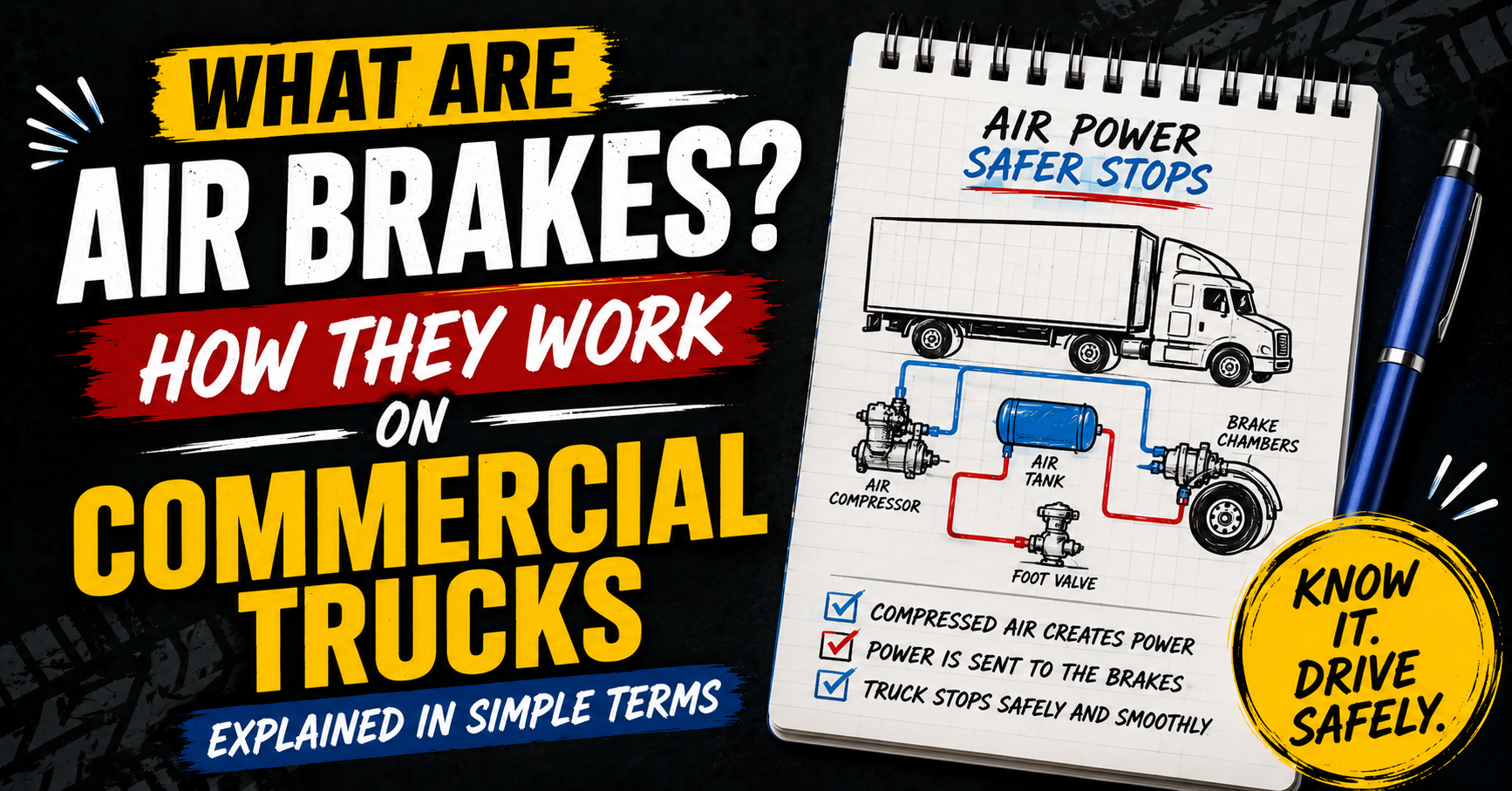
At their most basic level, air brakes use compressed air to apply braking force.
Here’s the general process.
The engine powers an air compressor.
That compressor builds air pressure and stores it in large air tanks mounted on the truck.
When you press the brake pedal, compressed air travels through the brake system to the brake chambers.
The brake chambers convert that air pressure into mechanical force.
That force applies the brakes and slows the truck.
When you release the brake pedal, the air pressure is released, allowing the brakes to disengage.
Although there are several components involved, that’s the basic idea.
Air pressure in.
Brakes apply.
Air pressure out.
Brakes release.
Once I started thinking about it that way, the entire system became much easier to understand.
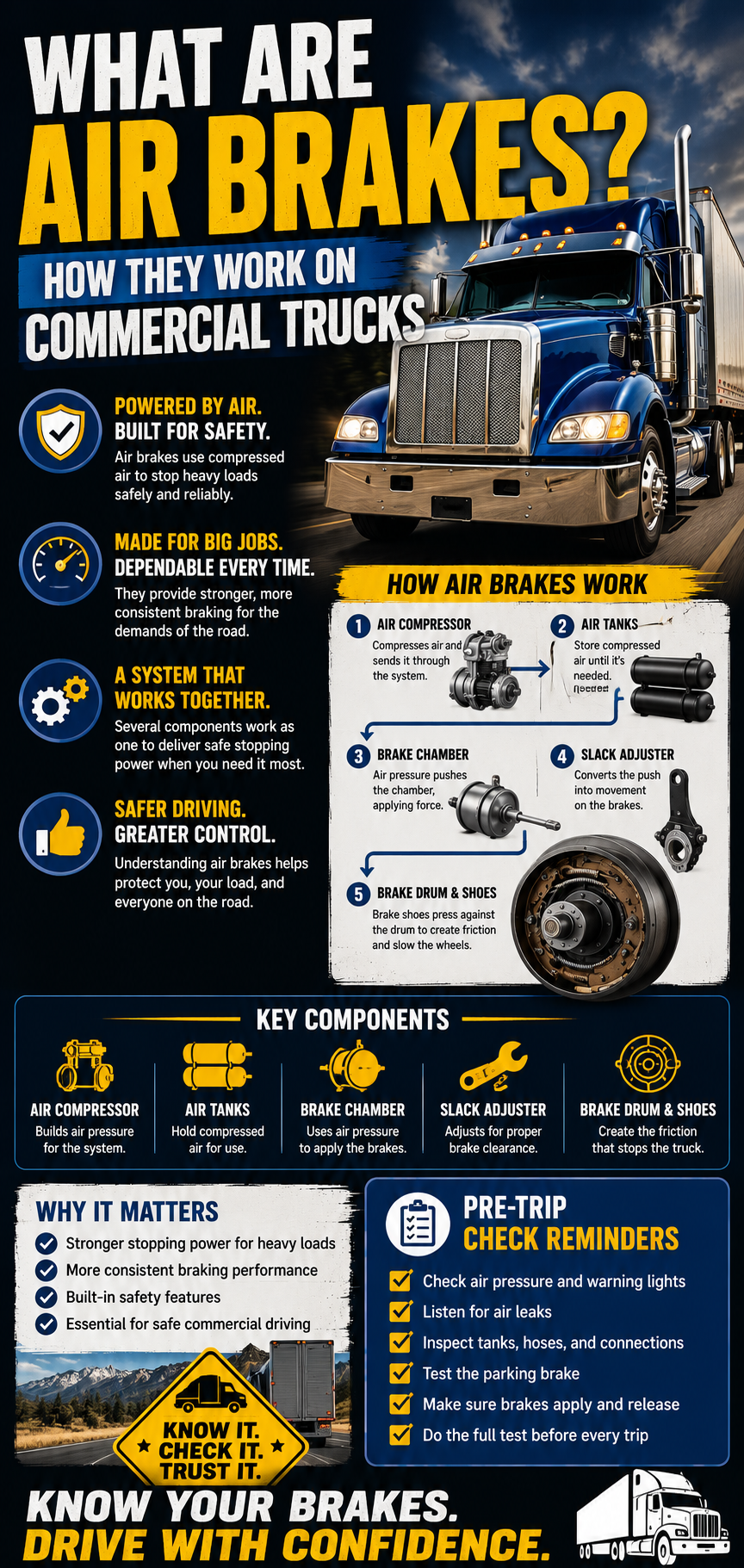
The Main Parts of an Air Brake System
Every commercial truck is a little different, but most air brake systems include the same major components.
These include:
- Air compressor
- Governor
- Air tanks (reservoirs)
- Air lines
- Brake pedal
- Brake chambers
- Slack adjusters
- Brake drums or brake discs
- Spring brakes
- Low air pressure warning devices
Don’t worry if those names seem overwhelming.
As you continue learning, each part will begin making sense.
Instead of memorizing the list, try understanding what each component actually does.
That approach helped me far more than simply trying to remember names for the written test.
What Does the Air Compressor Do?
Everything begins with the air compressor.
As the engine runs, the compressor continuously builds compressed air for the braking system.
That air is stored inside the truck’s air tanks until it’s needed.
Without the compressor, there would be no air pressure available to operate the brakes.
Think of it like an air pump that constantly keeps the system supplied.
The compressor doesn’t directly stop the truck.
Its job is simply to provide the compressed air that makes braking possible.
What Are Air Tanks?
The air tanks, sometimes called reservoirs, store compressed air after it’s produced by the compressor.
Instead of creating air only when you step on the brake pedal, the system keeps a reserve supply available at all times.
That’s important because commercial trucks often require repeated braking while driving through traffic, descending hills, or maneuvering around loading docks.
Having stored air allows the brakes to respond immediately whenever the driver presses the pedal.
During your CDL training, you’ll also learn why draining moisture from the air tanks is an important part of vehicle maintenance and safety.
How Do Brake Chambers Work?
Brake chambers are where compressed air becomes braking force.
When air enters the chamber, it pushes against a flexible diaphragm.
That movement turns the slack adjuster, which ultimately applies the brakes at the wheel.
It sounds technical, but you don’t need to become a mechanic to understand the basic concept.
Air pressure enters the chamber.
The chamber creates movement.
That movement applies the brakes.
Understanding that simple sequence makes many CDL test questions much easier to answer.
Why Are Slack Adjusters Important?
Slack adjusters connect the brake chamber to the braking mechanism at the wheel.
Their job is to transfer movement so the brakes apply correctly.
Proper adjustment is critical.
Brakes that aren’t adjusted correctly may not provide the stopping power needed to safely control a commercial vehicle.
Slack adjusters are also one of the components you’ll inspect during your pre-trip inspection.
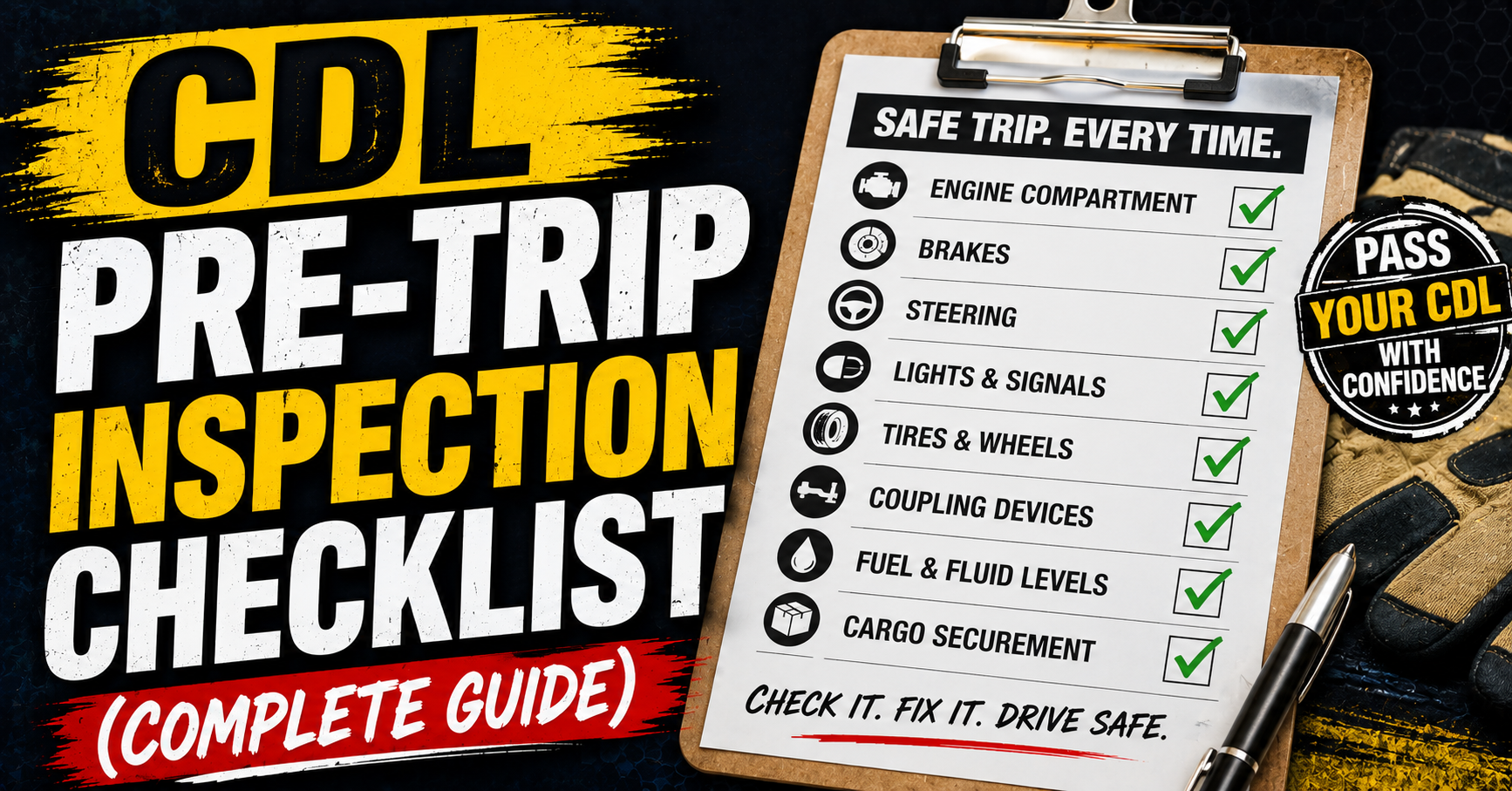
If you’re preparing for that portion of your CDL exam, our CDL Pre-Trip Inspection Checklist explains exactly what examiners expect you to inspect and describe.
What Are Spring Brakes?
One feature I really appreciate about commercial trucks is that they have a built-in backup system.
That’s where spring brakes come in.
Unlike the service brakes you use while driving, spring brakes are designed to apply automatically if air pressure drops too low.
They’re also what hold the truck in place when you set the parking brake.
This design helps prevent a truck from rolling away if the air system loses pressure.
It’s one of the many reasons air brake systems are considered so safe for heavy commercial vehicles.

What Happens If Air Pressure Gets Too Low?
One of the biggest misconceptions I hear from new CDL students is that if an air brake system loses pressure, the truck simply won’t have brakes.
That’s not how it works.
Commercial trucks are designed to warn the driver long before air pressure becomes dangerously low.
As pressure begins to drop, warning lights, buzzers, or other warning devices alert you that something isn’t right.
If the pressure continues to fall, the spring brakes will eventually apply automatically to help bring the vehicle to a stop.
That’s one of the biggest safety advantages of air brakes.
The system is designed to fail in a safer way than many people expect.
Understanding how these warning systems work is an important part of both the written CDL exam and becoming a safer driver.
Why Do Air Brakes Need to Be Tested?
Before I head out in a truck, I want to know the braking system is working exactly the way it should.
That’s why testing the air brakes is such an important part of every pre-trip inspection.
During your CDL skills test, you’ll learn how to check things like:
- Air pressure build-up
- Low air pressure warning devices
- Air leakage
- Spring brake operation
- Service brake operation
These tests aren’t just there to satisfy the examiner.
They’re designed to catch problems before you pull onto the highway.
Skipping them could mean driving a truck with a braking problem you didn’t know existed.
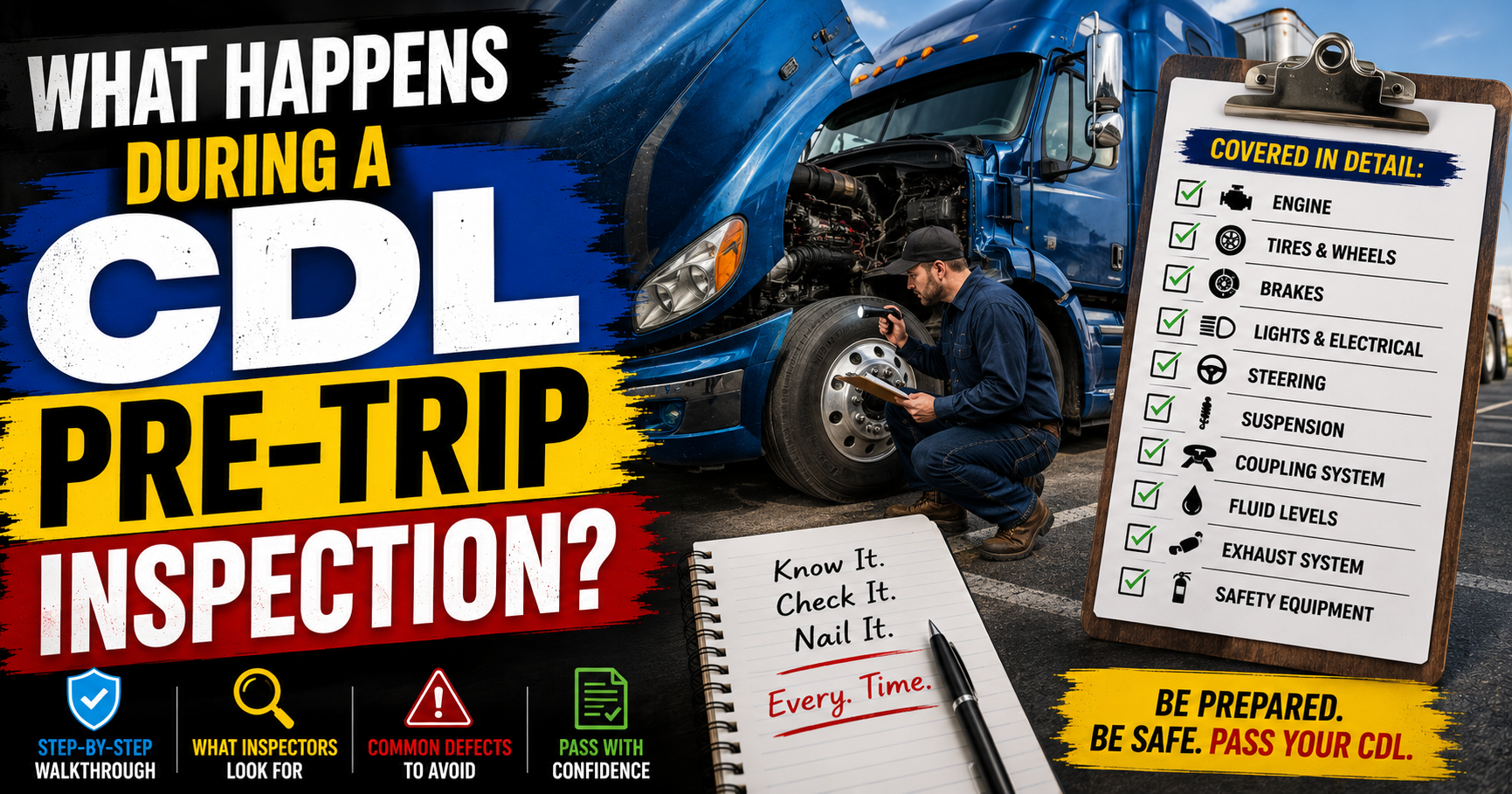
If you’re still learning the inspection process, our article on What Happens During a CDL Pre-Trip Inspection?explains how the air brake portion fits into the complete inspection.
Common Air Brake Problems Drivers Watch For
Even though modern air brake systems are extremely reliable, experienced drivers stay alert for signs that something isn’t right.
Some common issues include:
- Air leaks
- Low air pressure
- Worn brake linings
- Damaged air hoses
- Out-of-adjustment brakes
- Moisture inside the air system
- Slow pressure build-up
Most drivers won’t diagnose these problems themselves on the side of the road, but recognizing that something is wrong can prevent a much bigger issue later.
That’s one reason daily inspections are so important.
Do All CDL Drivers Need to Know Air Brakes?
Not necessarily.
Some commercial vehicles use hydraulic brakes instead of air brakes.
However, if you’re planning to drive most tractor-trailers or many larger commercial vehicles, there’s a good chance you’ll need to understand air brake systems.
Knowing how they work also makes it much easier to understand the inspection process and many of the questions you’ll see on the CDL written exam.
How to Study for the CDL Air Brakes Test
Over the years, I’ve found that students learn air brakes much faster when they combine reading with practice.
Instead of reading the same pages over and over, try this approach.
Start by learning what each component does.
Then move on to practice questions.
Finally, review the explanations for any questions you missed.
That process helps reinforce the information instead of simply memorizing answers.
After you’ve reviewed the basics, I recommend working through our Free CDL Air Brakes Practice Test 1. It covers many of the concepts you’ll need to understand before taking the written exam.
Keep Challenging Yourself
Once you’re consistently scoring well on your first practice test, don’t stop there.
The more questions you see, the more comfortable you’ll become with different wording and situations.
That’s why I also recommend taking our Free CDL Air Brakes Practice Test 2 before scheduling your CDL permit exam.
Don’t worry if you miss a few questions.
Use them as a guide to show you which topics need a little more review.
That’s exactly what practice tests are designed to do.
A Good Inspection Starts With Good Visibility
Many CDL students practice pre-trip inspections early in the morning or late in the evening when lighting isn’t ideal.
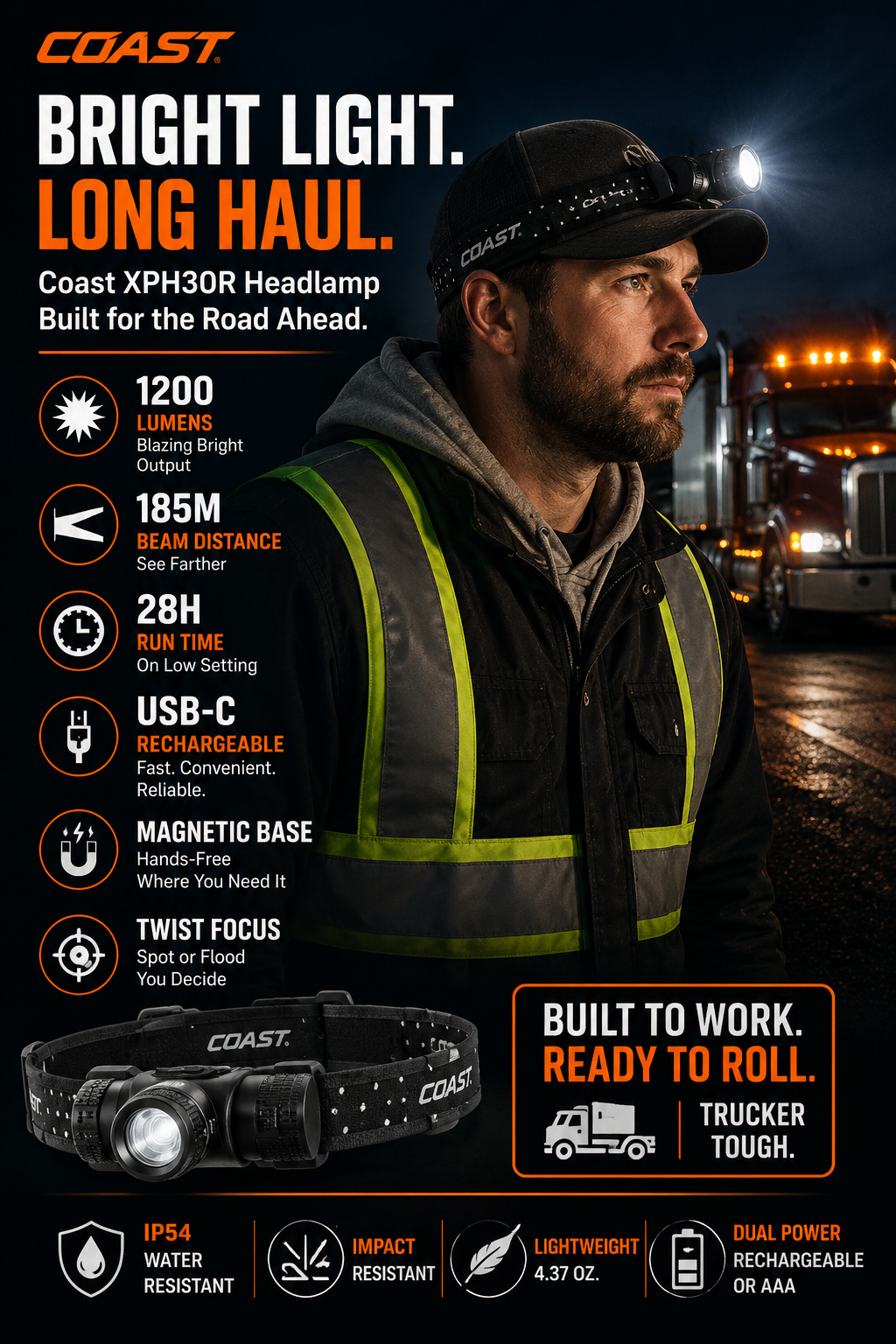
One tool I’ve carried for years is a dependable rechargeable headlamp. A hands-free inspection light can make it easier to see brake components during a pre-trip inspection.
Being able to clearly see brake chambers, slack adjusters, air lines, and other components underneath the truck makes inspections much easier than trying to balance a flashlight in one hand.
The Coast XPH30R USB-C Rechargeable Headlamp is a great option because it keeps both hands free while providing plenty of light for detailed inspections.
My Advice After Years Behind the Wheel
Air brakes seem intimidating when you’re first learning about them.
I know they did for me.
There are a lot of new terms, and it can feel like you have to memorize an entire mechanical system overnight.
The good news is that you don’t.
Start with the basics.
Understand how compressed air is used to apply the brakes.
Learn what each major component does.
Then reinforce that knowledge with practice questions and hands-on inspections.
Before long, you’ll find yourself recognizing brake components during every pre-trip inspection without even thinking about it.
Like most things in trucking, confidence comes with repetition.
The more you study and the more time you spend around commercial vehicles, the more natural everything becomes.
Author: Kevin Lawson
Kevin Lawson is a diesel mechanic and former fleet maintenance manager with more than 28 years of experience working on heavy-duty commercial trucks. Throughout his career, he’s diagnosed and repaired countless air brake systems, trained fleet technicians, and helped drivers understand the equipment they rely on every day. He enjoys making complex truck systems easier for new CDL students to understand.