
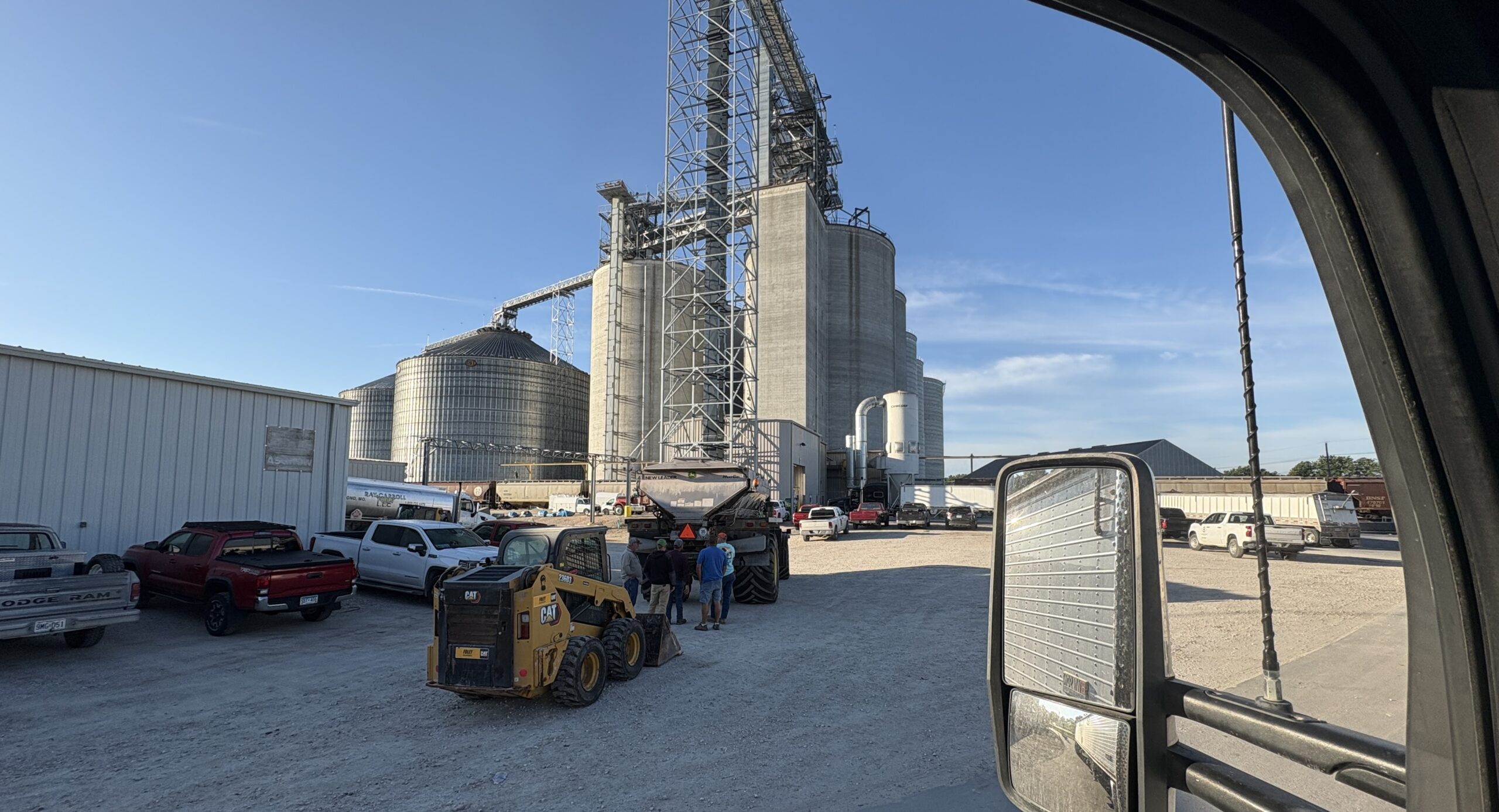
I hauled a load of corn to Ray-Carroll in Brunswick, Missouri, and took photos along the way because there’s a lot more to delivering grain than pulling under a bin and dumping it.
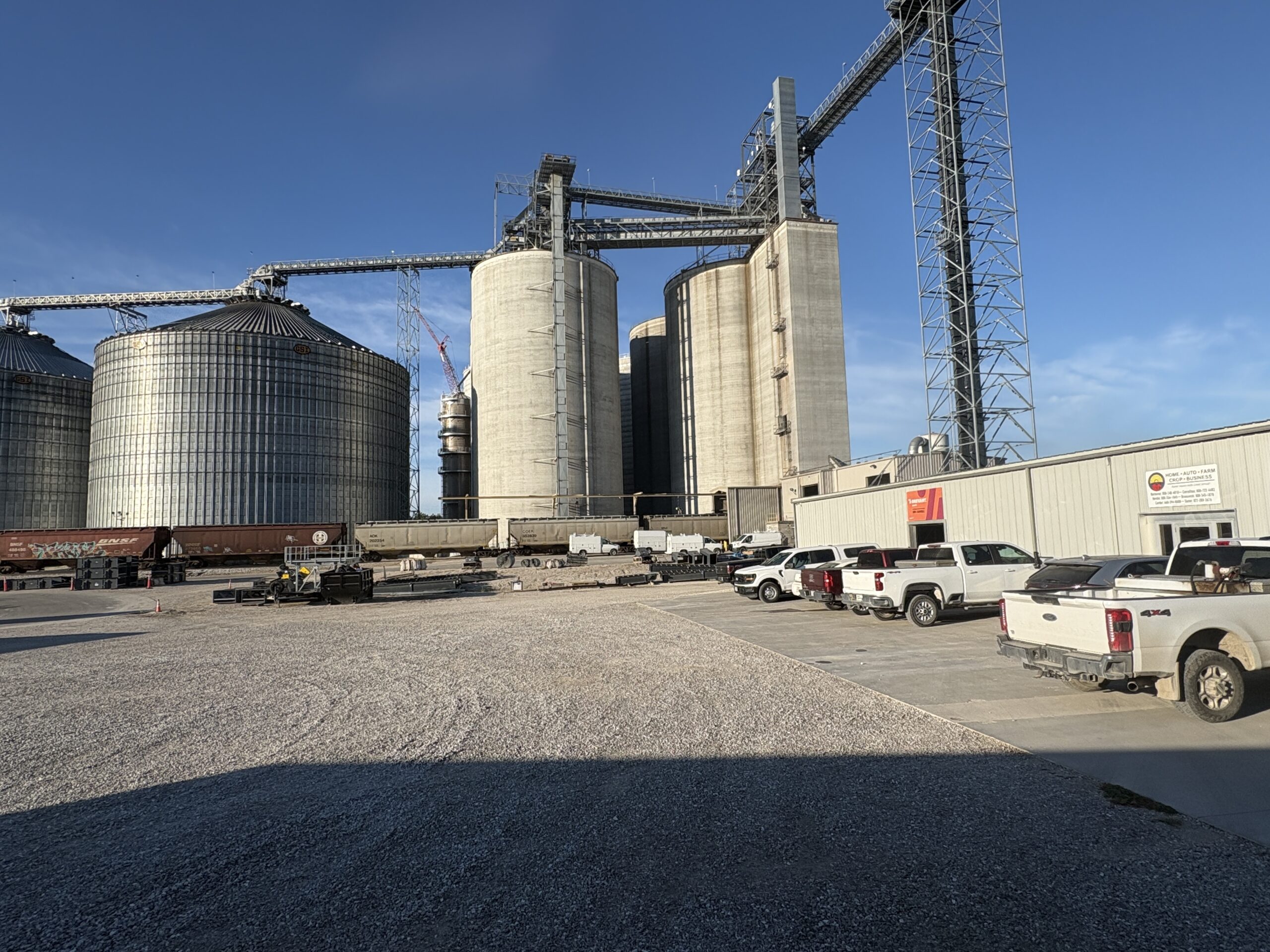
We haul plenty of corn there. On this trip, the place was busy. Trucks were moving through the lot, the grain bins towered over everything, and railcars sat alongside the facility. I knew the routine, but I could see how a driver making a first delivery might wonder where to go and what information they’d need at each stop.
For my load, I opened the tarp before getting on the first scale. At the scale, I gave the business name and answered whether the corn was being spot sold or delivered against a contract. They told me which bay to use. After unloading, I closed the tarp, went across the final scale for the empty weight, and collected the receipt to bring back to management at the farm.
That was the route my load took. Another elevator may direct trucks differently, and even at the same facility, the assigned unloading bay can change.
Arriving With a Loaded Grain Truck
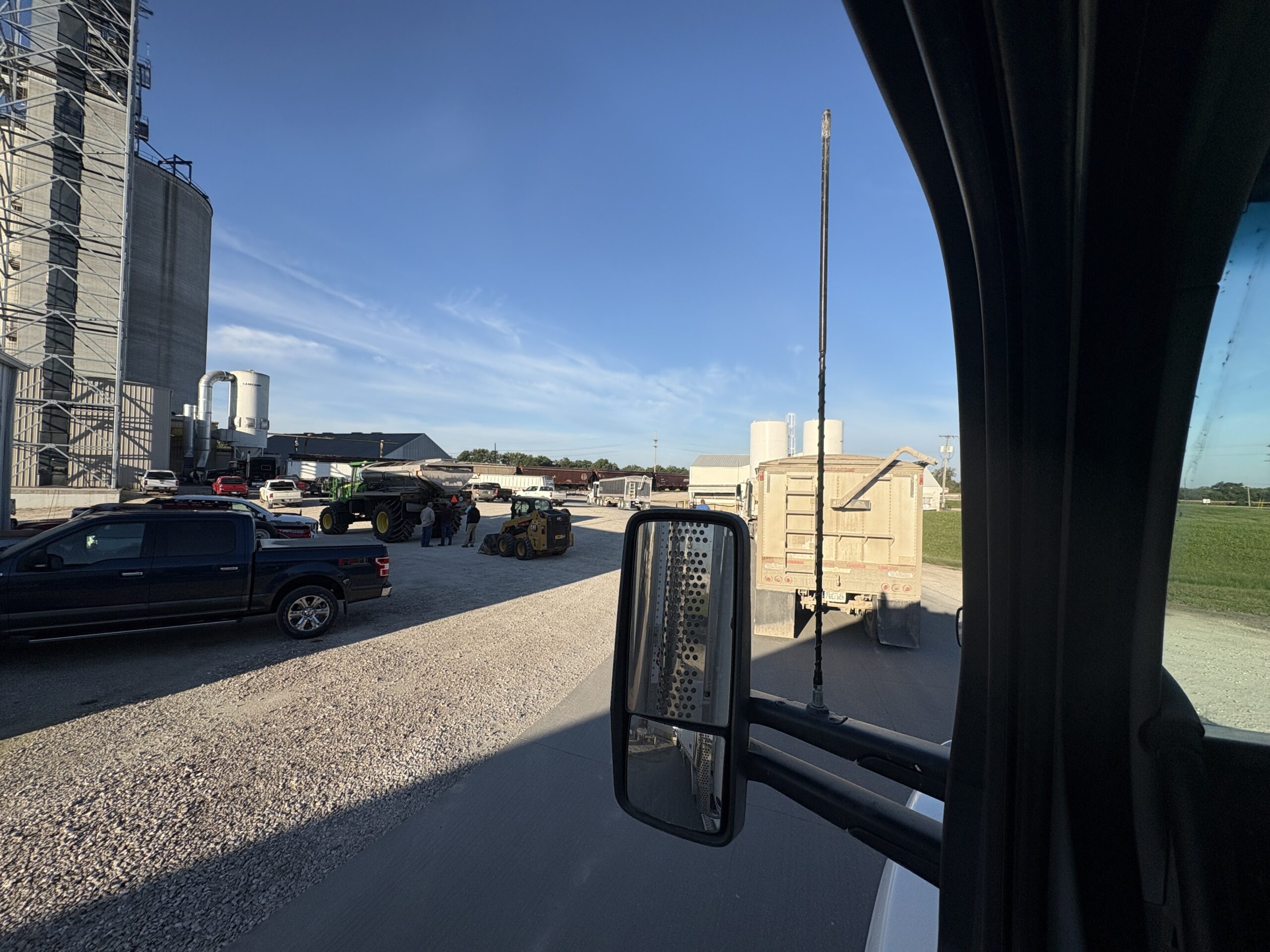
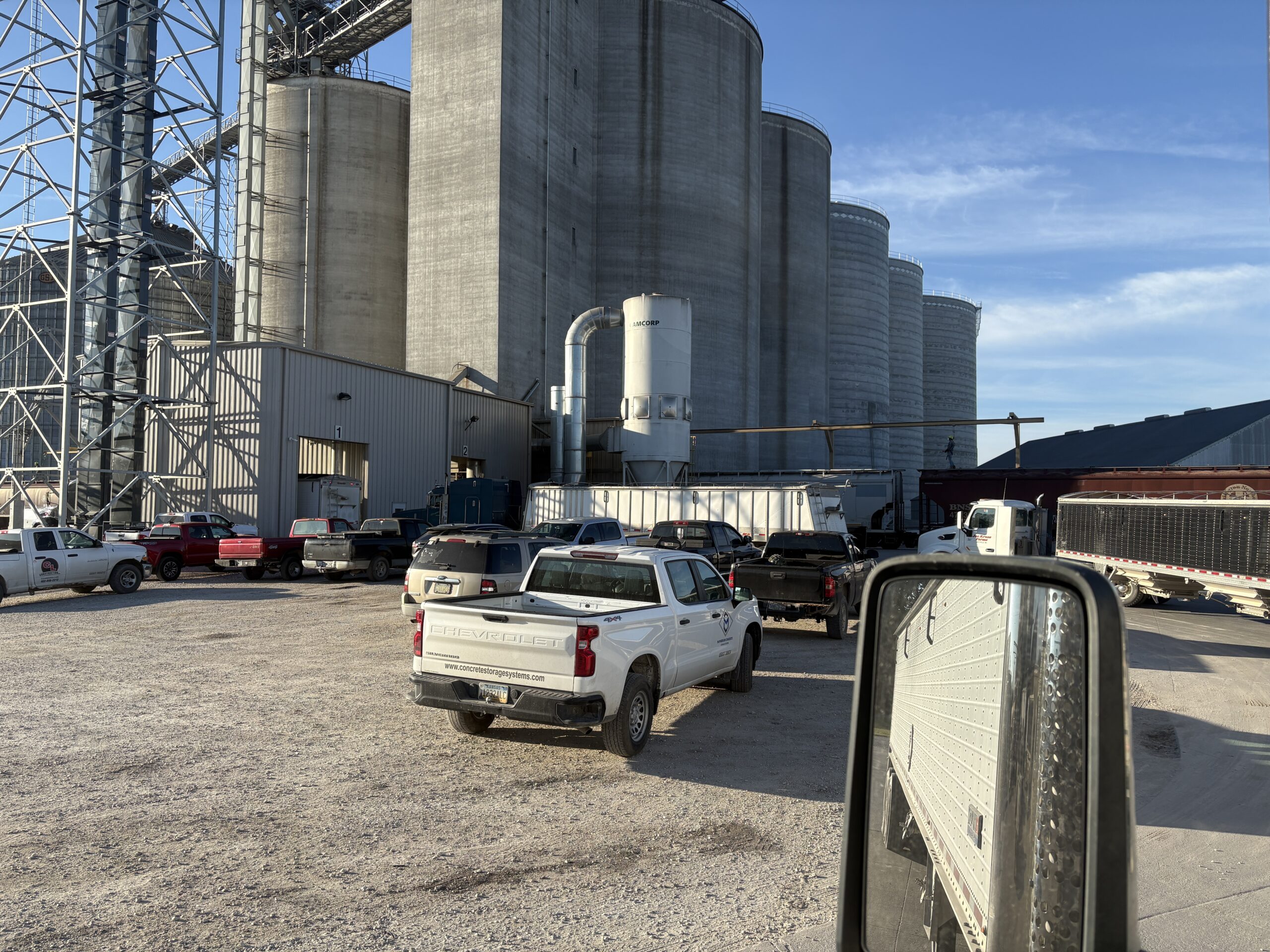
The first thing I noticed that day was how much was going on. Other trucks were ahead of me, and there was equipment and vehicle traffic around the buildings. The bins are enormous when you’re looking at them from a truck cab. In the photos, you can also see railcars beside the grain-handling structures.
It’s a different setting from unloading at a farm bin. At the farm, I’m focused on the auger, the pit, and the people working around that particular setup. At an elevator, I’m also moving through a receiving process with other drivers. Getting the order right matters because I can’t just pull into an open-looking bay and assume it’s mine.
I’ve written separately about how grain trucks unload at farm bins. This delivery followed the elevator’s instructions from the first scale through the final ticket.
Opening the Tarp Before the First Scale
Before weighing in, I got the tarp open. That was part of the routine for this delivery, and it’s one of those steps that’s easy to leave out when someone says, “Just take the corn to the elevator.”
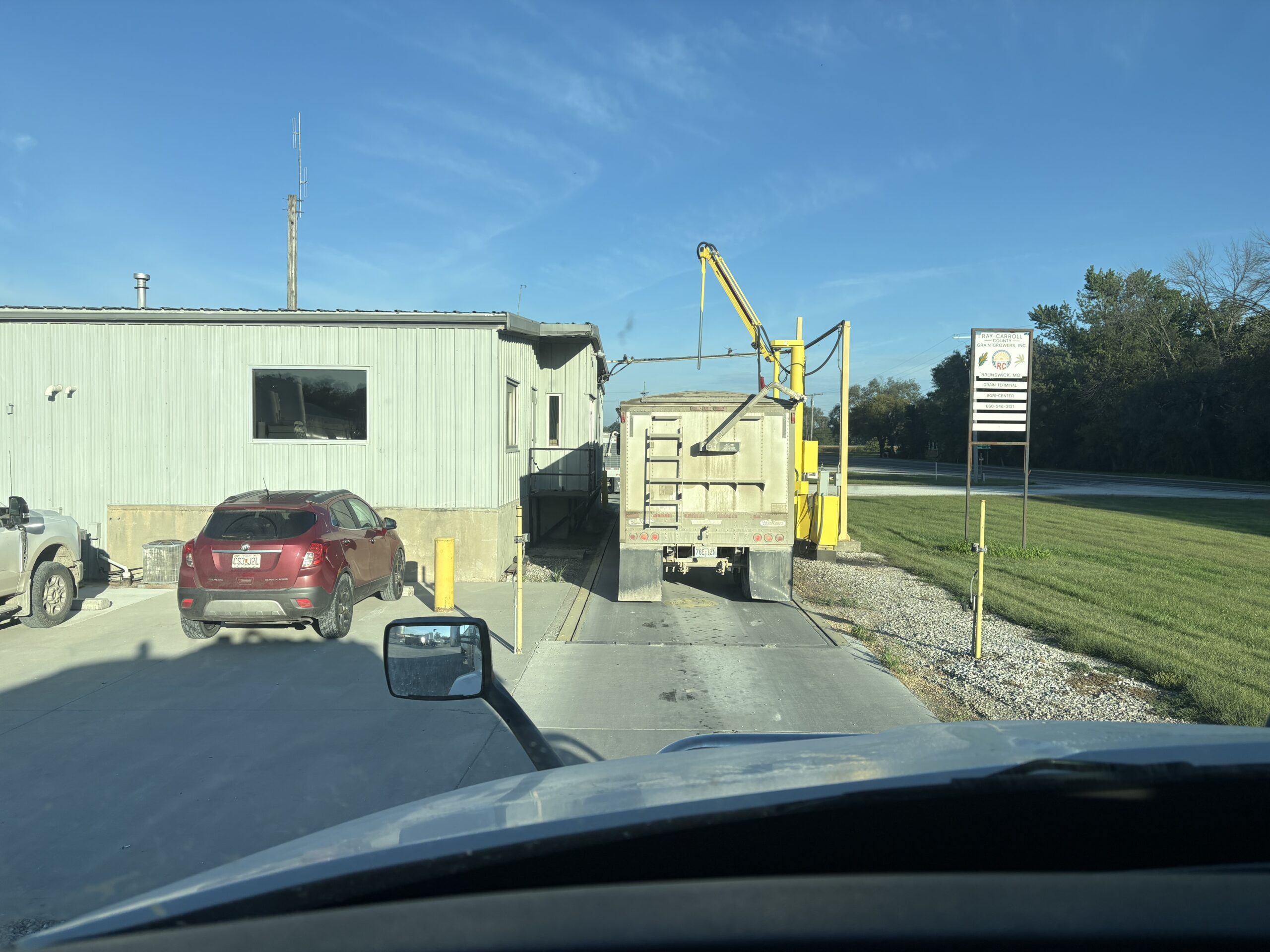
I pay attention to where I’m stopped and what’s happening around me before dealing with the tarp. On a busy day, trucks can be waiting to move toward the scale, and I don’t want to hold up that line because I waited until the last second to get ready.
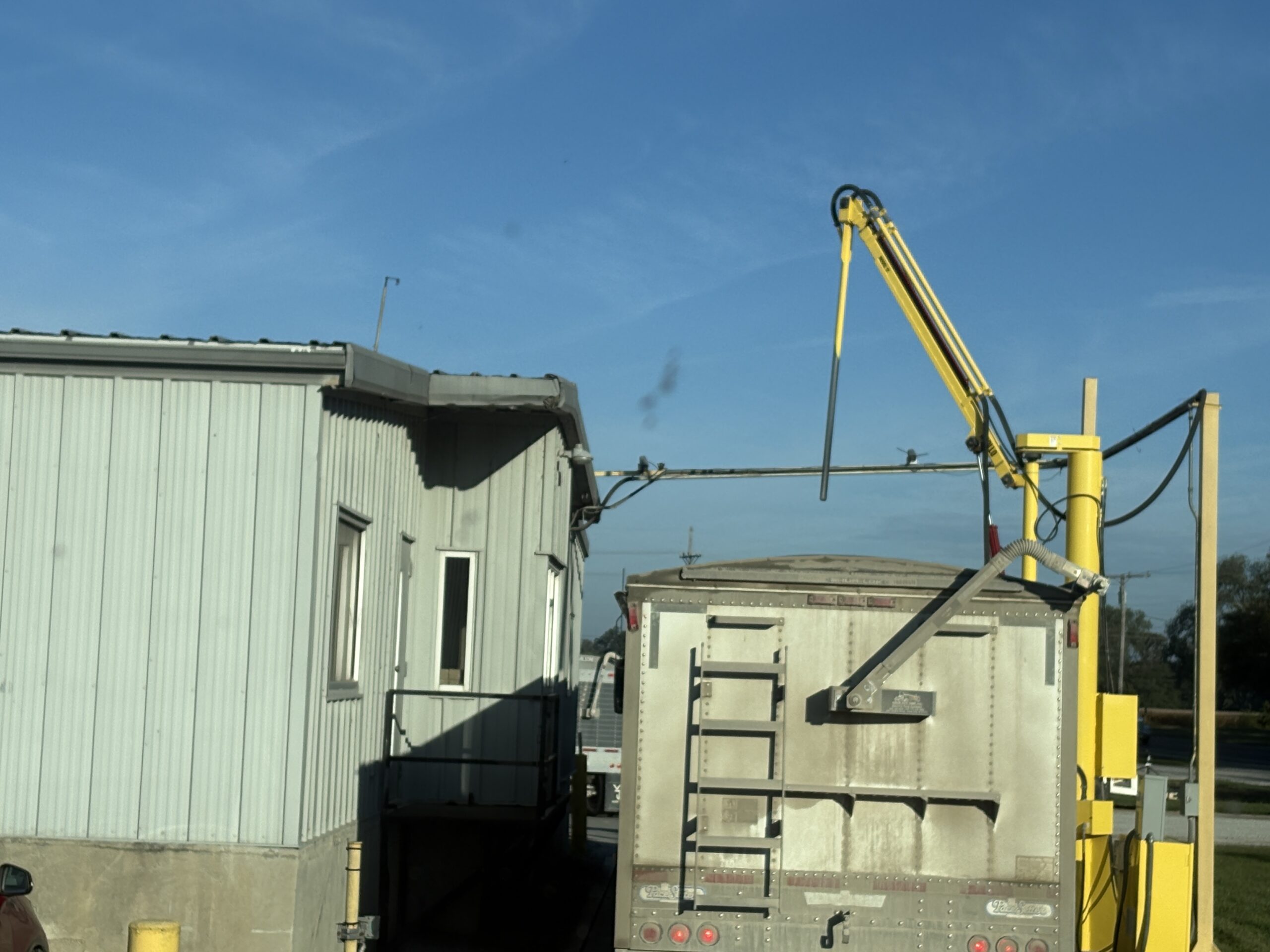
The receiving setup in my photo includes equipment over the truck ahead of me at the scale. I’m not going to claim exactly what was done to that driver’s load based on a photograph. What I can say is that I arrived with my tarp open and followed the sequence the facility gave me for my corn.
A new driver should confirm the tarp procedure for the place they’re visiting. Don’t assume every elevator handles arrival the same way.

Weighing In and Giving the Right Business Name
The first scale records the truck while it’s loaded. I pulled on as directed and gave the business name for the corn.
That name isn’t a small detail. I was hauling for a farm, so the load needed to be recorded under the right business. If I gave the wrong name or the load ended up on the wrong account, the problem would follow the paperwork back to the farm.
I was also asked whether the load was being spot sold or applied to a contract. That’s something a driver needs to know before getting to the scale. I can’t decide how the farm wants to market its corn while a line of trucks is waiting behind me.
If you’re hauling someone else’s grain, get the correct name and delivery instructions before leaving the farm. If you aren’t sure what to tell the scale operator, check with the person managing the load rather than guessing. The scale is where the elevator begins connecting the truck and its weight to the right business transaction.
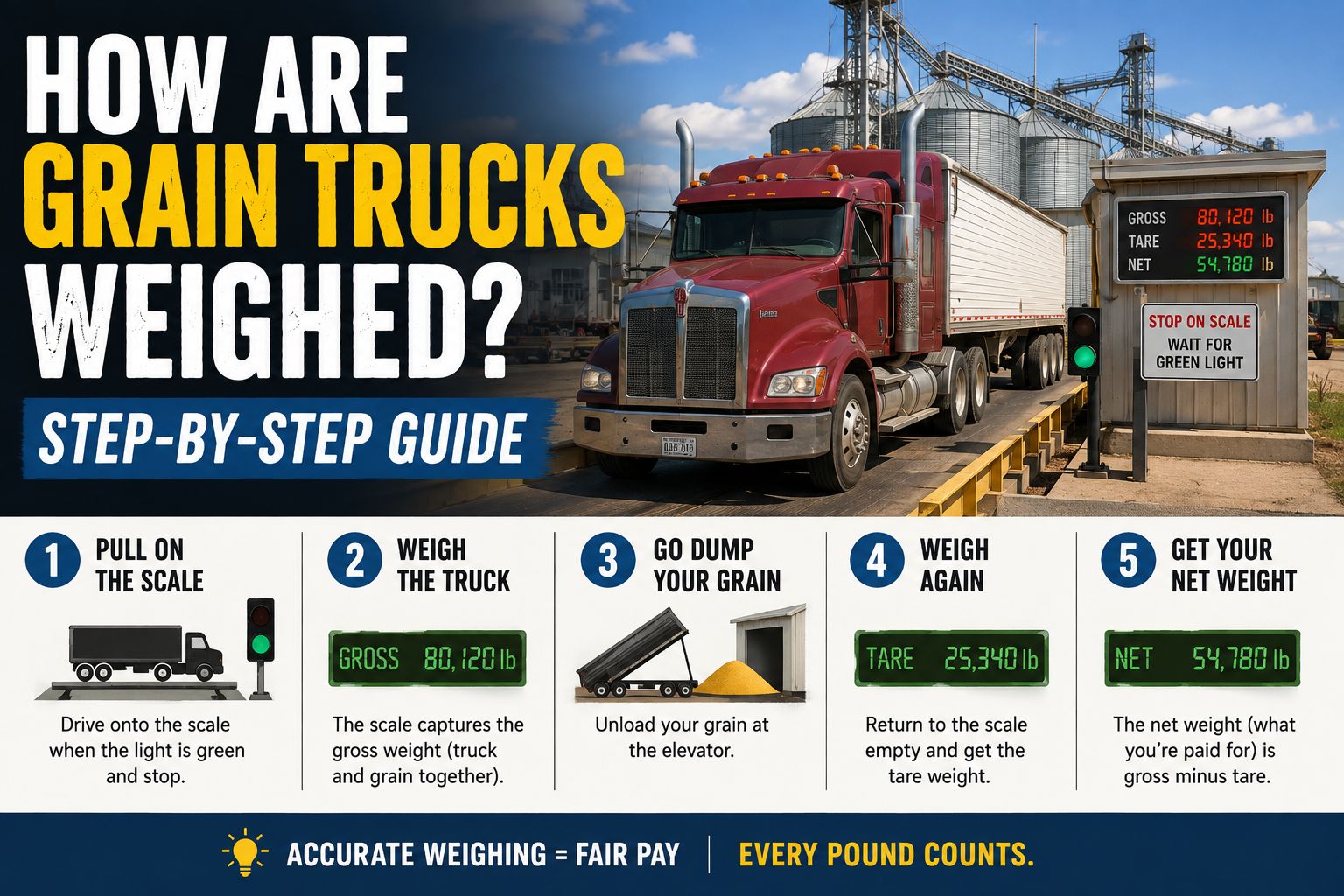
Our guide to how grain trucks are weighed explains the weight calculation in more detail. Here, I’m talking about what I had to do as the driver while moving through an actual delivery.
Waiting for an Assigned Unloading Bay
After weighing in, I was told which bay to use. I went to that bay to unload.
That instruction matters more than the fact that a bay looks open. A grain elevator may have more than one receiving point, and the people running it know where they want a particular truck to go. With other trucks moving through the yard, I follow the assignment instead of picking my own spot.
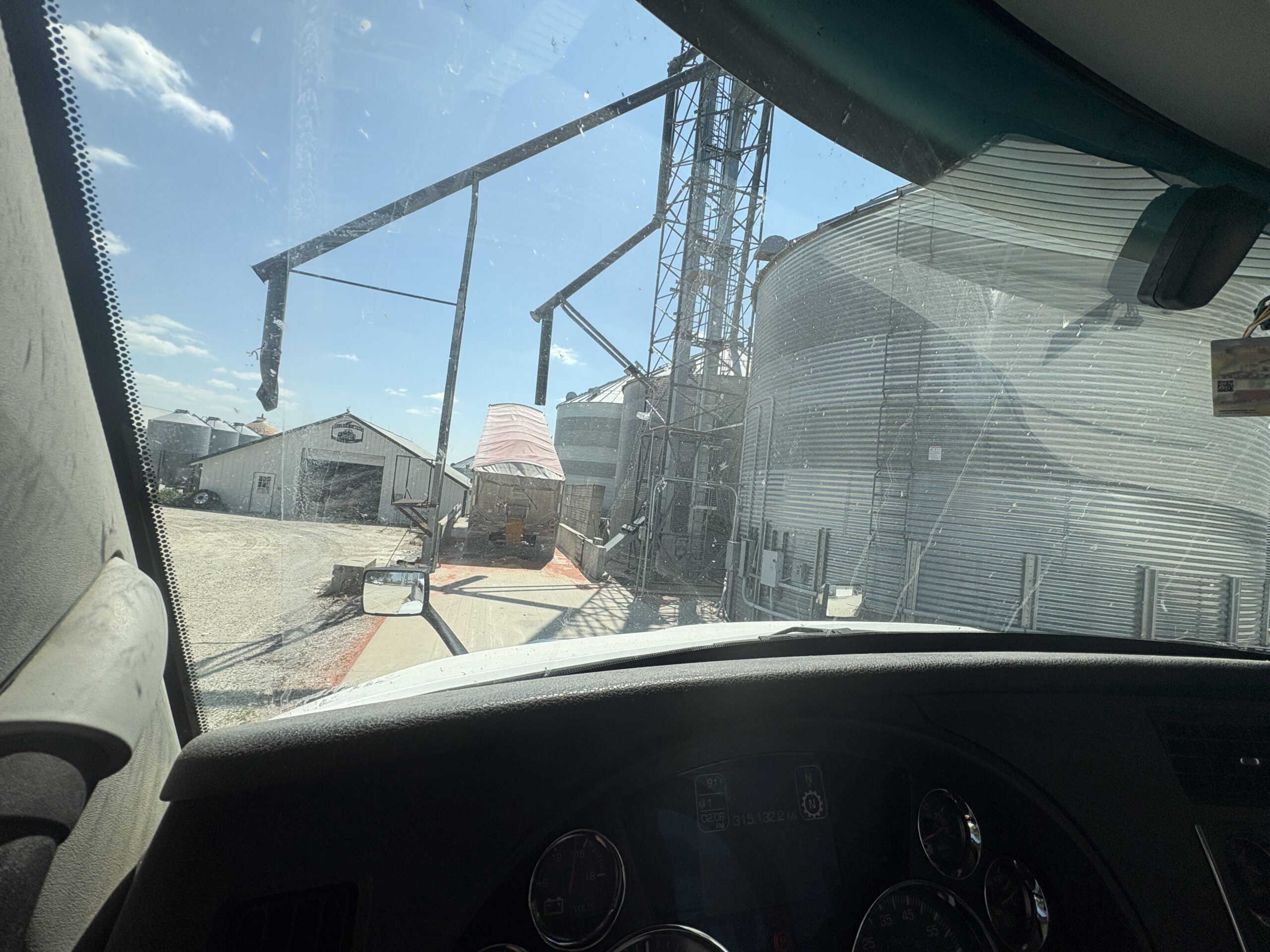
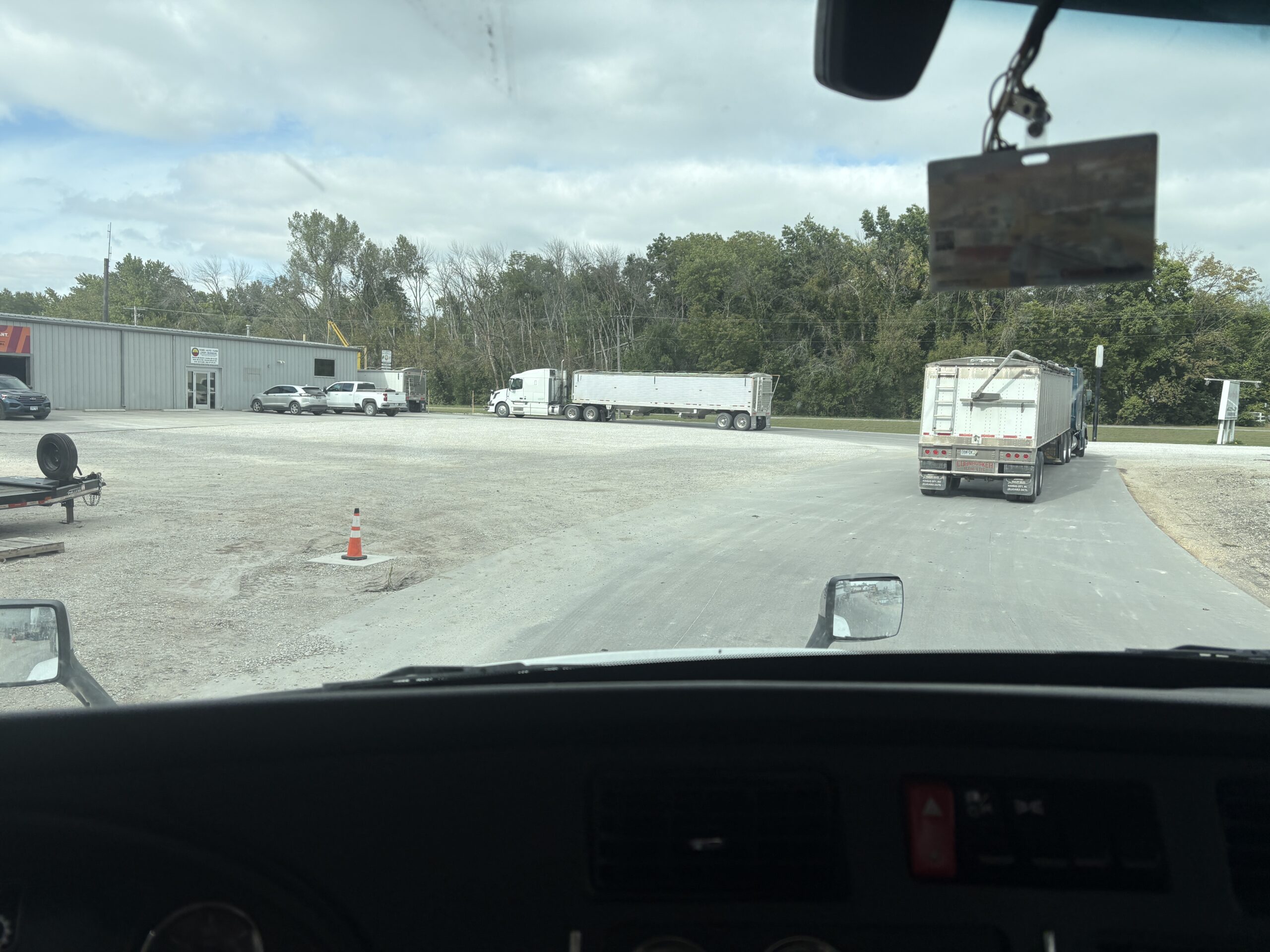
The photos show how much there was to watch on this visit. Trucks were moving near the scale and receiving buildings, while other vehicles and equipment were in the yard. I wasn’t driving through an empty lot where I could ignore everyone else’s route. I had to keep track of the truck ahead, the bay I’d been given, and the space around my trailer.
If you’re new to hauling grain, don’t rush because other drivers look like they know exactly where they’re going. It’s better to understand your instructions and line up properly than to make a wrong turn in a crowded elevator yard.
Unloading the Corn
At the assigned bay, I unloaded the corn. From the driver’s side of the process, the important thing was being at the rightbay and following the directions for that receiving point.
I won’t pretend that every elevator unloads trucks through the same equipment or that one visit explains every part of this facility. Different grain trailers have different unloading controls, and the people at the bay need room to do their work. I pay attention to my truck, the opening, and any directions I’m given there.
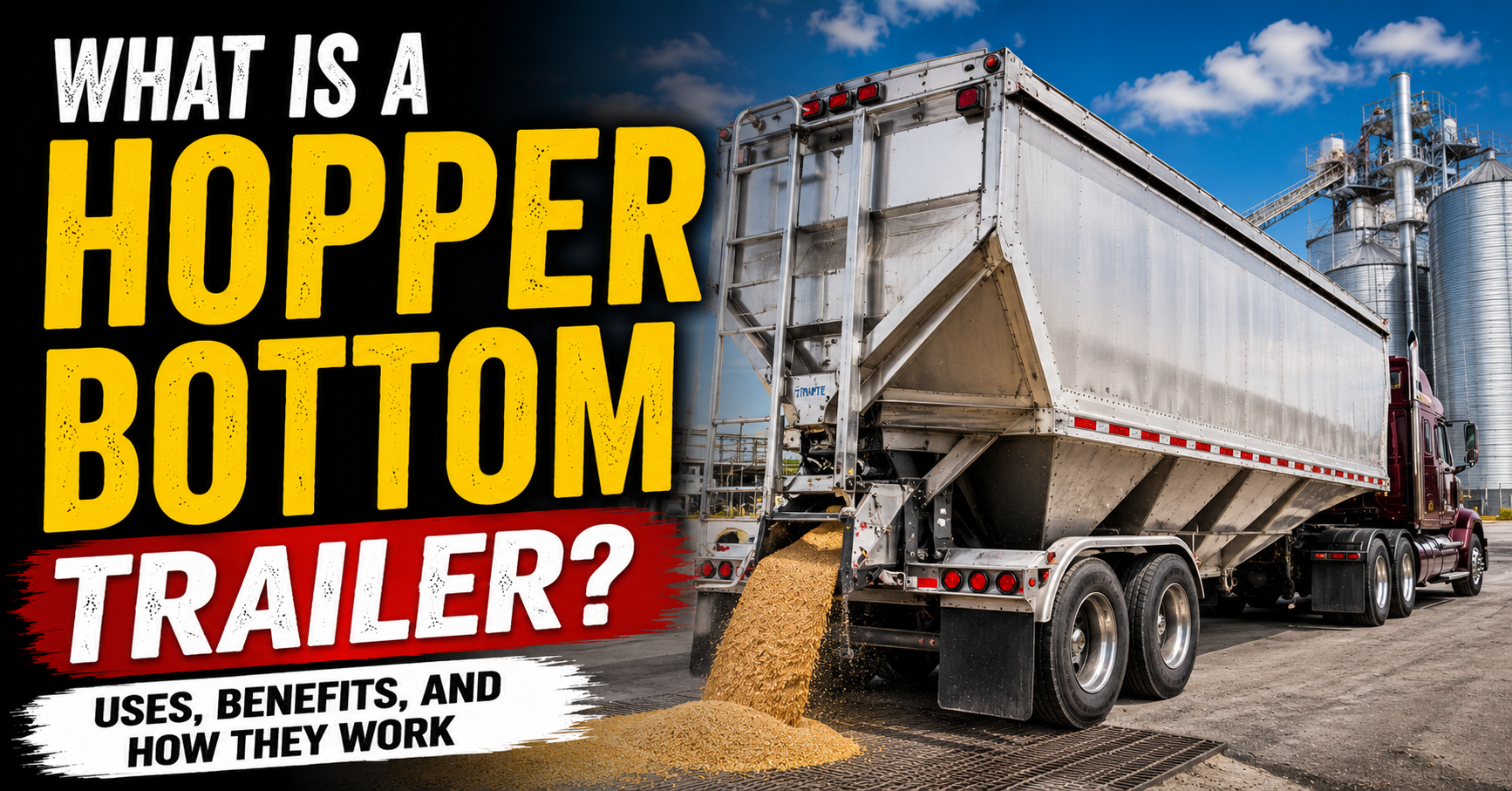
A hopper-bottom trailer is common in grain hauling, but the key point for this trip is the sequence: I didn’t unload until after the loaded weigh-in and the bay assignment. The elevator needed to identify and weigh the load before it was emptied.
Seeing the bins from the unloading area also puts the scale of the operation in perspective. My truck carried one load. Around it were multiple receiving areas, large storage structures, other trucks, and railcars. I saw a train come through the area as well. It was a reminder that the grain I brought was entering a much larger handling system, though I can’t tell you where my particular corn went after I left.
Closing the Tarp and Weighing Empty
After unloading, I closed the tarp and went to the final scale. This time, the truck was empty.
The two weights serve different purposes. The first records the loaded truck; the second records it after the corn is off. The difference is the weight of corn delivered, subject to whatever other figures appear on the elevator’s paperwork.
It’s tempting to think the job is finished once the trailer is empty, especially if you’re eager to get back for another load. For me, the empty weigh-in was still part of the delivery. Leaving before that final scale would leave out the number needed to complete the record for the load.
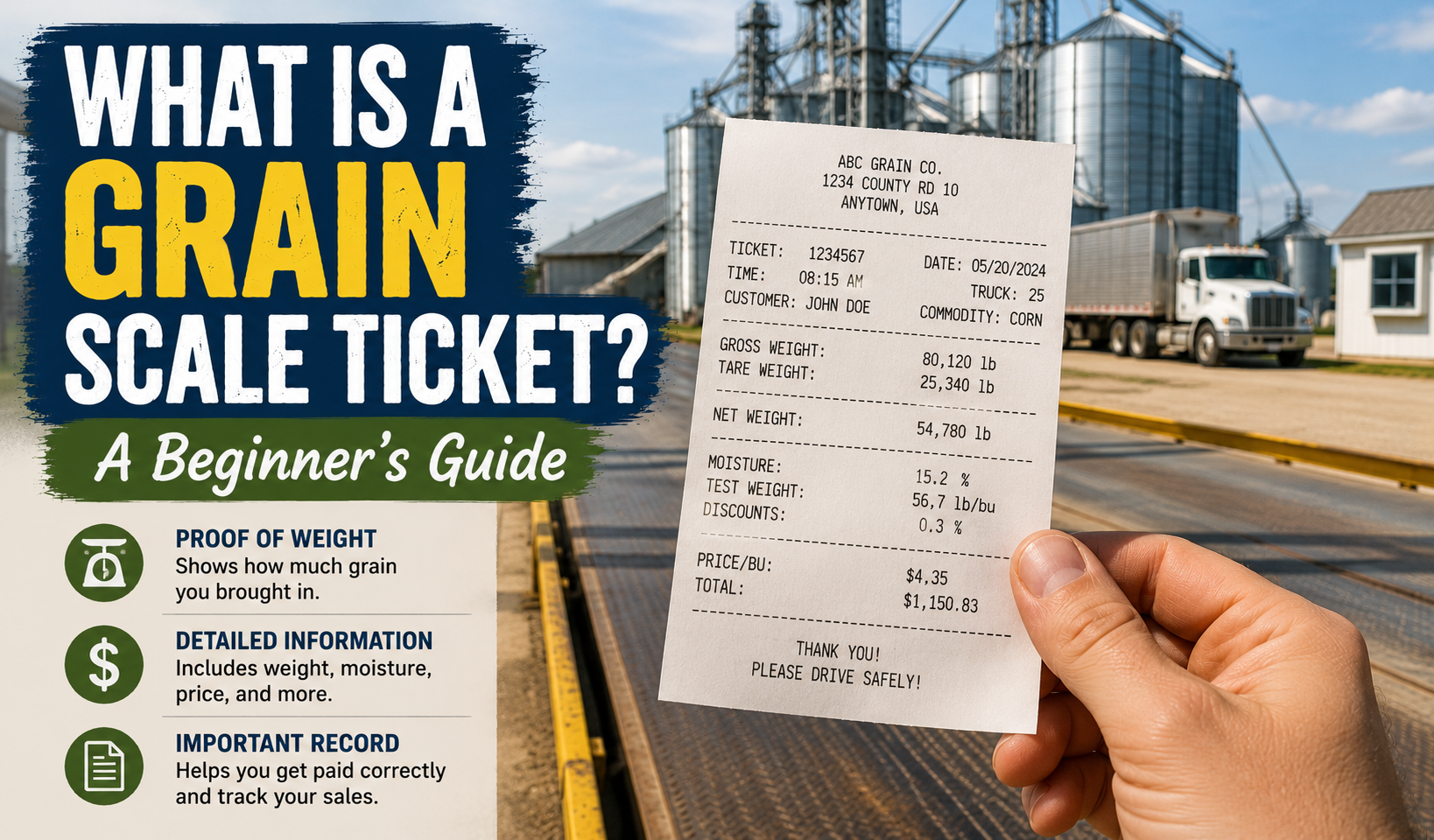
I’ve covered the terms printed on a grain scale ticket in a separate article. This trip showed why the driver needs to complete both scale stops before that ticket can tell the full story.



Getting the Receipt Back to the Farm
Once the empty weight was recorded, I got the receipt. I took it back to management at the farm for their records.
That piece of paper connects what happened at the elevator to the farm’s own accounting. It shows that the load was delivered and gives management the information from the scale. Because I was hauling for the farm, the receipt wasn’t something to leave in the cab and forget about after my shift.
For a new grain driver, I’d put that paperwork in the same mental category as getting to the right bay. The delivery isn’t just the physical act of dumping corn. It also has to be credited and recorded under the right business and sale or contract arrangement.
What I’d Want to Know Before My First Elevator Delivery
If I were heading to an unfamiliar elevator, I’d want four things straight before I pulled in: the correct business name, whether the grain was for a spot sale or a contract, where the facility wants drivers to enter and open their tarps, and what paperwork needs to go back to the farm.
I’d still follow the signs and the people working at the facility once I arrived. A busy elevator isn’t the place to insist that a procedure must be the same as the last one I visited.
My Ray-Carroll trip made that clear in a practical way. I arrived with a load of corn, opened the tarp, weighed in, identified the business and sale arrangement, unloaded at the assigned bay, closed the tarp, weighed empty, and brought the receipt home. Each stop had a purpose. Skip one, and the trip isn’t properly finished.
About the author: Dax I write about the trucking jobs I’ve actually done, including hauling corn to Missouri grain elevators. Find more of those firsthand accounts at TruckingResource.com.