
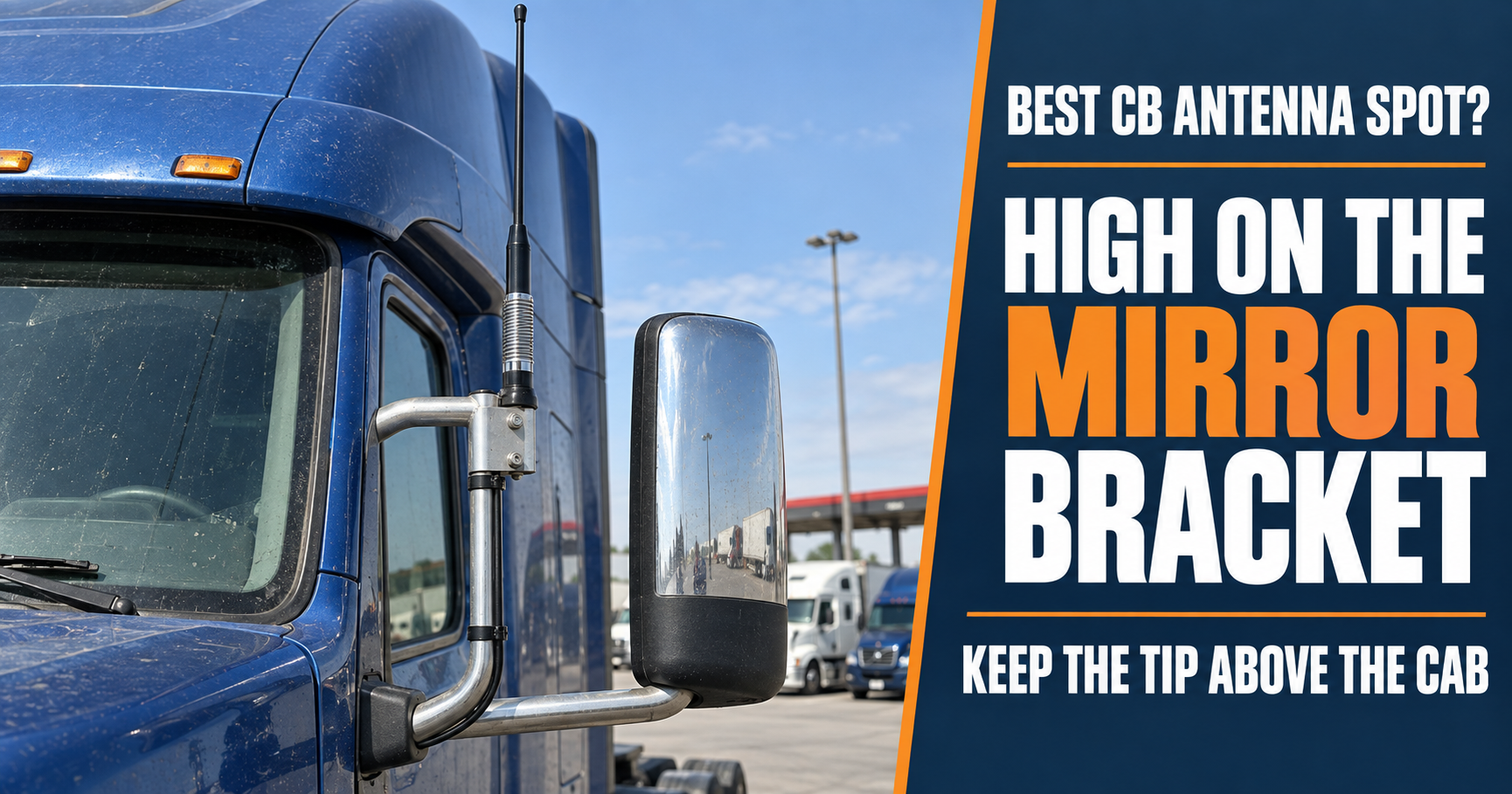
The place you mount a CB antenna can make a bigger difference than a lot of drivers expect. You can buy a good radio, install it neatly in the cab, and still be disappointed if the antenna is tucked against the truck where it has little room to work.
On a semi, though, “put it as high as possible” is only part of the answer. You also have to think about bridges, shop doors, tree limbs, mirrors, the trailer, and where the coax cable will run. I’d rather have an antenna in a practical spot that stays secure than one that looks perfect while the truck is parked but gets struck on the first low branch.
Here’s how I would compare the common mounting spots before drilling a hole or ordering a bracket.
My First Choice Would Depend on the Truck
If a truck already has a solid factory antenna location, I would start there. The mount fits the truck, the coax may already be routed, and I can inspect what is present before buying more parts.
If I were starting from scratch, I would look for a location that lets a good portion of the antenna extend above the cab while still leaving safe overhead clearance. On many semis, a properly fitted mirror mount is a practical choice. A roof mount may give the antenna a more open position, but the roof material, mounting method, and overall height all matter.
There is no one location I would recommend for every semi. A day cab, a tall sleeper, and a truck with a fiberglass roof do not present the same mounting choices.



What Actually Matters About Antenna Location?
I look at five things before settling on a spot: how much of the antenna is in the clear, how firmly the mount attaches, whether the mount works with that truck’s materials, how safely the coax can be routed, and whether the antenna can survive the places the truck needs to go.
An antenna mounted low beside a tall cab can have much of its length blocked by the truck. Moving it higher or farther into the clear may help, but every change needs to be checked against the truck’s total height and normal routes.
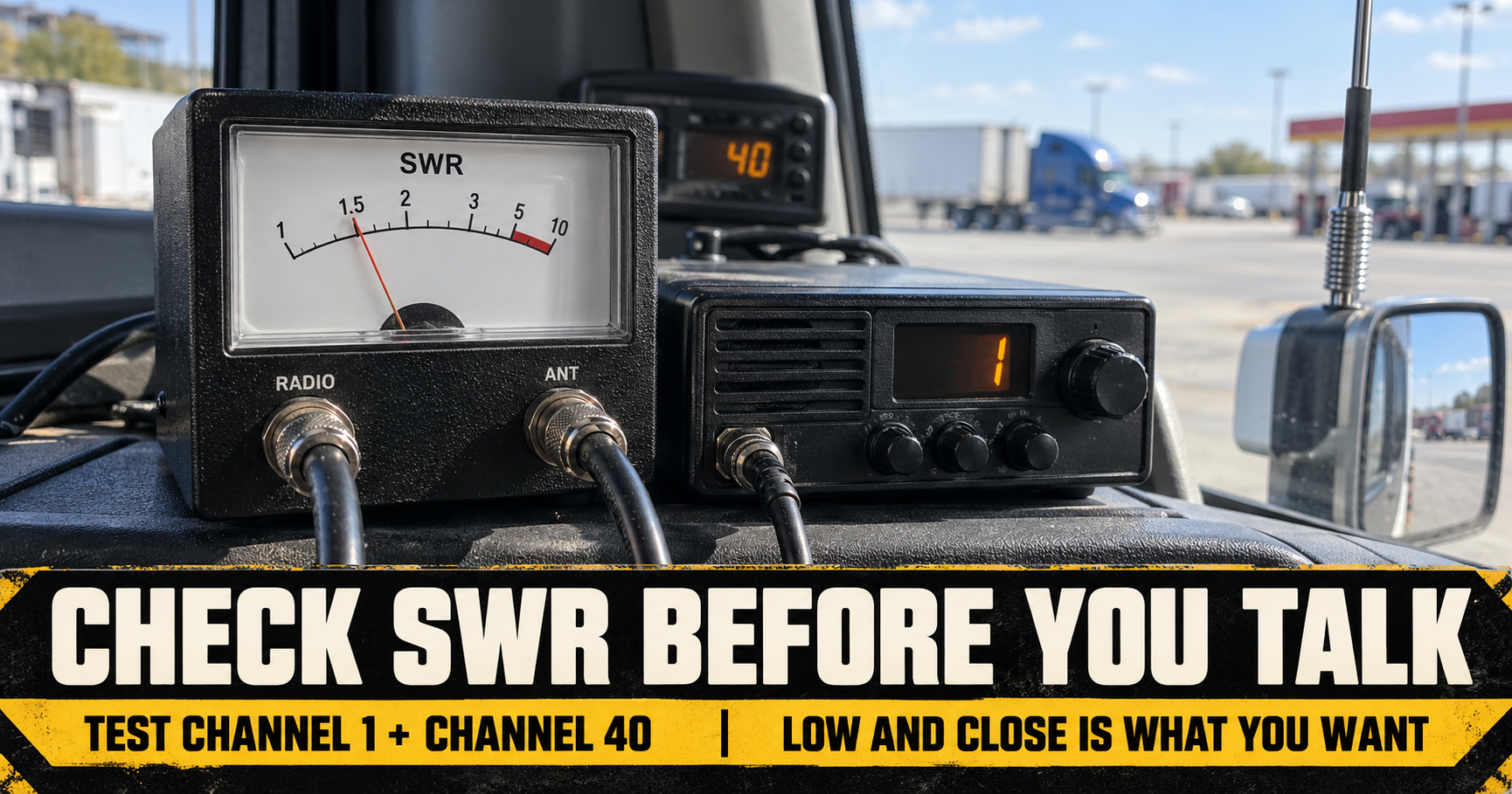
I would also want a mount that stays put. A bracket that shifts when the truck vibrates can strain the coax connection and change the antenna’s position. Once the installation is complete, I would check the CB radio’s SWR rather than assume the location works because the radio receives traffic.



Is a Mirror Mount a Good Spot?
A mirror mount is often the first option I would consider on a semi. It can put the antenna out toward the side of the truck, with more of the whip clear of the cab than a low mount tucked behind it.
The details of the mirror assembly matter. A bracket has to fit securely without interfering with mirror adjustment, visibility, or other hardware. I would inspect how the mount attaches and where its coax connector sits before buying it. A connector exposed where it will be soaked or tugged every time the door moves deserves extra attention.
I would not assume that every mirror arm provides the electrical connection a particular antenna mount needs. Trucks use different materials and designs. Follow the instructions for the antenna and mount, then verify the finished installation with an SWR reading.
Is the Roof the Best Place for a CB Antenna?
The roof can offer an open position, and on a suitable metal roof it may be an excellent place for the right antenna and mount. But I would measure the truck’s height with the proposed antenna before choosing that spot.
I would also find out what the roof is made of. A fiberglass roof does not behave like a metal mounting surface. Some antennas and mounts are designed for installations with a suitable metal surface, while others are made for different setups. I would choose parts intended to work together rather than assume any magnetic or through-roof mount will work on any cab.
Drilling the roof brings another concern: keeping water out. If the installation calls for a hole, I would want the correct hardware, proper sealing, and a coax route that does not get pinched. That is a job I would take seriously on a truck that has to sit outside in the rain for years.

What About Mounting an Antenna Behind the Cab?
Behind the cab may be convenient because there is already a place to attach a bracket or route cable. Convenience alone would not sell me on it.
I would stand back and look at how much of the antenna is beside the cab rather than above it. Then I would look at where the trailer sits during a turn and whether the antenna or cable could be struck, rubbed, or trapped. The right answer depends on the cab, trailer, bracket, and antenna length.
If the antenna is low and close to surrounding metal, I would be cautious about choosing that location just to keep the installation out of sight. A neat install is nice, but the radio still needs an antenna position that works.
Should You Run One CB Antenna or Two?
Two antennas can look right at home on a semi, especially on the mirrors. That does not automatically make them the better choice for every driver.
A dual-antenna setup needs the correct matching components and spacing to work as intended. I would not connect two ordinary antenna cables to the radio with a random adapter and expect better range. If the truck already has dual antennas, I would identify the components and inspect the condition of both sides before deciding whether to keep that arrangement.
For a new setup, I would be comfortable starting with one well-mounted antenna, tuning it, and seeing how it performs. That gives me fewer mounts and cable connections to troubleshoot. If a driver wants dual antennas for a particular truck and use, I would buy a system intended for that configuration and follow its instructions.
Measure Clearance Before You Commit
This is the part I would check before ordering a long whip. Measure the truck as it sits with its usual equipment, then work out how high the installed antenna will reach.
Think beyond highway bridges. The truck may need to pass through a shop door, enter a grain facility, drive beneath trees, or pull into a customer’s loading area. An antenna with a spring or flexible whip can still be damaged if it repeatedly strikes things. The mount can be damaged too.
I would also check whether the antenna could touch another part of the truck when it bends. If a bracket puts it close to an exhaust stack, fairing, or other hardware, picture what happens at road speed and in wind.
Plan the Coax Route at the Same Time
I would not pick an antenna location without deciding how the cable gets back to the radio. Coax needs a route that avoids sharp edges, pinched door openings, moving mirror parts, and places where it will rub through over time.
Leave enough room for the mirror or door to move normally. Secure the cable so it does not hang where it can snag, but do not pull it tight against a moving part. If the cable enters the cab, protect the entry point against water.
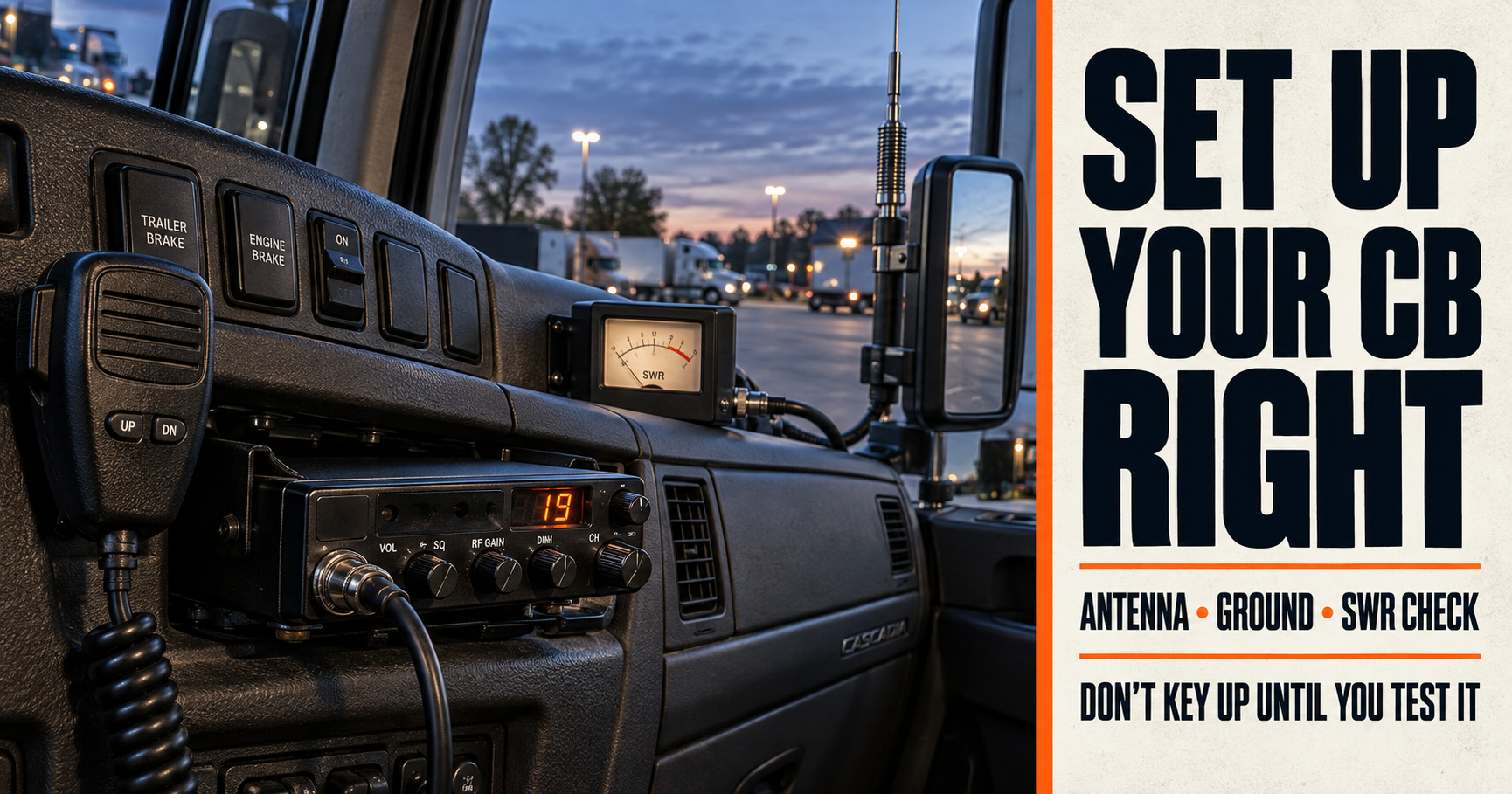
Before hiding all the cable, I would connect everything and make sure the radio and antenna setup can be checked. Our semi truck CB installation guide walks through the rest of the setup.



Does a Higher Antenna Always Mean Better CB Range?
Height and a clear position can help, but I would not promise that moving an antenna a few inches will add a specific number of miles. Terrain, other trucks, interference, and the setup at the other end of the conversation also affect what you hear.
I would judge a new location in two ways. First, take SWR readings on Channels 1, 19, and 40 and fix any installation problem those readings reveal. Second, pay attention to how the radio works during normal driving. Can you hear nearby drivers clearly? Can they hear you? Does performance change when you connect a trailer or move to a different area?
If you are wondering what distance is realistic in the first place, I cover the moving parts in how far a CB can reach from a semi truck.
The Spot I Would Avoid
I would avoid a location chosen only because it is easy to reach from the cab. If most of the antenna sits tight against the truck, the bracket is flimsy, or the coax has to pass through a place where it will be crushed, I would keep looking.
I would also avoid making permanent holes until I have confirmed the roof material, bracket fit, total height, and cable path. Those checks take less time than repairing a leak or relocating a mount later.
For most drivers choosing between reasonable locations, I would start with the truck’s existing mount if it is sound. Otherwise, I would compare a properly fitted mirror mount with any suitable roof mounting option, measure clearance, and check SWR after installation. The reading and the way the radio performs on the road will tell you more than how impressive the antennas look from the parking lot.
About the author: Dax earned his Class A CDL on his first attempt after an accelerated course at Ross Trucking School. He writes for TruckingResource.com with a focus on making truck equipment and CDL topics easier for newer drivers to understand.