
Your Kenworth’s air conditioner is working perfectly while you’re driving.
The cab is comfortable.
The vents are blowing nice, cold air.
Then you stop.
Maybe you’re waiting in line at a grain elevator.
Maybe you’re sitting at a stoplight.
Maybe you’re fueling up.
A few minutes later you notice something.
The air coming from the vents isn’t nearly as cold anymore.
Then, as soon as you start driving again…
The air gets cold.
If that sounds familiar, you’re not imagining things.
This is one of the most common A/C complaints on heavy trucks, and fortunately it usually points you toward a fairly specific group of problems instead of making you guess at every part in the system.
The Biggest Difference Between Driving and Idling
The biggest thing that changes when the truck stops isn’t the air conditioner.
It’s the airflow.
While you’re driving, outside air is constantly moving through the grille and across the condenser.
That airflow removes heat from the refrigerant, allowing the A/C system to keep producing cold air.
Once the truck stops moving, that natural airflow disappears.
Now the system depends almost entirely on the engine-driven cooling fan to pull enough air through the condenser.
If that airflow isn’t sufficient, vent temperatures begin climbing even though the A/C is still turned on.



A Dirty Condenser Is the First Thing I’d Inspect
If you’re driving during harvest like I am, your truck is constantly surrounded by:
- Corn dust
- Chaff
- Dirt
- Bugs
- Pollen
- Gravel road debris
Eventually that material starts collecting on the condenser.
Even if it doesn’t completely block airflow, it reduces the condenser’s ability to release heat.
At highway speeds you may never notice because road speed forces so much air through the cooling package.
At idle…
That restriction suddenly matters.
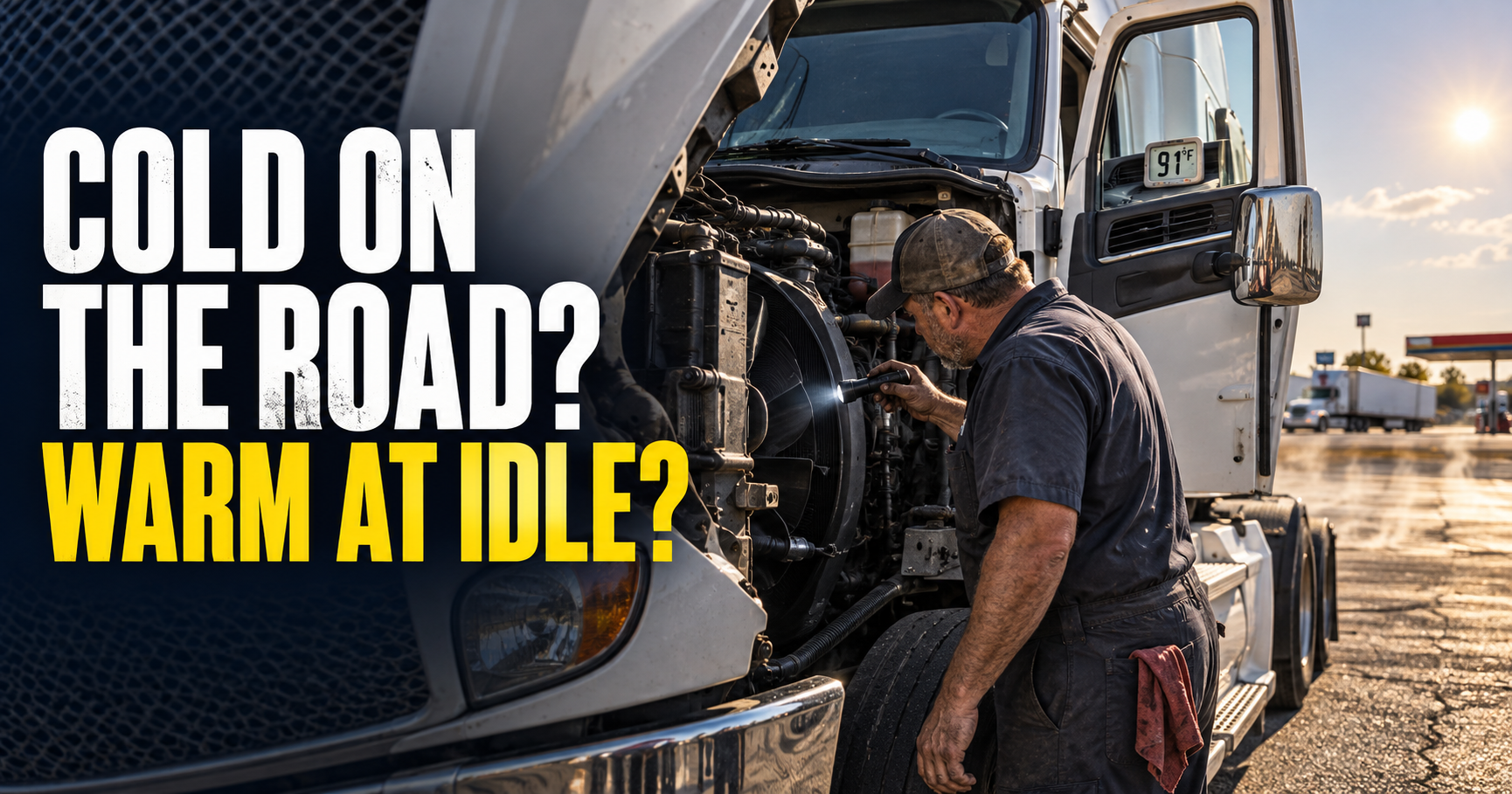
Before replacing expensive parts, I’d carefully inspect the condenser and radiator for packed debris.



Check the Engine Fan and Fan Clutch
The cooling fan becomes extremely important when the truck isn’t moving.
If the fan clutch isn’t engaging properly, or the fan isn’t pulling enough air through the condenser, the refrigerant stays hotter than it should.
That’s why many trucks cool perfectly at highway speed but lose cooling while sitting still.
This is especially common on trucks that work in dusty environments where the cooling package has to work much harder than normal.
Low Refrigerant Can Show Up More at Idle
Although condenser airflow is usually the first thing I suspect, low refrigerant is another common possibility.
A system that’s only slightly low on refrigerant may still cool reasonably well while you’re driving because:
- The compressor is turning faster.
- Airflow through the condenser is much higher.
- Heat leaves the refrigerant more efficiently.
At idle, those advantages disappear.
If the refrigerant charge is marginal, the truck may struggle to keep vent temperatures cold while sitting still. A low refrigerant charge can sometimes be most noticeable at idle, although it usually indicates a leak that should be diagnosed rather than repeatedly topped off.



The Compressor May Be Getting Weak
Compressors don’t always fail overnight.
Sometimes they simply lose efficiency over time.
A worn compressor may still produce enough pressure while engine RPM is higher on the highway.
At idle, however, it may not move refrigerant efficiently enough to keep the evaporator cold.
That doesn’t automatically mean the compressor is bad.
It simply becomes another item to evaluate after you’ve ruled out airflow problems and refrigerant issues.
Blend Doors Can Fool You
If the airflow is still strong but the temperature doesn’t stay consistently cold, don’t forget about the blend door.
A blend door that doesn’t fully close can allow heated air from the heater core to mix with the cold air coming from the evaporator.
The result is air that feels cool while driving but gradually becomes warmer at idle.
Depending on the truck, you may also notice the temperature changing on its own or not matching the temperature you’ve selected on the controls.
Start With the Simple Things
If this happened on my own truck tomorrow, I’d troubleshoot it in this order.
- Inspect the condenser for dirt, bugs, corn dust, and chaff.
- Verify the engine fan or fan clutch is moving enough air at idle.
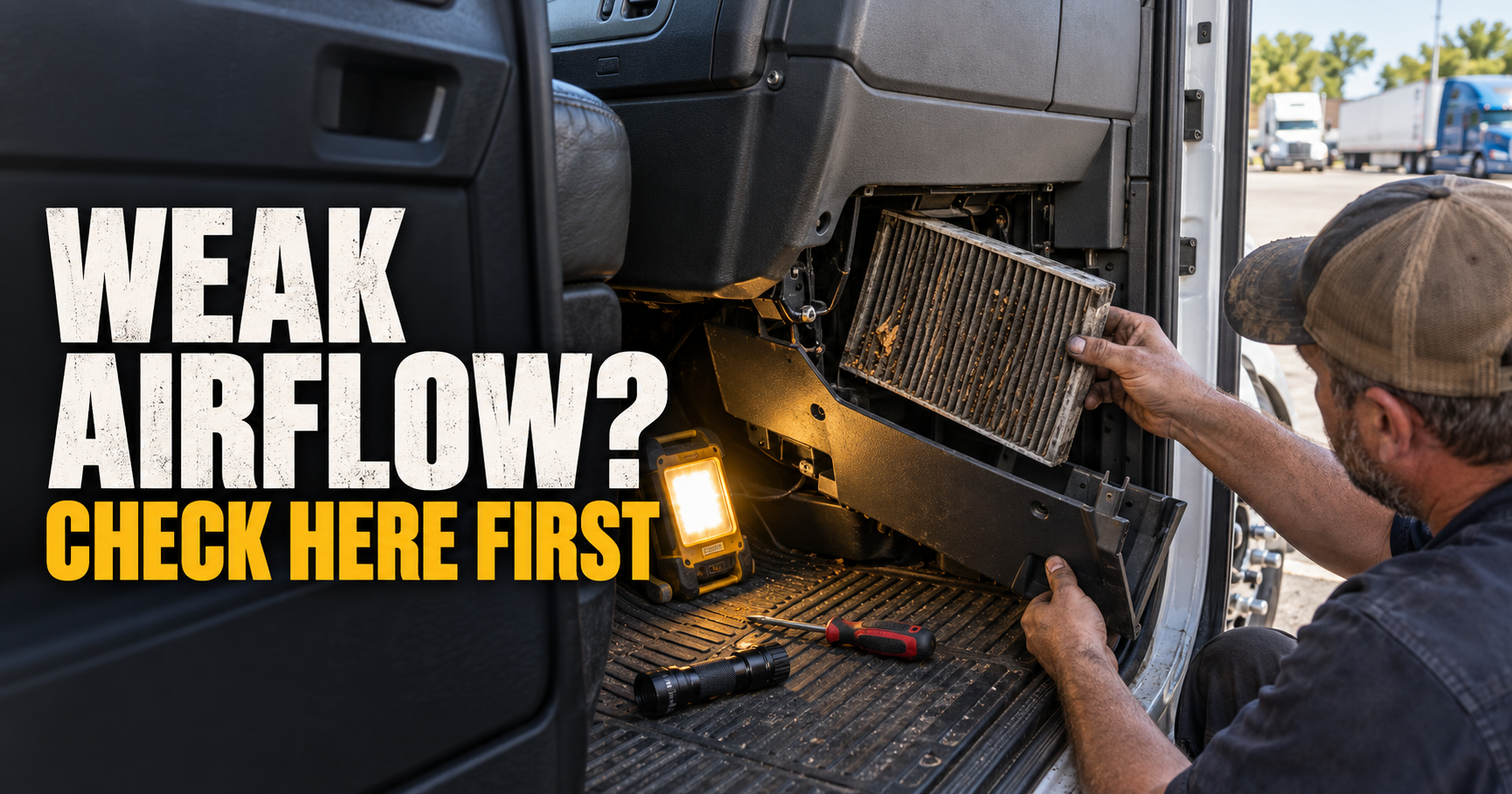
- Check that the cabin air filter isn’t severely restricted.
- Verify the compressor clutch is engaging properly.
- Have the refrigerant pressures checked.
- Investigate blend door operation if everything else appears normal.
That approach starts with the least expensive possibilities before moving into more complex diagnostics.
Harvest Makes Cooling Systems Work Harder
One thing I’ve noticed since hauling grain is that harvest is rough on cooling systems.
Every day the truck is exposed to:
- Corn dust.
- Chaff.
- Gravel road dust.
- Insects.
- Field debris.
All of that ends up packed into the cooling package.
Even if nothing is technically broken, reduced airflow through the condenser can have a noticeable impact on A/C performance, especially while idling.
It’s one reason I think harvest trucks benefit from cleaning the condenser and radiator more often than trucks that spend all day on the interstate.


Frequently Asked Questions
Why is my Kenworth AC cold while driving but warm when I stop?
The most common causes are poor airflow across the condenser while idling, a dirty condenser, a weak fan clutch or cooling fan, a slightly low refrigerant charge, or a compressor that’s becoming weak.
Can a dirty condenser really make that much difference?
Yes.
Dust, bugs, and harvest debris reduce the condenser’s ability to release heat. At highway speed, natural airflow often masks the problem. At idle, it becomes much more noticeable.
Does this always mean I need refrigerant?
No.
Low refrigerant is only one possible cause. Airflow problems, cooling fan issues, compressor performance, and blend door problems can all produce very similar symptoms.
Should I recharge the system before checking anything else?
I wouldn’t.
If the condenser is completely packed with harvest debris or the fan isn’t pulling enough air, adding refrigerant won’t solve the underlying problem. It’s better to diagnose the cause first than replace parts or recharge the system based on a guess.
Don’t Assume the Compressor Is Bad
When your Kenworth cools perfectly on the highway but gets warm every time you stop, it’s easy to think the entire A/C system is failing.
In reality, that specific symptom often points toward airflow across the condenser rather than the refrigerant system itself.
That’s why I’d always inspect the simple things first.
A dirty condenser.
A weak fan clutch.
A clogged cooling package.
Only after those have been ruled out would I move deeper into refrigerant pressures, compressor performance, and HVAC controls.
Working through the system one step at a time usually saves both time and money, and it gives you a much better chance of fixing the actual problem instead of replacing parts that were never bad in the first place.
Author: Jake Harrison
Jake Harrison is a commercial transportation writer for TruckingResource.com who specializes in CDL maintenance, truck systems, commercial vehicle equipment, and practical repair guides. He works with the TruckingResource.com editorial team to create detailed, beginner-friendly maintenance articles that help drivers diagnose common truck problems with confidence.