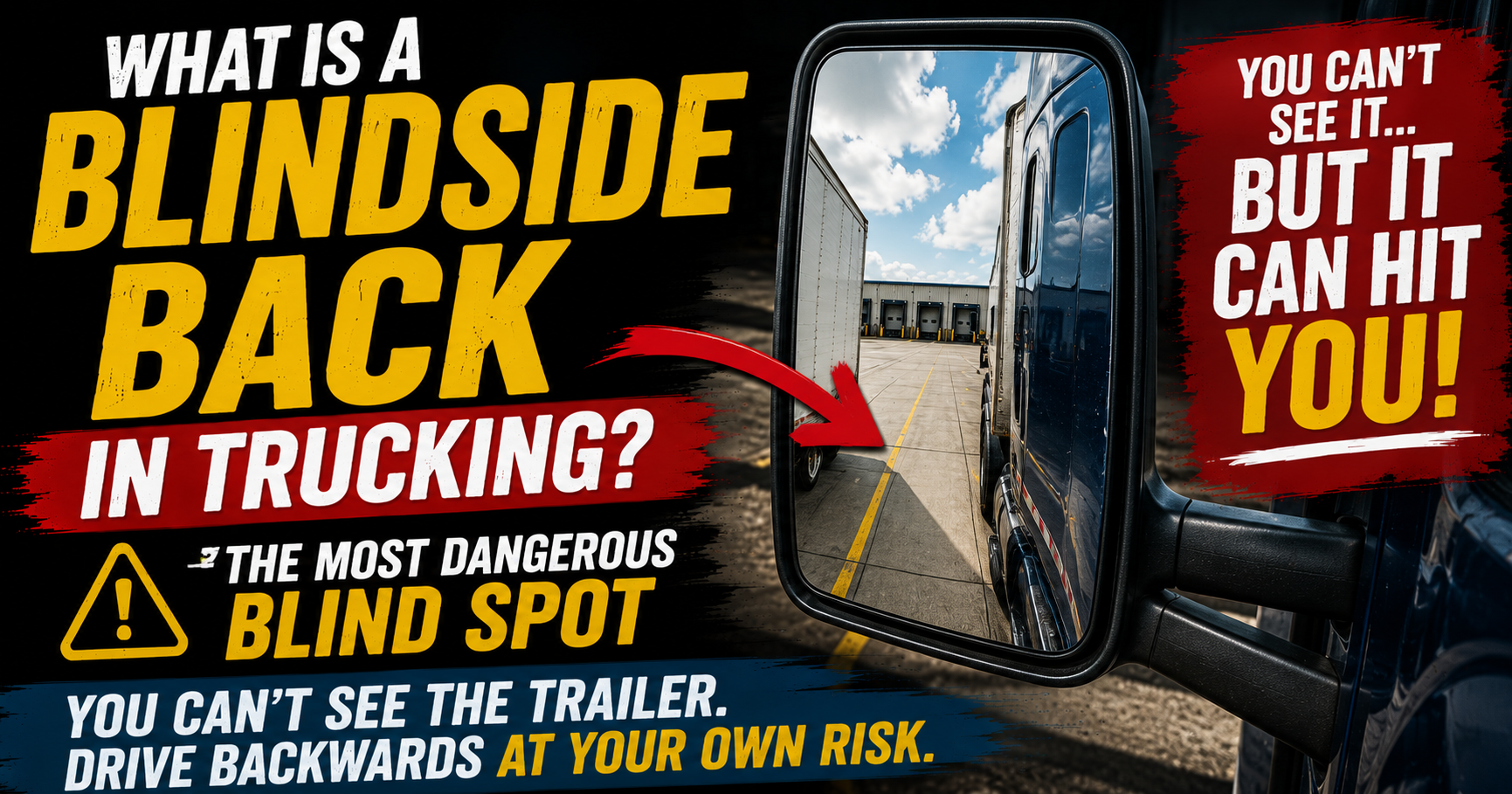
If you’ve spent any time around truck drivers, you’ve probably heard someone say something like, “I had to blindside it into the dock.”
Every experienced driver knows exactly what that means.
Every new driver usually groans a little.
That’s because a blindside back is one of the most challenging backing maneuvers you’ll encounter in trucking.
I’ve been fortunate enough to avoid many of them over the years because I always try to set myself up for an easier approach whenever possible. But sometimes you simply don’t have a choice. The customer, the parking lot, or the dock layout leaves you with one option.
Knowing how to perform a blindside back safely is an important skill that every professional driver eventually develops.
What Is a Blindside Back?
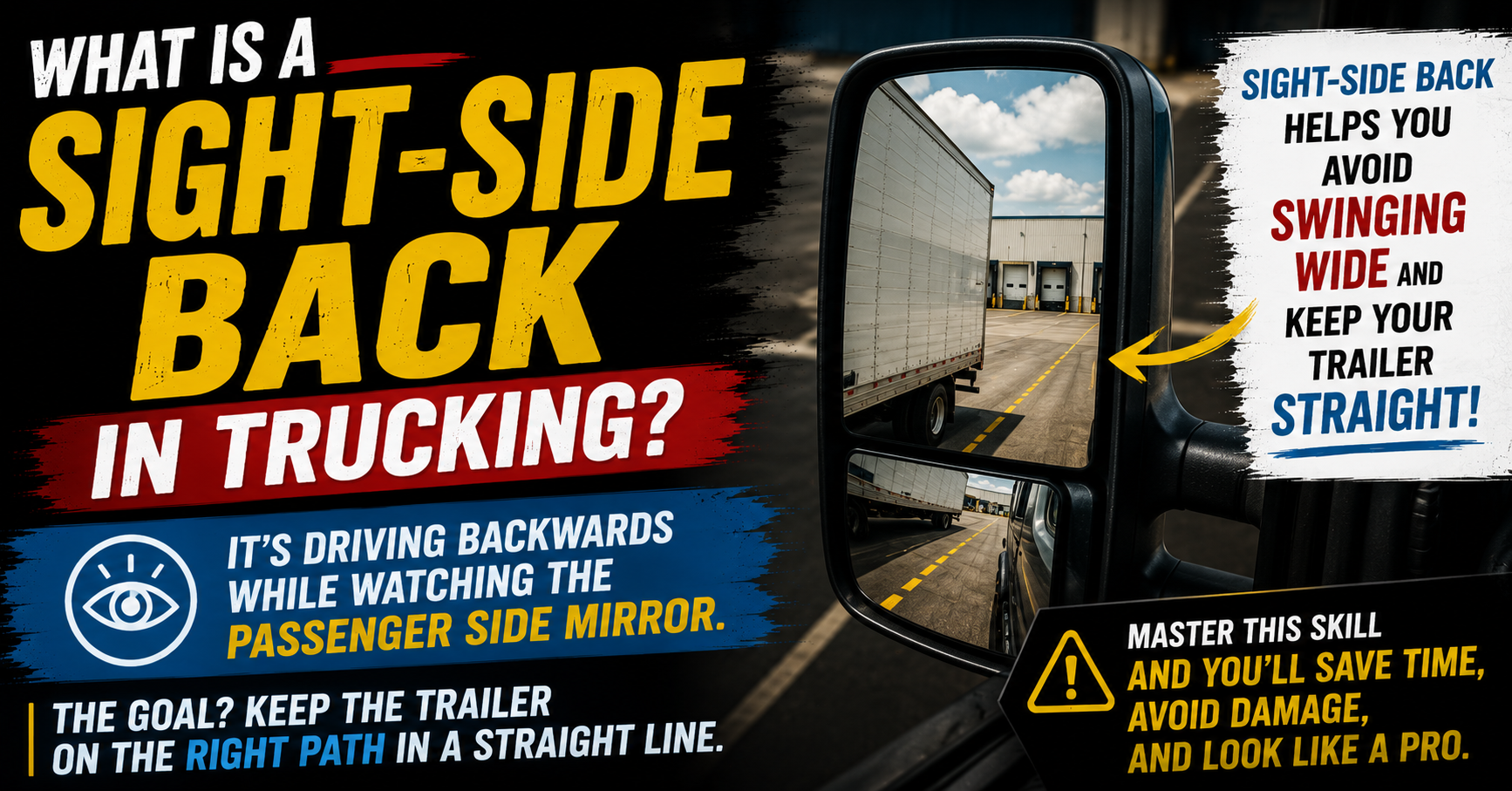
A blindside back is a backing maneuver where the trailer moves toward the passenger side of the truck, limiting the driver’s visibility because the trailer blocks much of the view from the cab. This makes it much harder to see obstacles, vehicles, pedestrians, or the exact position of the trailer. Comparing this maneuver with a What Is a Sight-Side Back in Trucking? makes the visibility differences between the two backing techniques easier to understand.
Most truck drivers consider it the more difficult of the two common backing techniques.
Why Is It Called a Blindside Back?
The name comes from the driver’s limited visibility.
When backing toward the passenger side, you can’t simply look out your window and watch the trailer.
Instead, you’re relying heavily on mirrors.
Even with good mirrors, there are larger blind spots on the passenger side than on the driver’s side.
That’s why it’s called a blindside back.
Blindside Back vs. Sight-Side Back
The easiest way to remember the difference is this.
A sight-side back places the trailer on the driver’s side, where visibility is much better.
A blindside back places the trailer on the passenger side, where visibility is significantly more limited.
Given the choice, almost every experienced driver will choose the sight-side back.
Sometimes, though, that simply isn’t possible.
We’ll cover sight-side backing in its own glossary article because it’s another important CDL term.
Why Blindside Backing Is More Difficult
The biggest challenge is limited visibility.
While backing, you’re trying to monitor:
- Trailer position.
- Dock alignment.
- Nearby vehicles.
- Pedestrians.
- Curbs.
- Obstacles.
- Trailer swing.
- Tractor position.
Doing all of that mostly through mirrors requires patience and practice.
I’ve learned over the years that blindside backing is never something to rush.
Where You’ll Most Likely Encounter a Blindside Back
Fortunately, you won’t perform one every day.
But there are plenty of situations where it happens.
These include:
- Crowded truck stops.
- Tight warehouses.
- Older loading docks.
- Customer parking lots.
- Construction sites.
- Busy distribution centers.
Sometimes the only available dock requires a blindside approach.
When that happens, slow and steady wins every time.
How I Approach a Blindside Back
My routine hasn’t changed much over the years.
First, I get out and look.
Sometimes more than once.
Then I begin backing very slowly while checking both mirrors constantly.
If I lose sight of where the trailer is going, I stop.
If something doesn’t feel right, I stop.
I’ve never been embarrassed about pulling forward and starting over.
It’s much cheaper than backing into someone else’s trailer.
The Importance of GOAL
One phrase you’ll hear throughout CDL school is GOAL.
It stands for Get Out And Look.
I still use it after all these years.
If I’m unsure where the trailer is heading or whether I have enough clearance, I simply climb out and check.
No customer has ever complained because I took an extra minute to avoid damaging their property.
Common Mistakes During a Blindside Back
I’ve watched plenty of new drivers struggle with this maneuver.
The mistakes are usually predictable.
Some drivers back too fast.
Others focus on only one mirror.
Some are afraid to stop and reset.
The biggest mistake of all is letting pride take over.
Every experienced driver has had to pull up and start over.
That’s part of trucking.
Off-Tracking Makes Blindside Backs Harder
One reason blindside backing can become tricky is because the trailer doesn’t follow exactly where the tractor goes. The explanation of why trailers off-track provides useful background for understanding trailer movement during backing and turns.
Instead, it cuts a different path as it pivots behind the truck.
Understanding off-tracking helps you better predict how the trailer will move during tight backing maneuvers.
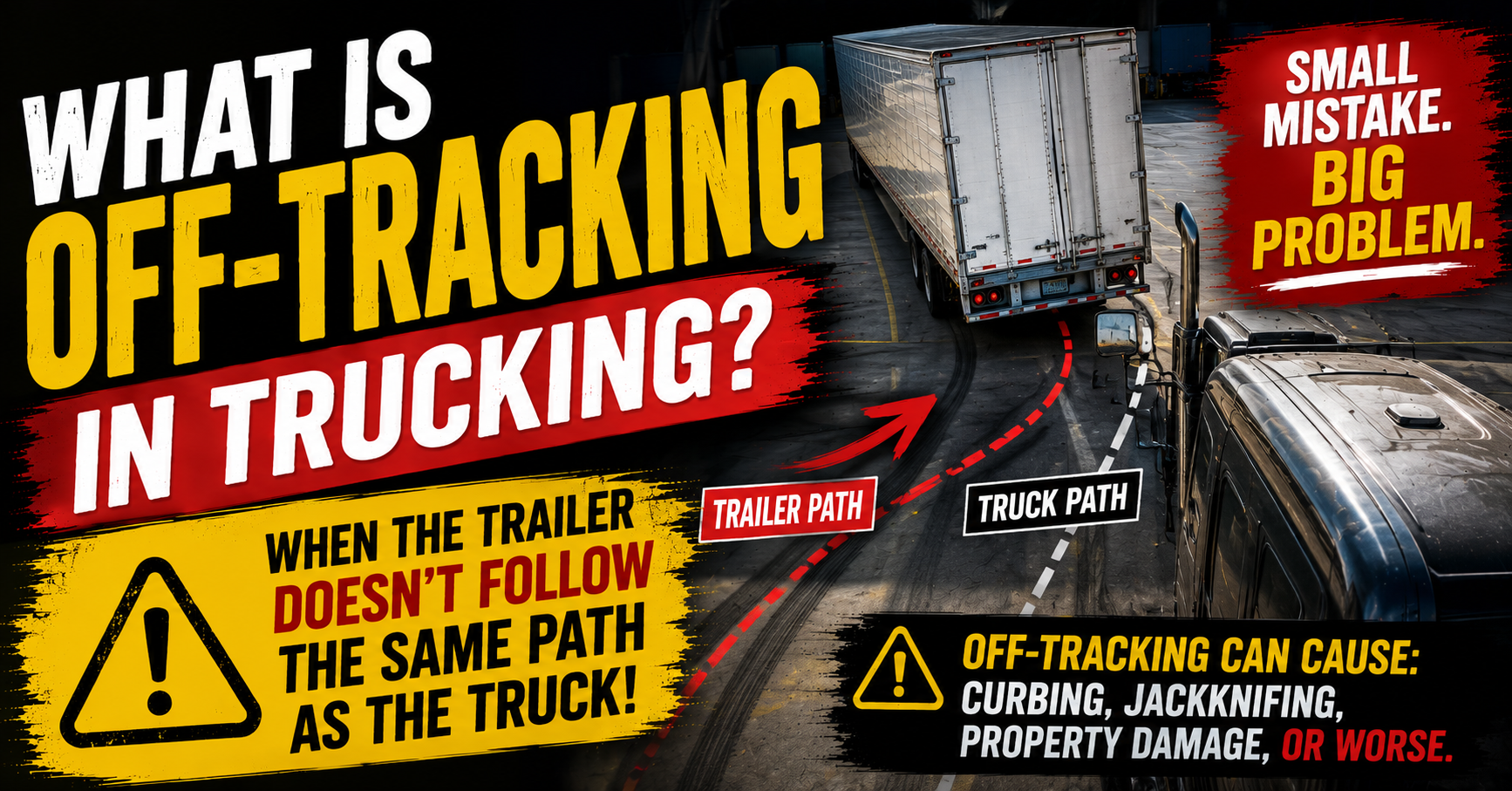
If you haven’t already, our guide on What Is Off-Tracking in Trucking? explains why trailers don’t follow the exact path of the tractor.
Tips That Have Helped Me
After thousands of backing maneuvers, a few habits have served me well.
- Back as slowly as possible.
- Ignore impatient drivers waiting behind you.
- Use every mirror.
- Stop whenever you’re uncertain.
- Get out and look as often as necessary.
- Don’t be afraid to reset your angle.
The goal isn’t backing quickly.
The goal is backing safely.
Will Blindside Backing Be on the CDL Skills Test?
It depends on your state and testing location.
Some CDL examiners include backing maneuvers that require strong mirror usage and vehicle control.
Even if your test doesn’t specifically require a blindside back, you’ll almost certainly encounter one during your driving career.
Practicing backing skills early pays off for years to come.
If you’re preparing for your permit or CDL exam, our CDL Permit Test Simulator: 125-Question Master Practice Exam is a great way to build confidence before test day.
One Piece of Equipment I Recommend
Many blindside backs happen before sunrise or after dark.
A good walk-around inspection is much easier when you can clearly see your surroundings.
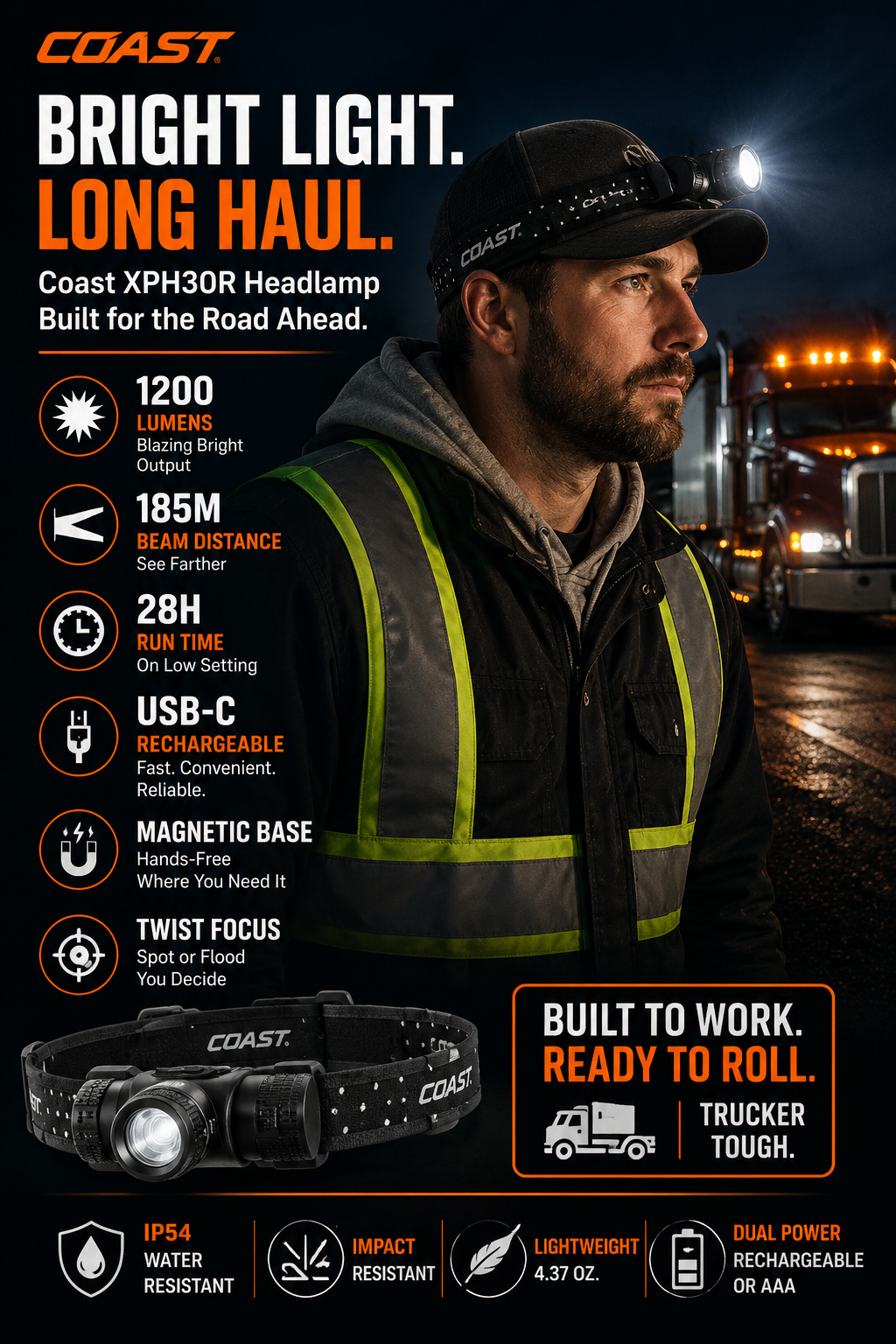
That’s why I always carry the Coast XPH30R USB-C Rechargeable Dual Power Headlamp.
When I stop to GOAL, having both hands free while checking trailer clearance, dock spacing, and obstacles makes the job much easier.
My Advice After Thousands of Backing Maneuvers
If there’s one thing I’ve learned, it’s this.
Nobody cares how fast you backed into the dock.
They care whether you hit something.
Blindside backing demands patience.
Some days you’ll nail it on the first try.
Other days you’ll pull forward three or four times before everything lines up.
That’s perfectly normal.
The drivers I respect most aren’t the ones who never pull up.
They’re the ones who refuse to let their ego cause an accident.
Take your time.
Use your mirrors.
Get out and look.
Those three habits will make you a better truck driver for the rest of your career.
Author: Mike Reynolds
Mike Reynolds spent more than 25 years hauling refrigerated trailers, dry vans, and flatbeds throughout North America. During his career, he trained new drivers on backing techniques, loading dock safety, and defensive driving, always emphasizing that patience and proper setup are far more important than backing speed.