After I started hauling grain during harvest, I noticed something pretty quickly.
Some days, after standing beside a hopper-bottom trailer while it unloaded into a grain bin, I’d find myself coughing on the drive to the next field.
Sometimes my throat felt dry.
Other times I felt like I had to keep clearing it.
If you’ve experienced the same thing, you’re definitely not alone.
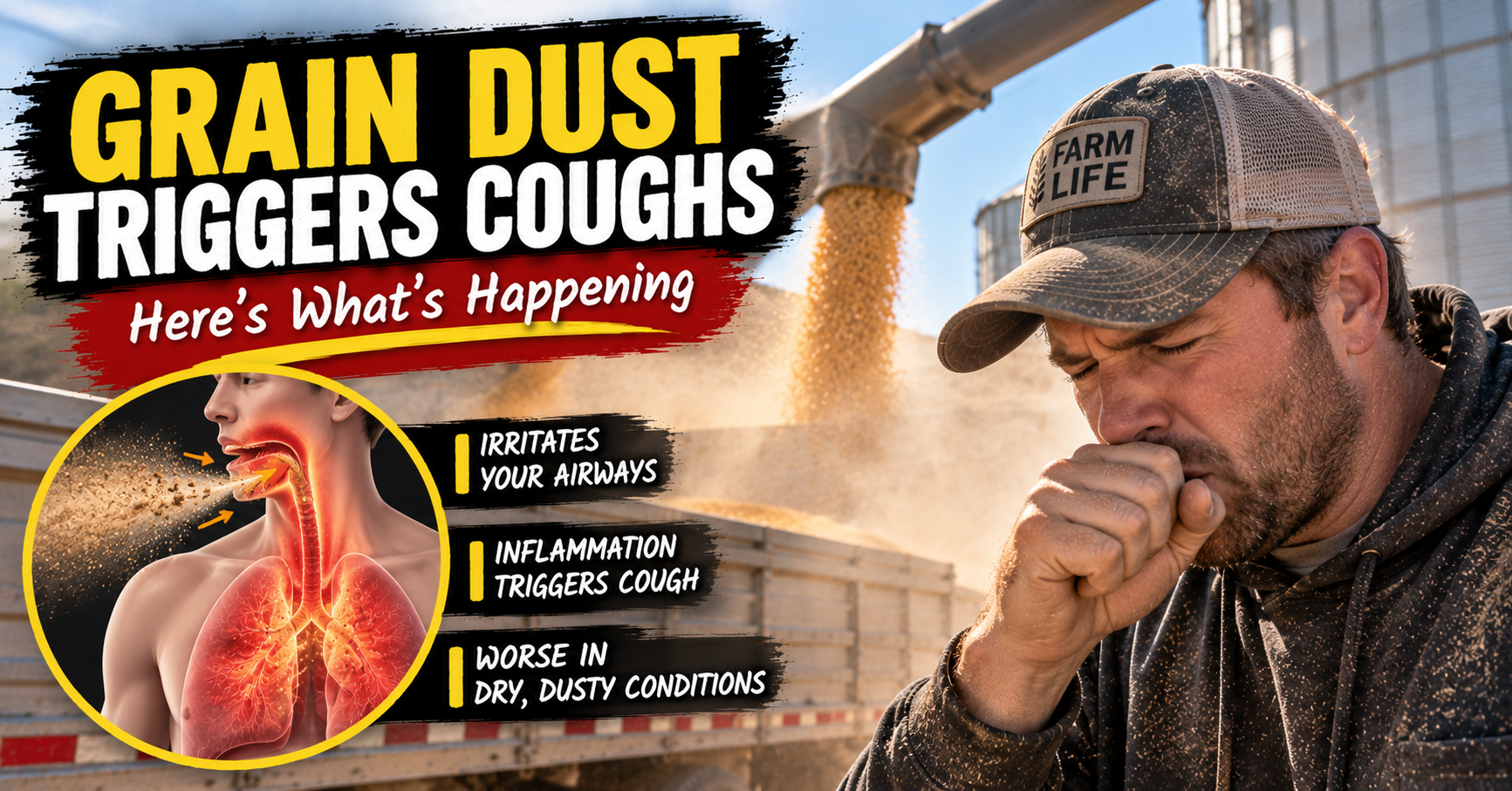
Grain dust is well known for irritating the respiratory tract. Even healthy people can develop coughing, throat irritation, or chest discomfort after breathing large amounts of dust, especially during harvesting or grain handling.
Grain Dust Irritates Your Airways
When you’re unloading corn, you’re not just breathing tiny pieces of corn.
That dust cloud may also contain:
- Corn particles.
- Pieces of cobs and husks.
- Soil.
- Pollen.
- Mold spores.
- Bacteria.
- Insect fragments.
- Other organic material.
Many of those particles are small enough to reach deep into your airways, where they can irritate the lining of your nose, throat, and lungs. Your body’s natural response is to cough in an effort to clear those particles.
Your Body Is Trying to Protect Your Lungs
A cough after breathing grain dust isn’t necessarily a sign that you’ve developed a disease.
It’s often your body’s normal defense mechanism.
Tiny hairs called cilia, along with mucus inside your airways, work together to trap inhaled particles.
Coughing helps move those particles back out before they settle deeper into your lungs.
The problem comes when you’re exposed over and over again throughout an entire harvest season or for many years.
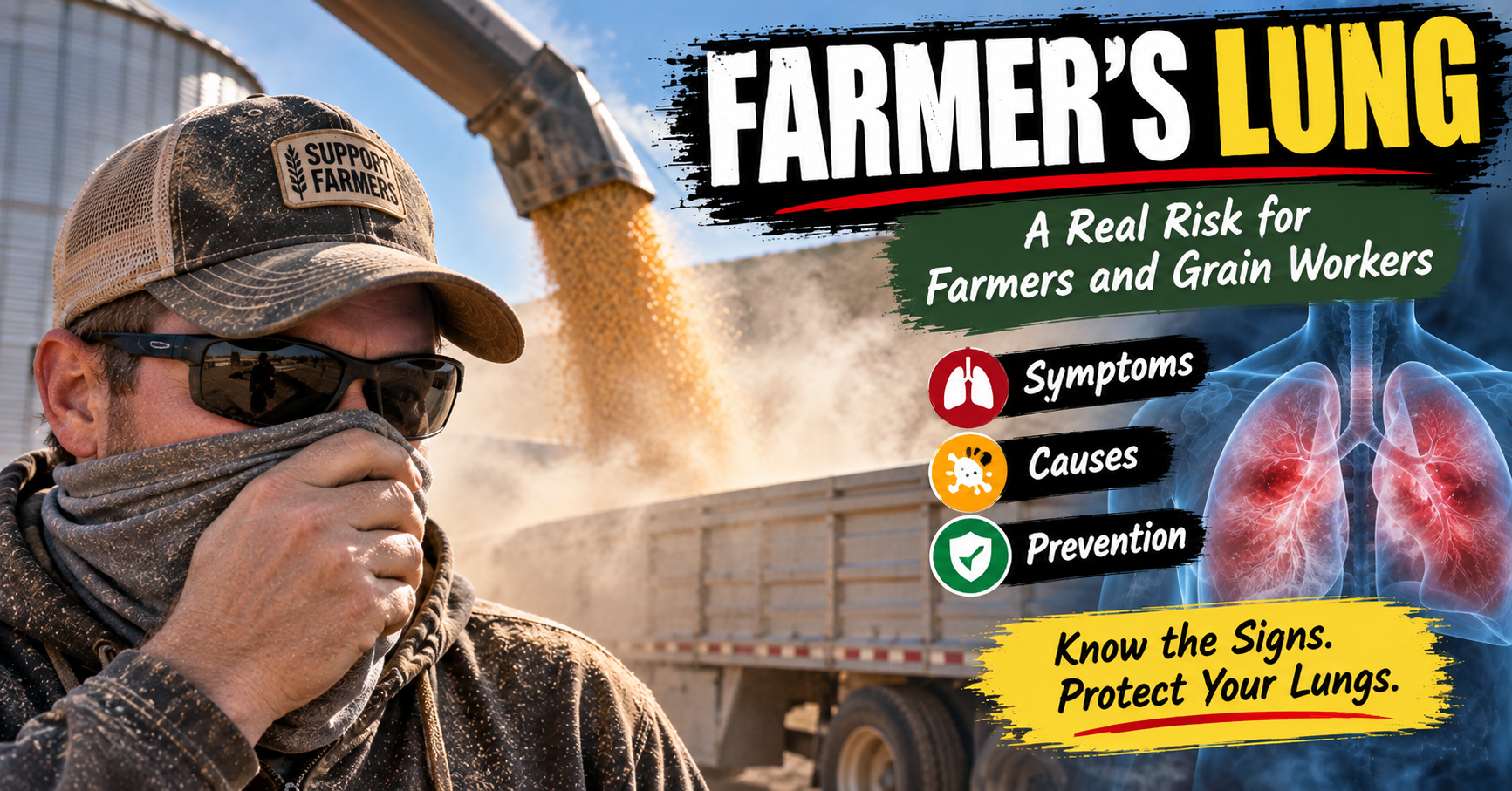
Repeated exposure can lead to chronic irritation and increase the risk of occupational lung diseases in some workers.
Sometimes It’s More Than Simple Irritation
Most harvest coughs go away after you’re away from the dust.
But occasionally, heavy exposure can cause something more significant.
Very large exposures to organic dust can trigger Organic Dust Toxic Syndrome (ODTS), a flu-like illness that usually begins several hours after exposure. Symptoms may include fever, chills, muscle aches, chest tightness, dry cough, and fatigue. Unlike Farmer’s Lung, ODTS is not an allergic disease and usually resolves within a few days once exposure ends.
That’s one reason it’s important not to ignore symptoms that seem much worse than an ordinary dusty throat.
Wearing a Respirator Has Made a Big Difference for Me
After spending time unloading grain, I decided I wanted to reduce how much dust I was breathing.
During harvest, it’s easy to think, “It’s only 15 or 20 minutes.”
But if you’re unloading multiple loads every day for weeks, those 15 or 20 minutes add up quickly.
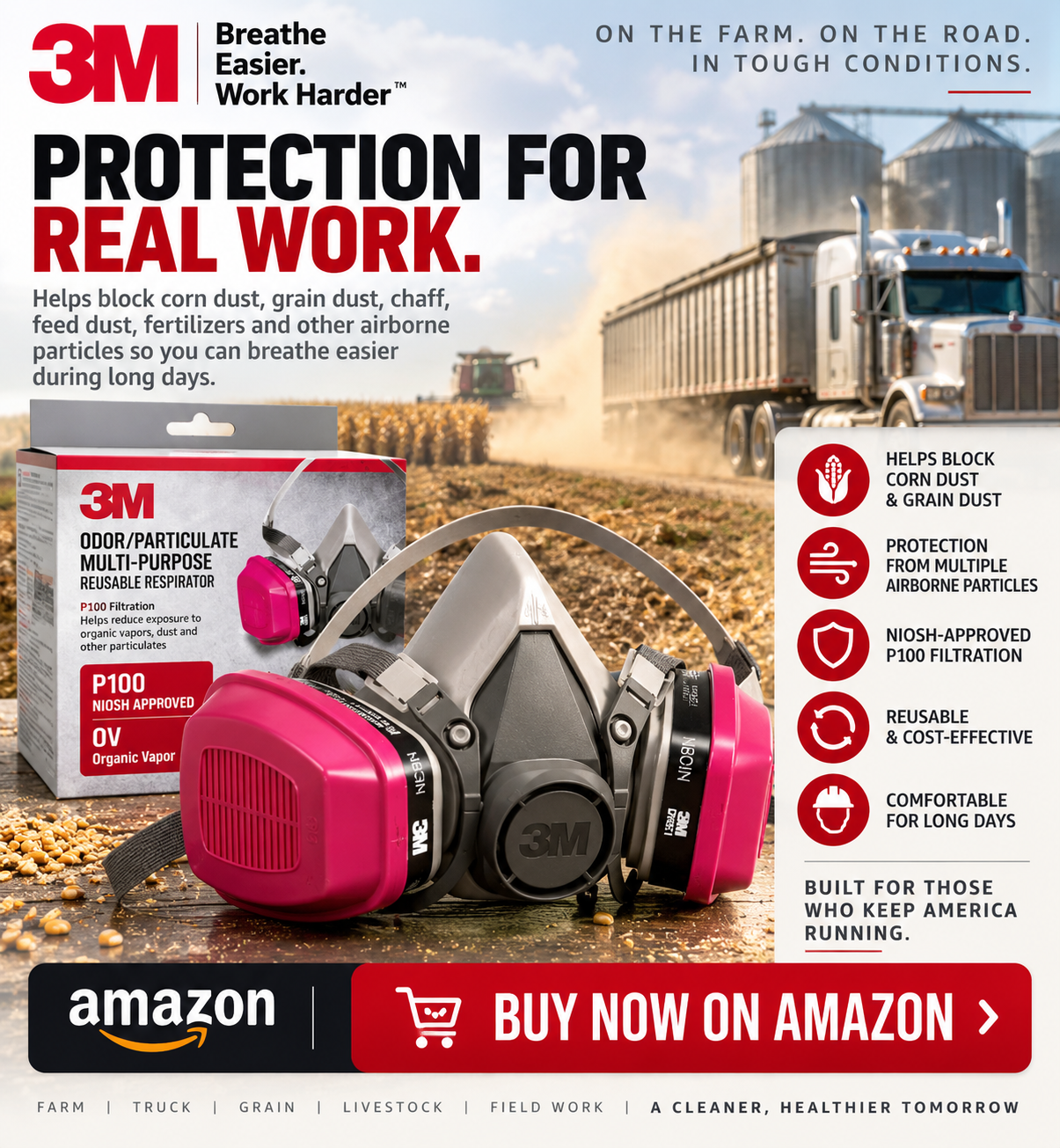
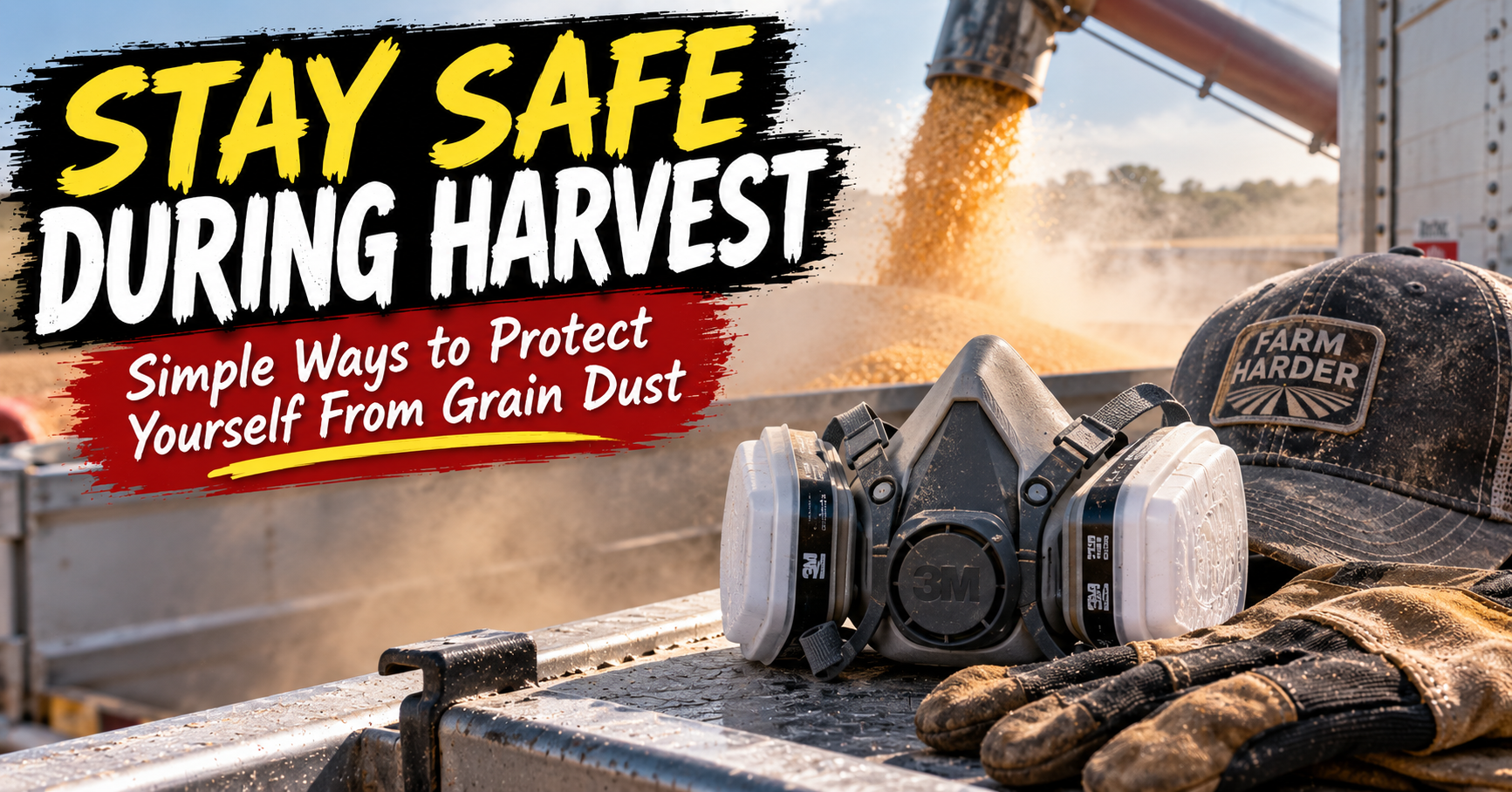
I’ve started using the 3M P100/OV Odor & Particulate Reusable Respirator while unloading because it provides a much better seal than a loose-fitting paper dust mask and uses P100 particulate filters, which are designed to capture at least 99.97% of airborne particles when properly fitted.
For me, it’s one of the easiest ways to reduce exposure without slowing down the job.
University of Missouri Extension recommends wearing a properly fitted respirator when working around grain dust, especially during activities such as loading, unloading, combining, and drying grain.
Other Things That Can Help
A respirator is probably the biggest improvement you can make, but I’ve found a few other habits help too.
- Stand upwind whenever possible.
- Step away from the dust cloud if you don’t need to be beside the trailer.
- Keep your truck windows closed while parked near unloading areas.
- Wear wraparound safety glasses to keep dust out of your eyes.
- Wash your face and hands before eating or drinking.
- Change dusty clothes after work instead of wearing them around the house.
None of these completely eliminate exposure, but together they can significantly reduce how much dust you’re breathing during harvest. That same habit of combining several precautions is useful when working through this CDL safety scenario practice.
When a Cough Isn’t Something to Ignore
It’s normal to cough occasionally after breathing a lot of dust.
What’s not normal is having symptoms that keep getting worse or don’t improve after you’re away from work.
You should pay attention if you develop:
- A cough that lasts for days.
- Wheezing.
- Chest tightness.
- Difficulty catching your breath.
- Fever or chills after working around grain.
- Symptoms that return every time you’re exposed to heavy grain dust.
Those symptoms don’t automatically mean you have Farmer’s Lung or another serious condition, but they do mean it’s worth being evaluated by a healthcare professional, especially if they keep coming back. Grain dust exposure has been associated with cough, wheezing, chest tightness, bronchitis, asthma, and other respiratory illnesses in agricultural workers.



Can You Keep Working Around Grain?
For most people, yes.
The goal isn’t to avoid harvest altogether.
The goal is to reduce unnecessary exposure.
Thousands of farmers, truck drivers, grain elevator employees, and farm workers spend their careers around grain.
The difference is that many experienced workers now take respiratory protection much more seriously than they did years ago.
Protecting your lungs today can help you avoid problems years down the road.
Frequently Asked Questions
Is it normal to cough after unloading corn?
It can be. Heavy grain dust can irritate your nose, throat, and lungs, causing temporary coughing or throat irritation. If symptoms are severe, persist, or keep returning after exposure, you should seek medical advice.
Why does my throat feel dry after unloading grain?
Grain dust contains very fine particles that can dry and irritate the lining of your throat and upper airways, especially during hot, dry harvest conditions.
Can healthy people cough from grain dust?
Yes. Even people without asthma or allergies can develop coughing, throat irritation, or chest discomfort after breathing high concentrations of grain dust.
What’s the best way to reduce grain dust exposure?
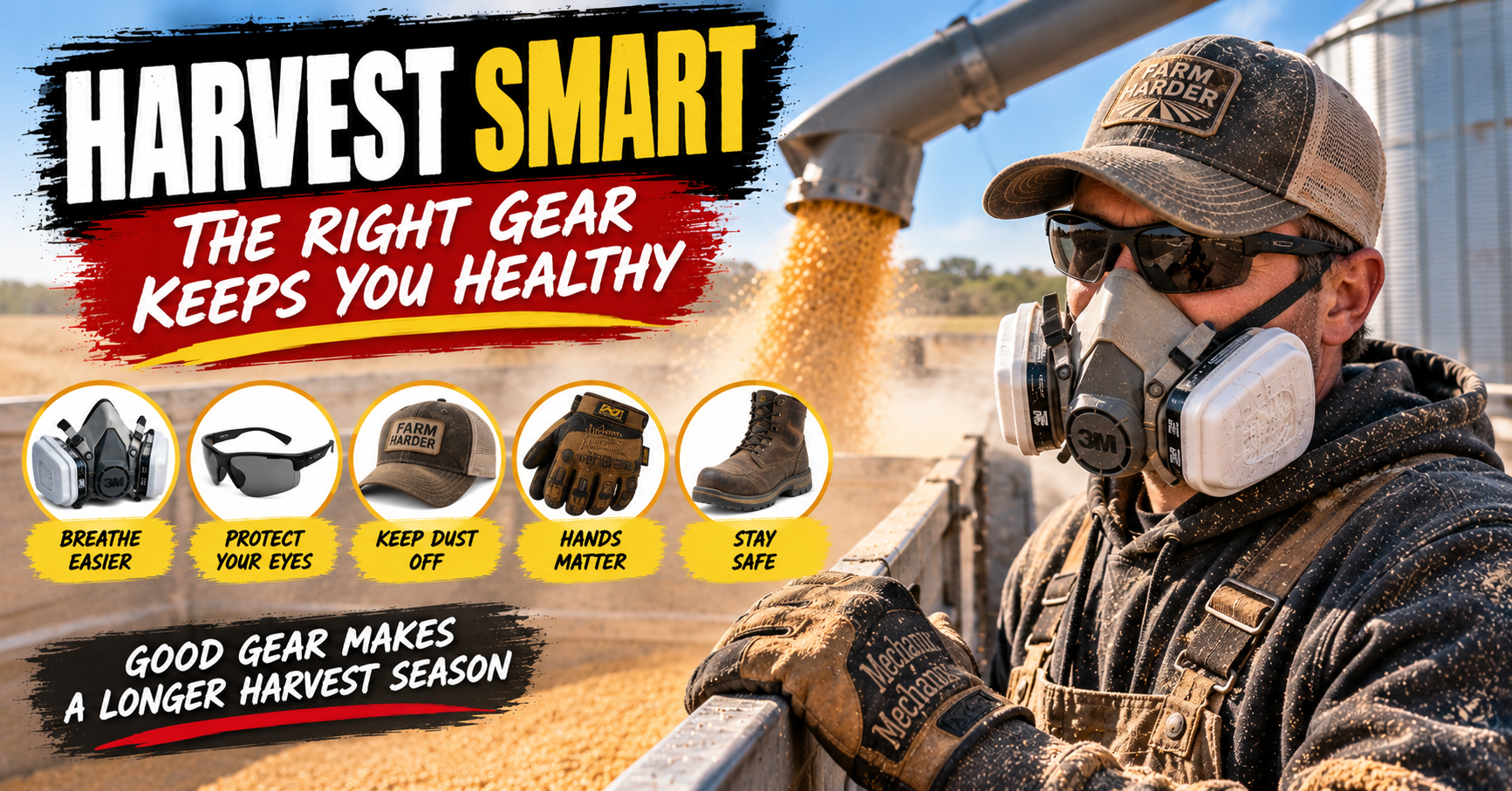
Wearing a properly fitted respirator, staying out of the main dust cloud whenever possible, and practicing good hygiene after working around grain are among the most effective ways to reduce exposure.
Author: Daxon Weaver
Daxon Weaver is the founder of TruckingResource.com and earned his Class A CDL in 2026. He currently drives a grain truck during harvest in southeast Missouri and shares practical, first-hand advice to help new truck drivers learn the job safely and confidently.