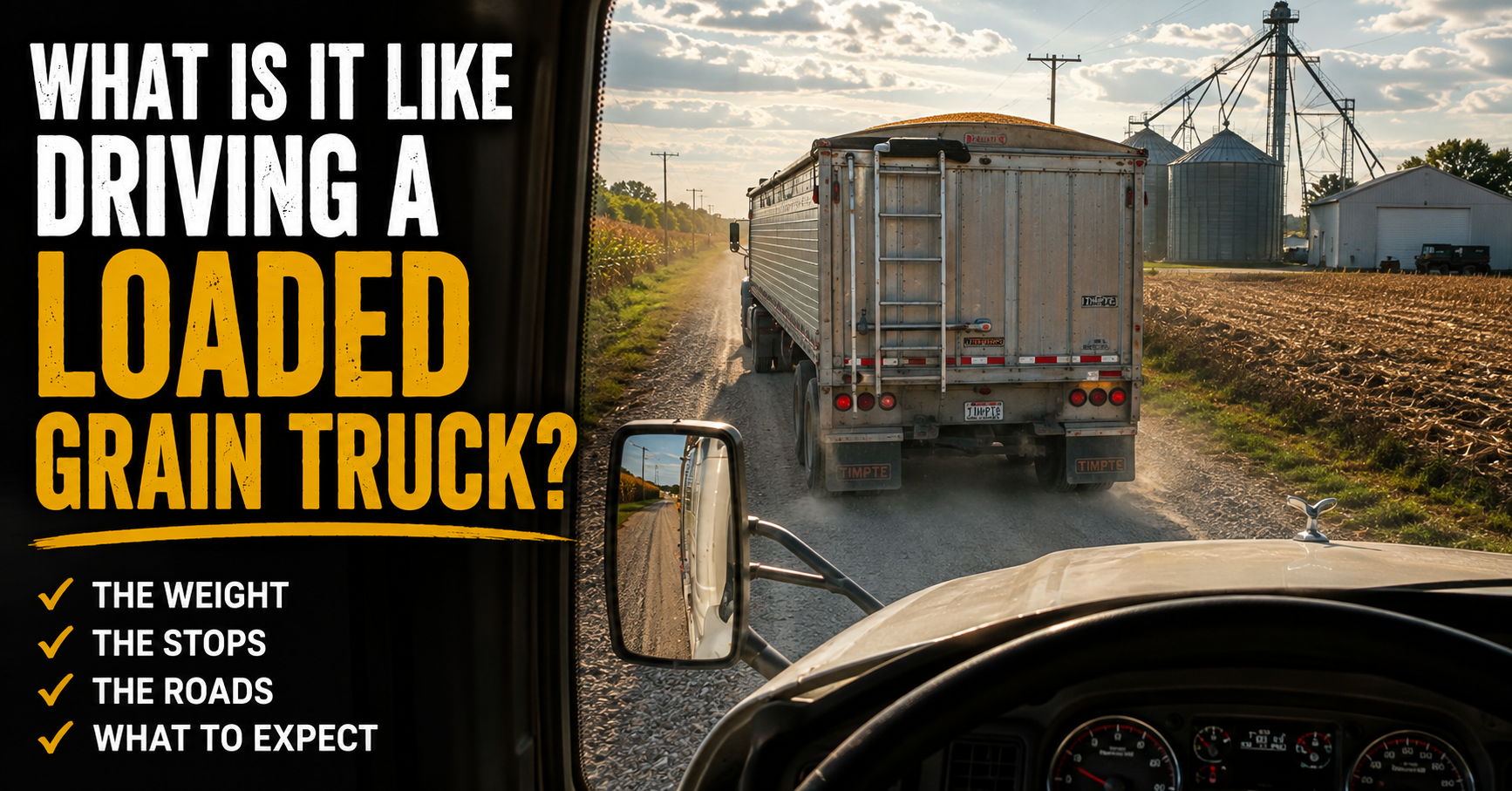
Before I started my first trucking job, one question kept running through my mind.
How different does a loaded truck actually feel?
I had driven during CDL school.
I’d practiced backing.
I’d passed my road test.
But hauling a real load for the first time felt completely different in my mind.
After spending time hauling corn during harvest, I can honestly say there are some noticeable differences.
Some were exactly what I expected.
Others surprised me.
If you’re getting ready for your first trucking job, I hope sharing what I’ve experienced helps you know what to expect before you haul your own first load. For a broader look at the early transition into professional driving, what to expect after CDL school adds more first-job perspective.
If you’re wondering how grain even gets from the combine to the truck in the first place, I’d recommend reading How Harvest Trucking Works From Field to Grain Bin first because it explains the entire process from harvest to storage.
The Truck Feels More Stable Than I Expected
One thing that surprised me was how planted the truck feels once it’s loaded.
I expected it to feel awkward.
Instead, it felt steady.
You definitely know you’re carrying weight.
But the truck doesn’t feel out of control.
It simply feels like it has a job to do.
That doesn’t mean you forget about the load.
Quite the opposite.
You become much more aware of giving yourself plenty of room and driving smoothly.
Everything Happens More Gradually
One of the first things I noticed is that a loaded truck doesn’t react as quickly as an empty one.
It takes longer to accelerate.
It takes longer to slow down.
It takes more distance to stop.
Nothing about that surprised me.
What did surprise me was how quickly I adjusted my driving without really thinking about it.
I naturally started planning farther ahead.
Leaving more following distance.
Getting on the brakes sooner.
Those are exactly the habits CDL school tried to teach me.
Now they actually make sense because I’m using them every day.
Smooth Driving Matters More Than Fast Driving
One thing I’ve already learned is that nobody is impressed by a driver who rushes.
A loaded grain truck rewards smooth driving.
Gentle acceleration.
Gentle braking.
Smooth steering inputs.
Planning your turns.
The smoother you drive, the easier everything feels.
It’s better for the truck.
It’s better for the load.
And honestly…
It’s less stressful for the driver.
Turning Takes More Planning Than Most People Realize
If there’s one thing I’ve become much more aware of, it’s turning.
Not because it’s difficult.
Because a loaded truck deserves respect.
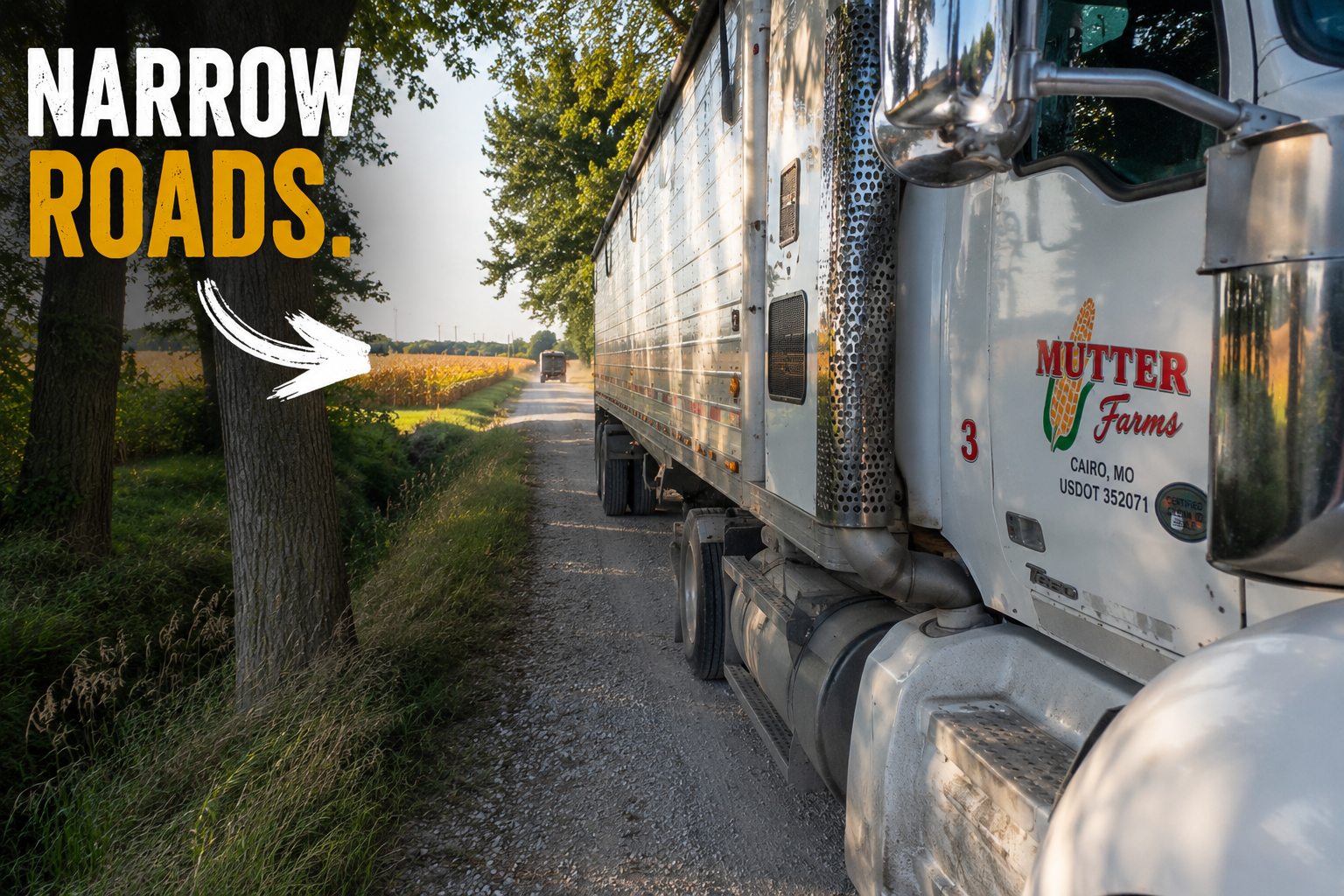
During harvest I’m often turning onto narrow county gravel roads that weren’t designed with large semi trucks in mind.
Some have ditches.
Some have mailboxes close to the road.
Some have county road signs sitting right where your trailer wants to track.
Then you add traffic.
Most drivers are patient.
Some aren’t.
I’ve learned that I can’t let someone behind me rush the turn.
If I need another few seconds to position the truck correctly and make sure my trailer clears everything safely, that’s exactly what I’m going to take.
Nobody remembers arriving somewhere thirty seconds later.
People definitely remember accidents.
Gravel Roads Keep You Paying Attention
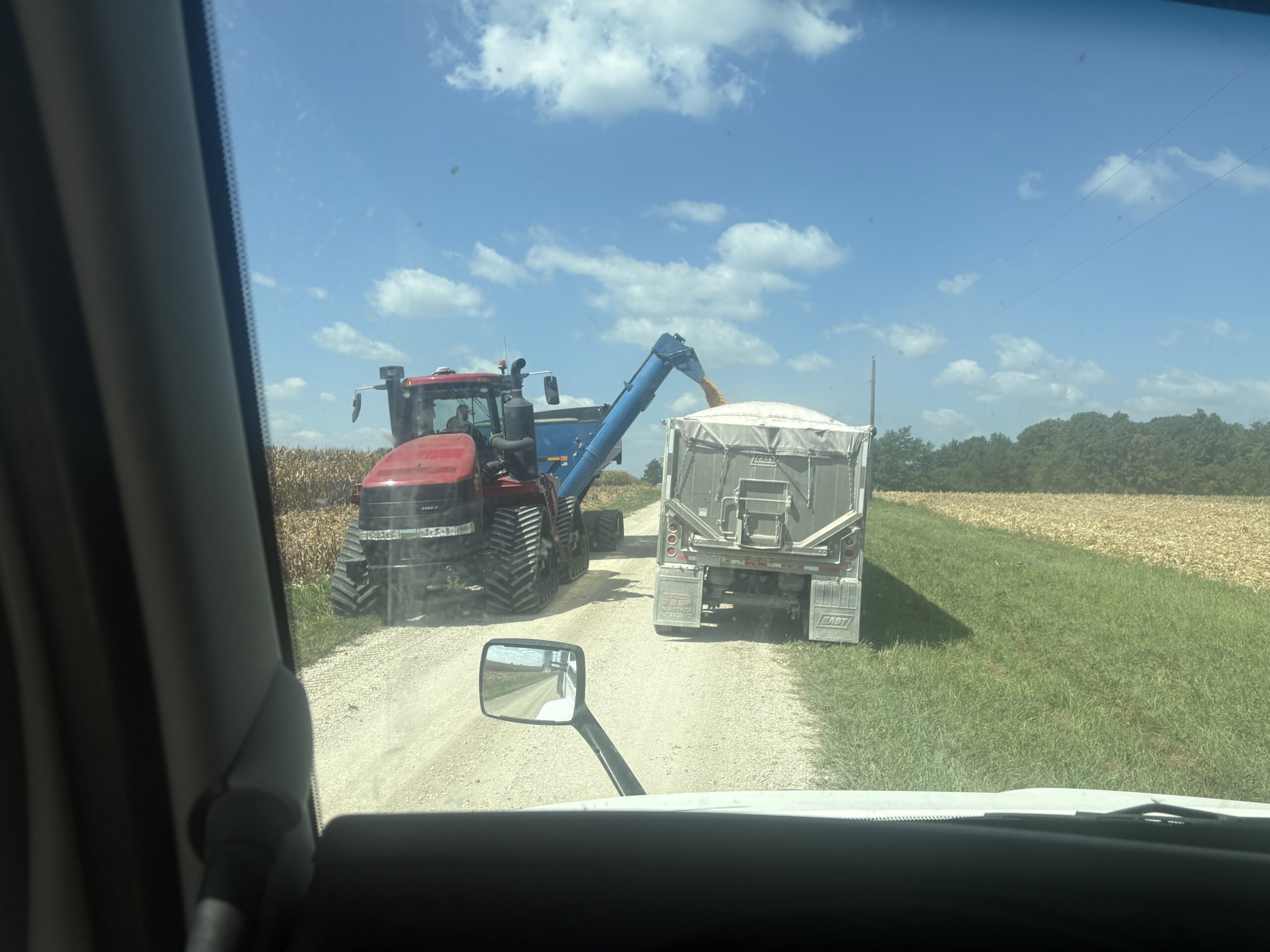
Before this job, I hadn’t spent much time driving a loaded semi on gravel roads.
Now it’s part of my daily routine.
Every gravel road is a little different.
Some are wide.
Some barely feel wide enough for two vehicles.
Some have soft shoulders after a rain.
Others have loose gravel that reminds you to stay smooth with your steering and braking.
Driving on them has taught me to look much farther ahead than I ever did in a pickup.
I’m constantly asking myself:
Can another vehicle fit?
Where is the edge of the road?
What’s my trailer going to do through this turn?
Those questions become second nature after a while.
Stopping Distance Is Something You Always Respect
Everyone knows a loaded truck takes longer to stop.
Actually feeling it is different than reading about it.
It’s one of the reasons I’ve become much more deliberate about leaving space between myself and the vehicle ahead.
That extra following distance isn’t there because I’m nervous.
It’s there because physics doesn’t care how experienced you are.
The heavier the truck, the more distance it needs to stop safely.
That’s why I never worry if another driver thinks I’m leaving “too much” room.
I’d rather have extra space that I never need than wish I had more when something unexpected happens.
You Learn to Read the Road Differently
One thing I didn’t expect was how much farther down the road I’d start looking.
In a car, it’s easy to focus mostly on what’s right in front of you.
Driving a loaded grain truck has changed that.
Now I’m constantly scanning.
Looking for intersections.
Watching traffic.
Checking mirrors.
Looking at road signs.
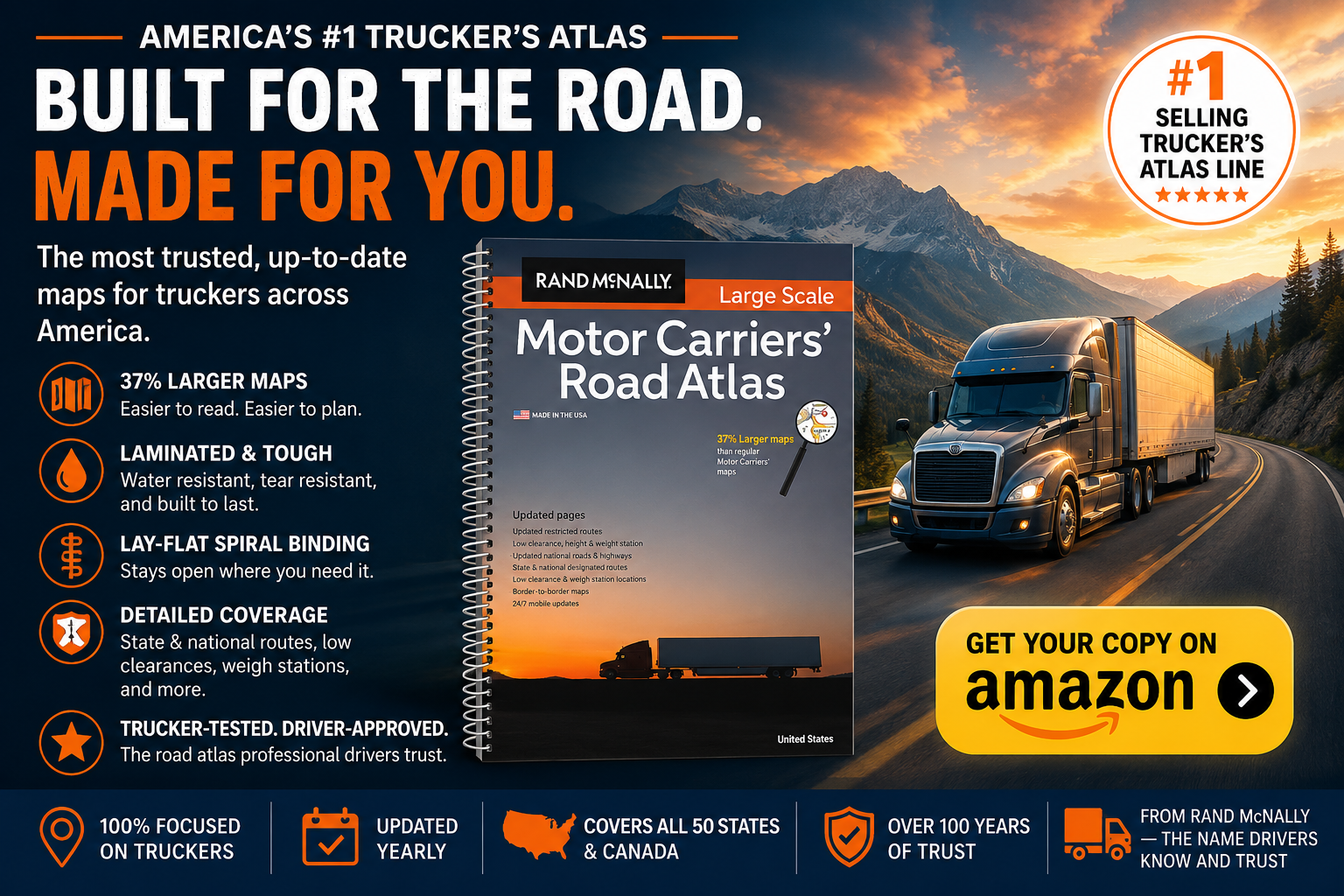
Planning my next turn well before I get there. A Rand McNally road atlas can support that habit when you need to study the route before reaching a difficult turn.
It isn’t stressful anymore.
It’s simply become part of driving.
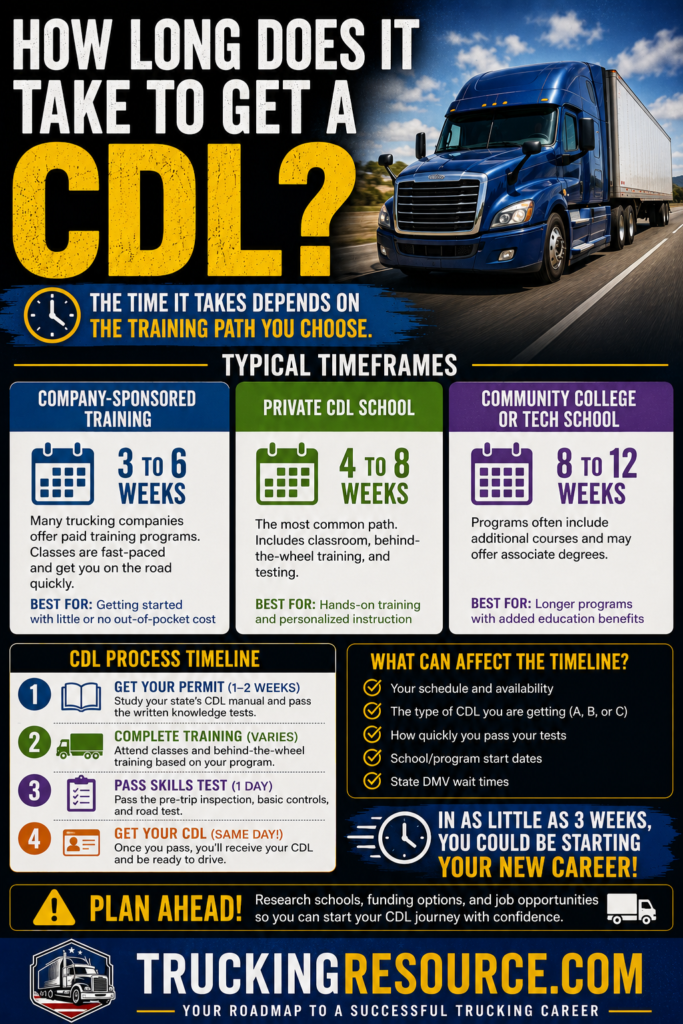
I can already tell those habits started during CDL school, but they’re becoming much stronger now that I’m using them every day. New drivers can also compare that training experience with the broader timeline described in CDL school.
Every Load Deserves the Same Respect
One thing I’ve promised myself is that I don’t want familiarity to turn into complacency.
Just because I’ve hauled several loads doesn’t mean the next one deserves any less attention.
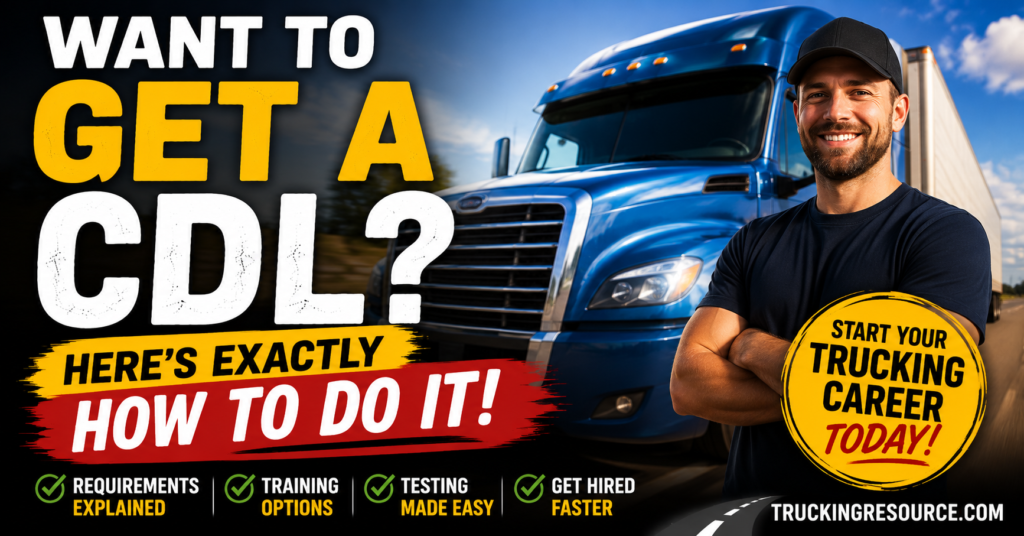
Every trip starts with a proper pre-trip inspection. New drivers can review proper pre-trip inspection as part of learning the routine behind every safe commercial vehicle trip.
Every trip deserves smooth driving.
Every trip deserves patience.
That’s especially true during harvest when there are so many people, trucks, tractors, and machines working together.
The goal isn’t simply getting the load delivered.
The goal is getting there safely every single time.
Empty and Loaded Trucks Really Do Feel Different
One of the biggest differences I’ve noticed is how much more responsive an empty truck feels.
Acceleration comes easier.
Stopping requires less distance.
The truck generally feels lighter.
A loaded truck is the opposite.
Everything happens a little more gradually.
Neither one is better or worse.
They simply require you to adjust your driving.
After only a short time, I found myself naturally making those adjustments without really thinking about them.
That’s probably one of the first signs that experience is starting to build.
My Confidence Has Grown With Every Load
Looking back at my first day, I smile a little.
Not because I knew everything.
Because I worried about things that turned out to be much smaller than I imagined.
Every load has helped build confidence.
Every trip has taught me something.
Some lessons are big.
Most are small.
But together they’ve made me a better driver than I was just a few weeks ago.
I wrote more about that transition in The Biggest Difference Between CDL School and Real Trucking because I don’t think you truly understand how much you learn on the job until you actually start driving.
Frequently Asked Questions
Is driving a loaded grain truck harder than an empty truck?
I wouldn’t necessarily say it’s harder, but it is different. A loaded truck takes longer to accelerate, longer to stop, and requires more planning before turns and intersections. After a while, those adjustments start feeling natural.
Do loaded grain trucks feel unstable?
That wasn’t my experience. I actually found the truck felt steady and well-planted. The important part is driving smoothly and giving yourself plenty of room instead of making sudden steering or braking inputs.
Is driving on gravel roads difficult?
It requires more attention than paved highways, especially when roads are narrow or have soft shoulders. Taking your time, looking well ahead, and making smooth steering inputs have been some of the biggest things I’ve learned.
What surprised you most about hauling your first load?
Honestly, I was surprised by how quickly the truck started feeling familiar. I expected to spend weeks feeling uncomfortable behind the wheel, but each day built a little more confidence.
Hauling My First Loads Changed the Way I Look at Trucking
Before I started this job, I thought hauling a loaded grain truck would be the most intimidating part of becoming a truck driver.
Now I see it differently.
The truck deserves respect.
The load deserves respect.
The road deserves respect.
But if you’ve built good habits, take your time, and never stop paying attention, those first nervous trips gradually become another part of the workday.
I’m still learning with every load I haul, and that’s one of the things I’ve enjoyed most about starting this career.
Author: Dax Weaver
Dax Weaver is the founder of TruckingResource.com and a first-year Class A CDL driver from Cairo, Missouri. After earning his CDL on his first attempt, he began hauling corn during harvest for a local farming operation. Through TruckingResource.com, Dax shares honest first-hand experiences, practical trucking advice, and real-world lessons from the beginning of his professional driving career.