When I earned my CDL, I thought getting the license itself was the hard part.
Then I started seeing job listings asking for things like a Hazmat endorsement, Tanker endorsement, or Doubles and Triples endorsement.
At first, it felt like learning a whole new language.
The truth is, CDL endorsements aren’t nearly as confusing as they seem. They’re simply additional qualifications that allow you to drive certain commercial vehicles or haul specific types of cargo.
Some endorsements can open the door to better-paying jobs, while others only make sense if you’re planning to work in a specialized part of the trucking industry.
Over the years, I’ve met drivers who collected nearly every endorsement available, and I’ve also known drivers who spent 30 years hauling dry vans with only the endorsements they actually needed.
In this guide, I’ll explain what each CDL endorsement does, who should consider getting it, and which ones I think are the most valuable based on the type of driving you want to do.
If you’re still working toward your CDL, it’s worth reading our guide on how to get a CDL step by step before worrying about endorsements. Getting your license always comes first.
What Is a CDL Endorsement?
Think of your CDL as the foundation. The What Is the CDL Air Brake Endorsement and Do You Need It? covers an important qualification that is often confused with an endorsement.
An endorsement is an extra certification added to your license that allows you to operate certain commercial vehicles or transport specific loads.
Not every truck driver needs every endorsement.
The right ones depend entirely on the type of job you want.
For example, someone hauling refrigerated freight across the country will usually need different endorsements than someone driving a school bus or hauling gasoline.
That’s why it’s important to understand what each endorsement actually covers before spending time and money earning one.
Why Endorsements Matter
One of the biggest advantages of earning endorsements is flexibility.
The more qualified you are, the more jobs you’ll generally be eligible to apply for.
I’ve seen drivers miss out on excellent opportunities simply because they didn’t have an endorsement that could have been earned with a little extra studying and testing.
That doesn’t mean you should rush out and earn every endorsement available.
Instead, think about where you want your trucking career to go over the next several years.
If you eventually want to haul fuel, you’ll need different qualifications than someone planning to drive a dump truck or haul construction materials.

The Most Common CDL Endorsements
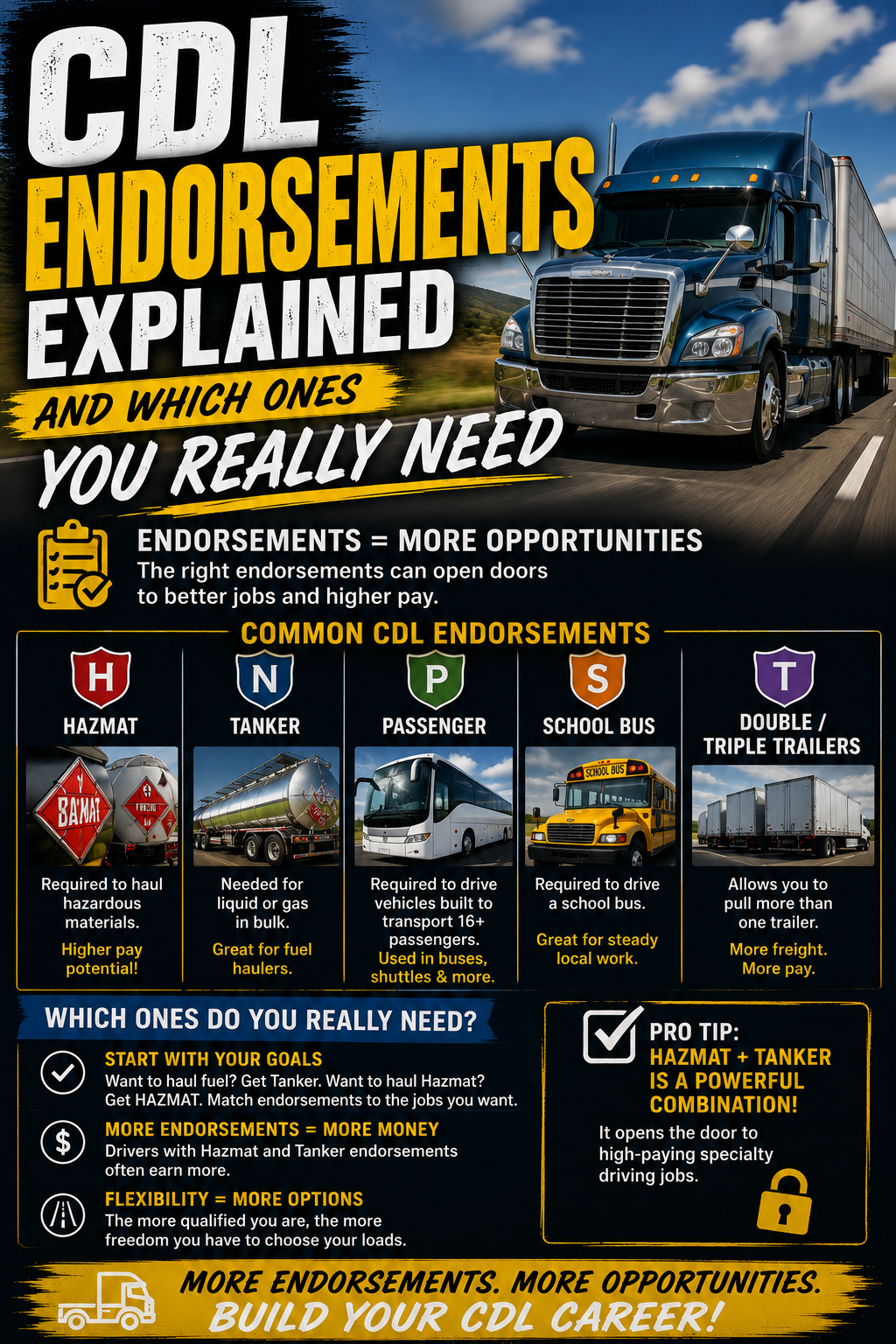
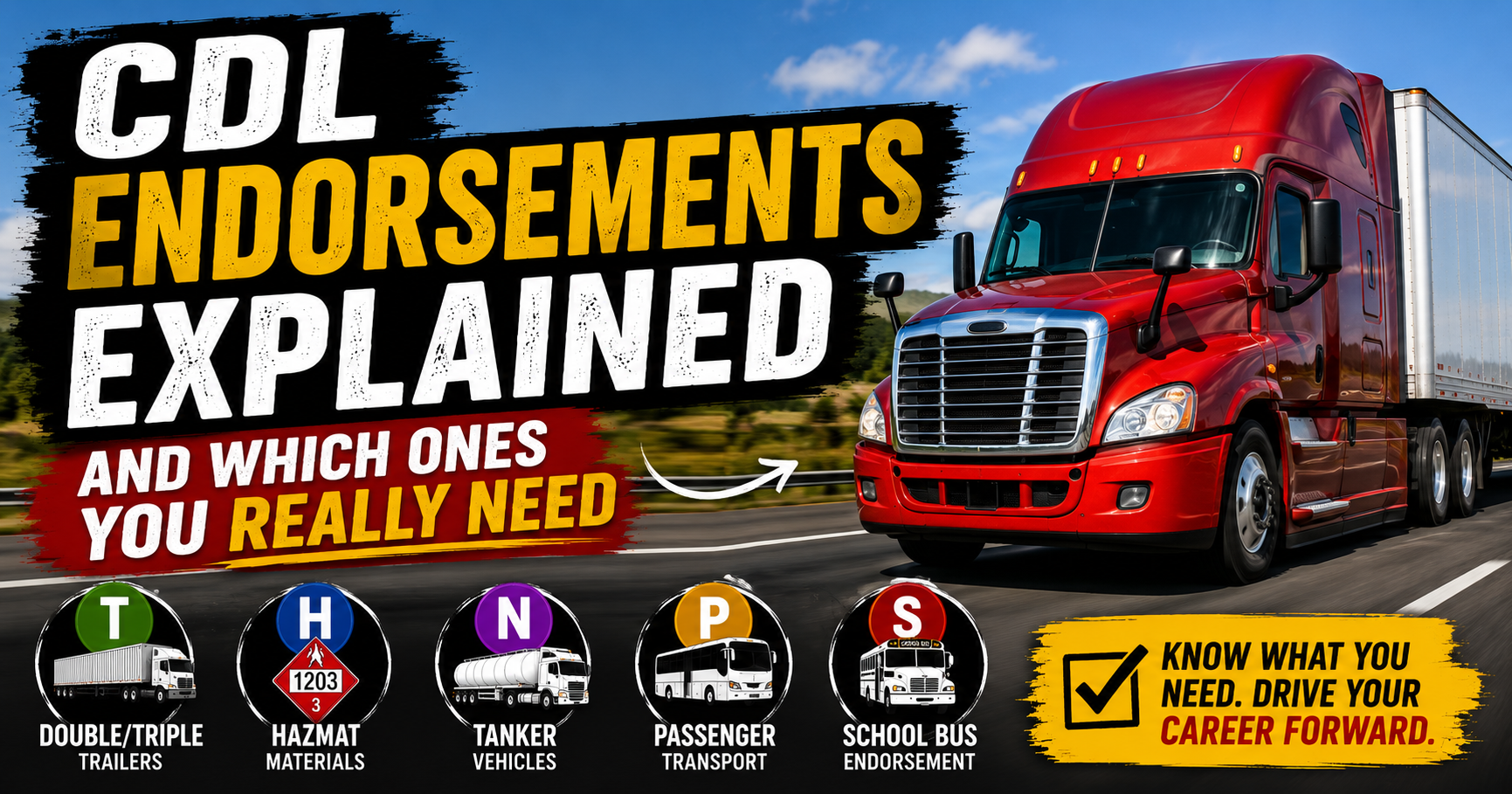
There are several endorsements available, but most new drivers will hear about these five first.
Tank Vehicle (N)
The Tank Vehicle endorsement allows you to operate commercial vehicles designed to transport liquid or gaseous materials in permanently mounted tanks or portable tanks of a certain size.
Driving a tanker is different from hauling dry freight.
Liquids move inside the tank while you’re driving, creating what’s known as surge.
Learning how that shifting weight affects stopping and cornering is one reason the endorsement exists.
Hazardous Materials (H)
The Hazardous Materials endorsement, commonly called Hazmat, allows drivers to transport certain hazardous materials that require placards under federal regulations.
Because of the nature of these loads, drivers must also complete a federal background check before receiving this endorsement.
Although it requires additional steps, Hazmat can open the door to higher-paying trucking jobs in many parts of the country.
Tank Vehicle and Hazmat Together (X)
Many fuel haulers and chemical transport companies require what’s known as the X endorsement.
Instead of earning separate Tank Vehicle and Hazardous Materials endorsements, the X endorsement combines both qualifications.
If hauling fuel sounds like something you’d enjoy, this is an endorsement you’ll likely want to pursue.
Passenger (P)
The Passenger endorsement is required for commercial drivers transporting passengers in qualifying vehicles.
You’ll commonly see this endorsement on drivers operating:
- Motor coaches
- City buses
- Charter buses
- Shuttle buses
Driving passengers brings different responsibilities than hauling freight, which is why additional testing is required.
School Bus (S)
If you’re planning to drive a school bus, you’ll need more than just a Passenger endorsement.
You’ll also need the School Bus endorsement.
This endorsement covers topics specific to safely transporting children, loading and unloading procedures, railroad crossings, emergency evacuations, and other responsibilities unique to school bus drivers.
Doubles and Triples (T)
The Doubles and Triples endorsement allows drivers to pull more than one trailer in situations where state and federal regulations permit it.
Although not every trucking company uses doubles or triples, they’re common in certain freight operations.
Pulling multiple trailers requires different driving techniques, especially when turning, backing, and managing trailer sway.
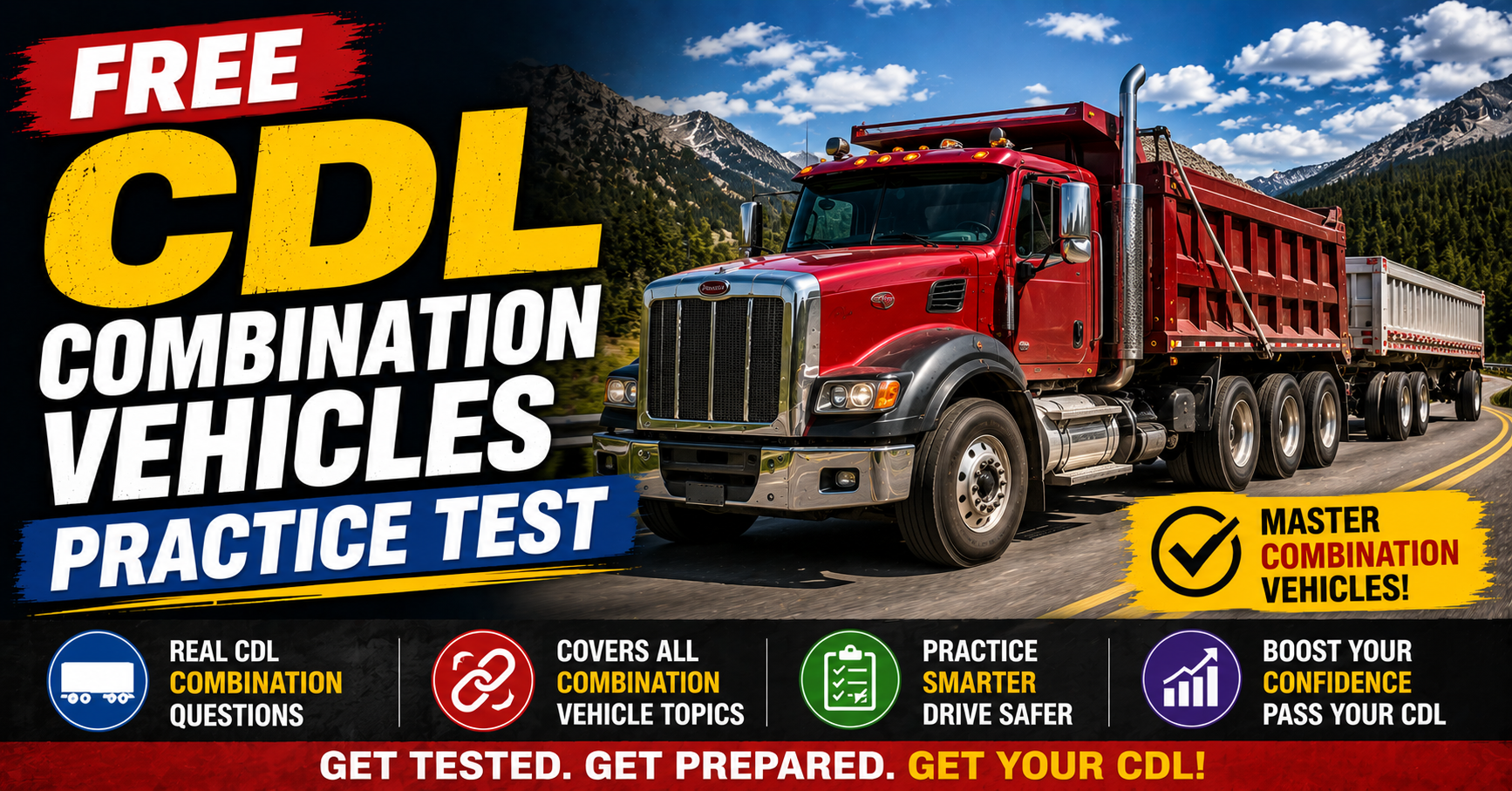
Understanding how combination vehicles behave is an important part of becoming a safe Class A driver. If you’re still preparing for your written exams, our Free CDL Combination Vehicles Practice Test is a great way to build confidence before test day.
Which CDL Endorsements Should You Get?
This is probably the question I’m asked most often.
My answer is always the same.
Don’t earn endorsements just because someone else says you should. Earn the ones that match the type of driving you actually want to do.
For example, if your goal is hauling dry van freight across the country, you may never need a Passenger or School Bus endorsement.
On the other hand, if you think there’s even a small chance you’ll want to haul fuel or chemicals in the future, earning your Tank Vehicle and Hazardous Materials endorsements can make you a much stronger job candidate.
The more flexible you want your career to be, the more valuable the right endorsements become.
Should You Get Endorsements Before Your First Truck Driving Job?
In many cases, yes.
Some companies are happy to hire drivers who already have the endorsements they need because it saves time and additional training later.
Other employers are willing to help drivers earn endorsements after they’re hired.
Before spending money on additional testing, look at job listings in your area.
You’ll quickly notice which endorsements local employers are asking for most often.
That can help you decide which ones are worth pursuing first.
Do CDL Endorsements Expire?
Some endorsements require additional steps to keep them active.
The best example is the Hazardous Materials endorsement.
Federal regulations require drivers to renew their security threat assessment periodically before the endorsement can remain on their CDL.
Other endorsements generally stay on your license as long as your CDL remains valid and you continue meeting your state’s licensing requirements.
Always check with your state’s licensing agency because renewal requirements can vary.
How Hard Are the Endorsement Tests?
Most endorsement exams aren’t especially difficult if you’ve spent time studying.
The biggest mistake I see people make is assuming they’ll pass without opening the CDL manual.
Each endorsement focuses on a specific topic.
For example:
- Tanker questions focus on liquid surge and safe operation.
- Passenger questions focus on safely transporting people.
- School Bus questions cover loading zones and student safety.
- Hazmat questions emphasize regulations and transporting hazardous materials.
- Doubles and Triples questions focus on combination vehicle handling.
Taking practice tests before your exam is one of the easiest ways to find weak areas before test day.
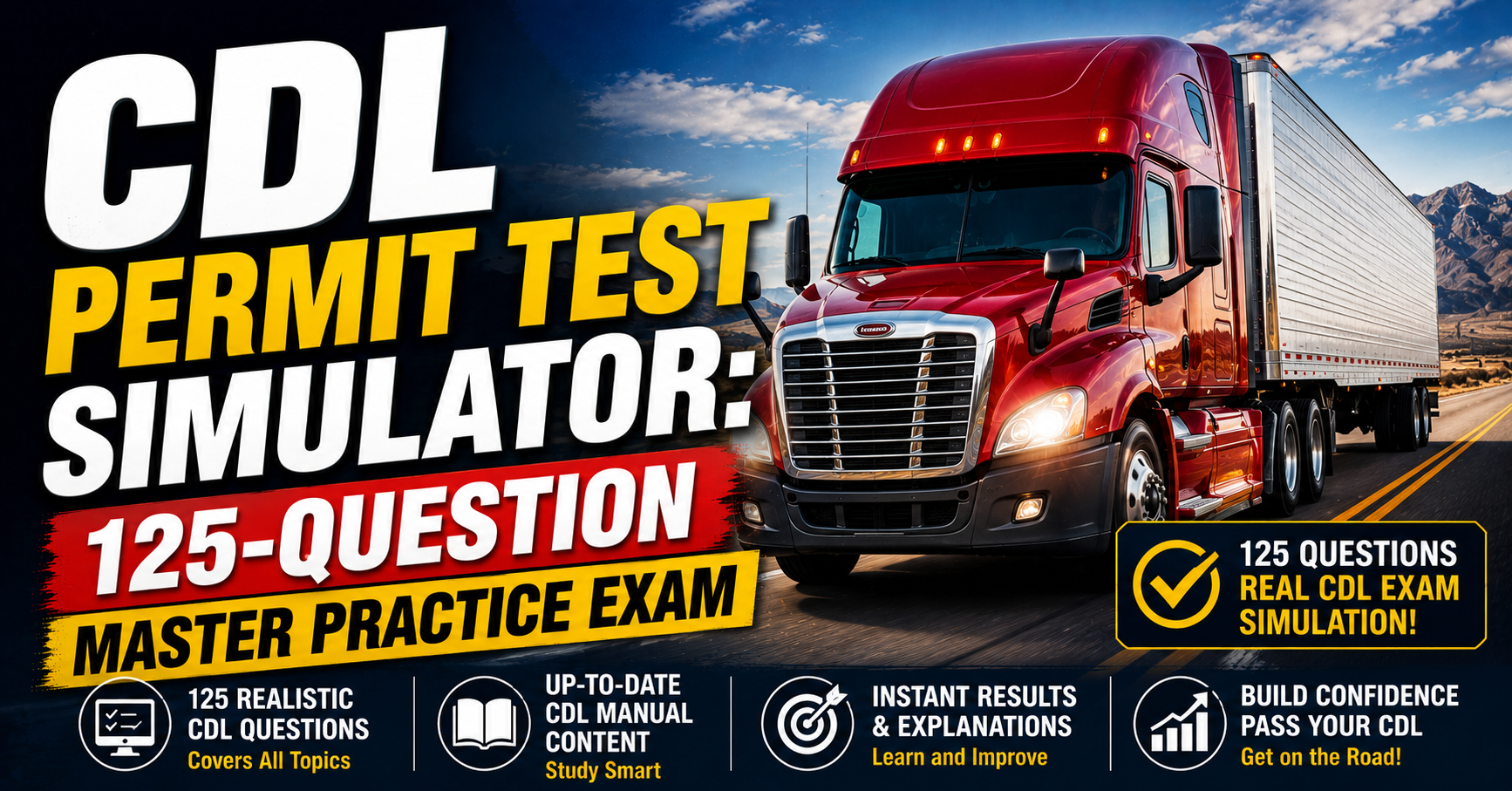
If you’re still preparing for your CDL written exams, I’d also recommend trying our CDL Permit Test Simulator (125-Question Master Practice Exam). It’s an excellent way to measure your overall readiness before heading to the DMV.
Do You Need Air Brakes Before Getting Endorsements?
Many people confuse the Air Brakes qualification with a CDL endorsement.
They’re not exactly the same thing.
Instead of adding a privilege to your license, passing the Air Brakes knowledge and skills requirements prevents you from receiving an air brake restriction on your CDL.
Since most Class A tractor-trailers use air brakes, it’s something nearly every future over-the-road driver should learn.
If you’re getting ready for that portion of the written exam, our Free CDL Air Brakes Practice Test #1 is a great place to start before moving on to more advanced practice questions.
My Advice After Years in the Trucking Industry
Looking back, I’m glad I spent the extra time earning endorsements that expanded my opportunities.
Even if I didn’t use every endorsement right away, having them gave me more choices when new jobs became available.
The trucking industry changes over time.
A company hauling dry freight today may decide to expand into tanker work tomorrow.
Having the right endorsements already on your CDL can make it much easier to take advantage of those opportunities.
If you’re just beginning your trucking journey, don’t feel like you need to earn every endorsement immediately.
Start with the ones that fit your career goals, gain experience behind the wheel, and continue adding qualifications as your interests and opportunities grow.
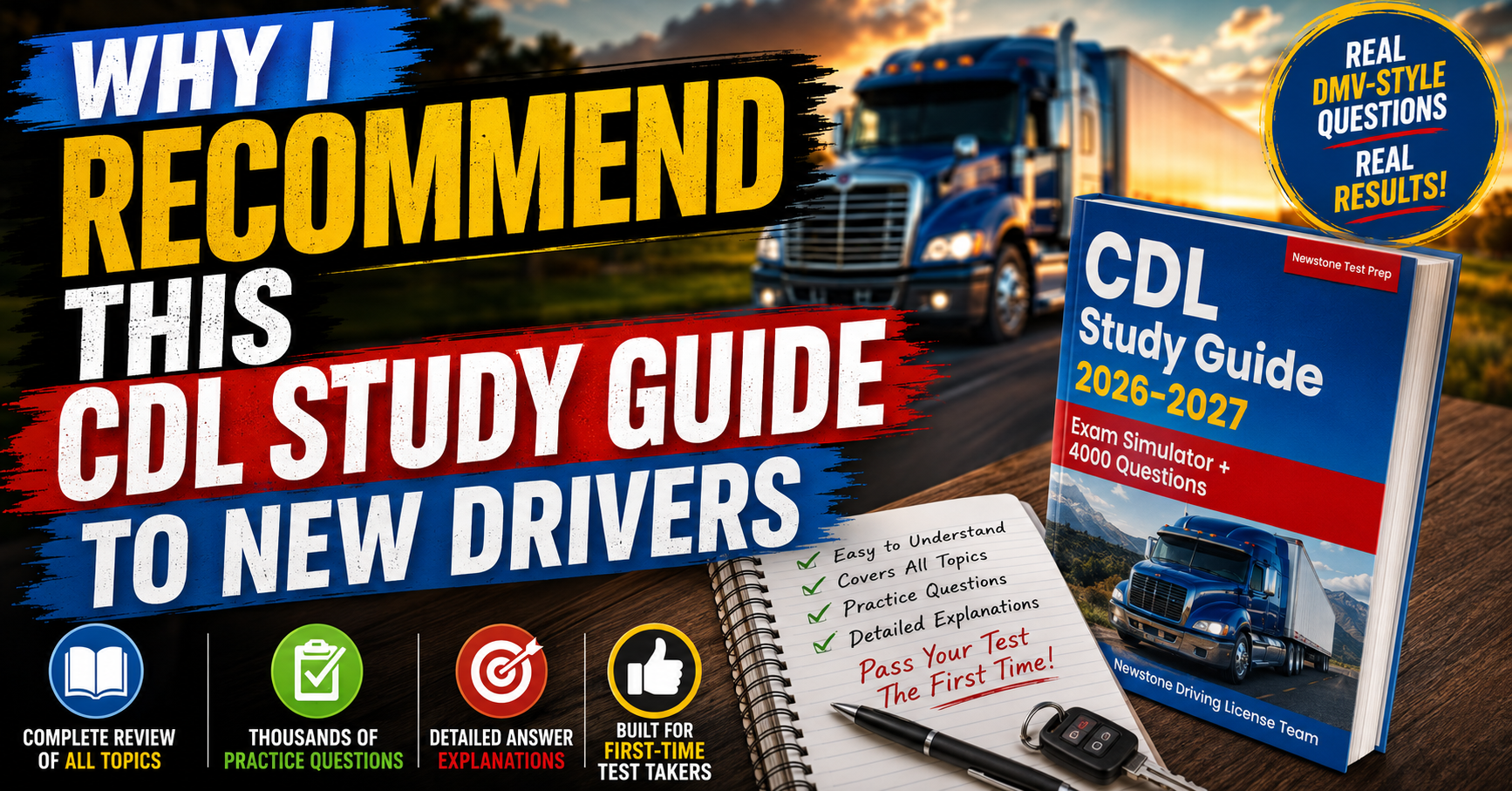
One of the best ways to prepare for any CDL written exam is by building a solid understanding of the material before taking practice tests. If you’re serious about passing the first time, our CDL General Knowledge Study Guide PDF is an excellent resource that explains the concepts in an easy-to-follow format. After studying, challenge yourself with our growing collection of free practice tests to see where you stand.
You can also browse our Trucking Topics page to find more guides covering CDL training, trucking careers, safety, maintenance, and life on the road.
Author: David Walker
David Walker is a former CDL instructor with more than 22 years of experience helping students earn their Commercial Driver’s Licenses. Throughout his career, he’s taught thousands of future commercial drivers how to prepare for written exams, master vehicle inspections, and develop the skills needed for safe, successful careers in the trucking industry.