
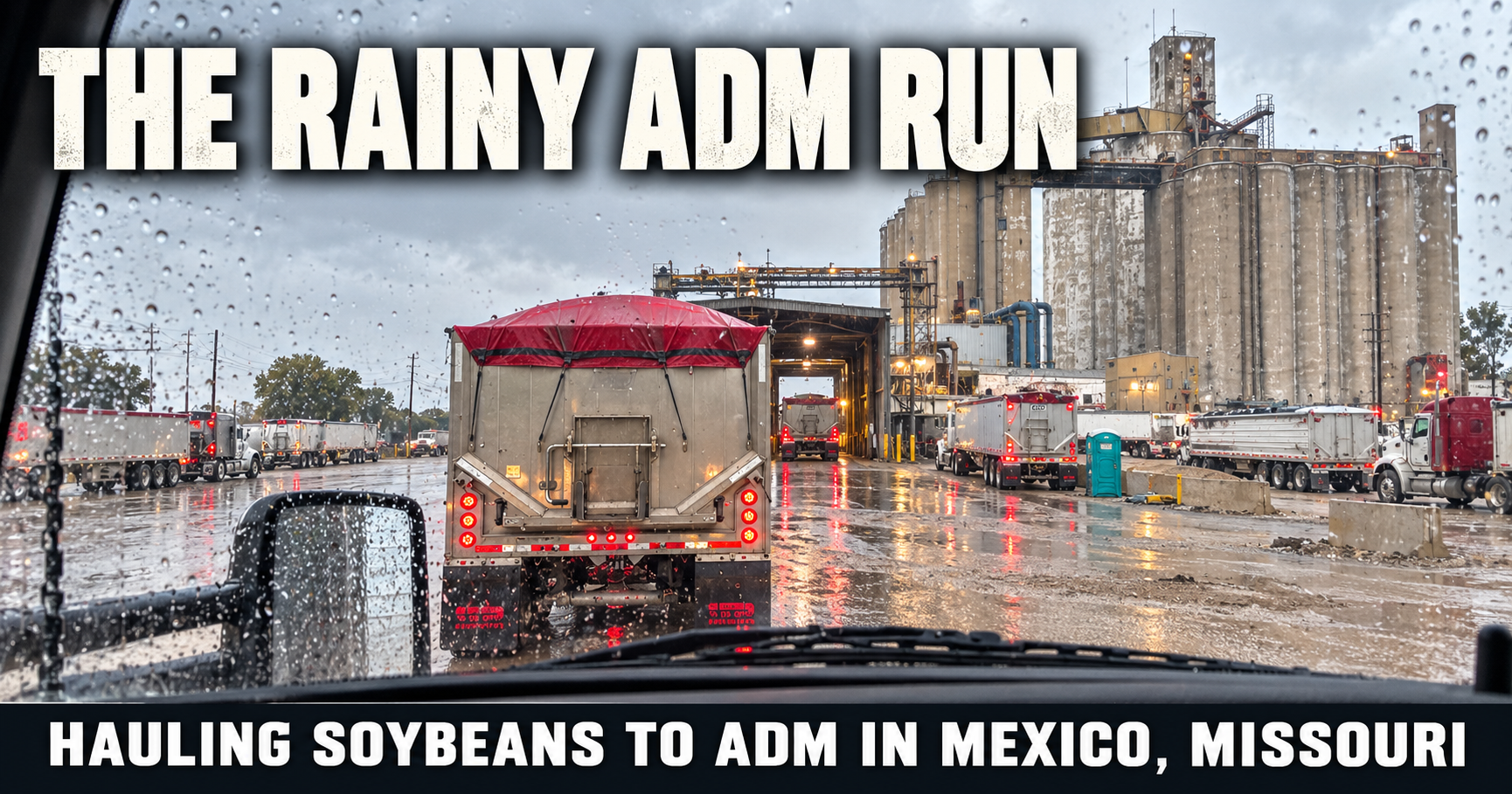
Today I hauled two loads of soybeans to ADM in Mexico, Missouri. I had been delivering corn to Ray-Carroll in Brunswick, so I understood the basic idea: check in, get weighed, unload, weigh empty, and take the ticket back. The route through this facility was different enough that I had to pay attention to every stop.
There was a long line of trucks, rain on the windows, an ID scanner that was not working, two possible unloading bays, and a second gate to reach the empty scale. Both of my trips went well. By the second load, I had a much better picture of how the place worked.
This is the process I followed on those two deliveries. Equipment and traffic patterns can change, so another driver should still follow the signs, lights, screen, and employees when they arrive.
Entering the gate and joining the line
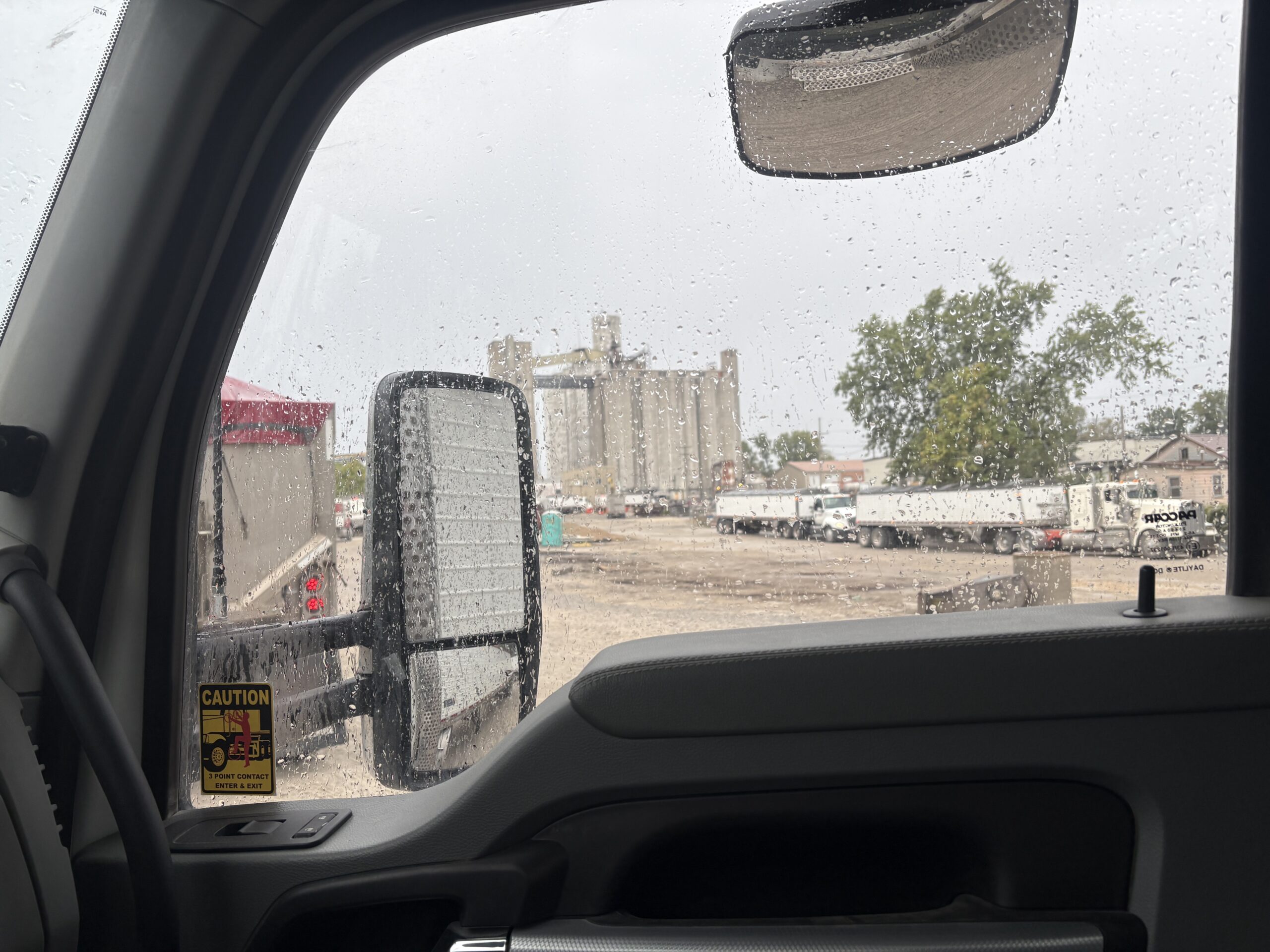
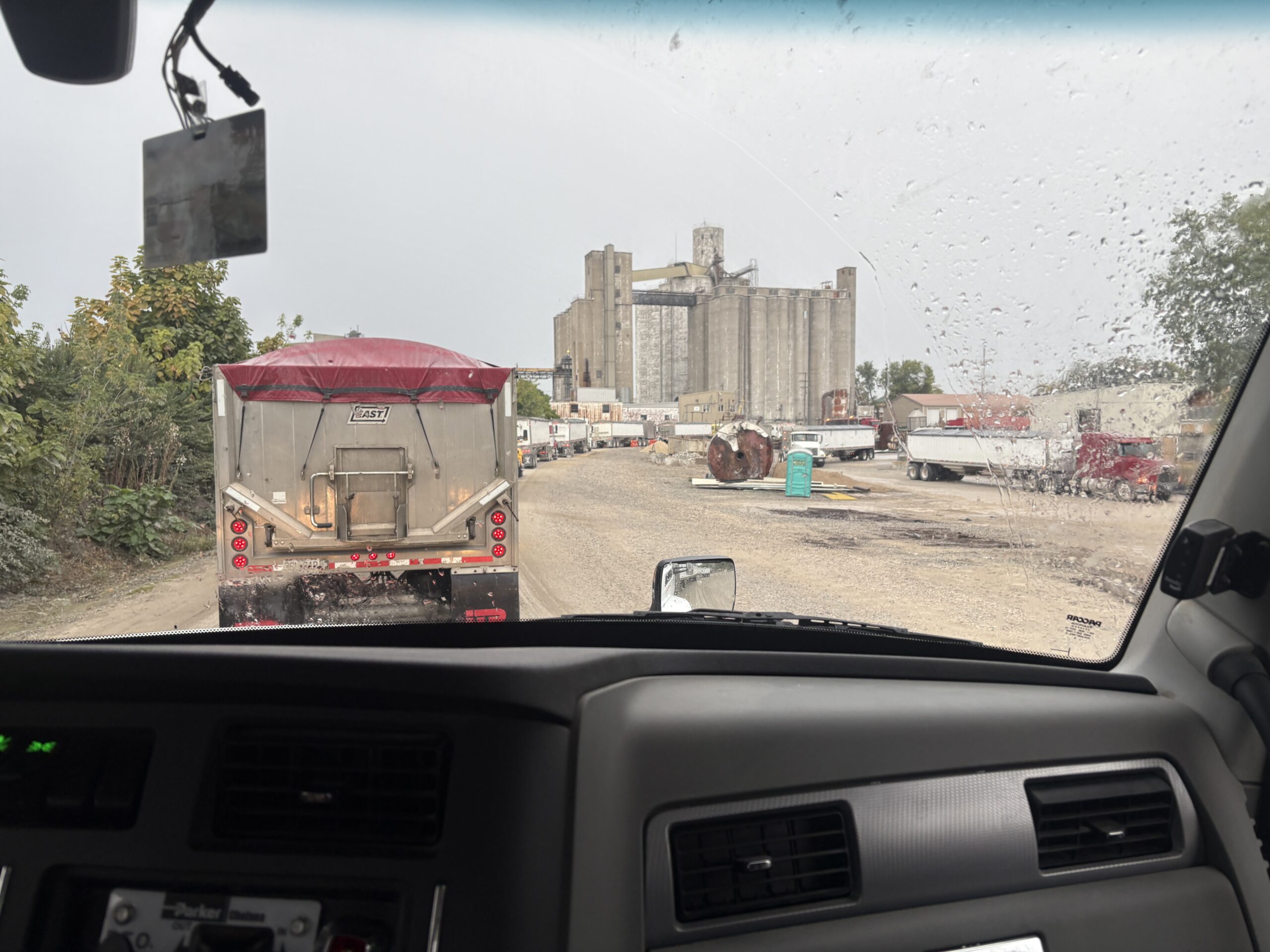
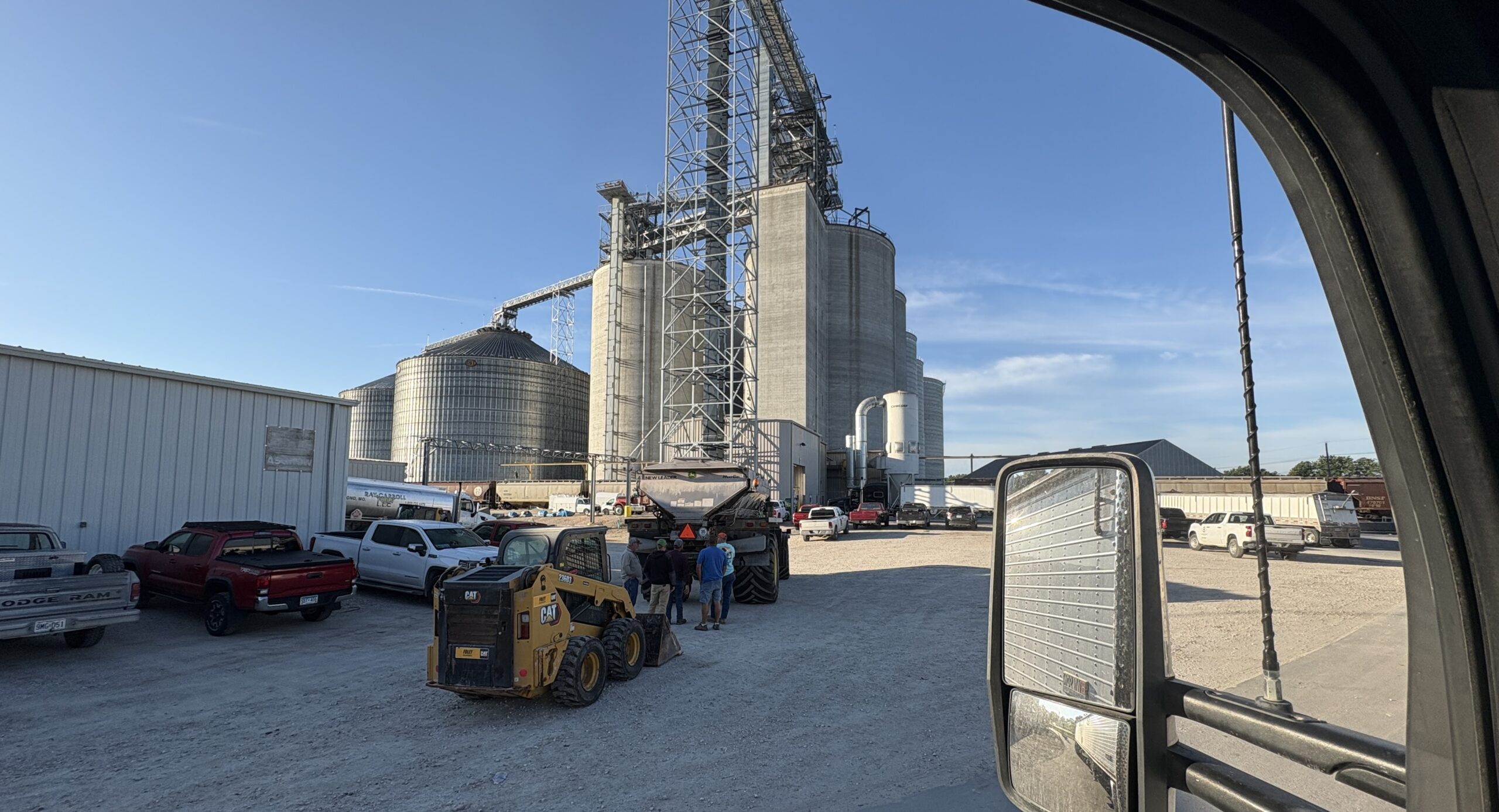
I pulled through the gate, made a long turn, and joined the line of trucks waiting to check in. The photos I took from the cab show trucks stretched toward the large concrete structures while rain covered my windows.
At a busy grain facility, being in line does not mean I can stop paying attention. Trucks are moving through several stages, and I need to leave room for the truck ahead while watching where the line leads. This was my first time taking soybeans through this ADM location, so I was looking for each stop rather than assuming it would be laid out like the elevator I already knew.
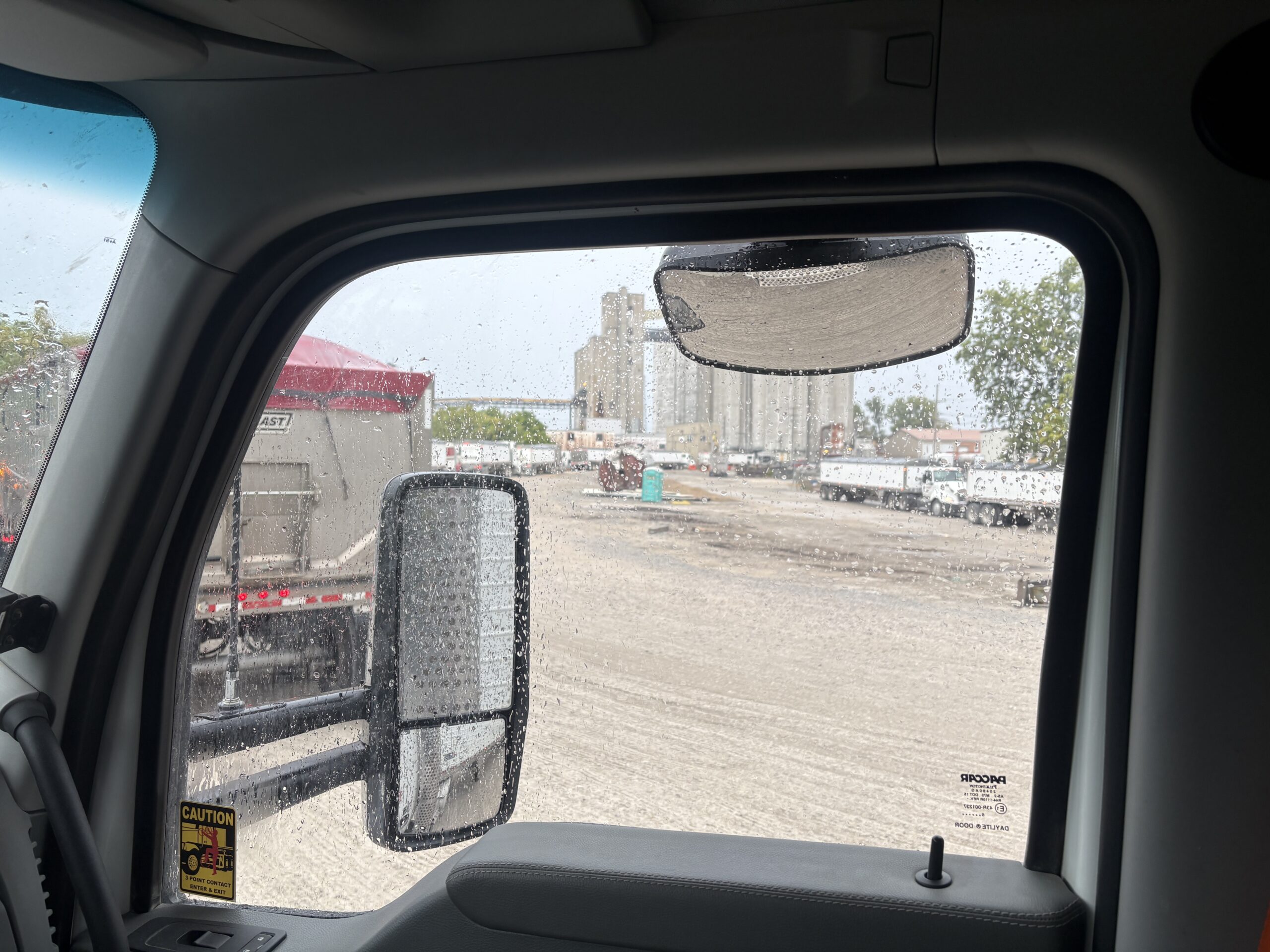
The first stop was the check-in scanner. Each driver has an ID tag to scan, which identifies the driver and load in the facility’s system. That was the plan, anyway. The scanner was broken on my trips.



The scanner was broken, so I used the phone
There was a phone at the scanner. I picked it up, and it rang through to an operator. I gave the operator my card or ID number, the name on the account, and how the soybeans were being sold. For these deliveries, that included identifying them as spot sales.
That phone kept the line moving even though the scanner was down. I did not have to guess whether I should drive past the check-in point or find somebody elsewhere. I used the phone at the station and gave the information the operator asked for.
The account name is a detail I pay attention to. I am hauling the farm’s soybeans, and the ticket needs to end up under the right name. I can provide the information I was given for the load, but I am not making the farm’s marketing decisions at the gate.
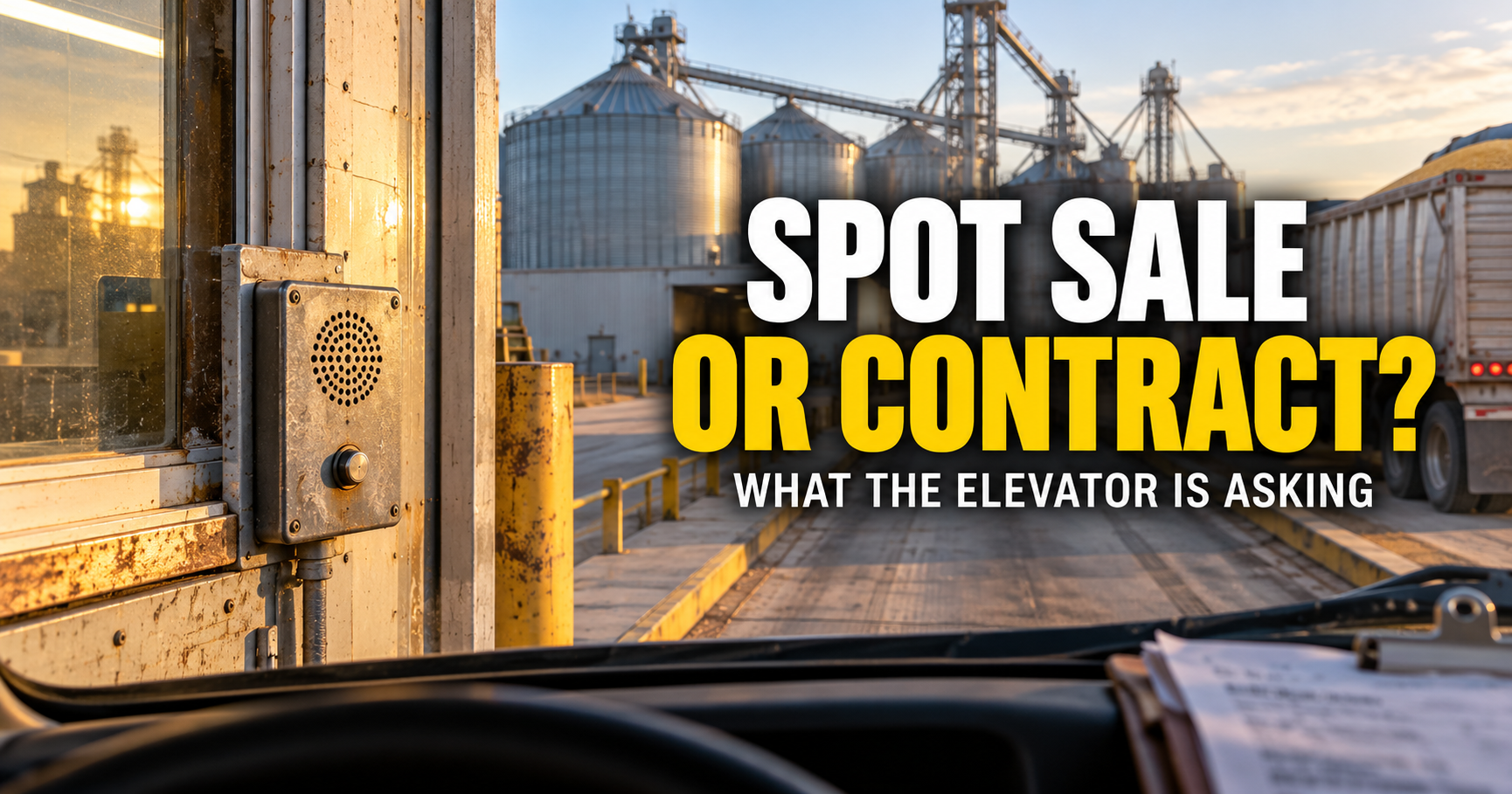
If the question about a spot sale sounds unfamiliar, I explain what the scale is asking in why a grain elevator asks “spot sale or contract”. The terms matter because the elevator needs to record the delivery under the correct account and sale arrangement.
Opening the tarp before the moisture check
After checking in, I opened the tarp on my hopper trailer. The soybeans needed to be accessible for the next stop, where the facility checked a sample.
I pulled ahead to the moisture-check area, where they put a probe into the back of the trailer. I waited while they took the sample. I did not get out and try to move forward as soon as the probe came out. There was a light controlling the next move.
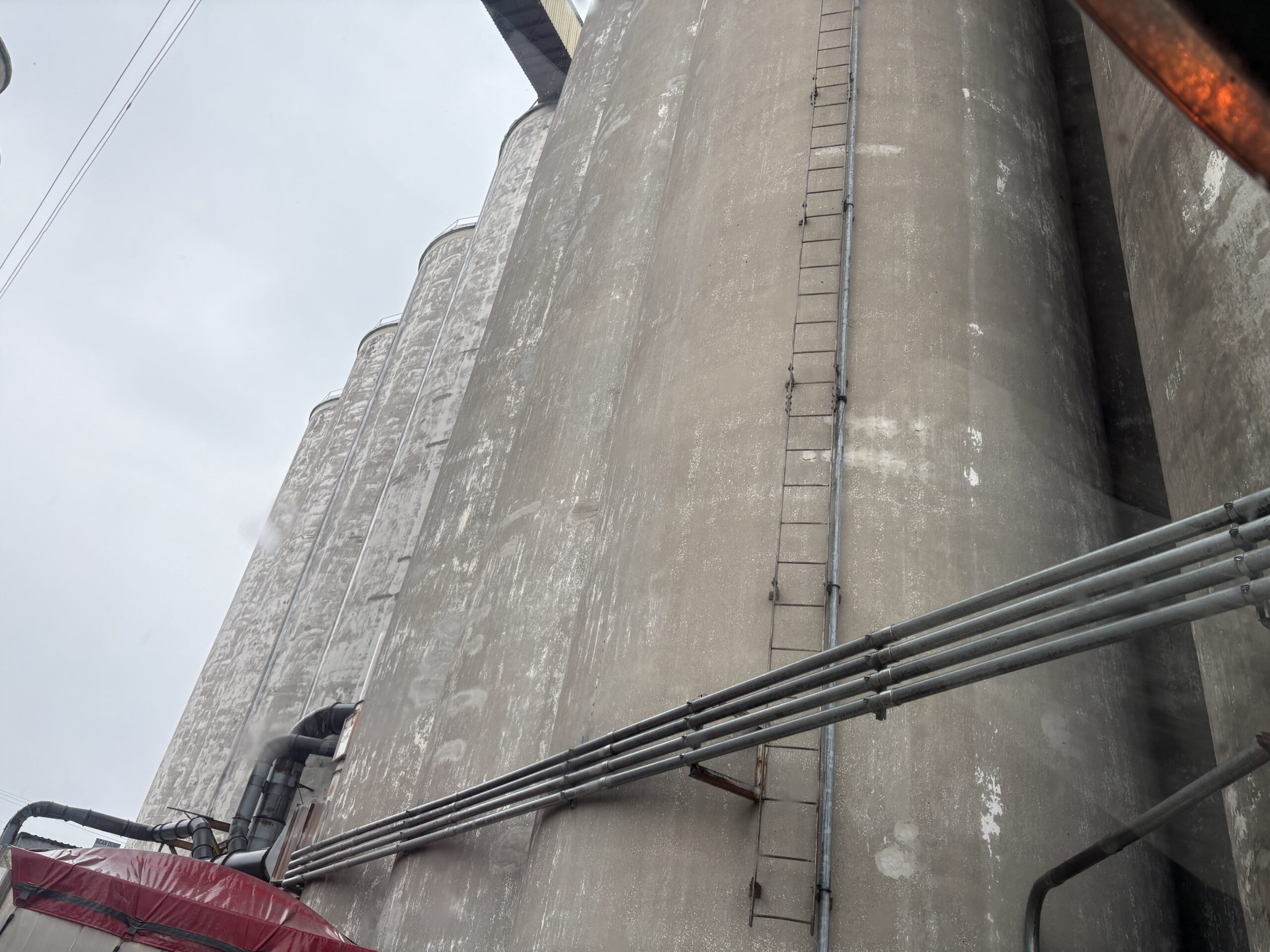
When the light turned green, I pulled forward toward the loaded scale. That sequence is easy to remember now: check in, open tarp, wait for the sample, then follow the green light to the scale. On a first visit, I wanted to make sure I did not skip a station just because the truck ahead had moved.
I am not going to invent a moisture result for either of my loads. What I saw was the sampling step and the signal telling me when to proceed. A driver who wants to understand why elevators check grain moisture can read why moisture matters when grain is delivered. That article discusses corn specifically; my two trips today were soybeans.
The first scale gave me the loaded weight and bay assignment
At the first scale, I scanned my ID card again. This was the loaded weigh-in, with the truck and soybeans still together.
There were red and green lights ahead of me. I stayed on the scale while the light was red. Once the system was ready, the light turned green, and the screen told me whether to use Bay 1 or Bay 2 for unloading.
I liked having the bay assignment on the screen. I did not have to pick an opening based on which line looked shorter or follow another truck and hope it was going to the same place. I waited for the instruction tied to my load and then drove to the assigned bay.
This is one reason a first trip to a new elevator can feel slower even when everything is working. Each stop has its own signal. If I move before the light changes, I may interrupt a weigh-in or head toward the wrong bay. I would rather take a moment to read the screen and make the correct turn.
Unloading the back hopper first
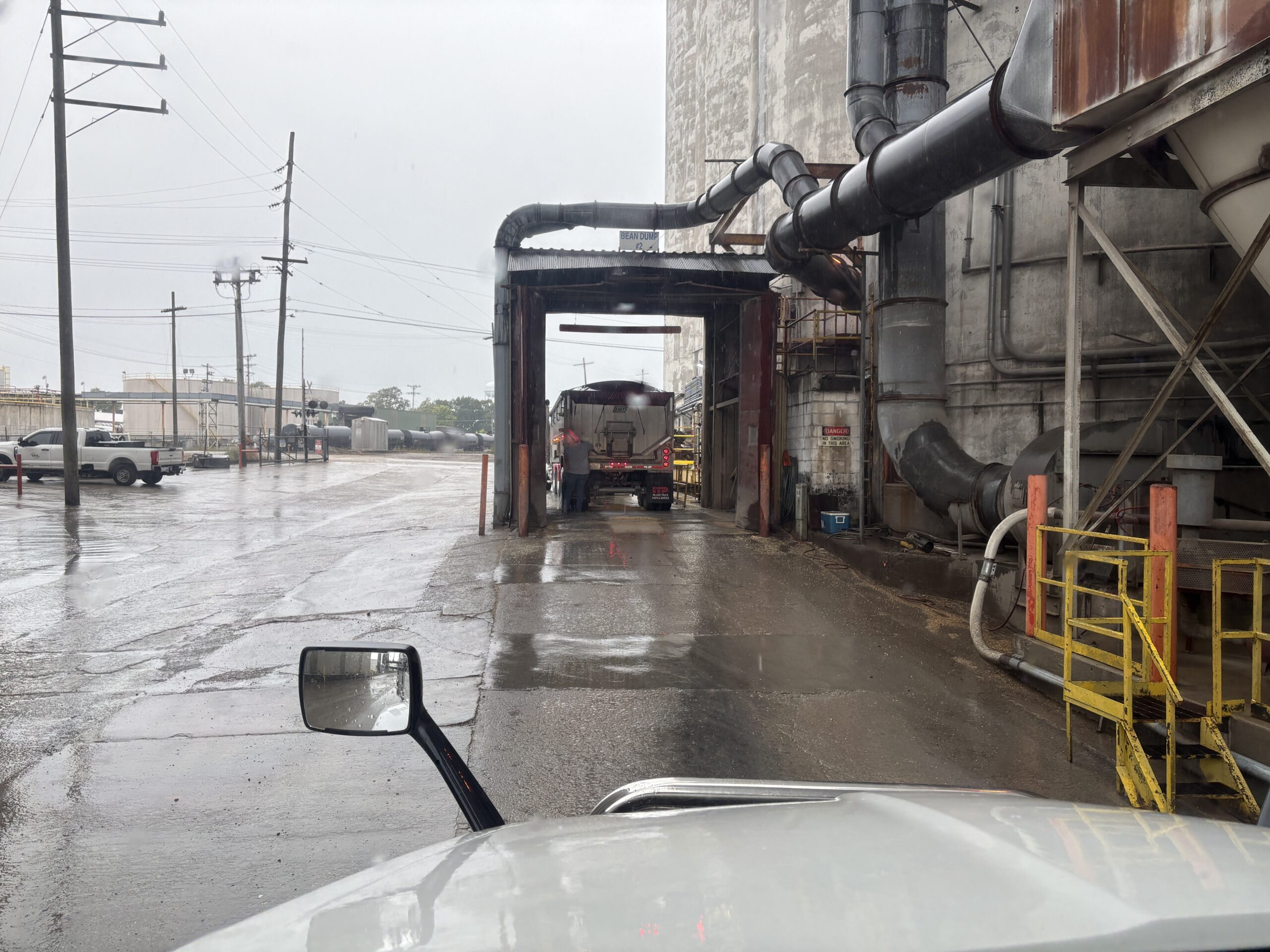
I pulled into the bay and positioned the trailer over the receiving area. At this location, they recommended unloading the back hopper first because the bay is on a hill. I followed that instruction rather than carrying over the order I might use somewhere else.
I got out and cranked the hopper door open myself. Once the rear section was empty, I repositioned the truck so the front hopper was over the unloading area. Then I opened that door and unloaded the front.
It takes some attention to position each hopper over the receiving area. I am not simply driving through one time and dumping everything without moving. I stop in the right place for the back, unload it, then back up to line up the front as directed at this facility.
Before leaving the bay, I make sure the hopper doors are closed and secured. Those doors were open to empty the trailer, but I need them shut before driving around the rest of the property.
The truck ahead of me and the bay appear in one of the photos I took during the rainy wait. The picture gives a better sense of how close the unloading area sits to the big concrete structures than a simple diagram of “scale, dump, scale” would.
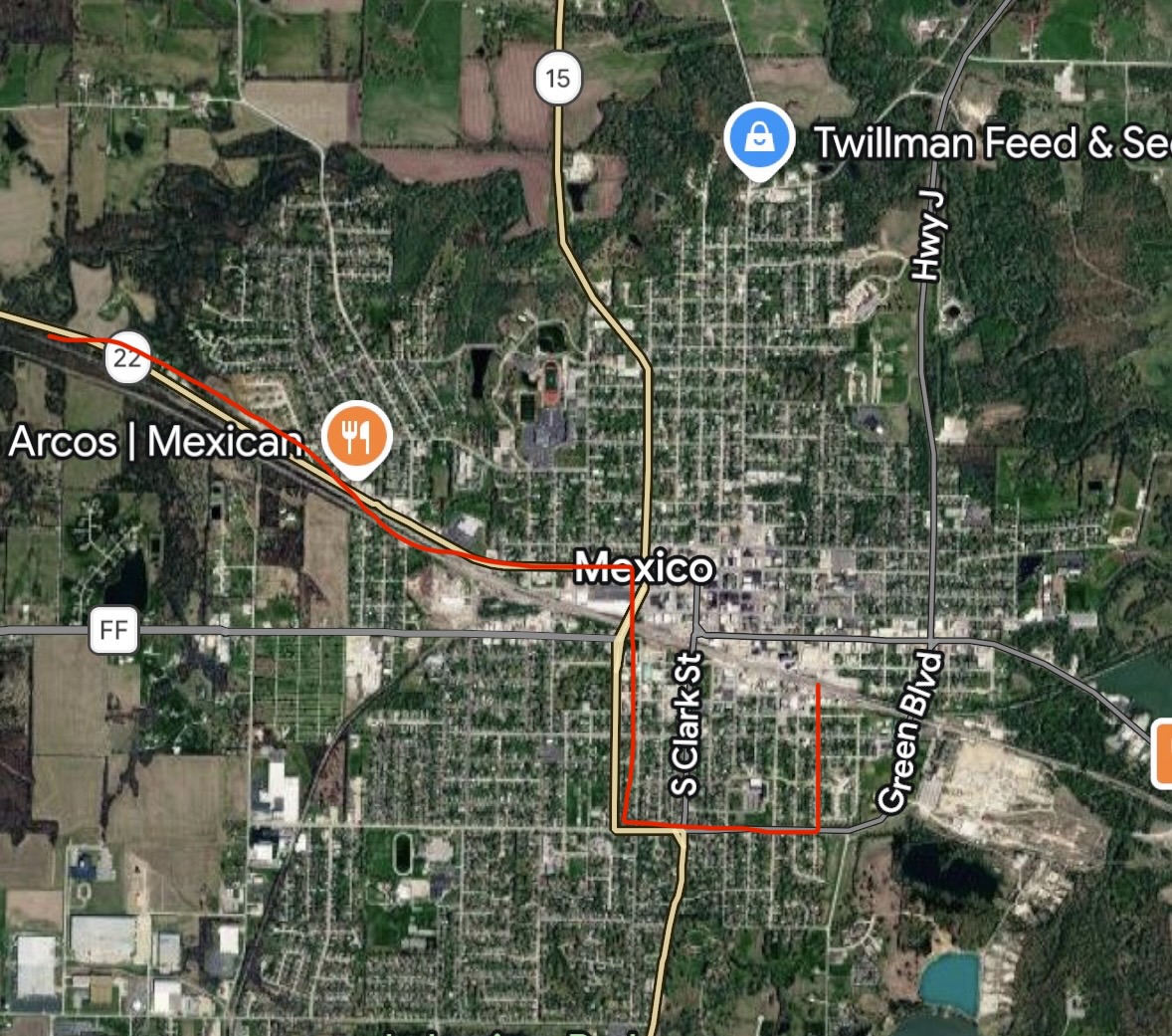
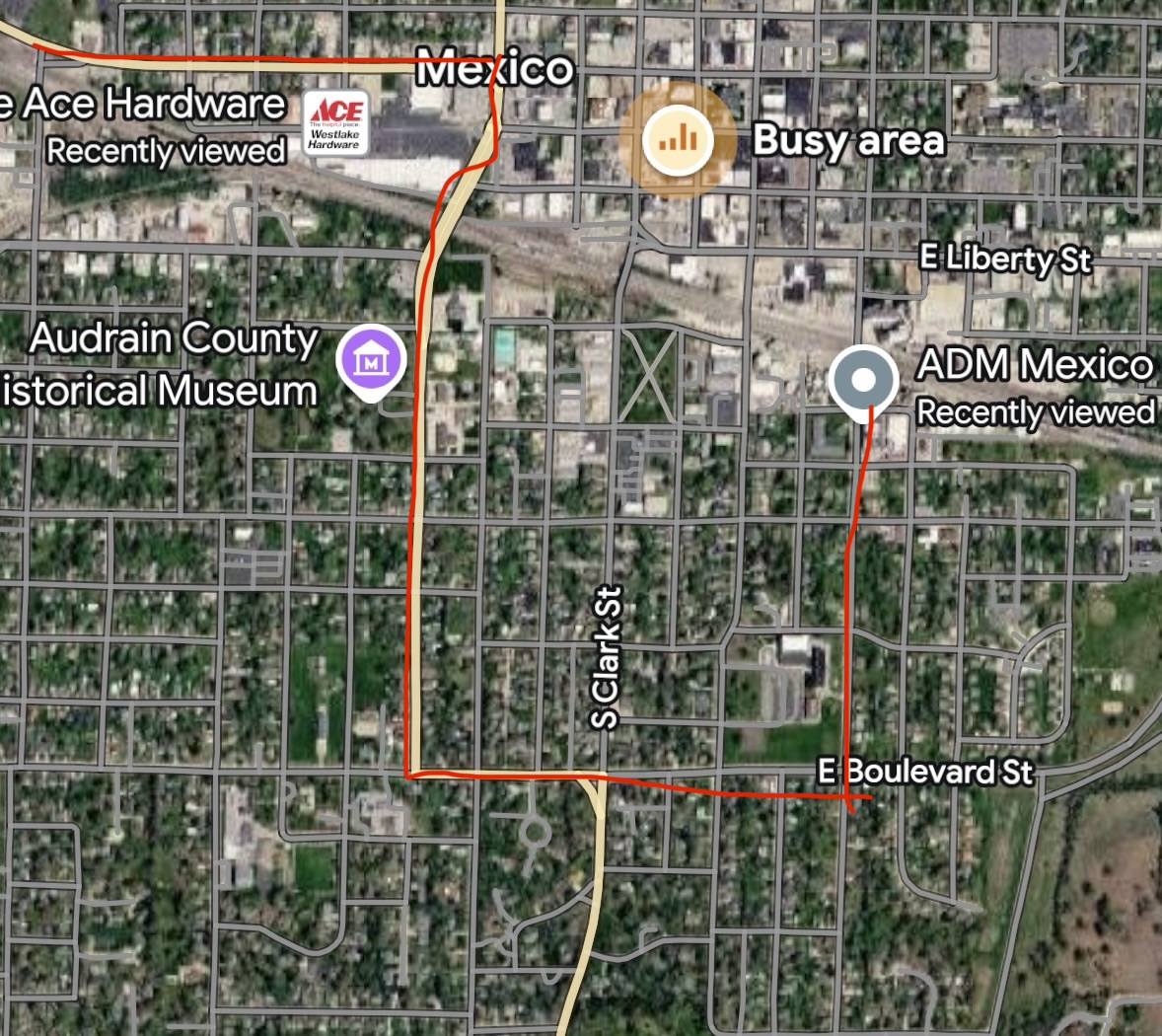
Below I have two images one zoomed in more than the other, but this is the route I take that is truck friendly to make big wide turns coming in from the west from Centraila on highway 22.
Driving around the concrete bins to the empty scale
Once the soybeans were out, I made a large turn around the concrete structures. The empty scale was not right beside the dump bay. I had to follow the route into another gate area to reach it.
That layout was one of the biggest differences from the grain elevator in Brunswick that I was used to. At Ray-Carroll, I had learned one route through the facility while hauling corn. Here I had a separate check-in, sampling stop, loaded scale, assigned dump bay, loop around the structures, and another gated approach to the final scale.
I wrote about my Brunswick corn deliveries in how unloading worked at a grain elevator. The basic loaded-minus-empty weighing process is familiar. The actual path through a facility can be very different.
I did not try to shortcut the route just because the trailer was empty. I followed it around to the gate for the final weigh-in, the same way I had followed the lights and bay assignment earlier.
Scanning again and checking the printed ticket
At the final scale, I scanned my ID badge again. The scale recorded the truck’s empty weight, and the machine printed a receipt.
I checked the name on the ticket before pulling out. That is a small step, but it matters. I had given the account name by phone because the first scanner was broken. I wanted to make sure the printed paperwork showed the right name for the farm’s delivery.
The loaded and empty weights are what let the facility calculate the net weight of soybeans delivered. The ticket is also the record I bring back to the farm. If you have never looked closely at one, what a grain scale ticket shows explains why I keep it and check it before leaving.
After getting the ticket, I pulled out and left. Then I came back and did it again with the second load.
What was different on my second trip
The second delivery was easier to follow because I already knew the order of the stops. I knew where the line led, that the check-in scanner was not working, where the phone was, and that I needed to open the tarp before the sampling point.
I still waited for each green light and read the bay assignment. Knowing the property did not mean I could assume the same bay or drive ahead before the system cleared me. It meant I could spend less time wondering whether I had missed a turn.
The broken scanner turned out to be manageable because there was a working way to reach an operator. The unfamiliar part was not the phone itself. It was learning how that phone check-in connected to the later card scans, scale lights, bay assignment, and ticket.
By the end of two trips, the route made sense to me. I would remember this ADM delivery as a series of clear checkpoints: gate and line, phone check-in, tarp and sample, loaded scale, assigned bay, empty scale, ticket.

What I would tell a driver making this trip for the first time
Have your ID tag and the correct account information ready before you reach the first scanner. If the scanner is down, look for the phone and give the operator the information requested. Know whether the load is a spot sale or tied to another arrangement before you get in line.
Open the tarp before reaching the sampling point, wait for the light after the probe is used, and stop on the loaded scale until the light and screen tell you to move. Read your assigned bay rather than choosing one yourself.
At the bay, follow the facility’s unloading order. On my trips, that meant the back hopper first because of the hill, then repositioning to unload the front. Afterward, follow the route around the concrete structures to the separate empty scale and check the account name on the printed ticket.
That was the process I followed for two soybean loads today. The rain, truck line, and broken scanner made it a memorable first visit, but everything worked out once I took it one stop at a time.
About the author: I share firsthand truck driving and grain-hauling experiences at Trucking Resource.