When I started looking into getting my CDL years ago, I remember thinking, “How complicated can it be? You get your license and start driving.”
It didn’t take long to realize there was a lot more to it.
Everywhere I looked people were talking about Class A, Class B, and Class C CDLs. Some articles made it sound incredibly confusing, throwing around terms like GVWR, GCWR, endorsements, and weight ratings before ever explaining what any of it actually meant.
After spending more than two decades behind the wheel of commercial trucks, I’ve learned the differences really aren’t that difficult once someone explains them in plain English.
If you’re trying to decide which CDL you need, you’re in the right place.
Whether your goal is driving a semi across the country, hauling gravel in a dump truck, delivering fuel, operating a concrete mixer, or driving a school bus, choosing the right CDL is one of the first decisions you’ll make. After identifying the license class that fits your goals, learn how the What Is a CDL Permit? Everything You Need to Know fit into the licensing process.
In this guide, I’ll explain exactly what each CDL class allows you to drive, the types of jobs available, the pros and cons of each license, and why many experienced drivers recommend one option over the others.
If you’re still researching the trucking industry, take a look at our Trucking Topics page where you’ll find guides covering CDL training, trucking careers, DOT rules, maintenance, and much more.
The Quick Answer
If you’re in a hurry, here’s the simple version.
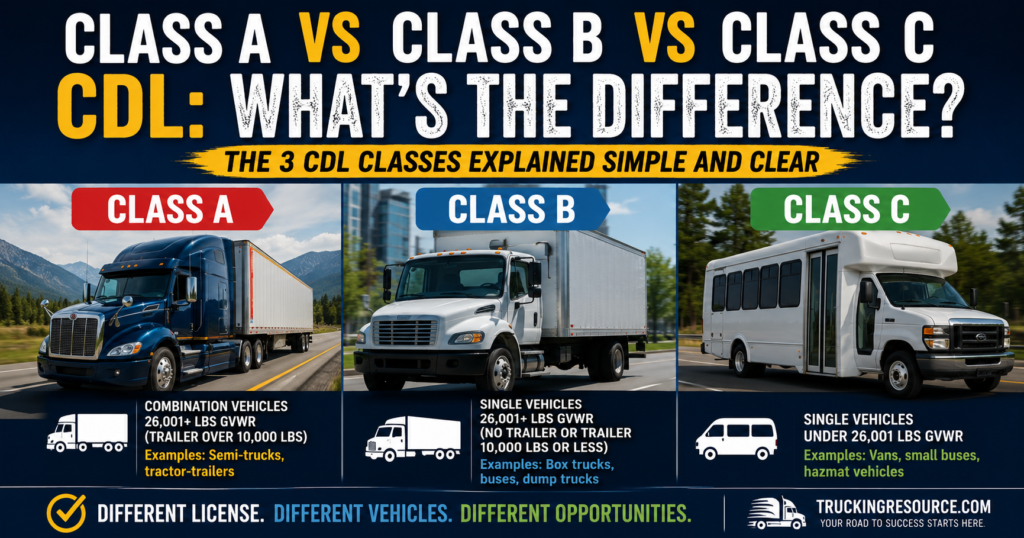
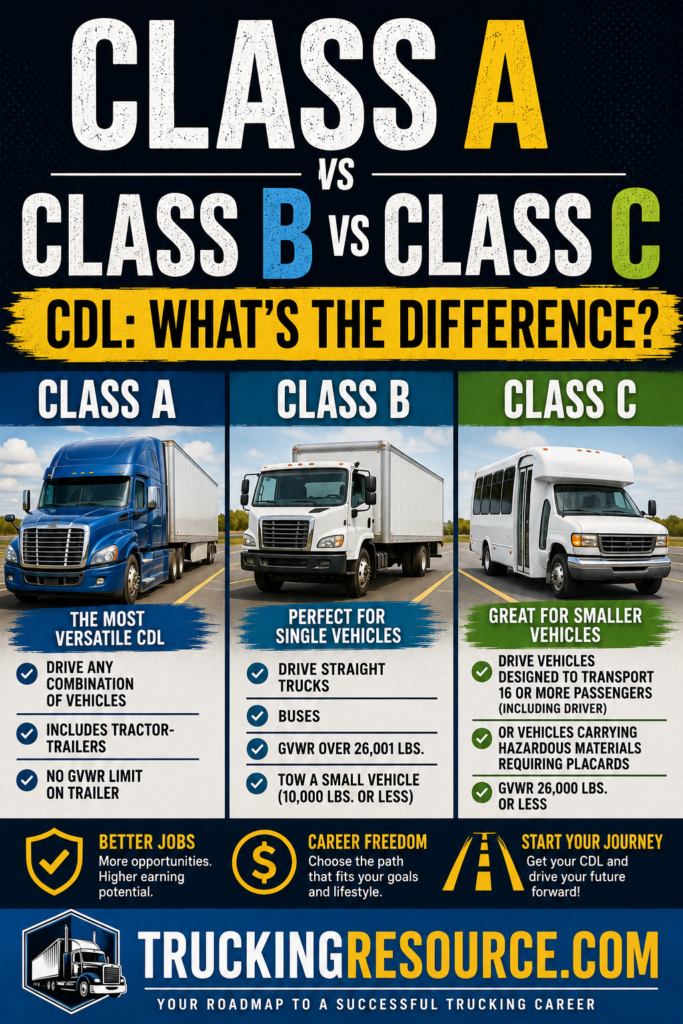
- Class A CDL allows you to drive tractor trailers and combination vehicles pulling trailers over 10,000 pounds. It offers the most career opportunities.
- Class B CDL is for heavy single vehicles like dump trucks, straight trucks, cement mixers, garbage trucks, and many buses.
- Class C CDL is generally used for certain passenger vehicles and vehicles transporting hazardous materials that don’t fall under Class A or Class B.
Most people planning to become professional truck drivers choose a Class A CDL because it provides the most flexibility throughout their career.
Now let’s dig a little deeper.
Why There Are Different CDL Classes
Not every commercial vehicle is built the same.
Driving an 80,000-pound tractor trailer down the interstate is a completely different experience than driving a dump truck around a construction site or transporting passengers through town on a city bus.
Because of that, the federal government created different license classes to make sure drivers receive training that’s appropriate for the type of vehicle they’ll actually be operating.
The biggest differences between the three CDL classes come down to:
- The weight of the vehicle
- Whether you’re pulling a trailer
- The weight of that trailer
- Whether you’re carrying passengers or hazardous materials
Once you understand those basics, everything starts making a lot more sense.
What Is a Class A CDL?
If someone asks me which CDL opens the most doors, my answer is almost always Class A.
A Class A CDL allows you to operate combination vehicles with a combined weight rating of 26,001 pounds or more, provided the trailer you’re towing weighs more than 10,000 pounds. To understand the weight rating behind that definition, see GCWR Explained: What Every CDL Driver Should Know.
That may sound technical, but here’s what it usually means in the real world.
If you’ve ever seen a semi truck pulling a full-length trailer rolling down the interstate, that’s almost always a Class A vehicle.
Over the years I’ve hauled everything from dry vans to flatbeds, and having a Class A CDL gave me the flexibility to move between different jobs without having to earn another license.
Vehicles that normally require a Class A CDL include:
- Tractor trailers
- Dry van trucks
- Refrigerated trailers
- Flatbeds
- Tankers
- Livestock trailers
- Car haulers
- Heavy haul combinations
- Lowboy trailers
- Double and triple trailers with the proper endorsement
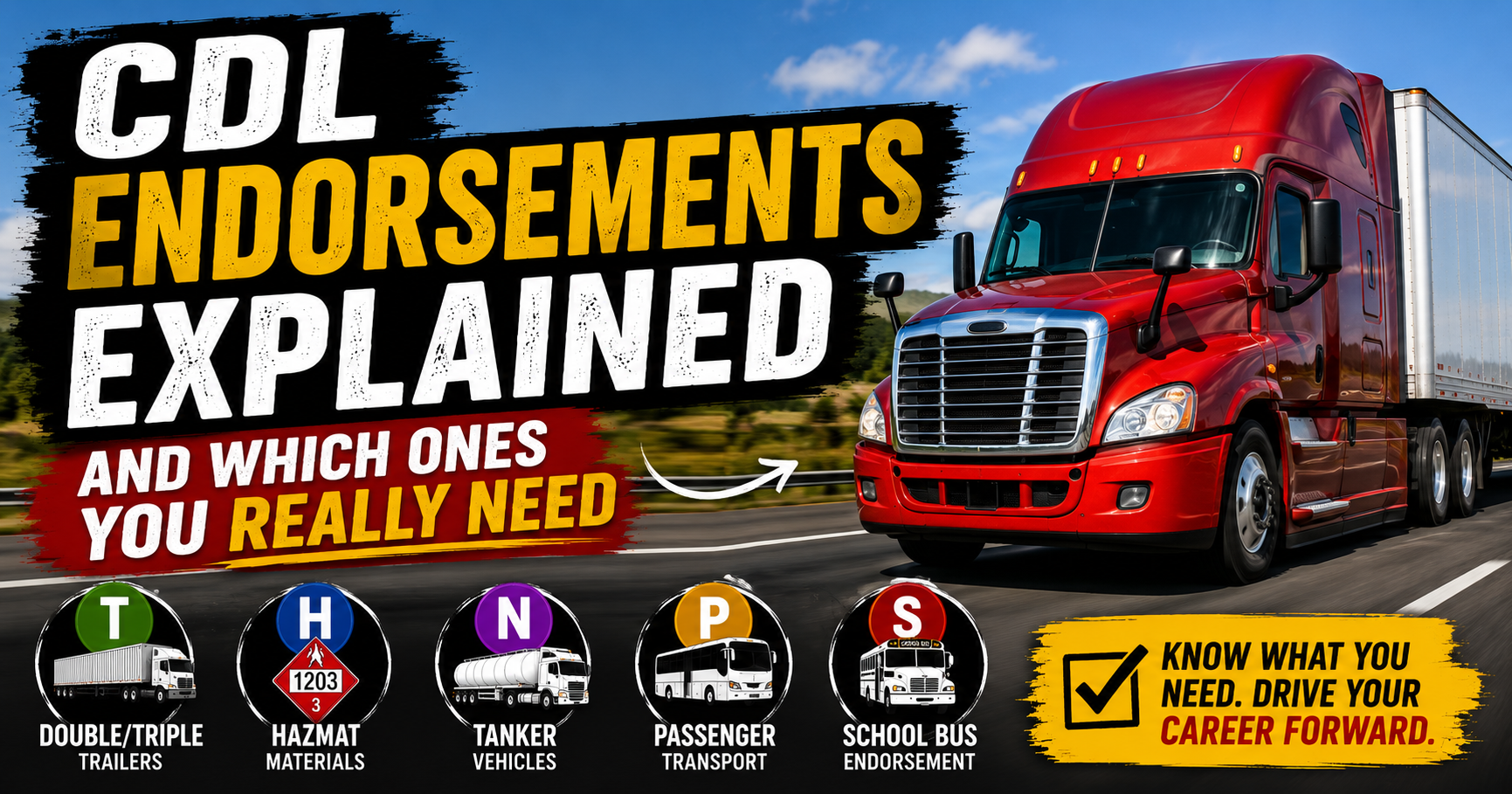
One thing many new drivers don’t realize is that a Class A CDL often allows you to drive many Class B vehicles as well, assuming you have any endorsements required for that vehicle. Those additional qualifications are explained in CDL Endorsements Explained and Which Ones You Really Need.
That’s one reason so many experienced drivers recommend earning a Class A license even if you’re still deciding what type of trucking you want to do.
It simply gives you more options later.
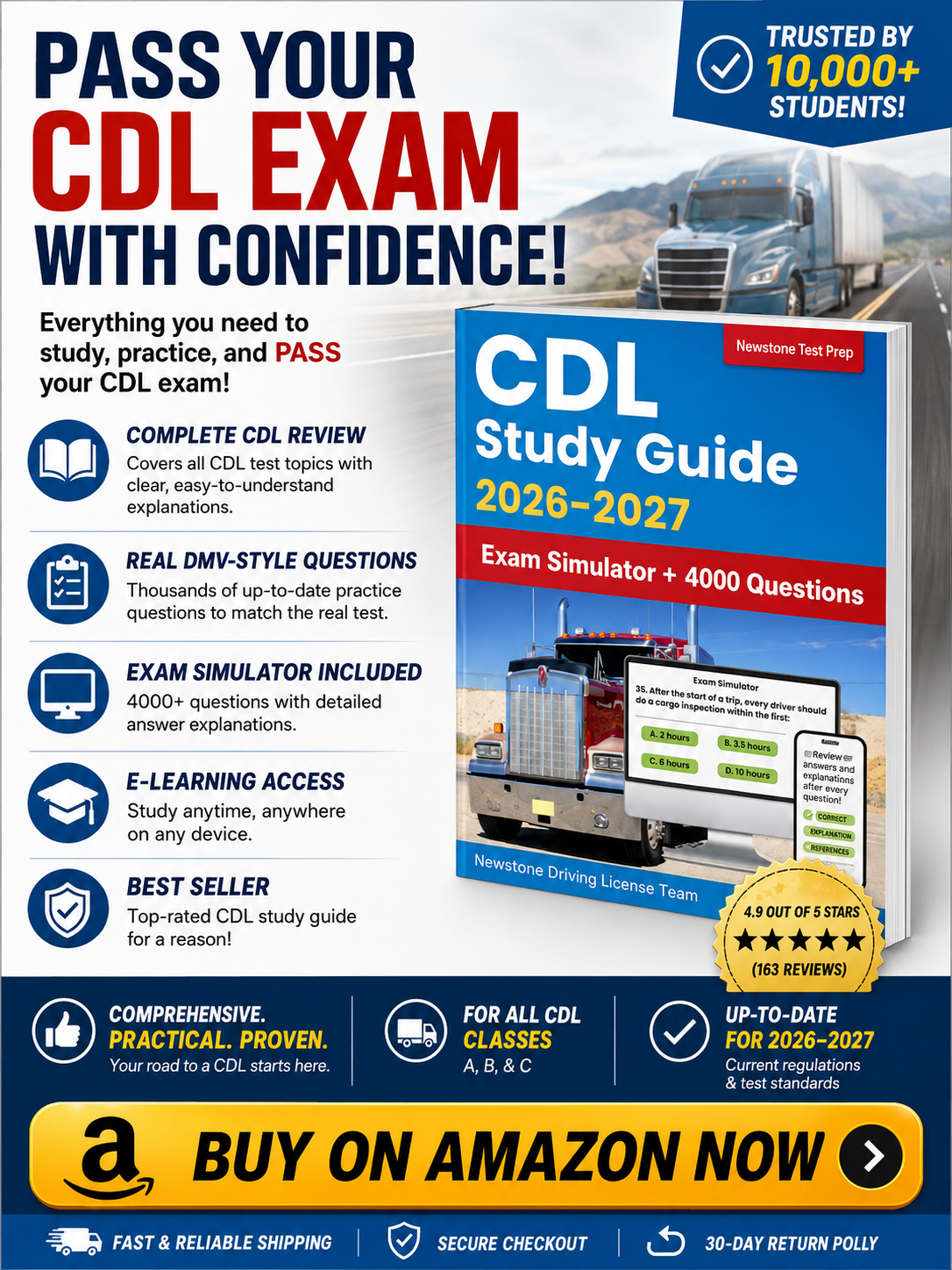
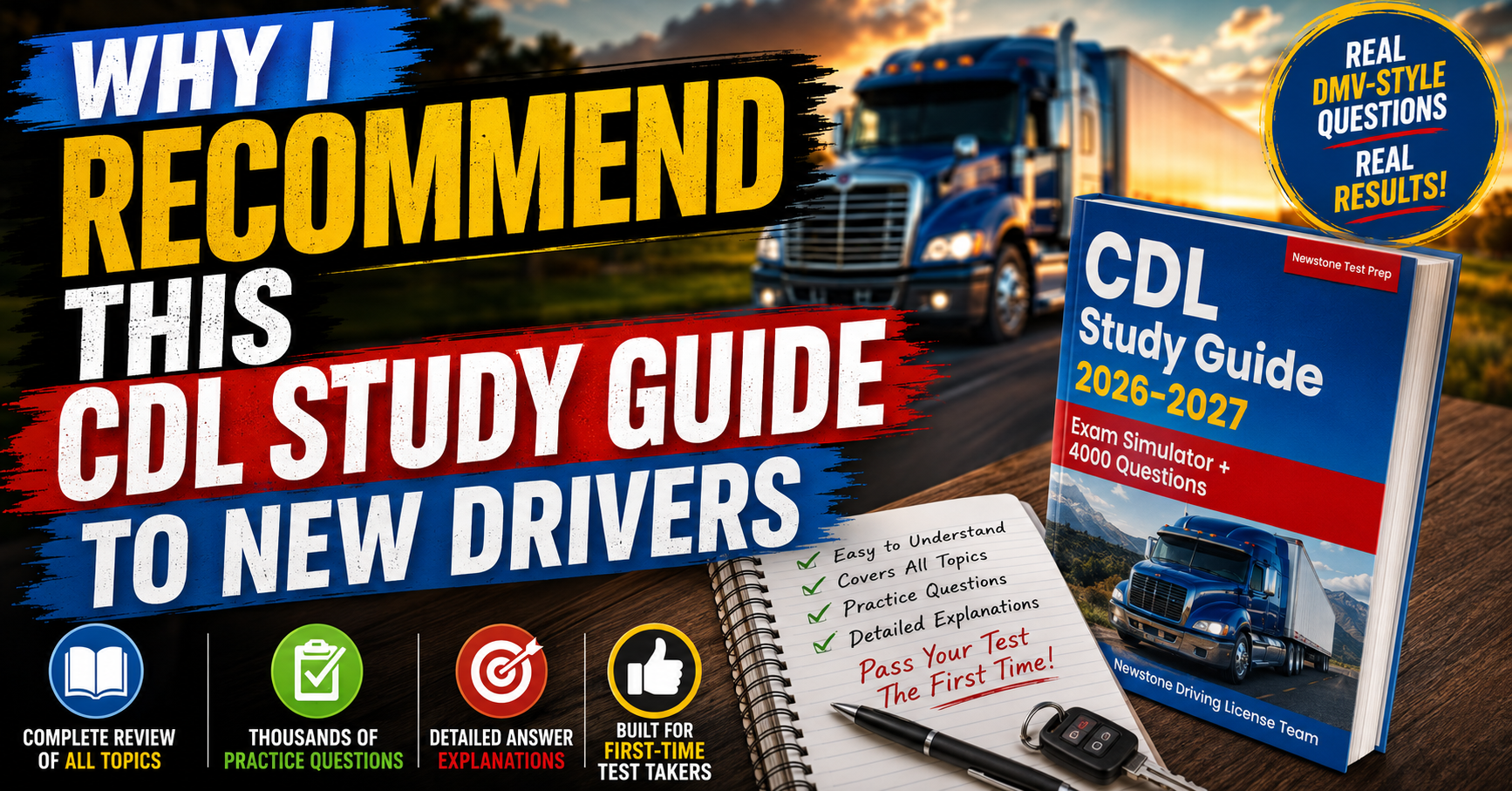
If you’re still deciding which CDL to pursue, now is also a great time to start preparing for the written exam. One resource I often recommend to new drivers is the CDL Study Guide: Complete Review + Real DMV-Style Questions and Detailed Answer Explanations. I like it because it combines realistic practice questions with detailed explanations that help you understand the material instead of simply memorizing answers. It pairs well with your state’s CDL manual and can help you feel much more confident before taking your permit test.
What Jobs Can You Get With a Class A CDL?
A Class A CDL qualifies you for some of the highest-paying driving jobs in the trucking industry.
Depending on your experience and endorsements, you could work as a:
- Long-haul truck driver
- Regional truck driver
- Local tractor trailer driver
- Flatbed driver
- Tanker driver
- Livestock hauler
- Heavy haul driver
- Auto transport driver
- Intermodal driver
- Dedicated route driver
Many of these jobs also require endorsements such as tanker or hazardous materials.
We’ll cover those in detail throughout our CDL Training section.
What Is a Class B CDL?
Not everyone wants to spend days or weeks on the road.
Some drivers would rather clock in each morning, work locally, and sleep in their own bed every night.
That’s where a Class B CDL shines.
A Class B CDL allows you to operate a single vehicle weighing 26,001 pounds or more, as long as any trailer being pulled weighs 10,000 pounds or less.
Unlike a tractor trailer, these vehicles are built as one complete unit.
Some of the most common Class B vehicles include:
- Dump trucks
- Straight trucks
- Box trucks
- Cement mixers
- Garbage trucks
- Utility trucks
- City buses
- School buses
- Fire trucks
- Delivery trucks
I’ve known plenty of drivers who spent their entire careers operating dump trucks or concrete mixers and absolutely loved it.
The work was steady, the routes were familiar, and most evenings they were back home having dinner with their families.
For many people, that’s worth far more than spending weeks driving across the country.
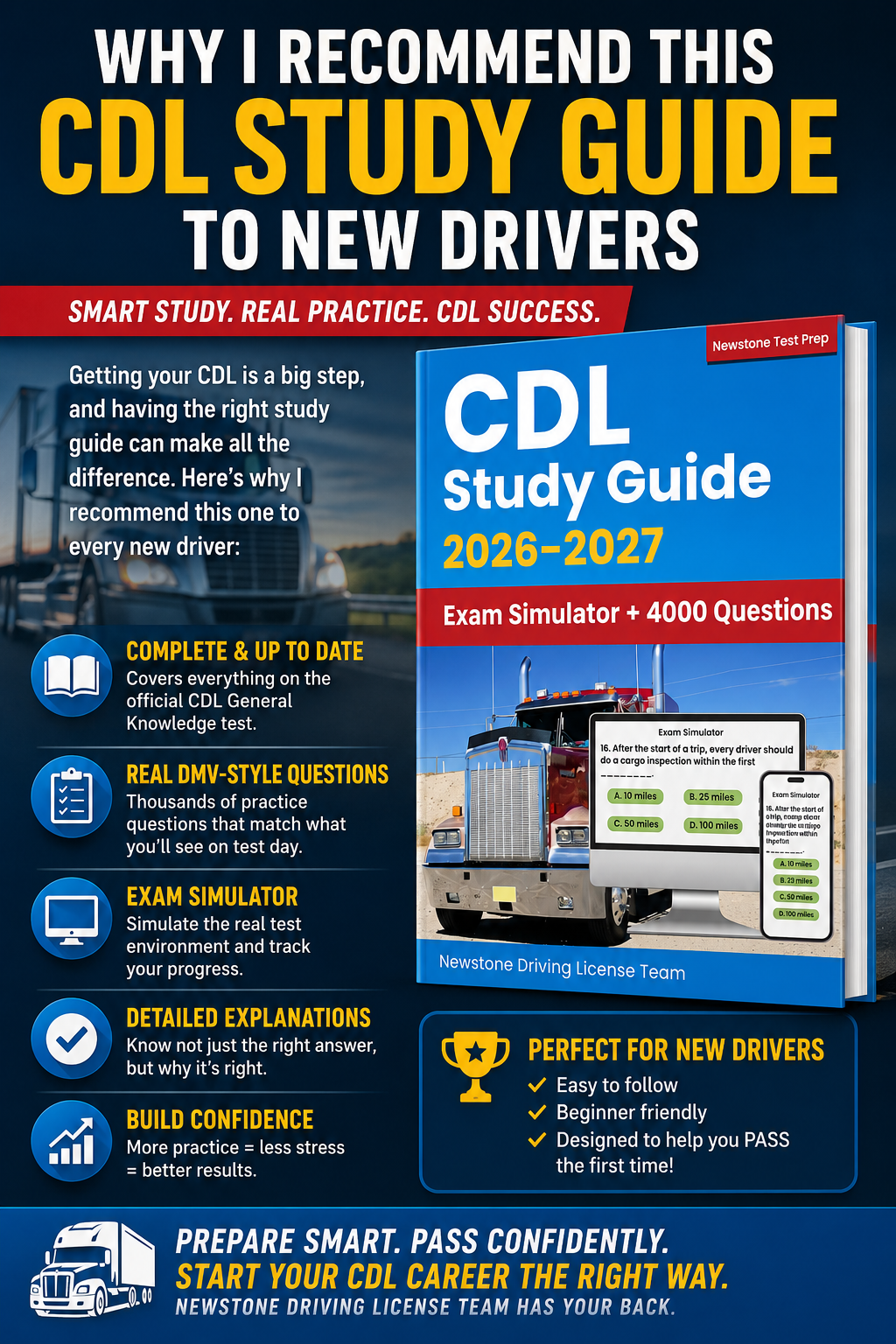
One resource I recommend keeping beside your CDL manual is our recommended CDL study guide. It includes realistic practice questions and detailed explanations that can help reinforce what you’re learning.
Careers That Usually Require a Class B CDL
A Class B CDL can lead to rewarding careers in both the private and public sectors.
Common jobs include:
- Dump truck driver
- Concrete mixer operator
- Garbage truck driver
- Public transit driver
- School bus driver
- Utility company driver
- Construction truck operator
- Local delivery driver
- Municipal fleet driver
Construction companies, cities, counties, and utility providers hire thousands of Class B drivers every year.
If you’re interested in staying close to home, this may be exactly the license you need.
What Is a Class C CDL?
Class C is probably the least understood CDL license.
That’s because relatively few commercial drivers actually need one.
A Class C CDL is generally required for vehicles that don’t meet the requirements of Class A or Class B but are designed to carry a certain number of passengers or transport hazardous materials requiring placards.
Examples include:
- Airport shuttle buses
- Passenger vans
- Church buses in certain situations
- Small hazmat delivery vehicles
- Specialized medical transport vehicles
Most people researching trucking careers won’t need a Class C CDL unless they’re planning to work in one of these specialized fields.
Which CDL Is Best?
This is probably the question I’ve been asked more than any other over the years.
The honest answer is that it depends on what kind of life you want.
If your dream is hauling freight across America, eventually becoming an owner-operator, or maximizing your earning potential, I’d recommend getting a Class A CDL from the start.
It gives you the most flexibility and opens the largest number of job opportunities.
If you’d rather drive locally, work construction, operate a dump truck, or drive for your city or county, a Class B CDL may be the better fit.
Neither license is “better.”
They’re simply designed for different careers.
The mistake I see people make is choosing a Class B license simply because they think it’s easier, only to realize later they really wanted to drive tractor trailers.
At that point, they’re back in school earning a Class A anyway.
If you think there’s even a chance you’ll want to drive a semi someday, I’d seriously consider getting your Class A first.
It can save you both time and money down the road.
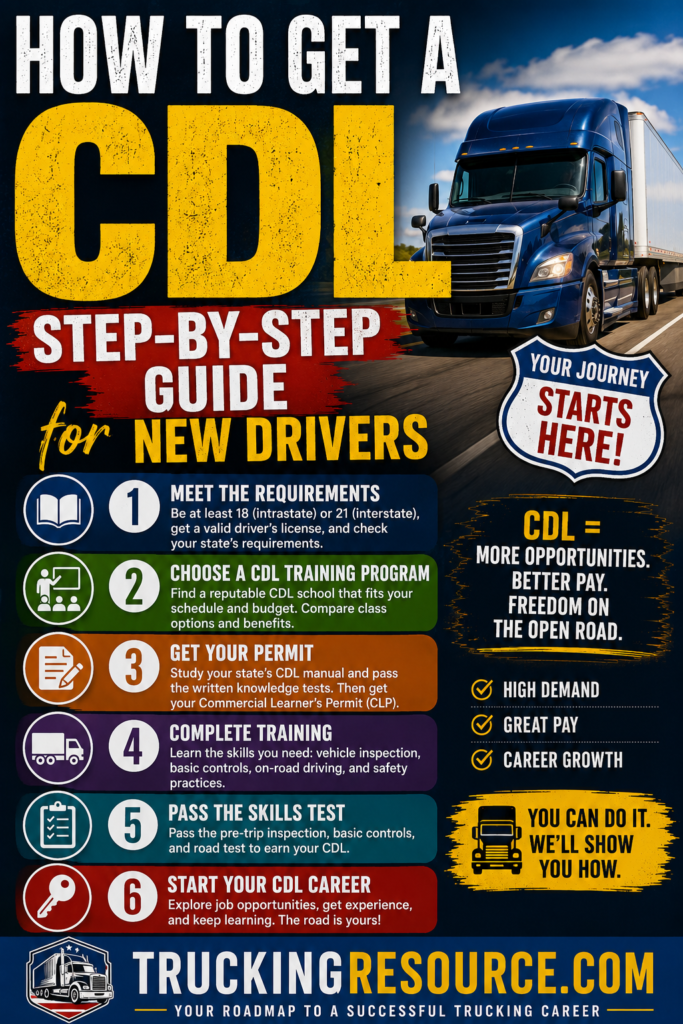
One question I hear almost as often as “Which CDL should I get?” is “How do I actually earn one?” Once you’ve decided whether a Class A, Class B, or Class C license fits your goals, the next step is understanding the licensing process from start to finish. Our guide on how to get a CDL step by step walks you through everything from getting your Commercial Learner’s Permit to passing your CDL skills test.
Can You Upgrade From a Class B CDL to a Class A CDL?
Yes.
Many drivers start with a Class B CDL because a local employer pays for their training or because they only plan to drive dump trucks or buses.
Years later, they decide they want the additional opportunities that come with driving combination vehicles.
At that point, they can attend the required training, pass the appropriate knowledge and skills tests, and upgrade to a Class A CDL.
While that’s certainly possible, many experienced drivers recommend earning the Class A first if you’re still undecided.
It’s easier to have the extra flexibility than to need it later and wish you already had it.
Don’t Forget About CDL Endorsements
Getting the right CDL class is only part of the process.
Many commercial driving jobs also require endorsements.
Some of the most common include:
- Tanker (N)
- Hazardous Materials (H)
- Passenger (P)
- School Bus (S)
- Doubles and Triples (T)
These endorsements allow you to operate specialized equipment or transport certain types of cargo.
We’ll be covering each endorsement in detail as our CDL Training library continues to grow.
My Advice After More Than 20 Years Behind the Wheel
If I could sit down with every new driver before they enrolled in CDL school, I’d give them one piece of advice.
Don’t choose your license based only on what sounds easiest.
Think about where you want to be five or ten years from now.
The trucking industry offers incredible opportunities, but the jobs available to you often depend on the CDL you hold.
A little extra training today can open far more doors tomorrow.
That’s why so many drivers choose a Class A CDL even if they start with a local job. It gives them the freedom to change careers without having to start the licensing process all over again.
As you continue learning about the trucking industry, be sure to explore our Trucking Topics page. We’re building practical, experience-based guides to help both new and experienced drivers make smarter decisions, stay compliant, and get the most out of a career behind the wheel.
Author: Mike Reynolds
Mike Reynolds has spent more than 25 years driving commercial trucks across the United States. During his career, he’s hauled dry vans, refrigerated freight, flatbeds, agricultural equipment, and construction materials. He’s passionate about helping new drivers understand the trucking industry and sharing practical advice that comes from real experience behind the wheel rather than a classroom.